 EPSRC is holding a two-day workshop on Pervasive and Ubiquitous Computing. The workshop will be highly multidisciplinary as well as bringing together those who are developing platforms and standards with researchers deploying and evaluating in real world environments.
In the Balancing Capability exercise, Pervasive and Ubiquitous Computing was selected as an area to grow. While this is likely to happen due to the increasing economic and social influence of the Internet of Things and related technologies, EPSRC believe that some effort is required at this stage to ensure a balanced portfolio of funded research by the end of the delivery plan period.
Moreover, while they believe this field has a key role to play in contributing to the achievement of their cross-ICT priorities, they think that to achieve the objectives described in the priorities: People at the Heart of ICT, Safe and Secure ICT and Cross-Disciplinarity and Co-Creation a mature community discussion will be required.
Further information about EPSRC‘s portfolio and strategies, see our website.
What is Pervasive and Ubiquitous Computing?
Put broadly, Pervasive and Ubiquitous Computing (PUC) is the fundamental and applied research that aims achieve the integration of computing into any device in any location that interacts with our lives.
Research in this area is necessarily multi-disciplinary and in order to achieve success will draw-on and synthesise ideas at the boundary of numerous other strands of research. This includes:
- Context awareness and affective computing in mobile systems and fundamental research into smart devices.
- Communication and information management between trillions of devices as well as new forms of distributed data handling and processing at scale.
- Research into the software or hardware of devices that have mobility as a unique aspect of their application. This includes the solutions to challenges of building systems on a grand scale such as interoperability, reliability and scalability.
Research into new forms of interaction with pervasive computer systems and related research into trust, privacy and security. This will require novel computer science and engineering while incorporating research from the social sciences, humanities and law.
How to apply
Those wishing to attend the workshop should complete the short Expression of Interest (EoI) form on this page.
This is a fantastic opportunity for BU academics as a lot of our research would be classed as ‘Pervasive and Ubiquitous Computing’. If you do get a place, please can you let your RKEO representative know as we are interested in how this area will grow and what calls may come out of it.
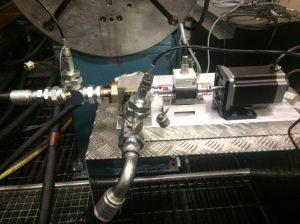 Hydreco Hydraulics is sponsoring and supporting two PhD projects from BU’s Department of Design and Engineering, in the Faculty of Science and Technology. One project involves the design and provision of the mechanical parts, while the other project involves the provision of the control systems. The company has just started testing the first prototype valve and its control system algorithm. The aims of the planned tests are to study the performance of the valve, compare it to the simulation predictions, and to identify its mechanical characteristics needed to fine tune the control algorithms.
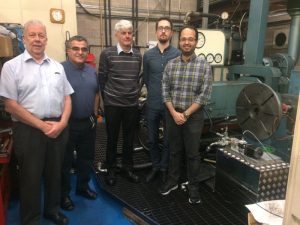 Mr Philip Godfrey and





 The first Chapter, “Performative Social Science”, in J. P. Matthes, C. S. Davis, & R. F. Potter (Eds.), The International Encyclopedia of Communication Research Methods, rehearses the development of Performative Social Science (PSS) as a research approach and method, developed over ten years at Bournemouth University through publication, film, research, workshops, Masterclasses, and PhD studies. Jones explains that PSS is not simply ‘art for art’s sake’ instead of research. PSS is research and dissemination practices based in the philosophy of Relational Aesthetics and has much in common with Social Constructionism. The ‘audience’ or reader/viewer are key to PSS, as is the wider community.
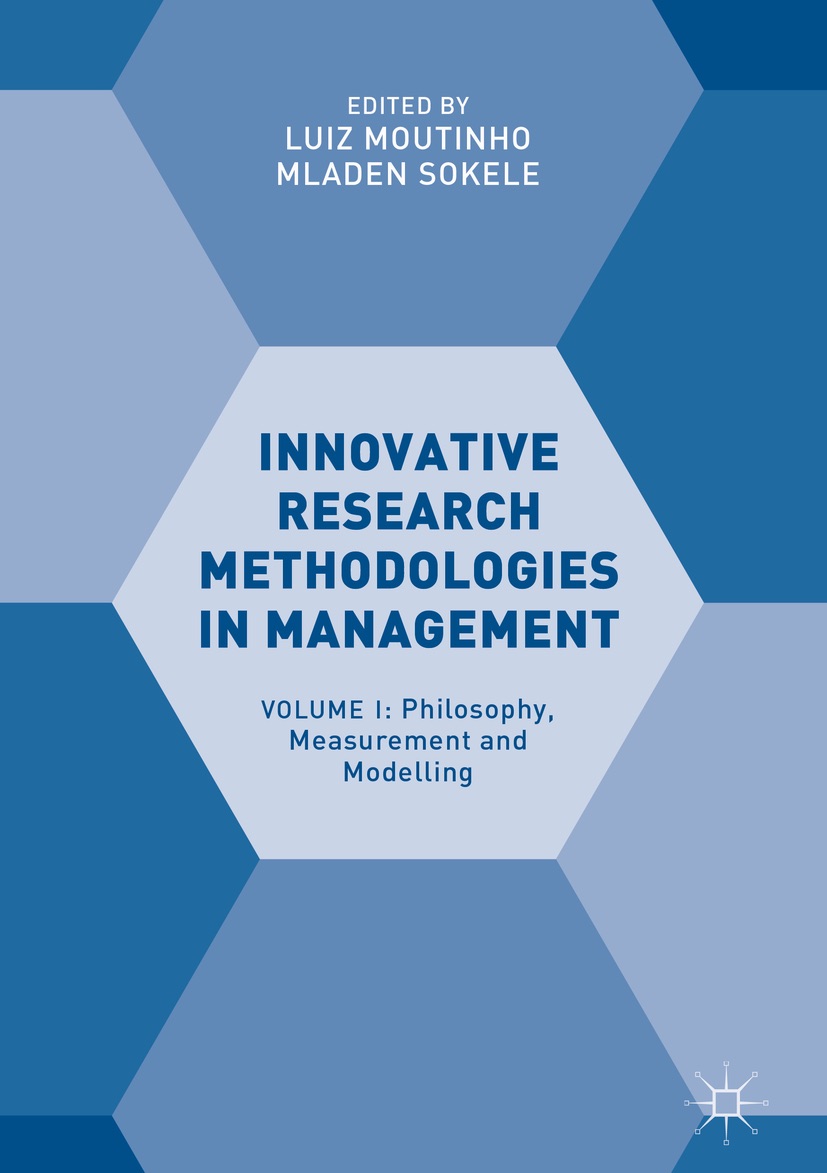 The second Chapter, “Emotivity and Ephemera Research”, in Innovative Research Methodologies in Management: Volume I, edited by L. Moutinho and M. Sokelem provides an in-depth worked example of PSS. The Chapter reports on a two-day experimental workshop in arts-led interviewing technique using ephemera to illicit life stories and then reporting narrative accounts back using creative means of presentation. The workshop took place at Bournemouth and participants were all University faculty members. A key to the process was in replicating what research participants may be feeling and going through when they share very personal stories with researchers. The exercise built a respect for this process by acknowledging that fact through the personal experiences and emotive connectivity of workshop participants.
 Cheltenham Science Festival is on the look-out for contestants to take part in their 2018 Over-Ambitious Demo Challenge at Cheltenham Science Festival 2018 (5-10th June).
 “Phenomenology or Narrative Method? Choosing one for my study”








 ESRC Festival of Social Science 2026: An Opportunity to Engage New Audiences
 New HIV paper by BU PhD student
 BU Annual Research Conference: Poster Exhibition Call for Applications
 Vitae Three Minute Thesis (3MT®) Competition: Applications Now Open
 3C Online Social: Thursday 26 March 1–2pm – Research Culture, Community & Can you Guess Who?
 ECR Funding Open Call: Research Culture & Community Grant – Apply now
 ECR Funding Open Call: Research Culture & Community Grant – Application Deadline Friday 12 December
 MSCA Postdoctoral Fellowships 2025 Call
 ERC Advanced Grant 2025 Webinar
 Update on UKRO services
 European research project exploring use of ‘virtual twins’ to better manage metabolic associated fatty liver disease