Category / Media Studies
CEMP Research & Innovation Bulletin
Here is the updated CEMP Research & Innovation bulletin and agenda for the next cluster meeting – CEMP Cluster bulletin and agenda 28.3.13_KE
The cluster meeting is on Thursday March 28th, 9.30-11.30 in the CEMP office.
Thanks to Kris Erickson for these updates.
The ‘thinktank’ reading for discussion at the meeting is SURRENDERING THE SPACE Convergence culture, Cultural Studies and the curriculum
Thanks to Ashley Woodfall for this.
Expressions of interest in the funding opportunities in the bulletin and / or to confirm meeting attendance, please email julian@cemp.ac.uk.
CEMP and CIPPM Researchers co-publish reports on parody for the UKIPO
Dr. Kris Erickson (CEMP), Dr. Dinusha Mendis and Professor Martin Kretschmer (CIPPM) have co-authored a series of reports commissioned by the UK Intellectual Property Office (UKIPO) on parody and pastiche. Empirical and legal research is presented in a sequence of three reports published by the UKIPO in March 2013. The three studies commissioned by UKIPO evaluate policy options in the implementation of the Hargreaves Review of Intellectual Property & Growth (2011).
Study I authored by Dr. Kris Erickson presents new empirical data about music video parodies on the online platform YouTube
Study II authored by Dr. Dinusha Mendis and Professor Martin Kretshcmer offers a comparative legal review of the law of parody in seven jurisdictions
Study III authored by Dr. Kris Erickson, Professor Martin Kretschmer and Dr. Dinusha Mendis provides a summary of the findings of Studies I & II, and analyses their relevance for copyright policy.
All three reports can also be found here
Study I presents new empirical data about music video parodies. A sample of 8,299 user-generated music video parodies was constructed relating to the top-100 charting music singles in the UK for the year 2011.
Study II discusses of the legal treatment of parodies in seven jurisdictions that have implemented a copyright exception for parody. The jurisdictions include Australia, Canada, France, Germany, Netherlands, UK, and USA. Study II identifies possible regulatory options for benefiting from a parody exception to copyright infringement, and distils the (economic and non-economic) rationales developed by legislators and courts. The report concludes by setting out a list of policy options.
Study III brings together the legal analysis and the empirical data. Each of the policy options identified in Study II is examined for its likely impact on the empirical sample gathered in Study I.
The research team comprising of Dr. Kris Erickson, Dr. Dinusha Mendis and Professor Martin Kretschmer presented the following key findings arising from the three Studies:
- Parody is a significant consumer activity: On average, there are 24 user-generated parodies available for each original video of a charting single.
- There is no evidence for economic damage to rights holders through substitution: The presence of parody content is correlated with, and predicts larger audiences for original music videos.
- The potential for reputational harm in the observed sample is limited: Only 1.5% of all parodies sampled took a directly negative stance, discouraging viewers from commercially supporting the original.
- Observed creative contributions were considerable: In 78% of all cases, the parodist appeared on camera (also diminishing the possibility of confusion).
- There exists a small but growing market for skilled user-generated parody: Parodists who exhibit higher production values in their works attract larger audiences, which can be monetized via revenue share with YouTube.
My Swedish visit
For the past couple of years those of us in the Centre for Media history have been building up our relationship with Lund University where Media History is taught and actively researched. The connection owes a lot to my colleague, Kristin Skoog, who is Swedish but specialises in BBC radio history.
Although I have visited Lund a number of times I have only now spent a week here and in my role as a Visiting Fellow I was asked to contribute to the teaching and research programme.
So I found myself talking to a group of possibly bemused second year undergraduates about BBC radio broadcasts during the second world war. Maybe this was a bit reckless because, as you may know, Sweden was officially neutral during the war and I did wonder how they would respond to the rather gung-ho nature of BBC war reporting. In fact they were very interested and perceptive in their comments.
My next task was to interview two media history PhD students with their supervisors present. Despite not really knowing much about their subjects the conversation seemed to be productive and I certainly learned a lot (about the history of A4 (!) and ‘balloonings’ in Stockholm).
My main challenge was to address the impressive media history research seminar and this time I was prepared with my latest, not entirely legally obtained, audio from the BBC sound archive on the Suez crisis of 1956. Surprisingly I saw in the audience Bente Larsen, a leading figure in Danish radio archives who had popped over ‘the bridge’ (yes, that bridge) to listen. I followed the very impressive and calm young Danish academic, Heidi Svømmekjær, and all went well.
I should add that I do not speak a word of Swedish and so could not use the library. But everyone in Sweden seems to speak very good English.
It has been an extremely stimulating and valuable experience and I would be happy to talk to anyone out there who is interested in building Swedish links.
One final comment; as a guest I was given my own profile page on the Lund University website http://www.kom.lu.se/en/research/mediehistoria/guest-researcher/ What a shame we at Bournemouth are not able to design web profiles of this standard!
Hugh Chignell, Professor of Media History, The Media School. 15.3.2013
Squeezing the pips from a conference with social media
Please forgive the self-publicity, but I would like to share my recent use of social media to promote BU, research, a conference and papers.
Last week, I attended the annual International Public Relations Research Conference (IPRRC) in the US, where I presented three papers, one with a US co-author. It’s the largest conference in the field, drawing 101 papers over three days and attendance in the order of 150-175 academics, graduates and some practitioners.
To broadcast involvement in the conference, I used my personal blog to present a daily summary of interesting papers: http://fiftyonezeroone.blogspot.co.uk/. The blog posts have had over 210 visits so far and were also circulated on LinkedIn, Twitter and Google+. There have been many re-tweets (RTs), plus appreciative emails and direct messages via Twitter.
A short summary of “top 10 research tips” was written for the prmoment.com website which has around 30,000 users, worldwide. It was posted on the site’s blog and is included in this week’s publication: http://blog.prmoment.com/ten-pr-research-tips-from-bournemouth-universitys-professor-tom-watson/
The outcomes of this type of activity will be long-term and hard to measure, but as I was the only UK delegate at IPRRC this year, it has given BU, our research and industry knowledge an international platform of expertise and insight to present ourselves. The capital cost was almost nil, as I used my own netbook, Wi-Fi was free and the time component was less than an hour a day. Try this approach at your next conference or internal event.
CEMP Research & Innovation Bulletin 14.3.13
The CEMP Research & Innovation Cluster bulletin for the meeting on 14.3.13 is here: Cluster bulletin and agenda 14.3.13.
The focus of the cluster is pedagogic research and innovation. Any colleagues interested in collaborating with CEMP to pursue any of the funding opportunities in the bulletin – please email Julian McDougall.
Cluster meetings take place every other Thursday. In the Thursdays in between, the bulletin will be posted here.
Media School team wins US grant for CSR research
A three-member Media School research team has been awarded a grant for research into Corporate Social Responsibility communication amongst employees.
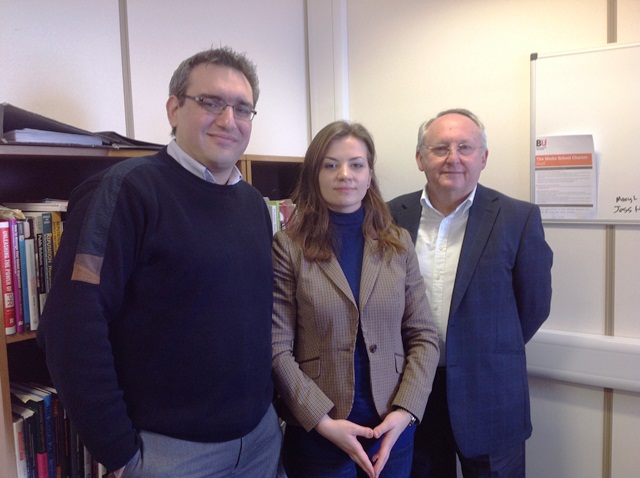
Dr Tasos Theofilou, Dr Georgiana Grigore and Prof Tom Watson (L-R) gained the grant from the Arthur W. Page Center for Integrity in Public Communication, a research center at the Penn State College of Communications.
They will be conducting a study in the UK and Romania to link with a previous study undertaken in Greece by Dr Theofilou. The study supports travel and the employment of research assistants for research in summer this year. Prof Watson, the project PI, has been named as a Page Legacy Scholar for 2013.
“Within the Media School’s Public Relations Research Group (the PRRes Gang), there is considerable expertise in CSR,” said Prof Watson.
“Dr Grigore is an organiser of an international CSR conference to be held at BU in the autumn, whilst Dr Theofilou is pioneering research into harnessing ‘scepticism’ as a factor in developing effective CSR communication within corporate organisations.
“This grant is very positive recognition of BU’s standing internationally within public relations and corporate communications research.”
# Arthur W. Page was a highly respected pioneer of public relations and corporate communications in the US from the late 1920s to the late 1940s at the telecoms giant, AT&T.
Euro PR history network backed by Fusion
A proposal to develop an innovative Europe-wide network of researchers in the history of public relations field has been supported by the Fusion Investment Fund (FIF).
The European Public Relations History Network (EPRHN) was formed in mid-2012 by Prof Tom Watson and backed by EUPRERA (European Public Relations Education & Research Association) as a priority project for the next three years. It was set up to identify archives and resources, undertake collaborative research, and prepare bids to European research bodies and PR industry organisations.
The field of public relations history has been developed at BU over the past four years, mainly through the establishment of the International History of Public Relations Conference (IHPRC).
Prof Watson said: “there has been increasing interest in the conference and PR historical research in Europe over the past 3-4 years but it has largely focused on national histories, personalities or phenomena. Collaborative research, across national boundaries, has yet to emerge. There is little shared knowledge of archival resources, where they exist or can be created.”
So far, 35 academics and practitioners from 12 countries have shown their interest in EPRHN. Its first publication, a catalogue of archives and resources in seven countries has just been published. A EPRHN planning meeting will be held at BU after IHPRC in June.
Within The Media School, the network will also help develop European aspects of the Centre for Media History (CMH). CMH is already developing relationships with universities in Sweden and northern Germany. CMH and EPRHN will, it is hoped, foster the recruitment of PGR students interested in media and communication historical research.
The Fusion funding will allow EPRHN to hold a planning event at BU after IHPRC in late June and for Prof Watson and Dr Tasos Theofilou, who is working with him on both PR history projects, to attend EUPRERA’s annual conference in Barcelona in October. At EUPRERA, they will hold the network’s first formal meeting and workshop. [Photos by Minna-Liisa Nurmilaasko, PROCOM Finland].
Fusion supports new PR research collaboration in Asia
For several years, the Media School (TMS) has been developing a relationship with Chulalongkorn University in Bangkok, Thailand. Chula, as it is known, is rated as the No.1 university in the kingdom.
The SMN award allows the development of a collaborative project between TMS and the Faculty of Communication Arts at Chula to organise an academic conference on public relations in Asia in Bangkok on November 18-19.
The conference will provide a platform for academic research on public relations history, current theory and practice, and future trends. In particular, it will investigate Asian (i.e. non Anglo-American) perspectives of public relations and will be the first dedicated conference to do so.
Prof Tom Watson, who is a co-chair of the conference, says the SMN funding “will lead to the development of a sustainable academic and research partnership between the two universities. It will enable BU staff participation in cross-cultural research with Thai colleagues. The conference will also place BU in a leadership role on research into cross-cultural communications and international public relations.”
Dr Ana Adi is working with Prof Watson on the project. She taught at Chula in mid-2012 on a staff exchange. She and at least one other TMS academic will be attending the conference and presenting papers.
The conference collaboration started with attendance by Chula’s Dr Napawan Tantivejakul at the International History of Public Relations Conference 2011 at BU, which began a dialogue about a joint conference with an Asian focus. This was cemented when Prof Watson visited Chula in November last year as a visiting professor and negotiated the arrangements. It is hoped that there will be 16 speakers, plus two keynotes, and 50 delegates at the November event.
Working with the European Media Management Association
At the recent BU EU Funding day, I was asked if I would write a short blog post reflecting on my first 6 months working as the Deputy President of the European Media Management Association (EMMA). So here it is!
My first observation is that over the past few years BU has become more aware of the need to become more externally focussed and integrated into a range of high quality networks. As far as my field of Media Management is concerned, EMMA provides a great platform. It also provides an excellent network to develop a range of collaborative activities at institutional and individual level, and to gain different cultural perspectives on the subject domain.
Being active in such an organisation requires commitment, but the rewards have been excellent in terms of working with European Board members, getting access to a new network and the ‘local’ knowledge that each person brings to the table. BU also bid for and won the right to host the EMMA Annual Conference, which has traditionally been held in major European or capital cities. Being a part of a European association has now moved the conversation from “where is Bournemouth…is it near London?” to “we’re looking forward to working with BU”. From my perspective that’s a quantum leap in our profile!
BU now has an EU Network Fund and I’d encourage you to use this as a springboard to engage with a range of European stakeholders.
My term as Deputy President has another 18 months to run and I’m looking forward to the challenges and opportunities that lie ahead!
Rufus Stone selected for Torin Film Festival
Ruf
us Stone has been selected for this year’s Torin Film Festival, 23 Nov-1Dec in Torino, Italy. Held every November, it is the second largest film festival in Italy, following the Venice Film Festival.
The 30-minute film is the result of three years of in-depth research into ageing and sexuality in rural Britain at Bournemouth University. The project, led by Bournemouth University’s Dr Kip Jones, uses the film as its main output.
Rufus Stone was directed by Josh Appignanesi (The Infidel) and produced by Parkville Pictures, London. The film stars well-known stage and television actor, William Gaunt in the title role. Jones was author of the story and acted in the capacity of Executive Producer for the film.
The film will be shown five times during the festival, which opens with a screening of Dustin Hoffman’s directorial début, Quartet. The festival will close with Ginger & Rosa, a 1960s coming-of-age story from U.K. director Sally Potter.
Rufus Stone will be screened in the Festa Mobile sidebar, made up of mostly European and Italian premiers, including Anna Karenina, Joe Wright’s adaptation of the Leo Tolstoy classic that stars Keira Knightley and Jude Law.
Rufus Stone was recently featured as part of the ESRC Festival of Social Science at Bournemouth University and will be shown locally as part of BU’s Festival of Learning next June. Future screenings are also planned for Birbeck, Cambridge and Oxford Universities.
Digital Economy finds NEMODE
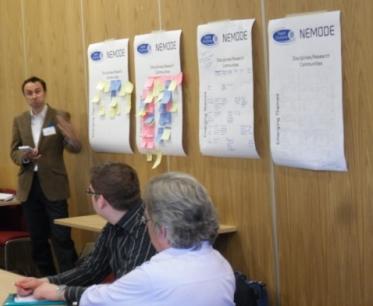
Academics from multi-disciplinary backgrounds recently attended a two day Digital Economy Network+ event at the University of Cambridge. The aim of the event was to continue the process of building a network of people interested researching New Economic Models for the Digital Economy.
The focus of the event was to share the diverse perspectives on new economic models for the digital economy and to develop and shape the research agenda on two key themes;
- What are economic models and how do different communities define them?
- Does an economic model differ from a business model?
Both days consisted of a number of brainstorm and discussion activities that opened with each academic presenting their views on the ‘big questions’ in relation to their own subject domain, which in my case is Media Management. It was certainly interesting to look at the same research questions from very different perspectives, and it this has helped inform my thinking for the Advances in Media Management (AiMM) research group that I lead and our forthcoming symposium on New Economic Models.
Further network events are planned, but for those BU academics researching within our own Creative & Digital Economy Theme – the funding headlines are;
- The EPSRC are managing the New Economic Models sub-theme of the Digital Economy
- The network will now be known as NEMODE
- NEMODE have £980k to support network activities including funding 10 small (£50k) feasibility/scoping studies. A call for the first two projects will be made in October this year.
- Successful feasibility studies can be scaled up via direct applications to the RCUK Digital Economy.
- Funding Applications that involve practitioners will be looked upon more favourably – which sits nicely with BU’s Fusion Strategy!
The relationship between journalism and democracy
Watch this excellent short video from BU’s Prof Stuart Allan on the relationship between the study of journalism and the study of democracy, through work funded by the Swedish Research Council.
To see other BU videos on YouTube go to the BU YouTube page!
httpv://www.youtube.com/watch?v=GiQxwraTF-E
EPSRC/ESRC Invitation for Outlines: Consortia for Exploratory Research in Security
As part of their contribution to the RCUK Global Uncertainties Programme, EPSRC and ESRC are jointly inviting proposals for research consortia (PDF 79KB) to explore current and future cyber security challenges.
CEReS consortia are encouraged to work across or between established disciplines and to draw on expertise from multiple research organisations wherever necessary. They particularly welcome proposals with significant novel mathematics and/or social science content.
Initially, outline proposals will be assessed for their novelty and fit to the aims of the call. Successful outline applicants will be invited to submit full proposals later in 2012.
EPSRC and ESRC have made available up to £4M available to fund full proposals funded through the CEReS call. They expect to support a range of projects which is broad in terms of scale (likely to be between £500k and £1M for each consortium), duration (two to four years), mix of disciplines (with single discipline proposals being the exception rather than the norm) and subject matter (although all must focus on cyber security-related challenges in the broadest sense). Activities funded through CEReS are limited to those currently allowed on EPSRC grants. As a result they will not be able to accept applications which request funding for PhD studentships, even if they are outside EPSRC’s remit.
CEReS is a call for exploratory research. Consortia should identify ambitious goals with far-reaching impacts on future research and, potentially at least, practice in cyber security. Projects which continue or extend current work in a straightforward or obvious way will not be supported. Collaboration between disciplines is strongly encouraged. Although it is not essential that all projects include cross- or intra-disciplinary working it is likely that the assessment process will select positively for consortia which adopt this approach.
Although it is being managed by EPSRC the CEReS call is also open to researchers eligible to apply for targeted funding from ESRC. There is no quota of applications or funding based on Research Council remits. It is possible for the same researcher(s) to be associated with more than one consortium application.
For further information visit the call website: http://www.epsrc.ac.uk/funding/calls/open/Pages/ceres.aspx and read the call documentation: http://www.epsrc.ac.uk/SiteCollectionDocuments/Calls/2012/CEReSCall.pdf. Outline proposals should be prepared and submitted using the Research Councils’ Joint electronic Submission (JeS) System (https://je-s.rcuk.ac.uk/).
The RKE Operations team can help you with your application.
The closing date is 14 June 2012.
Virgin Media Shorts Competition Opens to Entries (UK)
The Virgin Media Shorts, which is a short film competition that champions undiscovered talent, has announced that its 2012 competition is now open to entries.
The competition is open to filmmakers and gives them the chance to show their work in cinemas, on TV, online and on mobile (via the mobile internet). Prizes include: 13 film makers win a chance to show their work on 214 cinema screens nationwide; one winner will receive £30,000 to make their next film; and a People’s Choice winner will receive £5,000 of film funding and BFI mentoring. Films must be in English or subtitled in English and be of a duration of up to 2 minutes and 20 seconds. The deadline for entries is 12 noon on the 12th July 2012.
Strategies for use of news websites in journalism education
Funding Source: Association for Journalism Education
Chief Investigators: Dr Einar Thorsen and Sue Wallace, The Media School, Bournemouth University
Research Assistant: Dr Caitlin Patrick, The Media School, Bournemouth University
Project brief

Journalism is among the most rapidly changing industries, affected by both technological advances and shifting consumer habits. This makes it paramount for journalism education to keep pace with trends such as changing journalism practices and the migration of audiences to online journalism. One possible outcome of this imperative is for online news or magazine websites to be developed to a) showcase student reporting, b) serve as an educational tool in professional journalism practices, and c) facilitate research into news and journalism innovation. Journalism courses are increasingly making use of their own websites in one or more of these ways, but development, as in the news industry itself, has tended to be haphazard and quite often on a trial and error basis.
This project seeks to address this problematic by conducting a survey of news and magazine websites used in journalism courses, their history, evolution and integration into education practice. The aim is not to produce a standard model to be applied in every case. Rather, the intention is to collect and share experiences to inform education and curriculum development. The sharing of best practice can also help to maintain high standards in journalism education.
International survey
Phase One of the project launched in March 2012 and involves an international survey into the use of news and magazine websites in journalism education.
We would be most grateful if anyone involved in journalism education could assist by completing our survey:
https://www.surveymonkey.com/s/websites-in-journalism-education
We are interested in the views of both staff and students, so please circulate as widely as possible.
The survey is completed anonymously. For staff it takes no more than 10-15 minutes to complete, with the student section possible to complete in 5 minutes. All staff and students on undergraduate and postgraduate journalism courses are encouraged to partake and we welcome your participation.
Case studies
Phase Two of the project will take place in the second half of 2012 and involve up to five site visits to observe how websites are used in live news days simulating real-life news operations. During these visits we propose to conduct follow-up interviews in conjunction with examination of websites, to scrutinise in finer detail the patterns of application and usage.
Project outcomes
This project will investigate both technological and editorial issues associated with use of websites in journalism education.
Findings from this research project will be made available online and as contributions to relevant scholarly journals, including the AJE journal Journalism Education, outlining experiences, advice, and different models of application. The findings may also be of use to accreditation bodies and industry panels.
If you would like further information on the project, you can view the original project brief.BU’s Richard Berger wins an AHRC grant!
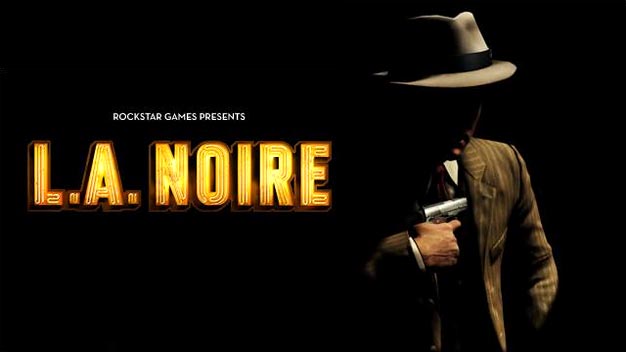
Congratulations to Dr Richard Berger, Associate Professor and Head of Postgraduate Research in the Media School, who has won an AHRC grant to research how the videogame L.A. Noire (which was released for Playstation 3 and XBOX 360 in May 2011) can be used to teach the English Literature curriculum. This is a collaborative grant led by Dr Julian McDougall at the University of Wolverhampton. Richard and Julian have collaborated previously on a number of journal papers, and are co-editors of the Media Education Research Journal.
About the AHRC award: The diegesis is set in 1947, and the game appropriates conventions from American film noir texts of the 1940s and 1950s, as well as later texts such as Alphaville (Godard, 1965) and L.A. Confidential (Hanson, 1997). The novels of Elmore Leonard and James Ellroy also contribute to this sphere of influence. Unlike these novels and films, this videogame is an author / auteur-less digital text which is pre-designed but ‘written’, in narrative terms, only when read (played). However, its highly literary and filmic nature would seem to be useful for teaching / learning in the English Literature curriculum.
As a research subject, L.A. Noire offers an opportunity to revisit ideas of adaptation and appropriation in the context of this digital transformation of the ‘hard-boiled detective novel’, and to further examine the relationship of exchange that exists between linear and digital texts. Videogames are still largely ignored in education as textual subjects but L.A. Noire is potentially transgressive, in terms of its potential to be taught / studied as a book (novel) in its digitally transformed state.
This project will explore the ways in which gamer-students and teachers might work with L.A. Noire to reconfigure dynamics of expertise, begin a remediation of the English Literature curriculum and respond to the digital transformation of what we think it means to ‘read’ in order to think differently about the function of books and the nature of textual authority in the digital age.
Congratulations Richard – this is an excellent achievement! 😀
Richard is a peer reviewer for the AHRC which he believes directly informs his own bidding activity – you can read his review of the benefits of being a peer reviewer here: Life as an AHRC Peer Reviewer. He has also made use of our internal peer review service (the RPRS) to help to strengthen his proposals prior to submission – you can read his review of the RPRS here: One Man’s Experience of the Research Proposal Review Service
Find out about Mixtape – the Media School’s excellent flexible CPD portfolio
BU is committed to developing its Continuing Professional Development portoflio. One School that has already done some excellent work in this area is the Media School. They launched their provision two years ago and now have over 250 students on a variety of CPD pathways – some delivered by BU and some delivered in partnership with employers such as the BBC and Pearson. All of the courses are accredited by Skillset, the sector skills council for creative and media. To find out more about the short course offer in the Media School and to hear from current students and employers, watch this amazing short video: http://mixtape.bournemouth.ac.uk/overview.html
Visit the Mixtape website here: http://mixtape.bournemouth.ac.uk/


SPROUT Returns: Designing Sustainability in Research Practice – Wednesday 20 May 12-2pm
Innovative Approaches to Doctoral Supervision: Selected Case Studies
3C Event: Research Culture, Community & Canapés-Tuesday 19 May 1-2pm
New chapters published in maternity book on risk
The British Academy European Research Council Grant Support Sessions
Grant Writing Workshops: Master the Art of the Winning Proposal
Apply now to take part in the 2026 ESRC Festival of Social Science
Reminder: Register for the ESRC Festival of Social Science 2026 Information Session

ECR Funding Open Call: Research Culture & Community Grant – Apply now

ECR Funding Open Call: Research Culture & Community Grant – Application Deadline Friday 12 December
MSCA Postdoctoral Fellowships 2025 Call
ERC Advanced Grant 2025 Webinar
Update on UKRO services
European research project exploring use of ‘virtual twins’ to better manage metabolic associated fatty liver disease