- Koirala, B., Rushton, S., Adhikary, P., Balen, J., et al. (2024) COVID-19 as a challenge to Nepal’s newly federalised health system: capacities, responsibilities, and mindsets, Asia Pacific Journal of Public Health (online first) https://doi.org/10.1177/1010539524125012.
- Sapkota, S., Rushton, S., van Teijlingen, E., et al. (2024) Participatory policy analysis in health policy and systems research: reflections from a study in Nepal. Health Research & Policy Systems, 22 (No.7) https://doi.org/10.1186/s12961-023-01092-5 .
- Wasti, S.P., van Teijlingen, E., Simkhada, P., et al. (2023) Selection of Study Sites and Participants for Research into Nepal’s Federal Health System, WHO South-East Asia Journal of Public Health 12(2):116-119.
- Sapkota, S., Dhakal, A., Rushton S., et al. (2023) The impact of decentralisation on health systems: a systematic review of reviews. BMJ Global Health 8:e013317. doi:10.1136/bmjgh-2023-013317.
- Wasti, S.P., van Teijlingen, E., Rushton, S., et al. (2023) Overcoming the Challenges Facing Nepal’s Health System During Federalisation: An Analysis of Health System Building Blocks, Health Research Policy & Systems 21(117) https://doi.org/10.1186/s12961-023-01033-2
- Sapkota, S., Panday, S., Wasti, S.P., et al. (2022) Health System Strengthening: The Role of Public Health in Federal Nepal, Journal of the Nepal Public Health Association 7(1):36-42.
- Adhikary, P., Balen, J., Gautam, S., et al. (2020) The COVID-19 pandemic in Nepal: Emerging evidence on the effectiveness of action by, and cooperation between, different levels of government in a federal system, Journal of Karnali Academy of Health Sciences 3 (3): 1-11.
- Rushton, S., Pandey, S., van Teijlingen, E., et al. (2021) An Investigation into the Impact of Decentralization on the Health System of Nepal. Journal of Manmohan Memorial Institute of Health Sciences, 7(1): 3–14. https://doi.org/10.3126/jmmihs.v7i1.43146

Category / Health, Wellbeing & Society
New BU midwifery publication by Joanne Rack
This week the international scientific journal Midwifery published Ms. Joanne Rack’s second paper from her PhD research. This latest paper ‘The Pregnant Pause: Engaging and Involving Public Contributors in Maternal Health Research‘ [1] appeared online two days ago. This paper focuses on Joanne’s PPI (Patient Public Involvement) in prepartion for her PhD research. The public contributors of PPI groups can include an extensive range of people, including patients, family members or carers, people from allied organisations, service users, and members of the general public who have an interest in research for other reasons. Participants bring their unique perspectives and experiences that can help to shape and inform the research process. This type of involvement ensures that maternal health research is grounded in the needs and preferences of those it aims to serve and grows a sense of ownership and investment among those who use the services but also those who provide them. Joanne stresses that PPI is an essential element for all maternal health endeavours.
Joanne is doing a Clinical Doctorate in the Centre for Midwifery & Women’s Health (CMWH) specialising in personalised care for women of advanced maternal age. This PhD study is matched-funded by University Hospitals Dorset (UHD) NHS Foundation Trust and Bournemouth University.
Her PhD is supervised and supported by Profs. Vanora Hundley, Ann Luce and Edwin van Teijlingen at BU and Dr. Latha Vinayakarao in Poole Maternity Hospital. The first PhD paper with Joanne as lead author was her research protocol ‘Understanding perceptions and communication of risk in advanced maternal age: a scoping review (protocol) on women’s engagement with health care services’ published int he summer of 2024 [2].
References:
- Rack, J., Hundley, V., van Teijlingen, E., Luce, A. (2025)The Pregnant Pause: Engaging and Involving Public Contributors in Maternal Health Research, Midwifery (online first)
- Rack, J., Hundley, V., van Teijlingen, E., Luce, A., Vinayakarao. L. (2024) Understanding perceptions and communication of risk in advanced maternal age: a scoping review (protocol) on women’s engagement with health care services, MIDIRS Midwifery Digest, 34(3): 201-204.
Meeting at BU to address maternal inequalities
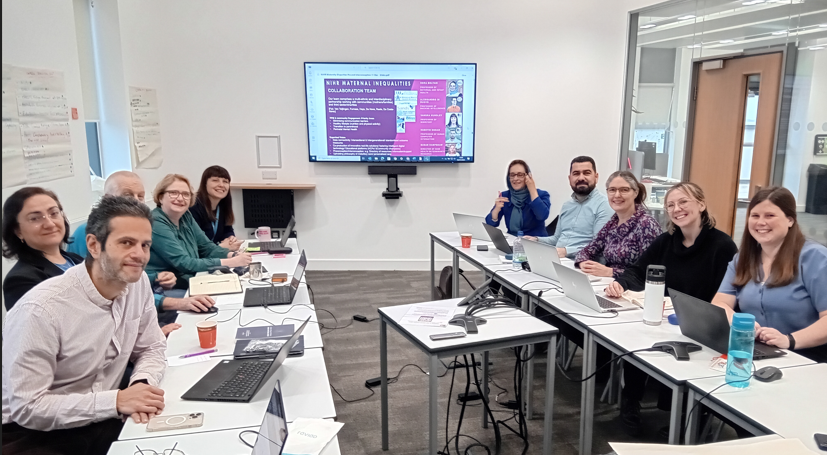
Today and yesterday (January 7-8) academics involved in MIHERC (Maternal and Infant Health Equity Research Centre), the successful interdisciplinary collaboration to address challenges in maternity care, met in Bournemouth. MIHERC is led by Sheffield Hallam University, along with Bournemouth University, South Yorkshire Digital Health Hub (SYDHH) and the Health Determinant Research Collaboration, Doncaster. In addition, a range of local and national partners are recognised. MIHERC is one of the nine groups of UK universities making up the new NIHR Challenge Maternity Disparities Consortium. This NIHR Consortium aims of tackling inequalities in maternity outcomes, focusing on inequalities before, during and after pregnancy.
Our second planning meeting highlighted our collective strengths including our expertise in community engagement and PPIE (Public & Patient Involvement & Engagement); intelligent digital solutions in maternity service delivery; research into under-served communities; and capacity building of both communities and maternity staff. The first planning meeting was held late last year at Sheffield Hallam University.
MIHERC is the only midwifery-led collaboration with a strong community engagement and digital inclusive research. MIHERC will work with various NHS Trusts as well as charities such as the Active Pregnancy Foundation, Active Dorset, and Maternal Mental Health Alliance.
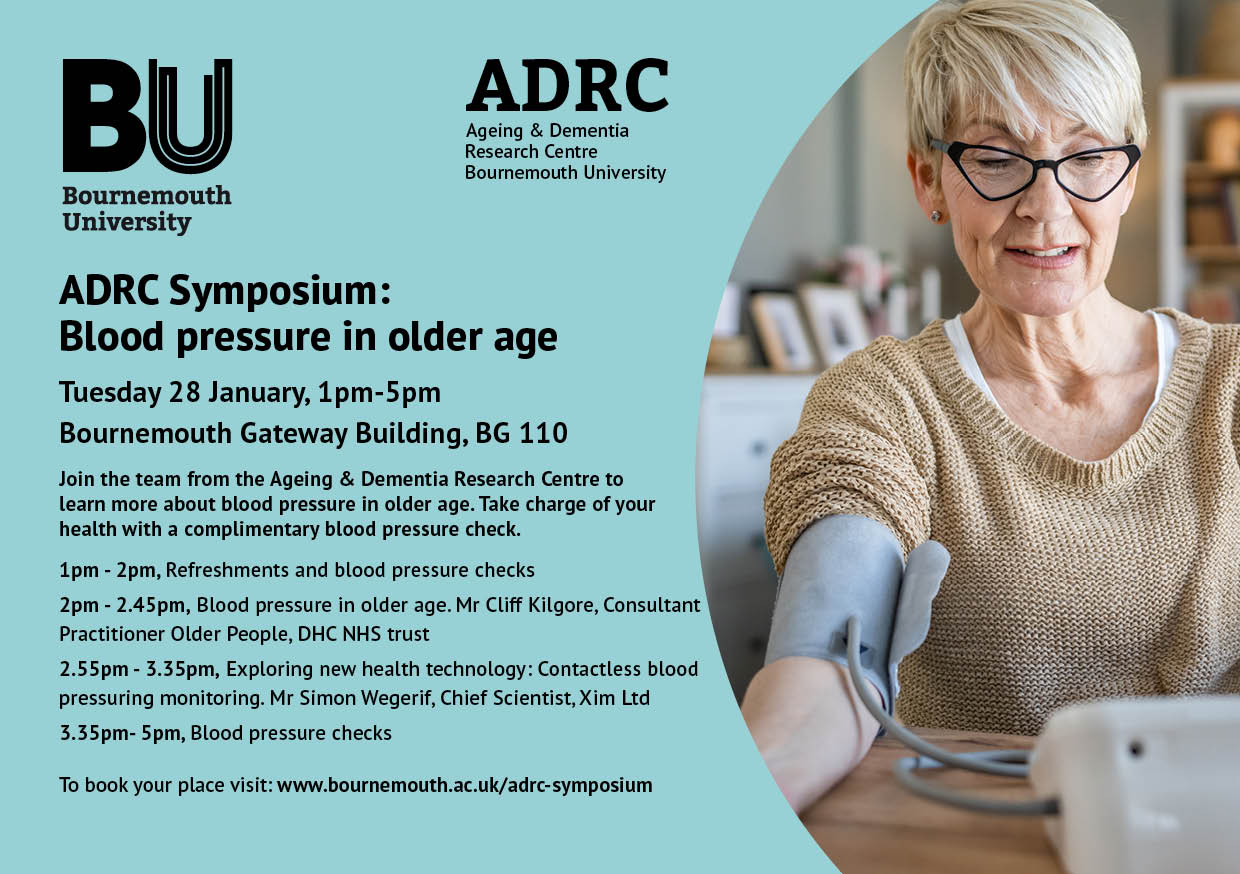
ADRC Symposium: Blood pressure in older age
Join the team from the Ageing & Dementia Research Centre to
learn more about blood pressure in older age. Take charge of your
health with a complimentary blood pressure check.
Booking now available at
http://www.bournemouth.ac.uk/adrc-symposium
New editorial Journal of Asian Midwives
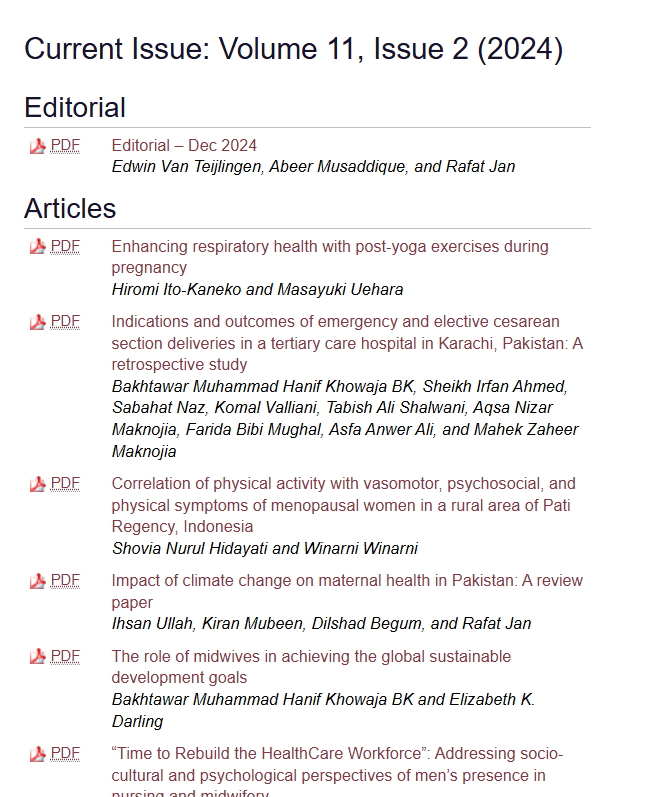
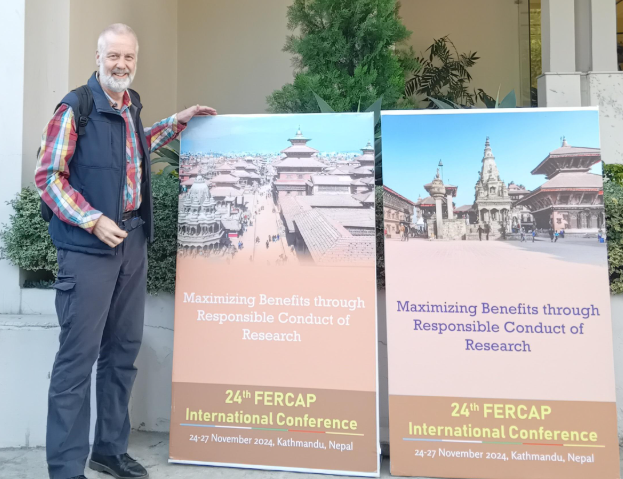
This weekend a new issue of the Journal of Asian Midwives appeared online [1]. Its latest editorial focuses in part on research ethics. The editors highlight the new World Health Organization (WHO) guidance for best practices in clinical trials [2]. The new WHO guidance was picked up at the 24th FERCAP International Conference “Maximizing Benefits through Responsible Conduct of Research” held in November 2024 in Nepal. FERCAP is the Forum for Ethical Review Committees in the Asian and Western Pacific Region.
FERCAP reminded us that research as a social activity should improve health and quality of life for both targeted and general populations. One notable message from this recent conference was the need for shorter and more comprehensible consent forms to make them user-friendly without sacrificing clarity. The other interesting development is that of so-called “decentralized clinical trials”. Decentralized or point-of-care trials can increase the diversity of clinical trial enrollment by increasing its accessibility, for example where elements of the trial are delivered at home and/or data are collected electronically by trial participants instead of researchers. These are exciting new developments in thinking about research ethics.
The Journal of Asian Midwives is Gold Open Access and hence freely available online.
Prof. Edwin van Teijlingen
Centre for Midwifery & Women’s Health
References:
- van Teijlingen, E., Musaddique, A., Jan, R. (2024) Editorial – Dec 2024. Journal of Asian Midwives, 11(2):1–2.
- World Health Organization (2024). Guidance for best practices for clinical trials. World Health Organization. https://www.who.int/publications/i/item/9789240097711 (accessed Jan. 2025)
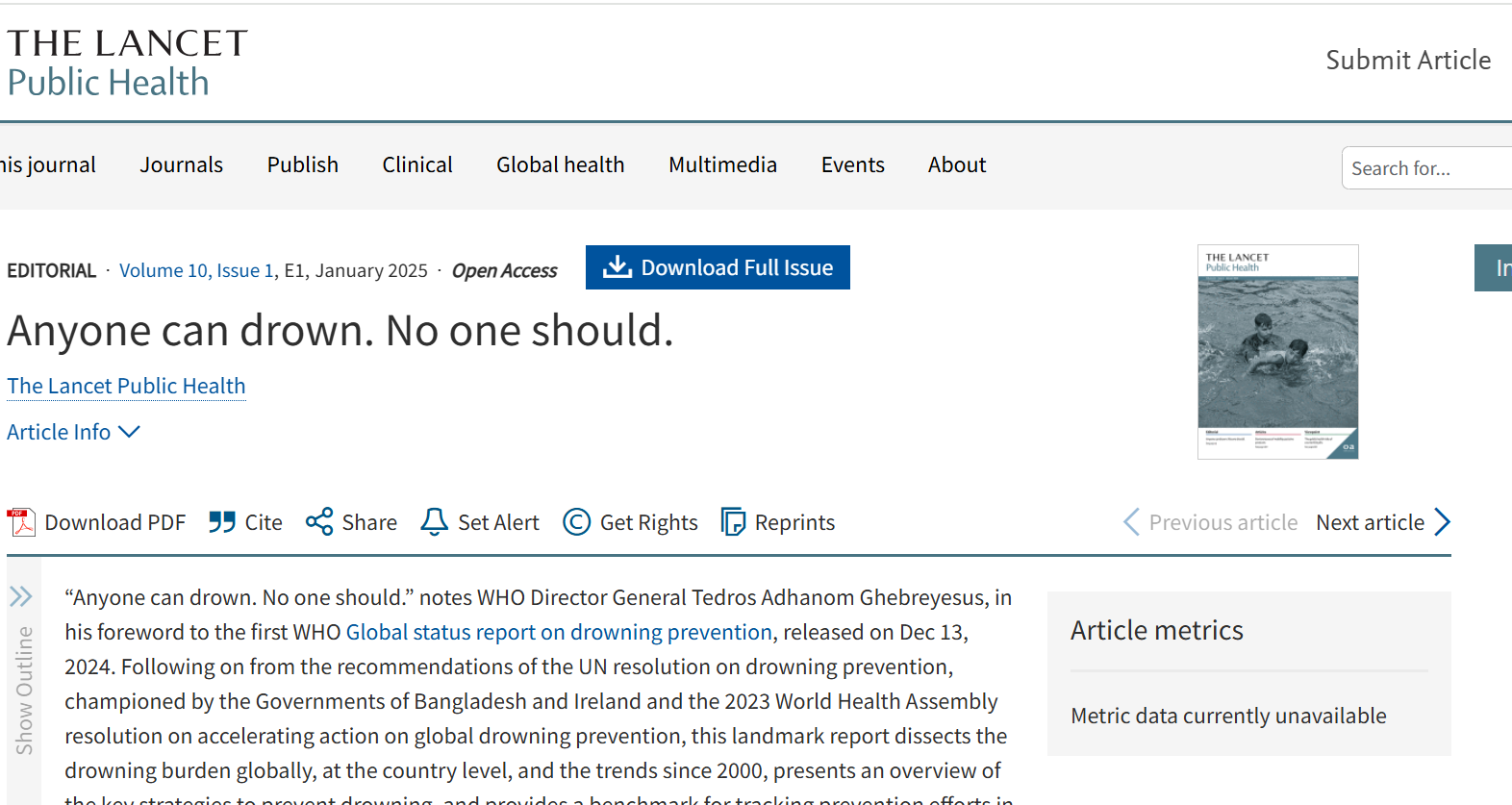
Anyone can drown. No one should!
The first editorial of The Lancet Public Health [1] highlights a public health issue close to our work in Bangladesh, namely the risk of drowning, especially in young children. “Anyone can drown. No one should” are the words of the Director General of the World Health Organization (WHO) in its first Global status report on drowning prevention, published two weeks ago (Dec. 2024). According to The Lancet Public Health this landmark report dissects the drowning burden globally, at the country level, and the trends since 2000, presents an overview of the key strategies to prevent drowning, and provides a benchmark for tracking prevention efforts in the future. Importantly, this report sheds light on a tragic, neglected, mostly preventable public health issue.
We are grateful to The Lancet Public Health for raising this important issue in 2025, since Bournemouth University (BU) is currently engaged in research project in this field called ‘Sonamoni’. This an interdisciplinary study is a collaboration with CIPRB (the Centre for Injury Prevention and Research, Bangladesh), the University of the West of England (in Bristol), the University of Southampton, the Royal National Lifeboat Institution (RNLI), and Design Without Borders (DWB) in Uganda. Sonamoni aims to design and develop interventions to reduce the number of young children drowning in Bangladesh.
This public health project is funded by the National Institute for Health and Care Research (NIHR) through its Research and Innovation for Global Health Transformation programme. For more information, visit the NIHR website.
The interdisciplinary team at BU includes three faculties and six member of staff: Dr. Mavis Bengtsson, Dr. Kyungjoo Cha, Dr. Mehdi Chowdhury, Dr. Yong Hun Lim, Mr. John Powell, and Prof. Edwin van Teijlingen. We recently published the first paper ‘Drowning Prevention should be a Public Health Issue in Nepal related to this project [2].
References:
- Anonymous (2025) Anyone can drown. No one should. The Lancet Public Health, 10(1): e1
- Hossain, M. S., Pant, P.R., van Teijlingen, E., Sedain, B., Rahman, A. (2024). Drowning Prevention should be a Public Health Issue in Nepal. International Journal of Social Sciences and Management, 11(4): 83–87.
Advancing Rehabilitation Research
Rehabilitation research has long remained in the shadows of other health/medical disciplines, despite its immense potential to reshape patient outcomes and community health. The Rehabilitation Research Symposium Series in Qatar is a significant initiative aligned with global and national frameworks such as the WHO’s (World Health Organization) Rehabilitation 2030 and Qatar’s National Vision 2030.
Advancing Rehabilitation Research: Building Capacity for Evidence-Based Practice: Level 2 Rehabilitation Research Symposium serves as a powerful response to the growing call for a comprehensive, evidence-based approach to rehabilitation, both locally and globally. The second day of this symposium, tomorrow (January 4th 2025), includes a session by Bournemouth University’s Prof. Edwin van Teijlingen. He has been invited to help build research capacity in the field of academic writing and publishing.
Bournemouth University collaboration in Qatar centres on academics and clinicians based at Hamad Medical Corporation’s (HMC). HMC has been appointed as a WHO Collaborating Centre for Healthy Ageing and Dementia, under auspices of Ministry of Public Health in Qatar. 
Study of federalisation in Nepal leading to policy brief
On Boxing Day and the following day (Dec. 27th) a member of our research team, Amshu Dhakal based at Manmohan Memorial Institute of Health Sciences (MMIHSS), presented findings from our Nepal Federal Health System Project in Kathmandu. The event, Nepal Health Conclave 2024, was organised by the Ministry of Health and Population and supported by WHO (World Health Organization) Nepal and UNFPA. The event aimed to help strengthen Nepal’s health services. This year’s conclave, themed “Bridging the Gap Between Global Expertise and National Needs”, brought together Nepalese diaspora health professionals and national stakeholders to foster collaboration and innovation in health systems.
Amshu presented two posters at the event: (1) The Impact of Decentralisation on Health Systems: A Systematic Review of Reviews which systematically reviewed how decentralisation affects health systems globally, highlighting key opportunities and challenges across WHO’s six building blocks; and (2) Transforming the Health System in Nepal: The Impact of Federalisation, which examined how the transition to a federal system reshaped Nepal’s health system, identifying gaps, opportunities, and actionable recommendations for improvement.
Our research team produced policy briefs in collaboration with government officials/stakeholders from all three levels of government. The policy briefs can be accessed at the website of our Nepal Federal Health System Project. This study was funded by the UK Health Systems Research Initiative [Grant ref. MR/T023554/1] to study the consequences for the health system of Nepal’s move from a centralised political system to a more federal government structure in 2015. This joint project was led by the University of Sheffield in collaboration with Bournemouth University, the University of Huddersfield, Canterbury Christ Church University and two institutions in Nepal, namely MMIHS and PHASE Nepal.
In late 2022 further funding was awarded by the Medical Research Foundation to Prof. Julie Balen, from Canterbury Christ Church University, to disseminate the findings of our UK Health Systems Research Initiative-funded research in Nepal. In terms of academic dissemination, we have published eight papers from this interdisciplinary project [1-8].
For and from this project, our team produced a comprehensive English-language policy brief as well as a Nepali-language version for politicians and policy-makers and civil servants in Nepal.
Prof. Edwin van Teijlingen
Centre for Midwifery & Women’s Health
References:
- Koirala, B., Rushton, S., Adhikary, P., Balen, J., et al. (2024) COVID-19 as a challenge to Nepal’s newly federalised health system: capacities, responsibilities, and mindsets, Asia Pacific Journal of Public Health (online first) https://doi.org/10.1177/1010539524125012.
- Sapkota, S., Rushton, S., van Teijlingen, E., et al. (2024) Participatory policy analysis in health policy and systems research: reflections from a study in Nepal. Health Research & Policy Systems, 22 (No.7) https://doi.org/10.1186/s12961-023-01092-5 .
- Wasti, S.P., van Teijlingen, E., Simkhada, P., et al. (2023) Selection of Study Sites and Participants for Research into Nepal’s Federal Health System, WHO South-East Asia Journal of Public Health 12(2):116-119.
- Sapkota, S., Dhakal, A., Rushton S., et al. (2023) The impact of decentralisation on health systems: a systematic review of reviews. BMJ Global Health 8:e013317. doi:10.1136/bmjgh-2023-013317.
- Wasti, S.P., van Teijlingen, E., Rushton, S., et al. (2023) Overcoming the Challenges Facing Nepal’s Health System During Federalisation: An Analysis of Health System Building Blocks, Health Research Policy & Systems 21(117) https://doi.org/10.1186/s12961-023-01033-2
- Sapkota, S., Panday, S., Wasti, S.P., et al. (2022) Health System Strengthening: The Role of Public Health in Federal Nepal, Journal of the Nepal Public Health Association 7(1):36-42.
- Adhikary, P., Balen, J., Gautam, S., et al. (2020) The COVID-19 pandemic in Nepal: Emerging evidence on the effectiveness of action by, and cooperation between, different levels of government in a federal system, Journal of Karnali Academy of Health Sciences 3 (3): 1-11.
- Rushton, S., Pandey, S., van Teijlingen, E., et al. (2021) An Investigation into the Impact of Decentralization on the Health System of Nepal. Journal of Manmohan Memorial Institute of Health Sciences, 7(1): 3–14. https://doi.org/10.3126/jmmihs.v7i1.43146
Academic writing: Six encouragements
The Festive Season is a good time to clean up and clear out the pile of paper collected throughout the proceeding year. One the many pieces of potentially useful information I archived was a three-page article from the April edition of the monthly magazine Prima [1]. Most certainly not the most academic magazine, but useful all the same, as it was a piece encouraging readers to write their own book.
The six steps or recommendations in Prima were:
- Figure out what you want to write;
- Make time to write;
- Find your writing method;
- Forget about perfection;
- Keep going (even when the going gets though);
- Find writing buddies!
I found it interesting as these six steps in this piece overlap a lot with the advice we have been giving to budding academics for years [2]. 
Prof. Edwin van Teijlingen
Centre for Midwifery & Women’s Health (CMWH)
References:
- Gibson, F. (2024) How to write a novel and get published, Prima (April edition): 38-40.
- Wasti, S.P., van Teijlingen, E., Simkhada, P., Hundley, V. with Shreesh, K. (2022) Writing and Publishing Academic Work, Kathmandu, Nepal: Himal Books
Dr. Catalin Brylla Leads Diversity and Inclusion Programme for Visible Evidence
Dr. Catalin Brylla, Principal Lecturer in Film and TV (FMC) has been appointed Chair of the Visible Evidence Diversity, Equity and Inclusion Advisory Committee. The committee’s programme was launched at the 2025 Visible Evidence Conference at Monash University in Melbourne.
Visible Evidence (VE) is the largest and oldest documentary studies community, having produced a wealth of research by renowned scholars, such as Bill Nichols, Michael Renov, Brian Winston, Patricia Zimmerman and Kate Nash. It has a long history of interdisciplinary and transdisciplinary research, fostering links between the academy and the media industry, and fusing documentary research, practice and education.
The VE DEI Advisory Committee has been established by the VE Governing Council to diversify its members and expand its outreach. The committee consists of Catalin Brylla as chair, Slava Greenberg, Tory Jeffay, Patrick Kelly and Geoffrey Lokke. Brylla has drawn up a plan to reach early-career researchers, Global South scholars/practitioners and other underrepresented academic and non-academic communities. He draws on his experience as Chair of the Society for Cognitive Studies of the Moving Image DEI Committee, founding member of the Journal of Media Practice’s Diversifying and Decentralizing Research Working Group, and Deputy Director of BU’s Centre for the Study of Conflict, Emotion and Social Justice.
The committee’s programme was launched at the 30th Visible Evidence Conference at Monash University, Melbourne, in December 2025. It featured a roundtable with scholars and media practitioners Dr. Shweta Kishore, Dr. Zoe Meng Jiang, Prof. Kate Nash and Prof. Pratāp Rughani, who provided their perspective of diversity and inclusion. The conference also featured the committee’s new mentorship initiative, which pairs up early-career members—including graduate students, junior faculty members and emerging filmmakers—with mid-career and senior scholars or media professionals.

Image above: Prof. Kate Nash presents data on institutional affiliations of first authors submitting to the journal Studies in Documentary Film; there is a distinct lack of submission from Global South scholars.
Some of the committee’s action plans include:
- Organising a DEI-related roundtable and workshop at every VE conference, featuring scholars from the Global South
- Organise career development ‘clinics’ for early-career researchers
- Create a VE YouTube channel that features recorded conference presentations for people who cannot attend the conference
- Liaise with journal editors to commission special issues from Global South scholars
- Monitoring VE membership and conference participation regarding institutional affiliations and countries
The VE DEI Committee’s programme was launched at Monash University Melbourne, on the unceded lands of the Bunurong Boon Wurrung and Wurundjeri Woi Wurrung peoples of the Eastern Kulin Nation. We pay our deepest respect to the traditional owners of this land and acknowledge their ongoing relationship with the lands and waterways. We pay our respect to all Indigenous people, and their elders past and present.
Two new BU midwifery publications
This past week, as part of her work with McMaster University in Canada, Bournemouth University’s (BU) Centre for Midwifery & Women’s Health (CMWH) postgraduate PhD student Joanne Rack published a paper in BMJ Open. This Open Access paper explores the strengths and weaknesses of midwifery research in Canada [1]. Joanne is currently doing a Clinical Doctorate in the specialising in personalised care for women of advanced maternal age. This PhD study is matched-funded by University Hospitals Dorset NHS Foundation Trust and Bournemouth University [BU].
Her PhD is supervised and supported by Professors Vanora Hundley and Edwin van Teijlingen in CMWH, Prof. Ann Luce, deputy dean in BU’s Department of Communication & Journalism as well as Dr. Latha Vinayakarao in Poole Maternity Hospital.
The second midwifery paper ‘Importance of Expanding Midwifery-led Units and Midwifery Care in Reducing Maternal Deaths in Nepal‘, which is also Open Access, has a different international focus, this time on Nepal [2]. The paper is co-authored by Dr. Preeti Mahato and Prof. Edwin van Teijlingen. Dr. Preeti Mahato, formerly in BU’s Faculty of Health & Social Sciences, is currently based at Royal Holloway, University of London.
References:
- Ruby, E., Brunton, G., Rack, J., et al. (2024). Exploring the landscape of Canadian midwifery research: strengths, gaps and priorities – results of a scoping review. BMJ Open 14:e087698. doi:10.1136/bmjopen-2024-087698
- Mahato, P., van Teijlingen, E. (2024). Importance of Expanding Midwifery-led Units and Midwifery Care in Reducing Maternal Deaths in Nepal. Europasian Journal of Medical Sciences 6(1). https://doi.org/10.46405/ejms.v6i1.537
New publications Dr. Pramod Regmi
Dr. Pramod Regmi in the Centre for Wellbeing & Long-Term Health published two new academic papers just before Christmas on health and migration. The first one was called ‘Health and Wellbeing Among Nepali Migrants: A Scoping Review’ [1], and the second one has the title ‘Returning Home to Nepal after Modern Slavery: Opportunities for Health Promotion’ [2]. Both papers are Open Access and, hence, freely available online!
References:
- Mahato, P., Bhusal, S., Regmi, P., van Teijlingen, E. (2024). Health and Wellbeing Among Nepali Migrants: A Scoping Review. Journal of Health Promotion, 12(1): 79–90. https://doi.org/10.3126/jhp.v12i1.72699
- Paudyal, A.R., Harvey, O., van Teijlingen, E., Regmi, P. R., Sharma, C. (2024). Returning Home to Nepal after Modern Slavery: Opportunities for Health Promotion. Journal of Health Promotion, 12(1): 125–132. https://doi.org/10.3126/jhp.v12i1.72713
First publication FHSS postgraduate student Anjana Paudyal
Congratulations to Anjana Paudyal, PhD student in the Faculty of Health & Social Sciences (FHSS), on the first publication from her PhD work. Anjana’s PhD research focuses on human trafficking in Nepal. Human trafficking is a form of modern slavery and it is a common crime aggravated by poverty, political instability, illiteracy, unemployment, as well as climate change. Despite being a global problem, modern slavery is understudied and poorly understood. Victims of modern slavery are exploited and can experience significant physical, psychological, or sexual, and reproductive health problems. Until recently, there has been little research, especially in low-income countries such as Nepal, around the need and opportunities for health promotion and education in this vulnerable group.
Her PhD fits in with Bournemouth University’s collaboration with the Unites States-based La Isla Network, the Johns Hopkins University Bloomberg School of Public Health and the Nepal Development Society. Led by La Isla Network, we are leading the first-ever international effort to research and address trafficking among Nepalese labour migrants. The work is funded by a $4 million cooperative agreement awarded by the U.S. Department of State’s Office to Monitor and Combat Trafficking in Persons, International Programs.
Reference:
- Paudyal, A. R., Harvey, O., Teijlingen, E. van, Regmi, P. R., Sharma, C. (2024). Returning Home to Nepal after Modern Slavery: Opportunities for Health Promotion. Journal of Health Promotion, 12(1), 125–132. https://doi.org/10.3126/jhp.v12i1.72713
Appreciating Appreciative Inquiry
Prof. Gabriele Bammer, the editor of the i2Insights blogs, highlighted in her ninth annual review that a post created by Bournemouth University academics was one of the website’s most popular contributions in 2024. This BU contribution ‘Learning to use Appreciative Inquiry‘ by Dr. Rachel Arnold is in the top eight most viewed this year – in fact it’s the second most viewed blog!
Dr. Rachel Arnold has been lead author on several research papers in the field of Appreciative Inquiry [1-2], in collaboration with current and former Bournemouth Academics, Professor Emerita Sue Way, Dr. Preeto Mahato (now at Royal Holloway, University of London) and Prof. Edwin van Teijlingen. Rachel has also been a contributor to a major textbook in the field [3-4].
References:
- Arnold, R., Way, S., Mahato, P., van Teijlingen, E. (2024) “I might have cried in the changing room, but I still went to work”. Maternity staff managing roles, responsibilities, and emotions of work and home during COVID-19: an Appreciative Inquiry, Women & Birth 37: 128-136.
- Arnold, R., Gordon, C., Way, S., Mahato, P., van Teijlingen, E. (2022) Why use Appreciative Inquiry? Lessons learned during COVID-19 in a UK maternity service, European Journal of Midwifery 6 (May): 1-7.
- Hodgkiss, D., Quinney, S., Slack, T., Barnett, K., Howells, B. (2024a) Appreciating Health and Care: A practical Appreciative Inquiry resource for the Health and Social Care sector, Forres: Appreciating People; ISBN: 978-1-9160267-6-6
- Hodgkiss, D., Quinney, S., Slack, T., Barnett, K., Howells, B. (2024b) Appreciating Health and Care: AI in practice, Forres: Appreciating People.
BU academics’ paper read 170,000 times!
This week ResearchGate notified us that our methods paper ‘The Importance of Pilot Studies‘ [1], published 22 years ago in The Nursing Standard,
has now been read 170,000 times! Prof. Vanora Hundley and Prof. Edwin van Teijlingen wrote this more elementary paper after publishing an in-depth academic paper on a pilot study into assessing maternity care in Scotland [2]. The latter paper described their learning from a pilot study which we conducted prior to a cross-national study of births in Scotland.
The methods paper in the Nursing Standard is also their most highly cited paper. Today Google Scholar lists it with 2,035 citations, interestingly this is not the case on SCOPUS as The Nursing Standard is not listed on SCOPUS. Researchers seem to be quoting this paper in their research methods section when they have done pilot or feasibility study for a larger-scale study.
References:
- van Teijlingen E, Hundley, V. (2002) The importance of pilot studies, The Nursing Standard 16(40): 33-36. Web: nursing-standard.co.uk/archives/vol16-40/pdfs/vol16w40p3336.pdf
- van Teijlingen E, Rennie, AM., Hundley, V, Graham, W. (2001) The importance of conducting & reporting pilot studies: example of Scottish Births Survey, Journal of Advanced Nursing, 34: 289-95.
Successful first session in the ADRC seminar series
We were thrilled to host the first of our new ADRC seminar series last Wednesday and welcomed a range of attendees including academics, practitioners, students and community members.

Join CMWH for their December seminar, discussing two key topics
Join our December seminar on Teams, any questions emailCMWH@bournemouth.ac.uk
Research fundamentals: Its a process – not a destination
What can I say? Achieving the funding with the British Academy, and embarking on the research has been one of my highlights of my academic career! The project has just completed, but I’d like to tell you a little bit more how it all happened, what it means to me, and offer some light-hearted moments, if I may.
First off – My journey to achieving funding was not an easy route. Looking at my data, I achieved success with the British Academy after a number of unsuccessful applications (over thirteen years) with the ESRC, the AHRC, Leverhulme, the Nominet trust, and a few with the British Academy as well. Well actually, It took seven failed bids with the British Academy, before success. Persistence, inevitably is a key facet, and it may not be as simple as, ‘ill respond to the feedback, and next time I will be successful’. As we know feedback can be highly subjective, and whilst you might get an idea of what you should have done better, there are no guarantees, or necessarily templates to follow. For example I have looked a good range of successful bids, and whilst you might get an idea of what might need to be presented, sometimes that can be misleading. You have your own voice, style and mode of narrative delivery, and you should not forsake that in seeking success. You need to sell your ideas, as much as yourself. I should know more about that, as prior to my academic career, I worked as a sales executive for quite a few years, and I have learned that its all about personal credibility, a product that offers good value for money, availability and endurance.
Writing funding bids, is a bit like working in the sales industry. You do need to get the order, but you have to be continually selling. Its about the process of continually selling, as much as the destination of the order.
So maybe learn from my experiences, which I am going to try and work through in this short blog.
There is no magical recipe to achieve external funding, but I think the most significant is ‘Don’t Give up’ in the immortal words of Peter Gabriel and Kate Bush Success can never be guaranteed, but you need to treat it like a process rather than a destination that is essential for you to arrive at.
Over the years that I have submitted bids, it’s been upsetting waiting for the deadline to pass, checking emails to see if you are going to get that magical acceptance message, and many times receiving the sad news, that ‘this time your bid was not successful, and you should not be deterred from trying again’. This seems like the end of a journey, but I would argue – for whatever reason you think you have been turned down, you should treat it like a new beginning, a chance to rework – rethink – ‘get back on your feet’ and ‘dust off your clothes’. As Kelly Clarkson says ‘What Doesn’t kill You Makes You Stronger’. OK that can seem a bit trite, because it can be devastating feeling rejected, and sometimes you don’t recover, and I think this is the essence of what we need to confront, in our research endeavors. It’s great to feel emboldened by a new sense of animation, where you start again, and you clearly see what you now need to do, but it’s not that easy. For example you should be wary not to Climb Every Mountain – you do need to be selective, and maybe you have missed an easier route, to where you want to go.
As I have learned over the many years of not being successful with external funding, there are three key elements that we need to consider:
- Your ability and identity – as a researcher or a personality.
- Your desire – what does this mean to you and what are you really going to achieve.
- The means – what are the pathways, the obstacles and the contexts that we need to work through to get where we want to.
For me most of my previous unsuccessful funding bids were ‘theoretical’, mostly I was thinking though how ideas can change though research. My ability, my desire and the means were too focused on my experiences of research, rather than what’s out there in the ‘real world’. The big shift for me was to conceive that research should be about process, impact and participants, rather than necessarily theories, debates and destinations.
So let’s take my research ideas as an example. Over the years I have researched LGBT identity in the media. I have produced a number of publications, presented at international conferences, and established an academic professional identity. This is certainly useful – to be perceived as an appropriate person to do funded research, but you need to demonstrate that you may be aware of what’s happening in the wider world, and what needs to be looked at.
LGBT studies is highly significant, but it can’t be just theoretical. How many times have I attended conferences and witnessed excellent conference papers with stellar academic foundations, often demonstrating the latest theories, mostly in the past focusing on gender performative theory, and more recently looking at affect theory. I am astounded by the academic rigor of these papers, and clearly the presenters have excellent experience in textual analysis, but mainly these texts are demonstrating academic potential.
While writing for funded research needs theoretical foundations, and sometimes developing a theory model may be a highly significant outcome, to make impact in the bid you need to articulate real world contexts, that may be messy, slippery and incomplete, but may offer a view or insight into something that we are missing.
In my research area the experiences of LGBTQ asylum claimants came to my attention though researching documentaries. Rather than focusing on representation, or even performance, I started thinking about experience. What were the experiences of LGBTQ asylum claimants in the UK? I had seen documentaries about the experiences of LGBTQ refugees in Europe, such as Exiled: Europe’s Gay Refugees at the same time I had seen the phenomenal documentary Our Journey to Europe which whist does not feature openly gay or queer refugees does frame the use of mobile technology. I then produced a paper called Queer Youth Refugees and The Pursuit of the Happy Object: documentary, technology and vulnerability, published in the book Youth Sexuality and Citizenship. Later I worked with Ieuan Franklin on a paper for Richard Berger who was curating a special issue on youth and refugees for the journal Interactions: Studies in Communication & Culture. Our paper was titled ‘Undocuqueer’ movement and DREAMers: activist online space and the affective queer body, which focused on the Undocuqueer Movement in the United States, where undocumented queer youth are struggling for rights.
This experience of new research that linked real world experiences of LGBTQ asylum claimants, made me think more about real world contexts. I wanted to find out what was happening to LGBTQ asylum claimants in the UK. With myself as lead investigator and Ieuan Franklin as co-investigator, we produced the funding application for the British Academy, consulting with Alan Mercel Sanca of LGB&T Equality Network Dorset who had some links with NGOs that supported LGBTQ asylum claimants. So working with a practice oriented stakeholder was incredibly useful, and led me to theorize who might be regional participants in the project. That said since we started the project, many of the participants changed, and in fact we ended up with a very different range of stakeholders. Also because of Covid-19 our project ended up being fundamentally different. We had planned to visit a number of regional NGOs, but it all ended up being done on Zoom. In many ways this was a benefit, as we were able to reach a far wider range of contacts. Added to this over the course of the project we established links with the regional NGOs and formed a prototype network across the UK, and I am pleased to report many of the participants are now supporting us in developing a follow on bid with the Nuffield Foundation.
Having now completed the British Academy project, I feel quite differently about funding applications. As principal investigator, you need to consider who is the best person to do the research, and though hiring our fabulous post-doctoral research assistant Mengia Tschalaer on the British Academy Project, I quickly learned what a pleasure it is to hire someone who is passionate about the subject area, and can be a great asset. At many points Mengia was driving the research as much as Ieuan or I. What a wonderful team member. So:
Point One – maybe you are not doing all the research, and hiring motivated others makes perfect sense.
Point Two – (which is a corollary of point one) – don’t make it all about you, look for needs in society, not necessarily just ways of looking.
Point Three – don’t be afraid to fail in bidding, research is a process not a destination. Even failed bids can lead to great outcomes for you.
On that note one of my failed applications to the British Academy was a proposal for book on the AIDS activist Pedro Zamora. Although this was never funded externally, and it was researched in my own research time with support from the Fusion Fund, this is one of my favourite achievements. Notably when I launched the book at GLBT Historical Society in San Francisco, it felt like a defining moment, especially when I was interviewed in the Bay Area Reporter.
So don’t think of funding applications as destinations that you must reach, but treat each application as a process based journey, where you will develop your ideas, which will be useful, whatever happens.
Writing funding applications is inherently personal, you spend considerable time working on the application, not really knowing if you are going to be successful, but you try.
And in the immortal words of the ethereal Sandy Denny of Fairport Convention, lets always give it ‘One More Chance’
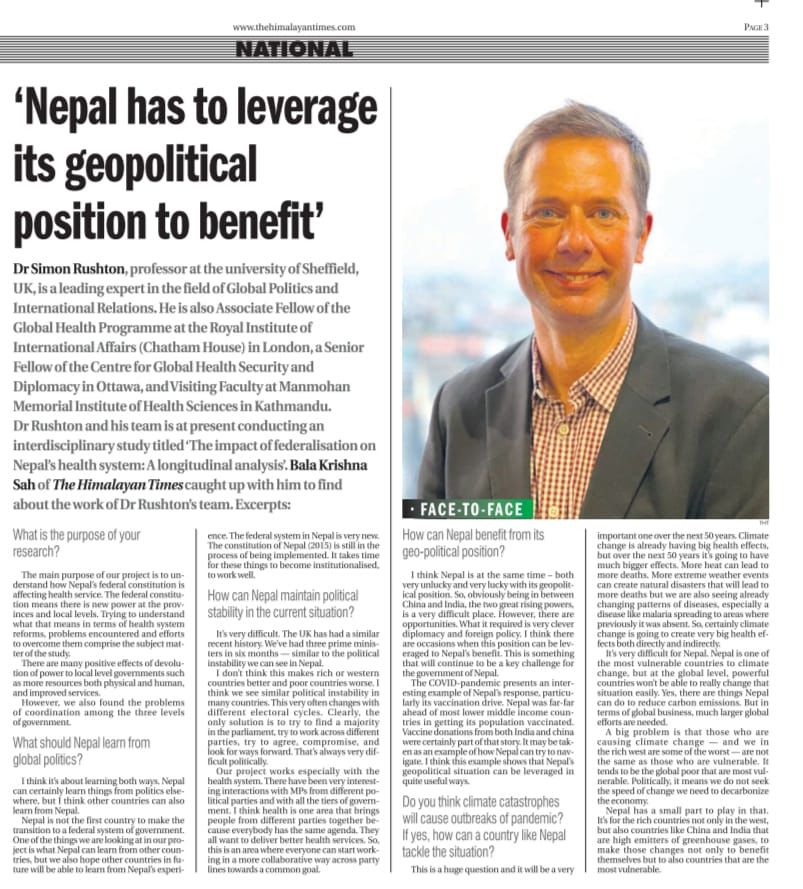
Last month we reported on this Bournemouth University Research Blog (click here!) that Ms. Amshu Dhakal, presented findings from our Nepal Federal Health System Project in Nepal. Amshu’s presentation at the Nepal Health Conclave 2024, organised by the Ministry of Health and Population and supported by WHO (World Health Organization) Nepal and UNFPA, resulted in an online article in Nepal. This article in Nepali in Swasthya Khabar Patrika features lessons learnt and evidence from our research project “The Impact of Federalisation on the Health System of Nepal.”
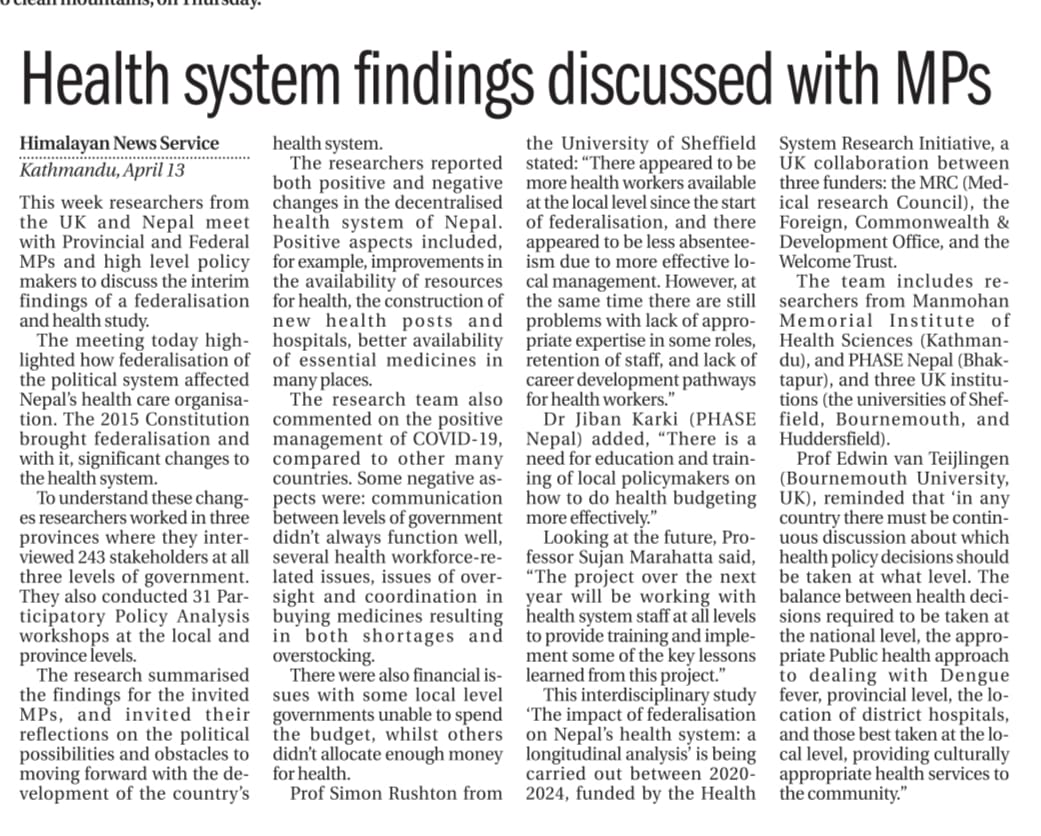
This is one of several news articles from this project which have appeared in both English and Nepali in national media in Nepal.
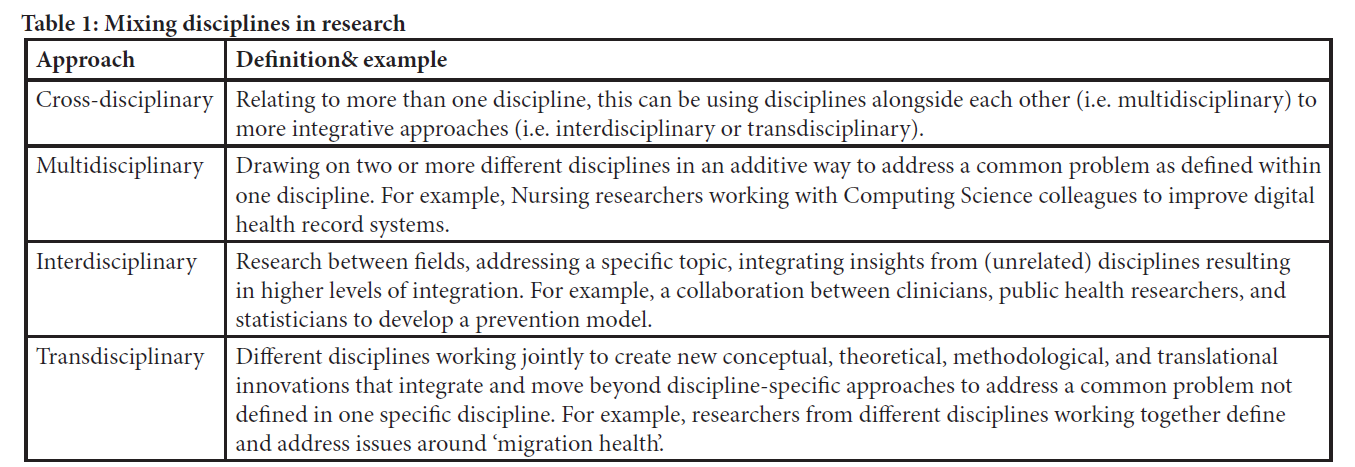
Our interdisciplinary research project ‘


3C Event: Research Culture, Community & Cookies – Tuesday 13 January 10-11am
Dr. Chloe Casey on Sky News
Final Bournemouth University publication of 2025
On Christmas Day in the Morning…
New Nepal scoping review on maternal & neonatal health
ECR Funding Open Call: Research Culture & Community Grant – Application Deadline Friday 12 December

MSCA Postdoctoral Fellowships 2025 Call

ERC Advanced Grant 2025 Webinar
Horizon Europe Work Programme 2025 Published
Update on UKRO services
European research project exploring use of ‘virtual twins’ to better manage metabolic associated fatty liver disease