On World Refugee Day 2025, Friday 20 June, the new Maternal and Infant Health Equity Research Centre (MIHERC) website was launched. MIHERC is a hub for research, collaboration and action on maternal and infant health equity. MIHERC) is a collaborative effort between Sheffield Hallam University, Bournemouth University and City of Doncaster Council working to reduce health inequalities for mothers and babies. This year’s World Refugee Day’s theme, hashtagSolidarity, reflects MIHERC’s mission to stand with all mothers and babies – especially those facing health and social inequalities or barriers to care.

Category / Health, Wellbeing & Society
Academics write for newspaper in Nepal
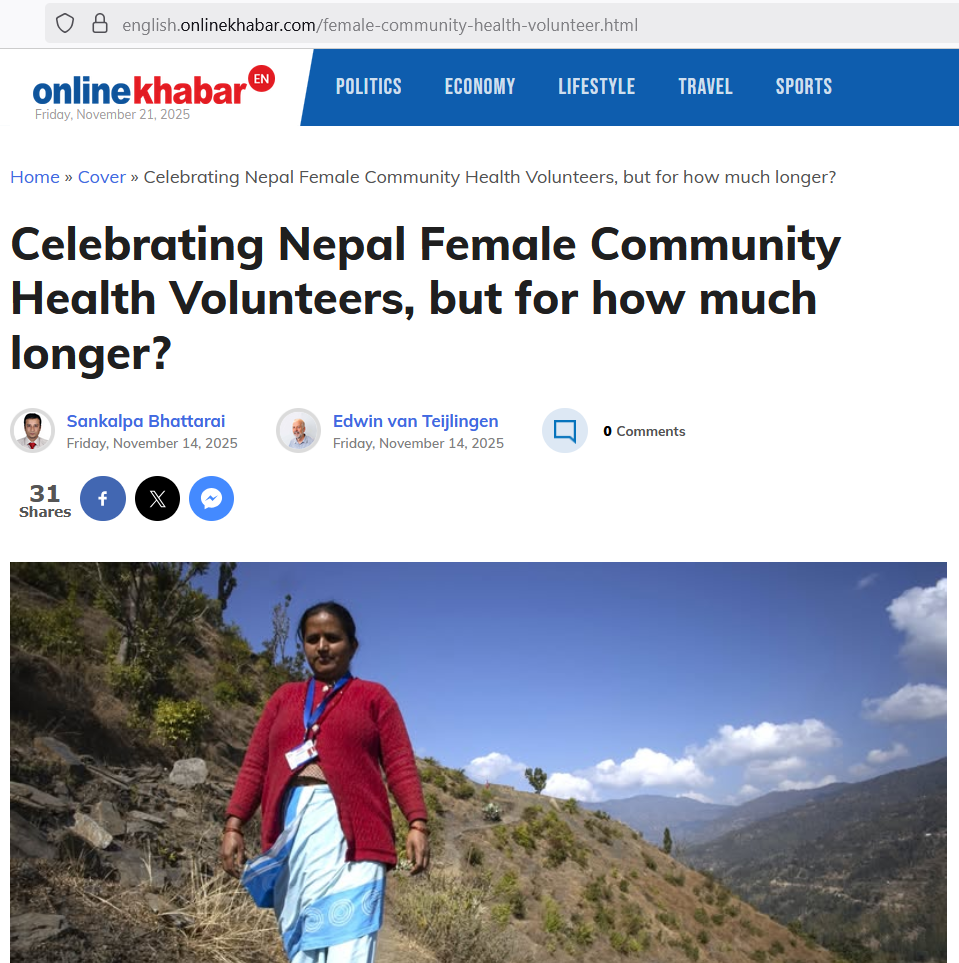
Yesterday the online newspaper Online Khabar in Nepal published an opinion piece in English written by three Bournemouth University academics working with a colleague in Kathmandu. This interdisciplinary piece ‘Resilient through experiences: Unlocking the entrepreneurial prowess of Nepal’s left-behind women‘ brings together ideas gained from many different studies and disciplines. The three authors from Bournemouth University are: Dr. Sukanya Ayatakshi-Endow, Prof. Edwin van Teijlingen, and Dr. Pramod Regmi, and they collaborated with Dr. Rashmee Rajkarnikar who is based at Nepal’s oldest and largest university, Tribhuvan University. The four authors brings insights from economics, business studies, sociology, women’s studies, migration studies and health.
New paper published on disability in women & girls
Yesterday (25 June) the online journal PLoS One published ‘Life-time experience of violence among women and girls living with disability in Nepal‘ our latest study on disability in Nepal [1]. This cross-sectional study was conducted in 28 municipalities representing all seven provinces as well as all three ecological regions of Nepal. A total of 1,294 women and girls with disability aged 15–59 years participated in 2021. We trained local enumerators using the KoBo application on smartphones or tablets. Both written and oral informed consent was sought from all participants. Cross-tabulations were performed in STATA 18 to determine the distribution of the prevalence of violence. Also, bivariable and multivariable logistic regression models were fitted to establish association between the participants’ characteristics and odds of experiencing violence.
Overall, 457 (35.32%) women living with disabilities had ever experienced violence at a point in their lifetime. Psychological/emotional violence was the most prevalent violence (74.40%) followed by physical violence (31.07%) and denial of services (28.67%). Age was positively associated with the likelihood of experiencing violence. Women belonging to the Brahman/Chhetri ethnic group had reduced odds of violence [AOR = 0.56; 95%CI: 0.37–0.85] compared to Hill Dalits. Divorced or separated women showed a markedly higher likelihood of experiencing violence [AOR = 6.69; 95%CI: 2.31–19.40] compared to currently married women. Participants who had not witnessed violence against other women exhibited significantly higher odds of experiencing violence [AOR = 1.86; 95%CI: 1.20–2.89]. Women living in the Koshi province [AOR = 4.04; 95%CI: 2.54–6.42], Madhesh province [AOR = 2.16; 95%CI: 1.15–4.08] and Bagmati province [AOR = 2.21; 95%CI: 1.41–3.46] reported significantly higher odds of experiencing violence compared to those in Karnali.
The paper concludes oncludes that age, ethnicity, marital status, and provincial residence are significant predictors of violence among women and girls living with disability in Nepal. Interventions aimed at addressing violence against women living with disability in Nepal must prioritize older women and those who were previously married. Also, policy-makers may want to consider giving priority must be given to those provinces where the prevalence and risk of experiencing violence is highest.
The study was funded The United Nations Women Trust Fund, and the paper is freely available in the Open Access journal. We previously published on research into disability in Nepal in 2023 [2].
Prof. Edwin van Teijlingen
Centre for Midwifery & Women’s Health
Visiting Faculty, Centre for Disability Studies, Mahatma Gandhi University, Kerala, India.
References:
- Simkhada P, Basnet S, Sharma S, van Teijlingen E, Wasti SP, Dahal T, et al. (2025) Life-time experience of violence among women and girls living with disability in Nepal. PLoS One 20(6): e0326659. https://doi.org/10.1371/journal.pone.0326659.
- Simkhada, P, Shyangdan, D, van Teijlingen E, Kadel, S, Stephen, J., Gurung, T. (2013) Women’s Knowledge & Attitude towards Disability in Rural Nepal. Disability & Rehabilitation 35(7): 606-13. http://informahealthcare.com/doi/abs/10.3109/09638288.2012.702847
Global Consortium for Public Health Research 2025
This week the 3rd Annual Meeting of the Global Consortium for Public Health (GCPHR) takes place at the University of Huddersfield on June 25th-26th. GCPHR 2025 was attended by people involved in global health research from the UK, India, Nepal, Qatar, and Ghana. Building on the success of the 2023 inaugural two-day meeting and the second annual event in 2024, the 2025 meeting brought together a diverse community of health researchers, practitioners, policy-makers and global health leaders. This initiative has as its main aim to facilitate the exchange of knowledge, promote innovation, and strengthen international collaboration.
Bournemouth University academics have been involved since GCPHR’s inception, and this year Prof. Edwin van Teijlingen from the Centre for Midwifery & Women’s Health (CMWH) contributed to a panel discussion on ‘Innovating Tomorrow: National and Global Research in the Age of AI’. He presented around the pros and cons of Interdisciplinary Research in Global Health. Together with colleagues Edwin has published several papers on interdisciplinary research [1-3] and collaborative writing of research output with a range of colleagues from different disciplines [4-5].
Prof. Padam Simkhada from the University of Huddersfield (and Visiting Faculty in BU’s Faculty of Health & Social Sciences outlined the recently awarded British Academy grant on ‘Evidence-based Policy-Making in Nepal’. The latter project, which includes BU’s Dr. Pramod Regmi as co-investigator, also has policy-makers in Nepal as collaborators, giving it great potential to become a REF Impact Case-Study.
References:
- Shanker, S., Wasti, S.P., Ireland, J., Regmi, P., Simkhada, P., van Teijlingen, E. (2021) The Interdisciplinary Team Not the Interdisciplinarist: Reflections on Interdisciplinary Research, Europasian Journal of Medical Sciences 3(2): 1-5. https://doi.org/10.46405/ejms.v3i2.317
- van Teijlingen, E., Regmi, P., Adhikary, P., Aryal, N., Simkhada, P. (2019). Interdisciplinary Research in Public Health: Not quite straightforward. Health Prospect, 18(1), 4-7. https://doi.org/10.3126/hprospect.v18i1.19337
- Wasti, S. P., van Teijlingen, E., Simkhada, P. (2020) Public Health is truly interdisciplinary. Journal of Manmohan Memorial Institute of Health Sciences, 6(1):21-22.
- Harvey, O., van Teijlingen, A., Regmi, P.R., Ireland, J., Rijal, A., van Teijlingen, E.R. (2022) Co-authors, colleagues, and contributors: Complexities in collaboration and sharing lessons on academic writing, Health Prospect 21(1):1-3. https://www.nepjol.info/index.php/HPROSPECT/article/view/39320/31432
- Hundley, V., Luce, A., Simkhada, P., van Teijlingen, E. (2022) Collaborative Writing for Publication, In: Wasti, S.P., et al. (Eds.) Academic Writing and Publishing in Health & Social Sciences, Kathmandu, Nepal: Himal Books: 15-19.
Workshop on Domiciliary Care Worker Training: Virtual Reality for DRA
Event Date and time: Tuesday, 15 July 2025, 1200-1600 GMT
Event Location: Bournemouth Gateway Building, St Pauls Lane, Bournemouth, BH8 8GP Room BG
(Refreshments and Lunch will be provided)
Join us to explore the use of Virtual Reality (VR) for training and evaluating dynamic risk assessment (DRA) in domiciliary care settings.
This stakeholder workshop will seek insights on the following research questions:
- How does the domiciliary care sector and FE colleges currently train and assess their workforce/students to risk assess in a patient’s home?
- How can a VR app be used by the domiciliary care sector and FE colleges to improve the learning and evaluation of dynamic risk assessment (DRA) skills?
- To what extent can VR DRA improve DCWs’ (domiciliary care workers) awareness of risks in a patient’s home?
Featured Speakers (TBC):
- Skills for Care, the strategic workforce development and planning body for adult social care in England.
- Partners in Care BCP Dorset
- BU Nursing Academics
- Demo of BU’s VR for DCW DRA prototype
Who Should Attend?
- Domiciliary care providers
- Workforce Educators
- Tech innovators in healthcare
- Government Policy / CQC professionals
About CfACTs+ Project
This project explores how creative technologies like VR can transform training, improve operational efficiency, and support workforce development; see:
Reserve Your Spot Today!
This event is free, but places are limited.
Register via Eventbrite
https://www.eventbrite.co.uk/e/workshop-on-domiciliary-care-worker-training-virtual-reality-for-dra-tickets-1433020275219?aff=oddtdtcreator
Event Funded by:
BU Early Career Researcher Network (ECRN) & Research Knowledge Exchange Development Framework (RKEDF)
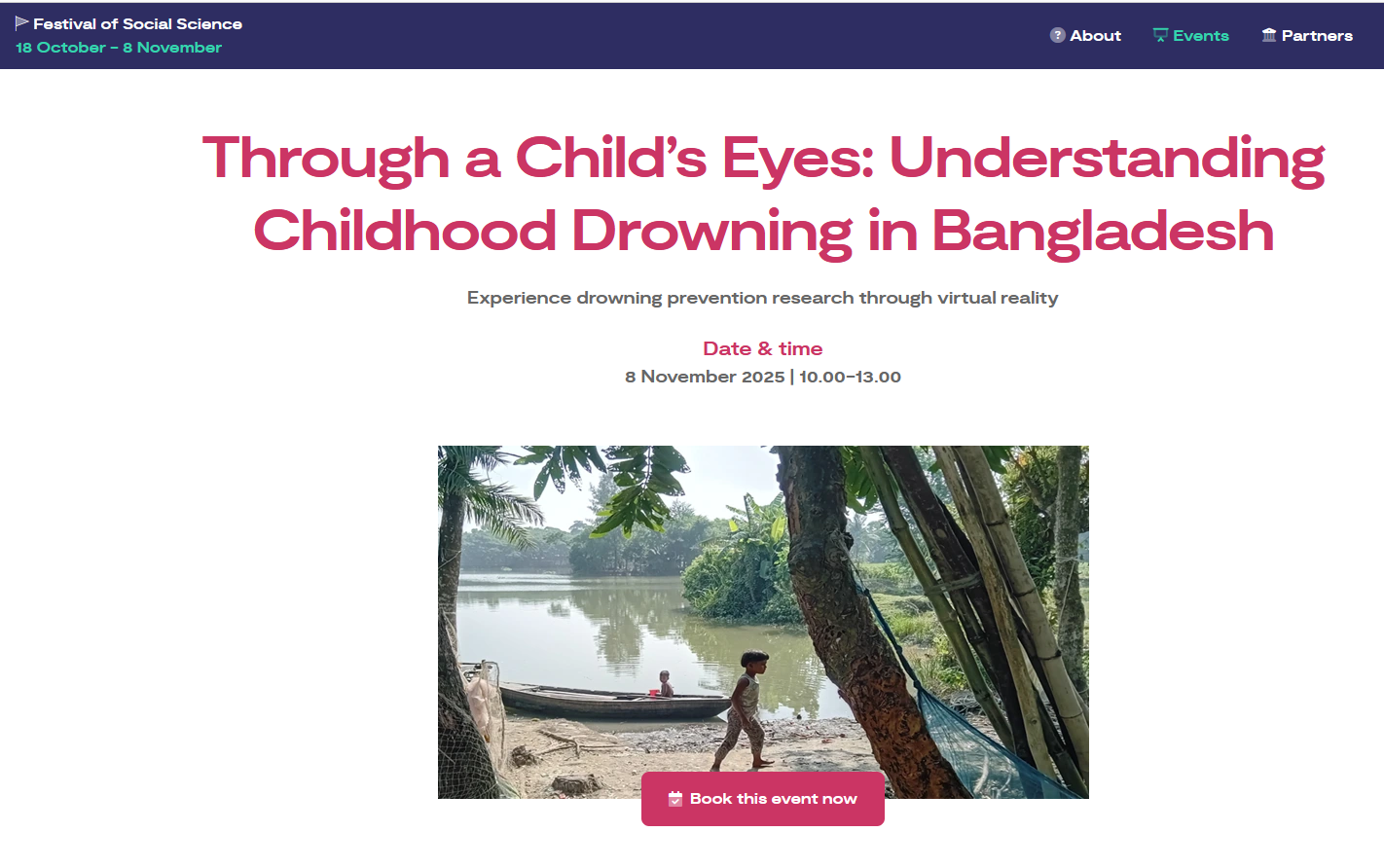
World Drowning Prevention Day at BU
Next month on July 25th Bournemouth University will join in with the world-wide celebrations of World Drowning Prevention Day 2025. The first achievement to highlight is Dr. Jill Nash interesting piece recently published in The Conversation, in which she highlights Five ways to keep teenagers safe by the water [1]. It is also worthwhile to read last year’s contribution to World Drowning Prevention Day by Jill on the dangers of being near water and the role emotions play in making safer decisions [2].
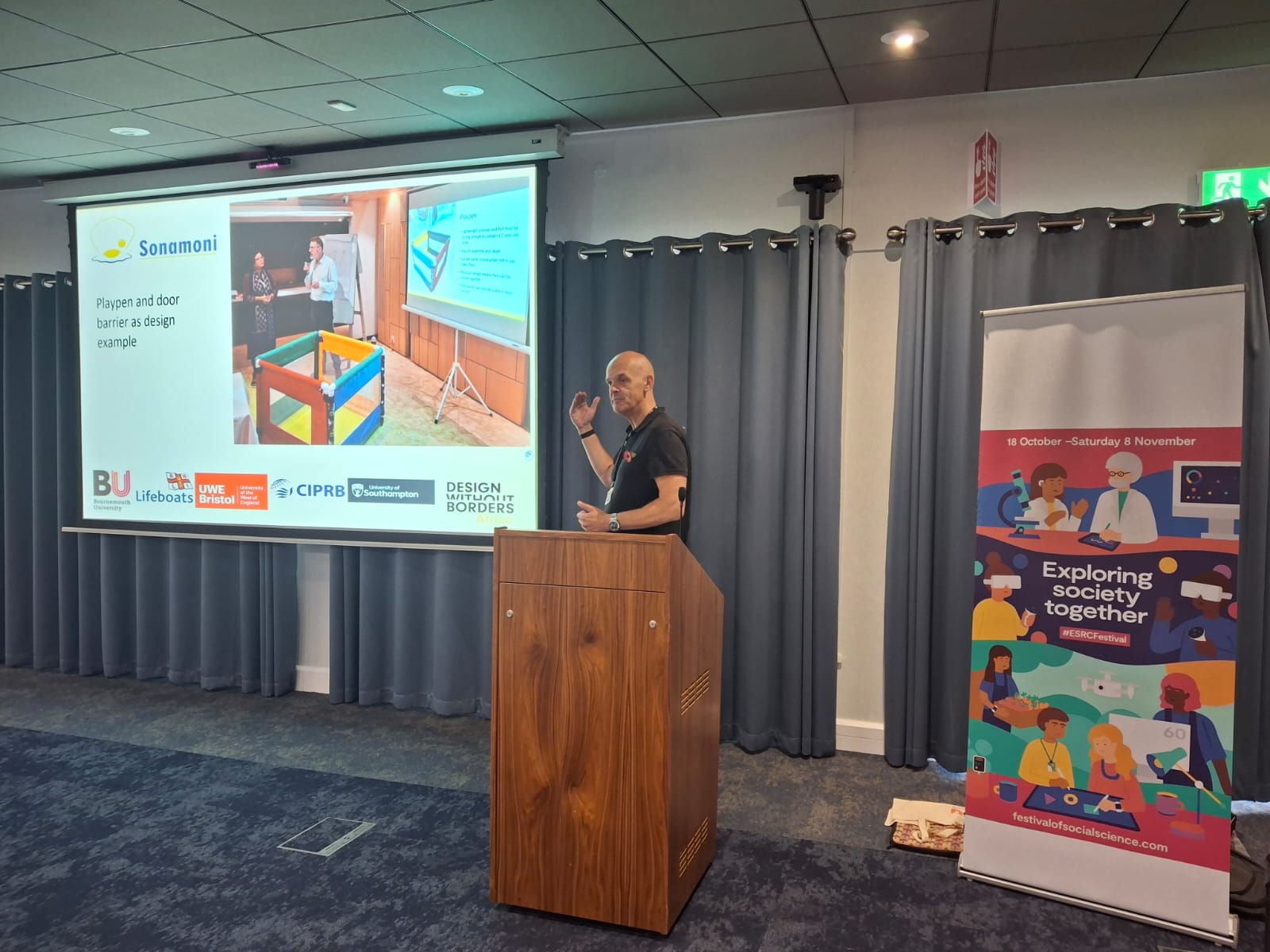
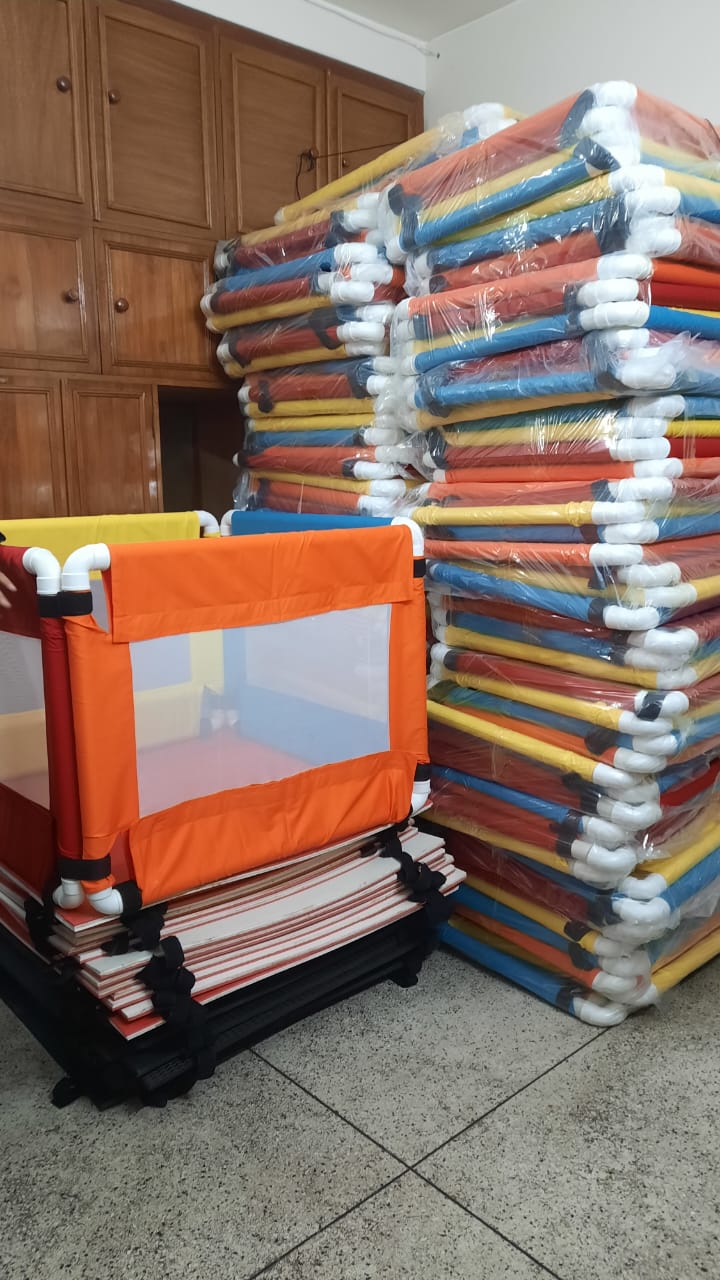
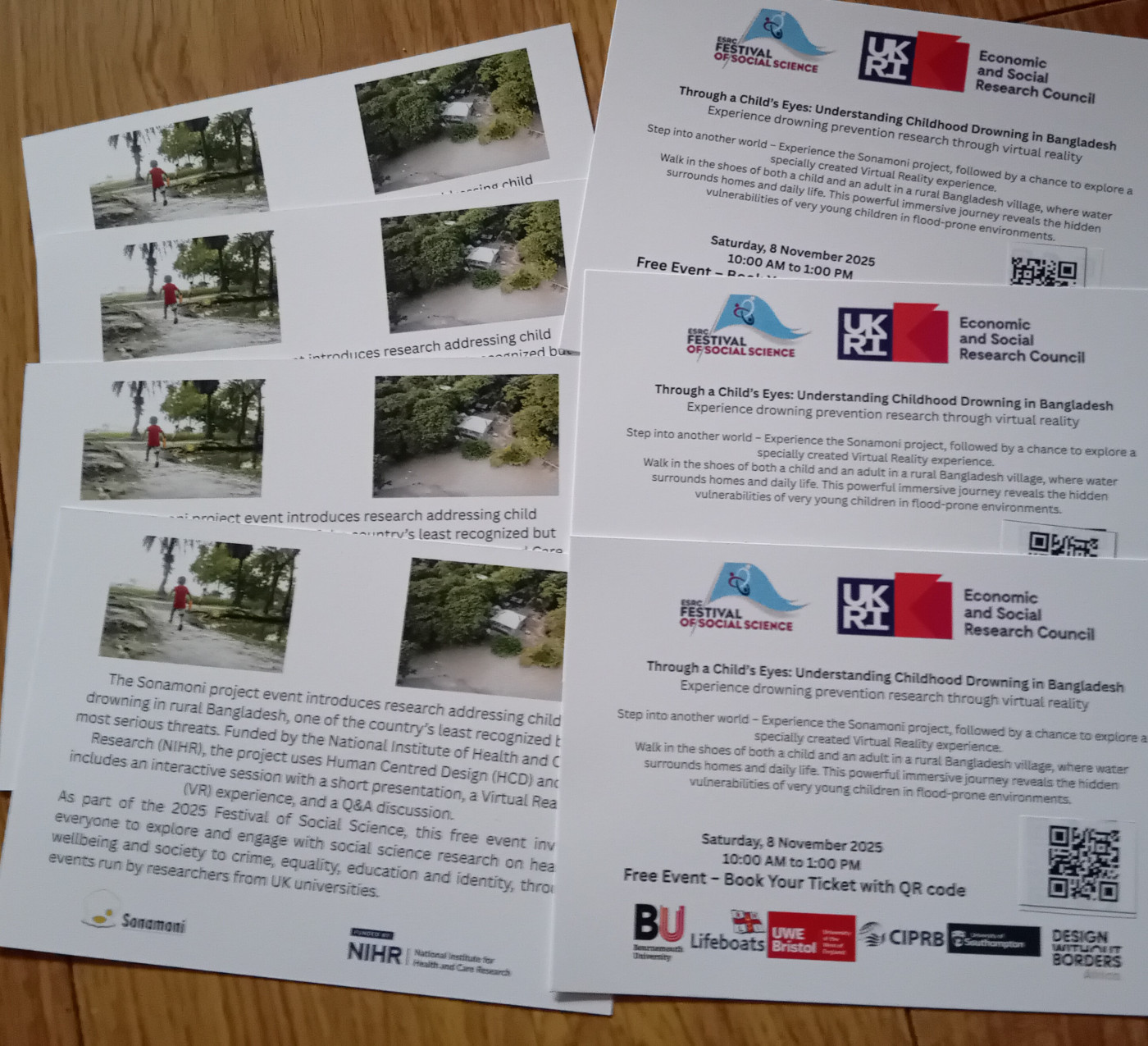
The second major piece of research related to drowning prevention at Bournemouth University is the Sonamoni Project. The Sonamoni Project is working with communities in rural Bangladesh utilizing human-centered design (HCD) techniques. The research project is identifying solutions to reduce the number of drowning deaths in newly mobile children (6-24 months), developing prototype, and assessing the acceptability and usability of potential interventions.
Sonamoni is coordinated by Bournemouth University in collaboration with the University of the West of England (Bristol), the University of Southampton, and the Royal National Lifeboat Institution (RNLI), Design Without Border (DWB) in Uganda and Centre for Injury Prevention and Research, Bangladesh (CIPRB). The interdisciplinary team at Bournemouth University covers three faculties and six academics: Dr. Mavis Bengtsson, Dr. Kyungjoo Cha, Dr. Mehdi Chowdhury, Dr. Yong Hun Lim, Mr. John Powell, and Prof. Edwin van Teijlingen.
This international project funded by the National Institute for Health and Care Research (NIHR) through its Research and Innovation for Global Health Transformation programme, also includes a BU-based PhD student, Mr. Md. Shafkat Hossein. He recently published the first article related to drowning prevention in Nepal [3].
References:
- Nash, J. (2025) Five ways to keep teenagers safe by the water, The Conversation June 20th.
- Nash, J. (2024) Why so many people drown at the water’s edge The Conversation July 25th.
- Hossain, M. S., Pant, P. R., van Teijlingen, E., Sedain, B., & Rahman, A. (2024). Drowning Prevention should be a Public Health Issue in Nepal. International Journal of Social Sciences and Management, 11(4): 83–87.
Centre for Wellbeing & Long-term Health, Rehabilitation & Prevention workstream Networking and Development Event – Wed 25th June!
Centre for Wellbeing & Long-term Health, Rehabilitation & Prevention workstream Networking and Development Event – Wed 25th June! In BG-212.
Does your research broadly fit the category of “rehabilitation and prevention”? Then join us for this first event of the Rehabilitation & Prevention workstream of the Centre for Wellbeing and Long-term Health!
Whatever the focus of your research is or your professional background, whether it be at population or individual level, public health or rehabilitation of a particular condition in a particular demographic of people, whether you are a PGR or a senior academic, we would like this to be your research home. Come and share the highlights of what you do in a 5-minute Lightning talk, and hear from the highlights of others.
We want this to be a stimulating event and you might just find your next collaborator(s). Dr Jonny Branney and Dr Katie Collins, the workstream leads, will be taking notes with a view to creating a quick reference guide of what the workstream members are working on to make it easier for you to find the expertise you need for your next project. We want the workstream to be a place to talk about the sort of research enquiry that gets you out of bed in the morning, that puts the joy into your working life. A place to share and celebrate in your project successes, and to get a welcome lift when your latest research bid or journal submissions are rejected. A place to learn from those more experienced, from those with alternative expertise, identify a mentor or a coach, and for others to learn from you and benefit from your coaching and mentorship. A place to test out your ideas and get feedback from critical friends. A place to identify collaborators for your next research project. Is your research broadly “rehabilitation and prevention”? Then this is your place. Register here!!
Lightning Talks
Attendees are required to prepare a 5 minute lightning talk – 5 PowerPoint slides maximum to summarise your background as a researcher, what you’ve done, are doing, and plan to do. Nice and concise so we quickly get to know what everyone is about. There will be a timer!
Rough Itinerary
12:30pm Lunch – provided
1pm Welcome from workstream leads
1.05pm 5-minute Lightning talks
2.50pm – 3pm Closing remarks from workstream leads
See you there! Room BG-212.
For further information on this event please contact theme leads, Dr Jonny Branney (jbranney@bournemouth.ac.uk) or Dr Katey Collins (kcollins@bournemouth.ac.uk).
Paper accepted on women and disability in Nepal
The academic editor of PLOS ONE informed us yesterday that our latest paper ‘Life-time experience of violence among women and girls living with disability in Nepal: A cross-sectional study’ [1] has been accepted for publication. The paper is based on research conducted as part of the Inclusive Partnership Against Violence (INPAV) project in Nepal.
Working with our long-term research paper Green Tara Nepal (GTN) and funded by The United Nations Trust Fund (UNTF) through Nepal Disabled Women Association (NDWA), we have been involved in InPAV. This project included a situation analysis of the existing government setup One-stop Crisis Management Center (OCMC) to understand the inclusiveness of the OCMC services for girls and women with disabilities. The paper just accepted was part of this research.
Centre for Midwifery & Women’s Health
- Simkhada, P., Basnet, S., Sharma, S., van Teijlingen, E., Wasti, S.P., Dahal, T., Okyere, J., Silwal, R.C., Pyakurel, M. (2025) Life-time experience of violence among women and girls living with disability in Nepal: A cross-sectional study . PLoS ONE (accepted).
Celebrating 25 years of Acquired Brain Injury Rehabilitation and Adult Neuropsychology Services in Dorset:
The Acquired Brain Injury Rehabilitation and Adult Neuropsychology Services in Dorset are having their 25 years anniversary which they are celebrating with this conference held in Bournemouth University.
We would like to invite you to this conference on 10th July 2025 which brings together professionals, researchers, and students who work with people with acquired brain injuries such as traumatic brain injury, stroke, tumour, or brain infections to discuss holistic and effective rehabilitation approaches in practice and applied research.
The Acquired Brain Injury Rehabilitation and Adult Neuropsychology Services in Dorset have always supported multidisciplinary collaborations across the field of rehabilitation and recovery. They have continued to have strong collaborations with Bournemouth University. Members have supported teaching and work placements at the MSc level for over a decade and collaborated with BU researchers from the INRC to bring together practice and research. This conference celebrates and showcases the services and these collaborations in this conference by bringing together professionals, clinical practice, and applied research.
The conference will include presentations about the ABRIS’s holistic rehabilitation philosophy, discussions about effective brain injury rehabilitation programmes, case stories and displays about bespoke person-centred rehabilitation activities.
This conference will be of interests to occupational therapists, speech therapists, clinical and neuropsychologists, doctors and rehabilitation physicians, physiotherapists, rehabilitation assistants, nurses, and case managers.
The conference is organised in collaboration with the Interdisciplinary Neuroscience Research Centre at Bournemouth (Interdisciplinary Neuroscience Research Centre | Bournemouth University) (Leads: Drs Ellen Seiss & Emili Balaguer-Ballester) and co-sponsored by Trauma Informed Practice Services (CIC www.thetipsuk.org).
For more details of the topic, and tickets (limited availability) please see the link on Eventbrite: https://www.eventbrite.co.uk/e/brain-injury-rehabilitation-a-holistic-approach-that-works-tickets-1112548555679?aff=oddtdtcreator.
BU seeking input from ethnic minority and migrant communities
Bournemouth University has received funding from the NIHR to support an internship for a Social Work student to seek views and perception of women from ethnic minority and migrant communities. Therefor, we are seeking volunteers to take part in a small group on-line workshop to hear from women from ethnic minority and migrant communities. They are invited to share their thoughts, insights and experiences of engaging in health research so that we can better understand what would work when conducting research with this population. This work sits within a larger NIHR-funded project that aims to reduce health inequalities for marginalised mothers and babies. BU Profs Huseyin Dogan and Professor Vanora Hundley are leading workstreams within this prestigious NIHR Maternity Disparities project over the next five years (more information about the bigger project can be found here!).
We would like to hear from women from ethnic minority and migrant communities, also referred as women from the global majority. You do not need to be pregnant or have had a baby to participate in the workshop. If you are a woman from an ethnic minority and migrant community in the UK and you would like to take part please apply here! The event will be online on Tuesday 8th July from 11.00-12.30. No specific experience of involvement in research is required.
Dr. Orlanda Harvey and Prof. Edwin van Teijlingen
Faculty of Health & Social Sciences
Successful academic writing, publishing and collaboration workshop at BU
Last week’s workshop on ‘Academic Writing, Publishing & Collaborating’ held at Talbot Campus organised by Mrs. Anjana Paudyal, Ph.D. student in FHSS (Faculty of Health & Social Sciences) was very engaging and very well attended. This event was part of the Doctoral College’s Research Culture and Community workshop series. The workshop was opened by Anjana, who spoke about publishing her first PhD paper in the first half year of her part-time PhD journey.
Key sessions in this interactive workshop included presentations from Ms. Jillian Ireland based at UHD (University Hospitals Dorset NHS Foundation Trust) and academics based at BU. Jillian spoke about her experience of publishing in practice journals as well as publishing papers about practice in academic journals.
Whilst Dr. Pramod Regmi, Principal Academic in International Health in FHSS stressed the importance of paying attention to publishing metrics and identifiers, including h-factors, impact factors, and social media use in academic publishing.
Prof. Edwin van Teijlingen, Research Culture Champion in FHSS outlined ideas for turning PhD chapters in papers and he also highlighted BU’s unique option of doing a so-called ‘Integrated thesis‘. The integrated thesis format allows students to incorporate papers into their thesis. These can be published papers, papers accepted for publication, papers submitted, prepared but not submitted papers and other unpublished
papers or reports.
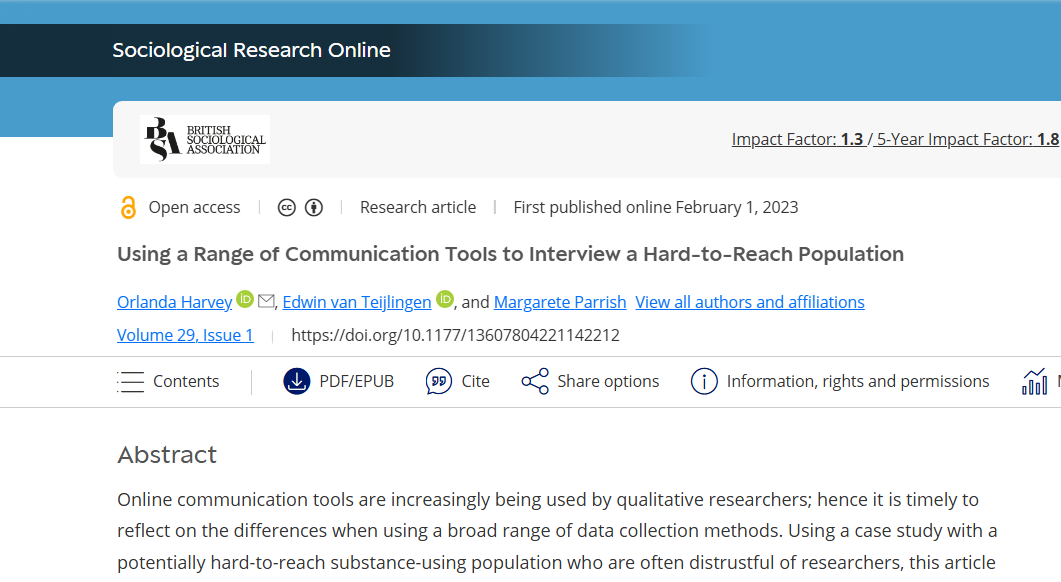
Dr. Orlanda Harvey is a senior lecturer in Social Work at BU, specialising in Developing Professional Relationships and Leadership, she presented replying to reviewers. The Question & Answer session was lively and engaging.
Last, but not least, Anjana Paudyal, the organiser, and presenters would like to thank the Doctoral College for supporting this important event!
Leadership in disaster nursing
On Wednesday (04/06) the Centre for Wellbeing and Long-Term Health (CWLTH) and the Department of Nursing Science welcomed Kelsie Fletcher back to Bournemouth University to talk about her doctoral research – ‘Becoming leaders of change: adaptive moral navigation and the challenges of international disaster nursing‘. Kelsie, currently a Lecturer in Nursing at the University of the Sunshine Coast in Queensland, is supervised by Professor Steve Ersser and Dr Linda Agyemang.
Kelsie presented some of her initial findings from her qualitative research in which she has interviewed nurses currently involved in teams engaged in disaster management around the world. In the coming week, Kelsie will be presenting her research again, this time to a much larger audience at the International Council of Nurses (ICN) Congress in Helsinki. If you would like to know more about Kelsie’s research, please email fletcherk@bournemouth.ac.uk.
We all wish Kelsie well as she moves towards submission of her thesis for examination later this year.
The CWLTH’s next and final research seminar for this academic year will be on Tuesday 17/06 when Jess Correia will be speaking about her research on ‘Understanding the decision-making process for women with common mental disorders around prescribed psychiatric medication use during pregnancy‘. All are welcome to attend and for more information please contact CWLTH@Bournemouth.ac.uk.
Centres of Excellence / demonstration projects
Many organisations use the concept of Centre of Excellence (CoE) in the intervention design and testing stage of a labour migration project. CoE is an interesting concept, which links to the notion of a ‘show home’ on a building site, the Scottish Government notion of a ‘demonstration project’, or more basic the content of the suitcase of a travelling salesman in the last century. For example, currently the Scottish Government established a Gypsy/Traveller Accommodation Fund, running from 2021 to 2026, to deliver good quality local authority sites with the initial ‘demonstration projects’ providing examples of how to design more and better accommodation for the community. Whislt a previous demonstration projects in Scotland featured teenage sexual health behaviour (1-2). A ‘model home’ or a ‘show home’ is the same house as the new one you will be buying or renting, but fully decorated with often expensive stuff. This to show the seller the house’s best potential, i.e. to give you a sense of what you own home could look like.
The idea behind a CoE is that a group of people with a share aim, provide leadership, skills training, research, and advice and support on topic based on a high level of expertise among the team members to ensure best practice. It is to demonstrate that something could work and also how it might work in practice.
Professor Edwin van Teijlingen
Centre for Midwifery & Women’s Health
References:
- Tucker, J, van Teijlingen E, Philip, K, Shucksmith, J, Penney, G (2006) Health Demonstration Projects: Issues evaluating community-based health intervention programme to improve young people’s sexual health, Critical Public Health, 16(3):175-89
- Tucker, J., Fitzmaurice AE., Imamura, M., Penfold, S., Penney G, van Teijlingen E, Shucksmith J., Philip, K. (2007) Effect of national demonstration project Healthy Respect on teenage sexual health behaviour, European Journal of Public Health, 17(2): 33-41.
Academic Writing, Publishing & Collaborating event sold out!
Bournemouth University’s (BU) Doctoral College aims to create a stimulating and motivating Research Culture and Community at the university. As part of this goal, the Doctoral College has funded a proposal by Anjana Paudyal, Ph.D. student in the Faculty of Health & Social Sciences (FHSS) to organise a half-day workshop on ‘Academic Writing, Publishing & Collaborating’ on 28th May.
This event is part of BU’s Research Culture and Community workshop series. The interactive workshop, facilitated by experienced BU with as guest contributor Jillian Ireland, Professional Midwifery Advocate at University Hospitals Dorset NHS Foundation Trust. Of all midwives working in the NHS (i.e. not in academic posts), Jillian is the most widely published midwife in the South of England; Jillian is also Visiting Faculty in FHSS.
Wednesday morning’s sessions will cover academic writing, collaboration in writing, writing for practitioners’ journals, publishing identifiers and metrics, and responding to journal editors and reviewers. There will also be opportunities for Q&A and networking.
The event at Talbot Campus is now fully booked, but if you are a postgraduate student and you would like to be put on the waiting list: please email Anjana Paudyal at: apaudyal@bournemouth.ac.uk.
We would like to thank the Doctoral College for supporting this important event!
Dr. Orlanda Harvey & Prof. Edwin van Teijlingen
(Anjana’s Ph.D. supervisors)
Inaugural research meeting for British Academy grant
Today we had the introductory meeting of our recently funded ‘British Academy Project on Evidence-Informed Policymaking in Nepal’, the project is coordinated by the University of Huddersfield by Prof. Padam Simkhada, who is also Visiting Professor in Bournemouth University’s (BU) Faculty of Health & Social Sciences. The co-investigator at BU is Dr. Pramod Regmi (Principal Academic in International Health), with other co-applicants based at the Keele University, Canterbury Christ Church University, the University of Sheffield, the University of Chester, the Nepal Health Research Council (NHRC), Kathmandu University and the research-based charity Green Tara Nepal.
This one year grant is officially starting next month (1st June). The plans for this project were laid some time ago, and expressed in our 2022 paper ‘Nepal urgently needs a National Evidence Synthesis Centre‘ [1]. Our funded project will focus on the activities of: (1) formative research; (b) capacity building including evidence synthesis; (c) the establishment of a National Evidence Synthesis Centre; and (d) the evaluation of sustainability planning. The British Academy see this award also as providing a developmental opportunity, enabling award holders to build connections within the cohort and critically beyond that as well.
Prof. Edwin van Teijlingen
Centre for Midwifery & Women’s Health
Reference:
- Simkhada, P., Dhimal, M., van Teijlingen, E., Gyanwali, P. (2022) Nepal Urgently Needs a National Evidence Synthesis Centre, Journal of Nepal Health Research Council, 20 (3): i-ii.
Congratulations to Dr. Shanti Farrington & colleagues
Today ResearchGate announced that the paper ‘The Interdisciplinary Research Team not the Interdisciplinarist’ [1] has been read 3,000 times. The paper, with psychologist Dr. Shanti Farrington (previously Shanker) as lead author, was written with colleagues from (a) the Faculty of Health & Social Sciences, namely Dr. Pramod Regmi and Prof. Edwin van Teijlingen; (b) the NHS, Ms. Jillian Ireland, Professional Midwifery Advocate in University Hospitals Dorset NHS Foundation Trust; (c) the University of Huddersfield, namely Prof. Padam Simkhada, who is also Visiting Professor at BU; and (d) the University of Greenwich, in the person of Dr. Sharada P. Wasti (previously based at the University of Huddersfield).
This methods paper addresses some of the pitfalls and barriers to being an interdisciplinary researcher. Being involved in interdisciplinary research is not an easy option for an individual discipline expert. It requires individual skills, ability to see beyond one’s discipline and perhaps personality characteristics such as a great team player. Interdisciplinary research may involve a mixed-methods approach underpinned by conflicting, and according to some, incommensurable research philosophies.
This paper on working interdisciplinary is part of a suit of academic papers on the topic written by some of the same authors [2-3]. All papers are fully open access and hence freely accessible across the globe to anyone with an internet connection.
References:
- Shanker, S., Wasti, S.P., Ireland, J., Regmi, P., Simkhada, P., van Teijlingen, E. (2021) The Interdisciplinary Team Not the Interdisciplinarist: Reflections on Interdisciplinary Research, Europasian Journal of Medical Sciences 3(2): 1-5. https://doi.org/10.46405/ejms.v3i2.317
- van Teijlingen, E., Regmi, P., Adhikary, P., Aryal, N., Simkhada, P. (2019). Interdisciplinary Research in Public Health: Not quite straightforward. Health Prospect, 18(1), 4-7. https://doi.org/10.3126/hprospect.v18i1.19337
- Wasti, S. P., van Teijlingen, E., Simkhada, P. (2020) Public Health is truly interdisciplinary. Journal of Manmohan Memorial Institute of Health Sciences, 6(1):21-22.
PhD supervision is good for you
Some people in academia (and many outside it) don’t appreciate the importance of PhD supervision . An academic supervising PhD students is not merely for the educational purposes, or in other words, for the benefits of the postgraduate student. The value of postgraduate supervision lies in pushing the boundaries of knowledge, about testing new ideas, new approaches or even new methods.
Interestingly, enough it means that PhD supervision for an academic is also about developing their own ideas, expanding one’s CV, and developing one’s career. Whilst for the university it is also for the wider benefit of research for the wider society. The latter means that PhD students help improve the REF (Research Excellence Framework) scores for a university, through metrics such as number and proportion of PhD completions, but also through papers based on PhD research co-authored with staff. It always amazes me how some outsider regard PhD supervision as simply more of the same, i.e. not that different from supervising an undergraduate student.
Looking at my ow CV, some of my best papers have been co-written with PhD students, including my most cited paper on SCOPUS [1]. Moreover, as the graph of my h-index [checked SCOPUS for May 19th 2025] shows four of my top eight highest cited papers were co-authored with postgraduate students [1-4]. Papers that would not have been written without the postgraduate student conducting knowledge-advancing research! 
Not surprisingly, three of the four former PhD students who co-authored these highly-cited papers are now in academic positions across the UK (the fourth one has retired). These four highlighted papers are not just looking good on my CV, they are also highly ranked within their respective journals. The first paper [1] is the 28th most cited paper in the Journal of Advanced Nursing, an impressive 28th position out of 12,762 articles ever published by this international journal. Similarly, the paper ‘Women’s autonomy in decision-making for health care: Demographic study in Nepal’ [2] is the 10th most cited paper in Reproductive Health, whilst ‘ To tell or not to tell: Barriers and facilitators in family communication about genetic risk’ [3] is the 20th most article in Clinical Genetics. Last, but not least, ‘Risk, Theory, Social & Medical Models: critical analysis of the concept of risk in maternity care’ [4] is the 17th most cited article (out of 3,910) in the international journal Midwifery.
Prof. Edwin van Teijlingen
Centre for Midwifery & Women’s Health
References:
- Simkhada, B., van Teijlingen E., Porter, M., Simkhada, P. (2008) Factors affecting the utilisation of antenatal care in developing countries: a systematic review of the literature, Journal of Advanced Nursing 61(3): 244-260.
- Acharya, D.R., Bell, J., Simkhada, P., van Teijlingen, E, Regmi, P.R. (2010) Women’s autonomy in decision-making for health care: Demographic study in Nepal. Reproductive Health 9(15) reproductive-health-journal.com/content/pdf/1742-4755-7-15.pdf
- Forrest, K., Simpson, S., Wilson, B.J., van Teijlingen E, McKee L, Haites, N., Matthews E. (2003) To tell or not to tell: Barriers and facilitators in family communication about genetic risk,Clinical Genetics, 64: 317-26.
- MacKenzie Bryers H., van Teijlingen, E. (2010) Risk, Theory, Social & Medical Models: critical analysis of the concept of risk in maternity care, Midwifery 26(5): 488-496.
Pioneering Research to Tackle Maternity Disparities: BU Academics Lead Major NIHR Initiative
This vital initiative aims to make a tangible difference in the lives of mothers and babies by tackling the complex factors that contribute to disparities in maternity care and outcomes.
MIHERC is already actively engaged in shaping the discourse around these critical issues. The team has commenced the organisation and chairing of impactful events, including the upcoming Artificial Intelligence for Maternity and Women’s Health and Wellbeing session at the International Conference on Artificial Intelligence in Healthcare (AIiH 2025). Further details about this exciting session can be found here: https://aiih.cc/maternity-and-women-health-wellbeing/.

The whole team at Bournemouth University 08.01.25


Reminder: Register for the ESRC Festival of Social Science 2026 Information Session

Deadline Approaching: Submit your Poster for the Research Conference by Monday 27 April
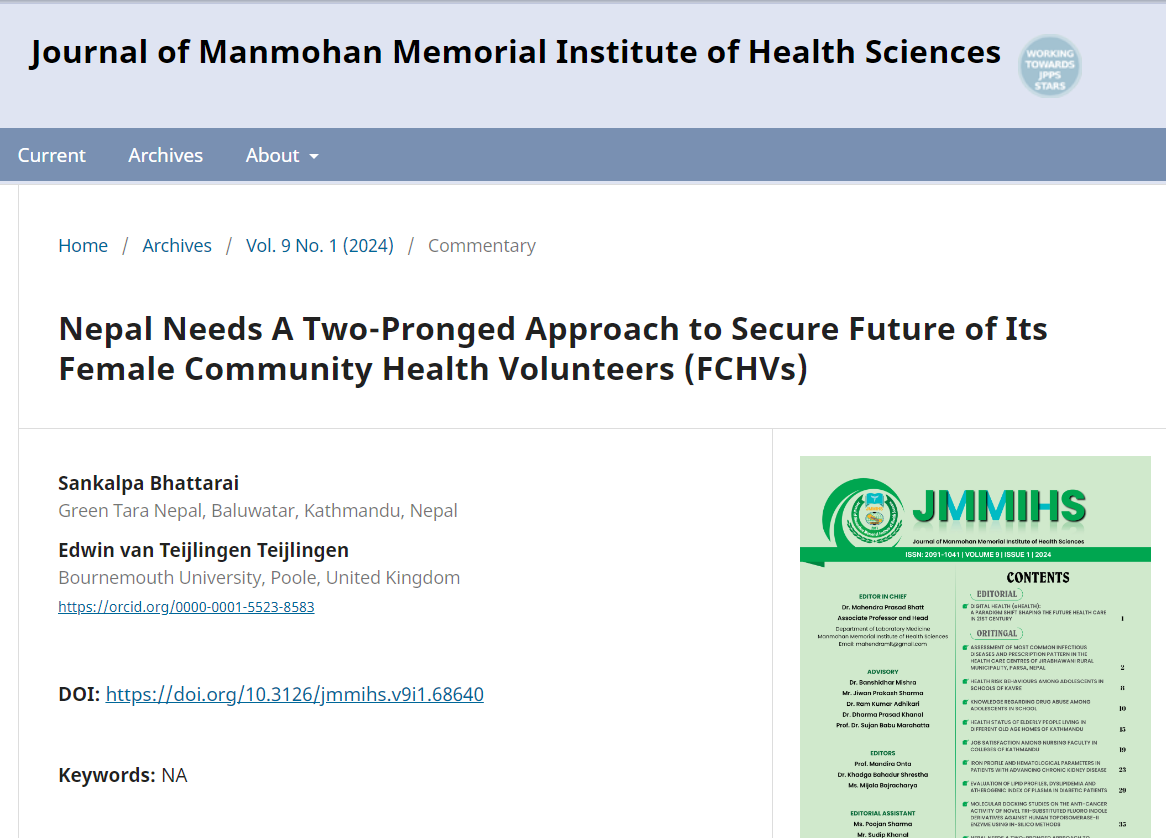
BU academics publish in Nepal national newspaper
New BU Physiology paper
Gender and street names
ECR Funding Open Call: Research Culture & Community Grant – Apply now

ECR Funding Open Call: Research Culture & Community Grant – Application Deadline Friday 12 December
MSCA Postdoctoral Fellowships 2025 Call
ERC Advanced Grant 2025 Webinar
Update on UKRO services
European research project exploring use of ‘virtual twins’ to better manage metabolic associated fatty liver disease
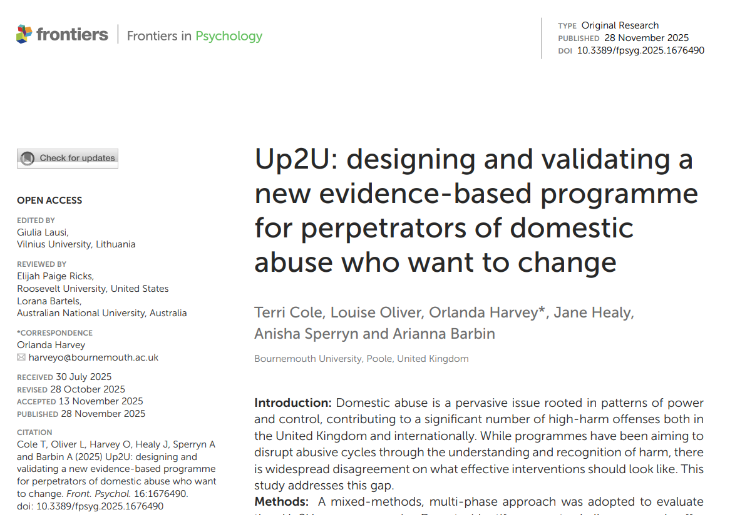
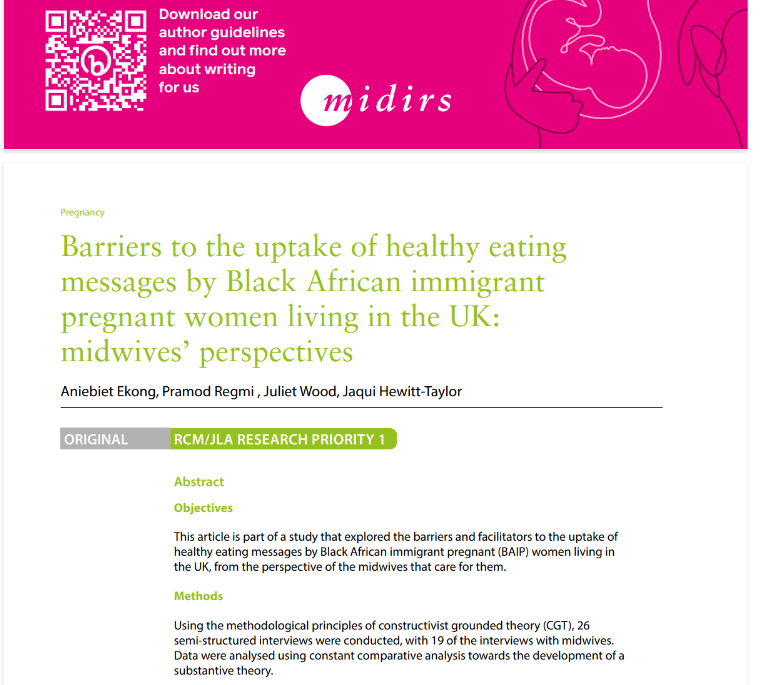
Explore our work, meet our partners, and find out how you can collaborate with us by clicking here! MIHERC is led by Sheffield Hallam University, with Bournemouth University as a key partner and the important funding coming from NIHR (National Institute for Health and Care Research) Maternity Challenge Initiative. The BU key academics are: Huseyin Dogan, Vanora Hundley, Edwin van Teijlingen, and Deniz Çetinkaya. Please share with all who may be interested.