

The Research Excellence Framework, or REF, is the new assessment method for publically funded research in universities. Its controversial new ‘impact’ element rates work based on evidence of social, economic or cultural benefits generated from it. But how easily can such things be quantified, particularly in applied academic subjects like social work?
Professors Jonathan Parker and Edwin van Teijlingen from Bournemouth University have addressed these questions in their paper ‘The Research Excellence Framework (REF): Assessing the Impact of Social Work Research on Society’, published in Practice: Social Work in Action.
They argue that ‘the framework raises doubts about whether it is possible to capture fully the impact of social work research at all, and social work itself for that matter’, and stress that some pathways need to be identified to do this.
In suggesting ways to evidence impact, such as primary evaluative research, Parker and Van Teijlingen also outline the stumbling blocks. There are data protection laws and the expense and time of tying up research evaluation with another research project.
The solution, they say, is for social work research to be built and undertaken in partnership with social care agencies; that impact is everybody’s concern and practitioners and those who use social work services and their carers have a role to play in its creation and identification.
Parker and Van Teijlingen acknowledge that the REF will promote critical-thinking, engage practitioners and address the challenges of public spending restraint, but express a deep-seated concern that this new method of assessment will mark a loss of ‘conceptual, theoretical and critical’ research.
Although assessing research through improved social, economic, health, and environmental aspects of life is unlikely to be questioned, Parker and Van Teijlingen strongly argue that it should not be the only set of research outcomes recognised. They argue that if the REF approach becomes common currency, ‘society is likely to lose the deeper understandings and meanings that have permeated thinking and, no doubt practice and behaviour.’
Both firmly believe BU’s research programme designed to enhance social work practice through continuing professional education has changed practice and influenced policy, as well as numerous other benefits to culture, public services, health, environment and quality of life.
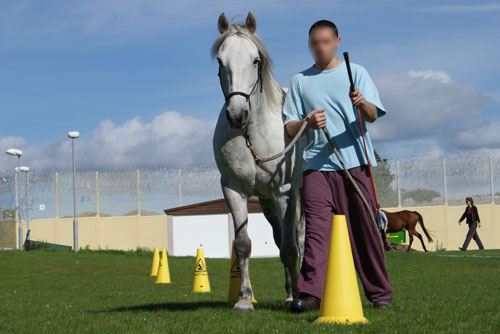
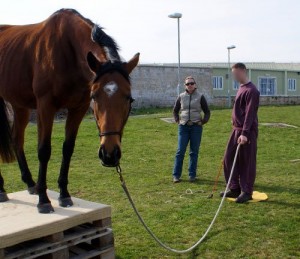 One of the participants has commented: “”I’ve been on anger management courses, alcohol courses, things like that – this is much different, you’re learning it physical, not mental if you know what I mean. It’s helped me more, without a doubt. I don’t like talking. …Normally, with other courses you’re in a group of people… you have to talk about your issues and things like that, but here you get it out in a different way, you’re doing physical things not just talking. I’ve been doing that since I was 6 years of age and it’s never worked. I learnt a lot about myself. I can actually do things. I always say I can’t but I can.”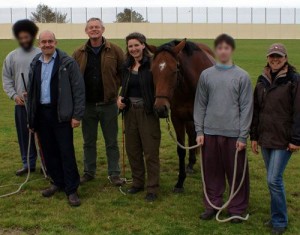

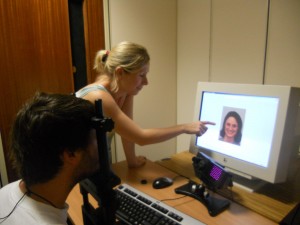 In September 2011 BU’s



 Watch this excellent short video from
  Watch this excellent short video from BU’s
  Watch this excellent short video from BU’s
  Watch this excellent short video from BU’s
  Watch this excellent short video from BU’s
  Watch this excellent short video from BU’s







 SONAMONI contributions to Safety Conference 2026 in South Africa
 Three CMWH presentations at Berlin conference
 New interdisciplinary paper on Nepal
 Horizon Europe Cluster 3 (Civil Security for Society) 2026 Calls Now Open
 MSCA Doctoral Networks 2026 Call Information Webinar
 ESRC Festival of Social Science 2026: Application Deadline Extended to Thursday 25 June 2026
 Reminder: Register for the ESRC Festival of Social Science 2026 Information Session
 ECR Funding Open Call: Research Culture & Community Grant – Apply now
 ERC Advanced Grant 2025 Webinar
 Update on UKRO services
 European research project exploring use of ‘virtual twins’ to better manage metabolic associated fatty liver disease