Last week, the Austrian Academy of Science hosted the 10th International Congress on the Archaeology of the Ancient Near East (ICAANE) on its magnificent premises in the heart of Vienna. A whole day was dedicated to the international launch of the ERC advanced grant The Hyksos Enigma, for which the Austrian Academy and Bournemouth University are co-beneficiaries, combined with a state-of-the-art review of research on the most significant site of the Hyksos, their capital Avaris/Tell el-Dab’a in the eastern Nile Delta. This was an important day to show Bournemouth’s presence and to promulgate its research in the bioarchaeology of the Hyksos, engage in extensive networking with associates and partners of the project, and to establish new links in support of Bournemouth’s role in the project. Regular updates will now appear on the new project website (http://thehyksosenigma.oeaw.ac.at/).
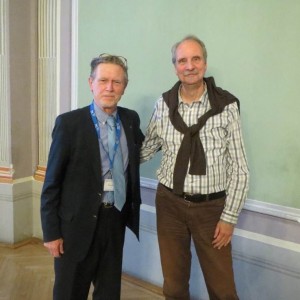
Prof Manfred Bietak (left), project lead, Institute for Oriental and European Archaeology at the Austrian Academy of Sciences, and Prof Holger Schutkowski, Co-PI, Department of Archaeology, Anthropology and Forensic Science.






 We have been advised by Marie Pandolfo, External Funding Manager for the Borough of Poole, that they are hosting an Interreg event.
 al and transitional water ecosystems in the France-England INTERREG V Programme
 Serendipity can be a wonderful thing.












 3C Online Social: Thursday 26 March 1–2pm – Research Culture, Community & Can you Guess Who?
 Four BU students at national midwifery conference
 INRC book roundtable/presentation by Drs Jonathan Cole and Catherine Talbot, Wednesday 22/04/2026, 13:00h, P426
 BU M.Res. student’s evidence to UK Parliamentary Women & Equalities Committee
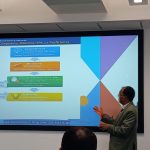 Prof Marahatta promoting BU-Nepal collaboration
 ECR Funding Open Call: Research Culture & Community Grant – Apply now
 ECR Funding Open Call: Research Culture & Community Grant – Application Deadline Friday 12 December
 MSCA Postdoctoral Fellowships 2025 Call
 ERC Advanced Grant 2025 Webinar
 Update on UKRO services
 European research project exploring use of ‘virtual twins’ to better manage metabolic associated fatty liver disease