Knowledge Exchange Framework
After the initial announcement and consultation, things had gone a bit quiet. Louis Coiffat from Wonkhe chaired a conference on it before Easter and wrote about it here. BU’s concern has been that there is likely to be an over-focus on commercialisation and technology transfer so that the result of the KEF is to recognise and distribute investment funds to those institutions already receiving income from commercialisation – rather than to invest in those participating in a broader range of knowledge exchange activities and with potential to develop important – but possibly less financially significant – technology transfer arrangements, e.g. in healthcare or other less remunerative areas (see John Vinney’s blog for Wonkhe from February).
And see the section below on research news – HEIF funding, which is likely to be influenced by the KEF – is increasing.
So the feedback from the conference is interesting:
- “It’s looking like KEF will involve a leadership statement (or concordat) – for institutions to self-evaluate, define, and communicate their own KE strategy. And, of course, some metrics. The latter will probably see institutions clustered and benchmarked. Speakers had good intentions about “proportionate” reporting burdens.
- A one-size-fits-all approach clearly won’t work, as another speaker said, this “isn’t a simple league table with one institution best at knowledge exchange”. Also, real life is messy, how can everything universities do be measured? In reality, much KE activity is already happening, it’s just not being captured, synthesised or described. But, nobody wants every academic completing a timesheet.”
And:
- “There’s also the question about how KEF relates to REF impact case studies. The consensus seems to be that KEF is about an institutions’ overall capabilities, not a peer-reviewed example of a single research impact in time.
- One promise of KEF is that it should support better self-evaluation so that providers can work on their weaknesses honestly without finger-pointing, and crow about their strengths. It should provide institutions with valuable new information they can then tailor to different audiences. However, it should also be formative, open, and flexible – rather than box-ticking. Universities will always need to answer questions about how their impact compares (with other institutions and internationally), and how they can improve. KEF could help with that.”
We look forward to the response to the recent consultation to see where all this ends up.
Student Loan Repayment threshold
The changes to the student loan repayment threshold announced by Theresa May last year have come into effect.
Graduates earning over the new £25,000 threshold are set to benefit too, with lower payments compared to before, for example:
- £25,000 per year repays £0 per month instead of £30
- £27,000 per year repays £15 per month instead of £45
- £30,000 per year repays £37 per month instead of £67
- £33,000 per year repays £60 per month instead of £90
- £35,000 per year repays £75 per month instead of £105
- £40,000 per year repays £112 per month instead of £142The increase in the student repayment threshold marks a key milestone and is another example of the steps the Government is taking to support those in higher education.The increased repayment threshold applies to any student who has taken out a post-2012 undergraduate student loan or Advanced Learner Loan.
Martin Lewis has written about the change in threshold on Money Saving Expert.com. It is also important to note that this change also affects interest dates.
- We are seeing more 18-year-olds than ever before attend university, including the highest ever number from disadvantaged backgrounds and we want to give these students a fair deal both during their studies and afterwards too. Not only will it benefit hundreds of thousands of graduates in the next financial year alone, but millions in the years to come.
Research news
Research England announced a pilot to explore a longitudinal, real-time evaluation approach for the REF 2021. The pilot will be led by research teams at Cardiff University and the University of Sheffield, and will test the feasibility of evaluating the perceptions, experiences and understanding of the REF among academics across career stages, and in a range of departments and universities.
The pilot will launch in the spring with the results available by early 2019.
Executive Chair of Research England, David Sweeney, welcoming the pilot, said:
- “UK universities deliver world-leading research and are recognised globally for the quality of their outputs and diverse impact. National research assessment has been part of our high-performing system for over 30 years and has developed over that period through consultation with the community. This work presents an opportunity to test evaluating REF 2021 in a new way, informing the collection of evaluative data for shaping exercises post 2021.”
Research England has agreed budgets for the academic year 2018-19 and capital budgets for the financial year 2018-19. Allocations for individual institutions will be announced in early May 2018. The letter to all institutions is here.
There is an overall increase of £70m available in 2018-19, enabling higher education institutions (HEIs) in England to deliver on the government’s industrial strategy and tackle global, national and local challenges.
The following budgets are being increased:
- An additional £25m for knowledge exchange through Higher Education Innovation Funding (HEIF), enabling universities to increase their contributions to deliver commercialisation and working with business to meet Industrial Strategy priorities;
- An additional £20m for the postgraduate research degree supervision element of quality-related research (QR) funding, supporting universities to develop the next generation of researchers and protecting the health of the talent pipeline through postgraduate study and into research and the wider economy;
- An additional £10m for the Global Challenges Research Fund (GCRF) element of QR, supporting investment in cutting-edge research that addresses the challenges of economic development and wellbeing faced by developing countries;
- An additional £6m to contribute to the charity research element of QR, providing additional support for research that universities carry out on behalf of charities.
David Sweeney, Executive Chair of Research England, said:
- “We are delighted to announce funding levels for the coming year. The increased public investment in universities reflects their central role in delivering economic growth and creating social prosperity for the country.
- We see universities as key partners in tackling global challenges, and the increased investment into GCRF reflects that. Our investment into the postgraduate pipeline will enable our higher education sector to continue to grow and attract top talent.
- Achieving the government’s target of 2.4% of GDP investment in R&D by 2027 depends on universities deepening their partnerships with business, charities and other organisations. Through HEIF, and working with the Office for Students, we are committed to investing in the knowledge exchange activities that underpin R&D partnerships.”
And a new funding scheme to build research excellence has been announced- the deadline is noon on 17th July 2018.
- “We are delighted to announce the launch of the Expanding Excellence in England (E3) fund, a first new initiative for Research England. This competitive fund will allocate up to £75m over three years to help grow small but excellent research units and departments in English universities. Bids will be assessed by an expert panel chaired by Professor Sir Ian Diamond, Principal and Vice-Chancellor of the University of Aberdeen.”
“Aims of the Fund
- Strengthen the contribution of English HEIs to our society, pushing the frontiers of human knowledge, delivering economic impact and creating social impact by supporting our society and others to become enriched, healthier, more resilient and sustainable;
- Build the capacity and quality of research in departments and units within English universities where excellence exists but at a small scale with potential for growth;
- Contribute towards the delivery of government strategy, including the Industrial Strategy, the GCRF strategy and local priorities by supporting sustained improvements in research capacity across England while maintaining the principle of funding excellence wherever it is found;
- Enhance the skills base and build talent in areas of research excellence where there is untapped potential;
- Stimulate strategic partnerships between HEIs and other organisations outside of Higher Education.”
As part of the Connecting Capability Fund Research England has invested £67 million in 14 collaborative projects between universities and with other partners to drive forward world-class university commercialisation across the country, including a project to build a creative technology network through a project led by the University of the West of England
HE Review
Reminder: to inform our BU response to the HE Review all staff and students are invited to consider the issues in this (anonymous) short survey. Please take a look at the survey questions as we’d like to hear from as many staff and students as possible. You don’t have to answer all the questions. The major review of HE will shape the HE system, including how universities are funded for years to come. The survey will be available to staff and students until Friday 20th April.
Prevent
The Secretary of State wrote to the Office for Students about its monitoring duty in relation to Prevent:
- As monitoring authority, the OfS’s function will be to collect information from RHEBs to enable it to monitor those bodies’ performance in discharging the ‘Prevent duty’ imposed on them by section 26(1) of the Act.
- I am now looking to the OfS to build on this experience when undertaking their function as the new monitoring authority; and in particular I would like them to build on the valuable work HEFCE has undertaken in sharing good practice and driving continuous improvement, which I know the HE sector values. Their work should include ensuring RHEB’s continue to effectively balance their Prevent and free speech responsibilities .
- I would also like the OfS to take the opportunity to review the existing monitoring framework and consider how it might evolve to align with the values and approach of the Office for Students. In particular, I would like the Office for Students to consider how it might take a more risk-based approach.
Transforming the service economy
The Government Office for Science issued a report on Growth Opportunities for the UK Service Economy.
- Recommendation 1: The Office for National Statistics should work with academia to develop new methods for mapping value chains as well as measuring research and development in the service sector. Opportunities to pilot and test new methods include the SERVCOM survey of service sector outputs and revisions to the Standard Industrial Classification.
- Recommendation 2: Industry and sector councils should raise the level of horizon-scanning to anticipate and monitor emerging opportunities and challenges to their services. In addition, government should undertake detailed studies to better understand how the potential to trade services at a distance is developing, and how this tradability will affect individual services.
- Recommendation 3: BEIS should build on the Bazalgette review of creative industries, the Maier review of industrial digitalisation, the Bell review of the life sciences sector and the Hall and Pesenti review of artificial intelligence to strengthen the service sector through the Industrial Strategy. Government and business should work together on the collected recommendations from these reviews. To support the service economy, this process can exploit sector deals, place-based policy making and support development of education, skills and lifelong learning, and the work of UK Research and Innovation and the Industrial Strategy Challenge Fund
- Recommendation 4: (1) Government needs to close the skills gap in STEM subjects such as data science, and ensure that our education system cultivates creative, social and critical thinking skills. (2) Industry needs to make a commitment to lifelong learning in the workplace by providing courses that train and reskill existing employees, rather than relying on new employees to fill skills gaps.
- Recommendation 5: Government and industry should jointly conduct a public debate on the impact and regulation of digital disruption, especially with regard to ensuring the protection of casual employees. There should be similar analysis and debate of the market and regulatory status of incumbent businesses and potential disruptors to help produce a level playing field. This could be facilitated through the work of the Alan Turing Institute and the Open Data Institute.
- Recommendation 6: Government, industry and academia should work together to raise productivity, encouraging the adoption and diffusion of innovation across the service sector. Government procurement could be used to incentivise support for SMEs as a key part of the supply chain to government, as is done in the USA. Schemes for place-based support from BEIS, Department for Communities and Local Government (DCLG) and other departments should consider how to incentivise diffusion of best practice, which needs to be in management and leadership as much as in technology.
- Recommendation 7: The Departments for Digital, Culture, Media & Sport (DCMS) and BEIS should continue developing a coordinated approach that takes into account business broadband concerns and ensures businesses can benefit equally from digital technology initiatives to help drive productivity and economic growth.
- Recommendation 8: Analysts and policy makers and those who deliver public services should work across government to understand how the government policy levers identified in the Technology and Innovation Futures report 2017 can be applied to greatest effect in the service sector.
- Recommendation 9: Government should consider using outcome-based contracts and avoiding over-prescriptive specifications. This approach to procurement will allow providers of assets to servitise and innovate their business models using digital technologies. It will be important to carefully examine and test outcome-based contracts and regulatory approaches to avoid unintended consequences and to achieve the full set of desired outcomes.
- Recommendation 10: The development of outcome-based contracts offers great opportunities to the UK. Industry, academia and leadership councils should together explore the possibilities for provision of outcome-based contractual services. Horizon-scanning will be essential to anticipate, monitor and assist in the identification of emerging opportunities in this area. Innovators should be encouraged to look across sectors and think more broadly about potential opportunities for servitisation and where the UK could create new comparative advantage.
- Recommendation 11: Government should use sector and city deals to develop and build on existing financial ecosystems across the UK with the aim of reducing regional disparities. This will require mass data collection to measure and evaluate the planning and implementation of these deals.
Subscribe!
To subscribe to the weekly policy update simply email policy@bournemouth.ac.uk
JANE FORSTER | SARAH CARTER
Policy Advisor Policy & Public Affairs Officer
Follow: @PolicyBU on Twitter | policy@bournemouth.ac.uk
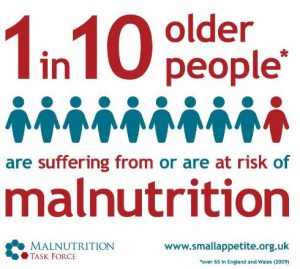
 Professor Jane Murphy from the Ageing and Dementia Research Centre (ADRC) has been invited to join the Malnutrition Task Force (MTF) board (http://www.malnutritiontaskforce.org.uk/) as an associate board member to increase the breadth of knowledge and experience of the team. It offers an exciting opportunity to contribute to and shape the work of the MTF work programme and priorities to effectively tackle avoidable malnutrition across our society. Jane is currently undertaking funded work as Clinical Lead for the ‘Nutrition in Older People Programme’ with the Wessex Academic Health Science Network.





 The Art & Humanities Research Council (AHRC) Research in Film Awards have returned for their fourth year which aim to showcase new and emerging talent in film-making linked to arts and humanities research and celebrate the best of a growing number of high-quality short films (defined as no more than 30 minutes in length) that bring research to a wider public audience.
 The Centre for Qualitative Research is pleased to announce that its Deputy Director, Caroline Ellis-Hill, will be keynoting at the 41st ASSBI Annual Brain Impairment Conference in Adelaide, Australia on the 4th -5th May 2018. Ellis-Hill will speak on “Lifeworld-led rehabilitation – a new approach to support psycho-social well-being following brain injury”.

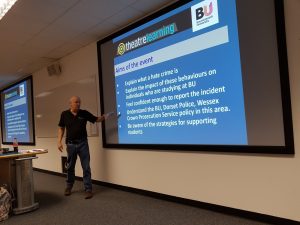




 #TalkBU is a monthly lunchtime seminar on Talbot Campus, open to all students and staff at Bournemouth University and free to attend. Come along to learn, discuss and engage in a 20-30 minute presentation by an academic or guest speaker talking about their research and findings, with a Q&A to finish.
 An exciting new research project will be launched this Saturday and the team is getting ready. Last November during the ESRC Festival young people told us what they liked doing outdoors. Next Saturday the research team from across BU will be releasing the top ten favourite things that young people enjoyed outdoors on a rock drop in partnership with Bournemouth Rocks. Young people can find out the results of our research and help develop our study by logging their finds and sharing their use of green space with the research team – Dr Holly Crossen-White, Dr Nathan Farrell and Dr Angela Turner-Wilson. The Rock Drop site will be released on Friday on social media
  We’re excited to announce that we are joining forces with Pint of Science again this year to bring science back to the pubs of Bournemouth.









 New academic paper on Nepal
 3C Event: Research Culture, Community & Cherry Blossom
 Boost Your Research Profile: Training Sessions with The Conversation
 ESRC Festival of Social Science 2026: An Opportunity to Engage New Audiences
 New HIV paper by BU PhD student
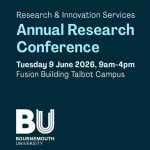 BU Annual Research Conference: Poster Exhibition Call for Applications
 ECR Funding Open Call: Research Culture & Community Grant – Apply now
 ECR Funding Open Call: Research Culture & Community Grant – Application Deadline Friday 12 December
 MSCA Postdoctoral Fellowships 2025 Call
 ERC Advanced Grant 2025 Webinar
 Update on UKRO services
 European research project exploring use of ‘virtual twins’ to better manage metabolic associated fatty liver disease