Fees and funding
Loans and parental contributions – The implication of the means-tested maintenance loan is that parents will make up the difference for those not receiving the full loan (ie if parental income is over £25,000)– parents are not always expecting or planning for this and sometimes parents are unable in practice to make up the difference. This week the Guardian ran It’s a hidden nasty’ quoting Martin Lewis (Moneysavingexpert.com) who said
- “it is ‘an absolute abomination’ the government is keeping quiet about how much extra most families must pay. If you aren’t entitled to a full maintenance loan, parents are expected to make up the gap, but what is outrageous is that the Student Loans Company tells you nothing at all about this.“It leads to friction in families and to students being underfunded.”
Moneysavingexpert.com has a table which lists the scale of parental contributions from £605 per year for £30,000 family income to £4,500 for families earning over £62,177. If the above link doesn’t take you straight to it the table is listed under point 11. And the full loan may not be enough anyway. The Guardian article makes the point that the poorest students, who leave with the biggest ‘debt’, still don’t have sufficient funds to cover their daily needs and links to the recent NUS Poverty Commission report. Both UUK and HEPI have called for the reinstatement of maintenance grants so students can afford the basics.
Martin Lewis believes the maintenance loan should be increased:
- But Lewis argues if there are limited funds this shouldn’t be the top priority. “If you want social equality you’ve got to face the fact that students haven’t got enough money to live on. The loans aren’t big enough. So I wouldn’t lower tuition fees, or bring back maintenance grants, I’d boost maintenance loans.”
This is Money has an article covering the increasing number of homeowners who are taking equity release deals to support their children through university.
HEPI have a guest blogger who is also a fan of maintenance loans. He begins by describing how the divergence between HE and adult FE is shrinking (crossover due to degree apprenticeships in Universities and level 4-5 vocational sub degrees in FE colleges). Furthermore, due to automation neither FE or HE can meet the economy’s needs alone. Certainly there will be no retraining revolution without re-expanding part-time undergraduate higher education. On this the blogger, Mark Corney, states the debate about reintroducing maintenance grants for full-time higher education students is crowding-out the fact that maintenance loans are being introduced for part-time students from this August.
He argues that even if tuition fees were free its maintenance support that is vital. In addition, the ‘HE and adult FE are different’ orthodoxy has perpetuated a myth which says full-time and part-time HE students need maintenance but adult FE students do not. Only by examining budget-line by budget-line of HE and adult FE funding together does the irrationality and unfairness of the maintenance loans gap become apparent.
The blog suggested an alternative to reintroducing maintenance grants for full-time higher education students is to increase the value of maintenance loans. Students from poor households will not repay their maintenance – or fee – loan if they remain ‘poor’ after graduation: nor will students from wealthier households who become ‘poor’ after graduation. It also suggested raising the income threshold to median gross annual earnings which is currently £28,600 to protect graduates. Whilst extending the repayment period (to state retirement age) to offset the cost to the Treasury.
Mark goes on to discuss the FE, the poor cousin, the complexity of the FE loan arrangements, the barriers and lack of take up. He states the debate over maintenance loans in adult FE is inextricably linked to technical education reform. He discusses introducing maintenance loans for all Level 4-6 technical education and warns: there is a real danger that Level 3 technical education will get stuck in the 16-18 T-level silo. Level 3 technical education must be accessible to adults too, with maintenance loans available to 19-24 year olds.
Interest rates – This is one of the issues that will need to be considered as part of the post-18 review. The Treasury Select Committee has criticised interest rates on student loans as they publish “Student Loans: Government and Office for National Statistics responses to the Committee’s Seventh Report”.
The BBC cover the story here.
Arts, humanities and social sciences – Research Professional report that the British Academy has stated that the UK’s national academies should be in charge of monitoring academic disciplines. The Academy broaches this topic through concern that Academic research, particularly in the arts and humanities, could suffer if universities lose funding for teaching as a result of the [Tertiary Education and funding] review. The article goes on:
- Arts, humanities and social sciences could lose out if the government ties tuition fees to graduate earnings or teaching costs, the academy said. This is because they are typically cheaper to teach and lead to lower-paid jobs than science subjects.
- The British Academy urged the government to protect funding for these subjects, which it said provide essential skills and research supporting the creative industries and financial, legal and professional services.
- “A wholly market-driven approach to education provision brings with it risks and perverse incentives, encouraging short-term rather than strategic management, and potentially stifling growth and innovation,” it said.
Read BU’s response to the HE review and more coverage of the issues in last week’s policy update.
Schools policy
Finally the government have issued a response to the Schools consultation that closed in December 2016 – politics definitely got in the way of this one with the backlash against the grammar schools policy and then the reshuffle. From the archive: a 2016 Wonkhe article by David Morris on the context for all this.
Grammar schools made the news this morning with the announcement of a £50 million fund to support expansion – but not the lifting of the ban on new ones. This will allow annexes and spin-off sites – but there are requirements on wider impact too.
Damien Hinds, the Education Secretary, is interviewed in the Guardian. The Sutton Trust published a response referring to their research:
- Gaps In Grammar found that high proportions of grammar school pupils come from the independent primary school sector, roughly double the rate you would expect. In fact, a pupil attending a private prep school is ten times more likely to enter a grammar than a pupil on free school meals.
But what about the requirement for universities to sponsor schools as a condition of registration? It has been watered down to an obligation to do one of 4 things: support teaching development, support curriculum design and delivery, take a leadership role in a school or “other targeted partnership activity”. It looks as if this will be administered through the new Access Agreements. It is clear that they hope – indeed they say that they “expect” more school sponsorship and university run free schools – but it won’t be a pass/fail registration condition.
Skills Shortages
There was a Westminster Hall debate on Wednesday considering skills shortages and skills strategy led of Robert Halfon (Chair, Education Select Committee). He announced that the Edge Foundation had formed an analysis group and would bring together key organisations to provide a more comprehensive approach to monitoring skills shortages in the UK.
Halfon set out four steps that: “would build on the strength of the knowledge-rich curriculum to ensure that it fosters young people who are also skills-rich and behaviours-rich—the areas that employers say they value most.”
- Firstly, there had to be a fundamental reimagining of pre-18 education, centred around GCSE provision, with Halfon stating that there was an “opportunity for that phase of education to end in a much more holistic and comprehensive assessment—a true baccalaureate.”
- Then there needed to be a broader and more balanced curriculum as it was “essential that we develop the next generation of engineers, entrepreneurs and designers” and that a narrow focus on academic GCSEs was “driving out the very subjects that most help us to do that,” he stated.
- Thirdly Halfon said careers advice was vital, and more had to be done to “create deep connections between the world of education and the world of work that inspire and motivate young people.” This included employers providing externships so that teachers could experience local businesses and merging duplicate careers organisations into a national skills service.
- Finally he said that destinations for young people leaving schools and colleges had to be moved front and centre, “giving school leaders and teachers the freedom to deliver the outcomes that we want for our young people.” He said that a planned programme of skills reforms could only be a success only if it went hand in hand with a school system that was equally focused on preparing young people for work and adult life.
Halfon continued that the sustained expansion of degree apprenticeships was vital to “fundamentally address the issue of parity of esteem between academic and vocational education, which has plagued this country for far too long“.
He concluded that foundations must be laid in schools through a “broad and balanced curriculum, intensive employer engagement, and destination measures as a key driver of success” which would “create the basis for a holistic system that prepares young people for high-quality T-levels and apprenticeships as part of a blended route that breaks down the artificial divide between academic and technical education to create a real ladder of opportunity for our young people.”
Anne Milton (Minister for Apprenticeships and Skills) added that progress should “not be about who someone knows or actually about what they know, or where they live or where they come from; it should be about what skills they have.” On the curriculum she said that it was “important widen young people’s eyes to the opportunities that are out there” but “a good foundation in certain key subjects, such as English, maths and digital skills” was equally important.
Halfon asked the minister how the Government would enforce schools to implement legalisation to invite apprenticeship organisations and university technical colleges into schools and further education colleges. She said as the legalisation was only introduced in January it will still being monitored.
Widening Participation and Achievement
A manifesto for new Director of Fair Access and Participation – HEPI and Brightside have issued a report calling for the OfS to take specific steps in improving access to HE for those from underrepresented groups. Reaching the parts of society universities have missed: A manifesto for the new Director of Fair Access and Participation has contributions from NUS, Rob Halfon MP (Chair Education Select Committee), the Sutton Trust, and other ‘leading thinkers from academic and university administration, think tanks and the media’.
Taken from the HEPI blog on the report the proposals include:
- experimenting with post-qualification admissions;
- appointing a Commissioner for Student Mental Health;
- requiring targets for students from care;
- delivering mandatory unconscious bias training for staff;
- granting fee waivers to asylum-seekers;
- guaranteeing mentoring for every pupil who wants it;
- curbing the use of unconditional offers (see note below);
- mandating statistical returns on sexual orientation; and
- founding new Oxbridge colleges to widen access.
Chris Millward, Director for Fair Access and Participation at OfS welcomed the manifesto, his response confirms he’ll discuss the ideas and refocuses on those priorities already announced, the push for common data indicators and a radical increase in ambition next year echo recent announcements. Chris said:
- I am grateful for this wealth of expert advice, especially the contributions from students. I look forward to discussing these ideas with many of the authors today, and in the coming year as I develop the way that the OfS regulates access and participation.
- I am pleased to see that many of the issues given priority are ones that I am already addressing in my guidance to universities and colleges….there are still wide gaps for mature students, for white males from the lowest income groups, and at the universities with the highest admissions requirements. And when students do enter higher education, certain groups also face real barriers to succeeding during and after their studies, particularly Black and Asian students and those with disabilities. I have made it clear to universities and colleges that I expect them to address these issues in their access and participation plans, which the OfS must approve if they wish to charge higher tuition fees.
- Students need a genuine choice of routes into higher education at different points of life, including high quality technical routes, such as degree apprenticeships, that will work for students from all backgrounds. Students need a more transparent and sophisticated admissions system that tackles the gap between potential and opportunity at the point of entry.
- And students need universities and employers to face up to the reasons for differential outcomes within and beyond higher education, and make changes that mean everyone has a fair chance.
- To succeed across all of these areas, the higher education sector will also need more robust and common data, indicators and evidence of “what works”, and a longer term approach to evaluation and target-setting.
- We will be focusing on all of these issues during the first year of the Office for Students. In doing so, we want to establish the basis for a radical increase in ambition next year, when we will agree new targets for universities and colleges to reduce the gaps in access, success and progression.
The report was picked up by The Times (focus on Oxbridge expansion) and The Guardian (focus on white working class boys access).
The position on unconditional offers is interesting – the recent wave of feeling against unconditional offers is interesting as previously it was seen as an effective and positive mechanism with which to engage non-traditional learners, especially care leavers. Arguments against it now are that it narrows the WP student’s choice perhaps leading to them selecting a lower status institution because of the unconditional offer rather than aspiring higher; that it may take up a place another ‘more deserving’ student could access; and that those with unconditional offers are not under pressure to perform as well in their level 3 exams.
Opportunity for Everyone
UUK have blogged on the Opportunity for everyone campaign and remind that HE’s role in aiding social mobility is more than increasing the earning potential of graduates:
- many graduates lead fulfilling lives in rewarding careers such as nursing, teaching and social work, all of which make immense contributions to society and the economy but pay less on average.
UKK call for the OfS to
- ‘consider extending the duration of Access and Participation Plans to allow universities to take a longer-term, strategic approach to the issues facing their own university community’ and for ‘the OfS should work to introduce a more strategic and effective approach to target setting and monitoring, including support for universities to contextualise their applicants’ prior achievements’.
The UUK blog notes there is more work to be done by universities on reducing drop out and improving the percentage of good degrees for students from underrepresented backgrounds.
Disabled Students Parliamentary Question
Q – Roger Godsiff: To ask the Secretary of State for Education, pursuant to the Answer of 24 April 2018 to Question 135864 on Disabled Students’ Allowances, what assessment his Department has made of trends in the level of reliance of disabled students’ on assistive technology.
- A – Sam Gyimah: Information on the use of assistive technology in higher education can be found in this 2017 report, commissioned by the then Higher Education Funding Council for England.
International staff and students
Mobility report – Wonkhe summarise the Universities UK International (UUKi) publication of the fourth annual Gone International report. They explain the report again finds more positive outcomes for students (e.g. 4.7% more with firsts and 0.8% more in employment) who have studied abroad than for their peers who haven’t. In addition, this year, new analysis finds positive outcomes for students from disadvantaged backgrounds, and for short-term study, work and volunteer placements (up to four weeks). Disadvantaged students are 3.6% less likely to study abroad than their more advantaged peers, despite benefitting more. The report is based on 2015/16 Destination of Leavers from Higher Education (DLHE) survey data. 16,580 students chose international study, the highest-ever number, but at only 415 more than the previous year, this remains the same proportion (7.2%). 53.1% of all 2014/15 placements were via Erasmus+, through which the UK received record levels of funding and which the UK government has “guaranteed” to remain part of until 2020. (Summary from Wonkhe.)
International Staff: Parliamentary Question
Q – Gordon Marsden: To ask the Secretary of State for Education, what discussions he has had with the Home Secretary on the (a) current and (b) future costs of (i) visas and (ii) permanent residency documents for overseas academics to work at UK Universities.
- A – Sam Gyimah: Department for Education officials meet regularly with Home Office officials to discuss a range of issues regarding overseas academic staff at UK universities. Border, immigration and citizenship fees are reviewed on an annual basis. The current visa fees are set out in the Immigration and Nationality (Fees) Regulations 2018.
Cancelled Visas
Last week we told you about the Test of English for International Communication scandal whereby the Home Office cancelled the visas of 35,000 students suspected of cheating the English fluency test. It was revealed the methods used to determine cheating had a 20% error rate and up to 7,000 genuine students were prevented from studying. This week its reported the NUS have released a report produced following an investigation by their legal firm Bindmans LLP criticising the Government and calling for action and redress. We haven’t been able to find the report itself but The Financial Times have covered the story.
Research Integrity
Sam Gyimah was interviewed for the Commons Science and Technology Select Committee investigation into research integrity. The committee heard that universities should be held responsible for the full compliance of upholding standards of research integrity but the Minister for Universities, Science, Research and Innovation declined to assert that funding should be dependent on this. Other topics covered included concordant sign up, self-assessment and disclosure in clinical trials. Read the full summary of the session provided by Dods Consultants here.
Industrial strategy funding opportunities
This week the Government launched several new initiatives and challenges funded through the Industrial Strategy Challenge Fund.
Resolving Social Challenges – On Thursday Oliver Dowden (Minister for Implementation) announced a series of competitions for tech firms to develop solutions tackling current social challenges. While the initiatives focus on the business sector some of the topics are interesting. Each contributes to the Government’s Grand Challenges – the data economy; clean growth; reducing plastic waster, tackling loneliness and healthy ageing and the future of mobility – the competition is designed to incentivise Britain’s tech firms to come up with innovative solutions to improve public services.
The forthcoming challenges:
- Identifying terrorist still imagery (Home Office). Home Office research shows that more than two-thirds of terrorist propaganda disseminated online is still imagery. This project will support both Government analysis of, and broader efforts to remove, this harmful material.
- Tracking waste through the waste chain, submitted by Department for Environment, Food and Rural Affairs (DEFRA). A new technological approach could help record, check and track waste, helping boost productivity, reduce costs, and protect both human health and the environment.
- Tackling loneliness and rural isolation, submitted by Monmouthshire Council. The government recognises that rural transport is vital to local communities, and businesses. A technological solution, exploiting vehicles with spare capacity could support rural economies.
- Cutting traffic congestion, submitted by Department for Transport (DfT). Greater collection and new analysis of data could help target interventions to cut congestion.
- Local authorities have large numbers of council vehicles crossing their areas every day. If they can be equipped with innovative data capture systems, they could understand potholes, litter, recycling, parking, air quality and more in real-time, every day, for no added cost. This could mean reduced service delivery costs and better local services.
The first of these competitions opens on Monday 14 May and runs for six weeks, with the remaining competitions being launched in subsequent months. Tech firms bidding to the fund will have free rein to create truly innovative fixes. Winning companies will be awarded up to £50,000 to develop their ideas.
Creative Industries – The Government has announced a funding competition – Audience of the future: demonstrators opening Monday 21 May. £16 million will be invested in 4 large scale creative industries demonstrator projects (£5-£10 million each) through the Industrial Strategy Challenge Fund. It aims to explore future global, mass market, commercial opportunities in the creative industries. Primarily this will be through pre-commercial collaboration at scale. Projects should significantly improve the current state of art in their field. The projects must explore new ways of communication with mass audiences (100,000+) using new immersive technologies and experiences that are a significant advancement on the state of art in the chosen area. The high level of innovation and scale should be capable of transforming the sector and replicable across the creative industries. The project should generate audience and consumer information that could be used to test the viability of new business models. The Government suggests that areas with strong potential could include moving images, access to live sporting events, visitor experiences in museums and galleries, and music and theatre performance. See here for more information.
A further £1 million is available for early-stage projects (£20-60k) that seek to understand customer needs for immersive experiences and the tools needed to deliver them. Early-stage projects should use human-centered design and look at audience behaviour to develop ideas for new products and services. Particular areas could include:
- advancing the state-of-the-art with immersive experiences that are desirable and fit-for-purpose
- producing high-quality immersive content cheaper, faster and in a way that is more accessible
- improving physical devices such as eyewear and controllers, or haptic feedback
- new digital platforms and services to deliver immersive content
See here for more information on the early-stage projects.
The PM spoke on Tuesday to praise Britain’s arts sector:
- But of course, the value of culture and creativity lies not only in its economic strength. Just as important is the less tangible contribution that it makes to our national life. The work you do brings joy to millions. It fosters unity, gives us a common currency. It helps to define and build our sense of national character.
- “Without culture […] society is but a jungle”. Your work is a vital part of our national life and our national economy, and I am absolutely committed to supporting it.
- Our ambitious sector deal for the creative industries, announced just before Easter, will see a further £150 million invested by government and industry, spreading success and making the sector fit to face the future.
She also announced a £3 million fund of new money to support creative projects within the Northern Powerhouse region on Tuesday. Offering a mix of grants and loans, the social investment fund will be open to non-profit, community-based organisations that deliver a positive social impact. Full speech here.
Nurse Training
Nursing has been in the news again this week. A series of oral parliamentary questions reveal the Government’s unwavering approach towards nurse training and on Wednesday there was a debate on the Government’s plans to remove funding from post-graduate converters into nursing (announced in February). The removal affects the two-year course for those who hold degrees in other subjects. It is controversial as this is the fastest way to train a registered nurse and there is currently a shortage of 40,000 nurses in England. The change brings the post-graduate courses in line with the undergraduate nurse training which has already lost the NUS bursary and now falls under the student loan system.
The Commons debate was secured as a result of opposition pressure, following a report by the Lords Secondary Legislation Scrutiny Committee, which referenced evidence submitted by the Royal College of Nursing (RCN). The RCN arranged for a number of student nurses, who currently receive post-graduate funding, to visit parliament during April to meet MPs and peers and explain what financial support has meant for them.
Michael Lawton, who received the NHS post-graduate bursary and is currently working as a registered nurse, said:
- “Without the bursary I couldn’t have applied and I wouldn’t be in a career I love, giving patients the great care they deserve. I know I make a difference every day. MPs I’ve spoken to are shocked at how many hours we do in clinical placement. By removing the bursary, the Government is asking people to pay to work on placements to keep the NHS afloat and that isn’t right.
Current post-graduate nursing student Georgie Ellmore-Jones said:
- “After my undergraduate degree I was already in a lot of debt. When I looked at pursuing a career in nursing and saw it was funded, it made it more certain in my mind that I wanted to do it. At post-graduate level many of the students have families and children to look after so adding more debt will only discourage potential students.”
The Commons vote held for the Government and the postgraduate bursaries will be removed. Responses from the Opposition:
Angela Rayner (Labour’s Shadow Education Secretary) said: “The Government has badly failed the next generation of nurses today by forcing through further cuts to their support and burdening health students with yet more debt”.
Jonathan Ashworth (Labour’s Shadow Health Secretary) said: “The Government’s decision to abolish NHS bursaries has led to a huge fall in numbers applying for these courses and will make the NHS staffing crisis even worse. Now Ministers are pushing ahead with further bursary cuts in the face of all evidence. By cutting bursaries for postgraduate students, the Tories’ vote tonight makes it even harder for people to train to work in the NHS.”
On Tuesday there were a series of oral questions on nursing to the Minister for Health (Stephen Barclay).
Q – Gill Furniss (Sheffield, Brightside and Hillsborough) & (Lab) Stella Creasy (Walthamstow) (Lab/Co-op) & Stella Creasy (Walthamstow) (Lab/Co-op): What assessment he has made of the effect of the withdrawal of NHS bursaries on applications for nursing degrees.
- A – The Minister for Health (Stephen Barclay): Nursing remains a strong career choice, with more than 22,500 students placed during the 2017 UCAS application cycle. Demand for nursing places continues to outstrip the available training places.
Q – Gill Furniss: Figures from the Royal College of Nursing show that applications have fallen by 33% since the withdrawal of bursaries. At the same time, the Government’s Brexit shambles has led to a drastic decline in EU nursing applications. How many years of such decline do we have to see before the Secretary of State and the Minister will intervene?
- A – Stephen Barclay: What matters is not the number of rejected applicants, but the increase in places—the number of people actually training to be a nurse. The reality is that 5,000 more nurses will be training each year up to 2020 as a result of the changes.
Q – Stella Creasy: The NHS already has 34,000 nursing vacancies. Given that there has been a 97% drop in nursing applications from the EU and that studies show that nearly half of all hospital shifts include agency nurses, will the Minister at least admit that cutting the bursary scheme has been a false economy for our NHS?
- A – Stephen Barclay: It is not a false economy to increase the supply of nurses, which is what the changes have done. Indeed, they form part of a wider package of measures, including “Agenda for Change”, pay rises and the return to practice scheme, which has seen 4,355 starters returning to the profession. More and more nurses are being trained, which is why we now have over 13,000 more nurses than in 2010.
Q – Grahame Morris: I respectfully remind the Minister that this is about recruitment and retention. The RCN says that we can train a postgraduate nurse within 18 months, which is a significant untapped resource, so why are the Government planning to withdraw support from postgraduate nurses training, too?
- A – Stephen Barclay: We have a debate involving postgraduate nursing tomorrow, but the intention is to increase the number of such nurses by removing the current cap, which means that many who want to apply for postgraduate courses cannot find the clinical places to do so. That is the nature of tomorrow’s debate, and I look forward to seeing the hon. Gentleman in the Chamber.
Q – Robert Halfon (Harlow) (Con): Will my hon. Friend, on top of the degree nursing apprenticeships, rapidly increase the nursing apprenticeship programme so nurses can earn while they learn, have no debt and get a skill that they and our country need?
- A – Stephen Barclay: My right hon. Friend is absolutely right to signpost this as one of a suite of ways to increase the number of nurses in the profession. As he alludes to, there will be 5,000 nursing apprenticeships this year, and we are expanding the programme, with 7,500 starting next year.
Q – Stephen Lloyd (Eastbourne) (LD): With every reputable independent body showing very clearly that we have a staffing crisis in the NHS nursing profession, can the Minister explain how cutting bursaries actually improves the situation?
- A – Stephen Barclay: I am very happy to do so. We are removing the cap on the number of places covered by the bursaries and increasing the number of student places by 25%, which means that there will be 5,000 more nurses in training as a result of these changes.
Q – Dr Philippa Whitford (Central Ayrshire) (SNP): The Secretary of State’s removal of the nursing bursary and introduction of tuition fees have resulted in a 33% drop in applications in England. In Scotland, we have kept the bursary, a carer’s allowance and free tuition, which means that student nurses are up to £18,000 a year better off, and indeed they also earn more once they graduate. Does the Minister recognise that that is why applications in Scotland have remained stable while in England they have dropped by a third?
- A- Stephen Barclay: The hon. Lady speaks with great authority on health matters, but, again, she misses the distinction between the number of applicants and the number of nurses in training. It is about how many places are available, and we are increasing by 25% the number of nurses in training. That is what will address the supply and address some of the vacancies in the profession.
Q – Dr Whitford: Workforce is a challenge for all four national health services across the UK, but, according to NHS Improvement, there are 36,000 nursing vacancies in England, more than twice the rate in Scotland. The Minister claims that more nurse students are training, but in fact there were 700 fewer in training in England last year, compared with an 8% increase in Scotland. The key difference is that in Scotland we are supporting the finances of student nurses, so will the Government accept that removing the nursing bursary was a mistake and reintroduce it?
- A – Stephen Barclay: The distinction the hon. Lady fails to make is that in England we are increasing the number of nurses in training by 25%; we are ensuring that nurses who have left the profession can return through the return-to-work programme; and we are introducing significant additional pay through “Agenda for Change”. As my right hon. Friend the Member for Harlow (Robert Halfon) said, we are also creating new routes so that those who come into the NHS through other routes, such as by joining as a healthcare assistant, are not trapped in those roles but are able to progress, because the Conservative party backs people who want to progress in their careers. Healthcare assistants who want to progress into nursing should have that opportunity.
Q – Justin Madders (Ellesmere Port and Neston) (Lab): When defending the decision to scrap bursaries, the Secretary of State said that, if done right, it could provide up to 20,000 extra nursing posts by 2020. Well, that figure now looks wildly optimistic, with applications down two years in a row. Is it not time that Ministers admitted they have got this one wrong and joined the Opposition in the Lobby tomorrow to vote against any further extensions to this failed policy?
- A – Stephen Barclay: If Members vote against the policy tomorrow, the reality is that they will be voting for a cap on the number of postgraduate nurses going into the system, and therefore they will be saying that more people should be rejected—more people should lose the opportunity to become nurses—because they want to have a cap that restricts the supply of teaching places.
Consultations
Click here to view the updated consultation tracker. Email us on policy@bournemouth.ac.uk if you’d like to contribute to any of the current consultations.
Other news
Did you know that Sarah also writes political updates covering specific academic areas on the BU Research Blog,– read the latest one here and watch out for these under the “policy” tag.
Bees: On Tuesday Ben Bradley (Conservative, Mansfield) made his case for a Private Members’ Bill to make provision about the protection of pollinators. Permission to progress the Bill was granted and our regional MP Oliver Letwin will take part in presenting the bill.
Journals: Inside Higher Ed talks of the American Universities ending costly journal subscriptions with major publishers.
Mental Health: The Commons Education, Health and Social Care Committees have published their response to the inquiry on young people’s mental health: The Government’s Green Paper on mental health: failing a generation. An oral parliamentary question was also asked on the topic on Tuesday:
Q – Helen Whately: I welcome the Green Paper on mental health in schools, which was published earlier this year, but it does prompt a question about the mental health of students in further and higher education. Does my right hon. Friend have any plans to look into that issue? If he does not, may I urge him to do so?
- A – Jackie Doyle-Price: I thank my hon. Friend for her question and her continued industry on these matters. As she mentioned, the Green Paper outlined plans to set up a new national strategic partnership focused on improving the mental health of 16 to 25-year-olds. That partnership is likely to support and build on sector-led initiatives in higher education, such as Universities UK’s #stepchange project, whose launch I attended in September. The strategy calls on higher education leaders to adopt mental health as a strategic priority, to take a whole-university approach to mental health and to embed it across policies, courses and practices.
Plastics: The Government have announced a new research and innovation hub to tackle plastic waste in the oceans.
Anti-cheating efforts: The Times has an article on a Lincoln University that is using ‘personalised essays to stamp out plagiarism’. The short article doesn’t go into detail on how the personalisation is achieved except: Degrees at the university, including a course in business, are offering alternative assessments that are both practical and written. A spokesman said: “In this way, the evidence each student produces is highly individual and it would be extremely difficult for an unrelated third party to be able to fulfil the requirements of the assignment brief. Although this method of assessment cannot be used as a panacea to the issue — nor is it appropriate in every situation — it raises the question of how appropriate current assessment methods are and to what extent they evidence personal learning.”
Subscribe!
To subscribe to the weekly policy update simply email policy@bournemouth.ac.uk
JANE FORSTER | SARAH CARTER
Policy Advisor Policy & Public Affairs Officer
Follow: @PolicyBU on Twitter | policy@bournemouth.ac.uk



 Alina is a founding member of the Interest Group established officially in 2016, following a collective effort of raising signatures that she co-ordinated as a volunteer. The Group has grown fast to over 100 members worldwide and brings together scholars investigating topics related to public diplomacy, nation branding, country image and reputation, public relations for and of nations, as well as political, global and cultural communication influencing international relations.
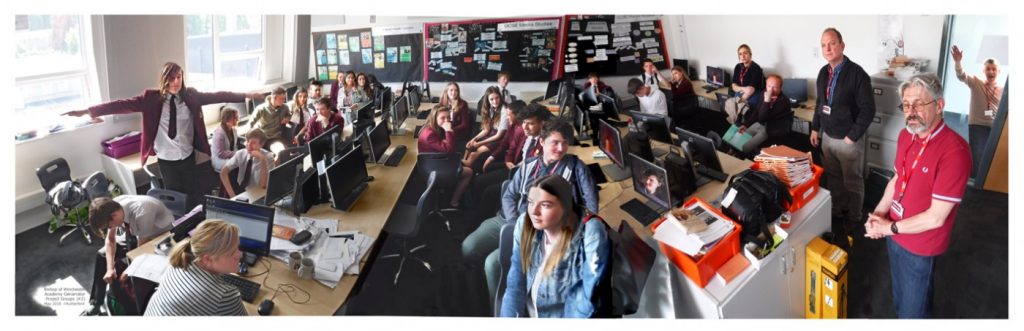 Genarrator project groups at Bishop of Winchester Academy – May 2018 photo ©Rutherford














 Verbal autopsy paper published two days ago
 ESRC Studentships for 2027 Entry: Opportunity Now Open
 SONAMONI contributions to Safety Conference 2026 in South Africa
 Three CMWH presentations at Berlin conference
 Horizon Europe Cluster 3 (Civil Security for Society) 2026 Calls Now Open
 MSCA Doctoral Networks 2026 Call Information Webinar
 ESRC Festival of Social Science 2026: Application Deadline Extended to Thursday 25 June 2026
 Reminder: Register for the ESRC Festival of Social Science 2026 Information Session
 ECR Funding Open Call: Research Culture & Community Grant – Apply now
 ERC Advanced Grant 2025 Webinar
 Update on UKRO services
 European research project exploring use of ‘virtual twins’ to better manage metabolic associated fatty liver disease