/ Full archive

The ACORN Fund Additional Round is Closing Soon

As advertised earlier, the ACORN Fund (Acceleration OResearch & Networking) for Early Career Researchers is open for applications  for projects that can be delivered before the end of July 2021. This round differs from previous rounds due to the short turnaround time, smaller budget and limited activities eligible for funding.

The  closing date is Tuesday, 4th May 2021 (5pm) and all applications must be submitted to the email account: acorn@bournemouth.ac.uk. Please use only this email address for submitting your applications.

On BU OneDrive, you can find out more by reading the updated ACORN Fund Policy (the guidance document) and apply using the Application Form for this round. In addition, to assist with the budget section, please refer to the RKE Internal Funding Sample Costs. As this does not require Full Economic Costing, you should not contact your faculty’s Funding Development Officer to complete the costing for you.

This scheme will provide c. five awards, of up to £3,000 each, to support BU’s ECRs, with the most promising talent, to gain experience of managing and leading their own pilot research projects.

Teaching marketing using the live case study method : Feedback from Dr Kaouther Kooli

Once again, the live case study method proved to be effective in delivering learning for marketing related disciplines. The excitement, the motivation, the engagement of our students taking the Marketing Communication and Brand Management unit is unbelievable and overturns the drawbacks of the challenging digital environment we have been constrained to deal with since the beginning of the Covid 19 pandemic.

My experience with the live case study method taught me several lessons and I would like to share with you some of them:
– Learning is co-created in a safe environment where different stakeholders e.g. tutor, students and client, engage in a project and contribute to solving a real problem for a real organisation. Students develop a strong awareness of their role in their learning journey and the impact they can make in their environment.
– Students are taking ownership of their learning journey and are aware of this. They are not passive, or just taking what is offered to them. They learn, search and discuss theories and concepts, make meaning of all this to be able to face the problem under consideration. They do it brilliantly! As a result they develop a lot more learning than what is stated in the ILOs.
– Confirms that students are not all the same and reinforces the importance of their background e.g. cultural, professional, that should be considered rather as a platform they build on when approaching the problem to be solved and this platform would give them confidence and strength in their endeavour. As academic we should encourage this and help them to express who they really are because it can only be beneficial for them, their learning experience and their contribution the community.
– Strong partnerships are concretised between BU and the community. I have been working with a charity hub i.e. aDoddle.org since 2016 and the relationship with this organisation has developed into a strong partnership. Every year, our students make huge contribution to this charity hub and by doing so, they continuously contribute to connect those who need helps with those who can help in Bournemouth Christchurch and Poole area and beyond.

You can find in the YouTube videos below testimonies from students and one of our clients telling us a bit of their journey with us:


If anyone (students, academics and partners) wishes to discuss any aspect or exchange any idea in relation to the live case study method, and how we can make our relations with external organisations stronger, please contact Sarah Hopkins shopkins@bournemouth.ac.uk, Mark Painter mpainter@bournemouth.ac.uk or Kaouther Kooli kkooli@bournemouth.ac.uk .

Dr Kaouther Kooli
Principal Lecturer in Marketing
Business School, Bournemouth University

New research about deaf and disabled people in TV

In a follow-up to BU’s recent research investigating the current state of the UK television industry’s workforce (State of Play), we are excited to be working once again with the TV union Bectu. This time we are examining the experience of disability, joining forces with the actors’ union Equity, and the group Deaf and Disabled People who work in TV (DDPTV).

Disability by design: Representation in TV – our new survey launched earlier this week – is part of a wider effort to address concerns about the under-representation of deaf and disabled professionals in the TV workforce. The outcome of our survey will help to inform approaches to amplify the voices of deaf and disabled professionals, educate on legal obligations and provide examples of lived experience. The project is part of an evolving package of work within FMC focused on the experience of media work (and work in the television industry in particular) which is highlighting some of the more problematic and often overlooked structural issues that beset these industries.

For further information about this and related research into work in the TV industry, contact Dr Christa van Raalte or Dr Richard Wallis.

Forthcoming events

Please see the forthcoming Science in Parliament events. These are free to BU staff. Contact Sarah on policy@bournemouth.ac.uk if you would like to book onto one of these events. Both academic and professional service staff are welcome to attend.


Monday 5th July, online at 5.30pm

 Climate Change

Sponsored by the Met Office


Monday 13th September,5.30pm

Mathematics and Algorithms

Sponsored by The Institute of Mathematics and its Applications


Tuesday 12th October, 5.30pm

 Neurological topic

Sponsored by the British Neuroscience Association


Monday 8th November,5.30pm

 COP 26

Sponsored by the National Physical Laboratory


Monday 29th November, 5.30pm

– Bioethics related – title to be confirmed

Sponsored by the Nuffield Council on Bioethics


Monday 6th December, 10.00am

STEM for Britain awards

EU RD and space programmes signed off

According to the latest news published on Research Professional, Members of European Parliament (MEPs) have formally signed off on the EU’s 2021-27 R&D and space programmes, as well as the post-Brexit EU-UK trade and cooperation agreement through which the UK will associate to the R&D programme, Horizon Europe.

Horizon Europe and the European Institute of Innovation and Technology, which draws funding from the R&D programme to support innovation but has separate legislation, were both approved by enormous majorities in European Parliament votes on 27 April.

Horizon Europe will have a budget of €95.5 billion, of which the EIT will get about €3bn. The legislation for both programmes was designed so they could start working from 1 January, although their formal sign-off will pave the way for grants to start being awarded.

The Parliament also voted by 660 votes to five in favour of the trade and cooperation agreement that defines the terms for the future EU-UK relationship. It was agreed by negotiators in December and had already provisionally entered into force.

Only the formality of a further behind-the-scenes sign-off is now needed to complete UK association to Horizon Europe, which will grant the country near-full participation rights in exchange for full provision of the funding for any grants won, as well as an administration fee.

Event: Journalism – an effective bridge between research and policy?

Social Science and the media: How can journalism provide an effective bridge between research and policy?
A free online event on 24 May to explore how we can grow a more supportive relationship between journalism, social research and policy. The meeting is part of a series organised by Transforming Evidence, an interdisciplinary collaboration aiming to share learning, connect communities and generate meaningful research about how we make and use evidence. This workshop aims to bring together academics, researchers, journalists and funders to discuss the current and potential role of the media in influencing the relationship between university research and policy

AGENDA

13:00 Welcome and introduction to Transforming Evidence

Professor Annette Boaz, co-lead Transforming Evidence.

13:05 Introductions

Jonathan Breckon(Chair)

13:10 What more can social scientists do to provide relevant and high-quality news content?

David Walker, contributing editor Guardian Public, and ex-ESRC Board Member

13:20 The role of academic expertise in media debates on Europe in post-Brexit Britain

Professor Catherine Barnard FBA, Deputy Director, UK in Changing Europe.

13:30 Educational research for the media; how best to inform policymaking for schools?

Fran Abrams, Chief Executive, Education Media Centre.

13:40 Academic rigour and journalistic flair: what role can intermediary organisations play
between journalist, academics and policy makers?

David Levy, Trustee, The Conversation UK and Senior Research Associate,
Reuters Institute for the Study of Journalism, University of Oxford

13:50 Chair leads discussion with speakers & audience Q&A

14:15 Finish

PhD student fellowship opportunity (food science/technology)

The Parliamentary Office of Science and Technology (POST) is currently recruiting for the 2021–2022 IFST-POST fellowship. Applications are open to PhD students of UK universities researching a food science and technology topic. Applicants should be in the second or third year of their PhD studies, undertaking research studies related to Food Science and Technology at a UK university. Students who are writing up their theses but have not yet graduated are eligible to apply.

For all its fellowship schemes, POST welcomes and encourages applications from underrepresented groups.

The deadline for application is 23:59 on 7th June 2021.

Please contact the policy team for support and advice before making an application. You can contact Jane and Sarah on policy@bournemouth.ac.uk

More information:

POST and IFST are offering a three-month fellowship to PhD students completing a PhD on a food science and technology topic based in a UK University. There is one funded fellowship available.

Successful applicants will be based in UK Parliament, supporting its use of research evidence. Most fellows assist POST in providing briefing material for parliamentarians on emerging food science and technology topics. Work may include:

  • Producing a POSTnote or POSTbrief (briefing documents to help inform the work of MPs and Peers), or contributing to a longer briefing report.
  • Assisting a select committee in an ongoing inquiry.
  • Organising a seminar to inform or disseminate research.

PhD Fellows are encouraged to interact closely with people and activities in the two Houses of Parliament, including Select committees, MPs and Peers, their support services, ‘All-Party Parliamentary Group’ meetings and the very wide range of other activities at the Palace of Westminster.

The fellowship can be carried out full-time for three months or part-time over a longer period. Successful applicants will be expected to start their fellowship between September 2021 and June 2022. The exact start date is to be agreed between the applicant, POST, and the applicant’s supervisor.

About the Institute of Food Science and Technology

The Institute of Food Science and Technology (IFST) is the UK’s leading professional body for those involved in all aspects of food science and technology. IFST is an internationally respected independent membership body, supporting food professionals through knowledge sharing and professional recognition. IFST membership comprises individuals from a wide range of backgrounds, from students to experts, working across a wide range of disciplines within the sector.

POSTnotes written by fellows funded through the IFST POST Fellowship scheme include:

Funding arrangements

IFST will support the Fellow by providing funding of £5,000 to cover a 3-month extension to their PhD award, maintenance (including caring costs) and accommodation (including travel costs for relocation).

For even more information and to read the application pack click here.


Parliament, policy engagement, and devolved policy training sessions for researchers

UK Parliament’s Knowledge Exchange Unit are offering two free online training sessions for academic researchers and knowledge mobilisers.

Please email policy@bournemouth.ac.uk if you secure a place at either of these events so we can track interest in the events we are sharing. Thank you.


Academic Librarians – Parliament/research engagement training

Parliament’s Knowledge Exchange Unit have a (free) online training session for academic librarians exploring ways to engage with Parliament and support researcher engagement with Parliament on 20 May 10:00-11:00.

To register book here.  

The policy team tracks the usefulness of the information we share so it’d be great if you could email us at policy@bournemouth.ac.uk if you plan to attend this event.

Here’s the event blurb:

This training webinar is aimed at academic librarians, i.e. people whose role is focused on overseeing and sharing information and resources with academics and researchers in an academic community. This includes academic librarians supporting researchers, scholarly communications librarians and librarians involved in REF support.

Academic librarians can play a key role in supporting academics in their parliamentary engagement and enhancing the academic research flowing from their institution into UK Parliament.

In the session, we will explain the role of Parliament, the place of research evidence in parliamentary activity, the role of the House of Commons Library, and how academic librarians and researchers can get involved with the work of UK Parliament and the House of Commons Library.

This training session will be delivered by the Knowledge Exchange Unit with a speaker from the House of Commons Library. It will share insights for academic librarians and the researchers they work with around how to engage with UK Parliament, with a particular focus on the House of Commons Library.

The session is focused on practical information and advice, with opportunities for Q&A.

Please note there is a short pre-requisite activity for this session of no more than 15 minutes; you will receive details of this with your joining instructions.

As a result of the training, academic librarians will:

  • Understand the different parts of Parliament, the place of research evidence in parliamentary activity, and how expertise can be shared with Parliament
  • Understand the role of the House of Commons Library, the resources and services it provides, and how it uses academic research and expertise, and
  • Be aware of how they can support academics in their parliamentary engagement and enhance the flow of academic research from their institution into Parliament and the House of Commons Library
  • Know how to stay in touch with opportunities to engage with Parliament

The session will be recorded and available to watch on the UK Parliament website afterwards.


Space Strategy & Satellite Infrastructure

The Commons Science and Technology Committee has opened a new inquiry into UK space strategy and UK satellite infrastructure and has invited written evidence by 24 June.

Here are the terms of reference:

  1. What are the prospects for the UK’s global position as a space nation, individually and through international partnerships;
  2. What are the strengths and weaknesses of the current UK space sector and research and innovation base;
  3. What lessons can be learned from the successes and failures of previous space strategies for the UK and the space strategies of other countries;
  4. What should be the aims and focus of a new UK Space Strategy, including considerations of:
  • technology;
  • skills and diversity;
  • research funding, investment and economic growth;
  • industry;
  • civil and defence applications;
  • international considerations and partnerships;
  • place;
  • current regulatory and legislative frameworks and impact on UK launch potential; and
  • impacts of low Earth orbit satellites on research activities.


What needs to be done to ensure the UK has appropriate, resilient and future-proofed space and satellite infrastructure for applications including:

  • navigation systems;
  • weather forecasting;
  • earth observation including climate change; and
  • communication (including broadband).

Contact the policy team (policy@bournemouth.ac.uk) if you wish to provide written evidence to this inquiry.

Funding Development Briefing – Spotlight on British Academy Mid-Career Fellowships

The RDS Funding Development Briefings occur weekly, on a Wednesday at 12 noon.

Each session covers the latest major funding opportunities, followed by a brief Q&A session. Some sessions also include a spotlight on a particular funding opportunity of strategic importance to BU.

Next Wednesday 5th May, there will be a spotlight on British Academy Mid-Career Fellowships.

We will cover:

  • Overview of the programme
  • How to apply
  • Q & A

For those unable to attend, the session will be recorded and shared on Brightspace here.

Please email RKEDF@bournemouth.ac.uk to receive the Teams invite for these sessions.


Research impact at BU: reducing fatigue in people with multiple sclerosis & tackling audiovisual piracy

A series of posts highlighting BU’s impact case studies for REF 2021. (The full impact case studies will be published on the REF website summer 2022.)

Reducing the impact of fatigue in people with multiple sclerosis using a novel fatigue-management programme

Research areas: Health Care, Digital Health, Psychology & Computing

Staff conducting research: Professor Peter Thomas, Dr Sarah Thomas, Dr Andy Pulman, Dr Sarah Collard, Dr Huseyin Dogan, Dr Nan Jiang

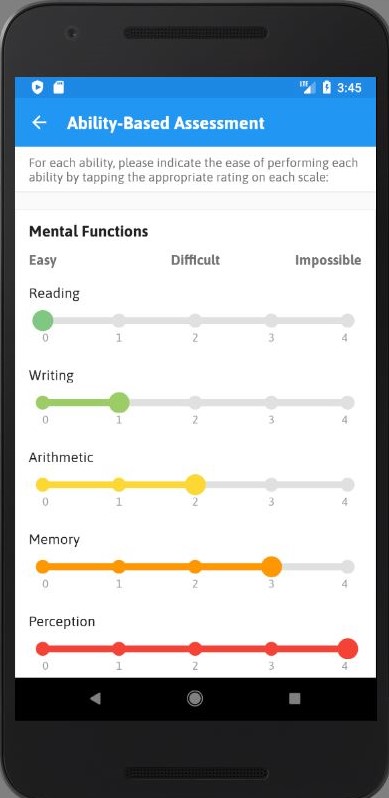
Background: Drug treatments for fatigue for people with multiple sclerosis (PwMS) are not always effective and, although cognitive behavioural therapy has proved helpful for other conditions, there was a lack of evidence supporting its use for managing MS fatigue. BU researchers conducted a scoping exercise (funded by the MS Society) and a Cochrane review, which confirmed the evidence gap in psychological treatments for MS fatigue. Thomas and her team worked with Poole Hospital to develop FACETS (Fatigue: Applying Cognitive behavioural and Energy effectiveness Techniques to LifeStyle), a group-based fatigue management programme, designed to be easily implemented in clinical practice. The MS Society also commissioned the team to explore the digital delivery of the programme and a protoype Android app was developed and tested.

The impact: An estimated 13,931 PwMS in the UK have participated in FACETS programmes, and the CEO of the MS Society confirms: “Our feedback from people with MS has shown the positive impact that the FACETS programme has on their lives, making a real difference”. The MS Society also supported the national roll-out of FACETS via delivery of a one-day facilitator training course developed by the research team, which has so far trained more than 300 healthcare professionals in the UK.  FACETS was included in the National Institute for Health and Care Excellence (NICE) guidelines for managing MS, and the MS Society website recommends its use. The impact of FACETS is global – it is being delivered in Ireland, Germany, Denmark, France and Australia, and the programme also been used or adapted for use in Spain, Argentina, New Zealand, Tasmania and New Jersey, USA.

Defeating the pirates: creating a technical guide to support EU law enforcement agencies in combatting audiovisual piracy

Research area: Computing & Informatics

Staff conducting research: Professor Vasilis Katos

Background: Cyber attribution involves processes in the tracking and identification of perpetrators using computer networks for hacking or conducting other crimes. In 2018, audiovisual (AV) piracy generated more than €940m in unlawful revenue in Europe alone. The European Union Intellectual Property Office (EUIPO) commissioned a technical guide to combat illegal Internet Protocol TV (IPTV) – television content formatted for internet delivery. Three areas of research undertaken by BU and academic collaborators – malware forensics, open-source intelligence and digital forensics – provided the basis for the 217-page guide, which underwent a three-month review by industry experts such as Sky and BT, law enforcement agencies and the European Agency for Criminal Justice Cooperation.

The impact: The final version of the guide was distributed to all EU law enforcement organisations, who now use it in IPTV investigations; it is also included in training material by the European Union Agency for Law Enforcement Training. In 2019, the guide supported operations by six EU member states to dismantle an international criminal network responsible for IPTV crime, with estimated damages of €6.5m. Last year it helped in the closure of an illegal international service, with more than 2m subscribers, representing an estimated €15m in profits for the criminal network. The guide also demonstrates how to identify pirate services and, for the first time, maps the illegal online video streaming ecosystem. The UK Intellectual Property Office said: ‘research conducted by BU has been critically important in providing a credible and collective analysis of how the environment of online streaming is both used and abused’ and has already identified the potential for transferring the research to other areas of IP crime.

Next post: saving an iconic freshwater fish from extinction and improving wellbeing with multi-sensory art installations.

Launch of the revised Academic Study Leave Policy

For some staff, research activity has understandably taken a back seat over the past 12 months due to the change in education models, adaptation to online teaching and focus on supporting students during this difficult time. The BU Academic Study Leave Policy has been revised and relaunched to provide opportunities for staff to engage actively and intensely in research activities that enable research performance in line with BU2025. Study leave is an important part of BU’s plans to recover from the impact of the pandemic and could be used, for example, to re-establish strategically important research activities from 2021/22 onwards, particularly those that lead in increased research income, outputs and/or impact.

The three main changes are:

  • In line with the BU2025 Research Principles, the purpose of the Academic Study Leave Policy has been updated from one which provided leave for education, professional practice or research to one which grants leave for research only. This proposed change is in response to the BU2025 challenge to build significant research capability across the University.
  • The priority list for academic study leave has been expanded to include ECRs and professional & support staff undertaking doctorates.
  • Changes to the application and approval process.

The revised Policy is available on the Staff Intranet here: https://intranetsp.bournemouth.ac.uk/policy/academic-study-leave-policy.docx. It is being launched now to tie in with planning for appraisals, with a view to any study leave beginning from academic year 2021/22 onwards. Applications should be discussed with appraisers as part of the appraisal round this summer.

Research data: new dataset available

Prof. Mike Silk recently published his research data on ReShare, the UK Data Service’s research data repository, for his ESRC funded project Sex work in the context of sports mega events: Examining the impacts of Rio 2016. 

Many funders and journals require the data supporting research publications to be deposited for long-term preservation because of its value to future research. Here’s what Prof. Silk had to say:  

What’s most exciting/important about your research?  

Probably centring marginalisation / inequality and ensuring visibility / voice for those who are often excluded and/or peripheral to the juggernaut of mega-events (involving as it does securitisation, sterilisation of communities, event-led urban renewal that is often a guise for further marginalisation).  

What do you see as being the benefits of making your data available? 

The data being available means their voices live on past the event itself. Given this particular dataset is the first of its kind, having this data available will hopefully be a useful comparator for those addressing such issues at future events (e.g., Tokyo 2020 / Paris 2024). 

Any advice you would give to anyone about managing their data effectively for successful deposit? 

Most important thing for me was ensuring familiarity with the UK Data Service’s ‘Plan to Share’resource … essential to writing the bid and thereby study design. It meant data could be collected in a particular format that made it easy to deposit, as opposed to having to re-work the data at the conclusion of the project (once funding has run out!) to make it ‘shareable’! Going through this resource in advance of bid submission invariably strengthens the quality of the actual bid.  

The dataset is available on request via this link: 

https://doi.org/10.5255/UKDA-SN-853702 

What support is available for researchers? 

The library offers guidance and support for data management from bid preparation (Data Management Plans) to deposit in BORDaR, BU’s research data repository. Visit our research data management guide or email us at bordar@bournemouth.ac.uk. 

Participants needed for a study on educators’ wellbeing.

Researchers and students at the Department of Psychology are conducting research into the factors promoting and otherwise affecting the wellbeing of education professionals specifically during this phase of the covid-19 pandemic (Ethics ID:34613). Via an anonymous, short survey, gaining the views of a wide range of education professionals nationally we aim to provide the Department of Education and the whole community of education with an evidence-based perspective on what is working well in schools to support staff wellbeing.

To contribute please forward the following link to any friends/family/contacts involved with teaching and learning (senior leaders, teachers, support staff and all other educational professionals) in primary or secondary schools in the UK https://bournemouthpsych.eu.qualtrics.com/jfe/form/SV_6mvGIrW6hk9z62F

If you have any questions or comments please contact us at researchwellbeing@bournemouth.ac.uk

Your support with this research would be greatly valued.