Public Engagement can be extremely rewarding, beneficial for your professional development, and judging by the recommendations from the Stern review it’s going to be a great source of impact for the next REF, but is your time being invested in it in the best way? According to this recent blog post by Steven Hill, Head of Research Policy for HEFCE if you want to be using public engagement to generate impact, the key is public involvement in the research. Find out more here.
Tagged / public engagement
Interested in winning £50 of Amazon vouchers?
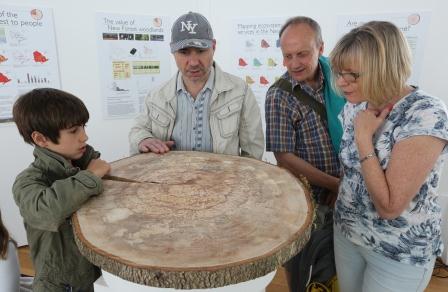
Bournemouth University Festival of Learning 2016
I’m looking to get as many students and staff members at BU (both academic and professional services) to complete our annual public engagement survey. Public engagement is about two way interaction with the public to generate mutual benefit, for example running a Festival of Learning event to share research outcomes, consulting with a public panel about where research is needed, or running a project in collaboration with a community partner. It has lots of great benefits for researchers, the community, and the university, and because of this, I want to make sure we’re doing it in the best way possible. This survey aims to understand our current strengths as an engaged university and identify areas that we can improve on using the National Coordinating Centre for Public Engagement’s EDGE tool. It takes between 5 and 10 minutes to complete, and if you leave your email address at the end you’ll be entered into a prize draw with the chance to win a £50 Amazon voucher.
Complete the survey here
Public Lecture Afternoon
Last week we welcomed 35 members of the public into the EBC for an afternoon of conversation around conservation! We welcomed 5 different speakers including 3 academics and 2 post docs from the Faculty of Science and Technology to share their research through a series of presentations and Q&As.
Amanda Korstjen’s opened the event with a talk about her work in tropical forests supporting conservation of primates before Demetra Andreou took over to share how we can use DNA to inform conservation, for example through identifying species of fish present in a river through water samples. We then took a short break for some cake (a key part of any RKEO organised event) before Liz Franklin took over to share her work on pollinators and giving advise on how to make your gardens more bee friendly and speaking on how consideration of pollinators should be a key part of urban planting spaces. We finished off the day with two talks about local conservation in Poole Harbour including Ann Thornton talking on how thickening algal mats are impacting wading birds and Leo Clark sharing his research into the impact of shellfish harvesting on the area.
The day was a great success with highly positive feedback from the audience on the topic. Thank you to all involved for giving such excellent talks.
If you’d like to take part in a future lecture day email nkay@bournemouth.ac.uk 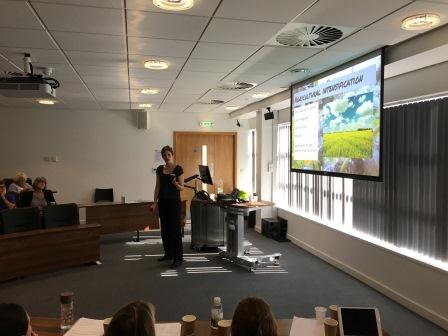
My Voice, My Story: Festival of Social Science
I cannot tell the truth about anything unless I confess
being a student, growing and learning something new every day.
The more I learn, the clearer my view of the world becomes
During November 2016, BU will be hosting the ESRC Festival of Social Science. This is part of a a national celebration of the social sciences that open up sites of sharing and critical reflection through debates, conferences, workshops, interactive seminars, film screenings, virtual exhibitions and much more.
Our programme of Fair Access Research draws on innovative insights and research approaches from the social sciences in order to understand and make a difference for students who are underrepresented in or marginalized by higher education.

For the Festival we will be working with a group of students to support them to share their stories through photography, group reflection and creative retelling. In telling individual stories we hope to elucidate collective responses to the very real challenges of being a student at this current moment.
You are invited to a workshop on Monday 7th November between 10:00-13:00 exploring what it means to become and be a student in the 21st century.
The workshop will be a space where students’ voices and stories are heard, listened to and reflected on. This project is rooted in the idea that the most effective research and policies are those shaped by the voices of the communities intended to be reached. The stories and exhibition will creative the space for us all to learn together to make higher education more accessible, engaging and equitable for all.
If you want to listen, reflect and help make a difference book here. Please share with colleagues and networks.
Between now and November go to Poole House to see the exhibition our colleague Dr Jacqueline Priego has curated that documents the lives and experiences student carers.
For more information about BU’s Fair Access Research, email the Principal Investigators, Dr Vanessa Heaslip (vheaslip@bournemouth.ac.uk) and Dr Clive Hunt (chunt@bournemouth.ac.uk).
To book a place at the workshop, follow this link.
Public Engagement Training Opportunities
Many of you may be interested to see the Royal Society have just launched a series of public engagement training workshops over the next year.
These include
Introduction to public engagement
Monday 17 October 2016 and Tuesday 31 January 2017
A course is for those with little or no experience aiming to provide you with the tools to get started
Public engagement practice
Thursday 10 November 2016
A course for those with some experience that will demonstrate how to create research-led projects that meet engagement aims.
Engaging with schools
Thursday 2 March 2017
A course for those scientists with some experience that will enable researchers to create effective engagement projects in schools.
Click on any of the above links to find out more about the courses
NERC: New public engagement funding call
Engaging the UK public with the big issues of environmental science
NERC is inviting proposals under the Planet Earth Pilot programme for public engagement projects costing up to £20k that must be delivered between January and end of March 2017.
This call initiates delivery of NERC’s public engagement strategy through:
- engaging members of the UK public with relevant contemporary issues of environmental science through delivery of environmental science public engagement activity
- building public engagement capacity in the environmental science research community and providing opportunities for early career researchers and PhD students to develop skills, practice and embed public engagement in their research careers
- building partnerships between researchers and publics or public-facing groups, and between research organisations.
Projects will focus on broad, contemporary issues of environmental science, not specific research projects or grants.
An additional budget is available to provide matched funding up to the total value of the proposal (an additional maximum £20k) to provide training and support for the involvement of early-career researchers and PhD students in public engagement projects.
Further details of this call can be found in the Announcement of Opportunity on the NERC website.
The closing date for proposals is 16:00 on 3 November 2016.
RKEO’s Genna West (Engagement and Impact Facilitator) will be attending the information event on Thursday 22 September – please contact her for further details. The aims of the event are to:
- introduce the call and give the opportunity to ask the NERC team questions
- showcase examples and experiences to spark ideas
- provide a forum for networking and forming collaborations.
If you’d like to discuss ideas for an event or need inspiration please contact Genna or Naomi Kay (Public Engagement Officer).
And, as always, please inform the RKEO Funding Development Team as soon as possible if you are interested in this call, so that they can support your bid.
‘Students who bounce back’: Photo exhibition
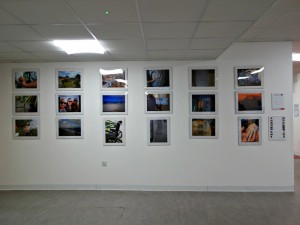 From 12 September, the Centre for Excellence in Learning (CEL) is holding a photo exhibition in Poole House, next to the Cash Office. This exhibition is part of the ‘Students who bounce back’ project, a study funded by Bournemouth University’s Fair Access Agreement Management Group. The study is being conducted by researchers at CEL, in co-production with student carers*.
The photographs displayed in the exhibition were taken by student carers as part of a photodiary exercise. Some of them also came to the University this week to formally launch the exhibition.
‘Students who bounce back’ has the following objectives:
- To explore the life experience of student carers at BU and the impact of caring in their learning experiences.
- To determine, in co-production with students, the main motivations and expectations of their university experience, and their contact with the different support mechanisms in place at BU.
- To contribute with empirical data to the development of the concept of psychosocial scaffoldings as enablers of resilience (or the ability to ‘bounce back’).
- To contribute to wider debates and developments about the learning experience of student carers in the Higher Education sector.
The exhibition will be on display for six weeks. For more information about the project, email Jacqueline Priego.
*A carer is defined as anyone who cares, unpaid, for a family member who, due to illness, disability, a mental health problem or an addiction, cannot cope without their support.
Featured Image Credit: Gareth Williams (CC BY 2.0)
Public Engagement in the sunshine!
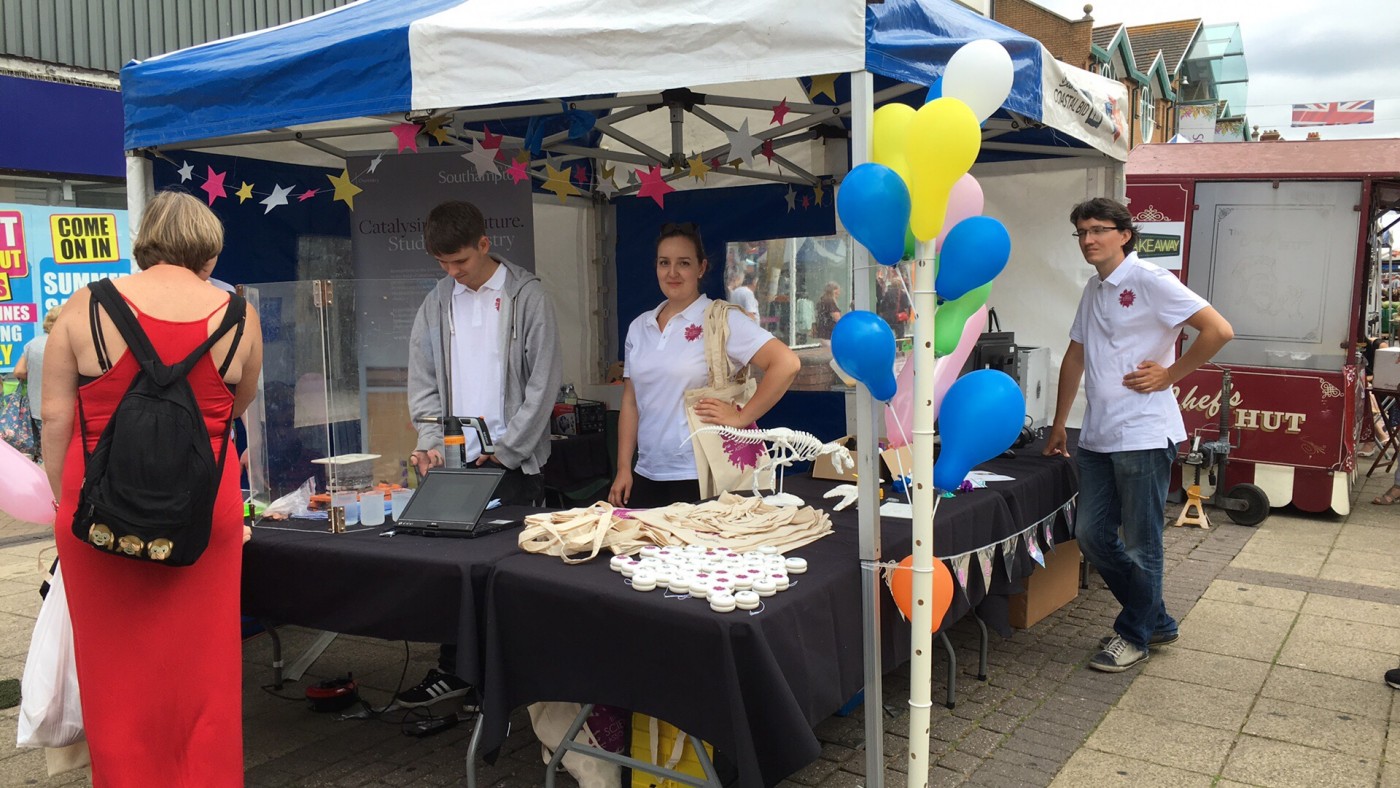
We recently headed down to a very sunny Boscombe for a day spent talking about science as part of their bustling Saturday market. Pitching up in between two amazingly fragrant food stands we spent the day talking to the community about two research projects with the potential to change lives as part of a British Science Association and Royal Society of Chemistry series of events known as Science in the City.
The idea of Science in the City has been to take science into highly deprived communities and talk to people about research who wouldn’t usually engage with us through events such as Festival of Learning. Working with University of Southampton (UoS) we submitted the bid in December 2015 and were successful in being picked to host an activity as part of the 2016 round of funding and approached Boscombe Market for a venue to let us talk to the community.
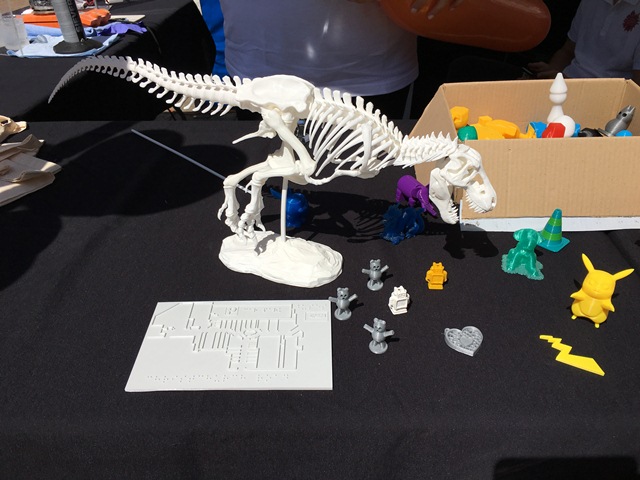
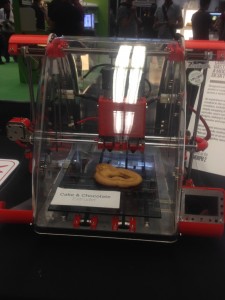
Keen to take the opportunity to share some of our high profile research we were especially pleased to be joined by Oleg Fryazinov and Mark Moseley who have been highly involved with the award winning SHIVA project which enables disabled children to design and 3D print objects using a simple interactive system that can be controlled using either touch or eye tracking software. This project has recently received funding through HEIF5+1+1 to expand the project further and work with new schools. Currently they are working closely with the Victoria School in Poole and may of the objects seen in the image below where designed by their students (unfortunately not the dinosaur as the software isn’t quite up to this yet!).
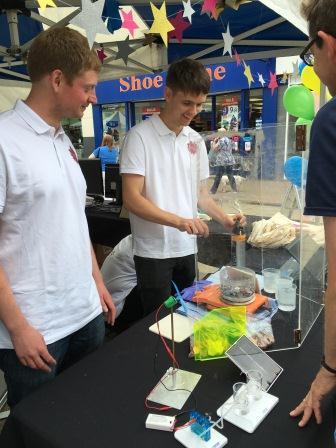
As well as BU’s research we also took an activity from UoS’s public engagement Roadshow. David and Alex, two PHD researchers from the university joined us for the day to talk to people about the technology behind hydrogen fuel cells and how they have the power to revolutionise our lives and minimise the amount of unclean energy needed to run our cars, buses and lorries. As well as a demonstration of the fuel cell in action they also were helping the public understand how catalysts could be used to reduce the amount of energy you need to put into a reaction and how coating a cheap substance (in our case copper pennies) with a catalytic material (a brass coating made by coating the penny in zinc and heating to produce an alloy) can reduce the costs involved with using them.
Mental health project in Nepal highlighted in national media
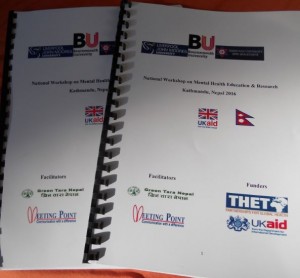 At the National Workshop on Mental Health Education & Research in Kathmandu organised by Tribhuvan University, Bournemouth University and Liverpool John Moores University last week we had quite a few television camera crews and journalists present. Sabitri Dhakal, one of the journalists from The Himalayan Times an English-language daily newspaper in Nepal, wrote a nice feature length article. This piece was based on interviews with BU Visiting Faculty Padam Simkhada and Prof. Edwin van Teijlingen conducted at our workshop. Her article with the title ‘Understanding Mental Health’ is available online.
Mental health in pregnant women and new mothers is increasing recognised on the global health agenda. In Nepal mental health is generally a difficult to topic to discuss. THET, a London-based organisation, funded Bournemouth University, and Liverpool John Moores University in the UK and Tribhuvan University in Nepal to train community-based maternity 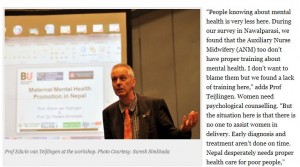 workers on issues around mental health. Thus far three groups of UK health and education experts have gone out to Nepal to train these communit maternity care providers, called Auxiliary Nurse Midwives (ANMs). ANMs, who are the key maternity service providers in rural birthing centres of Nepal, have received only 18 months of training and the training curriculum does not refer to dealing with mental health issues. The next group of volunteers is due to travel in September.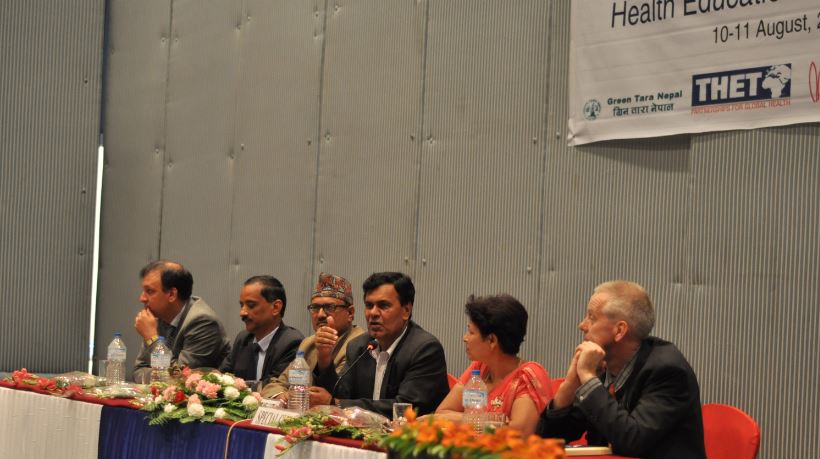
Prof. Edwin van Teijlingen
CMMPH
A great opportunity from the collaboration of Bournemouth University and Nuffield Foundation
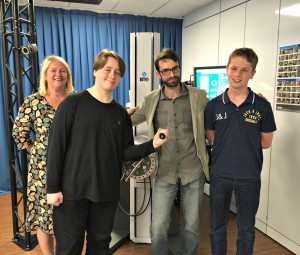
The Faculty of Health & Social Sciences (FHSS) has been hosting four Nuffield Foundation-funded college students this summer as part of Nuffield’s Research Placement programme. Two of the students (Jamie Singleton and Freddie Corrie-Deane) are working under the guidance of FHSS PhD student Francesco Ferraro, who is supervised by Professors Alison McConnell, Tom Wainwright and Dr James Gavin.
Jamie and Freddie joined us on the 25th of July and they are already familiar with many research aspects, such as: writing a review, dealing with ethical issues, using complex devices and tackling statistical issues.
Francesco has found the experience of working with the students rewarding from many perspectives: “I do trust their questioning and their will to learn and understand more, as it will help the project adding new questions. Conducting research is not simply a duty to search for results; producing research involves the ability to share it, by allowing others to join, bringing their own curiosity and surprise”.
A quote from Richard Feynman sums up the project so far “I would rather have questions that can’t be answered than answers that can’t be questioned.”
Here are a few thoughts from those involved in Freddie and Jamie’s Nuffield placements:
“Joining a research study, I knew I was in for a hefty chunk of reading, and with a pessimistic outlook I thought it would all be dry and bland, and that it would be the source of countless days of boredom. Thankfully I was wrong, and while I did have to spend an obligatory day or two reading background information, studies and manuals; the rest of this placement has been involved with the workings of brand-new machinery in the Orthopaedic Research Institute and going out into the local community to talk with people, both of which have been challenging and engaging in all of the right ways to make this experience an enjoyable one.
Our engagement in the community started very early into the placement, on the second day in fact, when we tagged along with Francesco (Our PhD Student overseer/mentor) to an area of sheltered housing to help him give a talk on his study, it was some really good hands on experience (it didn’t hurt that we were offered a biscuit or two). Following this line of talking to people, Jamie and I have spent the last couple of days walking around the gardens by the seaside talking to people and filling out surveys.
We have also spent a day or two engrossed in the outstanding labs in the Orthopaedic Research Institute, equipped with an amazing range of equipment from a pair of surgery VR simulators that bring in experts and surgeons from all over Europe, to the intricate and ever useful Primus Machine which has more potential and customisable positions than there are hours in the day and so understandably has just as many uses.”
- Freddie
“During the past two weeks at Bournemouth University, we have had lots of hands on experience and witnessed the fun sides of research and also, the not-quite side. The latter, quite funnily enough, involved vast amounts of background reading and studying of protocols. The more enjoyable hands on experience however, consisted of being introduced to and working in the Orthopaedic Research Institute Labs testing out protocols. Much to our disappointment… we had to use numerous fun and expensive pieces of equipment, it was at this point we knew this was the right place to be.
Amongst playing around with expensive machinery such as the PrimusRS and the Virtual Reality machines, we got to do some real work. This work was tough yet enriching and consisted of explaining what the research was about and why it is essential to a sheltered community, and of course when asked, accepting the offer for tea and biscuits. Visiting the shelter did give me an insight into the recruitment process for research projects, and I was quite surprised of how laid back it was.
Next, this time for real we did have work to do such as reading protocols, resources, and informative documents needed to produce our review which was not the most exciting experience however, it was made up for by the interesting walks we went on, through the Lower Gardens, in order to gather vital information that we needed for our project analysis of the PASE questionnaire.”
- Jamie
“I was really excited to visit our Nuffield students who are working with Francesco Ferraro at Bournemouth University. I was particularly keen to see how they have been integrated into the team working on a real life application. I was surprised by the highly technical, world class, equipment available to the team. I was also surprised to see how health care is being ‘gamefied’ with the balance app and the ‘Grail’. Thank you for having us.”
- Rachel Delourme (STEM Advisor & Sustainability Co-ordinator at Cornwall Council) and Shayan Bahadori (from Nuffield Foundation).
“Freddie and Jamie have been a huge asset to Francesco’s work over the past couple of weeks. They have worked together as a team to solve problems and test solutions, and I can see how all three of them have benefitted from the experience. I’d recommend hosting Nuffield placement students to anyone; they’ve been a pleasure to have around and they’ve both made valuable contributions to our work.”
- Alison McConnell
Going for Gold! 3D Scanning, 3D Printing and Mass Customisation of Ancient and Modern Jewellery – Dr. Dinusha Mendis delivers invited talks in Southampton, Newcastle and London
In July 2016, Dr. Dinusha Mendis Associate Professor in Law and Co-Director of the Centre for Intellectual Property Policy and Management (CIPPM) disseminated her research on the Intellectual Property (IP) implications of 3D scanning, 3D printing and mass customisation in Southampton, Newcastle and London.
Questioning what the future holds for IP law as a result of technologies such as 3D printing, Dr. Mendis spoke about the research she has conducted for the UK Government (UK Intellectual Property Office) as well as the research she is conducting for her RCUK/AHRC-funded project ‘Going for Gold’ considering the IP implications of 3D scanning, 3D printing and mass customisation of ancient and modern jewellery.
Cross-Hub Workshop on 3D Printing, Southampton Solent University, 5th July 2016
The event titled ‘Cross-Hub Workshop: 3D Printing: Development, Application and its Contribution to Local Economy’ hosted speakers from industry, academia and professional practice thereby presenting the opportunity to explore and discuss the digital opportunities and its potential contribution to local/national economy in the development and application of 3D printing technology.
Dr. Mendis was invited to speak about her research into the intellectual property implications of 3D printing and presented the results from the commissioned research carried out for the UK Intellectual Property Office, which led to the publication of 2 Reports and an Executive Summary in 2015, whilst outlining the copyright, design and licensing implications relating to cultural institutions and SMEs in 3D scanning and printing ancient and modern jewellery.
Fossilisation and Innovation Law, Innovation and Society Research Group of Newcastle Law School, 11th July 2016
At this 2-day event, Dr. Mendis was invited to speak about law’s response to innovation and emerging technologies. Dr. Mendis’ presentation explored law’s resilience to dynamic change, in particular, and questioned whether legislators should adapt to innovation whilst adopting innovative regulation. The 2 day event began with a keynote speech by Professor Dan Faber of UC Berkeley and concluded with a keynote speech by Professor Karen Yeung of Kings College London.
3D Printing in Law and Society Workshop, Information, Law and Policy Centre, Institute of Advanced Legal Studies (IALS) London, 12th July 2016
The event marked the launch of Dr. Angela Daly’s new book on 3D Printing and commenced with a presentation from Dr. Daly, a research fellow at Queensland University of Technology Faculty of Law, Australia. Dr. Daly’s presentation was followed by an invited guest lecture from Dr. Mendis who spoke about the IP implications of 3D printing, highlighting the challenges and opportunities which this technology has brought about, whilst outlining the next steps for 3D printing, from a legal perspective. More information about the event as well a write up about it, can be found here.
Want to talk about your conservation research with the U3A?
I’m hosting an afternoon of lectures on Wednesday 14 September to give BU academics the chance to share their research with members of the University of the Third Age (U3A).
Talks are usually around an hour including a good amount of time for questions. We usually have around 20 – 30 in the audience for these events. In particular this time they have asked to hear talks around a theme of conservation or nature so I’m especially keen to hear from you in you work in that area.
If you’d like to know more, or may be interested in speaking please drop me an email – nkay@bournemouth.ac.uk.
Take part in the Summer Science Exhibition 2017
Research Centres! This is your opportunity to be part of next year’s Royal Society Summer Science Exhibition, happening in London 3 – 9 July 2017. Showcase your research to over 10,000 members of the public and 2,000 school students that visit the Summer Science Exhibition. Many more are reached through coverage on TV, in the media and online.
The exhibit should be engaging for a non-scientific visitor and include associated interactive activities.
The exhibition provides a unique opportunity to raise the profile of your research and the University with key influencers, including potential funders, government and the public.
The exhibition will take place next year from 3 – 9 July. The call for proposals for next year’s exhibition is now open, and closes 26 September 2016.
Financial support is available for people to take part in this – Please talk to Naomi Kay for more details: nkay@bournemouth.ac.uk/ 61342
Find out more here.
Elderly people, are they physically active? A questionnaire in the Bournemouth area.
Freddie and Jamie are two college students visiting BU thanks to the collaboration with the Nuffield Project.
Their aim will be to produce an epidemiological study in the Bournemouth area using the The Physical Activity Scale for the Elderly (PASE).
This is their abstract:
The Physical Activity Scale for the Elderly (PASE) questionnaire is a common means of assessing the self-reported physical activity in the elderly over a 7 day period, as it is quite simple to administer, it can be carried out in a short period of time, via interview or self-administration (such as a survey) over a large group of subjects. Due to the ease of use, it is often core founding piece of research that occurs in the vast majority of epidemiological studies that revolve around the age group of approximately 65 years and above. One of the key benefits of the scale/questionnaire is how it gives clear and concise numerical results for an individual’s results based on very few basic calculations and how the activities it refers to are on different levels. These can consist of occupational, household and leisure activities however, all have to be within the previous seven days. It also consists of light, moderate and high-intensity activities as well as strength training (Casartelli, Nicola C. 2015).
Originally, when the PASE test came about, the method for assessing its reliability was by using a test-retest system. This is where two of the same type of test are carried out, one at the start of the testing and one after a given period of time, usually between one week and seven months. The second test however, has to be carried out within a time frame long enough so that people cannot recall answers from the previous assessment, but short enough so that the amount of physical activity they do, doesn’t change substantially. In one experiment carried out, the test retest coefficient (Pearson’s) reliability was approximately 1 for both a 3-day interval, and for a 3-week interval. Thus showing the results are easily scored using reliable methods and equipment.
The PASE is a well-established and trialled questionnaire that has been used hundreds of times as an index to understand the amount of physical activity that occurs within a community (Logan et al. 2013). It is also a very small test which takes 5-15 minutes to complete (or even less) for 12 questions.
The questionnaire was also carried out in an investigation in Japan (Hagiwara, A 2008), this had a large sample of 325 elderly subjects (aged 65+). In this investigation, validity was calculated using Spearman’s Rank Correlation Coefficient PASE scores and an accelerometer. Other correlations involving grip strength, body fat percentage, and reliability in this case was tested by the test-retest method. The average in this case was 114.9 which is correlated to energy usage and other factors. The consistencies between the first questionnaire PASE scores and the second were high, in this case this version of the PASE was accepted as valid and reliable due to the correlations and consistencies acting as supporting evidence.
The PASE questionnaire is not only used for the study of healthy elderly adults, it is also utilised for other reasons such as; Does It Predict Physical Health? , Patients After Total Hip Arthroplasty (Casartelli, Nicola C.2015) and for measures in lung cancer (Granger, C. L 2015) as well as many more, showing that this test is a very well respected and used method for scoring different categories of people.
Some reports of the PASE questionnaire say that a larger sample size is needed to gather precise validity and reliability estimates (Casartelli, Nicola C. 2015) however, most resources looked at have a suitable sample size, and some suggesting/ stating that a large group of subjects are needed Amongst the PASE questionnaire, there are two other reliable self-report questionnaires such as CHAMPS and YPAS, however resources suggest the PASE is the simplest and easiest to carry out and interpret.
If you would like to help them please complete the questionnaire HERE
Their project is part of a fall prevention research. More information can be find clicking HERE
What a difference a game makes

 This time in Nepal I noticed for the first time that ordinary people know about Bournemouth. Over the past seven years, since I started at Bournemouth University, I have struggled to explain to taxi drivers, people sitting next to me on public transport, etc. where Bournemouth is situated. This time for the first time I am getting nods and positive signs of recognition. This has little to do with Bournemouth University’s various health and media research collaborations in the country, but it is all to do with The Cherries!
It started last year with Bournemouth’s first successfull year in the Premier League. AFC Bournemouth winning games against some of the top English team during last season has made AFC Bournemouth well-known among many Nepali football fans. So thank you to AFC Bournemouth for no longer having to explain that I work in Bournemouth at Bournemouth University. And that Bournemouth is about two hours away by train from London, southwest of London on the coast to be precise.
Prof. Edwin van Teijlingen
Centre for Midwifery, Maternal and Perinal Health
Bournemouth University
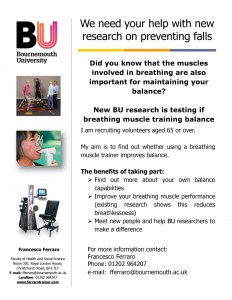
We need your help with new research on preventing falls.
Did you know that falls accident is a major health problem increasing its rate worldwide?
Falls accidents among older adults are known to be the third leading cause of chronic disability with an immense impact on the National Health Service causing a cost of more than £2.3 billion per annum.
Indeed only in the UK 30% of people over 65, and 50% of individuals over 80 falls at least once per year.
How can you help?
According to previous findings, the actions that maintain balance in response to destabilising forces acting upon the body can be helped by respiratory muscles.
But we need to understand more about how these muscles can contribute to enhancing human balance, and for this reason, I am now recruiting participant aged 65 or over to take part in a new study that will deepen the role of inspiratory muscle in postural stability.
Do you want to know more?
Do you wish to take part?
If yes send an e-mail to fferraro@bournemouth.ac.uk
Thank you for reading and sharing.
Taking Tear Gas on Tour
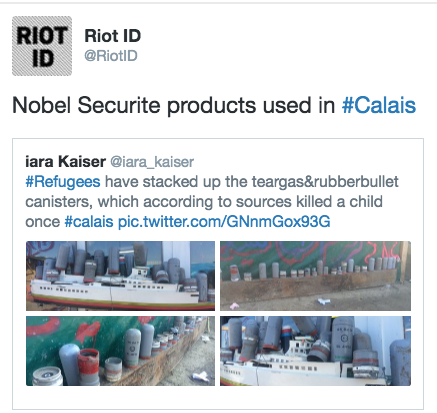 Our French samples of CS gas would leave our audience feeling sick, so for now we stick to power points when our tear gas research hits the road. Since the new year, members of Bournemouth University’s Civic Media team have had the opportunity to travel all around the country giving talks and workshops at UK Universities. Our Tear Gas project brings together academics, NGOs and digital designers to respond to the need for more publicly accessible information regarding tear gases’ effects on human life, animals and environments. We also consult and advise with organisation’s like Amnesty International on the policies and practices associated with the tear gas trade to help support human rights work around the world.
In February project lead Dr. Feigenbaum was invited to talk at the University of York as part of their Social and Political Sciences speaker series. Then it was over to the University of Sussex in early March, sharing two of our Fusion Funded BU Datalabs projects on Mapping Tear Gas and RiotIDs. Later in March, Dr. Feigenbaum headed into London for an invited talk on ‘Tear Gas and Other Media‘ at the University of Westminster. Then the whole team went up North in April for a RiotID workshop hosted by the University of Sheffield‘s Crick Centre as part of an ESRC Seminar Series. Postgraduate students and Senior Research Assistants Oz Demirkol and Daniel Weissmann, as well as URA Laura McKenna helped deliver a co-creation workshop alongside industry graphic design partner Minute Works and our NGO partner Omega Research Foundation.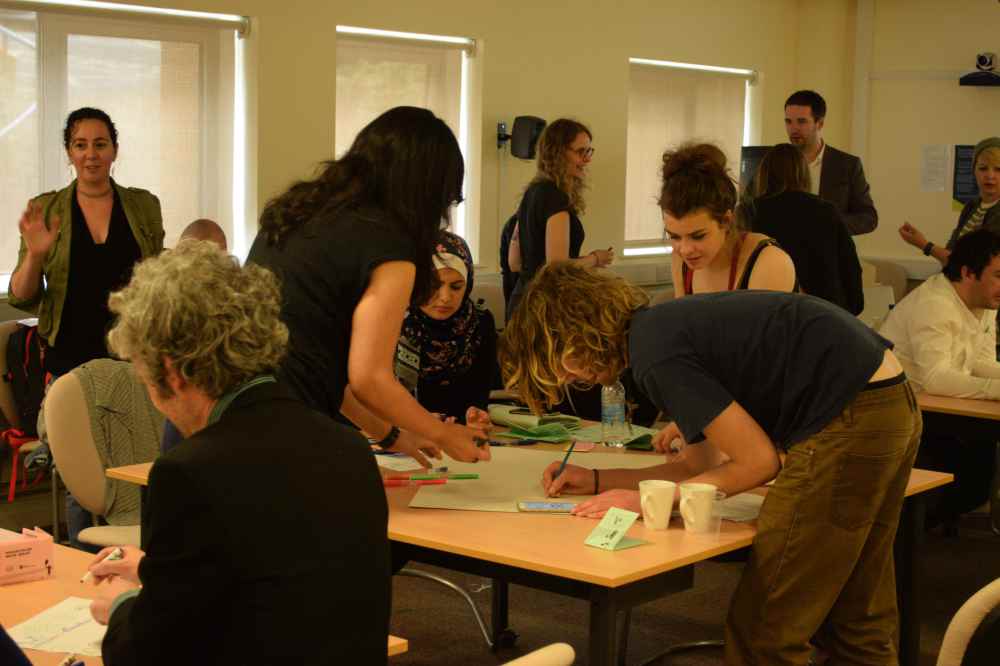
To explore the innovative methodology our project employs, combining investigative and data journalism practices, in early May we teamed up with Kings College London‘s new Centre for Digital Culture to host a two-day investigative research workshop, bringing together academics, NGOs and journalist from around Europe. The event was co-sponsored by both MeCCSA Social Movement Network and the Political Science Association, as well as by our research groups at BU. Later that month we were back on the train headed for Keele University’s Media Environments workshop in May. Dr. Feigenbaum and Minute Works co-designed an interactive workshop using our Fusion model for how to turn research into information visualisations for making impact.
Then it was back to London in June for a double header of events on security and arms control at the University College London. First up was a paper presentation on the Wellcome Trust funded part of our research lookin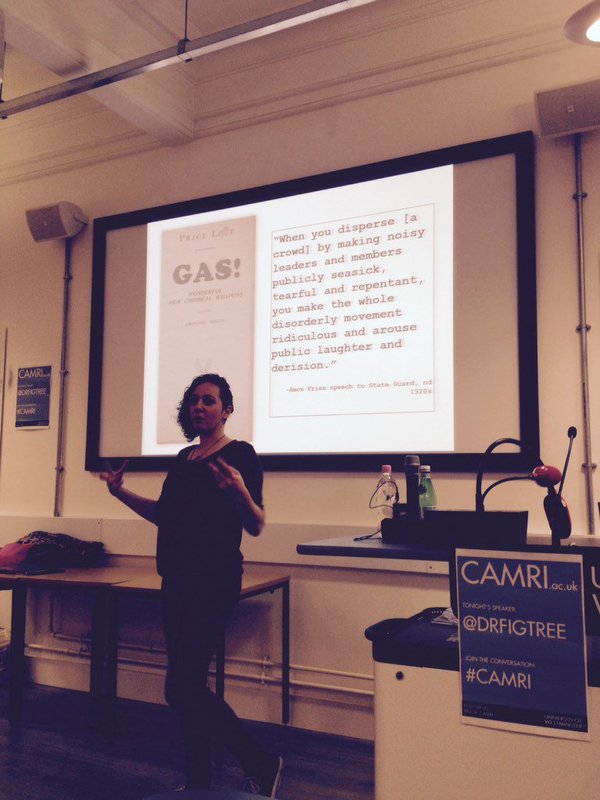 g at the Communication of Medical Knowledge in Tear Gas History. This two day interdisciplinary and international event was hosted aat UCL’s Global Governance Institute. A symposium directly followed on History, Security and Arms Control that marked the end of Professor Brian Balmer’s AHRC project on the Biological Weapons Convention. Speaking to an audience of 50 academics, policy-makers and NGOs, Dr. Feigenbaum presented on ‘Communication Approaches to the History of Tear Gas’, highlighting how policy-based research can engage with new digital technologies, information design and digital storytelling to make meaningful interventions in arms control.
Up next, in July Dr. Feigenbaum and summer URA Lauren Weeks are heading to the International Association of Media and Communication‘s annual conference to present their paper on the project’s use of social media in addressing issues of policing and human rights. Then it’s time for a holiday!
Our Tear Gas project has brought Bournemouth University’s Fusion vision to universities around the country. This work grew out of two fusion-funded grant projects. It has benefited from Fusion’s cross-faculty collaborations, partner networking opportunities, and working with four URA students over the course of its three years. The fruits of this collaborative labour can be seen in the steady stream of invitations we receive to take our cross-partner, co-creation project on tour–sharing and inspiring about issues that matter.
A great day enjoying Life by the River
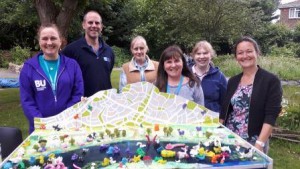 Yesterday the Life by the River Team welcomed over 130 guests to their Festival of Learning Event at the Kingfisher Barn next to the River Stour near Throop. The event was development by Holly Crossen-White and Angela Turner-Wilson from the Public Health Cluster in partnership with Tom Clarke from the RSPB and staff from Bournemouth Borough Council Parks. The aim of the event was to encourage the public to consider the health and wellbeing benefits that can be gained by spending time enjoying the natural environment. Of those who completed an evaluation form 63 % of visitors had never been to this stretch of the River Stour before and all said they planned to return. The Team received lots of positive feedback about the event with visitors saying ‘there was a brilliant atmosphere’ , ‘really relaxing’ and ‘lots of fun for everyone’.
BU staff can login below:
Other services







Recent posts
BU research Funding opportunities EU
 Verbal autopsy paper published two days ago
 ESRC Studentships for 2027 Entry: Opportunity Now Open
- Personal Reflection on Sharing Research Through Art: Collaborating to Understand Ageing in a Digital World
 SONAMONI contributions to Safety Conference 2026 in South Africa
- REF adds ‘midwifery’ to Unit of Assessment 3 name
 Three CMWH presentations at Berlin conference
 Horizon Europe Cluster 3 (Civil Security for Society) 2026 Calls Now Open
 MSCA Doctoral Networks 2026 Call Information Webinar
 ESRC Festival of Social Science 2026: Application Deadline Extended to Thursday 25 June 2026
- Apply now to take part in the 2026 ESRC Festival of Social Science
 Reminder: Register for the ESRC Festival of Social Science 2026 Information Session
 ECR Funding Open Call: Research Culture & Community Grant – Apply now
- MSCA Postdoctoral Fellowships 2025 Call
 ERC Advanced Grant 2025 Webinar
- European Migration Research and Impact – Invitation to a Roundtable Discussion
- MSCA Postdoctoral Fellowships 2025
 Update on UKRO services
 European research project exploring use of ‘virtual twins’ to better manage metabolic associated fatty liver disease
 Research Information Network
- Physical Sciences Case studies: information use and discovery
- Information handling in collaborative research: an exploration of five case studies
- Information literacy monitoring and evaluation
- Data centres: their use, value and impact
- Heading for the open road: costs and benefits of transitions in scholarly communications