w/e 20 November 2020
This week has been all about Government intervention in HE. The news has been non-stop so we’ve sectioned some of the biggest debates into separate documents which are linked to within the main text. Fear not, for our skim readers the basics on each debate are still covered in the main update.
Get comfortable, adjust your posture, the Government seems determined to tick all the boxes on their Santa wish list before the holidays (and the reality of post-Brexit Britain).
Quality: Lower value courses
Defining value for money has been a strong theme for government for the last few years. As has how the government will address their perception (shared enthusiastically by sections of the media) that the sector is riddled with “mickey mouse” “rip-off courses”. We have discussed the challenges of measuring quality mainly by reference to salary many times in our updates. And you will also have noticed (and we have pointed out regularly) that the government have become fixated this year on employment measures alongside continuation as the only useful metrics. As you know, they are encouraging the OfS to sideline the NSS.
So this week has seen some major developments –and you will not now be surprised by the direction…..
… or (spoiler alert) the pattern….
Wonkhe (Mon):
- In late February, Universities UK President Julia Buckingham used a comment piece in The Telegraph to trail a speech on a new tool to measure the value of individual subjects beyond just graduate earnings, including the benefit of students as well as to wider society and the economy – all framed as a kind of alternative Teaching Excellence Framework.
- Now nine months on it looks like the results of that work are set to be published this week, with the same paper reporting this morning that Vice Chancellors are to “launch a crack down” on “low quality” degrees in a new charter aimed at ensuring institutions take a “consistent and transparent approach” to identifying and improving low value courses. Proposals will even consider options for a return (in England) to “external assurance or independent review”. If the events of last week over admissions are anything to go by, DfE will likely publish its own competing plan on value by the end of Friday.
The UUK approach to quality concerns
On Monday Universities UK announced an advisory group were developing a charter to ensure universities (England only) take a consistent and transparent approach on potential low-value/quality courses. The UUK press release explains the rationale: Institutions already monitor and review their courses regularly and have robust processes in place to uphold quality and standards. Assessing value however is challenging, can be subjective and may involve areas such as graduate career satisfaction or employment outcomes many years after graduation.
The terms of reference for the charter are here. The charter advisory group will focus on:
- Demonstrating the sector’s commitment to consistency and transparency in processes to tackle low value courses through the publication of a Statement of Intent, agreed by universities.
- Highlighting best practice where universities are already identifying low value or low quality courses, including the use of metrics, and taking rapid action to address issues.
- Guidance will be published which universities are expected to follow
- Longer term universities will also consider options for external assurance or independent review to make their processes stronger as part of an ongoing charter.
Professor Julia Buckingham, President of Universities UK and Chair of the advisory group stated: The overwhelming majority of courses are high quality and offer good value for students, but we want to address concerns that some could deliver more for students, taxpayers, and employers…The public needs full confidence in the value and quality of a UK university degree and the charter will demonstrate universities’ commitment to constant improvement.”
And by mid week – the somewhat more challenging OfS approach
Just as with admissions UUK were being proactive and trying to address the concerns through self-management. However, on Tuesday the OfS finally announced their (delayed) consultation on regulating quality and standards which they hope will strengthen the English higher education sector and its international reputation.
The proposals are to set baseline requirements for quality and standards including numerical baselines for providers to meet on student outcomes.
Providers will be assessed on absolute performance in relation to the baseline. It applies to all types of students whatever, wherever and however they study. The proposed minimum numerical standards will apply for continuation, completion and employment (at professional level) and they will be absolute numbers that apply to all providers and all subjects and groups of students including familiar splits for full and part time, mature students, ethnicity, gender, disadvantaged background. They will not be benchmarked or adjusted for demographics.
Sector-recognised standards for degree classification will also become baselines. Table 1 on page 3 sets out the proposed definitions.
The OfS is also clarifying the data they will use, the indicators and approach for risk-based monitoring and their approach to intervention. They state this clarity will support them to better anticipate risks to quality and standards and rebalance their approach.
The executive summary is a useful read and they have a guide to the changes.
The OfS reassure that the consultation is taking place at an early stage of policy development and make encouraging noises about listening to providers. We’ll see.
The first and most obvious concern is about the impact of the numerical standards on universities with high numbers of WP students. This ominous section caught our eye:
- We set a minimum baseline requirement for quality, which includes a minimum level for student outcomes. Our intention in doing so is to be clear that all students are entitled to the same minimum level of quality. We also expect higher education providers to improve access to higher education for the most underrepresented groups and to reduce the gaps between the outcomes achieved for these students and the outcomes achieved for other groups. We do not accept that students from underrepresented groups should be expected to accept lower quality, including weaker outcomes, than other students. We therefore do not bake their disadvantage into the regulatory system by setting lower minimum requirements for providers that typically recruit these types of students.
Let’s hope they’re listening to Johnny Rich (Twitter).
The other obvious challenge is about regulatory and bureaucratic burden. There is a clear tension between the aim to reduce bureaucracy and the desire for more and more data, more reportable events, more contextual data indicators to be reported etc. They have a weird argument that more burden in the short term means less burden in the long term because they can make their response proportionate with more data, but we are not sure that anyone will buy that!
The Guardian cover the story in Universities may face sanctions if they fail most disadvantaged and this Wonkhe blog is well worth reading: the B3 bear hunts down Mickey Mouse.
Keen beans will also want to delve into the content that Wonkhe also have on the topic:
Wonkhe also review two papers on the topic:
- The Social Market Foundation has released a briefing paper on evaluating quality in higher education. The think tank provides an overview of the current quality assessment system, how well it works, and covers the main criticisms put against it. It argues that if the government wishes to raise the general quality of higher education in the UK, it must determine the purpose of HE, identify its intended audience, understand the limitations of quality assessment, and decide how important quality assessment is and then fund it appropriately. You can read the full briefing paper here.
- City AM has an opinion piece from the SMF’s [Social Market Foundation] chief economist on how answering the question of what universities are for will go a long way to fixing much of what troubles them.
Commenting on the OfS consultation and proposals, Nicola Dandridge, Chief Executive of the OfS, said:
- These proposals strengthen our ability to intervene where we have concerns. We have previously been clear that we are determined to stamp out any pockets of low quality, and these proposals would not only raise the bar in terms of the quality overall, but would enable us to monitor quality at a subject level, as well as taking into account issues which might be affecting students from particular groups.
- We are also making it clear that we do not accept that expectations should be lowered for students from disadvantaged backgrounds. All students are entitled to the same minimum level of quality and outcomes, and it would be untenable to have a regulatory system which allowed universities to recruit students from underrepresented groups but then set lower expectations for their success.
- Our plans – and the more detailed proposals we envisage setting out in 2021 subject to consideration of responses to this consultation – would allow the OfS to continue to investigate any concerns we have about quality and standards. We will be able to use our full range of powers if we consider that any of our registration conditions are breached.
- We remain extremely mindful of the need to ensure proportionate regulatory burden. Universities and other higher education providers offering high quality higher education across the board will find that our proposed approach to quality places minimal regulatory burden on them.
The consultation also clarifies the inter-relationship between all this and the TEF. See Annex D – there are no questions associated with this. However, it is ominous again:
- “Annex C contains proposals for the way in which weak TEF outcomes for a provider would result in additional scrutiny of that provider’s ongoing compliance with the minimum baseline requirements contained in the B conditions”.
It does too – take a look.
- We expect to consult on our future approach to the TEF in due course…..
- The way we structure our definitions of ‘quality’ and ‘standards’ for the purposes of setting baseline requirements (see Annex A) needs to be coherent with the components assessed by the TEF above that baseline. This is important because providers need to be clear about what is required to satisfy the baseline requirements in the B conditions, and then the performance above this that would lead to particular TEF awards.
- The way we use data to construct indicators, and the indicators that we choose to use for baseline regulation and TEF assessment, needs to be consistent, or inconsistencies explained. The indicators we propose to use in the assessment of condition B3 (see Annex B) cover similar outcomes as have – to date – been measured through the TEF. To ensure the coherence and proportionality of our regulatory activities, and subject to further consultation on both our approach to condition B3 and to the TEF, we intend to align the uses and definitions of the measures within our assessments of condition B3 and TEF, to the extent that this is appropriate and practical (for example, TEF only relates to undergraduate provision, whereas our assessment of condition B3 covers both undergraduate and postgraduate courses).
- The consequences of weak performance in relation to the B conditions, or in a TEF assessment, need to create incentives for improvement for providers that are below the minimum baseline or performing weakly in TEF.
Post Qualification Admissions (PQA)
So it never rains but it pours… last Friday after the UUK and UCAS recommendations on admissions that we covered in our update, the Secretary of State weighed in.
Gavin Williamson announced the DfE would review the admissions processes and potentially move to a post qualification admissions(PQA) system with students only receiving offers after their exam results. The press release focuses on the unfairness of the predicted grade inaccuracies which can work against high achievers from disadvantaged backgrounds whose grades are more likely to be under-predicted…Disadvantaged students are more likely to ‘under-match’ and enter courses below their ability than their advantaged peers. Under-matched students are then more likely to drop out of university, get a lower-class degree and earn less in employment.
Unconditional offers were also mentioned, which the Government maintains are encouraging students to accept offers that may not be in their best interest.
Williamson stated: By using predicted grades it is limiting the aspirations of students before they know what they can achieve…We need to explore how to change a system which breeds low aspiration and unfairness.
The Government committed to consult on proposals for change, including reviewing whether personal statements contribute to the unfairness. Any future change to the admissions system will not affect 2021 entrants although the Government aims to deliver any reform before the end of the current parliament. UUK had recommended no change before 2022/23 admissions at the earliest.
On Monday Williamson issued a short written ministerial statement (WMS). It contained similar material: The current system lacks transparency…In recent years we have also seen the emergence of undesirable admissions practices, such as the mass use of unconditional offers…a Post Qualification Admissions system [would] support social mobility and remove the complexity and undesirable practices of the current system.
In addition, it felt the educational disruption precipitated by the pandemic could also have been mitigated by a different admissions system:We know, due to the pandemic, that students have experienced considerable disruption to their education this year. We believe that the unique set of circumstances students faced could have been better dealt with by a fairer higher education admissions system.
The WMS also references the Sutton Trust’s October briefing on PQA which contains a graduate poll with 66% of graduate in favour of removing predicted grades and basing decisions on actual results – 13% felt the change would actually be less fair.
The elephant in the room here is that disadvantaged students may have greater potential than they demonstrate in exams. Higher class sizes, less individual support, disruptive classroom environments, schools with poorer performance and overall outcomes, time zapping part time, poorer nutrition, less parental experience and support all play a part in achievement and a student’s final exam grade. Some of these students may have been overpredicted grades by a teacher who recognised their potential, under the current system they would have been able to access higher tariff opportunities. Overprediction might even have been a motivator to stretch themselves further overcoming the disadvantage barriers. The same Sutton Trust report that the Government quote also states this:
- A change to a post-qualification system would likely influence university applicants’ choices in different ways. Just over 1 in 5 (21%) of those who achieved final grades higher than their predicted grades said they would have applied to higher tariff institutions if they knew their final grades before applying, while 29% who performed worse than their predictions reported they would have applied for institutions with lower entry requirements.
Successive Universities Ministers since Sam Gyimah have supported the agenda to get high performing disadvantaged young people into ‘high status’ institutions. However, as the Sutton Trust demonstrate above it isn’t that simple and there will be disadvantaged winners and losers.
The Sutton Trust have a good diagram highlighting the differences between the current system and two potential alternatives. Last week UUK came out in favour of PQO (post qualification offers) the Government is currently favouring PQA.
Over here we have the sector’s reaction and statements on the Government’s announcement and there are other engaging blogs and snippets for those who are most interested in this topic to explore.
No. 10
Towards the end of last week the news that several of the PM’s special advisors were leaving No. 10 captured the nation’s interest but what ripple effect might it have on HE? Wonkhe have a few things to say on the matter:
- The big “reset”….means No.10 could be in the market for new takes on domestic policy agendas…it’s been reported that Tory MP and university sceptic Neil O’Brien is to chair the Prime Minister’s Policy Board [now confirmed]. It’s an unpredictable combination of circumstances, but probably doesn’t spell good news for higher education.
- A ministerial reshuffle is being readied for the new year too, and the unpopular Gavin Williamson looks particularly vulnerable after a series of blunders – not least the summer examnishambles. But be careful what you wish for: The Times speculated over the weekend that Michael Gove could make a dramatic comeback to the education brief for 2021.
With so much emphasis on FE and Skills one does wonder what would happen to this agenda and the White Paper if Williamson is shuffled elsewhere.
O’Brien writes in Conservative Home: One of the great arts in politics is to see the problems and the big choices coming, so that you can solve them before the ship starts sinking.
On HE O’Brien writes:There’s a long-expected decision to take on universities. Do we keep the current system? Or build up technical education, and try to reduce the number of students on low value university courses which lead to low earnings while consuming lots of taxpayer subsidy? He doesn’t state his opinion but the questions are bang on the Conservative party line.
Finally Wonkhe tell us that the Politico London Playbook is reporting that MPs Jonathan Gullis, David Johnston, and Miriam Cates are in the running to lead a new Number 10 “task force” on the education and skills agenda.
Degree Classification Analysis
Coincidence in a week focussing on quality? Maybe. The delayed analysis of degree outcomes for 2018-19 from the OfS came out this week too.
You will recall the consternation caused by the last analysis (July 2019 which basically said that any achievement not explained by prior attainment was “unexplained”. Here they add on 2018-19 data. Expect unhelpful press comment.
- Our new analysis finds that in 2018-19, across the 147 providers considered, 14.3 percentage points of first class degree2 attainment change since 2010-11 are unexplained3 by changes in the graduate population. This is an increase of 0.4 percentage points from the unexplained attainment in 2017-18, which is the smallest increase observed since 2010-11.
- In respect of both first and upper second class degrees combined and first class degrees alone, the 2018-19 provider-level comparison shows:
- Most providers exhibited unexplained attainment significantly above the 2010-11 sector mean attainment.
- All providers had more unexplained attainment in 2018-19 than in 2010-11.
The OfS have a blog post written by Nick Holland, Competition and Registration Manager, discussing their findings and ‘why grade inflation matters’.
Headline findings:
- 5% of students included in the analysis received a first-class honours degree in 2018/19
- Of these, OfS finds that 14.3 percent are unexplained when compared to attainment in 2010/11 (an increase of 0.4% on 2017/18 data)
- In 2010/11 15.7% of students received a first – there have since been year-on-year increases in the proportion of firsts award, and the number unexplained
- Sector-wide data shows students with the highest A-level results are most likely to gain a first-class degree
- Students entering university with A-level (or equivalent) grades below DDD were almost four times as likely to receive a first-class degree in 2018/19 as their counterparts in 2010/11
- The analysis identified large variations between providers, but an on-average levelling out of attainment between 2017/18 and 2018/19
- The year-on-year change in first-class degreed attainment for the sector between 2017/18 and 2018/19 was 0.3%
- The greatest fluctuation in year-on-year attainment changes occurred in providers with small numbers
Potential explanations for attainment changes:
- For upper second and first class degrees combined, the highest attaining graduates for the additional contextual variable groups were white, non-disabled women from POLAR4 quintile 5 areas
- For first class degrees alone, the highest attaining graduates for the additional contextual variable groups were white, non-disabled women from POLAR4 quintile 4 areas
- Prior to 2010, the proportion of qualifiers achieving the highest A-Level grades had been increasing and it is unclear whether this was due to grade inflation or an increase in ability
- While some of the reported unexplained attainment could be explained by the change in A-Level grading policy, there is still strong evidence of significant unexplained sector attainment increases between 2010-11 and 2018-19
Nicola Dandridge, chief executive of the Office for Students said:
- ‘This data shows that the increase in the proportion of first class degrees awarded in 2018-19 has slowed compared to previous years, with a small increase from last year in the percentage of first class degrees which cannot be explained by other factors. While this may indicate that the brakes have been applied, it is clear that grade inflation remains a significant and pressing issue in English higher education.
- ‘Overall, this data represents a mixed picture. It may well be that factors we don’t account for in our modelling, including improved teaching and learning, have driven some of the increase that we have seen in recent years. There are also some striking changes at some of those universities which had previously awarded high proportions of firsts, although there is increased evidence of an unexplained increase in firsts at 73 per cent of universities.
- ‘Unexplained grade inflation risks undermining public confidence in higher education, and devaluing the hard work of students. Degrees must stand the test of time, which is why the OfS will continue to address this issue at both a sector-wide and individual university level.
- ‘The OfS launched a consultation this week with proposals which will help us to strengthen our ability to regulate quality and standards. These proposals, if taken forward following the consultation process, would let us intervene where evidence suggests that the standards set and recognised by the sector are not being met in practice by an individual university, college or other higher education provider.
- ‘It is correct to say that a permanent solution will require continuing collective action from universities over a period of time. Ultimately though, universities are individually accountable for meeting the OfS’s regulatory requirements in this area. Where we have concerns about unexplained grade inflation at any particular university or college, we are prepared to intervene to protect the integrity of the degree awarding system for all students.’
Wonkhe: David Kernohan complicates things a little, in a good way. And there’s lots more in the Wonkhe archive on the issue.
Research
Wonkhe and Research Professional supply lots of this week’s updates:
- R&D: An influential taskforce of university and business leaders has asked the government to put R&D firstin a revised industrial strategy to help the UK recover from Covid-19. (Research Professional.)
- ARPA: the departure of Dominic Cummings, the chief adviser to the prime minister, adds to doubts over the UK Arpa. (Research Professional.)
- What does the next US President mean for science and research? (Research Professional.)
- Bullying: UKRI has announced the establishment of a Forum for Tackling Bullying and Harassment in Research and Innovation, bringing together research funders, representative bodies, scholarly societies, and the Office for Students. The new group will meet quarterly and summaries of work will be published.
- UKRI and the US National Institute for Standards and Technology have signed a memorandum of understanding, with plans to work closely together in areas of research, research translation and commercialisation. (Wonkhe)
Digital Research Community: Wonkhe report that Jisc launched a digital research community last week, which they say will be exploring how technology and innovation can help improve current research practices.
One of the focus points of the new research community will be how digital technologies can be better deployed in response to the fast-changing research sector. This is part of a wider response to engagement with those working in research to explore issues around the use of technology, and to support the sector in responding to such things as the recent UK Government’s R&D roadmap, National Data Strategy, UKRI’s corporate plan and the announcement of a new research funding agency.
It will provide a space for researchers, research leaders, research managers and other professionals in the field to:
- Consider where technology solutions might alleviate concerns and support objectives, and the culture, skills and processes needed for effective implementation of those solutions
- Share technology innovation and good practice, demonstrating the ‘art of the possible’
- Unite disciplines, mission groups and geography
- Encourage collaboration and seek unified approaches
The group are due to meet for the first time in December. The first output from the group will be a webinar, which will present priorities and potential activities for the community – you can sign up to it here.
PGRs: In a week of non-stop big HE sector news the PhD extensions calls and debate has made a surprising volume of noise to also be prominent.
Wonkhe report on the University and College Union’s open letter signed by more 770 academics and researchers, criticising the review released by UK Research and Innovation on 11 November, which rejected calls to grant extensions to PhD students affected by the pandemic. The letter’s signatories say that without additional support, inequalities within the research community will be worsened and entrenched. The Guardian covers Monday’s open letter to UKRI calling for the body to rethink its position on PhD extensions. (Wonkhe)
- The latest UKRI announcements on support for postgraduate research students – a blog asking why it’s taken so long to let them down. (Wonkhe)
- The BBC reports that white applicants are offered PhD places at a higher rate than black, Asian and other ethnic minority candidates, according to data obtained through a freedom of information request. (Wonkhe)
PTES: AdvanceHE are report the latest Postgraduate Taught Experience Survey (PTES) shows positive trends from students, despite the challenges of 2020.
40,000 students from 69 institutions took part in PTES before and during the national lockdown and within the context of recent HE staff strikes.
- 79% of postgraduates were satisfied with their taught experience compared with 82% in 2019
- Overall satisfaction declined by up to six percent after lockdown
- 29% of taught postgraduates did not feel their course ran smoothly in 2020
- 32% of taught postgraduates definitely agreed they were encouraged to be involved in decisions about the course
- Lockdown was mentioned in a “significant minority” of negative comments. Those who referenced lockdown cited ‘organisation’ (14%), ‘resources’ (14%) and ‘teaching’ (12%) as their main areas of concern
- Overall, lockdown appears to have been more impactful on PGT students than PGR students or undergraduates surveyed this year, with particular cohorts being hit the hardest:
- Students who had already experienced disruptions (e.g. through strikes earlier in 2020)
- Students with caring and work commitments
- Students who declared a disability
- Students with disciplines relying on specialist resources (such as creative arts or architecture)
Research Parliamentary Questions
Access & Participation
The Social Mobility Commission published Changing gears – Understanding downward social mobility.
- So far policy-makers have focused on helping people to experience upward mobility, ignoring the fact that others have to move down. This was not such an issue while professional and managerial jobs were still expanding, as there was more room at the top. But this is no longer the case. Given the many challenges we face due to the coronavirus pandemic, it is vital to understand why and how individuals experience downward mobility, and what, if any, barriers they face.
The report aims to fill the gaps in knowledge on the prevalence, nature and consequences of downward mobility. It explores who is more likely to be downwardly mobile and differentiates between involuntary downward mobility where people slip down the ladder and voluntary downward mobility where people are able to choose to take a ‘lower’ occupation. The report only considers occupational downward mobility, not income or wealth.
- During 2014-18 21% of men and 24% of women (aged 30-59) experienced downward mobility, this in in line with other countries. 80% remained at the lower level 5 years later.
- Downward mobility is highest among women with several children, ethnic minority groups from outside the UK and individuals with lower educational qualifications.
- Caring responsibilities – Having more children increases the chances of experiencing downward mobility for women but has only a small effect for men
- Ethnicity – Some BAME groups, especially those born outside the UK, are much more likely to experience downward mobility, even after accounting for their educational qualifications and other individual characteristics
- Men and women with degrees are 50–60% less likely to be downwardly mobile, regardless of their skills in early life. This shows that talented people from less privileged backgrounds who do not or cannot access higher education are more likely to experience downward mobility than people from privileged backgrounds, who perhaps demonstrate less skill in earlier life, but can access the higher education opportunities that matter when accessing the job market.
- Downward mobility is highest for children of those working in occupations that have tended to become more graduate-led over time (such as nursing, policing, fire or the military). This means that their children may not have been able to access similar occupations to their parents, without going into higher education. People experiencing downward mobility were also more likely to end up in certain sectors – including the police and military – which suggests that that there are knock-on consequences across generations.
- It wasn’t possible to quantify the proportion of individuals who experience voluntary or involuntary downward mobility. However, the factors associated with ‘unfair’ involuntary downward mobility, such as access to educational opportunities, opportunity hoarding, racial discrimination, caring responsibilities or poverty, are consistent with those limiting upward social mobility.
More detail on the impact of education as an insulator.
Those with degrees have a 15% chance of experiencing downward mobility, as compared with about 30% for those with GCSEs or below. Higher degree classifications, and studying subjects like medicine, teaching or science, further reduce the chances of downward mobility.
… achieving any formal qualification results in a much lower chance of downward mobility (20%). This suggests that the qualification itself, and not just academic ability, is one of the key factors influencing downward mobility. This reflects the importance that employers attach to degree level qualifications when selecting candidates for higher occupational roles; using degrees to distinguish job-applicants potentially excludes those with high potential but lower educational qualifications.
- Our research showed a range of ways in which education helped to support people, providing benefits beyond the opportunities afforded by higher levels of qualification. Education, especially higher and further education, provided confidence, soft skills and a sense of belonging in the workplace. Those who had a higher level of education also tended to approach life’s set-backs with greater confidence and resilience. This was notable when we discussed career challenges. Those with a higher level of educational attainment were more able to think strategically in terms of alternatives that might be open to them. They had a broad range of skills that they were able to draw upon beyond their qualification. There was a sense that education provided an endorsement of their skills and capabilities, enabling them to approach opportunities with confidence.
However, a degree wasn’t found to insulate against the influence of other life events:
- degree-educated professional women had been driven to considering lower-status roles by the stressful reality of combining demanding and inflexible professional roles with parenthood.
In another example, a working-class graduate from a rural location had felt that she did not fit in well with colleagues in a graduate job in London, and soon returned home to take up a lower-status job
Impact of educationally supportive home environment
- Researchers have highlighted the role of opportunity hoarding in restricting social mobility, demonstrating the higher educational outcomes for middle-class children, even where early ability is on a par with their peers in routine or manual occupations. The research points to some privileged parents having a high level of involvement with their children’s educational achievement, providing intensive support in order to hothouse their children academically, for example by nurturing cognitive and soft skills during childhood.
Many participants in the research sample for this report had had the opposite experience as children, with a lack of attention and oversight of their progress at school, from either parents or teachers. At school, many recalled that they hadn’t been singled out as high achievers, nor had they been targeted as requiring extra support. Either of these labels, they felt, could have resulted in a greater interest in their progress, but the fact that they had not stood out meant that they had gone ‘under the radar’ and been allowed to drift into achieving below their potential. This lack of interest had left them feeling disconnected from school achievement, and gave them a sense that they could have achieved more, given the right support and guidance.
If you are interested in this topic the report is an easy read and there is wider content than the elements outlined above.
TASO: Wonkhe report that Independent evaluation hub Transforming Access and Student Outcomes (TASO) has published a report on the lack of evidence supporting the retention and attainment of disadvantaged and underrepresented students in higher education. Based on a review conducted by Coventry University and the Bridge Group, the report recommends research be carried out to establish causal links between action and outcome, with greater attention paid to understanding effects in a more granular and intersectional way.
Parliamentary Questions
International
Wonkhe shared lots of content on international matters this week:
- The Institute of International Education has released a recruitment survey that suggests that new international student enrolment in the US (and on US provider online courses) has decreased by a startling 43% between autumn 2019 and autumn 2020.
- This HEPI blog has a piece asking why universities are so secretive about their reliance on international student recruitment agents.
- The SRHE blog has a piece from two researchers on approaches to teaching international students in the UK.
- UCAS evidence shows there is still demand from the EU for UK universities– but students need encouragement to study in post-Brexit Britain.
Student Intention (by Wonkhe)
- Ahead of anticipated January starts, global polling by IDP Connect of more than 5,000 international applicants, offer holders and students, of whom 884 intend to study in the UK, finds that 80 per cent intend to start their studies as planned – a 21 percentage point increase since the first instalment of the International Student Crossroads research, which took place in April 2020.
- The research, which is supported by Universities UK International, also finds an increase in willingness to begin study online with an expected transition to face to face teaching. However, 44 per cent of those polled say they would tolerate online learning for only three months before expecting to transition. 92 per cent say they would be willing to undertake a period of quarantine before beginning their studies, up from 77 per cent in the June 2020 instalment of the research.
- The UK does not fare especially well in international applicants’ comparative assessment of the national response to coronavirus (rated 5.7 out of 10), the safety of citizens and visitors (rated 6.4 out of 10), or the welfare of international students (rated 6.3 out of 10), lagging behind Australia, Canada and New Zealand, but scoring ahead of the USA.
International Perceptions: The All-Party Parliamentary University Group have published International student perceptions & why the UK needs to build more destination loyalty. There are several nice colourful charts.
- Students from different markets should be approached in tailored ways that meet their specific needs. The research shows that Chinese students are risk averse – as a sector we can respect and support their needs by facilitating online studies and communicating frequent COVID-related updates. For Indian students, the emphasis should be on post-study work opportunities.
- As the higher education landscape becomes increasingly competitive, the focus should be on promoting the UK to international students as a desirable, holistic destination. More destination loyalty is urgently needed in key target markets. This is to ensure that prospective international students are driven not only by prestigious institutions, but by the UK as a destination in itself.
- The UK can do more to change international student perceptions. Efforts to key markets should focus on aspects such as student safety (particularly related to COVID), international student welfare (testimonials by international students currently in the UK are powerful) and what the UK is doing to effectively respond to the pandemic.
- The blog suggests the UK government’s new immigration graduate route has already had positive effects on recruitment.
Future of post-16 Education
In a week of relentless news it would be easy to overlook the Independent Commission on the College of the Future’s report on the future of England’s post-16 education system. While the report wasn’t such a headline grabber it is significant because its deals with the Government’s vision to reshape and rebalance the post compulsory education sector. Make no mistake this report is all about FE, reshaping and supporting FE, yet the themes are noteworthy for the stability of the HE sector. The document is bold and frank, it names the (potential) competition between FE and HE created by the Government’s technical education agenda, alongside references to serving the other 50% of the population who do not access HE, and the intention to rebalance funding across the post-16 sector.
The (independent) Commission was formed to answer these questions – what do we want and need from colleges from 2030 onwards, and how do we get there? The report is well researched with an impressive range of collaborators. While it feels it has a weight behind it at this stage it is only a series of recommendations to Government. The recommendations however do track the Government’s headline intent and the Skills White Paper is imminent.
The report itself needed a deeper delve into the implications and you can read our analysis here. It centres around the concept of a College place-based network in which employers are heavily invested and skills needs agreed and addressed. The skills and higher technical agenda, the relationship, support, collaboration and competition between local institutions (FE & HE), adult retraining, the unspoken Government agenda to rebalance numbers going into HE and reprioritisation of the status of the graduate degree route (and perhaps, therefore, the funding behind it all) all feature. Read more here.
Research Professional have a rather decent interpretation of elements of the report here. Their write-up is particularly good at drawing out where the Commission has tried to find solutions to reduce potential competition between HE and FE.
Lord Blunkett gives his take on the report’s intent in The Times. On competition he states: Lifelong learning is complementary to higher education, which it embraces. Further and higher education working collaboratively will help to reach more people, deliver more impact and improve value for money.
However, his intent is less clear when he comments: Quality teaching equals quality learning, and further education must be underpinned by a commitment to excellence for students (unlike universities, where expertise is underpinned by research).
Student Fees petition – no blanket refund
Last week we highlighted that the Petition Committee had scheduled a debate on all five student fee related petitions. You can read the debate in full here or a summary here.
Only a handful of MPs attended the debate although those that did speak made a range of informed points. Michelle Donelan represented the Government to make it clear there would be no change. No blanket refunds and students need to pursue their own cases individually through the Office of the Independent Adjudicator.
The Institute for Fiscal Studies (IFS) have a really insightful analysis on the topic – Who would benefit from reimbursing tuition fees?
- The total cost to universities of refunding fees…for a whole year would be around £10 billion if the policy applied only to full-time undergraduates domiciled in England. Including all fee-paying students – which includes students from other home nations, international students, part-time students, and those studying for other degrees – would nearly double the amount to be reimbursed. [Almost half total university income in 2018/19!]
- Among undergraduate students domiciled in England, this kind of reimbursement of tuition fees would primarily benefit the small minority of students who pay their tuition fees out-of-pocket, and those who go on to have high earnings after they have graduated. Only the roughly 10% of students (or their parents) who pay tuition fees directly would receive any immediate pay-out. All others will have taken out the full government-backed loan to cover their fees, so reimbursement would merely lower their student loan balance.
- This change to the student loan balance only matters for high-earning graduates. The reason is that mandatory repayments only depend on graduates’ earnings, and all remaining student loan balances are written off 30 years after graduates start repaying. Lower-earning graduates will not repay their loans within 30 years whether or not tuition fees are reimbursed, so their repayments would be the same… Borrowers in the bottom half of the graduate earnings distribution would gain virtually nothing from tuition fee reimbursement
- The corollary of this is that by far the largest direct beneficiary of any such reimbursement by universities would be the government… Of the total amount reimbursed, more than two thirds would end up in the government’s coffers.
- No reimbursement option is particularly palatable for the government. Forcing universities to reimburse students may well bankrupt some of them, causing major disruption for some students and others. If the government shouldered the full costs, that would constitute an expensive give-away benefitting mainly high earners and international students.
Wonkhe also have a write up of the debate.
NUS – calls for change
The National Union of Students (NUS) has said students need urgent financial support as well as a plan for a new education system built on the principles of being lifelong, fully-funded, accessible and democratic, at the upcoming spending review.
NUS has been encouraging students and students’ unions to hold Town Hall meetings with MPs, so that students can share their experiences, and put forward their demands directly to them. This is being supported by a programme of action being led by grassroots student organisers throughout the week to demand that the government provide them with financial support, and that universities and colleges meet their demands – including rent rebates.
Research by the NUS has shown that 20% of students did not think that they would be able to pay their rent and essential bills, and 3 in 4 students were anxious about paying their rent this term.
NUS is calling for the government to take urgent action by –
- Providing funding to colleges and universities to be directed towards hardship funds
- Investing to eradicate digital poverty and ensure that students have the technology they need to learn, including free internet access
- Introducing financial support for students during lockdown periods
- Providing students with the right to leave accommodation contracts without any financial detriment
- Directing funding towards students’ unions to empower students to shape decisions
On the lifelong, funded, accessible and democratic education system NUS calls for
- Reintroduce non-repayable, means-tested maintenance grants, and set eligibility for these at previous levels plus inflationary increases
- Greater investment into adult education, and all adult education funding invested into the further education sector to be ring-fenced for this purpose
- All Equivalent or Lower Qualification (ELQ) funding restrictions should be removed through all levels of education
- Raise the base funding rate for 16- and 17-year-olds in further education to at least £4,760
- Extend the maximum student loan eligibility to enable all students to afford basic living costs without reliance on part-time employment
- Greater investment in NHS children and young people’s mental health services
Commenting ahead of the spending review, Larissa Kennedy, NUS National President, said –
- The treatment of students during this pandemic is not an anomaly, it is indicative of an education system rotting at its core, with this being just the latest manifestation of the tyranny of the marketised university, which is forced to prioritise profit above all else.
- Students need support now. They deserve better than the meagre measures they have been offered so far, and need urgent support to prevent a worsening mental health crisis, students turning to foodbanks for their next meal and a lack of access to education.
- On top of exposing and exacerbating some of the systemic challenges for students, COVID-19 has also created an urgent need for greater support. The spending review must look to the future and secure students’ present. The most important measures for this will be ensuring that students have the financial support that they require to cope with the effects of this pandemic.
PQs
Education Sector
Covid
- Covid: students only need one negative test to travel – Lord Parkinson: The guidance for students in England is that only one negative test is required.
- Lord Parkinson on the January return to university guidance: people will want a bit of certainty about the resumption of education in January. Our hope is to be able to provide that guidance before the end of term so that everyone knows the situation going into the Christmas holidays. But of course, like everything, that will depend on developments in the virus and the pandemic. Lord Parkinson sidestepped answering whether students would require to be tested in January.
- Accommodation codes of practice (and whether they need revision in light of Covid)
- Students who wish to terminate accommodation contracts to go home to study online
- Government urges universities and private providers to ‘be fair’ in their decision over rent charges during Covid, particularly for clinically vulnerable students.
- Covid clusters at educational settings
Inquiries and Consultations
Click here to view the updated inquiries and consultation tracker. Email us on policy@bournemouth.ac.uk if you’d like to contribute to any of the current consultations.
Other news
Green Industrial Revolution: The Prime Minister has unveiled his Ten Point Plan for a Green Industrial Revolution – summary here. Also Andrew Griffith MP has been appointed as the UK’s Net Zero Business Champion. His role is to support the country’s business community to make credible plans to net zero by 2050 or earlier and showcase the UK’s place as a global leader in tackling climate change.
Board Diversity: Wonkhe report: that Advance HE has announced a new project to diversify higher education governing boards. In partnership with Perrett Laver, the HE Board Diversity Project will establish an evidence base of what can be done to ensure that university governing boards are truly diverse, with the aim to develop and share best practices and ways forward for the sector.
Racially inclusive: Wonkhe tell us that SUMS Consulting has published a briefing paper on making higher education institutions racially inclusive. The paper, based on a panel discussion with representatives from universities and student unions, covers best practices in support of students and staff; leadership on issues of equality, diversity and inclusion; creating an anti-racist university and other sector wide initiatives.
Making friends: HEPI have a blog on How the Government should reset its relationship with universities.
NEETS: Wonkhe have picked up on a Financial Times article which covers statistics from the Office for National Statistics demonstrating that the number of 18-24 year olds not in education, employment and training fell compared to last year. An interesting counterpoint to recent stories, although the population dip demographics may come into play.
Station of the Nation HE style: There’s a new HEPI blog on the state of HE today – Turf wars, new providers and spending reviews – and how there are 118 fewer higher education providers in England than there were meant to be in 2020
Degree Apprenticeship regulatory regime: Wonkhe tell us that Universities that deliver degree apprenticeships will be subject to Education and Skills Funding Agency funding audits from April next year, according to a report in FE Week this morning. The first audits could come in the same month that Ofsted starts to inspect degree apprenticeships.
Shared Prosperity Fund: The University Alliance have published an open letter to the Government, (signed by 70 universities and businesses) calling for clarity on the delivery of the UK Shared Prosperity Fund (UKSPF). UKSPF is due to replace EU Structural Funds after they wrap up in 2023 and the EU funds have been a key enabler of collaboration between universities and businesses with funds used to support and develop communities and regions. The letter pushes for greater transparency and argues that without the timely replacement of funds, many of the projects and schemes universities and businesses collaboratively deliver in local areas across the UK are at risk. Affecting livelihoods across the county in a time of growing economic challenges.
Student Protection (closure): Wonkhe outline the Office of the Independent Adjudicator for Higher Education (OIA)’s new briefing note on complaints arising from course, campus, or provider closure. In the case of provider closure, there are particular concerns relating to the financial implications for students of transferring institution, the need to preserve student records, the impact of interruptions to ongoing processes such as academic appeals, placements, or research projects, arranging for the award of exit qualifications, and management of student accommodation. Wonkhe has a blog wondering if the protection we give students matches the risks they take.
Student Fee comparability: iNews covers analysis by the Russell Group that showed that by academic year 2023-24 per student funding in England will be similar in real terms to 2011-12, before the tripling of tuition fees.
Careers Guidance: The Social Mobility Commission published research on how effective training and careers guidance for frontline or low-skilled workers can increase their progression, pay and social mobility. It found that organisations with strong progression cultures benefit from increased productivity, higher quality outputs, lower staff turnover and being seen as more attractive places to work.
Subscribe!
To subscribe to the weekly policy update simply email policy@bournemouth.ac.uk. A BU email address is required to subscribe.
External readers: Thank you to our external readers who enjoy our policy updates. Not all our content is accessible to external readers, but you can continue to read our updates which omit the restricted content on the policy pages of the BU Research Blog – here’s the link.
Did you know? You can catch up on previous versions of the policy update on BU’s intranet pages here. Some links require access to a BU account- BU staff not able to click through to an external link should contact eresourceshelp@bournemouth.ac.uk for further assistance.
JANE FORSTER | SARAH CARTER
VC’s Policy Advisor Policy & Public Affairs Officer
Follow: @PolicyBU on Twitter | policy@bournemouth.ac.uk
 UK Research and Innovation (UKRI) has developed a new feature in its current funding systems to recognise formally the contributions of UKRI reviewers via ORCID, a unique identifier tool for individuals.
 To receive “ORCID review credits”, UKRI reviewers must hold an ORCID account and link their ORCID ID to their Je-S account. UKRI will only send ORCID review credits to the reviewers that submit a “usable review” via Je-S after 23 Nov. 2020. For more information, please see UKRIs webpage on how they recognise reviewer contribution, and the guidance on ORCID Reviewer Recognition for UKRI reviewers.

 RDS have worked with Faculty DDRPPs to ensure greater transparency around the recent changes to the bidding approval process, and to ensure that research remains a key activity for our academics.
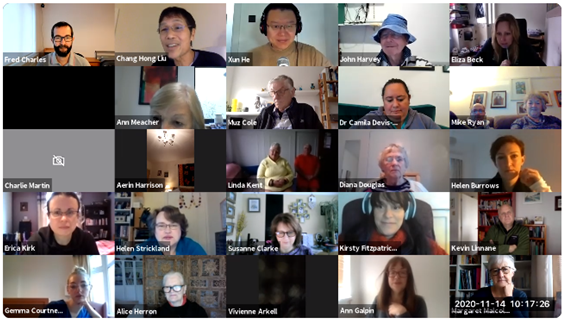

















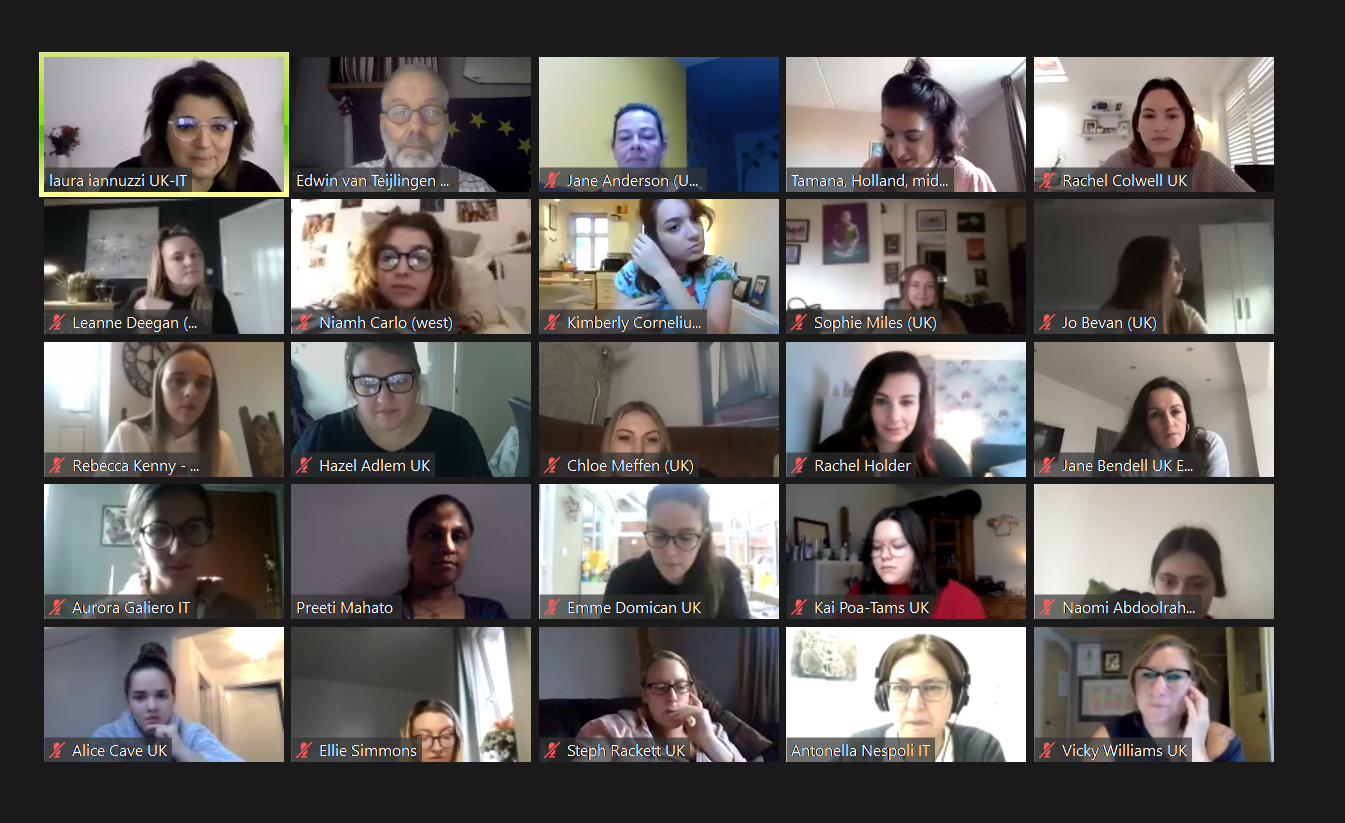

 Thank you to those who attended the IMSET launch last week. We hope that you now have a better idea of who we are and what we are aiming to do.











 SONAMONI contributions to Safety Conference 2026 in South Africa
 Three CMWH presentations at Berlin conference
 New interdisciplinary paper on Nepal
 Horizon Europe Cluster 3 (Civil Security for Society) 2026 Calls Now Open
 MSCA Doctoral Networks 2026 Call Information Webinar
 ESRC Festival of Social Science 2026: Application Deadline Extended to Thursday 25 June 2026
 Reminder: Register for the ESRC Festival of Social Science 2026 Information Session
 ECR Funding Open Call: Research Culture & Community Grant – Apply now
 ERC Advanced Grant 2025 Webinar
 Update on UKRO services
 European research project exploring use of ‘virtual twins’ to better manage metabolic associated fatty liver disease