
Click to Register.
Latest research and knowledge exchange news at Bournemouth University
Post written by Dr Kaouther Kooli:
 I am pleased to announce that Professor Malcolm MacDonald will be giving a talk to the MSc Marketing Management students on Monday 5 March 2018 in room EB306. PGR and academics are invited to attend.
You can find below a summary of the presentation and also Malcolm’s short biography.
Summary of the presentation
Six steps to develop financially quantified value propositions in B2B markets
According to McKinsey and my own research, everyone talks about value propositions, but only 5% of organisations have them and even those that do have them don’t always quantify them financially.
Any supplier who can quantify financially how they can help their customers grow their profits will always succeed, no matter how difficult the market conditions.
A lot of what constitutes value from a supplier is about helping the customer to avoid disadvantage, but, much more importantly, those suppliers who can demonstrate that they will create advantage for them will be respected and there will be fewer conversations about price.
This lecture will spell out a process for developing financially-quantified value propositions
Professor Malcolm MacDonald Short Biography
Until 2003, Malcolm was Professor of Marketing and Deputy Director of Cranfield University School of Management, with special responsibility for E-Business. He is a graduate in English Language and Literature from Oxford University, in Business Studies from Bradford University Management Centre, and has a PhD from Cranfield University. He also has a Doctorate from Bradford University and from the Plekhanov University of Economics in Moscow. He has extensive industrial experience, including a number of years as Marketing and Sales Director of Canada Dry. Until the end of 2012, he spent seven years as Chairman of Brand Finance plc. He spends much of his time working with the operating boards of the world’s biggest multinational companies, such as IBM, Xerox, BP and the like, in most countries in the world, including Japan, USA, Europe, South America, ASEAN and Australasia. He has written forty six books, including the best seller “Marketing Plans; how to prepare them; how to use them”, which has sold over half a million copies worldwide. Hundreds of his papers have been published. Apart from market segmentation, his current interests centre around the measurement of the financial impact of marketing expenditure and global best practice key account management. He is an Emeritus Professor at Cranfield and a Visiting Professor at Henley, Warwick, Aston and Bradford Business Schools. In 2006 he was listed in the UK’s Top Ten Business Consultants by the Times.
Once again Jens Holscher was awarded an ERASMUS grant to visit the University of Perugia (Italy). BU has a long established collaboration with colleagues in Perugia both in research and teaching. Jens will go there with PhD student Peter Howard-Jones to present a paper on Firm Productivity in the Western Balkans in their research seminar, which they recently published in Economic Annals. They will also give a series of lectures on Emerging Markets.
Dr Elvira Bolat has secured Erasmus Staff Teaching Mobility fund to visit and teach at the University of Beira Interior (Covilhã, Portugal) in May-June 2018. Elvira will deliver a social media marketing and online communication course to Master students. This visit will be hosted by Dr Arminda Maria Finisterra do Paço, Assistant Professor in Marketing.
In addition, Dr Bolat is organising and chairing the 17th The International Congress on Public and Non Profit Marketing (IAPNM), an annual event organised by major universities and scientific institutes that offers a friendly atmosphere and professional work environment for the presentation and discussion of the latest scientific and practical advances in the areas of public and nonprofit marketing, as well as in any other issue related to corporate social responsibility, social marketing and management of nonprofit organisations. IAPNM will be held in Bournemouth on 6-7 September 2018. The event attracts academics, businesses, public organisations and non-profit organisations across the world. Bournemouth being a Sustainable Fish city of Europe will continue building on its current reputation in a sustainability agenda. Dr Arminda Maria Finisterra do Paço and Dr Helena Maria Alves, from the University of Beira Interior, are members of IAPNM scientific committee. Travel to and teaching in the University of Beira Interior will allow Dr Bolat to discuss organisation of IAPNM in Bournemouth as well as enable collaborative research projects via joint funding proposals and research papers around use of social media in NGO’s (non-governmental organisations), tourism or HEI (higher education institutions).
Overall the visit will strengthen and expand the partnership between BU and the University of Beira Interior, especially in relation to the nonprofit marketing discipline.

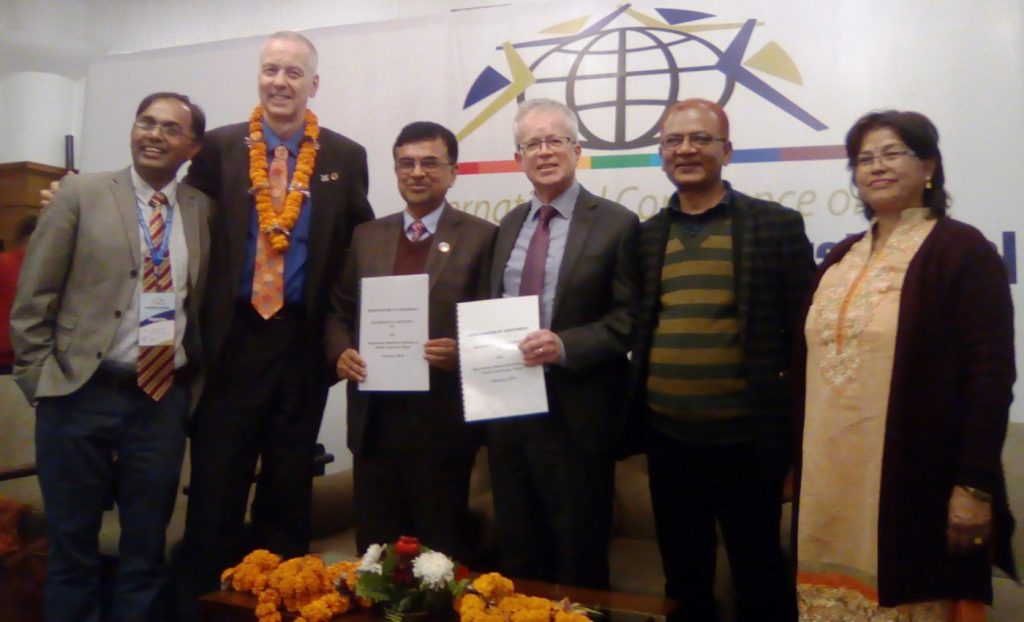
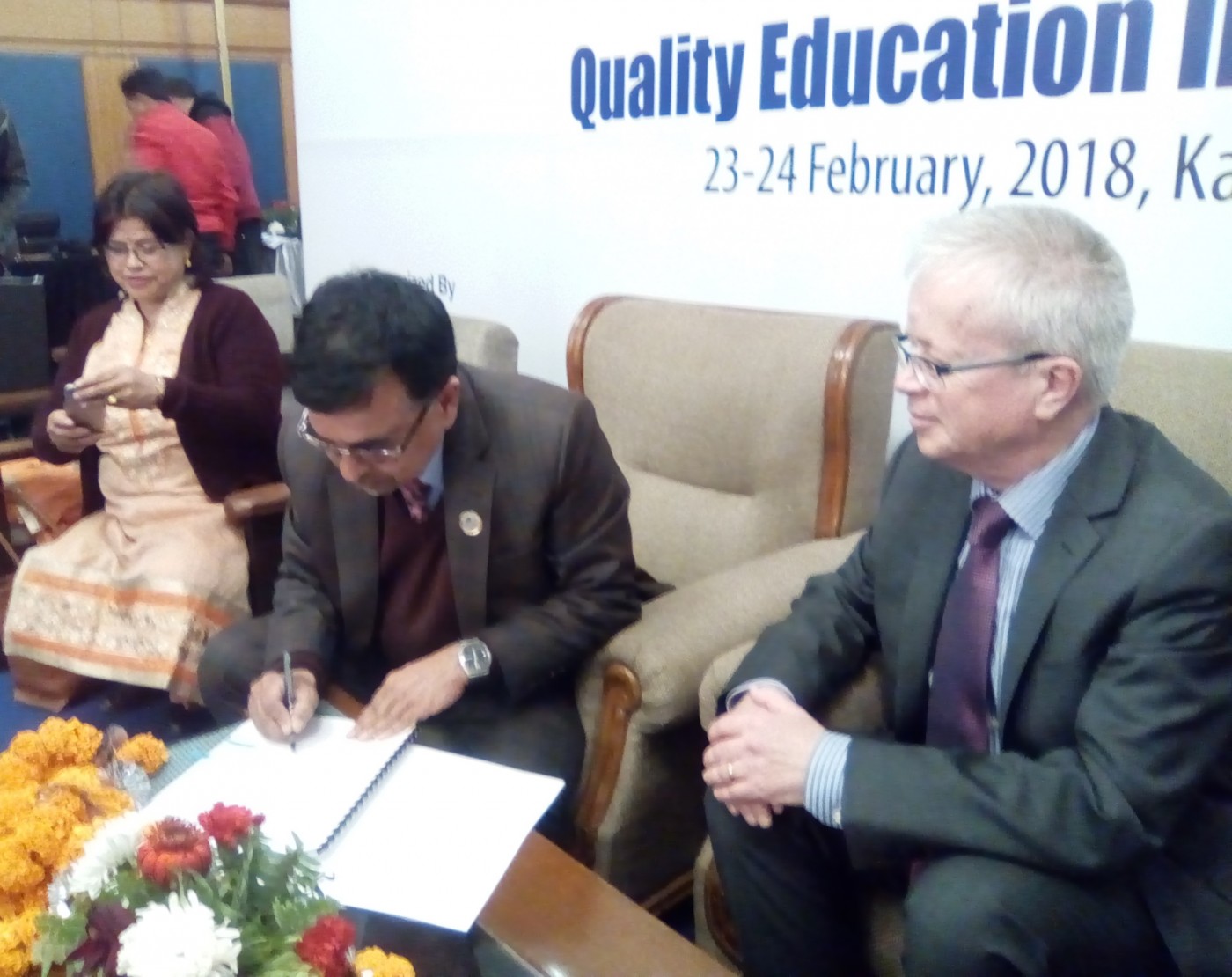 This weekend Manmohan Memorial Institute of Health Sciences (MMIHS) in Kathmandu, Nepal signed a Memorandum of Agreement (MoA) with Bournemouth University (BU).
 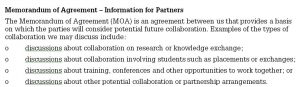 The ceremonial signing took place on the final day (24th Feb.) of the International Conference on Quality Education in Federal Nepal. Prof. Stephen Tee, who also spoke at the conference, represented our university.
 The UoA formalises a long-standing collaboration between the two institutions. MMIHS and BU academics have jointly applied for research grants, conducted collaborative research and published together. Several BU staff [1-3] and students [4] in the Faculty of Health & Social Sciences have published in the Journal of Manmohan Memorial Institute of Health Sciences, an Open Access journal. Moreover, Prof. Edwin van Teijlingen in the Centre for Midwifery, Maternal and Perinatal Health has been a Visiting Professor at MMIHS for nearly a decade and has given several guest lectures over the years to staff and students at MMIHS.
References:
As members of the scientific committee, Dr Jason Sit and Prof. Juliet Memery would like to invite colleagues and PGR students to submit papers to CERR 2018 at the University of Surrey (Guildford). Please find more details on the CERR website.
The paper/abstract submission is only two weeks away (March 15 2018) so we (the scientific committee) would like to give you a quick update on the event.
Should you have any questions or queries please contact Jason at jsit@bournemouth.ac.uk or on ext. 61888.

Dr Jason Sit has secured Erasmus+ staff mobility fund to visit IQS School of Management (Universitat Ramon Llull, Barcelona) in April 2018. Jason will share his research insights into Retail Consumer Experience and Technology with the UG and PGT marketing students at IQS. The visit will be hosted by Associate Professor Nicoletta Occhiocupo who teaches and researches in the domain of retail marketing. The visit will strengthen and expand the partnership between BU and IQS, especially in relation to the retail marketing discipline.
“I was inspired to submit an abstract to SURE as it looked like a great opportunity to showcase my research and also to develop my public speaking and communication skills,” says Abigail.
Her research explores the representation of refugee in contemporary documentary and current affairs reporting. “I have always followed the refugee crisis in the news. It is an incredibly important issue within humanity today, which is often not helped by negative media representation of the refugees themselves.”
Abigail was inspired by the BBC 2 series Exodus: Our Journey to Europe, “After watching this TV series, I knew that I had to use it as a case study,” she says. “I wanted to explore the key reoccurring representational themes within contemporary documentary and current affairs broadcasts which highlight the refugee crisis. This series offers new modes of documentary filmmaking which challenge the existing perceptions of refugees.”
“Overall, I think SURE is a great way to showcase work, especially to a wide variety of people. SURE offers students a chance to discuss their research with people outside of their faculty or programme, which is perhaps an opportunity we would not normally have.”
The Showcasing Undergraduate Research Excellence conference will taking place on 7 March 2018. Many undergraduate students from across the university will be presenting their research throughout the conference in a variety of different ways, from presentations to posters and art installations. Please register via the Eventbrite page if you would like to attend.
For more details, visit the SURE website or email the SURE team.
It’s down to you, the public, to vote for your favourite image which will determine the top 3 winners of this year’s Research Photography Competition. Voting closes at 4pm on Monday 12 March.
Click here to go to the voting web page.
All photo submissions will be exhibited in the Atrium Art Gallery on Talbot Campus from 20-30 March 2018 and is an opportunity to find out about the research behind each photo in much more detail.
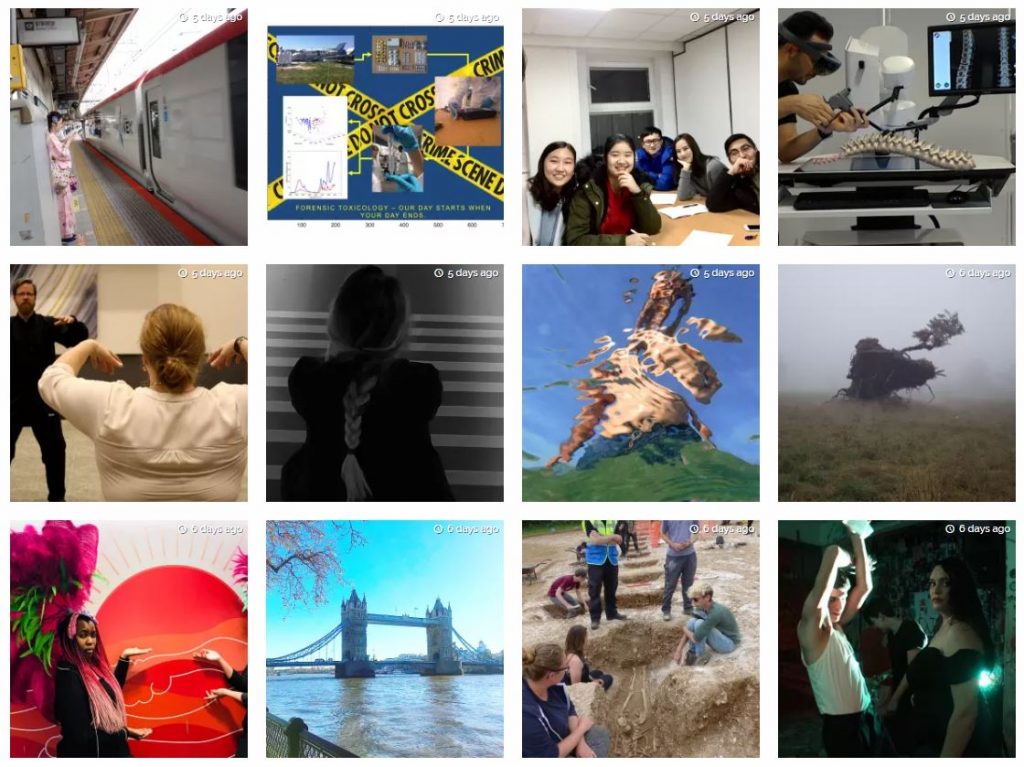
You can take a look at our Photo of the Week on the research website for previous year’s entries and the research behind their photos.

shandrus via Shutterstock.com
By Bronwen Thomas, Bournemouth University
In the days before social media – and, presumably, media training – Gerald Ratner’s description of some of the products sold in his chain of jewellers as “total crap” became a byword for the corporate gaffe. Recently the chief executive of publisher Hachette Livre, Arnaud Nourry, seems to have suffered his own “Ratner moment” when he described ebooks in an interview with an Indian news site as a “stupid product”.
The interview, which was intended to address the future of digital publishing and specific issues facing the Indian publishing market, was widely misquoted and Nourry’s comments taken out of context. But there is no denying the fact that the publisher criticises his own industry (“We’re not doing very well”) and attacks ebooks for lacking creativity, not enhancing the reading experience in any way and not offering readers a “real” digital experience.
Some commenters on social media welcomed Nourry’s comments for their honesty. They highlight his seeming support for the idea that publishers should be championing writers and artists working to exploit the creative potential of digital formats to provide readers with experiences that may be challenging and disruptive, but also exhilarating and boundary pushing.
'Ebooks are stupid.' Terrifically interesting interview with CEO of Hachette on https://t.co/7q3JKcLM0z: https://t.co/EaXdLSVhgq @ambientlit @joannae @ProffJon @tomabba
— Kate Pullinger (@katepullinger) February 19, 2018
But many of the 1,000-plus commenters reacting to coverage of the story on The Guardian’s website spoke out against “fiddling for the sake of it” – claiming they were not interested in enhanced features or “gamified dancing baloney” borrowed from other media. They also listed the many practical enhancements that ebooks and ereaders do offer. The obvious one is the ability to instantly download books in remote locations where there are no bricks and mortar bookstores. But there are other less obvious enhancements, including being able to instantly access dictionary and encyclopedia entries (at least if you have wifi access) and the option to have the book read to you if you have visual impairments.
Elsewhere, Australian researcher Tully Barnett has shown how users of Kindle ereaders adapt features such as Highlights and Public Notes for social networking, demonstrating that even if ebooks are not that intrinsically innovative or creative, that doesn’t necessarily mean that they can’t be made so by imaginative users.
Nourry clearly isn’t averse to the provocative soundbite – in the same interview he went on to say: “I’m not a good swallower” when asked about mergers and conglomeration in the publishing industry. On the other hand, he also seems very aware of the special place of books and reading in “culture, education, democracy” – so his use of the word “stupid” in this context is particularly inflammatory and insensitive.
My research on digital reading has taught me that debating books vs ereaders is always likely to arouse strong passions and emotions. Merely mentioning the word Kindle has led in some instances to my being shouted at – and readers of “dead tree” books are rightly protective and passionate about the sensory and aesthetic qualities of physical books that the digital version possibly can’t compete with.
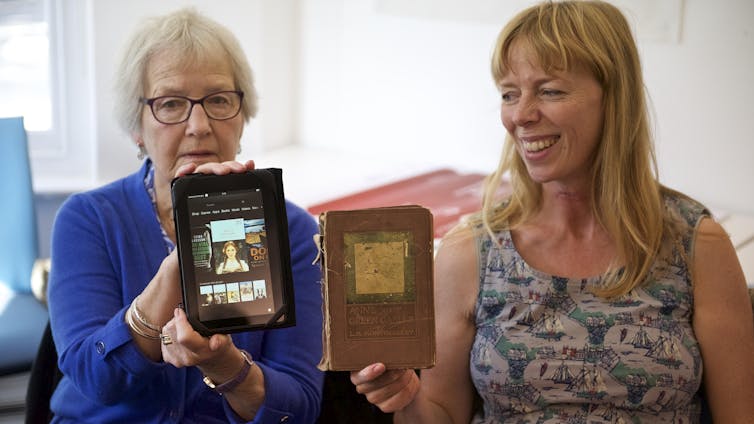
Mother and daughter Barbara and Jenni Creswell enjoyed Anne of Green Gables in both print and ebook format. Ray Gibson, Author provided
But, equally, my research has shown that enhancements in terms of accessibility and mobility offer a lifeline to readers who might not be able to indulge their passion for reading without the digital.
In my latest project, academics from Bournemouth and Brighton universities, in collaboration with Digitales (a participatory media company), worked with readers to produce digital stories based on their reading lives and histories. A recurring theme, especially among older participants, was the scarcity of books in their homes and the fact that literacy and education couldn’t be taken for granted. Our stories also demonstrated how intimately reading is connected with self-worth and helps transform lives disrupted by physical and mental health issues – making comments about any reading as “stupid” particularly damaging and offensive.
I would like to know if Nourry would still call ebooks stupid products after watching Mary Bish’s story: My Life in Books from our project. A lifelong reader who grew up in a home in industrial South Wales with few books, Mary calls her iPad her “best friend” and reflects how before the digital age her reading life would have been cut short by macular degeneration.
As well as demonstrating that fairly basic digital tools can be used to create powerful stories, our project showed that the digital also makes us appreciate anew those features of the physical book we may take for granted, the touch, smell and feel of paper and the special place that a book handed down from generation to generation has in the context of family life.
Bronwen Thomas, Professor of English and New Media, Bournemouth University
This article was originally published on The Conversation. Read the original article.
 Every BU academic has a Research Professional account which delivers weekly emails detailing funding opportunities in their broad subject area. To really make the most of your Research Professional account, you should tailor it further by establishing additional alerts based on your specific area of expertise. The Funding Development Team Officers can assist you with this, if required.
Research Professional have created several guides to help introduce users to ResearchProfessional. These can be downloaded here.
Quick Start Guide: Explains to users their first steps with the website, from creating an account to searching for content and setting up email alerts, all in the space of a single page.
User Guide: More detailed information covering all the key aspects of using ResearchProfessional.
Administrator Guide: A detailed description of the administrator functionality.
In addition to the above, there are a set of 2-3 minute videos online, designed to take a user through all the key features of ResearchProfessional. To access the videos, please use the following link: http://www.youtube.com/researchprofessional
Research Professional are running a series of online training broadcasts aimed at introducing users to the basics of creating and configuring their accounts on ResearchProfessional. They are holding monthly sessions, covering everything you need to get started with ResearchProfessional. The broadcast sessions will run for no more than 60 minutes, with the opportunity to ask questions via text chat. Each session will cover:
Each session will run between 10.00am and 11.00am (UK) on the fourth Tuesday of each month. You can register here for your preferred date:
These are free and comprehensive training sessions and so this is a good opportunity to get to grips with how Research Professional can work for you.
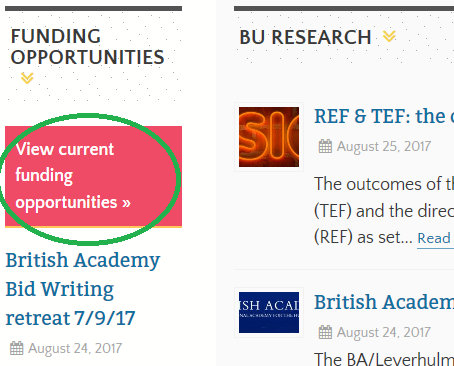 By clicking on this box, on the left of the Research Blog home page just under the text ‘Funding Opportunities‘, you access a Research Professional real-time search of the calls announced by the Major UK Funders. Use this feature to stay up to date with funding calls. Please note that you will have to be on campus or connecting to your desktop via our VPN to fully access this service.
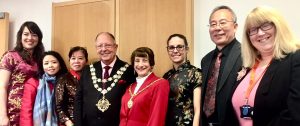
BU staff Wei-Jun Liang of the Faculty of Science and Technology, Rebecca Triggs of the Faculty of Health and Social Sciences, and Vianna Renaud of the Faculty of Media and Communication took part in the recent Bournemouth Chinese School Chinese New Year Celebration at the Bournemouth Library. Performing both Eastern and Western songs on violin, flute and piano,
For Rebecca, the event was special as, “I feel very proud to be working for BU as we are committed to engaging widely with our local community. BU’s Vision and Strategy supports staff to work collaboratively outside of BU to build our connected community and enhance our worldwide reputation. By celebrating different cultures to understand, we can greater appreciate cultural traditions and celebrations. Therefore it was an absolute pleasure to represent BU and be a part of the Chinese New Year Celebrations event held at Bournemouth Library. It was also a privilege to meet the Mayor and Mayoress of Bournemouth.”
For Wei June, “It was nice to be able to contribute to the local communities in enhancing the cultural interaction of the city. I feel that showing our presence and effort may help to publicize BU visions and values.” 
With over 200 young people taking place in a wide range of activities and the library full of spectators, this event was attended by both the Mayor and Mayoress of Bournemouth amongst other special guests. For Vianna, ‘This is a true example of the community and university joining forces for the greater benefit of everyone involved.”
For more information on the Bournemouth Chinese School: https://www.facebook.com/BournemouthChineseSchool/
For more information on the Mayor and Mayoress of Bournemouth: https://www.bournemouth.gov.uk/councildemocratic/TheMayor/TheMayorofBournemouth.aspx
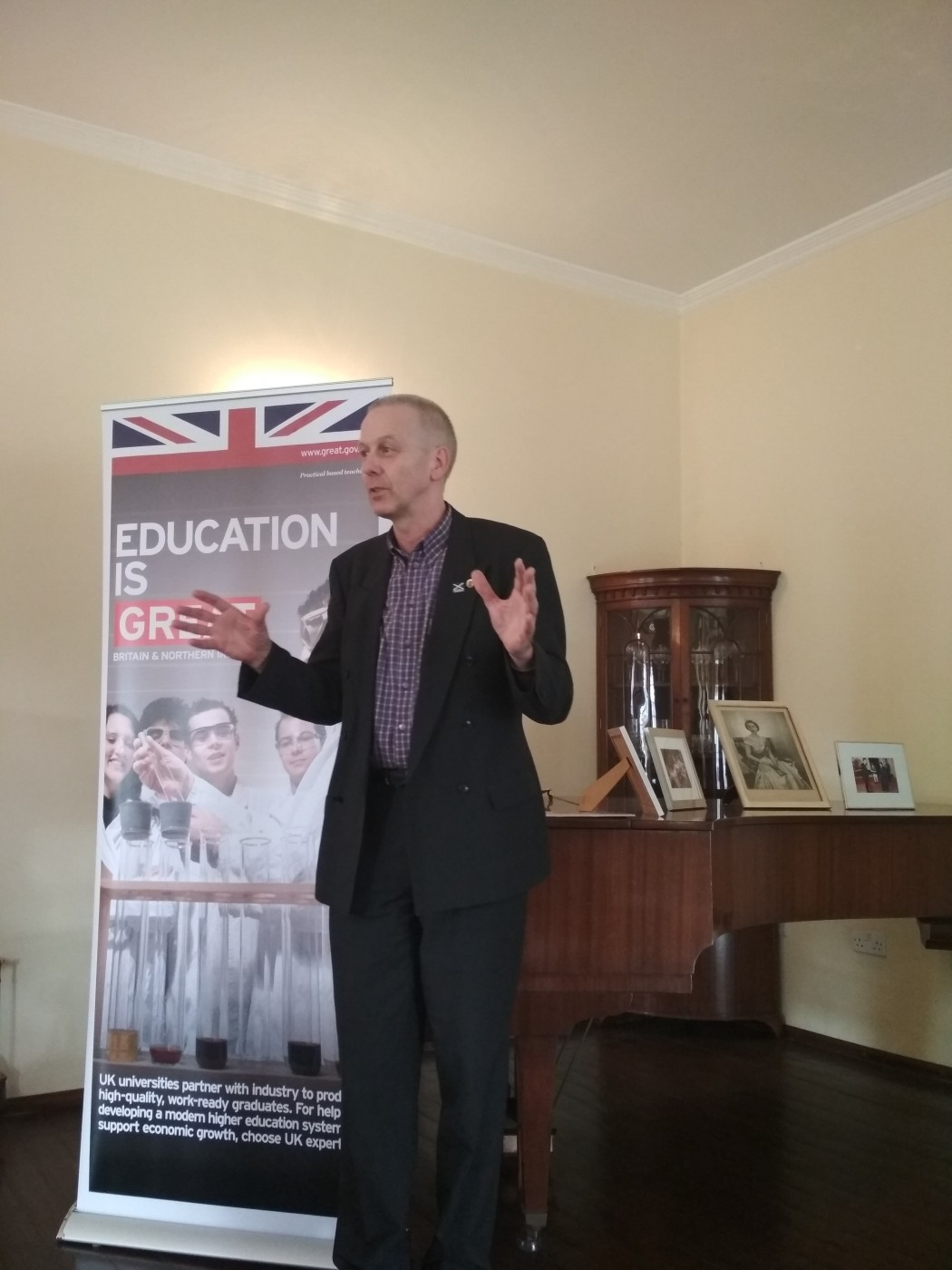 The British Ambassador to Nepal Richard Morris hosted the launch of a report of a market study of Nepal’s education sector today (28th February) in his Kathmandu Residence. The report was commissioned to help support UK service providers who are looking for education opportunities in Nepal. The Ambassador invited Bournemouth University’s Prof. Edwin van Teijlingen to highlight the UK’s expertise in research, as well as to share his own experience in UK-Nepal partnerships/ collaborations in education.
Prof. Edwin van Teijlingen is Visiting Professor at colleges in Nepal: (1) Nobel College, affiliated with Pokhara University; and (2) Manmohan Memorial Institute of Health Sciences, affiliated with Tribhuvan University.

The third Interdisciplinary Research Week (IRW) is being held from 19th to 23rd March 2018. Join us to celebrate the breadth and excellence of Bournemouth University’s interdisciplinary research, and stimulate new collaborations and ideas amongst the University’s diverse research community.
The week-long event includes a programme of lectures, workshops, and discussions, aimed at promoting interdisciplinary workings; to provide an understanding of how to get involved in Interdisciplinary Research.
Programme
Inspirational Speaker – Professor Celia Lury
British Academy Visit – Interdisciplinary Research
Collaborating with Others: Becoming a Better Team worker
Networking: Making the Most of an Upcoming Event
New research realities and interdisciplinarity
Interdisciplinary research with industry
Lighting Talks: What can and should be achieved in Interdisciplinary Research
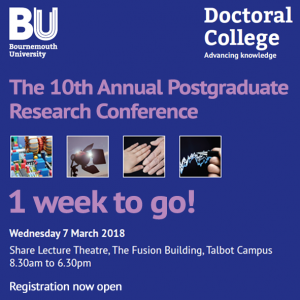 The Doctoral College kindly invites you to attend the 10th Annual Postgraduate Research Conference taking place in the Fusion Building, Talbot Campus.
The Annual Postgraduate Research Conference is an opportunity to listen to and engage with current postgraduate research taking place at BU. Organised and hosted by the Doctoral College this cross-faculty and interdisciplinary conference supports postgraduate researchers at all stages in presenting their research to their peers and colleagues across BU.
There will be oral, poster and photography presentations taking place throughout the day with a networking opportunity at the end.
If you have any questions please email pgconference@bournemouth.ac.uk. We look forward to seeing you.
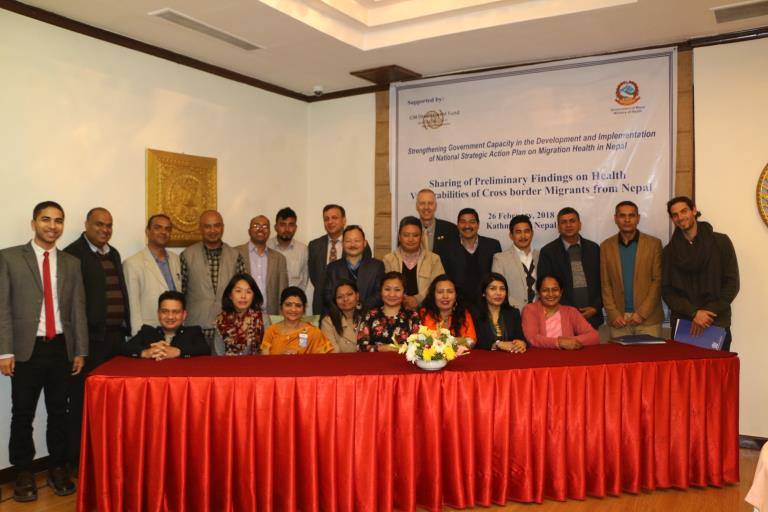
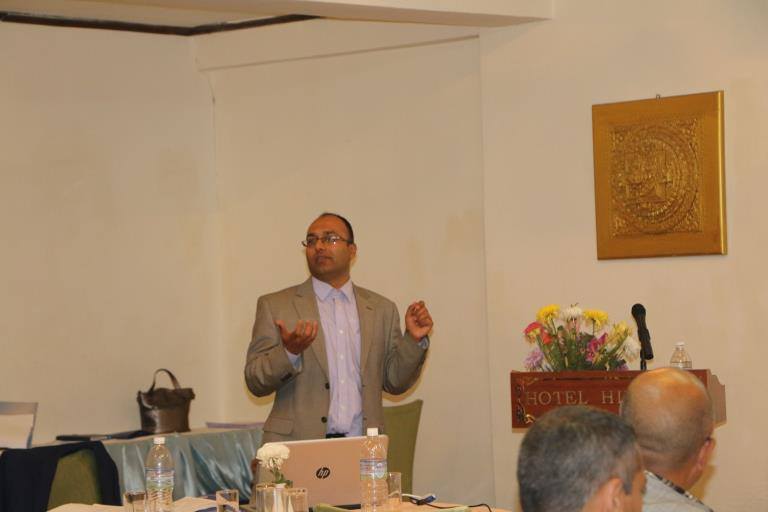
Yesterday (Monday 26th February) we disseminated the preliminary findings of our study on ‘Health vulnerabilities of cross border migrants from Nepal.’ The study was funded by IOM (International Organisation for Migration) in Kathmandu. The main findings were outlined one of the researchers from Green Tara Nepal.

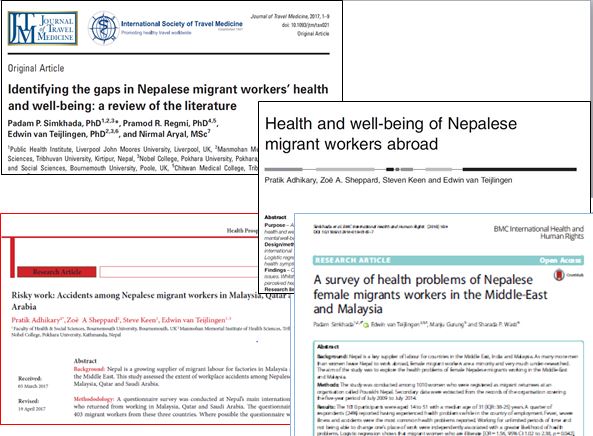
The study was conducted in Nepal by Nepali researchers Drs. Pratik Adhikary, Nirmal Aryal and Raja Ram Dhungana, with methodological support from Prof. Padam Simkhada (Liverpool John Moores University) and BU’s Prof. Edwin van Teijlingen. The mixed-methods study included a cross-sectional study of 752 Nepali migrant workers who had returned from working in India as well as focus groups and interviews with a sub-sample of returnees and interviews with two key informants. The research team also highlighted some key issues raised in two recent migration and health papers co-authored by some of the contributors to the dissemination event [1-2].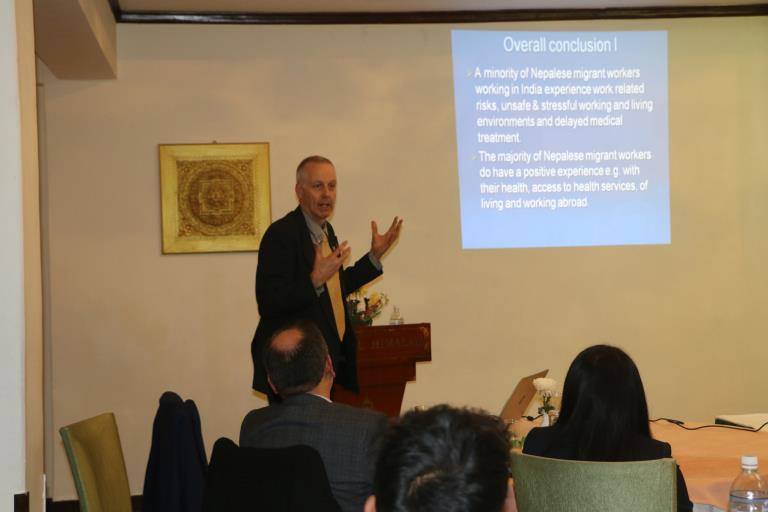
The project has strong link with Bournemouth University, Prof. Simkhada is Visiting Professor in BU’s Faculty of Health & Social Sciences (FHSS), Dr. Pratik Adhikary is a BU Ph.D. graduate and Dr. Nirmal Aryal has just been appointed in FHSS as a Post-Doctoral Researcher in preparation for REF 2021.
References:
Last April representing the research team from Bournemouth University, Sarah Hodge presented cross-discipline PhD research in a competitive symposium in Las Vegas organised by Nick Bowman. The research team included Jacqui Taylor and John McAlaney from the department of Psychology, Davide Melacca and Christos Gatzidis from the department of Creative technology and Eike Anderson for the National Centre for Computer Animation.  Since then the research project was invited to contribute a chapter to a book related to the topics from the Symposium, which is due out this summer (see below for further details).
In the spirit of this collaboration, Nick came to BU this month to give a guest talk for the Psychology seminar series, which was open to all departments and faculties. The talk was related to the book from the symposium and was titled: Video Game Demand – Specifying and Measuring an Elusive Construct. 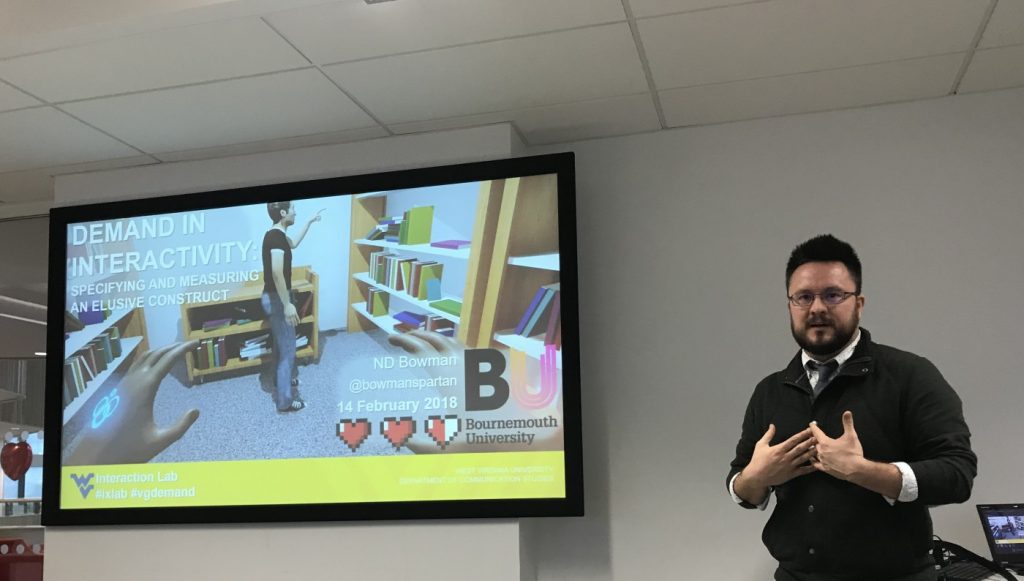
In this talk Nick proposes a model and scale of measuring the demands of video games on the user (see below for further details). It was wonderful to see those from other departments and faculties attending the talk, creating a diverse audience and an engaging atmosphere. The talk also supported the psychology undergraduates; particularly those that selected the Cyberpsychology final year unit, where they had been discussing Nick’s and colleagues research. It was a fantastic experience having Nick visiting Bournemouth from America, and we are looking forward to future collaborations with him.
Book: Bowman, N. D. (in press). Video games: A medium that demands our attention (Ed.). New York: Routledge
Chapter 7 contribution from BU: Hodge, S., McAlaney, J., Gatzidis, C., Anderson, E.F., Melacca, D. and Taylor., J. Applying Psychological Theory to in-game moral behaviors through the development of a purpose-made game.
Chapters related to Nick’s talk: Chapter 1 Bowman, N.D. The Demanding Nature of Video Game Play and Chapter 13 Bowman, N.D., Wasserman, J., and Banks., J. Development of the Video Game Demand Scale
If you would like more information about the research please contact: shodge@bournemouth.ac.uk
 Funding of £500k-£15m is available for innovation projects lasting up to 30 months that will help address the commercial challenges of battery innovation, development and manufacture through the UK supply chains. The deadline for applications is 28/3/18.
All projects must involve at least one SME and must be conducted in collaboration. To find out more, please click here.
BU staff can login below:







 ESRC Festival of Social Science 2026: An Opportunity to Engage New Audiences
 New HIV paper by BU PhD student
 BU Annual Research Conference: Poster Exhibition Call for Applications
 Vitae Three Minute Thesis (3MT®) Competition: Applications Now Open
 3C Online Social: Thursday 26 March 1–2pm – Research Culture, Community & Can you Guess Who?
 ECR Funding Open Call: Research Culture & Community Grant – Apply now
 ECR Funding Open Call: Research Culture & Community Grant – Application Deadline Friday 12 December ECR Funding Open Call: Research Culture & Community Grant – Apply Now
 MSCA Postdoctoral Fellowships 2025 Call
 ERC Advanced Grant 2025 Webinar MSCA Postdoctoral Fellowships 2025 Call ERC Advanced Grant 2025 Webinar MSCA Postdoctoral Fellowships 2025
 Update on UKRO services
 European research project exploring use of ‘virtual twins’ to better manage metabolic associated fatty liver disease
 Research Information Network