/ Full archive

Dementia toolkit to help patients, carers and healthcare workers – now live!

dementia

The aim of this Dementia Evidence Toolkit is to make all information publicly that is publicly available, available in a form that is clear and easy to understand for dementia patients, their families and unpaid carers as well as for staff working in health and social care. It will also benefit academics and those involved in decision-making both locally and nationally.

Launched at the beginning of August , the toolkit devised by Adelina Comas-Herrera, David McDaid, Professor Martin Knapp and colleagues, is the first of its kind globally, and is funded by the Economic and Social Research Council (ESRC). The Dementia Evidence Toolkit brings together more than 3,000 journal articles and 700 reviews of research studies in one place.

The toolkit is in the form of a comprehensive online database featuring the latest scientific evidence on what works in dementia care and treatment has been developed by the researchers at the Personal Social Services Research Unit, London School of Economics and Political Science (PSSRU at LSE).

Dementia is the fastest growing major cause of health-related disability across the world, and the health, social and economic impacts are increasing because of an ageing population. There are around 850,000 people in the UK with the condition, a figure expected to rise to 2 million by 2051. There are currently no cures for dementia which is associated with ongoing cognitive decline such as memory loss, problems with judgement and often some behavioural issues. Instead, the focus for healthcare services is on slowing down dementia progression using different care approaches.

Read the press release in full.

Creative Industries – new 5 year strategy

BFX 0716

The Creative Industries Council’s new 5 year strategy proclaims amazing news for the Creative Industries. With the sector growing at 8.9% a year (making it the second fastest growing sector), the UK’s Creative Industries is vital to the UK’s economy.

The 2016 strategy refresh is demanding but attainable, with a focus on driving economic value, through support for business growth, job growth, exports and inward investment.  The sector seeks to build on existing trade relationships and to unlock the potential of the sector in international markets with a primary focus on the USA and key territories in Europe, Asia and the Middle East.  Review the Nesta/Creative England report on the Geography of Creativity . This includes rich content about  regional opportunities.

The Geography of Creativity in the UK

nesta_logo

In this report, in partnership with Creative England, NESTA have used the latest data and official definitions to map the creative industries in the UK. The  goal is to provide a data resource to demonstrate the economic significance of the creative industries across the country, and inform policies to strengthen them further.

Findings

  • The creative industries are becoming more important in local economies across the UK. Between 2007 and 2014 they became more important in local business population in 9 out of every 10 locations.
  • Identified 47 creative clusters across the UK. London and the South East are important components of the UK creative industries, but so are the North, Scotland, Wales and Northern Ireland. These clusters grew their creative employment by 28% between 2007 and 2014
  • The UK’s geography of creativity isn’t only about ‘hip creative cities’,  clusters in creative conurbations across the country have also been identifed.
  • Creative communities in different parts of the country are working together across cluster and administrative boundaries. The geography of the UK creative industries is an interconnected system.

Policy recommendations

  • Support the development of clusters outside of London and the South East
  • Continue efforts to share the benefits of London’s status as a global creative industries hub across the UK
  • Local Enterprise Partnerships and universities should consider what more they can do to address the strengths and weaknesses within their particular area, such as an over reliance on large firms or growing links between graduate talent pools and creative clusters
  • Networks of UK creative industries should strive to maintain their global reach.

(This work contains statistical data from ONS which is Crown Copyright. The use of the ONS statistical data in this work does not imply the endorsement of the ONS in relation to the interpretation or analysis of the statistical data. This work uses research datasets which may not exactly reproduce National Statistics aggregates.)

Download the full report.

Events for innovators, entrepreneurs and investors

events

Innovate UK supports many events that bring together innovators, successful entrepreneurs and investors. At the events information and advice  is available highlighting the type of support and funding that is currently available. Find and more and register for upcoming events:

Venturefest Manchester – Bridgewater Hall, Manchester, M2 3WS
Date: 21 September 2016
View speaker line up
Find out more & register >>

Venturefest Wales – SSE SWALEC, Cardiff, CF11 9XR
Date: 28 September 2016
View the full programme
Find out more & register >>

Venturefest Scotland – Glasgow Science Centre, Glasgow, G51 1EA
Date: 1 September 2016
View the agenda
Find out more & register >>

New Scientist Live – ExCeL London, E16 1XL
Date: 22 – 25 September 2016
We will be attending the New Scientist Live event where our Chief Executive, Dr Ruth McKernan MBE, will be talking about Therapies of the Future on Friday 23rd September.
See what’s on
Find out more & register >>

Low Carbon Vehicle Event 2016
– Millbrook, Bedford, MK45 2JQ
Date: 14 – 15 September 2016
Our stand will showcase some of our many successful LCV projects and be an opportunity to meet the Innovate UK and KTN team.
View the Seminar Programme
Find out more & register >>

Innovate 2016  – Manchester Central
Date: 2 – 3 November 2016.
Innovate 2016 is  Innovate UK’s  flagship event showcasing the very best of innovation talent and global opportunities for businesses.
Find out more & register >>

Why not update  Innovate UK with your location so you can receive relevant communications including events in your area Update my location>>


Research in the news: do we all need a ‘digital diet’?

A ‘digital diet’ is the practice of controlling the obsessive and excessive usage of digital media, explains Dr Raian Ali, Principal Academic in Computing at BU.

Digital addiction, to games in particular, is often associated with negative life experiences and sometimes serious consequences such as neglecting children and personal health and hygiene conditions. With games like Pokémon Go such addiction could be argued to take cyber-physical form resulting in physical harm such as car accidents and visiting risky places. This motivated us to think of a more responsible way of designing of technology, which would include intelligent and interactive digital addiction labels and warning messages.

Technology can also exacerbate problematic work styles, where people remain connected to their job all the time. We argue that online communication systems are not designed to help reduce preoccupation but indeed often facilitate it.

What is ‘Digital Diet Technology’? 
Digital Diet Technology denotes software applications meant to help people monitor and regulate their digital usage and reduce their digital addiction. The technology uses techniques like tracking the amount of usage and visualizing in some form of infographic, allowing users to set up limits of usage and enabling their digital devices to lock automatically and ask them to take a break, comparing their usage to an average user and so on.

Why is it questionable?
The lack of clear scientific background of such technology is what motivated our research. We suspected that ‘digital diet’ technology may have undesirable side-effects, similar to typical cases in utilizing persuasive technology to change behaviour.

As part of our Digital Addiction research and the work done in our ESOTICS research group at Bournemouth University in collaboration with StreetScene  Addiction Recovery, we conducted empirical research using diary study method followed by interviews involving participants with problematic usage of their mobile phones. They had to install and use popular commercial Digital Diet apps for two weeks.  The study indicated a number of issues.

 Misunderstanding and Misjudgement 
These apps monitor and evaluate the amount of usage time and frequency. However, digital addiction is not only, and not necessarily, about the time spent and frequency of use. Think of social network users who post a comment and keep thinking of the replies they could be getting even when they should be sleeping.

Lowering Self-esteem
This may happen when a user receives repetitively a message or a score indicating a failure of self-regulated goal or that others are managing to regulate their usage better. Hence, we need a more intelligent classification of users and their groups so that we issue suitable messages and comparisons.

Creating parallel addiction 
Some participants said they became more inclined to check their mobile phone to know how they compare to others and how much time they had spent so far which may cause further anxiety and lead them to check other apps. It is like “inviting someone to a pub to talk about their alcohol addiction.”

Lack of Interest and Unsustainable effect 
Despites of the usefulness of measuring usage, participants generally felt that the apps were too much of a one-size-fits-all and were too simplistic. The messages sent, the avatars used and the comparisons made do not tend to cluster users and recognize their personality, usage style and perception of their own usage.

For more information about Raian’s research, see his recent blog posts for the Huffington Post here and here.


An update on Academy of Marketing funded research

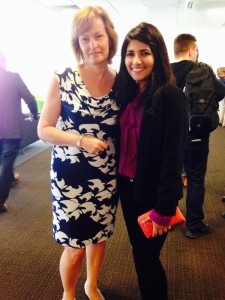
The findings from current research conducted by Dr Julie Robson and Samreen Ashraf from the Faculty of Management were presented at the Academy of Marketing conference, Northumbria University recently.

The research, funded by the Academy of Marketing, uses concepts from behavioural economics to help understand how people perceive their pension and how they are likely to use their pension money in retirement. The study focuses on people originally from South Asia (India, Pakistan, Bangladesh etc.) but who are now living and working in the UK. A key question therefore is the role that culture has on the perception and use of pensions.

Given the pension reforms last year this research is timely as UK pension-holders aged 55 and over now have the freedom to use their pensions as they wish. Not surprisingly there has been much media speculation on how this money will be used – will it be blown on luxury goods (e.g. an expensive holiday or sports car?), used to pay off existing debt, given to children to help them get onto the property ladder or invested for later life?

As many retirees are known to have insufficient money for their retirement this research will be of interest to policymakers as many first generation South Asians living in the UK are now coming up to retirement age.

This research project runs to September 2016 when a final report will be issued to the Academy of Marketing.

Me and Julie picture

Introducing the Student Project Bank

7735 RKEO Student Bank Ident_Bulb Graphics V3.0

Based in the Research and Knowledge Exchange Office, the Student Project Bank is a mutually beneficial collaboration between community organisations and BU students. Students get to work on a live project with real world impact as part of their studies and community organisations get the opportunity to access their creativity, skills and gain valuable insights. The Student Project Bank is based on a science shop and our projects must have the potential to benefit an individual, a community or society through research, service improvement or a creative project.

We are looking for community organisations, charities, not-for-profits and corporate partners to submit their project ideas. We will work with them to turn their ideas into project briefs which will be made available to students across BU from our undergraduate and Master’s courses.

How it works

  1. A community organisation tells us about their idea.
  2. We’ll work with them to develop their idea into an exciting project brief and upload it to the Student Project Bank. It can then be picked up by a student with the right skills and enthusiasm.
  3. We’ll meet with the community organisation and student to discuss everyone’s needs before starting the project.
  4. Once completed, our student shares the results of the project with the community organisation and it is published open access on our website.

The Student Project Bank is currently in the development stage and we will be putting out a call for interested parties to take part in a pilot project over the coming months. If you would like to find out more about this fantastic project, or would like to take part, please contact spb@bournemouth.ac.uk. We will be launching to students in September 2016.

Higher Education Innovation Fund (HEIF)

andrew archery

As HEIF 5+1  funding came to an end  on 31 July after a run of 12 months , there is no time to stop for breath as the wheels of knowledge exchange continue to turn and HEIF 5+1+1 gears up –  running from 1 August 2016 until 31 July 2017.

Following a competitive call, (with an increase in applications from previous years) twelve projects have been identified to accelerate the ethos of knowledge exchange and innovation at BU.

Progress updates will be posted by the projects teams during the year and you can follow their progress on a number of channels including the research blog . A list of the projects has been included at the bottom of this post.

For further information about knowledge exchange opportunities including HEIF feel free to contact Jayne Codling within RKEO.

PI  

Project Title


Alexander Pasko Establishing a network to disseminate the results of SHIVA project aimed to provide virtual sculpting tools for users with wide range of disabilities
Alison McConnell Development and validation of a mobile device App to reduce blood pressure
Andrew Whittington Sherlock’s Window: improving accuracy of entomological forensics at post-mortem criminal investigation using combined cuticular hydrocarbon and internal metabolite analysis.
Bogdan Gabrys Data Science and Analytics Training and Engagement Services for Business
Dan Franklin Using flow cytometry to monitor harmful algae in coastal waters: establishing a regional testing arena in Poole Harbour with global benefits
Elizabeth Franklin (Liz) ECO-CODING: Creating a centre for DNA Meta-barcoding Ecology at BU
Kevin McGhee Empowering service users: Assessing the potential benefits of Psychiatric Genetic Counselling
Matthew Bennett Dinosaurs to Forensic Science: Digital, Tracks and Traces
Pippa Gillingham Towards improving the condition of natural and cultural capital in Dorset and Hampshire
Sarah Bate Superior Face Recognition: Generating Knowledge Exchange with National and International Security Agencies
Tom Davis Increasing access to Music: Music Technology in Special Educational Needs (SEN) settings.
Wen Tang PLUS+: Police Learning Using Simulations: Impact Evidence Gathering

Widening Participation: a practice of hope

warhol kruger clouds

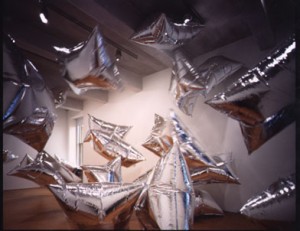
Silver Clouds, Billy Kruger and Andy Warhol 1966

Our Fair Access Researchers have written a blog-post exploring the necessity of hope and solidarity for widening participation – particularly when any glimpse of a silver cloud seems very out of reach.

Drawing on the work of José Esteban Muñoz, our researchers see hope as a troubling but very necessary thing for those working to transform higher education:

“Practicing educated hope, participating in a mode of revolutionary consciousness, is not simply conforming to one group’s doxa at the expense of another’s…It is not about announcing the way things ought to be, but, instead, imagining what things could be. It is thinking beyond the narrative of what stands for the world today by seeing it as not enough” (from Duggan and Muñoz, 2009: 278).

One of the cornerstones of the Fair Access Research project is that it is through working and learning together that just such a hope can be practiced.

Developing the thinking that underpinned an article that suggested how research can be used to better enable and embed an institutional culture that works for social justice, Maggie and Alex are now researching how the ideas, rhetoric and policies of widening participation are being learnt in different organisations. To contribute to this research and share your learning, please do complete our survey for the sector to help understand this more. They will be going up to Liverpool over the coming weeks to do some fieldwork with colleagues in different organisations.

For more information about the Fair Access Research project please email the Principal InvestigatorsDr Vanessa Heaslip and Dr Clive Hunt.

Innovate 2016 – Spotlight on innovation event

events

Hosted by UKTI and Innovate UK, Innovate 2016 is a two day event showcasing the very best of innovation talent and global opportunities for businesses. The event includes:

  • an exhibition of the most cutting edge innovations
  • inspirational keynotes from some of the most respected industry thought leaders
  • discussions with international buyer and investors
  • fantastic networking opportunities
  • in-depth seminars on key market trends
  • a business Support Zone highlighting the breadth of Government support for innovation

The event will be held 2-3 November in Manchester.

Click here to find out more.

Latest Major Funding Opportunities

The following funding opportunities have been announced. Please follow the links for more information.

Economic and Social Research Council

ESRC invites applications for an Understanding the Macroeconomy Network Plus. The aim of the network is to develp the capacity needed to sustain a substantive policy-oriented research programme, which is focussed on the macroeconomy. The Network will include representatives from the policy community and the private sector as well as academics from the economics profession and other disciplines which have the potential to add value in this area. It will be charged with providing leadership in connecting interdisciplinary research groups and networks, ensuring the new initiative can best add value in the context of existing capacity and current research agendas (whether or not ESRC-funded).

Maximum budget: £3.7 million. Closing date for outline proposals: 4pm, 20/09/16.

Engineering and Physical Sciences Research Council

EPSRC is inviting tenders for a contract to run a mid-range facility providing a high-specification electron microscopy  service to the UK academic community and other users. Full details of how to apply will be in the relevant published OJEU and Contracts Finder notices. The contract will run initially for three years with an option to extend it to five years subject to a review. Bidders will need to provide information on the specification of the equipment they intend to operate, the facilities and the service they intend to provide, the staffing of the facility and the cost of the service.

Maximum award: Not specified. Closing date: 07/09/16.

Global Food Security

Global Food Security, in collaboration with  BBSRC, ESRC, NERC and the Scottish Government, invites applications for its second call on Resilience of the UK food system in a global context. There are three overlapping thematic priorities in the programme. Proposals should address one or more thematic priorities and are encouraged to take a food systems approach

  • Optimising the resilience of agricultural systems and landscape whilst enhancing productivity and sustainability
    At the core of this theme is understanding the relationship between resilience, sustainability and production and how to optimise the trade-offs associated with these tensions. This will help ensure agricultural systems and landscapes that are both resilient and sustainable and balance the provision of food with other ecosystem services in the face of evolving world-wide changes and threats
  • Optimising resilience of food supply chains locally and globally
    This theme is focused on understanding the economic, environmental, biological and social factors affecting the food supply chain, and the interplay between these, to ensure resilience of the food system at a local-to-global level
  • Influencing food choice for health, resilience and sustainability at the individual and household level
    Central to this theme is understanding the drivers behind food choices and how these impact on the wider food system and production, in order to identify interventions that result in provision of nutritious and sustainable food in more resilient and equitable ways

Maximum award: £2.8million. Closing date: 10/11/16.

Natural Environment Research Council

NERC invites applications for access to its High Performance Computing Facilities. Users will be allocated to one of three HPC consortia- oceanography and shelf seas; atmospheric and polar sciences; mineral and geophysics.

Maximum award: Not specified. Closing date: 12/09/16.

Medical Research Council

MRC invites outline proposals for its Stratified Medicine Initiative call – disease-focused partnerships to stratify for patient benefit. This call aims to support consortia to address disease areas where there is a strong case for scientific advancement and major unmet clinical need. Proposals should clearly describe and justify why a particular disease area is likely to contribute important understanding of disease, whether employing stratification by response to treatment or by risk, diagnosis and/or prognosis. The consortia must: build upon existing scientific and clinical expertise; utilise clinical research infrastructure, such as that provided by the National Institute of Health Research, Scottish Government Health Directorates, National Institute for Social Care and Health Research, Welsh Government and Health, Social Services and Public Safety, Northern Ireland; forge significant links with industrial partners.

Total budget: £15million. Closing date: Outline applications due 4pm 01/12/16.

Wellcome Trust

Wellcome Trust invites applications for its Investigator Awards in Science, which fund researchers at all career stages working on important questions of relevance to their scientific remit.

Maximum award: £3million. Closing date: 21/11/16.

If you are interested in submitting to any of the above calls you must contact RKEO with adequate notice before the deadline.

Please note that some funding bodies specify a time for submission as well as a date. Please confirm this with your RKEO Funding Development Officer

You can set up your own personalised alerts on Research Professional. If you need help setting these up, just ask your School’s/Faculty’s Funding Development Officer in RKEO or view the recent blog post here.

If thinking of applying, why not add notification of your interest on Research Professional’s record of the bid so that BU colleagues can see your intention to bid and contact you to collaborate.


CQR launches monthly Seminar Series “In Conversation with …”

13432167_10154245215569855_4045956637427322389_n-001

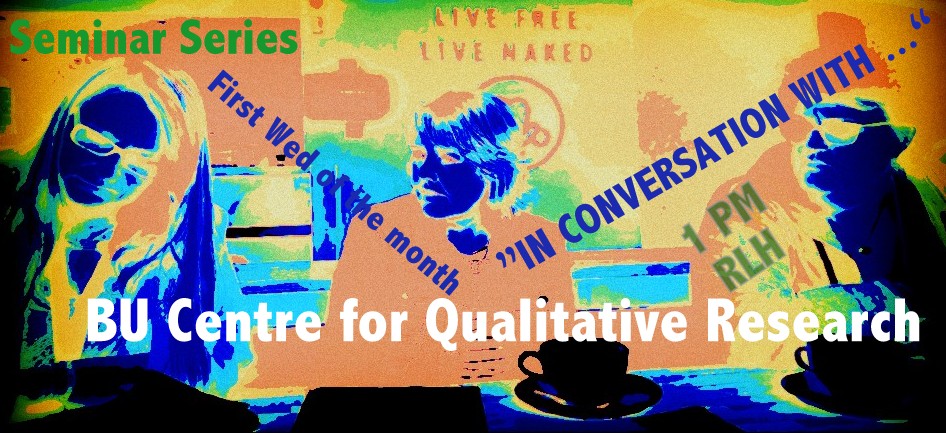
The Centre for Qualitative Research is kicking off its new seminar series on 7 September at 1 pm in Royal London House (RLH 201 Masterclass Suite).

New to BU and FHSS, Prof. Sam Porter (Head of Social Work & Social Sciences Dept. at FHSS) will join CQR’s Kip Jones and Caroline Ellis-Hill “in conversation” about: “The Relationship between the Arts and Healthcare”.

Mark your diaries now and join us for an intriguing conversation!

Because CQR is keen to make information available to students and staff about qualitative METHODS, the seminars will be arranged somewhat differently than the typical lunchtime seminar.

We are asking TWO (or more) presenters to agree to present each research method as a CONVERSATION…first, between each other, and then with the audience.  We are also asking that no PowerPoint be used in order that it is truly a conversation and NOT a lecture. The conversations will be about a particular research method and its pros and cons, NOT research projects or outcomes.

The “In Conversation with …” Seminar Series will be held on the FIRST WED of each month for nine months beginning in September. They will run from 1 pm until 1:50.

We are then hoping that many will join us for a CQR ‘KoffeeKlatch’ following at Naked Cafe next to RLH after the seminar.

We anticipate that by making the CQR Seminar Series really unique and exciting that they will inspire students and academics alike to investigate the wide range of qualitative methods and expertise available at CQR, and enrich their research projects by doing so.

Below is the list of Seminar dates, topics and presenters. Mark your diaries now so that you don’t miss them!

7 September

RLH 201

The relationship between the arts and healthcare” Sam Porter, Kip Jones & Caroline Ellis-Hill
5 October

RLH 201

Social Work as Art” Lee-Ann Fenge and Anne Quinney
2 November

RLH 201

Phenomenology” Jane Fry and Vanessa Heaslip
7 December

RLH 201

“Auto-biography and Auto-ethnography


Judith Chapman and Sarah Collard
11 January (2nd Wed.)

RLH 201

Participatory Action Research and Co-operative Inquiry”   Carole Pound and Lee-Ann Fenge
1 February

RLH 201

Appreciative Inquiry”


Clare Gordon and Caroline Ellis-Hill
1 March

RLH 201

Photo-elicitation” Michele Board and Jenny Hall
5 April

RLH 303

Applying Film and TV Methods to Research”


Trevor Hearing & Kip Jones
3 May

RLH 303

Ethnography” Janet Scammell and Jonathan Parker
7 June

RLH 201

“CAQDAS (NVIVO, MAXQDA)” Jacqueline Priego and Debbie Holley