office fNews galore. We cover all the major news and provide short commentary and links on the specialist interest topics.
Party politics: tertiary reform?
The next general election is constantly on the minds of policy makers. Last week Kier Starmer rowed back from Labour’s traditional position of abolishing HE tuition fees. This week attention has turned to what could be learnt from Wales’ review and reform of education which has resulted in a joined up tertiary education system. Andy Westwood writes for Wonkhe suggesting that Wales could be a blueprint for policy and suggesting Labour should prioritise tertiary reform over tuition fees.
Some snippets to whet your interest:
- While the higher education funding system looks unsustainable in its current form and surely can’t survive the next Parliament without reform, it does not follow that it is sensible to try and fix it in isolation from other parts.
- …there is likely to be a series of policy priorities that will affect both colleges and universities as Labour draw up its manifesto, alongside any potential plan to reform tuition fees and higher education funding. But designing centralised policy solutions separately – e.g. by focusing solely on full-time university tuition fees but not on lifelong learning, apprenticeships or day-to-day funding for FE will only bake in the silos and systemic incoherence that cause so many problems for people, places and businesses.
- The Welsh model, if not perfect, is certainly better than that currently in England…, we have three competing and very different systems – a centralised funding and management body (ESFA) running (and underfunding) FE, as well as schools, a market regulator (OfS) and an entirely separate and different system for apprenticeships (IFATE). Adult learning remains a poor relation and a low priority for each. The three funding systems are also different – direct funding and loans but managed places, uncapped markets with tuition fee loans, employer levies and grants (and limited access across routes to means-tested maintenance)…it is complex and counterproductive. And both in part and overall, it is failing.
Chris Millward (former Director for Fair Access at OfS) agrees with Westwood and is keen to bring technical and academic together in a cohesive tertiary system. He also suggests Government could reduce regulation in the areas that are a priority such as higher and degree apprenticeships, modular (shorter) learning, and advanced technical or research courses. Especially if they’re in geographical areas where the Government wants to drive growth and attract investment by aligning skills and innovation around a university presence. Finally, he suggests increasing fees (only by inflation) where institutions can demonstrate excellence beyond a threshold (I.e. we’re back to TEF related increases – which the House of Lords originally threw out). You can read Millward’s blog for Research Professional in full here.
Lifelong Learning
Earlier this week THE reported the Government were considering uncontroversial legislation surrounding the Lifelong Learning loan entitlements. These loans allow students to borrow up to the equivalent of four years’ worth of student loan funding across their whole life to spend as they will including on shorter or modular courses (more here). The loans are expected to be particularly attractive to mature students who wish to retrain or change careers (assuming they don’t already have a degree). Previous PM Boris Johnson pledged to introduce the LLE by 2025.
The background:
- In May 2022, the government said in the Queen’s Speech that it would introduce a higher education bill to implement the LLE in England and, “subject to consultation”, a minimum entry requirement (MER) for individuals to be eligible for student loans, as well as student number controls (SNCs).
- After that consultation [results promised soon], the Department for Education was said to favour capping numbers on courses using outcomes measures including the proportion of graduates going into “managerial or professional employment”, and an MER set at two E grades at A level. However, ministers changed and current HE Minister Halfon is said to be far less supportive of MER plans. Other sector commentators are also opposed: Any move to reopen the door to minimum entry requirements or student recruitment limits would be extremely concerning and against modern universities’ core principles of inclusion, aspiration and the power of education to transform lives (Rachel Hewitt, Chief Executive of MillionPlus).
- Lord Johnson of Marylebone, the Conservative former universities minister, said Ministers must rethink their approach and allow “much greater flexibility in terms of what courses will be eligible for LLE funding…Learners wanting to access specific skills do not necessarily want or need courses that are simply credit-bearing modules of existing qualifications…The DfE needs to ensure that learners have a much broader choice of courses and credentials – credit-bearing and non-credit-bearing – if the LLE is to fulfil its potential. Lord Johnson was also an opponent to student number controls while he was HE Minister.
The rumours were correct! The Government introduced the Lifelong Learning (HE Fee Limits) Bill on Wednesday. The Bill aims to build upon previous legislation and provides the legal framework to underpin credit-based learning, set fee limits and update legislation in relation to the Access and Participation Plans. It:
- Introduces a new fee limit method which limits the amount a provider can charge for a course or module based on credits. This means the amount a provider can charge a student is proportionate, whether the student takes up a short course, a module or a traditional full course.
- Enables the Secretary of State to set maximum chargeable credits per course year, so that students are not being charged disproportionately for whatever course they wish to undertake.
- Introduces the concept of ‘course year’ as opposed to an ‘academic year’, to allow fee limits to apply with greater precision according to when the course actually starts. This aims to support more flexible patterns of study.
The Bill’s financial commitments remain as expected – students may receive a loan entitlement, equivalent to four years of post-18 study (£37,000 in today’s fees) which can be used over their working lives. This will be available for both modules of courses and full courses, whether in college or at university. If will fund provision between level 4 and 6 so first degrees, higher technical qualifications, HNCs and HNDs.
Wonkhe add: It is recognised that not all courses fit a credit-based modular model – nursing is cited as one example of a “non-credit-bearing” course that will be funded at a “default” level equivalent to a standard number of credits. Prices for all credits will vary depending on institutional registration, TEF award, access and participation plan status, and specific fee limit designation as of now – there will also be separate credit values for placements, study abroad, and credit transfer. Of course, Wonkhe also has a new blog on the topic.
Commenting on the Bill’s introduction Dr Arti Saraswat, AoC HE Senior Policy Manager, makes some good points:
- Implementing this by 2025 will be challenging and will depend on publishing a detailed rule book, putting the correct systems in place and, most importantly, ensuring programmes are ready so that students can enrol on courses on a more modular basis. Ensuring the scheme has been tested through a thorough pilot process will be vital to building trust in the new system.
- There is still work needed to explain who will be eligible for the Lifelong Learning Entitlement, where they will be able to use it and how those institutions will be regulated. Colleges already have a track record of teaching HE on a more part-time, flexible and individualized basis to adult learners but this activity has diminished in recent years creating a genuine challenge in rebuilding capacity, at a time when the UK needs higher skills to boost productivity and grow the economy.
- There are wider challenges involved in reinvigorating adult higher education. The LLE and credit-based student loans are important technical fixes but are not enough on their own. Access to maintenance support is essential to ensure students can afford to study on a flexible basis.
Research
There is lots of research related news. Here are a series of links and blogs which cover the main announcements.
Innovation vision: Last Friday Chancellor Jeremy Hunt set out his goals for the UK. On research and innovation he included:
- UK world leader in digital and tech, green and clean energy sector, and creative industries
- Created more tech unicorns than France and Germany combined
- Fintech in the UK attracted more funding than anywhere in the world outside of the US
- UK Covid vaccine has saved more than 6m lives around the globe
- Largest offshore windfarm in the world
- Golden thread running through industries in the UK – innovation
- UK ranks 4thglobally in innovation index, responsible for all the productivity growth
- Hunt asked innovators to the help the UK achieve something both ambitious and strategic
- He wants the UK to be the next Silicon Valley and for the world’s tech entrepreneurs and life science innovators to come to the UK
- UK universities, financial sector, and government will back them
- Government determined to make the UK a tech superpower
- Confidence in the future starts with honesty in the present
- UK weakness: poor productivity, skills gaps, over concentration of wealth in the SE
- Brexit opportunity – make Brexit a catalyst for bold choices
- Plan for growth – not a series of announcements, but a framework for policies in the future
And lots more:
- Research Professional: the growing tensions around spinouts at British universities.
- Impact data contribution to society: The British Academy and the Academy of Social Sciences have launchedresearch into what REF impact study case data can tell us about the contribution of the arts, humanities and social sciences to the wellbeing of society, culture and the economy. The research is intended to provide a robust evidence base on which the higher education sector and policymakers can build to articulate the value of research and its impact on society. (Wonkhe 26/01).
- The House of Lords Economic Affairs Committeehas published a report on research and development tax relief and expenditure credit
- 45 UK researchers were successful in winning grants from the European Research Council recent round. UKRI’s Horizon Europe guarantee covers the funds while association is still up in the air
- Policy influencing: HEPI published a report on how policymakers currently interact with research and how researchers lobby policymakers.
- Lost money:Top UK economists have criticised £6 million a year in “perverse” quality-related cuts to their field, part of more than £100 million lost in the social sciences more broadly, despite a sharp improvement in Research Excellence Framework ratings. (THE)
- Women’s Health Strategy for England – implementation.
- Research security: article in The Times; Wonkhe blog
- Intellectual Property: The N8 Research Partnership – an alliance of eight universities in the north of England – has delivereda statement on rights retention, strongly recommending that researchers “do not by default transfer intellectual property rights to publishers and instead use a rights retention statement as standard practice.” (Wonkhe)
- ARIA: We’ve been writing about ARIA for so long that it feels like old news. However, it’s only right to mention the Government has now formally launched ARIA and it was legally established on 25 January. The link contains basic information about the purpose of ARIA and Wonkhe inform that Five new members have been appointed to the board, including former chair of the UK Vaccine Taskforce Kate Bingham and new Chief Financial and Operations Officer Antonia Jenkinson and that ARIA also announcedthat it would begin recruiting programme directors in the week of 6 February.
- NHS Clinical Research at risk: The Lords Science and Technology Committee wroteto the Steve Barclay (Minister for Health and Social Care) warning that the current state of clinical research, pressures on the NHS, and a declining workforce is putting the future of clinical research in the NHS in jeopardy. The committee also emphasised that without urgent action patients will miss out on innovative treatments and the UK will miss out on economic growth. This webpage gives the best summary of the situation and the Committee’s recommendations which include mention of universities. Postdoctoral career insecurity is also mentioned and the Committee recommend offering longer contracts with the expectation of permanent positions to follow.
- International collaboration: New Wonkhe blog – Becoming a science superpower relies not only on national research capacity but finding reliable international partners.
- Research catapults: A new blog on Wonkhe – Catapults in context – Catapults are getting more funding and more political attention. But what do they do and what are they for?
- Innovation: UKRI announced their cross-research council responsive mode pilot scheme which offers funding for interdisciplinary ideas that transcend, combine or significantly span disciplines. The full fund is worth £32.5 million and UKRI intend to make 26 awards.
- R&D tax credits for small and medium sized enterprises are still contentious and Shadow BEIS Minister Chi Onwurah voiced concerns during oral questions: AMLo Biosciences is a Newcastle University spin-out whose groundbreaking research will save lives by making cancer diagnosis easier and more accurate. AMLo spends millions on research and reinvests all its research and development tax credits into R&D. The Government’s tax credit changes will halve what AMLo can claim, meaning less research and fewer new jobs. Its investors may ask for it to move abroad, where R&D is cheaper. Many Members have similar examples in their constituencies. Will the Minister explain why the Government issued no guidance, gave no support and had no consultation on the changes to SME R&D tax credits? Does he accept that whether in respect of hospitality heating bills or spin-out science spend, the Government are abandoning small businesses? Kevin Hollinrake (Small Business Minister) responded on behalf of the Government suggesting that the Government are trying to fix the problem: Clearly, we have to balance the interests of the taxpayer with the interests of small business. We have to make sure that the money that is being utilised for R&D is properly spent, and there were concerns about abuse of the small business R&D scheme. It is good that the Treasury is now looking into the matter and looking to move towards a simplified universal scheme, which I would welcome and on which there is a consultation. I absolutely agree that we need to make sure we have the right support for research and development in this country, not least for SMEs.
Parliamentary Questions:
- ARIA funding flexibility.
- Monitoring the UK’s innovation clusters
- Confirmation of the total Government spend on R&I in 2018 as £12,765 million, 2019 as £13,542 and 2020 as £15,266
- Horizon Europe: If the UK does not associate to Horizon Europe, the Government will be ready with a comprehensive alternative, including a suite of transitional measures and longer-term programmes, funded from the budget set aside for association to European programmes. As stated in my speech at Onward UK on 11 Jan 2023, these programmes will enable the UK to meet its global Science Superpower and Innovation Nation ambitions. Details of the transitional measures have already been published, and the Department will publish more detailed proposals on the longer-term programmes in due course.
Regulatory: OfS under fire
Matt Western has been demonstrating his worth as Shadow HE Minister recently by asking a series of useful parliamentary questions. This includes Matt questioning Minister Halfon on whether the OfS will increase the registration fee for universities (because the fee is set by DfE). Halfon’s response:
- No final decision has been made on any fee increase. The department is currently considering the level those fees should be set at for the 2023/24 academic year, to ensure that the OfS can perform its important functions effectively, ensuring students receive high quality education and value for money.
- This includes continuing investigations to address pockets of low quality HE provision and deliver new duties under the Higher Education (Freedom of Speech) Bill.
It’s this last element that’s the kicker because fee increases are expected to be tied to the newer closer regulatory interventions on course quality and free speech.
You’ll recall a couple of weeks ago that the mission groups wrote to a select committee urging them to look how OfS regulate the sector. The Russell Group have spoken out again, on the same issue because the proposed increase in registration fees is of 13-15% whilst student maintenance loans were only uplifted by 2.8%. Dr Tim Bradshaw, Chief Executive of the Russell Group stated:
- We’ve been clear with Department for Education that, before any increase in the Office for Students’ fees is considered, the regulator should demonstrate clearly how this extra funding will bring genuine benefit to students and how it plans to show that it is itself operating in the most efficient and effective way… It’s a frankly bizarre move given the perspective of the maintenance loan uplift, and also because it is not clear if the Office for Students has actually asked for this level of increase. Instead, the 13% figure seems to be coming more from political angles and linked primarily to responsibilities the Office for Students may get if and when the Higher Education (Freedom of Speech) Bill becomes law.
- Instead of bumping up its fees…the Office for Students should be cutting them, and substantially…
- while Parliament wrestles with the closing stages of the Free Speech Bill, maybe it should instead put a little more effort into scrutinising existing legislation and the priorities of the Government, its departments and the regulator with respect to students as they try to stay focused on their studies while their maintenance loans run out.
Dr Tim Bradshaw wrote further on the topic in a HEPI blog and you can also read the Russell Group’s analysis on student losses as maintenance loans fail to keep up with inflation here.
Another corker from Matt Western that the Government slightly sidestepped is whether the OfS Director for Free Speech will commit to the IHRA definition of antisemitism. All HE institutions have been pushed hard in recent years to sign up to the definition. Minister Coutinho stated: … We remain committed to the IHRA definition and our belief that providers should adopt it… The Higher Education (Freedom of Speech) Bill will require reasonably practicable steps to be taken to secure freedom of speech within the law. The Director will oversee the free speech functions in that context.
The OfS, who haven’t been sitting idly by whilst the Russell Group launched their offensive. On Friday Wonkhe reported that: The Office for Students (OfS) is seen by providers as “seeking conflict”, lacking independence from government, and poor at communicating, according to findings of independent research into its relationship with the sector. As a result it has set out plans to “refresh” its engagement with providers – a blog from chief executive Susan Lapworth sets out actions including better communication channels, careful consideration of consultation lengths, and visits to institutions to “improve mutual understanding”.
The research that Wonkhe mentioned was actually published in July and this entertaining Wonkhe blog picks out the highlights from the research feedback. Seven months passed in which OfS had plenty of time to ruminate on their response/action and on Thursday Susan Lapworth published her own blog setting out what OfS would do. Here’s a comment from ‘Andy’ about Susan’s blog (published on Wonkhe):
- The blog follows Susan Lapworth’s now traditional approach of apologising for the fact that the sector doesn’t understand the OfS, and promising to try and explain more clearly why everything they do is excellent, while not engaging with any substantive criticisms or issues. Coming across, as always, as someone very much untroubled by doubt.
- The blog also comes with the function to comment but, as always, even mildly critical comments are not published (which is perhaps why the blogs never have any comments on them).
- There are, as the article gently implies, no obvious signs that anything is going to get any better.
TEF: Finally the last thing anyone who was involved in the recent TEF exercise will want to read about now is…well…TEF. There is an easy read blog (yes it’s Wonkhe again) which contemplates TEF 4.0 and considers whether to embrace it or firmly place one’s head in the sand. Enjoy!
Students
Student Affordability
- Reassurance from Paul Blomfield MP who chairs the APPG for Students writing about why students should be a priority in cost of living discussions within Parliament.
- A useful Commons Library briefing the value of student maintenance support details how student maintenance support levels have changed over time and explores whether it’s enough, parental contributions and eligibility. A key point is that the real terms value of loans reduce by 7% in the current academic year and 4% for 2023/24 with the impact that the reduction is larger than any real cuts seen in student support going back to the early 1960s.
- Parliamentary question confirming there are no plans to offer a repayment holiday on student loans when a graduate falls on hard times.
- Scotland have suspended their student rent cap stating it had limited impact on annual rents set on the basis of an academic year.
- Jersey have confirmed that the previous temporary (2022) increase in student maintenance will become permanent. However, the administration are coming under fire because the funding arrangements for next academic year haven’t yet been released.
- Wonkhe report that Rising costs are “ruining” the university experience by 54 per cent of students, according to new pollingon the cost of living. Seven in ten have considered dropping out, with 37 per cent of these citing living costs as the main reason. The survey, conducted by Opinium on behalf of higher education software provider TechnologyOne, covered a representative sample of more than 1,000 university students across the UK in December and January.
Additional Hardship Funding: In our recent policy update we covered the announcement of additional student hardship funding for 2022-23. Overall there is £11.1m through full-time student premium, £1.6m through the part-time student premium, and £2.3m through the disabled students’ premium.The OfS has now shared allocations with providers and tasked them to consider how to distribute the additional funds. What is interesting policy wise is that Wonkhe highlight that the money is a redistribution of funds which were originally designed to support preparation for the Lifelong Loan Entitlement and “emergent priorities” funding. So, another Government initiative that under Rishi’s administration the brakes have been applied to (just lightly). This slowdown could mean that the PM is taking a more considered approach to previous policy initiatives rather than steamrollering them out…or if could just mean a general election is looming on the who-knows-how distant horizon.
Student Accommodation: Wonkhe cover resistance to the Government’s plan to abolish fixed term tenancies: A group of universities, student accommodation providers, and landlord bodies have written to the government warning against the abolition of fixed-term tenancies for students renting privately. The letter, co-signed by Universities UK chief executive Vivienne Stern, argues that the introduction of open-ended tenancies to the student housing market, as proposed by the government, will “undermine the stability and proper functioning of the sector” which is “dependent on property being available at the start of the academic year”. The Telegraph reports on the letter.
Quick news and blogs
Admissions: BTEC still under threat
- Opposition to the removal of funding for some vocational qualifications continues. The Lords have been vocal in their opposition and a cross-party group urged Education Secretary Gillian Keegan to withdraw plansto cut funding for recently reformed applied general qualifications, such as BTECs.
- Recent analysis from the Protect Student Choice campaignrevealed more than half of the 134 qualifications currently available (undertaken by 200,000 pupils) and included in the DfE’s performance league tables would be ineligible for funding from 2025.
- The letter to Minister Keegan included high profile figures such as previous Education Secretaries of State David Blunkett and Ken Baker, former Education (and HE) ministers David Willetts and Jo Johnson, the Deputy Speaker of the Lords Sue Garden, and Labour peer Mike Watson. The letter highlights that previously they had been assured that only a small proportion of the applied generals would be removed, which is why they had supported the Skills Bill. It also states that qualifications to be defunded, which include health and social care, science, IT and business, are popular with students, respected by employers and valued by universities and states that removing them will have a disastrous impact on social mobility, economic growth and our public services. The Peers call on Keegan to remove the qualifications from the scope of the level 3 review and reforms, which are being cut to streamline the current offering and make way for new T Levels.
- In other House of Lords news a rather eminent group of Peers has come together to launch a select committee on 11-16 year olds’ Education with reference to the skills necessary for the digital and green economy. Former HE Minister Lord Jo Johnson will chair the Committee and you can view the other Members here. The calibre of Peers participating makes this committee one to watch. They include a former education secretary, a Teachers Union general secretary, the Lords deputy Speaker, president of the Independent Schools Association, co-chair of the engineering APPG, and several party education spokespersons.
HESA statistics | Grade inflation (deflation)
It’s always an interesting half hour to peruse the HESA data releases. This time it’s the first look at the overall 2021/22 student statistics. For ease of reading we’ve popped the overall key points here. They cover student numbers and characteristics including disability, ethnicity, deprivation, religion, and age; by subject (spoiler – languages are down again); and qualifications awarded. HESA also published an insight brief – some interesting points:
- A decrease in EU enrolment coupled with an increase in non-EU international numbers – unsurprisingly there may be a link with the end of home fee eligibility for EU students and the introduction of the Graduate route visa scheme.
- A decrease – although not to pre-pandemic numbers – in the number of students being awarded first class honours, following a surge in high grades during the 2019/20 and 2020/21 academic years. The government will be pleased although they want it to go back to pre-pandemic as a start and maybe further.
- An increase in students studying abroad as pandemic-era travel restrictions were lifted.
- A decrease – although not to pre-pandemic levels – in students living in their parents’ or guardians’ home, following an increase during the height of the pandemic. (Remember this data is before current cost of living concerns.) This is interesting because we wondered if there would be a permanent shift, it seems not but cost of living may mean this changes again.
Wonkhe have a blog on the data release.
On the topic of grade inflation OfS Chief Executive, Susan Lapworth, stated: Today’s figures show a welcome decrease back towards pre-pandemic levels in the proportion of first class degrees awarded to students graduating in the 2021-22 academic year…Left unchecked, grade inflation can erode public trust and it is important that the OfS can and does intervene where it has concerns about the credibility of degrees. Universities and colleges understand that they must ensure that the degrees they award are credible and properly represent students’ achievement. This is the way to maintain the confidence of students, employers and the wider public in higher education qualifications.
Susan also mentioned the UUK and GuildHE initiative which aimed to increase transparency in degree awards: Last year, members of Universities UK and GuildHE committed to address the rising proportion of first class and upper second degrees and pledged to return to pre-pandemic levels of grading. We welcomed that commitment and will continue to monitor trends in classifications to understand factors that may contribute to the sector’s performance.
UUK has a good explainer about the initiative on their website (stick with it through all the drop down clicks): How universities are turning the corner on grade inflation.
If you’re interested in the latest statistics on HE staff from HESA you can read the analysis here.
ChatGPT
ChatGPT was THE topic of conversation over the last few weeks. Here’s a selection of links which vary in their focus and take on the topic.
Inquiries and Consultations
- Here is the updated inquiries and consultation tracker. Email us on policy@bournemouth.ac.uk if you’d like to contribute to any of the current calls.
- Other news
- Targets and measures: Wonkhe blog – the unique strengths of higher education are at risk from the excessive standardisation of targets and performance measures.
- Emerging Tech: Previous universities minister Chris Skidmore has been appointed to support Sir Patrick Vallance’s work to accelerate the development of emerging tech. Chris will work on green industries. Skidmore will be stepping down as an MP at the next election
- Degree apprenticeships: Wonkhe tell us Universities UK has released a ten point plan on how to grow degree apprenticeship provision, calling on government to review the costs and burden of regulation – the scale and complexity of which currently “creates a potential barrier to entry” – and reopen the register of apprenticeship training providers, so that universities new to delivering degree apprenticeships “can take the first step to be able to deliver them”. Also: Minister for Skills, Apprenticeships and Higher Education Robert Halfon praised universities’ role in promoting degree apprenticeships – including excellent Ofsted inspection reports, which he noted as confirming his belief that universities “are brilliantly placed to deliver these unique programmes”. And we have a Parliamentary Question: Promoting degree apprenticeships to disadvantaged young people.
- Health workforce: The Welsh government has announced an expansion in training places for the health professional workforce in Wales, with £281.98 million to be invested in 2023-24, an eight per cent increase from the current year. The funding includes £7.14 million for medical training places. (Wonkhe.)
- Refugee/asylum access to HE: Wonkhe report that a new online portal has launched to promote opportunities for refugees and people seeking asylum in the UK to access university. The Displaced Student Opportunities UK website – created by Refugee Education UK, Student Action for Refugees, and Universities of Sanctuary – is intended to showcase academic scholarships, grants, short courses and mentoring for displaced students.
- Minimum entry requirements (or limiting student numbers): there is an interesting THE article Second chances. It covers the Netherlands universities who may revert to using lotteries to decide which students are admitted to fixed-capacity programmes. Supporters say we do believe it would promote equity between students. Interesting, but this approach isn’t (currently) being considered for UK HE policy.
- THE has an article on the MPs who also work in Universities. It’s mainly concerned with the impact of second earnings but does mention how having an MP on staff, even temporarily, could be a lobbying route. This Evening Standard article quantifies the detail a little more on second earnings noting former PMs within the top earners but unfortunately doesn’t dish on how much universities are paying their parliamentarians.
- Carbon footprint: The Government wants HE (and FE) to publish carbon footprint data by 2025 but there isn’t a reliable data collection system in place. Wonkhe: Enter the Environmental Association for Universities and Colleges (EAUC) and a Standardised Carbon Emissions Reporting Framework agreed in consultation with every relevant sector group you can imagine. It’s a voluntary, consensual requirement that will align with an updated and streamlined HESA estates management record and aims to meet providers where they are in terms of collection and reporting. Here’s the blog.
- New Uni: Blackpool to receive £40 million to build a new carbon neutral university.
- Turing troubles: Opinion piece in THE on the problems with the Turing Scheme. The authors recommend offering funding more promptly and flexibly.
- Contract cheating: Wonkhe blog – Daniel Sokol describes a case of blackmail by an essay mill and proposes a new approach to how universities should handle such cases.
- Student dropout: Wonkhe blog – What sort of support should be offered when students drop out of university? Stephen Eccles shoots and scores.
Subscribe!
To subscribe to the weekly policy update simply email policy@bournemouth.ac.uk. A BU email address is required to subscribe.
External readers: Thank you to our external readers who enjoy our policy updates. Not all our content is accessible to external readers, but you can continue to read our updates which omit the restricted content on the policy pages of the BU Research Blog – here’s the link.
Did you know? You can catch up on previous versions of the policy update on BU’s intranet pages here. Some links require access to a BU account- BU staff not able to click through to an external link should contact eresourceshelp@bournemouth.ac.uk for further assistance.
JANE FORSTER | SARAH CARTER
VC’s Policy Advisor Policy & Public Affairs Officer
Follow: @PolicyBU on Twitter | policy@bournemouth.ac.uk
 Lyle Skains’ Neverending Stories: The Popular Emergence of Digital Fiction (Bloomsbury) has just been released, exploring the many ways narrative storytelling has evolved and risen to popular awareness since the “disruptive” innovation of the computer.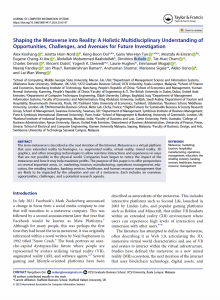


















 New HIV paper by BU PhD student
 BU Annual Research Conference: Poster Exhibition Call for Applications
 Vitae Three Minute Thesis (3MT®) Competition: Applications Now Open
 3C Online Social: Thursday 26 March 1–2pm – Research Culture, Community & Can you Guess Who?
 Four BU students at national midwifery conference
 ECR Funding Open Call: Research Culture & Community Grant – Apply now
 ECR Funding Open Call: Research Culture & Community Grant – Application Deadline Friday 12 December
 MSCA Postdoctoral Fellowships 2025 Call
 ERC Advanced Grant 2025 Webinar
 Update on UKRO services
 European research project exploring use of ‘virtual twins’ to better manage metabolic associated fatty liver disease