Bournemouth University wishes all its Nepali students, staff and collaborators in both the UK and in Nepal a Healthy and Happy New Year 2078 today.

Latest research and knowledge exchange news at Bournemouth University
Bournemouth University wishes all its Nepali students, staff and collaborators in both the UK and in Nepal a Healthy and Happy New Year 2078 today.

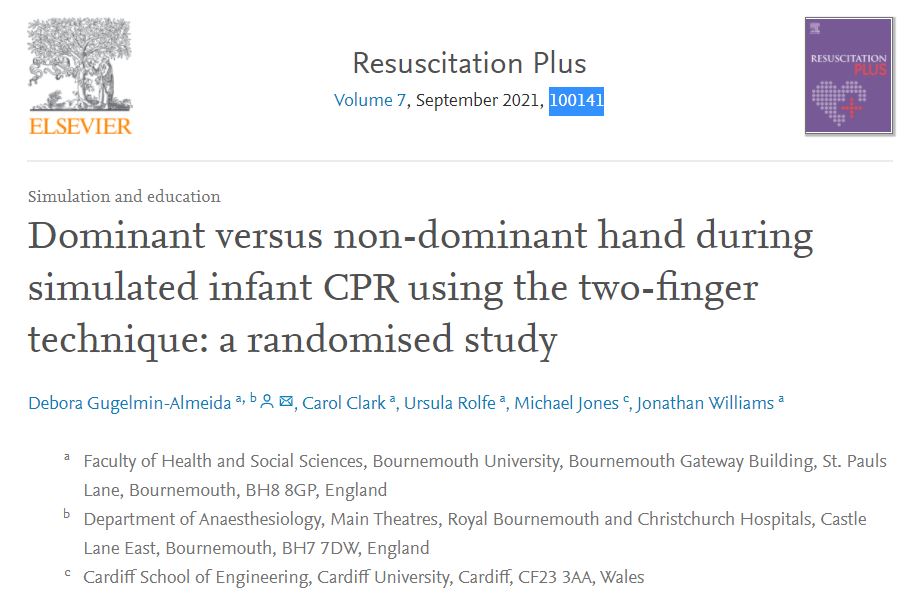
The journal Resuscitation Plus published a systematic review with Debora Almeida in the Department of Midwifery & Health Sciences as lead author. Her latest paper ‘Do automated real-time feedback devices improve CPR quality? A systematic review of literature’ is co-authored with colleagues from Brazil. The review assessed the effectiveness of automated real-time feedback devices for improving CPR (cardiopulmonary resuscitation) performance during training, simulation and real-life resuscitation attempts in the adult and paediatric population. The paper concludes that the use of automated real-time feedback devices enhances skill acquisition and CPR performance during training of healthcare professionals, and secondly, that further research is needed to better understand the role of feedback devices in clinical setting.
Congratulations!
Prof. Edwin van Teijlingen
Centre for Midwifery, Maternal & Perinatal Health (CMMPH)
Reference:
Recently, Health Prospect: Journal of Public Health published our article on ‘PhD supervision in Public Health’ [1]. The lead author is Dr. Pramod Regmi, with co-authors Prof. Padam Simkhada (FHSS Visiting Faculty) from the University of Huddersfield and Dr. Amudha Poobalan from the University of Aberdeen. The paper has a strong Aberdeen connection, the fifth oldest university in the UK. Three of us (Poobalan, van Teijlingen & Simkhada) use to work in the Department of Public Health at the University of Aberdeen (one still does), and three of us (Poobalan, Regmi & van Teijlingen) have a PhD from Aberdeen.
Reference:
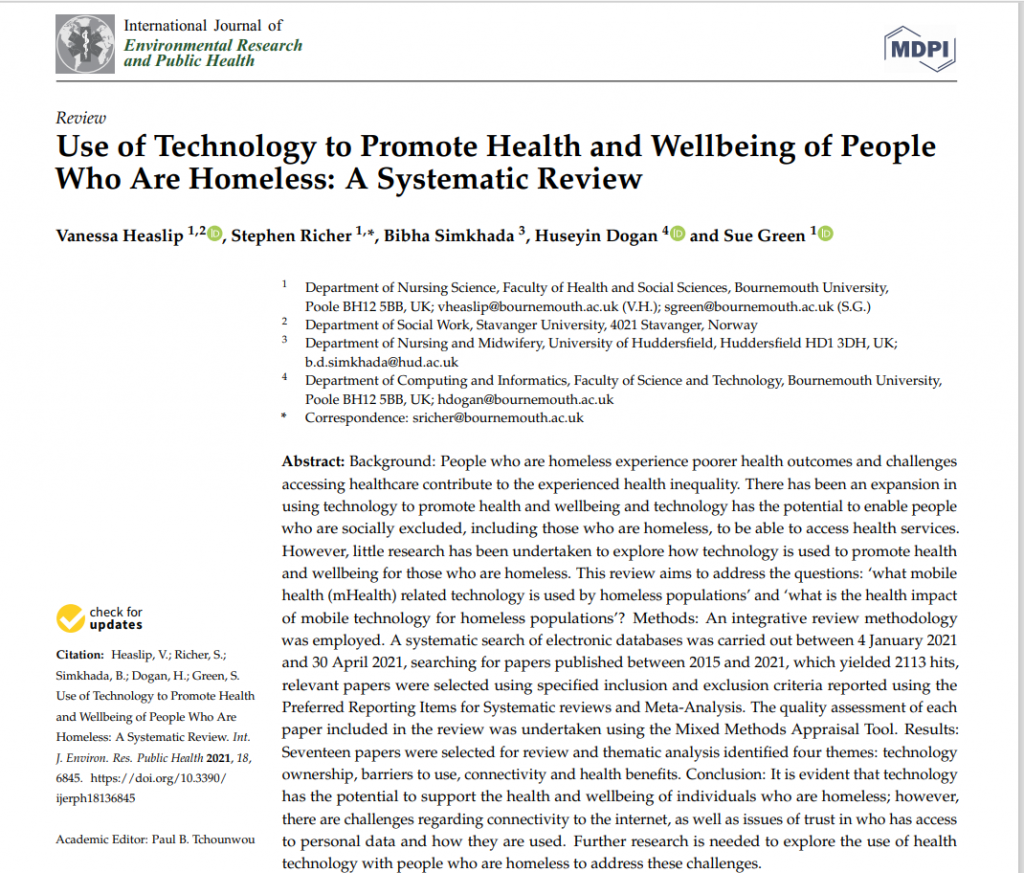
Homelessness in the UK is on the increase (Open Government 2018). Health outcomes for those that are homeless are far poorer than of the general population with an mean age of death of 45 years (men) and 43 years (women) compared to 76 ( men) and 81 years (women) for those living in homes (Office for National Statistics 2019). The South West region had the third highest number of rough sleepers in 2018 (Homeless link 2017) and this project will take place in Bournemouth and the surrounding area.
Using technology to access healthcare is nothing new; accessing virtual consultations with your GP or using one of the wide range of apps to access information and advice on is increasingly common, particularly during the current pandemic. However, this does require access to appropriate technology and internet along with the knowledge of how to use it.
Although there is a growing use of technologies amongst homeless people (McInnes et al 2015) to connect with their peers, there is no current research exploring the role of technology in assisting people who sleep rough in locating and accessing appropriate local services.
In partnership with colleagues from the Providence surgery, Dorset Healthcare NHS Foundation Trust, the Big Issue and Streetwise; Staff at Bournemouth University are conducting a research project with the aim of developing a freely available app enabling navigation and access to resources to self-manage complex health and social care needs.
Dr Vanessa Heaslip
Dr Sue Green
A Registered Nurse with experience in acute and continuing care environments, Sue has been at the forefront of the development of clinical academic careers for nurses. Sue’s research programme focuses on aspects of clinical nutrition. She has a long standing interest in the process of nutritional screening and its effect on care.
Dr Huseyin Dogan
A Principal Lecturer in Computing at Bournemouth University (BU). Dr Dogan’s research focuses on Human Factors, Assistive Technology, Digital Health and Systems Engineering. He is the Co-Founder and Co-Chair of the Human Computer Interaction (HCI) research group.
Dr Bibha Simkhada
Bibha works at Huddersfield University in the School of Health and Human Sciences. Her research interest includes Technology in Healthcare, Ageing research mainly in Dementia, Health and Wellbeing of BAME population and women’s health. She has methodological expertise on narrative and systematic review and qualitative research.
Stephen Richer
Stephen is a part time PhD student and working part time as the project research assistant. His background is in Mental Health Nursing and he has worked in numerous roles within the NHS and for various mental health charities.
Rachel BaileyAs the research project progresses, this blog will be updated on our methods, progress and results.
We are keen to hear from any local organisations working with the homeless that could assist with research. Please contact Stephen Richer sricher@bournemouth.ac.uk
Dr Michelle Heward in a previous post discussed how BU’s Ageing and Dementia Research Centre (ADRC, @BournemouthADRC) have been engaging with older people to discuss research being undertaken, pitch new ideas of research we want to undertake, and listen to what this group believe we should be researching. The first 2 coffee mornings were led by Professor Jane Murphy discussing her research on nutrition, and Professor Jan Weiner discussing his research on wayfinding. The 3rd coffee morning was led by Dr Michele Board discussing how nursing has changed over the last 40 years, and her research exploring the role of Advanced Clinical Practitioners (ACP’s) looking after older people during the COVID19 pandemic. Using pictures to generate discussion those attending discussed their own healthcare journeys and concerns about nurse education. ‘Bring back matron’ and why nurses needed to go to university were questions that generated much discussion. Michele explained that healthcare has dramatically changed since she started nursing. As an example 35 years ago women undergoing a hysterectomy would be in hospital 2 day pre operatively (!) and 10 days post operatively. Today women will be admitted on the day of their operation and remain in hospital between 1-5 days post op. Another example is in the care of those following a stroke. Patients would be in hospital for a long period of time and sat in ‘buxton chairs’ and tipped back because their balance was poor. Our understanding of post op care, and the care of people following a stroke has increased dramatically in that time, with shorter length of stay (Home is best suggests Board and McCormack 2018), and significantly better patient outcomes.
The buxton chair has gone! These advances alongside an ageing population with multi-morbidity, increasing frailty, has led to an increase in acuity of care in acute hospital environments and in the community. Nurses need to be critical thinkers, challenging how we care and what is best for each individual patient. Nurses have to deliver excellent hands on care, with expert holistic assessment and evaluation skills. They lead teams and influence how care should be delivered from the bedside to strategic decision making. For those reasons nurses need to be knowledgeable, to critique the evidence as well as create the evidence to support how care should be delivered. That is why a university education, supported by 50% of their course in practice settings, is essential. That is the nurse I want to care for me and my loved ones, compassionate, kind, caring, and knowledgeable. To illustrate this further Michele shared examples of the research she is undertaking of the brilliant nurses and allied health professionals working as ACP’s during COVID19.
During focus groups and 1-1 interviews the research team (Dr Dawn Morely, Dr Janet Scammell, Kelsie Fletcher,@AN4LTH) and 3 practitioners from Dorset Healthcare, Cliff Kilgore, Mary Edwards and Dr Pippa Collins,@DorsetHealth), heard how the ACP’s advocated for patients, led to the development of services, their responsiveness, flexibility and adaptability during an enormously challenging period – it was very inspiring. Their advanced critical thinking skills ensured the care they delivered was holistic and person centred. Hopefully those attending the coffee morning were convinced that a university education for nurses and the new role of ACP’s illustrated the expertise of postgraduate nurses delivering care on the front line.
Congratulations to Prof. Vanora Hundley who co-authored an important commentary ‘WHO next generation partograph: revolutionary steps towards individualised labour care’ in the international journal BJOG [1]. The authors comment on the partograph which is widely used across the globe as part of the assessment of labour progress. It was recommended by the World Health Organization (WHO) in the early 1990s as a routine tool for displaying the progress of labour. Despite its global acceptance, utilization and correct completion rates as low as 31% and 3% respectively, have been reported.
Congratulations!
Prof. Edwin van Teijlingen
CMMPH (Centre for Midwifery, Maternal & Perinatal Health)
Reference:
Hofmeyr, GJ, Bernitz S, Bonet M, Bucagu M, Dao B, Downe S, Galadanci H, Homer CSE, Hundley V, et al. (2021) WHO next generation partograph: revolutionary steps towards individualised labour care (Commentary), BJOG An International Journal of Obstetrics & Gynaecology, First published: 8 March 2021
The British Academy informed us yesterday that we have been successful in our application to the Writing Workshops 2021. The project builds research capacity of early career researchers researching gender in higher education institutions in Nepal. The grant will provide training in academic writing and publishing to help improve Nepali staff’s chances of getting published in international journals in English. The workshops will be co-delivered by a team of UK-based (Dr. Shovita Dhakal Adhikari, Dr. Pramod Regmi and Prof. Edwin van Teijlingen) and Dr. Rashmee Rajkarnikar from Nepal’s oldest university, Tribhuvan University, supported by Nepali scholars/editors from Social Science Baha (SSB).
We have planned three stages: 1) virtual mini workshops, guided discussion/input on academic writing, publishing, journal submission, and review processes ; 2) online workshops where participants present their draft papers/work and receive feedback from peers, mentors, invited speakers/editors and opportunities networking/collaborations (for co-authorship, peer review and peer support); and 3) monthly tutorials (webinars) later in 2021 to provide mentorship and peer support to participants.
This application is third time lucky as two previous applications to The British Academic for Writing Work had not been successful. Over the years the team has build up capacity in academic writing and publishing in Nepal ad hoc. This grant will allow us to offer a more systematic approach to academic writing capacity building in Nepal. It is building on a growing number of paper published by FHSS staff on various aspects of academic writing and publishing. [1-14]
References:
The curious start of an academic collaboration
Two days ago a group of academic from Bournemouth University (BU) submitted a bid for a research grant to the NIHR (National Institute for Health Research) to help prevent the drowning of toddlers in Bangladesh. The proposed research is a collaboration with the RNLI (Royal National Lifeboat Institution), and an other UK university, the University of the West of England (UWE) and a research organisation called CIPRB (Centre for Injury Prevention and Research, Bangladesh). Nothing particularly out of the ordinary there. BU academics submit collaborative bid for research grants all the time, with colleagues at other universities, with large charities (like the RNLI), and with research institutes across the globe. What I find intriguing is the round-about way this particular collaboration came about within BU.
The NIHR called for research proposals in reply to its Global Health Transformation (RIGHT) programme. The RNLI approached CIPRB, an expert in accident prevention from UWE and BU experts in health economics and human-centred design to discuss putting in an intention to bid. The RNLI has a history of working with both CIPRB in Bangladesh on drowning prevention and with BU in various design project (including improved ball bearings for launching lifeboats). The team decided that it needed a sociologist to help study the social and cultural barriers to the introduction of interventions to prevent drowning in very young toddlers (12-14 months). My name was mentioned by our UWE colleague whom I know from her work in Nepal. For example, she and I had spoken at the same trauma conference in Nepal and the lead researcher on her most recent project is one of my former students.
Thus, I was introduced to my BU colleagues in different departments (and faculties) by an outsider from a university miles away. I think it is also interesting that after twelve years at BU I am introduced to fellow researchers at the RNLI, especially since I only need to step out of my house and walk less than five minutes to see the RNLI headquarters in Poole.
Prof. Edwin van Teijlingen
CMMPH (Centre for Midwifery, Maternal & Perinatal Health)
Four PhD students, whom I had the pleasure of supervising, graduated yesterday with a Ph.D. I never had so many Ph.D. students graduating at the same time. Not all of these four students started at the same time. Moreover, two I was invited as a supervisor after the student had started, and for most I was not the lead/first supervisor .
All four students have an internationally focused thesis:
Alice Ladur with her Ph.D. focusing on: Male involvement in facilitating the uptake of maternal health services by women in Uganda.
Peter Wolfensberger with his Ph.D.: Creating meaning- Understanding the experiences of people living with mental illness in Switzerland- A Qualitative Study.
Shaqaieq AShrafi Dost with her thesis: Factors that affect the management capacity, leadership and employee performance in the Ministry of Public Health (MoPH), Afghanistan: A single embedded single-case study.
Orlanda Harvey with her Ph.D. study under the title: Male anabolic androgenic steroid-users: A mixed-methods study -The voice of the AAS-user.
Orlanda is a good ambassador for Bournemouth University’s PhD Integrated Thesis. The newly introduced Integrated Thesis allows Ph.D. candidates to incorporate papers in their thesis (e.g. instead of a chapter). Papers can be included that have been published or submitted for publication to an academic peer-reviewed journal. As the first BU student to submit an Integrated Thesis Orlanda paved the way with BU library staff to sort out the finer details around, for example, copyright issues and thesis formatting (https://blogs.bournemouth.ac.uk/research/2020/08/27/supporting-integrated-theses-at-bu/ ).
In this COVID-19 year the graduation was on ZOOM, something I didn’t think would work as well as it did. I love the British-style graduation with the big audience, the ceremony, the gowns, the band, etc. In previous years I had always looked forward to ceremony in the BIC, the Bournemouth International Centre. This year because it was on ZOOM the event was smaller, shorter and more personal. This offered the opportunity to talk to students and colleagues which is otherwise nearly impossible in the hustle and bustle of thousands of people in the BIC.
Being a graduation it is also the end of an era for the student and the supervisor, and the beginning of a new one.
CMMPH (Centre for Midwifery, Maternal & Perinatal Health)
NIHR Research Design Service are pleased to offer the opportunity to attend the next in its series of ‘Researcher Road Shows’ – Using health and social care datasets in research: Practical advice to support your research journey.
This event is taking place via Zoom and is aimed at all those seeking practical guidance on how to find, access and gain approvals to use health datasets, including early career researchers:
Monday 15 March, 10am to 2.30pm: ‘Lifting the Lid on Data – Meet the Data Custodians’
Wednesday 17 March, 10am to 2.30pm: ‘Navigating the system’
Your local branch of the NIHR RDS (Research Design Service) is based within the BU Clinical Research Unit (BUCRU)
We can help with your application. We advise on all aspects of developing an application and can review application drafts as well as put them to a mock funding panel (run by RDS South West) known as Project Review Committee, which is a fantastic opportunity for researchers to obtain a critical review of a proposed grant application before this is sent to a funding body.
Contact us as early as possible to benefit fully from the advice
Feel free to call us on 01202 961939 or send us an email.
Today FHSS Prof. Jonathan Parker published an article (online first) on structural discrimination and abuse associated with COVID-19 in care homes in The Journal of Adult Protection [1]. Whilst Dr. Preeti Mahato, Prof. Edwin van Teijlingen and FHSS Visiting Professor Padam Simkhada had a COVID-19 paper published in the Journal of Midwifery Association of Nepal (JMAN) in late-January 2021 [2], although an electronic copy only reached their email inbox today.
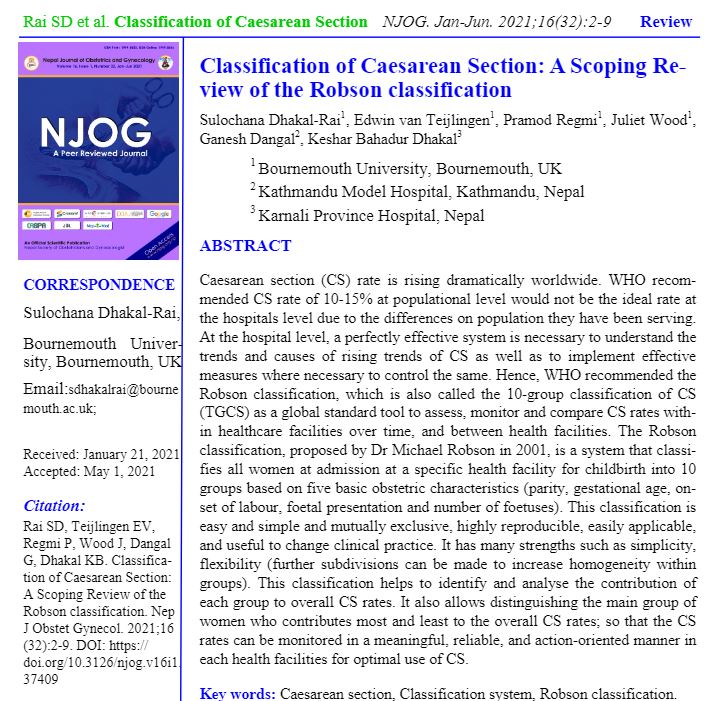
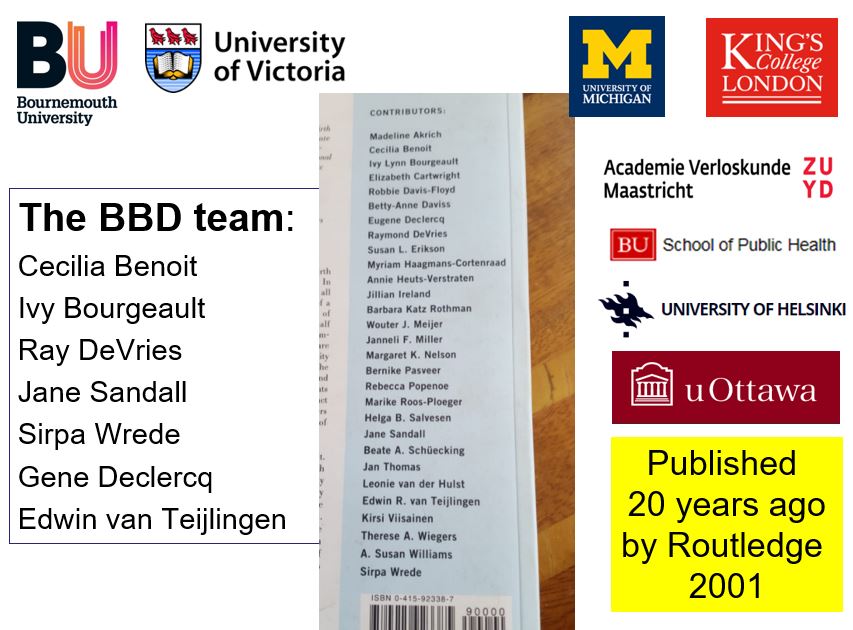
Today our chapter: Birth Systems across the World: Variations in maternity policy and services across countries was published in the renowned series of books: FIGO Continuous Textbook of Women’s Medicine [1]. This chapter was co-authored by Prof. Edwin van Teijlingen in the Centre for Midwifery, Maternal & Perinatal Health (CMMPH) with Prof. Sirpa Wrede and Doctoral Researcher from the University of Helsinki (Finland) and Dr. from the European University at St. Petersburg (Russia). The chapter includes a set of recommendations for future practice.
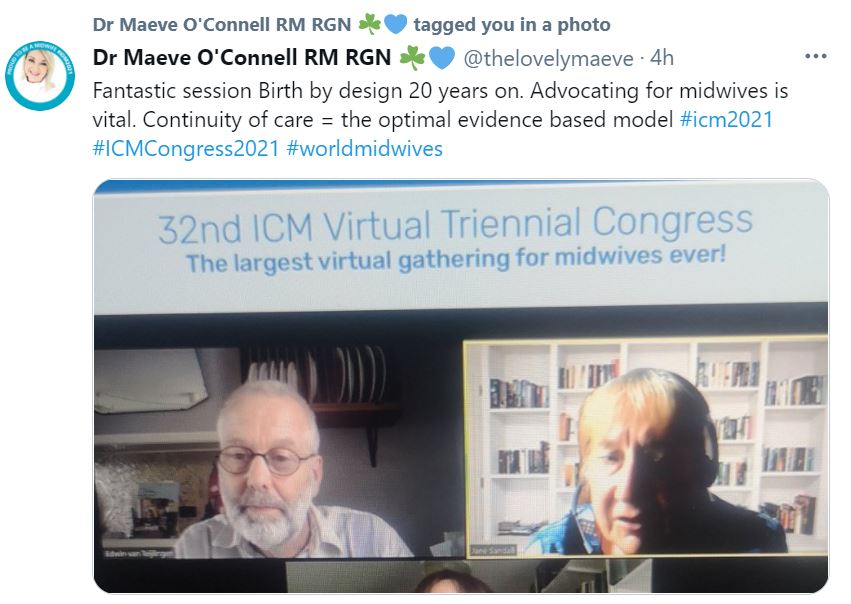
Volume 1 is edited by Prof. Jane Sandall from King’s College London. Earlier this year Prof. Sandall was appointed as the first-ever head of midwifery research for England and one of her key focuses will be around ending racial health inequalities in maternity care.
Everything published on The Global Library of Women’s Medicine is available to everyone everywhere for free and there is no requirement to register in order to view it.
Reference:
Congratulations to Dr. Pramod Regmi (Lecturer in International Health) in the Department of Nursing Sciences on today’s publication of ‘The unmet needs for modern family planning methods among postpartum women in Sub-Saharan Africa: a systematic review of the literature’ [1]. The paper in the international peer-reviewed journal Reproductive Health is co-produced with BU MSc Public Health graduate Jumaine Gahungu and Dr. Mariam Vahdaninia who left the Faculty of Health & Social Sciences in mid-2020.
Well done.
Prof. Edwin van Teijlingen
CMMPH
Reference:
Dear colleagues
– Do you have a great idea for research in health, social care or public health?
– Are you planning to submit a grant application to NIHR?
Our popular seminar continues online and will take place on Tuesday 23rd March 2021 from 10.00am – 12.30pm.
The seminar provides an overview of NIHR funding opportunities and research programme remits, requirements and application processes. We will give you top tips for your application and answer specific questions with experienced RDS South West advisers.
We also have a limited number of 20-minute 1-to-1 appointments available after the seminar should you wish to discuss your proposed study with an RDS adviser.
Find out more and book a place.
Your local branch of the NIHR RDS (Research Design Service) is based within the BU Clinical Research Unit (BUCRU)
We can help with your application. We advise on all aspects of developing an application and can review application drafts as well as put them to a mock funding panel (run by RDS South West) known as Project Review Committee, which is a fantastic opportunity for researchers to obtain a critical review of a proposed grant application before this is sent to a funding body.
Contact us as early as possible to benefit fully from the advice
Feel free to call us on 01202 961939 or send us an email.
The year 2021 started in many ways in the same way as it had ended with a country gripped in COVID-19 and a national lock down to limit the spread of the disease. It is appropriate timely that the first publication from our international collaboration, studying the health system in Nepal, focuses on COVID-19 [1]. This academic paper forms part of our on-going study of the decentralisation of the Nepal health system. The study is run by the University of Sheffield, the University of Huddersfield and Bournemouth University in the UK and PHASE Nepal and Manmohan Memorial Institute of Health Sciences in Nepal. The study is funded by the UK Health Systems Research Initiative.


This paper was unplanned as nobody (neither in the UK or in Nepal) had heard of COVID-19 when we submitted the grant application in mid-2019. It was only when we started our project officially in April 2020 that COVID-19 had become the pandemic it is today. We took the opportunity to assess some of the early evidence on the effectiveness of the actions taken to deal with COVID-19 by the national government as well as provincial and local governments and the levels of cooperation and coordination between them.
Authors on this include BU PhD graduate Dr. Pratik Adhikary and FHSS Visiting Professor Padam Simkhada, as well as our collaborator on other funded projects, Dr. Sujan Marahatta from Manmohan Memorial Institute of Health Sciences (Nepal).
Prof. Edwin van Teijlingen
CMMPH
Reference:
Peer reviewing is the backbone of academic publishing. It is this peer review process to ensure that papers/publications have been vetted scientifically prior to publication by experts in the field, i.e. one’s peers. However, the process is not without its problems. One such problems is the delay in academic publishing. For example, a few days ago we published a substantive editorial on COVID-19 in Qater [1]. When we submitted this in July 2020 the information in our editorial was very up to date, and it still was when the Qatar Medical Journal accepted it on 26th July 2020. Unfortunately, with all the incredibly rapid developments in vaccine development, approval and roll out some of the paper now reads like ‘historial data’.
Prof. Edwin van Teijlingen
Centre for Midwifery, Maternal & Perinatal Health (CMMPH)
Reference:
Congratulations to Prof. Vanora Hundley whose article ‘Escalation triggers and expected responses in obstetric early warning systems used in UK consultant-led maternity units’ is now available Open Access online. The paper has been accepted in Resuscitation Plus. Co-authors include FHSS Visiting Faculty Prof. Gary Smith and Dr. Richard Isaacs.
The paper reports on a review of OEWS [Obstetric Early Warning Systems] charts and escalation policies across consultant-led maternity units in the UK (n = 147). OEWS charts were analysed for variation in the values of physiological parameters triggering different levels of clinical escalation. The observed variations in the trigger thresholds used in OEWS charts and the quality of information included within the accompanying escalation protocols is likely to lead to suboptimal detection and response to clinical deterioration during pregnancy and the post-partum period. The paper concludes the development of a national OEWS and escalation protocol would help to standardise care across obstetric units.
Congratulations!
CMMPH
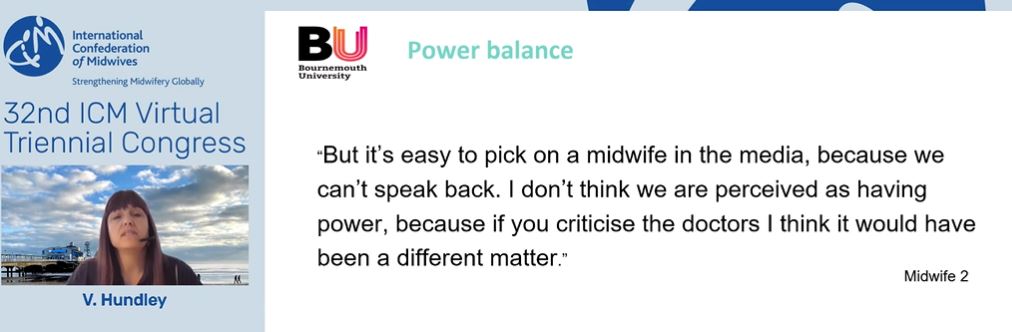
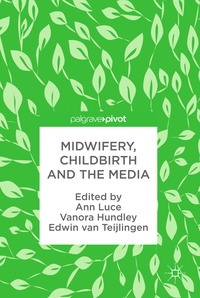
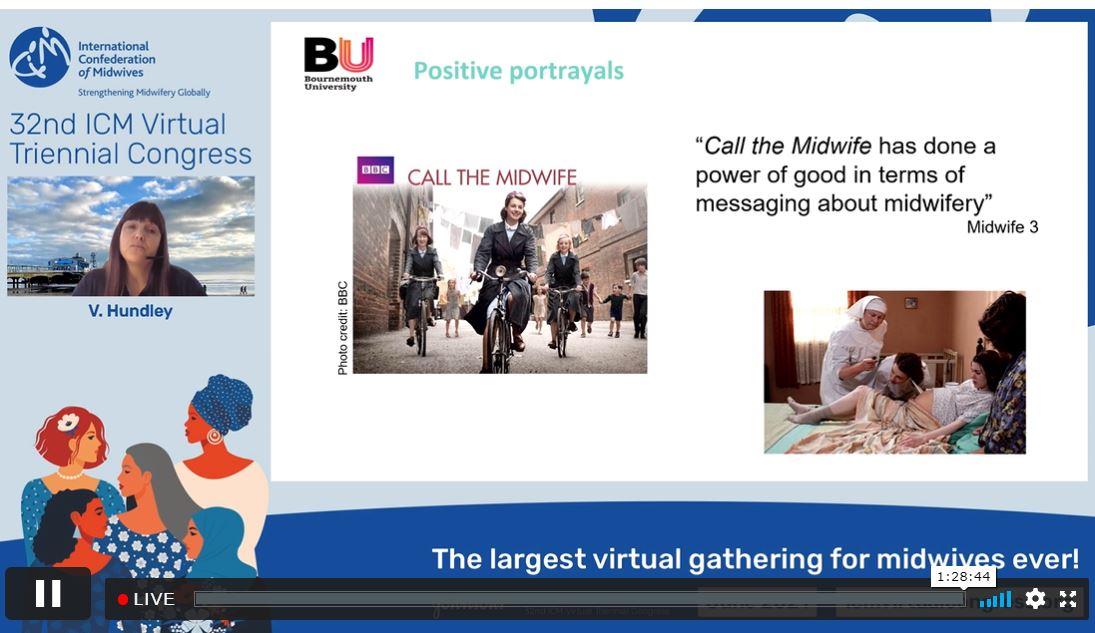
Today we received an end-of-year good-news message from ResearchGate telling us that 700 people had ‘read’ our book Midwifery, Childbirth and the Media [1].
Lee Wright, Senior Lecturer in the School of Nursing and Midwifery at Birmingham City University wrote in his review of our edited volume: “…our media image and digital foot print are rapidly becoming the most important window into our profession. In a rapidly changing environment this book provides an up to date and informative insight into how our profession is affected by the media and how our profession can inform and influence the image of midwifery. This area is going to become even more important in the future universities and trusts increasingly use broadcast and social media to manage information and inform our clients of the services we provide. This book will be the important first text in a new growth area. It brings together an internationally recognised group of authors who are experts in this field. I wholeheartedly recommend it to you.”
This edited collection was published by Palgrave Macmillan in 2017 and it is part of a larger body of Bournemouth University research on the topic [2-6].
Professor Edwin van Teijlingen, Professor Vanora Hundley and Associate Professor Ann Luce
References: