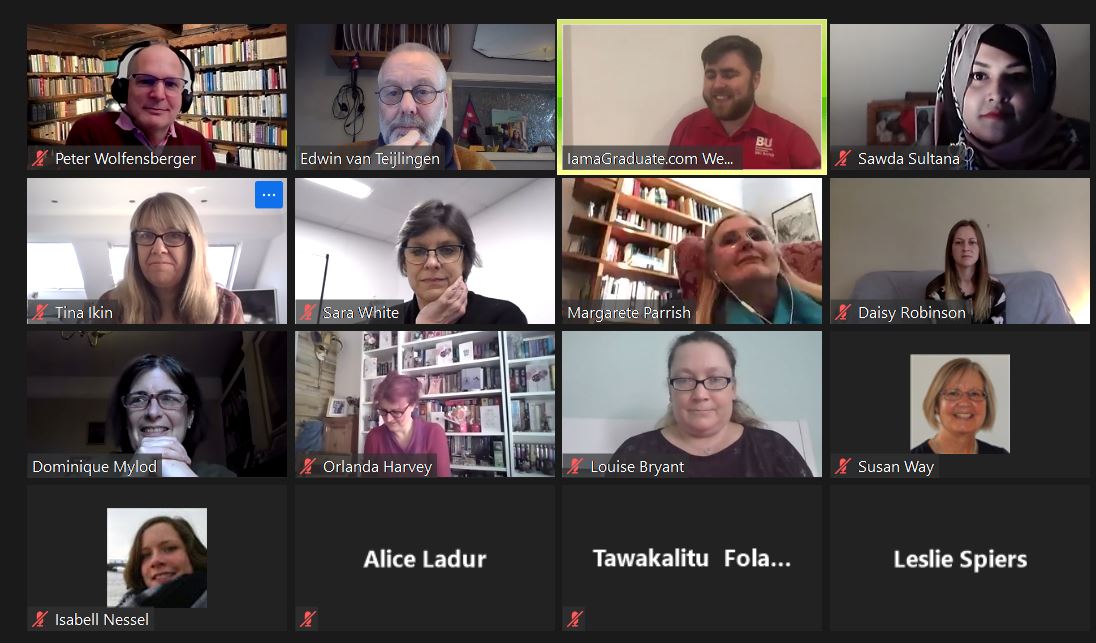
Four PhD students, whom I had the pleasure of supervising, graduated yesterday with a Ph.D. I never had so many Ph.D. students graduating at the same time. Not all of these four students started at the same time. Moreover, two I was invited as a supervisor after the student had started, and for most I was not the lead/first supervisor . 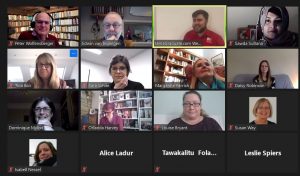 All four students have an internationally focused thesis:
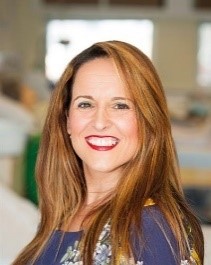
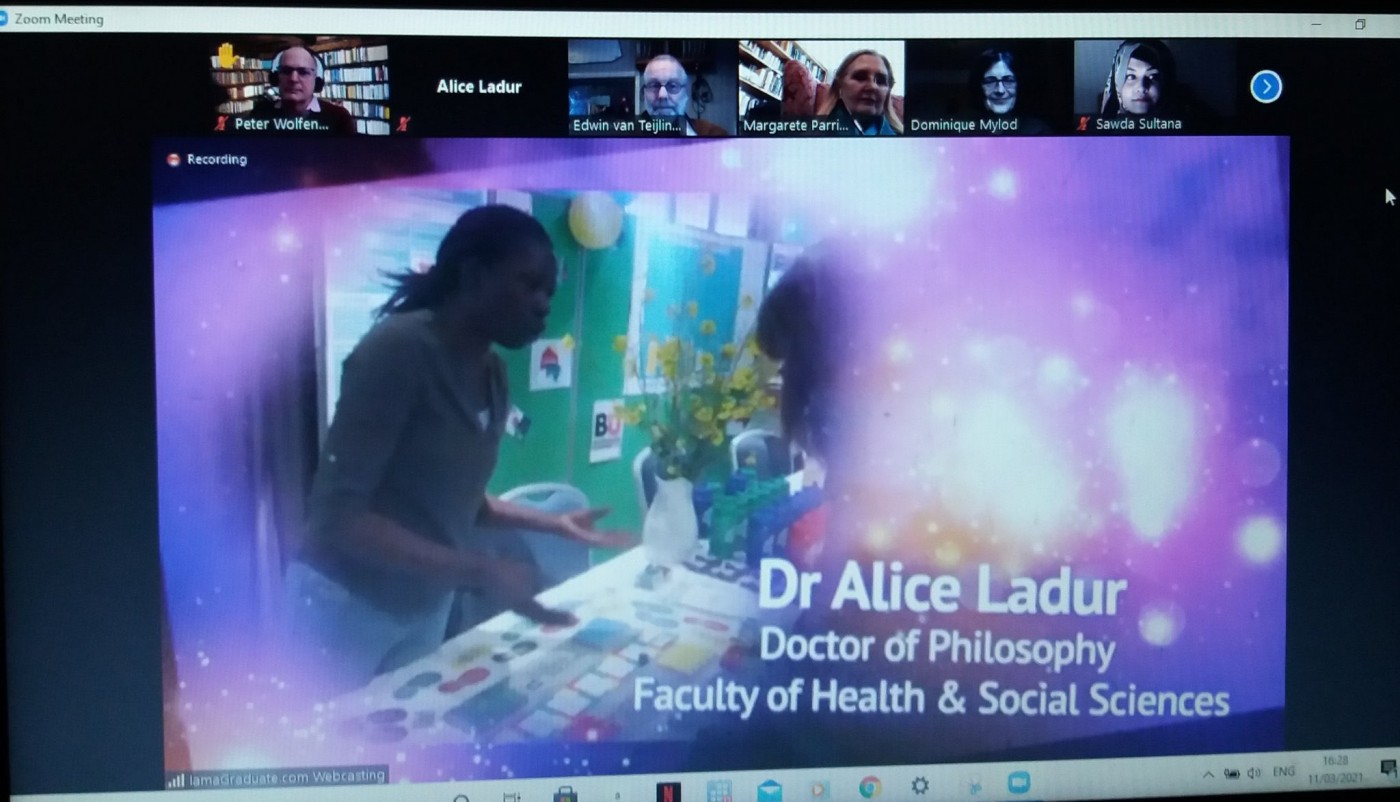
Alice Ladur with her Ph.D. focusing on: Male involvement in facilitating the uptake of maternal health services by women in Uganda.
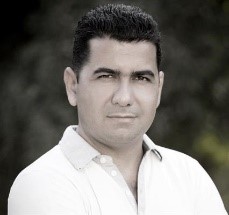
Peter Wolfensberger with his Ph.D.: Creating meaning- Understanding the experiences of people living with mental illness in Switzerland- A Qualitative Study.
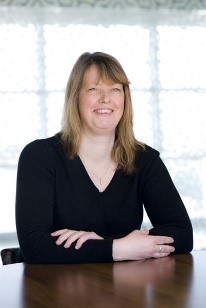
Shaqaieq AShrafi Dost with her thesis: Factors that affect the management capacity, leadership and employee performance in the Ministry of Public Health (MoPH), Afghanistan: A single embedded single-case study.
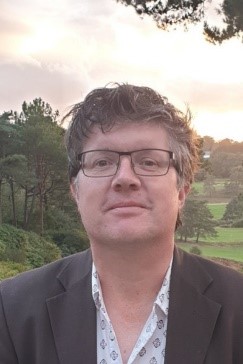
Orlanda Harvey with her Ph.D. study under the title: Male anabolic androgenic steroid-users: A mixed-methods study -The voice of the AAS-user.
Orlanda is a good ambassador for Bournemouth University’s PhD Integrated Thesis. The newly introduced Integrated Thesis allows Ph.D. candidates to incorporate papers in their thesis (e.g. instead of a chapter). Papers can be included that have been published or submitted for publication to an academic peer-reviewed journal. As the first BU student to submit an Integrated Thesis Orlanda paved the way with BU library staff to sort out the finer details around, for example, copyright issues and thesis formatting (https://blogs.bournemouth.ac.uk/research/2020/08/27/supporting-integrated-theses-at-bu/ ).
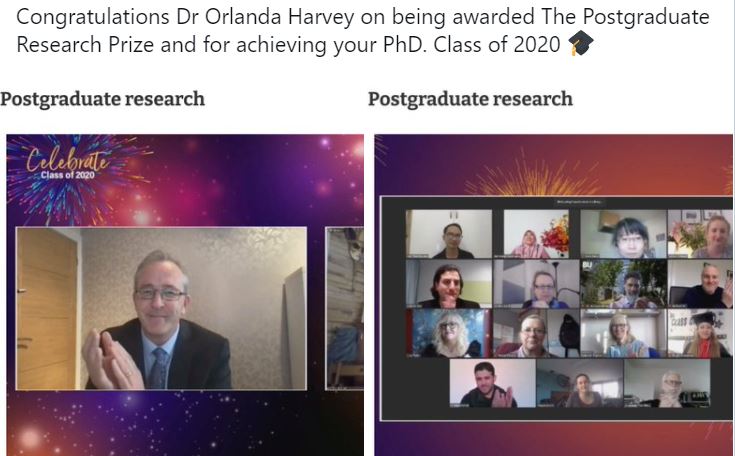 In this COVID-19 year the graduation was on ZOOM, something I didn’t think would work as well as it did. I love the British-style graduation with the big audience, the ceremony, the gowns, the band, etc. In previous years I had always looked forward to ceremony in the BIC, the Bournemouth International Centre. This year because it was on ZOOM the event was smaller, shorter and more personal. This offered the opportunity to talk to students and colleagues which is otherwise nearly impossible in the hustle and bustle of thousands of people in the BIC.
Being a graduation it is also the end of an era for the student and the supervisor, and the beginning of a new one.
Prof. Edwin van Teijlingen
CMMPH (Centre for Midwifery, Maternal & Perinatal Health)




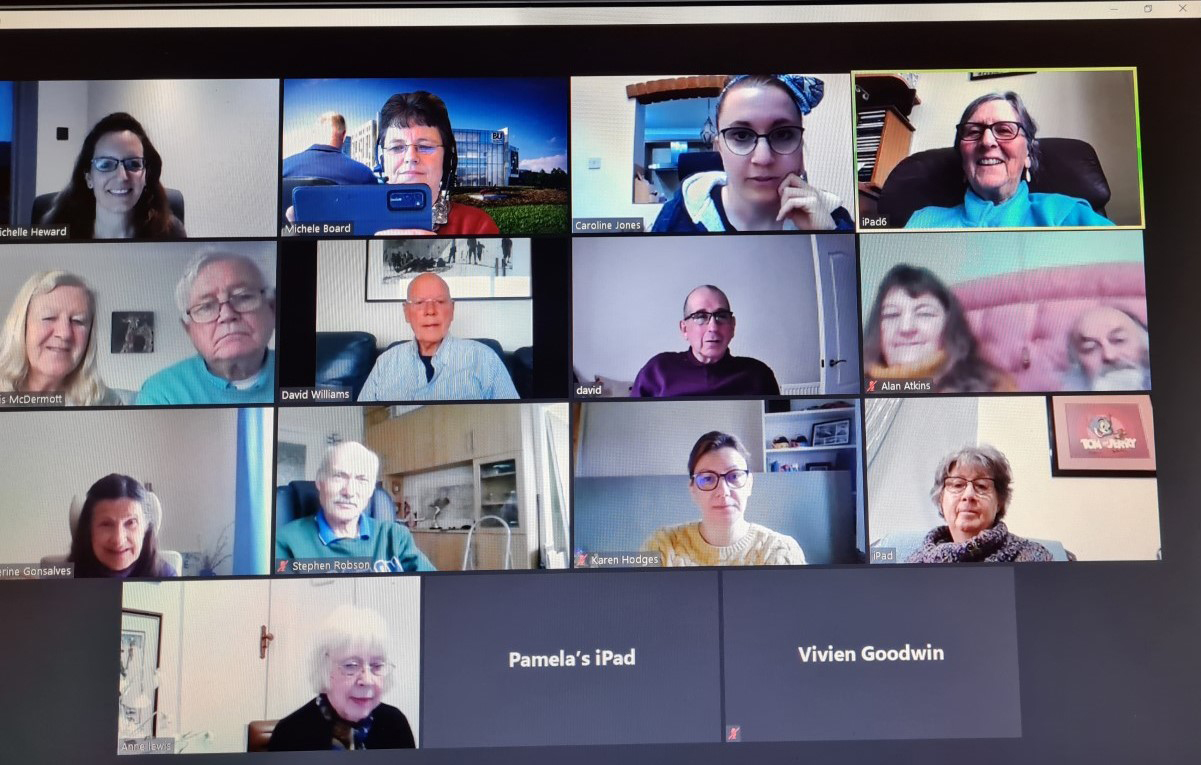
 The buxton chair has gone! These advances alongside an ageing population with multi-morbidity, increasing frailty, has led to an increase in acuity of care in acute hospital environments and in the community. Nurses need to be critical thinkers, challenging how we care and what is best for each individual patient. Nurses have to deliver excellent hands on care, with expert holistic assessment and evaluation skills. They lead teams and influence how care should be delivered from the bedside to strategic decision making. For those reasons nurses need to be knowledgeable, to critique the evidence as well as create the evidence to support how care should be delivered. That is why a university education, supported by 50% of their course in practice settings, is essential. That is the nurse I want to care for me and my loved ones, compassionate, kind, caring, and knowledgeable. To illustrate this further Michele shared examples of the research she is undertaking of the brilliant nurses and allied health professionals working as ACP’s during COVID19.
  During focus groups and 1-1 interviews the research team (Dr Dawn Morely, Dr Janet Scammell, Kelsie Fletcher,@AN4LTH) and 3 practitioners from Dorset Healthcare, Cliff Kilgore, Mary Edwards and Dr Pippa Collins,@DorsetHealth), heard how the ACP’s advocated for patients, led to the development of services, their responsiveness, flexibility and adaptability during an enormously challenging period – it was very inspiring. Their advanced critical thinking skills ensured the care they delivered was holistic and person centred. Hopefully those attending the coffee morning were convinced that a university education for nurses and the new role of ACP’s illustrated the expertise of postgraduate nurses delivering care on the front line.
















 SONAMONI contributions to Safety Conference 2026 in South Africa
 Three CMWH presentations at Berlin conference
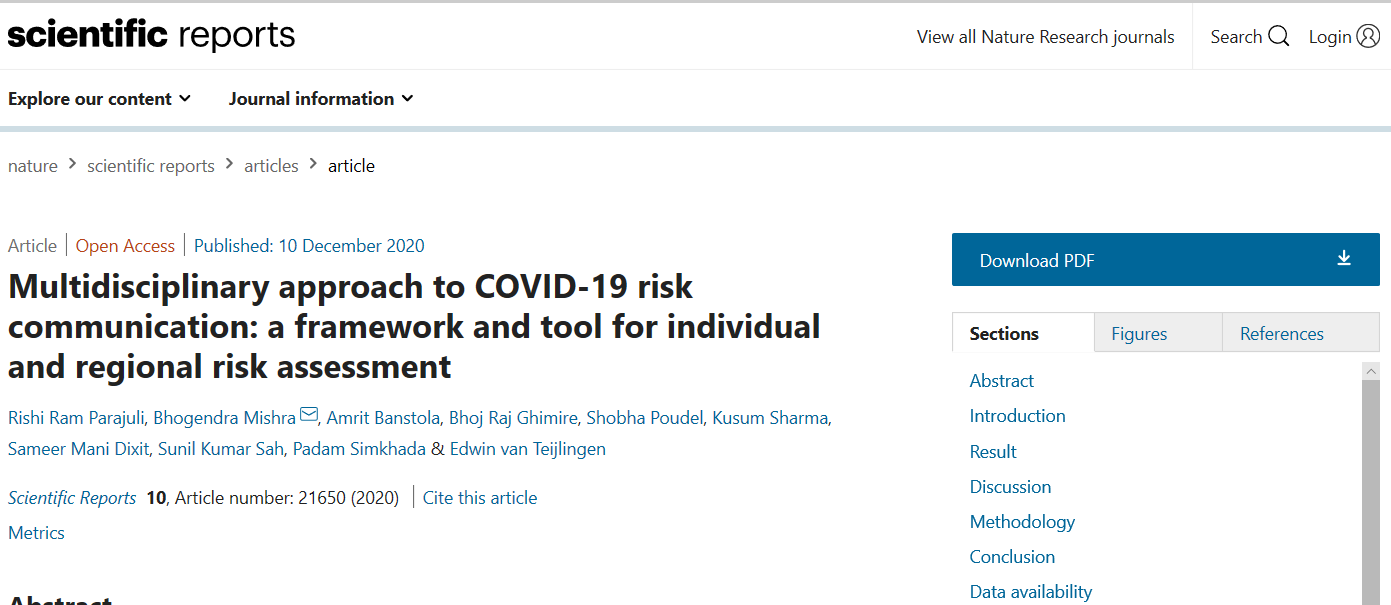
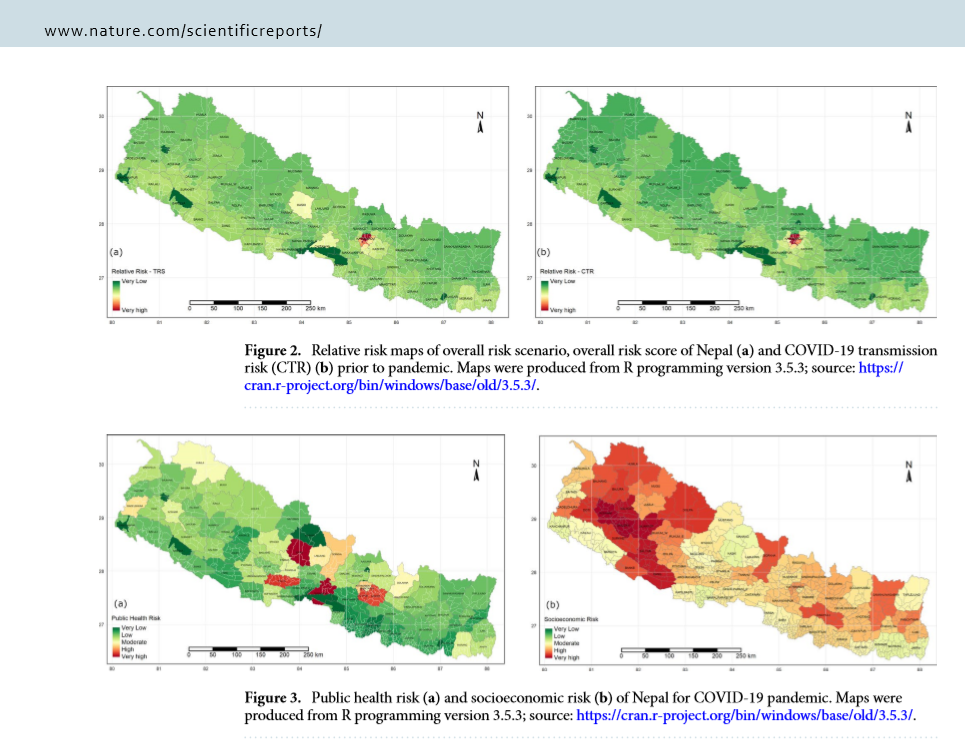
 New interdisciplinary paper on Nepal
 Horizon Europe Cluster 3 (Civil Security for Society) 2026 Calls Now Open
 MSCA Doctoral Networks 2026 Call Information Webinar
 ESRC Festival of Social Science 2026: Application Deadline Extended to Thursday 25 June 2026
 Reminder: Register for the ESRC Festival of Social Science 2026 Information Session
 ECR Funding Open Call: Research Culture & Community Grant – Apply now
 ERC Advanced Grant 2025 Webinar
 Update on UKRO services
 European research project exploring use of ‘virtual twins’ to better manage metabolic associated fatty liver disease