This November, supported by a BU Women’s Academic Network Small Research Grant and a BUBS QR grant, I presented my paper on Refugee Women, Entrepreneurship and Acceptance and Legitimacy at the Institute of Small Business Entrepreneurship (ISBE) Conference 2024 at Sheffield, UK.
The conference, titled ISBE 2024- Research, Policy and Practice for a More Equitable World, is one of the most significant occasions annually for academics in the UK and beyond whose contributions to the domain of small business entrepreneurship is not only limited to the academic journals but are strongly influential in policy design. The ‘More Equitable World’ in the conference title alludes to the changing nature of the world we inhabit- one where we are recognising more and more every passing day, that the existing economic models are not relevant anymore. Most of the discussions at the conference were connected to the wider global challenges underpinned by UN Sustainable Development Goals.
In the subject domain of entrepreneurship, we talk of the entrepreneurial process- one marked by dealing with uncertainty (Knight, 1921), uncertainty of the perfect kind- one that is not just unknown but unknowable. One might argue- but all uncertainty is like that isn’t it? Not if you look at our own human propensity to ambiguity aversion and risk taking- we are much more likely to contend with known risks then unknown risks. We engage in behaviour most of the time to lower our risks; we like clarity, we like to reduce ambiguity ( Ellsberg, 1961). But expert entrepreneurs, as Saras Sarasvathy suggests, are those who accept the perfectly unknowable nature of the future and yet they are comfortable with the uncertainty that comes with it because they remain open to opportunities, remain flexible, adaptable and open to change.
The Covid-19 pandemic brought with it an acceptance that we cannot, for the best of all the risk assessments undertaken, foresee the future. The smallest of mircoorganisms became the biggest disruptor in the marketplace and for humankind. Overnight, digital transformation was the demand of the marketplace. The acceleration of digitisation expected and demanded of smaller enterprises meant business survival was nigh impossible. But the human spirit, seen through the lenses of entrepreneurial spirit, prevailed. The world witnessed a (re)emergence of entrepreneurial leadership through creation of startups globally, focused on the taking small incremental steps to solving the grand challenges facing the planet and humanity. This had happened before when the 2008-2010 financial crisis occurred– as traditional for-profit businesses took a major hit, we saw in their wake, a growth in startups channelling their energies into creating economically sound business models which support communities and causes.
I reflect on this continually through my taught units in Entrepreneurship at BU and through my research. And I see this reflection in the world of academia and business around me. At ISBE 2024 this year, I had the privilege of engaging with individuals who are making profound impact on policy and society (economy after all must serve the needs of the society- it is not decoupled). Some of the discussions were on Inclusivity in entrepreneurship with focus on neurodivergence and the path of entrepreneurship; gender gap in entrepreneurship; focus on how to make finance equitable for all in the context of business startups; focus on newer economic models relevant to our current times.
My research focus is on marginalisation and entrepreneurship- gender bias in entrepreneurial finance; gendered roles and entrepreneurial experience; refugee crisis and integration into society through entrepreneurship. It was a breath of fresh air to witness how openly policy makers and highly influential academics are talking about how it is high time to stop talking about the problem e.g. Gender Bias and work to a solution that is real. There is no dearth of evidence on the problem of the gender gap in entrepreneurship. The last I checked it was a 3-6% loss to global GDP to the region of nearly USD 5 trillion. Inclusivity, just in the context of the binary gender gap here, is not just an argument of social justice and fairness (which would be a very strong argument) but an economic one.
My participation at the conference was facilitated by funding from the Women’s Academic Network at Bournemouth University (BU) and BU Business School QR funds. The value of the grants was not just limited to the paper presentation at the conference but is poised to lead to bigger outcomes in the form of collaborative research, joint external bid applications and public engagement.
Although I have had papers accepted at conferences in the last few years but this was the first conference I had physically attended (barring an online one in 2023) after a hiatus of nearly 4 years. Those 4 years began with the pandemic lockdown year of course and then life took over. The context of gender issues in entrepreneurship is not dissimilar to that of women or mother academics* or women in other industry sectors. Recently, I came across an interview with Indra Nooyi, former CEO of PepsiCo, who said that the work-life ‘balance’ is problematic; we ought to strive for work-life juggle. Not sure what you make of it, but I hear it from the perspective of a woman academic who wishes to make a positive impact through her work and also create a positive family experience. And in that process, relying on support network(s) and grants such as the ones I had are critically important. As I found through one of my recent research studies, social relationships (within family or externally) provide the much needed ‘propping up’ allowing women ( entrepreneurs) to work towards their (business) aspirations.
Participation at conferences is not just limited to academic feedback on papers; it is way beyond that- it becomes a supportive network; it is inspiration; intellectual stimulation; professional networking; creating a collaborative space for future projects; creating opportunities of PhD candidates; connecting with policy makers and ultimately, human connectedness that we all crave. For women academics like me, I feel it is a priceless experience. One that I would be looking forward to repeating more often.
- The blogpost refers to gender in the binary only.
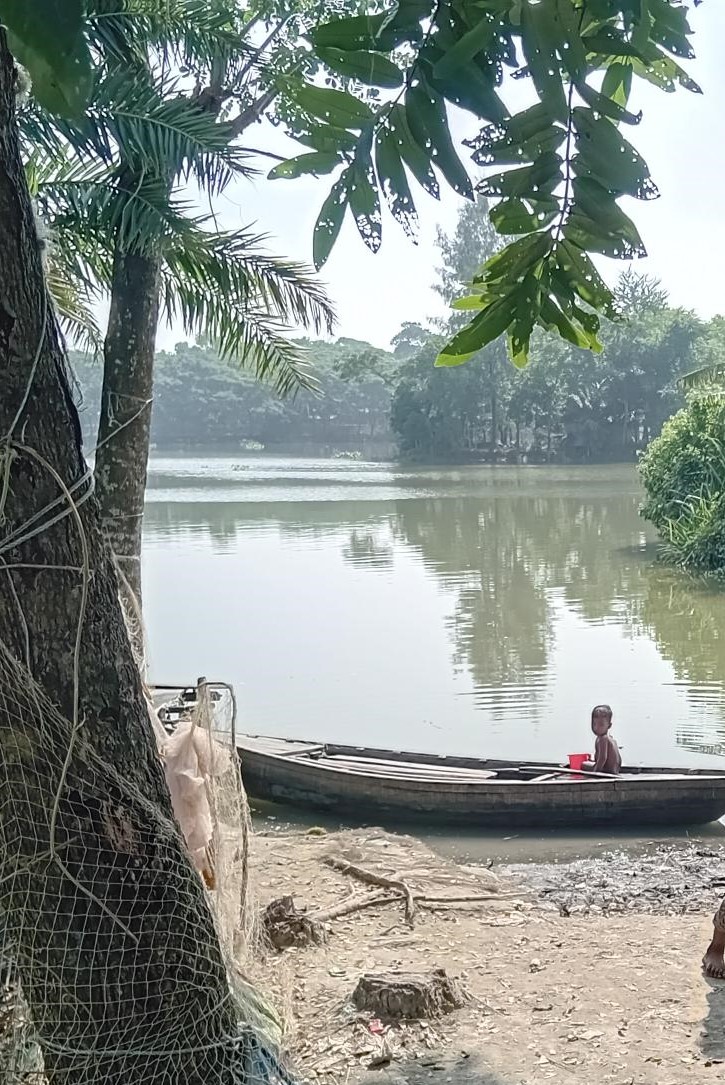
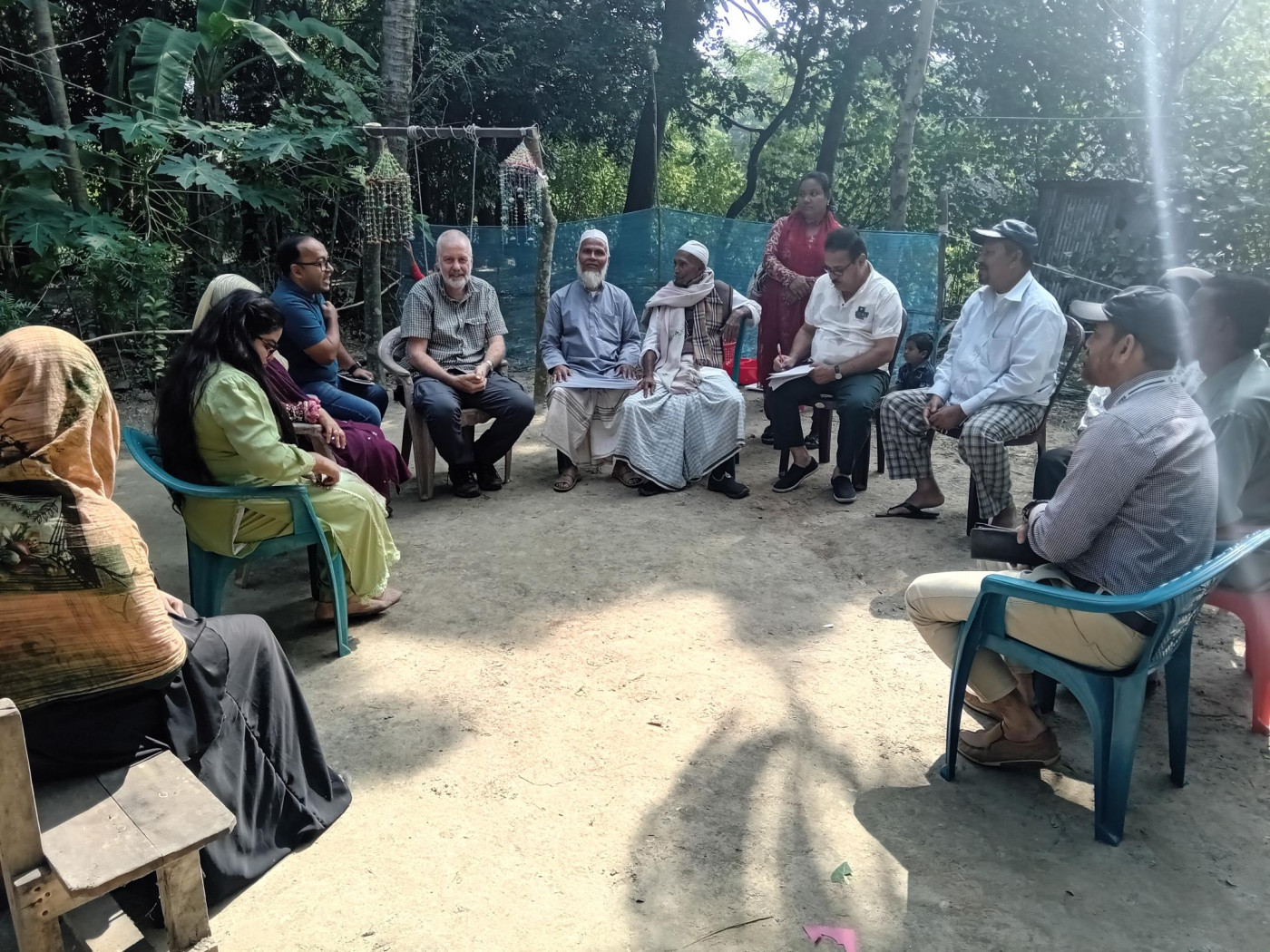
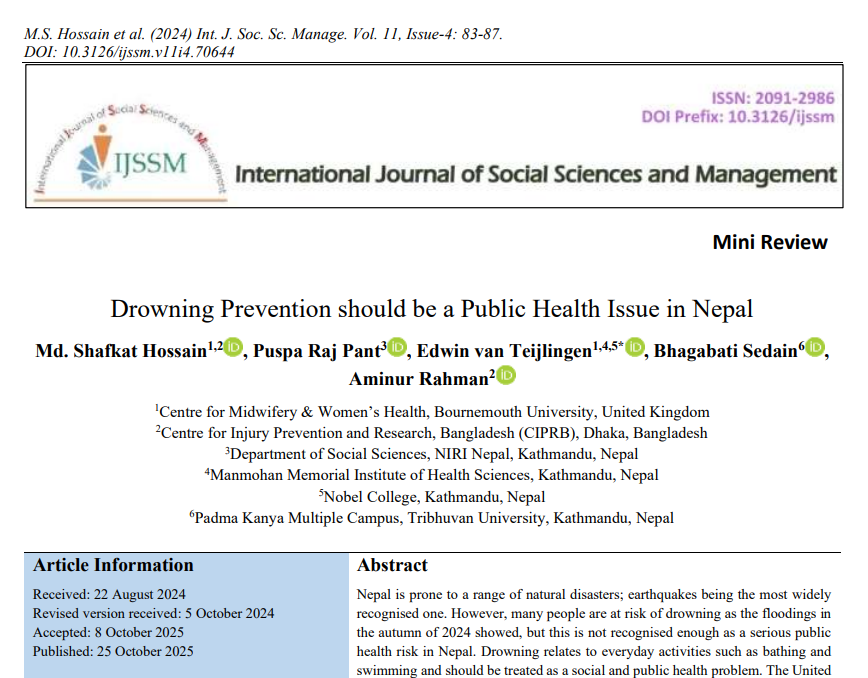
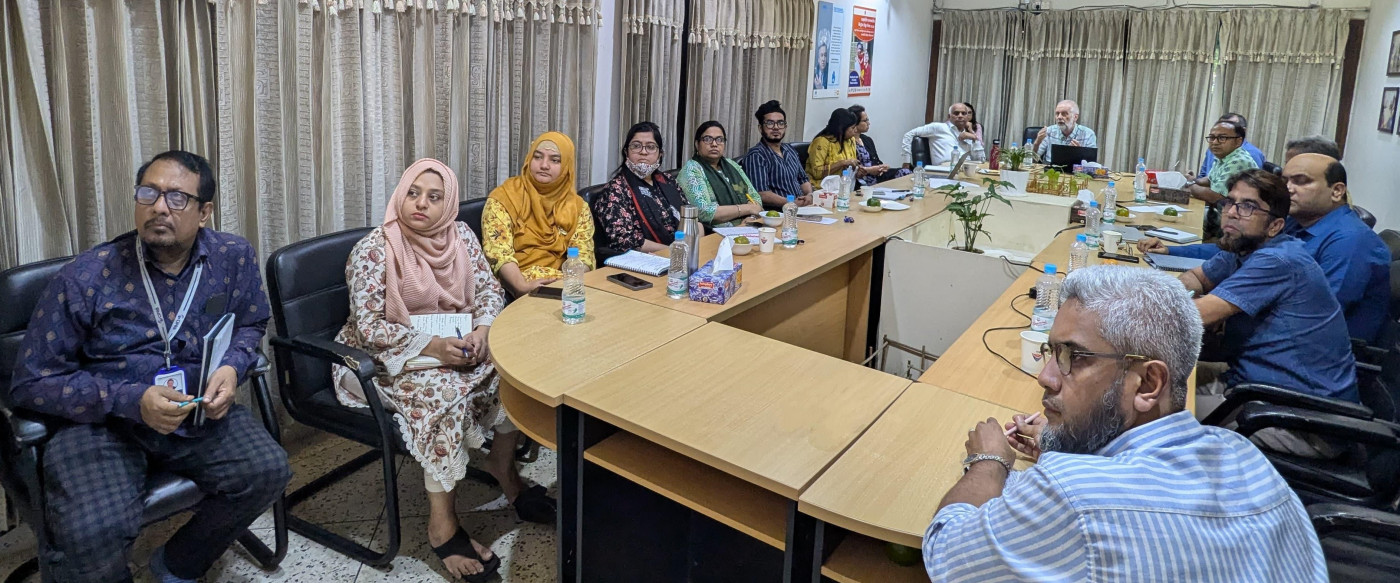 Yesterday I had the pleasure to delivery two research capacity building workshop sessions in Dhaka with staff at CIPRB (Centre for Injury Prevention and Research, Bangladesh). I was in Bangladesh as part of our Sonamoni project, this interdisciplinary project is jointly coordinated by Bournemouth University and CIPRB, in also includes the University of the West of England, Bristol, the University of Southampton, Design Without Borders (DWB) in Uganda, and the Royal National Lifeboat Institution (RNLI). We are working to reduce drownings among newly-mobile children, generally those under two years old. This £1.6m project has been made possible by a grant from the National Institute for Health and Care Research (NIHR) through its Research and Innovation for Global Health Transformation programme.
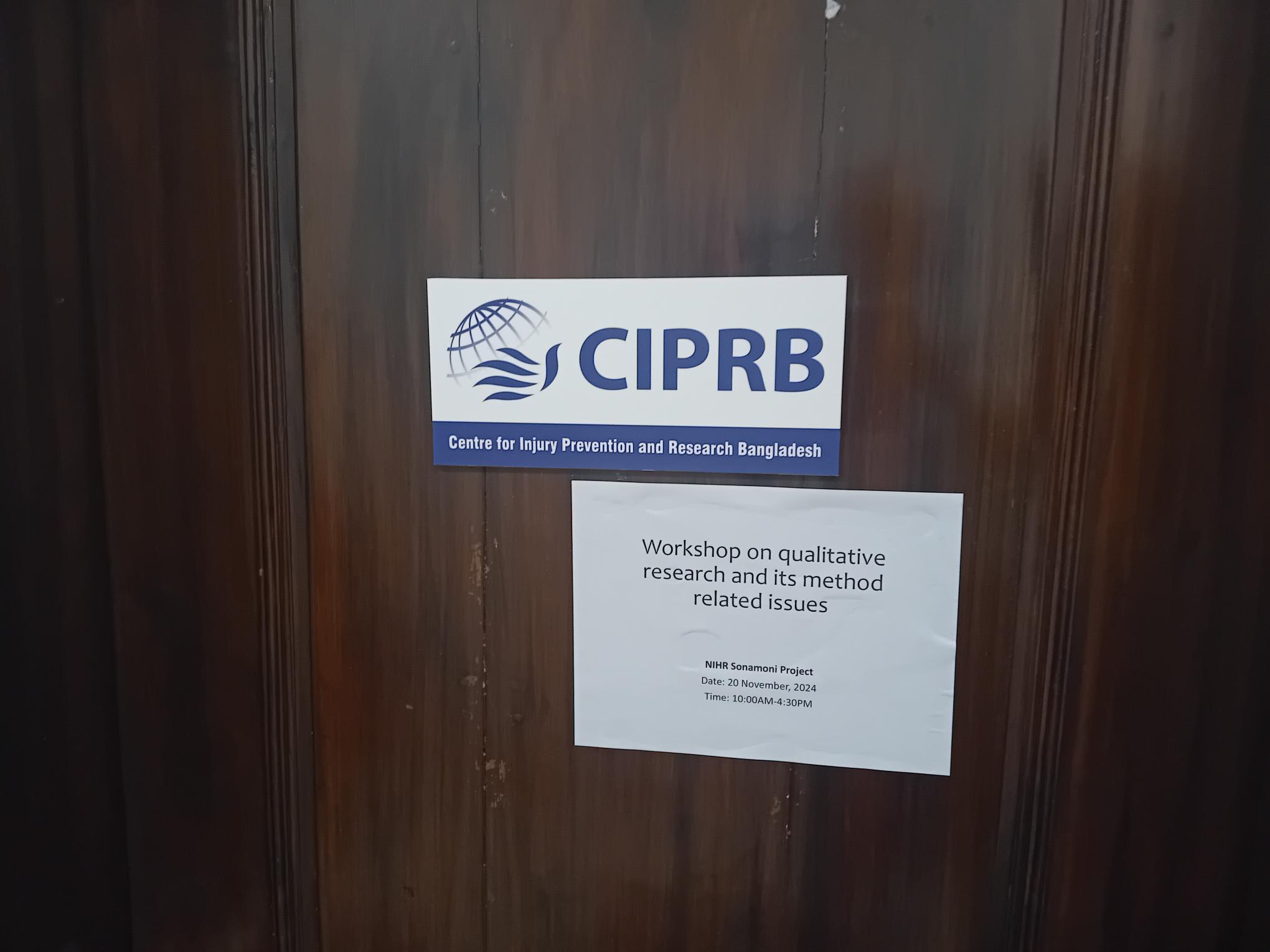 Two sessions covered qualitative research approaches in the morning and academic writing and publishing in the afternoon. The sessions were attended by staff involved in the Sonamoni project but we made it open to other CIPRB staff and in total 18 people attended. BU’s contributions to capacity-building initiatives aim to develop our collaborators’s research staff’s skills and increase their confidence in conducting qualitative research as well as publishing it.















 Food Price Research Shortlisted for Civil Service Prize
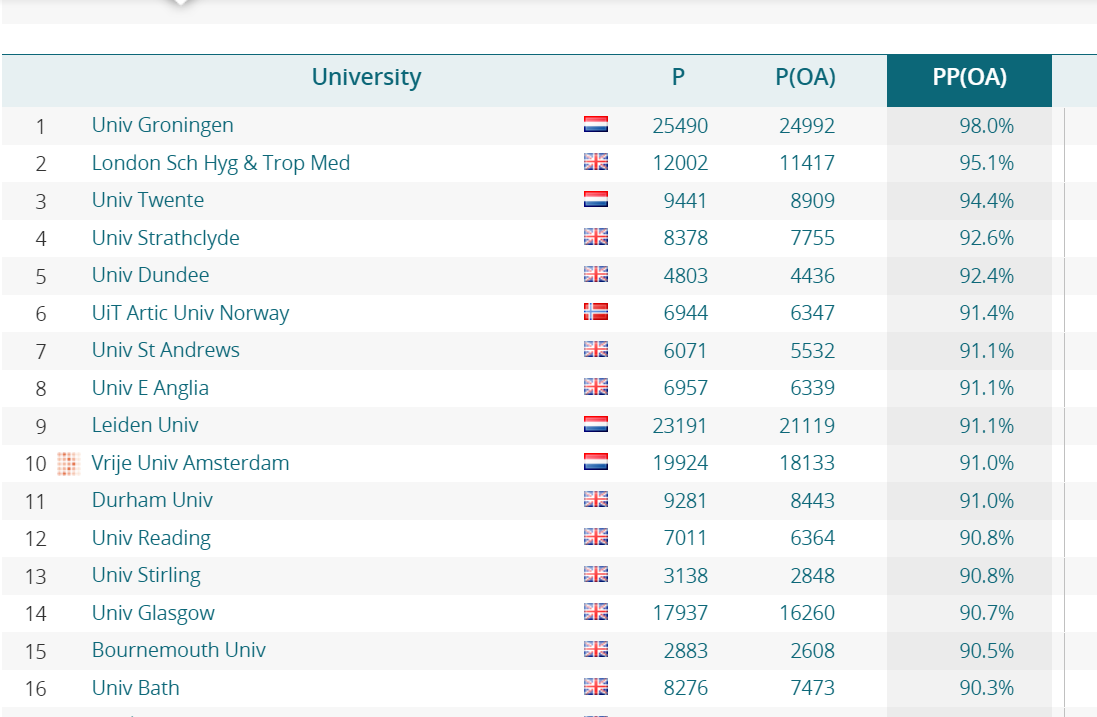
 It’s International Open Access week
 3C Event: Research Culture, Community & Connections – Wednesday 11 November 3-4pm
 ECR Opportunities: New Development Programme, Researcher Grants & Upcoming Events
 Help us capture BU’s knowledge exchange activity HE-BCI survey 2025–26
 Verbal autopsy paper published two days ago
 Horizon Europe Cluster 3 (Civil Security for Society) 2026 Calls Now Open
 MSCA Doctoral Networks 2026 Call Information Webinar
 ESRC Festival of Social Science 2026: Application Deadline Extended to Thursday 25 June 2026
 Reminder: Register for the ESRC Festival of Social Science 2026 Information Session
 ECR Funding Open Call: Research Culture & Community Grant – Apply now
 ERC Advanced Grant 2025 Webinar
 Update on UKRO services
 European research project exploring use of ‘virtual twins’ to better manage metabolic associated fatty liver disease