Participants wanted: Brain Networks of Sharing Attention
Latest research and knowledge exchange news at Bournemouth University
Dr Ola Thomson of BUBS, People and Organisations, is pleased to announce her new book: “Nurturing equality, diversity and inclusion: Support for research careers in health and biomedicine”. The book is available as open access which means you can read it free of charge via Bristol University Press (Policy Press) – link here: https://bristoluniversitypress.co.uk/nurturing-equality-diversity-and-inclusion.
You can also order a hard copy of the book with 50% off until 21 January using code JAN50 at the checkout.
The book is co-authored with Prof. Rachael Gooberman-Hill of the Elizabeth Blackwell Institute for Health Research at the University of Bristol. The volume provides an overview of the state of EDI in research careers in health and biomedicine in the UK, and offers innovative organisational and individual strategies to nurture diversity in research institutions.
Today’s academic and research institutions recognise the importance of diverse research teams in health and biomedical science, in terms of the business case, social justice and the common good. This ‘go-to’ book familiarises readers with the key equality, diversity and inclusion (EDI) issues in relation to research careers and researcher development. Bringing together the challenges and solutions to EDI matters with an evidence-based approach in one volume, the book offers practical strategies and interventions for academic and research settings. This is an essential guide for equality planning team members, researchers, HRM officers and managers across academia and research.

The Chair of the REF Impact Subcommittee (RISC) has an important role to play in supporting preparations for the Engagement and Impact element of Bournemouth University’s (BU) REF2029 submission.
RISC reports on progress in the development of impact case studies and against impact strategies to the REF Committee, sharing intelligence from across BU and the wider HE sector, making recommendations on impact resourcing and ensuring evidence of impact is robustly recorded.
The Chair, who should be a member of the Professoriate, needs an institution-wide perspective on the development of impact case studies and the new impact narratives, and to ensure the subcommittee is effective in reviewing progress.
Key responsibilities include:
Application process:
Research Development and Support (RDS) runs an expression of interest (EoI) call, inviting all those who are interested to put forward a short case (one page maximum) outlining why they are interested and the knowledge, skills and experience they think they could bring to the role. Applications from underrepresented groups (e.g. women, minority ethnic, declared disability) are particularly welcome. The deadline is: 5pm, Monday 29th January.
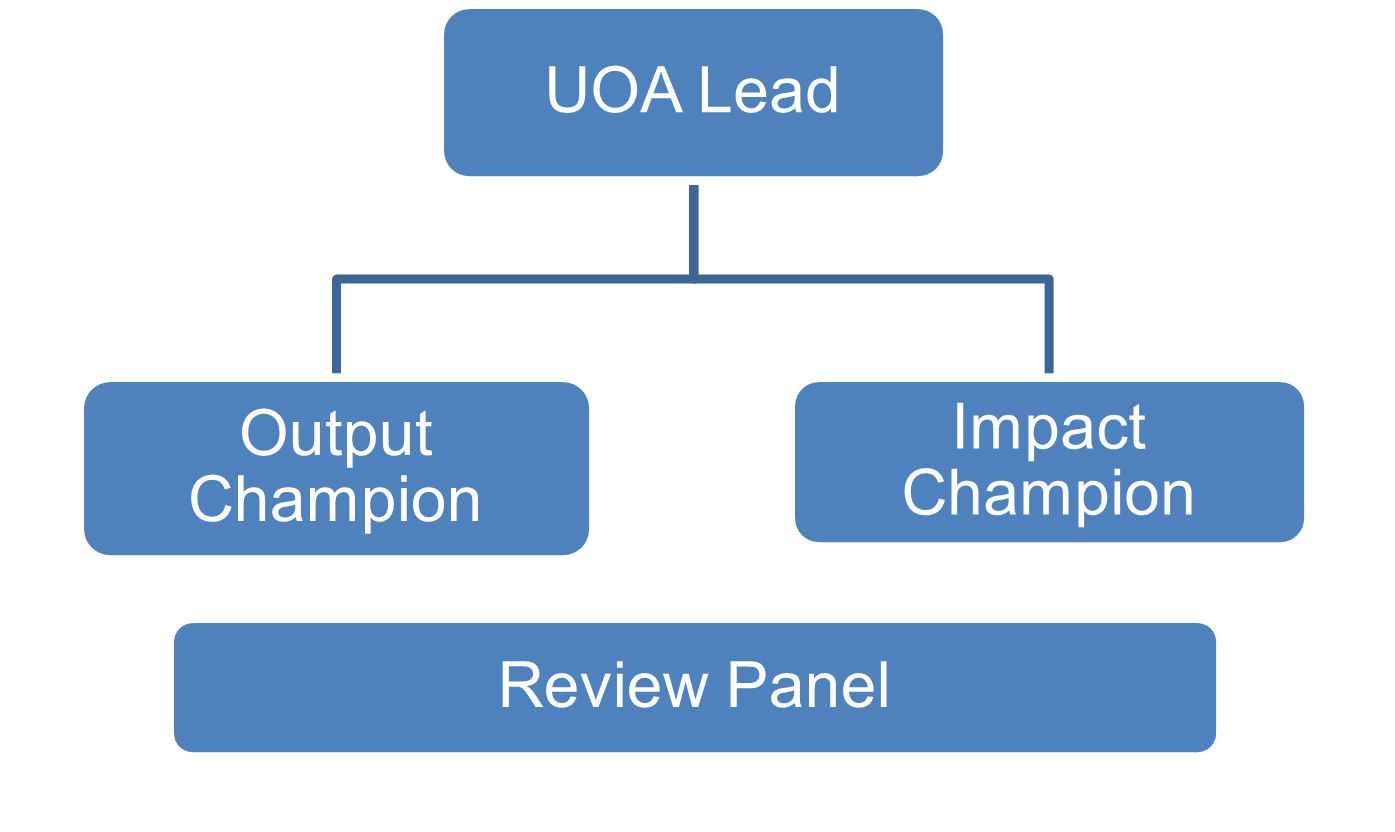
EoIs are submitted to RDS (impact@bournemouth.ac.uk) and reviewed against the selection criteria detailed below by a gender-balanced selection panel comprising:
In the event of there being just one EoI received for a particular panel member role, the panel will still review it using the selection criteria to ensure the applicant is suitable for the role.
Further details on the role and selection criteria are here:
Chair REF Impact Subcommittee role descriptor
Process and criteria for RISC Chair recruitment
Selection criteria
The panel will give each EoI a score out of 15, based on how well they score against the criteria outlined below. These are equally weighted, with each criterion carrying a total possible score of 5. The panel will offer the role to the applicants with the highest ranked EoIs. A member of the panel will provide feedback to all applicants.
Questions
Any queries regarding the process should be directed to impact@bournemouth.ac.uk. Specific questions about the Chair role should be directed to REF Committee Chair Professor Einar Thorson.
On my latest trip to Nepal I noticed a number of related newspaper stories about those wanting to migrate abroad for work. Yesterday there was an article with the headline ‘Three held for defrauding unemployed youths’ (The Himalayan Times, January 11, page 2), which could be seen as story about crime, just like the one next to it on the same page with was headed ‘Vehicle stolen’ (The Himalayan Times, January 11, page 2) .
Both fit under the category of people suffering from crime committed by naughty people. However, having studied labour migration as a sociologist for over a decade it also speaks of the desperation of young people to leave Nepal. In that sense, the ‘Three held for defrauding unemployed youths’ story, is more like the story the day before ‘Family of Nepali who joined Russian Army worried after hearing about his death’ (The Himalayan Times, January 10, page 1).
In the latter story of a tragic death of a Nepalese mercenary, the most unexpected element I found was that Nepalese victim had paid Rs. 500,000 to criminals, who acted as brokers. I would have expected that Putin’s agents operating in the Middle East were paying large amounts of money to potential army recruits to fight in the invasion of Ukraine. To my great surprise, the payment was the other way round, where Nepalese migrant workers are desperate enough to pay the country at war. When people are desperate to work abroad unscrupulous brokers see opportunities to make money.
Whilst at the end of December 2023 two Nepalese men were killed when Korean language test candidates were staging demonstrations in Kathmandu demanding that they be allowed to appear for language tests for jobs in the manufacturing sector in South Korea. When the Minister for Physical Infrastructure and Transport stopped to intervene, he sparked a riot and his car was set on fire. The police opened fire and killed two protesters in a very un-Nepalese way of dealing with protest. Again to me the underlying issue to note is how desperate these men are to go abroad and get to work in South Korea.
Prof. Edwin van Teijlingen
CMWH (Centre for Midwifery & Women’s Health)
Bournemouth University (BU) is preparing submissions for future REF exercises. An Institutional Level Statement was introduced as part of the submission for REF2021 and will form part of the formally assessed component for REF2029. BU has created an Institutional Statement Lead role. This will be recruited via an open and transparent process. All academic staff at Grade10+ have the opportunity to put themselves forward.
The Institutional Statement Lead is a significant commitment and will be recognised with a 0.2FT workload allocation (or job-share), and commensurate buyout return for the host department. The role is permanent, to be reviewed on an annual basis, and role holders can choose to step down at any time. Potential applicants should discuss their workload balance with their Head of Department before applying.
The Institutional Statement Lead undertakes a vital role in driving and delivering BU’s REF submission, influencing the University’s preparations, shaping an optimal submission, and ultimately having a significant effect on BU’s REF results.
Key responsibilities of the Institutional Statement Lead role include:
Application process:
To apply, please submit a short statement (suggested length 300 words), explaining your interest in the role and what you could bring to it. Applications from underrepresented groups (e.g., minority ethnic, declared disability, women) are particularly welcome.
EoIs should be submitted to RDS (ref@bournemouth.ac.uk) by 5pm 26th January 2024.
EoIs will be reviewed against the selection criteria detailed in this document by a gender-balanced selection panel comprising the:
The panel will invite those meeting the criteria to an interview. This process is applied consistently as per the process for UOA Leaders. In the event of there being just one EoI received for a role, the panel will still review it using the selection criteria to ensure the applicant is suitable for the role.
Selection criteria
The selection criteria are outlined below. The same criteria will be used at both EoI and interview stage. These are equally weighted, with each criterion carrying a total possible score of 10. The role will be offered to the highest scoring applicant. A member of the panel will provide feedback to all applicants.
Further detail on the roles and selection criteria can be found here:
Process and criteria for selection
Questions
Questions regarding the process should be directed to RDS, ref@bournemouth.ac.uk. The REF Institutional Statement Lead specific questions should be directed to the Chair of RSG Professor Kate Welham.
One print daily English-language newspaper The Annapurna Express and one online newspaper Gazzabkoo Magazine published articles this week on our project on strengthening the health system in Nepal. The latter used the title ‘Strengthening Health Systems for Better Health‘ and the former opted for the headline ‘Forum on health system strengthening’.
Our interdisciplinary study ‘The impact of federalisation on Nepal’s health system: a longitudinal analysis’ is funded by the UK Health Systems Research Initiative [Grant ref. MR/T023554/1]. In this Nepal Federal Health System Project we study the consequences for the health system of Nepal’s move in 2015 from a centralised political system to a more federal structure of government . This joint project is led by the University of Sheffield in collaboration with Bournemouth University, the University of Huddersfield, Canterbury Christ Church University and two institutions in Nepal, namely MMIHS (Manmohan Memorial Institute of Health Sciences) and PHASE Nepal.

Prof. Edwin van Teijlingen
CMWH (Centre for Midwifery & Women’s Health)
Prof. Ann Luce (FMC), Ms. Georgia Turner (PhD candidate FST), Ms. Lauren Kennedy (MSc student FST) and Dr. Reece D. Bush-Evans (Lecturer in FST) are pleased to announce the publication of their most recent work in British Medical Journal: Medical Humanities titled, “Quite simply they don’t communicate: a case study of a National Health Service response to staff suicide”. You can access the article here for free.
Workplace suicide can have significant knock-on effects within an organisation, yet research has shown within the healthcare profession, not all staff receive suicide prevention training, and few employers take the time to reflect on the need to change workplace policies or practices following the death of a staff member to suicide. How staff suicide is communicated across an organisation and to family members is important. Effective crisis communication is critical for effective management for a timely and sensitive response to a staff suicide within an organisation. By doing so, workplaces can help to reduce the significant emotional trauma suicide can have on an employee, and support good mental health across its workforce.
This groundbreaking work in the field of suicide prevention is already having an impact. The work was cited by Parliament’s Public Accounts Committee recent report on “Improving Mental Health Services”. Furthermore, the research has served as the underpinning evidence for NHS England’s National Suicide Prevention Toolkit for England, which will be implemented across all NHS Trusts in England. And, with a renewed focus on healthcare suicide, with a specific focus on female nurses, the research served as underpinning evidence for England’s National Suicide Prevention Strategy that was released in September 2023.
The team would like to thank all research participants as this was a difficult project to complete. Further, thanks must also be extended to NHS England for funding, the BU Open Access Fund, and the colleagues across BU who read drafts of the work prior to publication.
The sixth paper from our interdisciplinary research team focuses on the effective way we applied participatory policy analysis in a study on the effects on the health system in Nepal. In the research we used a methodological approach using the River of Life which we describe in this paper ‘Participatory policy analysis in health policy and systems research: reflections from a study in Nepal’ [1]. The Lead author is Dr. Sujata Sapkota from Manmohan Memorial Institute of Health Sciences (MMIHS) in Kathmandu.
This study was funded by the UK Health Systems Research Initiative [Grant ref. MR/T023554/1]. In this larger Nepal Federal Health System Project we study the consequences for the health system of Nepal’s move from a centralised political system to a more federal government structure in 2015. This joint project is led by the University of Sheffield in collaboration with Bournemouth University, the University of Huddersfield, Canter Bury Christ Church University and two institutions in Nepal, namely MMIHS and PHASE Nepal. We have managed to publish five papers from this project prior to today’s one reflecting on the methodology [2-6].
Prof. Edwin van Teijlingen
CMWH (Centre for Midwifery & Women’s Health)
References:
Today and tomorrow our research team is engaged in discussions with those responsible for running the health system at different levels of the new federal system in Nepal. The aim today and tomorrow of this participatory research project is bring together stakeholders from all levels of government (local, provincial and federal), to develop solutions, practical actions and recommendations for different levels of the political system to address some of the five areas our research identified as possible priorities. Nepal changed from a centralised political system of government to a federal system in 2015. It is easy to see how such change in the political system might affect the organisation, funding, governance, human resources, etc. of all sub-systems in society, such as the education system, the police, and in the area of our particular interest, the health system.
This interdisciplinary study started just before COVID-19 in 2020 and is now coming to a conclusion. The multi-national research team includes researchers from Nepal: MMIHS (Manmohan Memorial Institute of Sciences) in Kathmandu, and PHASE Nepal (Bhaktapur), the University of Sheffield, Bournemouth University, and the University of Huddersfield (the original UK applicants), and researchers currently based at three further UK universities: the University of Greenwich, the University of Essex and Canterbury Christ Church University. This exciting research is funded by the Health System Research Initiative, a UK collaboration between three funders: the MRC (Medical Research Council), the Foreign, Commonwealth & Development Office (FCDO), and the Welcome Trust.
This is an interesting report from the British Society of Gerontology analysing impact case studies from REF 2021. This includes work from Bournemouth University amongst various other centres.
Please find below the links to the report and presentation about “The impact of Ageing Research within the Research Excellence Framework 2021: an evaluation” as a useful reading in terms of the range and scope of age-related research.
OpenBright grants have been available since 2020 to support women in the development of research projects at the university level, focusing on subjects related to computing and technology. OpenBright offers small grants for students studying for degrees or postgraduate qualifications in areas such as software engineering, data science, digital media, artificial intelligence, and robotics.

We are thrilled to introduce the awardees:

Assemgul Kozhabek (Final year Ph.D. candidate): Assemgul is the second-time OpenBright grant awardee. Her plan is to upgrade her computer system to conduct a thorough analysis of road networks. This upgrade will greatly support her project, titled “Examining the Topology of Urban Road Networks in densely populated countries: China and India”. Assemgul and her supervisor Dr. Wei Koong Chai abstracted road networks as complex systems and employ tools from network science to study their properties. This study introduces multi-level urban road network robustness metrics, which incorporates macro, meso and micro perspectives. Assemgul thanks her supervisor Dr. Wei Koong Chai and Dr. Melanie Coles for their guidance and support!
Fatima Ahmad Muazu (1st year Ph.D. student): Fatima got funding for her project “The Use of Mobile Learning and Assistive Technologies for Enhancing Digital Inclusion in Special Education for Learners with Learning Disabilities in underserved regions of Northern and Southern Nigeria”. The funding will be used to conduct a preliminary needs analysis involving stakeholders and students in special education settings of 4 Nigerian secondary schools.
Ayo Agbeja (MSc Data Science and Artificial Intelligence): Ayo’s research title is “Plastic Wastes and Sustainability Targets in Germany: A Policy Simulation Experiment using Machine Learning”. Her project has a primary focus on Germany and aims to investigate the relationship between policies related to plastic waste management and sustainability objectives, particularly in the context of reducing carbon emissions. This simulated model will take into account the key factors: economic growth, oil and coal production, the generation of renewable energy, and energy consumption, while making projections based on an optimal weighting of these factors.

This afternoon Prof. Edwin van Teijlingen attended
a partnership meeting with colleagues from Nepal’s Manmohan Memorial Institute of Health Sciences (MMIHS) in Yak & Yeti Hotel in Kathmandu. The discussion highlighted the longstanding partnership and collaboration between MMIHS and BU. The meeting was part of a wider collaboration around between MMIHS, BU and the University of Huddersfield, The University of Sheffield and Canterbury Christ Church University. The latter universities have been working together for over fours years in an interdisciplinary study ‘The impact of federalisation on Nepal’s health system: a longitudinal analysis’. This project has been funded by the Health System Research Initiative, a UK collaboration between three funding bodies: the MRC (Medical Research Council), the Foreign, Commonwealth & Development Office, and the Welcome Trust.
The BU-MMIHS collaboration has included successful ERASMUS+ staff and student exchanges as well as student exchanges from BU to Kathmandu as part of the Turing Scheme. Currently various BU academics are also involved a co-supervisors on MSc projects conducted by MMIHS postgraduate students.
Prof. Edwin van Teijlingen
Centre for Midwifery & Women’s Health (CMWH)

On the last day of 2023 the Journal of Health Promotion published the paper ‘Sexual Harassment Among Nepali Non-Migrating Female Partners of International Labor Migrant Men’ [1]. This paper, in an Open Access journal, addresses one of the consequences of male labour migrants leaving their family members behind in Nepal. While non-migrating spouses often receive financial support in the form of remittances, their husbands’ migration also creates numerous social and personal problems. This qualitative study explored non-migrating spouses’ experience of sexual harassment/abuse and its impact on their mental health. Fourteen in-depth interviews were conducted and women reported experiencing harassment by men they knew, including their teachers and colleagues, who knew their husbands were abroad. But none of the women reported taking any action against their perpetrators, indicating a lack of power in this study population in still predominantly patriarchal society.
The lead author of the paper is Assistant Prof. Kalpana Gyawali from Tribhuvan University, Nepal’s largest and oldest university paper. Her co-authors are: Padam Simkhada, Visiting Professor in BU’s Faculty of Health & Social Sciences as well as Professor in Global Health at the University of Huddersfield, Edwin van Teijlingen in Bournemouth University’s Centre for Midwifery & Women’s Health, Ms. Shraddha Manandhar, PhD. student at the University of Huddersfield, and Mr. Ram Chandra Silwal the Country Director of Green Tara Nepal, the charity we have been working with for nearly twenty years.
References:
One of the first message I received this morning was that our editorial ‘Addressing the inequalities in global genetic studies for the advancement of Genetic Epidemiology’ [1] had been published yesterday. If I had know this in time it would have been the proper last Bournemouth University Research Blog of 2023 published yesterday. Interestingly, we only submitted the draft editorial on Christmas Day, got it back for revisions on Boxing Day and resubmitted it and had it accepted on December 28th. It dis, of course, help that both editors-in-chief of the Nepal Journal of Epidemiology are co-authors on this editorial!
Prof. Edwin van Teijlingen
Centre for Midwifery & Women’s Health (CMWH)
Reference:
Discovering equations, laws, or invariant principles underpins scientific and technical advancement. Robust model discovery has typically emerged from observing the world and, when possible, performing interventions to falsify models.
Recently, data-driven approaches like classic and deep machine learning are evolving traditional equation discovery methods. These new tools can provide unprecedented advances in computer science, neuroscience, physics, philosophy, and many applied areas.
We have just published a new study discussing concepts and methods on causal and equation discovery, outlining current challenges and promising future lines of research. The work also showcases comprehensive case studies in diverse scientific areas ranging from earth and environmental science to neuroscience.
Our tenet is that discovering fundamental laws and causal relations by observing natural phenomena is revolutionised with the coalescence of observational data and simulations, modern machine learning algorithms and domain knowledge. Exciting times are ahead with many challenges and opportunities to improve our understanding of complex systems.
This study is a collaborative work between eight universities in Europe and the United States (Valencia, Berlin, Tübingen, Jena, Stockholm, New York, and Bournemouth Universities).
Camps-Valls, G., Gerhardus, A., Ninad, U., Varando, G., Martius, G., Balaguer-Ballester, E., Vinuesa, R., Diaz, E., Zanna, L. and Runge, J., 2023. Discovering causal relations and equations from data. Physics Reports, 1044, 1-68 (Impact Factor=30).
A few days ago were alerted by ResearchGate that our article ‘Migrant Workers in Qatar: Not just an important topic during the FIFA World Cup‘ has reached 300 reads [1]. We (Padam Simkhada, Pramod Regmi and I) wrote this article a year ago to raise publicity about the conditions of Nepalese migrant workers in the Middle East. The hazards faced by migrant workers engaged in building the football stadiums in Qatar have been well documented before and during the FIFA Men’s Football World Cup. Their working conditions are often very dangerous and their living conditions are often very poor. 
This time last year Dr. Pramod Regmi, Dr. Nirmal Aryal, Prof. Edwin van Teijlingen, and BU’s Visiting Professor Padam Simkhada also published ‘Excessive Mortalities among Migrant Workers: the Case of the 2022 FIFA World Cup’ [2]. At the time we wrote “The men’s FIFA Football World Cup 2022 is in full flow in Qatar” which finished with a very exciting final between Argentina and France. Around the same time BU’s PhD student Yagya Adhikari also wrote a paper on ‘Forgotten health and social care needs of left-behind families of Nepali migrant workers’ [3]. This paper was co-authored by Dr.Pramod Regmi in the Department of Nursing Sciences, Prof. Edwin van Teijlingen, and BU Visiting Faculty Prof. Bhimsen Devkota.
Unfortunately, since the World Cup finished, the world, the media and our politicians have moved on and the health and well-being of migrant workers are no longer headline news. The reminder this week of 300 reads for our editorial gives us another opportunity to remind everyone of the need to keep the plight of migrant workers in the Middle East (and elsewhere) on the world’s agenda.
Prof. Edwin van Teijlingen
Centre for Midwifery & Women’s Health (CMWH)
References:
Yesterday (29th December) Prof. Edwin van Teijlingen attended a workshop on ‘Current situation of migration and its impact on Mental health’ in a hotel in Kathmandu, Nepal. This workshop was organised by the Transcultural Psychosocial Organization Nepal (TPO Nepal) and funded by a Finnish aid organisation.
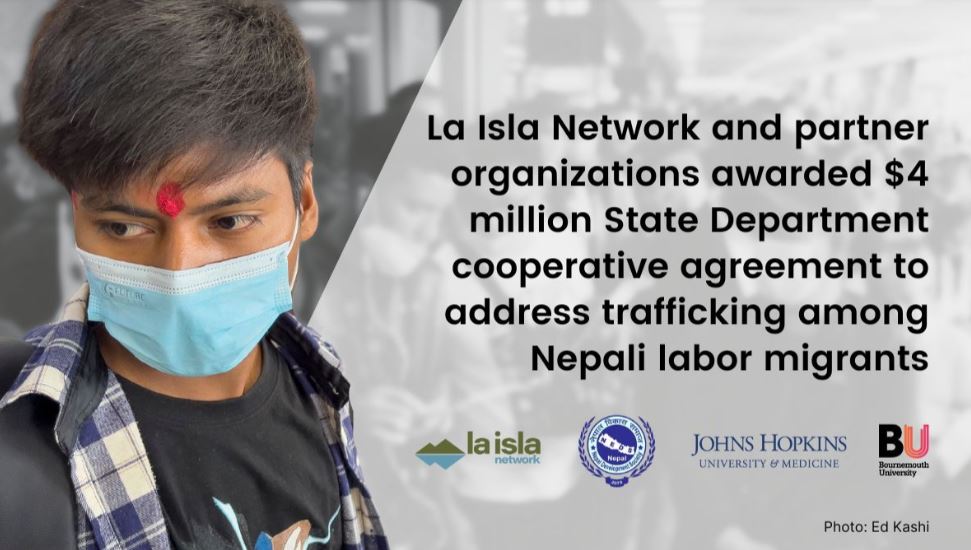
Two of BU’s current collaborators were members of the workshop panel. One of the panel members was FHSS Visiting Faculty Prof. Padam Simkhada, who is Professor of Global Health at the University of Huddersfield. He spoke about the limited amount of research into mental health in general in Nepal and in migrant workers in particular. The chair was Mrs. Manju Gurung from the organisation POURAKHI Nepal, who collaborates with BU in the recently started project on health and migration funded by the USA State Department. Unsurprisingly, several speakers at the workshop referred to studies conducted in the field of migrant workers’ health by BU academics, particularly the work published by Dr. Pramod Regmi and Dr. Nirmal Aryal.
Prof. Edwin van Teijlingen
Centre for Midwifery & Women’s Health
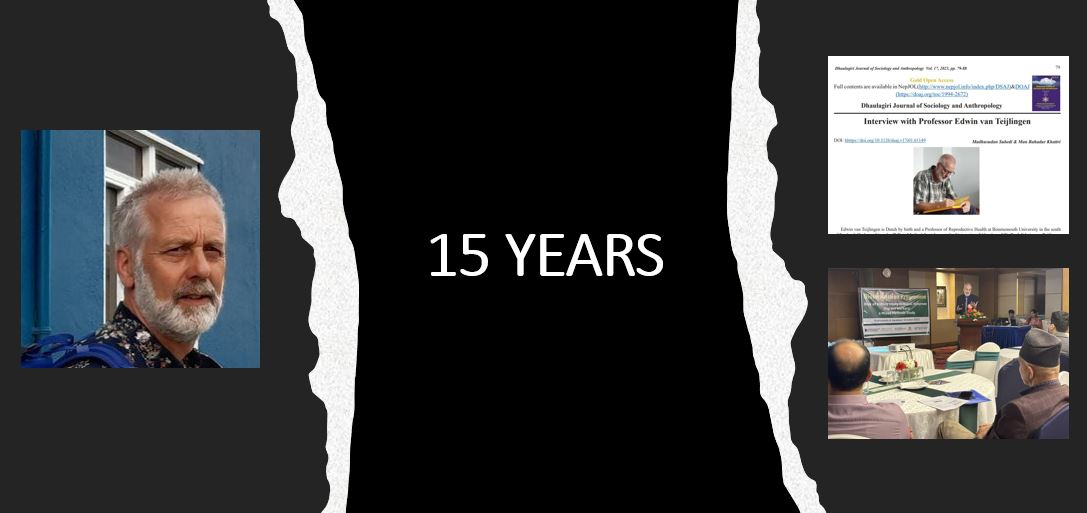
Today Madhusudan Subedi and Man Bahadur Khattri published their Interview with Prof. Edwin van Teijlingen in the Dhaulagiri Journal of Sociology & Anthropology [1]. This academic journal is published in Nepal and it is Open Access; hence freely available to read to anybody with access to the internet.
Their abstract reads: “Edwin van Teijlingen is Dutch by birth and a Professor of Reproductive Health at Bournemouth University in the south of England. He has achieved a PhD in Medical Sociology at the University of Aberdeen, UK. Prof. Edwin van Teijlingen connected with Nepal while supervising Nepali PhD scholars in UK, and he has been a frequent visitor to Nepal since 2006. He has supervised more than 35 PhDs, among which 13 are Nepali. He has examined more than 50 PhDs. He has published around 300 academic papers and book chapters in health promotion, midwifery, and health services research. He serves as a peer reviewer for worldwide famous health journals such as PLOS One and BMC Pregnancy & Childbirth. He delivered a speech to the Members of Parliamentarians in Kathmandu in 2016 as part of a workshop to promote evidence-based policy-making. He is a committee member on various grant-awarding bodies in the UK, Belgium, the Netherlands, Norway, Switzerland, and the USA. He is a visiting Professor at the Centre for Disability Studies, Mahatma Gandhi University, Kerala in India (2020-present); the School of Health Sciences at the University of Nottingham in England (2017-2026); Nobel College, affiliated with Pokhara University, Nepal (2012-present); and Manmohan Memorial Institute of Health Sciences affiliated with Tribhuvan University (2009-present). We would like to express our gratitude for his acceptance to share personal and academic lives, which can inspire young and energetic scholars in Nepal and elsewhere.”
Reference: