 Only a week away… BU POSTGRADUATE CONFERENCE 9-10 MARCH 2016, hosted by the Graduate School on the 3rd Floor, Executive Business Centre, Lansdowne. With only a few tickets left, register to experience a jam packed programme of exciting postgraduate research, addresses from BU and external key academics, and share experiences with research and masters students from across the whole university…an opportunity not to be missed. For a copy of the programme and to register visit www.bournemouth.ac.uk/graduateschool.
Category / conferences
Political Studies Association: Sport and Politics Conference 2016

Political Studies Association: Sport and Politics Conference 2016
Conference theme: Social Justice
Sport, Politics and Social Justice
The Department of Sport and Physical Activity are pleased to be hosting this years PSA Sport Special Interest Groiup Conference on the 4th and 5th March at the Executive Business Centre.
This is the 10th anniversary of this academic group and the conference has gradually grown to become an international event with papers being presented by academics from the USA, Turkey, Poland, Hong Kong and the UK.
The conference will aim to unpack and interrogate some of the ideas concerning Sport, as a cultural form par excellence, its inherent political nature, andwhat can only be described as an ambiguous relationship with social justice. Governments and international sports organisations often cite the commonly held precepts of social justice – fairness and/or entitlement – as key aspects and determinants of political bargaining and policymaking concerning sport.
Some might claim that it is the supposed virtue of justice that sits at the heart of sport that gives it such special value manifest in the use of sport in initiatives such as crime prevention, community development and health promotion.
Others might argue that within a wider cultural politics, sport can be understood as an insidious site through which various discourses are appropriated and mobilised in regard to the organisation and discipline of daily life and, from this perspective, that sport may do very little to champion an orientation towards social justice, equality and inclusion.
The Sport, Politics and Social Justice Conference 2016 will provide a wide-ranging and interdisciplinary examination of these issues and more. The conference will explore the inter-relationship between sport, politics and social justice by drawing on research from a variety of academic fields, including: politics, political science, sociology, social policy, political philosophy, criminology, community and youth work, history, law, geography, and sport studies.
If you are interested and would like to attend please contact the conference Chair Andrew Adams +
Big Data in Health and Care – ‘Using data to gain new insights’

Date: Tuesday 19 April
Location: St. Mary’s Stadium – Britannia Road Southampton, Hampshire SO14 5FP GB – View Map
Time: 9:00am – 5:00pm
About the event:
Big Data in healthcare is being used to cure disease, improve quality of life, avoid preventable deaths and more importantly plan primary prevention strategies. With the UK population increasing and all of us living longer, through initiatives such as the Vanguards, models of care are rapidly changing, and many of the decisions behind those changes are being driven by data.
This Big Data conference, chaired by Richard Samuel, (Fareham and Gosport, South-Eastern Hants CEO) will provide an overview of Big Data from experts within the field, as well as practical examples of how Big Data is being used to improve the way that we deliver services. A Big Data expo will be accessible throughout the day and in the afternoon a variety of plenary sessions will gather feedback from participants to help shape future actions.
To register: Click here
If you have any questions or queries regarding the event or any specific access needs please do not hesitate to contact Katie Cheeseman – Digital Health Programme Manager katie.cheeseman@wessexahsn.net
March 21st: Embedding Citizen Science into Wildlife Conservation Management Conference
We would like to invite you to this one-day conference on
Embedding Citizen Science into Wildlife Conservation Management
Bournemouth University, Monday 21st March 2016, 8.30-16.30
To view the full programme and book, please go to Eventbrite booking or http://bit.ly/citsci_in_mngt
This one-day conference is organized by the National Trust and Bournemouth University and will consist of talks and associated workshops and posters presented by a range of organisations including Amphibian & Reptile Conservation (ARC), Butterfly Conservation (BC), Bournemouth University (BU), C entre for Ecology & Hydrology (CEH), Dorset Wildlife Trust (DWT), Footprint Ecology (FE), Field Studies Council (FSC), National Trust (NT) and Natural England (NE).
The following four key steps to enabling Citizen Science to impact positively on wildlife conservation management will be explored by presenters and participants:
1) Engaging and recruiting motivated volunteers
2) Effective skills training
3) Appropriate data recording and management methods
4) Linking data collection with conservation management planning
The National Trust’s Cyril Diver project will be presented as a case study as well as a range of other citizen science projects led by public and voluntary-sector organisations.
This conference is geared to conservation practitioners and other stakeholders in citizen science and is particularly relevant to public and voluntary-sector organisations involved in (a) harnessing the skills and time of volunteer naturalists in the surveillance and monitoring of biodiversity and (b) site-based nature conservation management.
There is a £20 fee to cover conference organisation costs. A buffet lunch and tea/coffee breaks are included in this cost.
To view the full programme and book, please go to Eventbrite booking or http://bit.ly/citsci_in_mngt
Booking closes March 4th!
Hope to see you there!
David Brown (National Trust) and Anita Diaz (Bournemouth University)
Dr Lenia Marques nominated to the World Leisure Organization Board of Directors
The Board o f Directors of World Leisure Organization (WLO) just welcomed Dr Lenia Marques as a member for the mandate 2016-2018.
“Founded in 1952, World Leisure, is a world-wide, non-governmental association of persons and organizations dedicated to discovering and fostering those conditions best permitting leisure to serve as a force for human growth, development and well-being.” (WLO, 2016)
Among different partners and collaborators, WLO has been working with universities, industry and international bodies, such as the United Nations.
One of the highlights of WLO forthcoming activities is the congress in Durban (South Africa), on which Dr Lenia Marques is member of the scientific committee. In this congress she will also present part of her ongoing research on online and offline leisure practices within events studies.
There are still opportunities for UG and PG students to participate both in the congress (speakers, posters or volunteers) and in the international fieldschool in Durban (24 June – 2 July 2016). This is a very exciting opportunity for students, in particular in the areas of Leisure, Events, Tourism, Sports and Recreation.
For more information on the WLO, the WLO congress or student opportunities, please contact Dr Lenia Marques, lmarques@bournemouth.ac.uk.
Social Science Seminar Series, Dr Sarah Collard, 17th Feb 16, 1-2pm.
All welcome to the February social science seminar series, Royal London House, Lansdowne Campus, R301, 13:00-14:00.
How do you exercise with epilepsy?Insights into the psychosocial impact of exercising with epilepsy
Abstract:
Research examining the connection between epilepsy and exercise has seen a surge in recent years, specifically examining the benefits to exercise on seizure control and overall well-being for a person with epilepsy. However, the barriers to exercise and methods of exercising currently employed by people with epilepsy have yet to be explored within depth. This presentation will provide a background to the psychosocial impact of exercising with epilepsy and what barriers stand in the way for people with epilepsy in feeling the benefits of exercise. Discussing findings from an exploratory qualitative study investigating possible barriers and coping strategies already in place for people with epilepsy in regards to their exercise life, this presentation will further our insight into the psychosocial impact of exercising with epilepsy as well as discuss how we might move this research forward in encouraging more people with epilepsy to exercise.
If you have further queries about the seminar series, please get in touch with Dr Mastoureh Fathi.
The Graduate School in the Netherlands
Professor Tiantian Zhang attended the 9th EUA Council for Doctoral Education (CDE) in the Netherlands on the 20th – 21st January, 2016. The EUA CDE is dedicated to improving and developing doctoral education. This event was attended by approximately 110 international delegates who represented numerous Universities from across Europe. Representing the Graduate School from Bournemouth University, Professor Zhang was able to network and develop international contacts with other Universiti es. This was a wonderful opportunity for a representative from BU to learn and exchange good practices with others who are dedicated to enhancing the Doctoral Education experience.
BU Higher Education Reform Expert Provides Opening Speech in Germany
Management researcher and adviser Dr Tim Breitbarth (Department of Sport & Physical Activity) provided the opening speech on trends in European higher education internationalisation policies, strategies and activities at a national higher education management congress in Cologne last week.
The one-day congress was attended by vice chancellors, pro-vice-chancellors (global engagement) and heads of international offices. In his 45-minutes speech, Tim covered topics such as the new competitive landscape of higher education and the role of internationalisation as a catalyst for overall reforms in a number of countries and also provided some guidance on change management.
Tim’s speech allowed subsequent discussions and other presenters to build upon, amongst which were a vice chancellor, the head of audit of the German Rectors’ Conference and the director of a higher education consultancy.
Last year, Tim was inaugurated for a 2-year term as an advisor to the German higher education sector as part of a EU-funded project of the German Ministry of Research and Education and the German Academic Exchange Service.
The power of a poster… and public involvement in research
 A lot of people think of poster presentations at conferences as being a “waste of time” and “never read” but being able to condense a lot of information into a limited amount of space while still making it engaging for people reading the poster can have a lot of impact.
Lisa Gale-Andrews and Helen Allen from Bournemouth University Clinical Research Unit prepared a poster on the involvement of patients and members of the public in developing a grant application. It was presented at the NCCPE Engage 2015 conference in December.
Now imagine their surprise when, almost 2 months later, the NIHR Director for Patient and Public Involvement in Research highlighted the poster (and subsequent publication of the work in Research Involvement and Engagement) as a “good learning tool for others” in his Blog. The Blog was then tweeted to his 3413 followers.

Helen at Engage 2015
As a result, the poster is going to be shared at various patient, public involvement and engagement training sessions. All that impact from one conference poster! So keep that in mind the next time you’re “only doing a poster”.
“Performative Social Science: What it is, What it isn’t, and What it has become”, Talk by Dr Kip Jones, Wed, 20th January 2016, Royal London House, R301, 1-2 pm
All staff and students welcome. Please feel free to bring your lunch.
Abstract:
“Performative Social Science” was a term first coined by Norman Denzin in 2001, the year that Kip Jones received his PhD and began to explore new ways to communicate Social Science findings to wider audiences.
What is Performative Social Science (PSS) then, Art or Science? It isn’t one or the other. It is enriching the ways in which Social Science subjects might be researched and/or findings disseminated or communicated to various communities. Ideally, audiences should be almost unaware of the seams where practitioners have cobbled together in-depth, substantial scholarship with artistic endeavor. PSS is defined as the use of tools from the Arts or Humanities in investigating and/or disseminating Social Science research.
The Seminar will explore Jones’ journey from early productions produced on his PC in his bedsit, to gatherings (physical and virtual) of like-minded academics (Illustrated above), to the production of a major short film based in solid qualitative research methods including auto-ethnography, and back again to ‘kitchen sink’ work, producing creative productions which inform his future efforts.
***
If you have any queries, please get in touch with seminar series coordinator Dr Mastoureh Fathi, mfathi@bournemouth.ac.uk
Dr. Fiona Kelly invited guest speaker at Cecily Saunders Institute, King’s College London
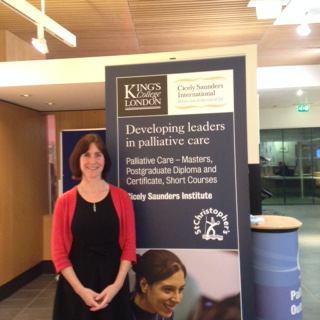 On 25th November, Dr Fiona Kelly attended the Cecily Saunders Institute at King’s College London as an invited guest speaker to present research on determining what aspects of the design of care environments might be important for people with dementia nearing the end of life. The key messages of her presentation were the importance of firstly assuming the ability of people with dementia to engage with the senses, whether through touch, sound, smell, sight or taste and then to provide the means of engaging with whatever sense was appropriate or possible. The presentation was followed by a panel discussion with the audience in which the practical application of design principles within hospital settings was debated. The consensus was that even small changes can make a big difference. Following the presentation and discussion, the panel made a commitment to include consideration of dementia design principles in staff education within the Institute.
Fleming, R., Kelly, F. and Stillfried, G. (2015) ‘I want to feel at home’: establishing what aspects of environmental design are important to people with dementia nearing the end of life, BMC Palliative Care. http://www.biomedcentral.com/1472-684X/14/26
Dr. Dinusha Mendis disseminates Government-funded research on the IP implications of 3D Printing at invited talks in UK and EU (Part II)
In April 2015, the UK Intellectual Property Office (UKIPO) published three reports reflecting a legal and empirical study into the intellectual property (IP) implications of 3D printing. The project – commissioned by the UKIPO – was awarded to Bournemouth University and was led by Dr. Dinusha Mendis.
Together with Dr. Mendis, the research team consisted of Dr. Davide Secchi (Southern University, Denmark; previously Bournemouth University at the time of conducting the research) and Dr. Phil Reeves (Econolyst Ltd – now Stratasys Strategic Consulting Ltd).
All three reports can be found here and further information about the project, including research findings and recommendations for the UK Government, Industry and Intermediaries can be found here.
Since the publication of the reports, Dr. Dinusha Mendis, Co-Director of the Centre for Intellectual Property Policy and Management (CIPPM) has been invited to deliver a number of talks in UK and Abroad, thereby reflecting the impact of the research.
This blog-post, highlights the invited talks in EU. For the dissemination of research in UK, please see here.
34th ECTA Conference, Hamburg, Germany
On 12 June 2015, Dr. Mendis was invited to present the research at the European Communities Trade Mark Association 34th Annual Conference in Hamburg. The Conference took place from 10-13 June 2015 and Dr. Mendis spoke on the copyright implications of 3D printing based on the findings from the UKIPO project.
Dr. Mendis spoke on the topic as part of a Panel exploring the challenges to copyright law, which also included Professor Ian Hargreaves, Professor of Digital Economy, Cardiff University UK and author of the Hargreaves Review 2011.
For further information, please see here.
MAPPING Project, First General Assembly, Hannover, Germany
From 22-23 September 2015, the First General Assembly of the FP7-funded MAPPING Project was held in Hannover, Germany at the Hannover Congress Centrum.
MAPPING – Managing Alternatives for Privacy, Property and Internet Governance brought together stakeholders from three key areas including Internet Governance, Privacy and Intellectual Property.
Dr. Mendis was invited to speak in the Intellectual Property Panel titled ‘The EU IP Reform: Unlocking Culture, Stimulating Progress’. As part of the talk, Dr. Mendis was invited to speak on the UKIPO 3D Printing project.
Further information about the event can be found here.
OHIM Enforcement Conference, Alicante Spain
In November (18-20 November 2015) Dr. Mendis was invited by the Office for Harmonisation in the Internal Market (OHIM) in Alicante Spain. The 3-day event organised by OHIM, Europol and Eurojust explored issues on tackling enforcement in relation to the infringement of copyright and design law.
The event was attended by policy makers, law makers, customs and border protection officials, investigators, criminal analysts and industry experts amongst others.
Dr. Mendis presented at this conference together with with Dr. Davide Secchi (co-author of Study 1 of the UKIPO Project) and member of the research team which carried out the Commissioned work for the UKIPO.
Dr. Mendis and Dr. Secchi presented the research carried out particularly for Study 1 of the UKIPO project, but also took the opportunity to speak on next steps and future projects – in taking forward the UKIPO Project.
In this regard, Dr. Mendis spoke briefly about the work being carried out for the newly funded project considering a legal and empirical case study on 3D printing, 3D scanning and mass customisation of ancient and modern jewellery.
For more information about the new project, please see here. For further information about OHIM’s event, please see here.
FORUM Institut Management GmbH, 3D Printing and IP, Munich, Germany
On 1 December 2015, FORUM Institüt fur Management GmbH hosted an international conference exploring 3D Printing and IP Rights. The conference brochure including further details and speakers can be found here.
Dr. Mendis was invited to speak on the UKIPO Project with a particular focus on the implications for IP as a result of 3D online platforms as well as its impact on the industrial sector.
The presenters were drawn from industry, professional practice and academia thereby providing for a vibrant discussion.
Dr. Dinusha Mendis disseminates Government-funded research on the IP implications of 3D Printing at invited talks in UK and EU (Part I)
In April 2015, the UK Intellectual Property Office (UKIPO) published three reports reflecting a legal and empirical study into the intellectual property (IP) implications of 3D printing. The project – commissioned by the UKIPO – was awarded to Bournemouth University and was led by Dr. Dinusha Mendis.
Together with Dr. Mendis, the research team consisted of Dr. Davide Secchi (Southern University, Denmark; previously Bournemouth University at the time of conducting the research) and Dr. Phil Reeves (Econolyst Ltd – now Stratasys Strategic Consulting Ltd).
All three reports can be found here and further information about the project, including research findings and recommendations for the UK Government, Industry and Intermediaries can be found here.
Since the publication of the reports, Dr. Dinusha Mendis, Co-Director of the Centre for Intellectual Property Policy and Management (CIPPM) has been invited to deliver a number of invited talks in UK and Abroad, thereby reflecting the impact of the research.
This blog-post highlights the invited talks in UK. For dissemination of research in the EU, please see here.
Plymouth Law School, One Day Workshop on CSR
On 28 August 2015, Plymouth Law School held a one-day workshop, titled, ‘Valuing Knowledge, Creativity and Innovation: Relating Corporate Social Responsibility to Copyright Law’.
The workshop considered the prospect of practising Corporate Social Responsibility (CSR) in relation to copyright, where similar ideas of corporate social awareness have already applied to other areas of intellectual property protection.
Dr. Mendis explored the issue from the angle of emerging technologies and gave a presentation titled ‘Printing the Future: Is there a Need for Regulation? The Copyright Implications of 3D Printing’.
Other invited speakers on the day included, amongst others, Professor Charlotte Waelde, Professor of Intellectual Property, Exeter University and Dr. Abbe Brown, Reader and Deputy Head of the Law School, University of Aberdeen.
Please see here for further information.
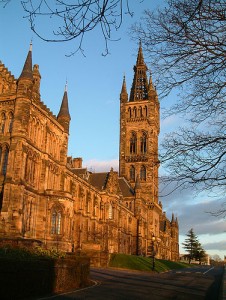
EPIP Conference 2015, CREATe, University of Glasgow
From 2-3rd September 2015, CREATe, the RCUK Centre for Copyright and New Business Models in the Creative Economy at the University of Glasgow hosted the 10th Annual Conference of European Policy for Intellectual Property (EPIP). The event explored intellectual property from an economic, legal and political perspective considering its impact in the creative economy with a focus on copyright, data and the changing economics of the digital world.
Dr. Mendis presented and led a panel titled ‘A Legal and Empirical Study into the Intellectual Property Implications of 3D Printing – Findings, Conclusions and Recommendations’. The panel consisted of the research team, which carried out the research for the UKIPO Project, with a Panel member from the UKIPO outlining the next steps in relation to policy in the area of 3D printing and IP Law.
Together with Dr. Mendis, other Panel members included Dr. Davide Secchi (University of Southern Denmark), Ms. Sophie Jones (for Dr. Phil Reeves) (Stratasys Strategic Consulting) and Ms. Pippa Hall of the UK Intellectual Property Office.
Further information this event can be found here and further information about the conference including presentations from both days can be found here.
IPAN Event, London
On 11 November 2015, the Intellectual Property Awareness Network (IPAN) hosted an evening event, which explored 3D printing from an industry perspective as well as from a legal (IP) perspective. IPAN is a non-profit organisation working to improve understanding of patents, trademarks, designs, copyright and other IP rights and their value to society.
IPAN is chaired by CIPPM Associate Director, Professor Ruth Soetendorp.
Dr. Mendis was invited to deliver a talk highlighting the research findings, conclusions and recommendations of the UKIPO Project and its implications for IPAN’s membership. Dr. Mendis spoke alongside Mr. Paul Gately, EMEA Manager of 3D Systems.
3D Printing Panel and Poster Presentation at University of Liverpool
On 11 December 2015, Dr. Mendis will form part of a panel exploring the topic of 3D printing and its implications for IP law, from a broader perspective at the University of Liverpool.
Academy of Marketing 3rd B2B Marketing Colloquium in Paris, 11-12 APRIL 2016: Opportunity to publish in Special Issue, Journal of Industrial Marketing Management (3* ABS ranking)
Dear All,
Université Paris 1 Panthéon Sorbonne in partnership with Bournemouth University is hosting 3rd annual colloquium for academics and professionals investigating the theory, context and practice of the B2B marketing.
Please see details on the theme, the indicative programme and submission instructions below. We are also pleased to inform that Professor Peter Laplaca is coming to facilitate the session aimed at helping you to write and publish in high quality journals. Moreover, the colloquium is sponsored by the Journal of Industrial Marketing Management (the lead ranking journal for the B2B marketing, 3* ABS ranking).
For any information related to the event and submission/registration process, do email Dr Elvira Bolat at ebolat@bournemouth.ac.uk and Dr Kaouther Kooli at kkooli@bournemouth.ac.uk
Theme: ADDRESSING THE BIG PICTURE: MACRO-ENVIRONMENT CHANGES AND B2B FIRMS
Organising team:
Université Paris 1 Panthéon Sorbonne
- Dr Héla Benmiled-Cherif, Maître de Conférences, Ecole de management de la Sorbonne, PRISM (porteur du projet) Hela.Benmiled@univ-paris1.fr
- Dr Guillaume Chanson, Maître de conférences en Stratégie, Ecole de management de la Sorbonne, PRISM Guillaume.Chanson@univ-paris1.fr
- Professeur Jean- François Lemoine, Directeur du Pôle Marketing, Professeur de Marketing, Ecole de management de la Sorbonne, PRISM, Jean-Francois.Lemoine@univ-paris1.fr
- Professeur Alexandre Steyer, Professeur de Marketing, Ecole de management de la Sorbonne, PRISM Alexandre.Steyer@univ-paris1.fr
- Professeur Catherine de la Robertie, Professeur de Stratégie, Ecole de management de la Sorbonne, PRISM Catherine.De-La-Robertie@univ-paris1.fr
- Professeur Jean-Jacques Pluchart, Professeur émérite de Stratégie, PRISM Jean- Jacques.Pluchart@univ-paris1.fr
Bournemouth University
- Dr Kaouther Kooli, Lecturer in marketing, Faculty of Management, Bournemouth University, kkooli@bournemoth.ac.uk
- Dr Elvira Bolat, Lecturer in marketing, Faculty of Management, Bournemouth University, ebolat@bournemouth.ac.uk
- Dr Julie Robson Senior Principal lecturer in marketing, Faculty of Management, Bournemouth University, Jrobson@bournemouth.ac.uk
- Dr Nektarios Tzempelikos, Tzempelikos , Senior lecturer in marketing, Anglia Ruskin University, Lord Ashcroft International Business School, nektarios.tzempelikos@anglia.ac.uk
To-date, B2B research has examined the factors that drive successful buyer/seller relational exchanges in business markets. However, the focus has mainly been on the supplier, the customer and/or the interaction between them, with little attention being paid to the impact of macro-factors on these interactions. The result is limited knowledge of the complexities that the broader macro-environment encompasses, how these affect the theory and practice of B2B marketing and how their management could be a source of differentiation for B2B firms. In other words, the ‘big picture’ of where and how B2B firms operate is still lacking.
Macro-environmental changes are both major and uncontrollable. They range from political and legal changes, to demographic and social conditions, as well as technological developments, natural disasters and civil wars. These factors influence firms’ decision making, their strategies, innovation, technological prowess, and market performances. . This need, to address the big picture of the impact of the macro environment on B2B firms, provides the topical basis for this Call for Papers.
Relevant topics for the Colloquium and special journal issue include (but are not limited to):
- Analysis of B2B relationships and firm responses to macro environmental changes.
- The management of macro-environment changes by B2B firms in the present and the future.
- The effects of political changes on B2B relationships g. the current discussions on Britain’s continued membership of the EU
- Legal changes, g., the growth of patent applications and issues of Intellectual property as indicators of firms’ R&D and innovation activities in a country or countries.
- Social and psychological effects of B2B activities with the business custom
- The impact of technological changes, g. how Social media is affecting B2B firms’ intelligence gathering and product marketing for their B2B
- How environmental factors affect (positively or/and negatively) relational exchanges in B2B m
- Value co-creation between firms and/or sub-contractors in similar or different industries
- Other topics affecting B2B firms, such us services marketing, customer relationship management, supply chain management and log
This colloquium is dedicated to researchers in B2B marketing. Day one will provide an opportunity for authors to present their papers and gain feedback from their B2B peers. On day two the keynote speaker will provide insight into how to get published in top B2B journals. Papers presented at this conference will be considered for publication in a special dedicated issue of Industrial Marketing Management.
Programme
Day 1
8.15-8.30 Welcome and refreshment
8.30-10.30 Parallel Session 1 Paper presentation ( 2 x 4 papers)
10.30- 10.45 Coffee break
10.45-13.00 Parallel Session 2 Paper presentation ( 2 x 4 papers) 13.00-14.00 Lunch
14.00-15.45 Parallel Session 3 Paper presentation ( 2 x 4 papers) 15.45-16.00 coffee break
16.00-17.30 Parallel Session 4 Paper presentation ( 2 x 4 papers)
19.00 Dinner
Day 2
7:30 – 8:00 Refreshment
8:00 12:00 Keynote Session: How to get published in a top B2B journal
Chair: Professor Peter Laplaca
12:00 – 12:15 Coffee break
12:15-14.00 Keynote Session: B2B research needs: Advancing the discipline & Close of Colloquium
Chair: Professor Peter Laplaca
14.00 Lunch
Deadlines
- 11th January 2016 : paper submission closes at midnight
- 25th January 2016 Paper decision notified to authors.
- 12th February 2016 Conference registration deadline for those presenting
Paper Format & Review
Full-length paper submission according to the guidelines of Industrial Marketing Management to B2Bcolloque@gmail.com
Manuscripts must be original, unpublished works not concurrently under review for publication at another outlet and are expected to follow the standard formatting guidelines for IMM (Guidelines can be found at https://www.elsevier.com/journals/industrial-marketing- management/0019-8501/guide-for-authors ). Do not submit a paper at the IMM paper submission website. Address questions regarding the special issue to any of the organising team.
The papers will undergo a rapid-response review process by end- January and must not be submitted to a journal prior or during this time. Success in the review will not guarantee publication in the special issue, but in order to be accepted for special issue publication, papers need to be presented at the colloquium.
Colloquium fees: Academics € 300 PhD students € 200
IMPORTANT
- For any cancellation after the 01 March 2016 there will be no refund of the fees
To register for the colloquium please go to http://b2b2016.sciencesconf.org
What do we know about back pain? The Society for Back Pain Research AGM Bournemouth 2015

I was delighted to attend and represent BU at The Society for Back Pain Research (SBPR) Annual General Meeting 5-6 November 2015 which was conveniently held in Bournemouth, at Anglo-European College of Chiropractic, a partner college of BU. SBPR was formed in 1971 to promote the study of all clinical and scientific aspects of spinal pain, including the neck (my area of interest), and to encourage research into its causes, treatment and prevention. There are now over 200 members of the Society, from a wide range of disciplines including all sorts of healthcare professionals and scientists. Suffice to say if there is anything about back pain this audience does not know it is probably not worth knowing! Having said that, attending this meeting reminded me just how much about back pain is still unknown…
Biological Factors in Non-Specific Back Pain
The title of this year’s meeting was ‘Biological Factors in Non-Specific Back Pain’ to place an emphasis on the ‘biological’. It has been over 25 years since the biopsychosocial model was applied to back pain but lately research has tended to be more concerned with psychosocial aspects, such as fear-avoidance behaviour or depression; research into physical findings to diagnose back pain has sadly not been very fruitful. [An important point was made by Professor Maurits van Tulder, that research has actually been largely focused on psychological factors, to the expense of social factors]. While psychosocial factors do seem to be important in influencing patients’ recovery, they don’t get us much closer to a diagnosis, to finding out what is producing and driving the patient’s pain.
However, one of the presentations at SBPR hinted at where the research focus as regards imaging (and MRI specifically) could perhaps go. One of Associate Professor Mark Hancock’s suggestions was that we need studies that focus on changes on MRI, in response to treatment (or no treatment). But how do we best measure such changes? Which treatments and for whom? Could findings on MRI in a person without back pain predict back pain in the future?
Want to know more? For a longer version of this blog, click here.
Many thanks to the Professional Practice Development community, Faculty of Health and Social Sciences, for making my attendance possible.
Invitation to the 20th International Conference on Knowledge-Based and Intelligent Information and Engineering Systems (KES2016)

KES-2016
20th International Conference on Knowledge-Based and Intelligent Information & Engineering Systems
Welcome to the 20th Year of KES Conferences!
We are pleased to invite participation in the 20th International Conference on Knowledge Based and Intelligent Information and Engineering Systems, KES2016 organised by KES International in the historic city of York in the United Kingdom.
The conference will consist of keynote talks, oral and poster presentations, invited sessions and workshops, on the applications and theory of intelligent systems and related areas.
The conference proceedings will be published in Elsevier’s Procedia Computer Science open access journal, available in ScienceDirect and submitted to be indexed/abstracted in CPCi (ISI conferences and part of Web of Science), Engineering Index, and Scopus (subject to confirmation).

KES2016 will be held in York, a historic walled city in the North East of England, founded by the Romans in 71AD. It possesses a wealth of historic attractions including an impressive 13th-century Gothic cathedral, York Minster, with beautiful medieval stained-glass windows, and City Walls that form a walkway on both sides of the River Ouse. The Monk Bar gate houses an exhibition tracing the life of 15th-century Plantagenet King Richard III.
The conference flyer and call for papers and special sessions can be found here.
We are looking forward to your submissions and welcoming you in York next year.
KES2016 General Chairs
Robert J. Howlett, Bournemouth University, UK
Lakhmi C. Jain, University of South Australia and Bournemouth University, UK
Bogdan Gabrys, Bournemouth University, UK
EURAXESS – November Newsletter
As notified in the November EURAXESS Newsletter, there are a number of research workshops open for registration under Researcher Links and the Newton Fund. The workshops give researchers the opportunity to form new international connections and Early Career Researchers may apply for grants in order to participate.
Some of the opportunities are:
- Resilient Structures and Infrastructure 14-17 March 2016, Kazakhstan – Apply by 30/11/15
- Healthy Goals for Healthy People: Achieving the Sustainable Development Goal in Health, 20-23 February 2016, Iran – Apply by 1/12/15
- Water Management and Environmental Impact Assessment in the Oil and Gas Industry, 14-17 March 2016, Kazakhstan – Apply by 15/12/15
- Community-based Sustainable Energy: Combining wireless systems, smart micro-generation and education, 5-20 February 2016, Brazil – Apply by 24/12/15
- Development visit to Thailand – food and drinks technology, February 2016, Thailand – Apply by 30/12/15
Further opportunities are listed on the British Council website.
Why not sign up for the EURAXESS Newsletter so that these and further opportunities are delivered direct to your own inbox?
Euraxess UK is a British Council hub, which aids researchers in their career development, supporting mobility and acting as a support mechanism for researchers moving abroad or moving to the UK. Their services include:
- Euraxess Jobs – over 8,000 current opportunities
- Euraxess Services Network – helping researchers move to a new country
- Euraxess Funding Opportunities database – funding schemes for researchers
‘Vulnerable Warriors: Counter-terrorism and the rise of Militarised Policing’ seminar by Dr Anna Feigenbaum and Daniel Weissman,
Dr Anna Feigenbaum
Daniel Weissman
2nd December 2015, Royal London House, R303, 1-1:50 pm
All staff and students welcome to the last Social Science seminar in 2015.
Abstract:
This paper seeks to better understand the cultural and material processes of police militarization and its relationship to security infrastructures and geo-political practices of social control. In this paper we trace the rise the ‘Warrior Cop’ through an analysis of changes in the circulation of advertisements of policing and policing products at security expose between the late 1990s and the present, taking our analysis up through the recent Paris attacks and the Milipol Security expo held days after.
This analysis is framed against the backdrop of existing research on the shift in the post-Cold War period from a security focus on the threat of the nation-state to the threat of insurgency and non-state actors. This period was characterized by national and transnational changes to policing: intelligence gathering and information sharing, as well as equipment supply and transfer and knowledge exchange around training and operations.
We begin this paper with an overview of the key shifts in the military and policing sectors that gave rise to the phenomenon of ‘Warrior Cops’. In contrast to dominant narratives of police militarisation that see power and tactics shift directly from the military to the police, we outline what we refer to as the militarization of security, a process through which not only the police, but also judicial and emergency response services, infrastructures, feelings and attitudes become transformed in ways that position the need for warriors against the threat of risky spaces and vulnerable bodies.
For any enquiries regarding the Social Science seminar series please contact Dr Mastoureh Fathi: mfathi@bournemouth.ac.uk
BU staff can login below:
Other services







Recent posts
BU research Funding opportunities EU
 3C Online Social: Thursday 26 March 1–2pm – Research Culture, Community & Can you Guess Who?
 Four BU students at national midwifery conference
 INRC book roundtable/presentation by Drs Jonathan Cole and Catherine Talbot, Wednesday 22/04/2026, 13:00h, P426
 BU M.Res. student’s evidence to UK Parliamentary Women & Equalities Committee
- New Accessibility/disability and Tourism Paper just published, focusing on humanising travel experiences Devis-Rozental C, Buhalis D, Bello BO, Darcy S (2026;), “Reframing accessible tourism through the humanising framework”. International Journal of Contemporary Hospitality Management, https://doi.org/10.1108/IJCHM-05-2025-0632
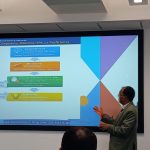 Prof Marahatta promoting BU-Nepal collaboration
 ECR Funding Open Call: Research Culture & Community Grant – Apply now
- FLF UKRI round 11- internal launch and timelines
 ECR Funding Open Call: Research Culture & Community Grant – Application Deadline Friday 12 December
- ECR Funding Open Call: Research Culture & Community Grant – Apply Now
 MSCA Postdoctoral Fellowships 2025 Call
 ERC Advanced Grant 2025 Webinar
- MSCA Postdoctoral Fellowships 2025 Call
- ERC Advanced Grant 2025 Webinar
- European Migration Research and Impact – Invitation to a Roundtable Discussion
- MSCA Postdoctoral Fellowships 2025
 Update on UKRO services
 European research project exploring use of ‘virtual twins’ to better manage metabolic associated fatty liver disease
 Research Information Network
- Physical Sciences Case studies: information use and discovery
- Information handling in collaborative research: an exploration of five case studies
- Information literacy monitoring and evaluation
- Data centres: their use, value and impact
- Heading for the open road: costs and benefits of transitions in scholarly communications