Bournemouth University researchers have given us a glimpse into some of their fantastic research, for the Research Photography Competition. The competition which ran in its third year challenged BU academics and students to capture the impact of their research in a single image. Researchers from across BU and all its faculties entered the competition.
Entries to the competition demonstrated some of the research taking place both here at BU and across the globe from forensic investigation, midwifery in Nepal, meeting the identity needs of older people and looked at repairing trust in the service sector.
The competition saw an overwhelming response with close to 1000 votes from BU staff, BU students and the wider BU community.
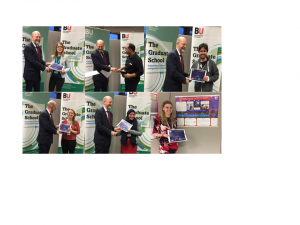
Vice Chancellor John Vinney congratulated the winners on 9 March in the Atrium Art Gallery.
“It’s been brilliant to be able to announce the winners. There’s a great diversity of winners that really encapsulate the range and impact of research here at BU,” commented Vice Chancellor John Vinney.
Below are your winners:
1st Place- “This is Me. I am Ron” by Chantel Cox

Chantel is a PhD student from the Faculty of Health and Social Science. She is looking at the cultural processes that underpin healthcare professionals meeting the identity needs of frail older people.
On winning first prize Chantel commented,
“It’s very exciting to win. It’s really good to get your research known about and out there in a different format. I’d like to use photography somehow in my research, so it’s really inspired me.”
2nd Place- The Compound Eye of Calliphora Vomitoria (Bluebottle fly) by Christopher Dwen
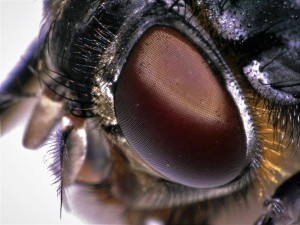
Christopher is a Forensic Research Assistant from the Faculty of Science & Technology. He’s been looking at the blood feeding activities of flies at crime scenes, as these can often be confounding. These patterns can help in instances of violent assaults.
3rd Place- A Concerted Effort to Repair Trust by Samreen Ashraf
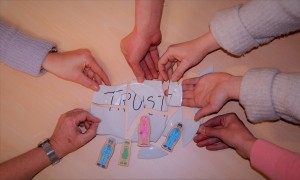
Samreen is a Lecturer in Marketing from the Faculty of Management.
Samreen is a Lecturer in Marketing from the Faculty of Management. Samreen has been looking at the service sector and examining trust repair endeavours from various stakeholders’ perspective related to three different contexts: mis-selling financial services (e.g. PPI); HR issues in the retail sector (e.g. Sports Direct) and safety issues within the leisure sector (e.g. Alton Towers).
All entries from this year’s Research Photography Competition are currently being exhibited in the Atrium Art Gallery until 22 March.







 KIPWORLD,
 Find your own voice, even your own subject material. Use your blog to develop your writing and your personal style. Don’t just assume that it has to look and sound like a blog to be one. Include at least one picture with every blog article. Let people know about the blog through social media—don’t expect an audience to just find it on its own. Promote it.
 From time to time, Jones holds an hour-long taster session, “Academic Blog Writing”. If you are interested in joining an upcoming session, please










 National Postdoc Appreciation Week 2026: The Changing Landscape of Postdoc Careers
 NIHR Insight South West Central Conference 2026 at Bournemouth University
 BU PhD student presented at World Safety Conference in South Africa
 National Research Supervision Recognition: Apply Now & Join the Supporting Workshop on 16 September
 Horizon Europe Cluster 3 (Civil Security for Society) 2026 Calls Now Open
 MSCA Doctoral Networks 2026 Call Information Webinar
 ESRC Festival of Social Science 2026: Application Deadline Extended to Thursday 25 June 2026
 Reminder: Register for the ESRC Festival of Social Science 2026 Information Session
 ECR Funding Open Call: Research Culture & Community Grant – Apply now
 ERC Advanced Grant 2025 Webinar
 Update on UKRO services
 European research project exploring use of ‘virtual twins’ to better manage metabolic associated fatty liver disease