Places are going fast for our conference next month. See full programme here. If you would like to secure a place please register here.
See you there.
Latest research and knowledge exchange news at Bournemouth University
Places are going fast for our conference next month. See full programme here. If you would like to secure a place please register here.
See you there.
The Researcher Development Programme (RDP) offers over 150 workshops, online modules, online resources and an interactive webinar series specifically for postgraduate researchers professional, personal and research development.
The RDP offers the flexibility to meet individual development needs and long-term career development whilst at BU. The programme aims to ensure that postgradaute researchers are fully equipped with the skills and knowledge required to complete their research degree and make a successful transition into their future career, whether in academia or beyond.
Full programme details can be found in the brochure.
A quick step user guide on how to use Brightspace and how to book onto workshops can be found here.
If you are a postgraduate researcher or supervisors and have any questions please contact your Research Skills and Development Officers Natalie and Clare on pgrskillsdevelopment@bournemouth.ac.uk
CALL FOR PAPERS – SPECIAL ISSUE
“Brand Management and Cocreation: lessons from tourism and hospitality” JOURNAL OF PRODUCT AND BRAND MANAGEMENT – Planned publication is early 2021. http://emeraldgrouppublishing.com/products/journals/journals.htm?id=jpbm
2017 Impact Factor: 2.75
GUEST EDITORS:
Professor Dimitrios Buhalis, Bournemouth University, UK
Professor Nigel Morgan, Swansea University, UK
Dr Sangwon Park, Hong Kong Polytechnic University, China
The planned publication early 2021
Deadline for submissions 1 September 2019
Submissions period 1 August 2019- until 1 September 2019.
________________________________________________
CALL FOR PAPERS
Branding originated as a means by which a company differentiated its goods and/or services compared to its competitors (Cowley, 1991). The importance of brand management in tourism and hospitality has become more important than ever as the sectors have become mature, global and highly competitive. Hitherto, the creation of strong brands was the result of passive or responsive marketing involvement by brand managers on consumers (Brown, Kozinets, and Sherry, 2003). Recent literature on marketing and brand management, however, suggests that strong brands are generated from a co-creation process, involving consumers’ active engagement (Boyle, 2007). For example, Coupland, Iacobucci, and Arnould (2005, p. 107) comment that “the consumer is an active partner with the marketer in brand-meaning formation”, whilst Brown et al. (2003, p. 30) note “the brand is a milieu where marketing management and consumer commitment co-exist”.
Tourism and hospitality deal with experiential products and are at the forefront of cocreation (Buhalis & Foerste, 2015) so that the integration of brand management and co-creation is now a crucial issue (Buhalis and Inversini, 2014). In terms of inseparability, one of the service characteristics, the service environment implies the involvement of consumers in the entire service process – including the production and consumption stages (Middleton, Fyall, Morgan, Morgan, and Ranchhod, 2009). Moreover, the development of information technology (e.g. TripAdvisor, Booking, and Expedia) facilitates the sharing of consumer service experiences and their positive or negative reflections as part of co-creation activities, which potentially informs brand development and reputation (Binkhorst and Den Dekker, 2009; Au, Buhalis and Law, 2014). Numerous studies in tourism and hospitality have discussed the brand management and co-creation, separately. However, academic attempts to integrate two important themes are more limited. Therefore, the purpose of this special issue in JPBM is to explore brand management and co-creation in tourism and hospitality contexts using a variety of issues/concepts/examples. We invite submissions on a broad range of tourism and hospitality branding topics in this regard, and welcome both conceptual and empirical contributions.
Some suggested tourism and hospitality branding topics include:
• Brand cocreation in tourism and hospitality
• Destination branding and cocreation
• Tourism and hospitality branding
• Tourism and hospitality Branding across cultures
• Branding through tourism ecosystems
• Sustainability and tourism branding
• Destination image and destination personality
• Branding for tourism places
• Regenerating obsolete brands in tourism and hospitality
• Tourists engagement with brands
• Brand managers’ approaches to tourism and hospitality products
• Strategies for adapting innovative branding strategies to tourism and hospitality
• The impact of technology on tourism and hospitality branding
SUBMISSION INFORMATION
Full papers submitted to this special issue are subject to the standard review procedures and rules of Journal of Product and Brand Management.
http://emeraldgrouppublishing.com/products/journals/author_guidelines.htm?id=jpbm Please note that:
• Papers need to be submitted online to the Special Issue on “Brand management and cocreation: lessons from tourism and hospitality” through the ScholarOne System (http://mc.manuscriptcentral.com/jpbm).
• For informal enquiries you can contact the guest editors.
• Submissions will be blind-reviewed by at least two reviewers.
• Based on the reviewers’ recommendation, the guest editors and the Editors-in-Chief will decide whether the particular submission is accepted as it is, revised and re-submitted, or rejected.
Deadline for submissions 1 September 2019.The Scholar 1 site will not open for submissions until 1 August 2019. The site will remain open for one month until 1 September 2019. Submissions to the special issue can only be made during this window and should be made by selecting the special issue from the drop down menu which will become available on 1 August 2019. The planned publication is early 2021.
REFERENCES
Au, N., Buhalis, D., Law, R., 2014, Online Complaining Behavior for Mainland China Hotels: The Perception of Chinese and Non-Chinese Customers”, International Journal of Hospitality and Tourism Administration, 15, pp.248-274.
Binkhorst, E. and Den Dekker, T. (2009), “Agenda for co-creation tourism experience research”, Journal of Hospitality Marketing and Management, Vol. 18 No. 2-3, pp. 311-327.
Boyle, E. (2007). “A process model of brand cocreation: brand management and research implications.” Journal of Product and Brand Management, Vol. 16. No. 2, pp. 122-131.
Brown, S., Kozinets, R.V. and Sherry, J.F. (2003), “Teaching old brands new tricks: retro branding and the revival of brand meaning”, Journal of Marketing, Vol. 67 No. 3, pp. 19-33.
Buhalis, D., Foerste, M., 2015, SoCoMo marketing for travel and tourism: Empowering co-creation of value, Journal of destination marketing and management 4 (3), 151-161 76
Buhalis D., Inversini A. (2014) Tourism Branding, Identity, Reputation Co-creation, and Word-of-Mouth in the Age of Social Media. In: Mariani M.M., Baggio R., Buhalis D., Longhi C. (eds) Tourism Management, Marketing, and Development. Palgrave Macmillan, New York
Coupland, J.C., Iacobucci, D. and Arnould, E. (2005), “Invisible brands: an ethnography of households and the brands in their kitchen pantries”, Journal of Consumer Research., Vol. 32 No. 1, pp. 106-13.
Cowley, D. (1991), Understanding Brands by Ten People Who Do, Kogan Page, London
Boyle, E. (2007) “A process model of brand cocreation: brand management and research implications”, Journal of Product and Brand Management, Vol. 16 No. 2, pp.122-131.
Middleton, V. T., Fyall, A., Morgan, M., Morgan, M., & Ranchhod, A. (2009). Marketing in travel and tourism. Routledge.

R
Dr Jaeyeon Choe in Faculty of Management successfully co-organised and co-chaired the Nexus of Migration and Tourism: Creating Social Sustainability Symposium, with Vietnam National University, University of Social Sciences and Humanities in Hanoi, 20-21 September 2018.
During the symposium, very diverse and international papers from over 15 countries and various disciplines including tourism studies, hospitality management, cultural anthropology, human geography, sociology and marketing were presented. The presentations were followed by interesting questions and discussion.
We had the honour of having four world renowned keynote speakers present:
Prof Michael Hitchcock, Goldsmiths, University of London
‘A tale of two cities: Tourism and social sustainability in Hong Long and Macau’
Prof Alan Lew, Northern Arizona University, USA
‘Diaspora Migration and Social Sustainability: A Tourism and Resilience Perspective’
Prof Sabine Marschall, University of KwaZulu-Natal, South Africa’
‘But Is It Tourism?’ Social Sustainability and the Blurred Boundaries between Travel, Tourism and Migration’
Prof Noel Salazar, KU Leuven, Belgium
‘Migration and Tourism Mobilities: Time to Bring Sustainability into the Debate’
The keynote speakers provided inspiring talks and provoked discussion whilst suggesting future directions for research on migration, tourism and social sustainability. Whilst chairing sessions, they mentored junior researchers and local Vietnamese scholars, which was both kind and helpful.
Despite rapid tourism economic development, and research into labour and employment, research hasn’t caught up to the rapidly changing issues, such as tourism linked migration, precarity of employment and social and cultural aspects of sustainability. Thus, we discussed, reflected and developed upon issues pertaining to sustainability and the nexus of migration and tourism. We were particularly interested in the complexities of trends, issues, challenges and opportunities around migration linked tourism, which remains a relatively minor part in the field of tourism.
As a follow up step, Dr Choe is organising ‘Migration and Tourism: Creating Social Sustainability’ special issue in the Tourism Geographies Journal (http://www.tgjournal.com/). This call is with the support of the editor in chief and one of the keynote speakers, Prof Alan Lew. The Tourism Geographies Journal is one of the top journals in both tourism studies and geography, with a high impact factor. We expect to have quality articles in this issue directly from the symposium presenters and beyond.
It was also great to see local Vietnamese scholars present their work. The international participants learned a lot about opportunities, challenges and issues in Vietnam tourism. Supporting the local Vietnamese scholars work to be published in an international journal, Dr Choe is organising another special issue, ‘Tourism and Sustainable Development in Asia’ in the Journal e-Review of Tourism Research. Growing quickly with the new editor-in-chief, Dr Cody Paris, this journal is open access, and the editorial board are very supportive of early career researchers, graduate students, and international scholars. We are very happy to encourage local scholars, who, with English as a 2nd or 3rd language, often find obstacles publishing.
The symposium also offered a formal yet interactive and fun networking workshop to discuss how to build educational links, work on grant projects or publications across disciplines, institutes and continents.
The local host, Dr Long, Dr Dung and Dr Nhat and other academic staff and students at Vietnam National University, University of Social Sciences and Humanities all worked very well together, and they showed exceptional Vietnamese hospitality throughout. This has been an excellent international collaboration project, and we look forward to collaborating again in the near future.

[VNU University of Social Sciences and Humanities Event Management students did a wonderful job assisting the sympousium. Well done!]
The Higher Education Policy Institute and Canadian Higher Education Strategy Associates have published a joint research paper on means-tested tuition fees for higher education – Targeted Tuition Fees – Is means-testing the answer? It explores the different funding approaches around the world considering the three major approaches to subsiding students in HE:
Targeted free tuition starts from the notion that income-contingent fee loans do improve access but don’t do enough to help those from the poorest households, many of which are extremely debt adverse, and it leads to these families ruling out attending HE. Targeted free tuition suggests means testing and offering those on lowest income partial or full exemption from tuition fees.
The report concludes that “targeted free tuition has both an attractive political and economic logic: it provides benefits to those who need it without providing windfall gains to those who do not. Evidence from several countries over many years tells us that students from poorer backgrounds have a higher elasticity of demand than students from wealthier ones. Put simply, there is far more value for money in reducing or eliminating net tuition for low income students than there is in doing so for wealthier ones”.
Nick Hillman (HEPI) spoke on the report during the Today programme on Radio 4 on Thursday.
Means testing tuition fees is another interesting contribution to the Post-18 Review discussion. It would of course, increase costs, just at the time when the accounting treatment is about to change and the existing costs become more visible. You’ll remember we reported last week that the Post-18 Review report is delayed awaiting outcomes on the decision of how to account for student loans, but will Phillip Augar use the delay to cogitate further on tuition fees?
There is an interesting debate, though, about the tension between means testing families at one level (as already happens for maintenance loans) and then basing everything on the graduate premium – i.e. the income of the graduate not the family. The government will say that the current position is fairer because the amount repaid is all based on graduate income, whereas under this system the merchant banker children of WP families would repay nothing. The opposing side was expressed on Radio 4 by Polly Mackenzie of Demos. She said that technocratic solutions developed by policy wonks would not solve the problem of student finance. That the public were emotionally opposed to debt and the system is too broken to survive, regardless of the merits of rebranding, renaming or tweaking it.
Alex Usher, the Canadian author of the paper writes for Wonkhe in A case for means-tested fees.
While Becca Bland from Stand Alone highlights that students with complex family situations which approach but don’t quite meet categorisation as an independent student fall through the means testing cracks and all too often can’t access sufficient funding to access or complete HE study. See Family means-testing for student loans is not working.
The Institute for Fiscal Studies (IFS) released its annual report on England’s education spend. On HE it summarises:
The report hit the headlines for the decline in FE spending; this heightened the current speculation that FE spend may be addressed through the post-18 tertiary education funding review. Research Professional report that the IFS write a
The article notes that the TEF, which originally planned to link higher tuition fees to outcomes, would have incentivised HE providers to focus more on their performance metrics. However, a respondent from Exeter University challenged the IFS’ statement, saying:
The key points from the IFS report:
Higher Education
Responding to the IFS report Geoff Barton, Association of School and College Leaders, played on the gulf between FE and HE funding levels:
Mis-sold and overhyped: The Guardian ran a provocative article Mis-sold, expensive and overhyped: why our universities are a con claiming universities haven’t delivered on the social mobility and graduate wage premium that politicians promised. If you read to the end you’ll see the author is actually in favour of scrapping tuition fees and increasing levels of vocational provision.
Transparent Value?: Advance HE blogs How does HE create and demonstrate value? Arguing there is
The OfS have blogged on improving graduate employability. They say:
The blog goes on to highlight the OfS consultation which sets out tough targets for improving employment gaps. The OfS call for more work placement opportunities:
Apart from calling for more work-based time the blog’s advice for improving graduate employability is limited to stating:
The blog also announced that the OfS will launch a competition in October for projects testing ways of improving progression outcomes for commuter graduates (who remain in their home town during study and after graduation).
Pre-degree technical internship – Research Professional writes about a Danish trial scheme which gives students work experience in technical subjects before they commence at university. The scheme consists of a four-week internship undertaken before the degree start date which provides insight into how the learning and knowledge will be applied in practice The trial aims to reduce high dropout rates of 20% on Danish technical courses, with dropout soaring to 30% for students with lower graded prior academic qualifications.
Gender Pay Gap – The Telegraph highlighted how the gender pay gap is apparent even at lower levels of qualification. In women choose lower-wage apprenticeships than men the Telegraph describes how the professions with a dominant female workforce are lower paid, for example women tend towards lower paid child development careers whereas engineering and construction receive higher remuneration.
UCAS have published their latest 2018 cycle acceptance figures which sum up the confirmation and clearing period, key points:
Explore the data more through interactive charts here.
Clare Marchant, UCAS’ Chief Executive, said: The highest ever proportions of young people from England, Scotland, and Wales have been accepted, and record numbers of people have a place after applying through Clearing, with their exam results in hand. [Interesting given continued calls for a post-qualification admissions process.]
She continues: The enduring global appeal of studying an undergraduate degree in the UK is clear from the growth in international students with a confirmed place, both from within and outside of the EU. The overall fall in acceptances reflects the ongoing decline in the total number of 18 year olds in the UK’s population, which will continue for the next few years, and follows similar patterns to application trends seen earlier in the year.
Wonkhe describes the data in Drama Backstage? Clearing statistics in 2018 and the Independent’s article says Universities feeling the pinch will have taken generous view of entry qualifications to full places.
Nursing recruitment continues to fall, the UCAS figures for England show a further drop of 570 less students for 2018/19. Last week the NHS figures highlighted a crisis with record levels of vacant nursing posts – just in England the NHS is short of 40,000 registered nurses. Lara Carmona, Royal College of Nursing, said:
However, the response to a parliamentary question on Monday saw the Government remain steadfast to the funding changes:
Q – Caroline Lucas: To ask the Secretary of State for Health and Social Care, if he will make it his policy to reintroduce bursaries for nursing degrees; and if he will make a statement. [172541]
A – Stephen Barclay: The removal of bursaries and introduction of student loans for nursing degrees has increased the number of nursing degree places that are available. Latest Universities and Colleges Admissions Service data for September 2018 show that there are still more applicants than places available for nursing courses.
As such we have no plans to reinstate a bursary cap on places, which would limit the number of places available.
The Office for Students published Regulatory Advice 11: Guidance for providers about facilitating electoral registration. It requires Universities to work with all geographically relevant Electoral Registrations Officers to provide sufficient student information to maintain the electoral register. Good practice case studies for electoral registration are included at Annex A (pages 7-12).
The Office for Students (OfS) has published Regulatory Advice 11: Guidance for providers about facilitating electoral registration, for registered providers in England. Any provider may be randomly selected for scrutiny, but attention will be focused on those where issues have been raised, in particular from electoral registration officers. Good practice and case studies show how universities should take a risk-based approach on the issue, and also raise awareness of democratic engagement and electoral registration.
The Migration Advisory Committee (MAC) published their final report on European Economic Area migration within the UK this week. Here are the key points:
Labour Market Impacts:
Productivity, innovation, investment and training impacts
Public finance and public fund impacts
Public service impacts
Summary of recommendations for work migration post-Brexit:
Following last week’s MAC report on international students the sector has speculated that the above recommendations have been influenced by the Home Office and so are likely to be acted upon. Furthermore, during her interview with Nick Robinson this week the Prime Minister said that an immigration policy will be published later in the Autumn. This may be published as an Immigration white paper (a Government statement of intent in relation to immigration, white papers sometimes invite sector response on some small details or call for public support). The PM has also hinted that EU nationals won’t receive special treatment (which is one of the report’s recommendations) and Sajid Javid has been reported saying that EU nationals will face visas and caps. However, immigration is one of the key Brexit bargaining points, one which David Davis, speaking on Radio 4’s Today programme this week, declared wouldn’t be resolved until late on in the negotiation stages.
With the report’s recommendations to support high skilled migration, and previous Governmental assurances towards university academics, the recommendations haven’t sounded any alarms within the HE staff sector. However, universities that rely on EU talent to bolster medium skilled professional roles could face difficulty.
Meanwhile British Future’s National Conversation on Immigration (which Wonkhe says is the biggest ever public immigration consultation – 19,951 respondents) was published this week finding:
Wonkhe report that: The research concludes that the public wants to hold the government to account for delivering on immigration policy promises, as well as more transparency and democratic engagement on the issue.
The survey also calls for:
On the new universities it continues:
A Research Professional article revisits the MAC Commission’s failure to challenge Theresa May’s refusal to remove international students from the net migration figures. However, it believes Britain’s declining share of the international student market can be saved by the following seven actions:
It concludes: A whole-of-government approach must be adopted and a firm national target for education exports should be set. Education policy and migration policy should support each other in a common commitment to that target. Only then can the UK stay ahead of its competitors in attracting international students and strengthening education exports.
There was also a parliamentary question on last week’s MAC international student’s report:
Q – Steve Double: To ask the Secretary of State for the Home Department, with reference to the Migration Advisory Committee report entitled International Students in the UK, published on 11 September 2018, what assessment he has made of the potential merits of the recommendations in that report; and if he will make statement.
A- Caroline Nokes: We are grateful to the Migrant Advisory Committee for their balanced and comprehensive review into International Students in the UK. We will be carefully considering the recommendations made in the report and will be responding in due course.
Advent of AI leads to job refocus
The World Economic Forum report The Future of Jobs 2018 believes AI and automation technologies will replace 75 million jobs leading companies to change the human role resulting in 133 million new roles by 2022. The WEF report suggests that full time permanent employment may fall and there would be ‘significant shifts’ in the quality, location and format of new roles. The report highlights skills and the need for companies to invest in upskilling their workforce. Saadia Zahidi, Head of the Centre for the New Economy and Society at the World Economic Forum, said: While automation could give companies a productivity boost, they need to invest in their employees in order to stay competitive. Meanwhile this CNBC article which describes the WEF report claims that AI and robotics will create 60 million more jobs than they destroy.
A parliamentary question on AI was responded to this week:
Q – Lord Taylor Of Warwick: What assessment they have made of public perceptions of artificial intelligence ; and what measures they will put in place to ensure that the uptake of this technology is done so in a transparent, accountable and ethical manner.
A – Lord Henley: The Government is aware of a broad range of views on the potential of artificial intelligence . The independent review on artificial intelligence in the UK stressed the importance of industry and experts working together to secure and deserve public trust, address public perceptions, gain public confidence, and model how to deliver and demonstrate fair treatment.
The new Centre for Data Ethics and Innovation (CDEI), AI Council and Office for Artificial Intelligence (OAI) were set up to deliver the recommendations of the review, and therefore have a crucial role to play.
Ethical AI safeguards, including transparency and accountability mechanisms, will be scrutinised and improved through the new Centre for Data Ethics and Innovation – the first of its kind anywhere in the world. The £9m Centre will advise on the safe, ethical and innovative use of data driven tech and help negotiate the potential risks and opportunities for the benefit of consumers.
The UK already has a strong and well respected regulatory environment, which is an integral part of building customer confidence and trust in new innovations. The Government is committed to ensuring that the public continues to be protected as more artificial intelligence applications come into use across different sectors. We believe creating an environment of responsible innovation is the right approach for gaining the public’s trust, and is ultimately good for UK businesses.
Technological Change
Vince Cable, Leader of the Liberal Democrats, spoke on technological change at the autumn party conference:
In the face of relentlessly advancing new technologies, it is easy for people to feel powerless and threatened. So we have to understand and regulate some of the technologies coming down the track.
Jo Swinson and I are setting up a commission to look at how to turn emerging technologies from a threat into an opportunity.
And if we embrace these technologies, imagine the potential. The potential for robotics in care homes; for machine learning which can detect the first signs of malignant tumour or detect fraud for blockchain which can enable massive, secure, clinical trials and quantum computing which can out-compute computers. Britain could and should be a leader, investing massively in our science and technology base.
Research
After eight months working together, the UK Parliament and the Devolved Administrations have co-authored a four-page briefing on Research Impact and Legislatures. The work has fed into the Research Excellence Framework (REF) 2021 draft guidelines on submissions and panel criteria. It is also noted that Parliament features in 20% of REF 2014 impact case studies.
Three former Higher Education Academy directors have launched OneHE, a global membership network and collaboration platform focused on effective learning and teaching. It will award innovation grants selected by community vote. UK membership fees start at £3 a month.
To subscribe to the weekly policy update simply email policy@bournemouth.ac.uk
JANE FORSTER | SARAH CARTER
Policy Advisor Policy & Public Affairs Officer
66724 65070
Follow: @PolicyBU on Twitter | policy@bournemouth.ac.uk

The Ball Assisted Latent Labour (BALL) trial has just recruited their 200th participant. The pragmatic randomised controlled trial is the highest recruiting trial in the Wessex Clinical Research Network for reproductive health. Clinical Doctorate midwife Dominique Mylod is researching whether using a birth ball at home in latent labour reduces pain perception. Dominique recently welcomed BU final year student midwife Alice Lovell to the island for a week’s research elective. The photo shows them sampling island life!
Congratulations to both on achieving such fantastic recruitment!
The procedures for late submissions of external research and knowledge exchange applications has been updated to provide greater clarification. The updated procedure can be found on the staff intranet here. This now contains useful links to the standard process when applying, as well as the financial regulations and explanations of full economic costing. The Faculty Executive Deans have also provided their support to the procedure.
RKEO will endeavour to support and submit all applications where possible. We recognise that some funders will give short-notice of a call and that there may be other circumstances where sufficient notice cannot be given. However, all applications, regardless of time to submit, have to go through the same costing and approval process and there is an expectation that only good quality and competitive applications should be submitted. Applicants should also note that time has to be factored in for Faculty Executives and/or UET to read and sign-off final submissions (these are busy people who spend a lot of time in meetings). RKEO will be flexible where we can for those exceptional cases.
If you have any queries then please contact Jo Garrad, RKEO Funding Development Manager.
The Research and Knowledge Exchange Office (RKEO) invite all ‘new to BU’ academics and researchers to an induction.
This event provides an overview of all the practical information staff need to begin developing their research plans at BU, using both internal and external networks; to develop and disseminate research outcomes; and maximising the available funding opportunities.Objectives
Indicative content
For more information about the event, please see the following link: https://staffintranet.bournemouth.ac.uk/workingatbu/staffdevelopmentandengagement/rolecareerdevelopment/academiccareerdevelopment/rkeoinduction/The ninth induction will be held on Wednesday, 3rd October 2018 on the 5th floor of Melbury House (please note that it is normally on 4th floor but we’ve moved it as we now have PRIME located with us. There will be an option at the end to come and meet the whole team on the 4th floor).
| Title | Date | Time | Location |
|---|---|---|---|
| Research & Knowledge Exchange Office (R&KEO) Research Induction | Wednesday 3rd October 2018 | 9.00 – 12.00 | Lansdowne Campus |
9.00-9.15 – Coffee/tea and cake/fruit will be available on arrival
9.15 – RKEO academic induction (with a break at 10.45)
11.25 – Organisational Development upcoming development opportunities
11.30 – Opportunity for one to one interaction with RKEO staff
12.00 – Close
There will also be literature and information packs available.
If you would like to attend the induction then please book your place through Organisational Development and you can also visit their pages here.
We hope you can make it and look forward to seeing you.
Regards,
The RKEO team
Café Scientifique – Tuesday 2 October- Facing our future self
Bournemouth Café Scientifique is turning 6 on Tuesday 2 October. To celebrate we have a fantastic talk from Dr Curie Scott about changing our attitudes to ageing. We’ll also have Birthday Brownies!
Join us on Tuesday 2 October from 7.30pm until 9.00pm (doors will open from 7.00pm):
Café Boscanova – 650 Christchurch Road, Boscombe, Bournemouth, BH1 4BP
Facing our future self
Dr Curie Scott
One in five people alive today will reach their 100th birthday. You are going to grow old but have you thought about it? Ageing is a taboo subject and older people are often stereotyped and overlooked. Dr Curie Scott invited people over 60 and students from Health & Social Care professional courses to four drawing workshops. Come and hear how drawing about ageing made a startling difference to their current lives. In terms of ageing, we cannot separate ourselves from our future older self, however much we want to do so. ‘They’ are the ‘we’ of the future.
If you have any questions please do get in touch. You can also follow us on Facebook and Twitter.
Plus, why not send us a request to be added to our Public Engagement mailing list and be the first to hear about all our events and activities.
We look forward to seeing you!
Café Scientifique Team
Are you currently undertaking research within the NHS and your Good Clinical Practice (GCP) training is due to expire? Or has it expired recently?
GCP certification lasts for two years, so if your training is due to expire, has expired, or you want to validate your learning, then take advantage of the upcoming refresher half day session, taking place at Royal Bournemouth Hospital on Tuesday 2nd October, 1pm – 4:30pm.
Spaces are still remaining, so if you’d like to enrol, get in touch as soon as possible with Research Ethics or the Wessex Clinical Research Network.

Skam”, the Norwegian TV series about Oslo teenagers, has influenced our concept and will be used to engage local youth in telling their own stories.
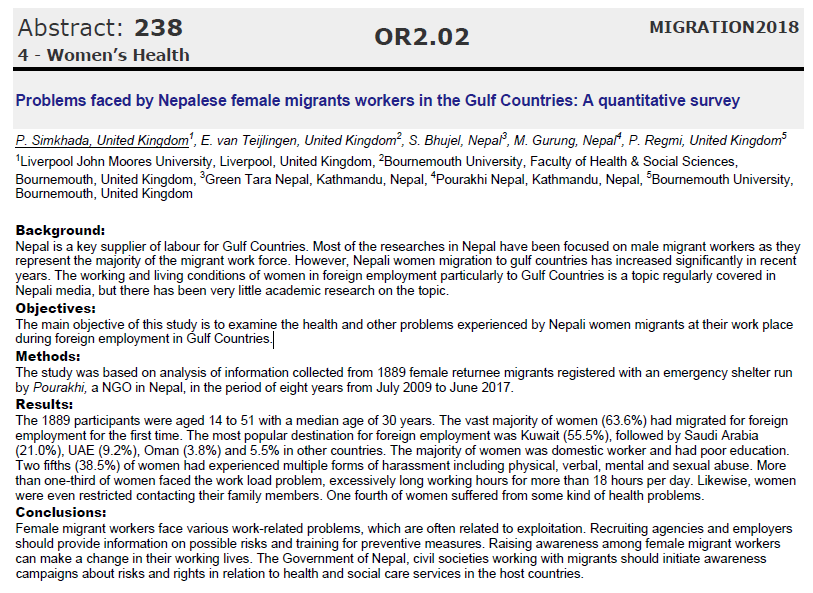
Congratulations to FHSS academics Dr. Pramod Regmi and Dr. Nirmal Ayral who published an editorial yesterday in a scientific journal in Nepal. The paper ‘Experts warn Nepal Government not to reduce local Public Health spending’ [1] was co-authored by Dr. Bibha Simkhada who has just been offered a post as Lecturer in Nursing in the Department of Nursing & Clinical Sciences, she shall be starting with us on November 1st. Further co-authors include FHSS Visiting Professor Padam Simkhada and Dr . Sujan Marahatta, the journal’s editor. He is based at Manmohan Memorial Institute of Health Sciences (MMIHS) in Kathmandu, Nepal. Bournemouth University has a long-standing research collaboration with MMIHS.
The editorial warns about the risks of losing the focus on public health and its wider national and global perspective in the recently changed political arena of Nepal. Since 2015 Nepal has moved from a central state to a federal republic, whereby the seven new Provinces have gained much more power and control in the decentralisation process. Moreover the first local elections for two decades in 2017 meant a lot of new and inexperienced local politicians were voted in. Many of these local people had little prior experience of political processes, governing health systems, the notion of priority setting, running sub-committees of elected representatives, political decision-making at local level, etc. The paper argues that Public Health can easily disappear of the radar. The untrained newly elected representatives with no political experience are most likely to be drawn into proposing and supporting popular measures including developing new buildings, black-top roads, hospitals, etc., rather than measures that increase the local or regional budget for teachers, Continuous Professional Development (CPD) for community health workers, and preventative public health measures in general. Buildings and roads are immediate demonstration to voters that politicians have done something useful, reducing maternal mortality by 2.6% or employing two additional health workers doesn’t give politicians neither the same publicity, nor do such policies have immediate signs of success, and hence are unlikely to be vote winners.
The Journal of Manmohan Memorial Institute of Health Sciences is part of the Open Access publishing of Nepal Journals OnLine (NepJOL) supported by INASP. The editorial also illustrates the kind of work conducted in Bournemouth University’s Integrative Wellbeing Research Centre (iWell).
Prof. Edwin van Teijlingen
Centre for Midwifery, Maternal & Perinatal Health (CMMPH)
Reference:
Simkhada, P., Teijlingen van, E., Simkhada, B., Regmi, P., Aryal, N., Marahatta, S.B. (2018) Experts warn Nepal Government not to reduce local Public Health spending, Journal of Manmohan Memorial Institute of Health Sciences, 4(1): 1-3.
I recently had the opportunity to apply for a grant as principal investigator. The reason for writing this post today is to say thanks to everyone involved, including the RKEO staff, the Co-investigators (Paula Callus in particular), the partner institutions but also all colleagues who gave us suggestions, supporting and helping also if not involved (Isabella Rega and Richard Berger were some of these).
On reflection, I would have done all of it differently. More time was needed (possibly not when on Annual Leave and not night time), partners need to be in place well before the call is out, reference letters cannot be asked for last minute, etc. I made all (or almost all) the mistakes above, but I had a very clear idea about the project and I felt surrounded by enthusiastic colleagues who were happy to share their expertise with me. I now know I have still a lot to learn and I can’t wait for the next opportunity.
A good point was to take notes which will be used for next grant applications. Somehow it does not matter if we will get the funding at this first attempt, we are looking forward to improving the application and the project itself, which will require more research. Yes, applying for grants is not a boring task, there is a lot of research involved which brings new ideas and opens up opportunities, whether you get the funding or not.
I hope this post will be read as a positive gentle push to apply for grants and not only because it’s the Institution in need of more grants applications but because the process itself is incredibly enriching. I hope my colleagues enjoy their future grant applications as much as I did.
a+
BU research students were well represented at the recent 4th International Conference for Marketing Insurance (ICMI) held at Bournemouth University which provided an excellent opportunity to showcase their work in insurance and marketing.

4th ICMI delegates
Doctoral student Emmanuella Ejime (FoM) presented her work on psychological distance and motor insurance; and Freyja Van Den Boom (FMC) delivered her paper on the legal aspects of personal data and consumer insurance.
Three papers were also presented by practitioners who have taken the part-time Masters in Professional Development (Loss Adjusting) at BU. The first paper from John Hall examined the changing role of the loss adjuster in household claims; the second paper from George Macharia investigated insurance claims fraud in Kenya and Uganda; and the final paper was presented by Alice Edwards which looked at success in complex claims.
The ICMI serves as the primary platform to promote research in the field of insurance marketing. Further details on the conference and the Association for Insurance Marketing can be found here, or alternatively contact the 2018 conference chair, Julie Robson (jrobson@bournemouth.ac.uk).
The 5th International Conference for Marketing Insurance (ICMI) will be held in October 2019 at IPAG Paris, France.
MSCA Individual Fellowships 2018 Call Submission Rates
According to UKRO, the European Commission has released the submission rates for the 2018 Marie Skłodowska-Curie Actions (MSCA) Individual Fellowships (IF) call, which closed on 12 September; a total of 9,830 proposals were submitted.
This represents a slight increase in comparison to the previous MSCA IF call under Horizon 2020 in 2017, which received 9,089 proposals. The results can be expected by mid-February 2019.
Open registration for MSCA Innovative Training Networks UK Information Events
UKRO in it’s capacity as National Contact Point for the Marie Skłodowska-Curie Actions (MSCA) will hold two free information days focussing on the 2019 MSCA Innovative Training Networks (ITN) call for proposals (deadline for the submission of applications on 15 January 2019). Registration can be accessed through the following links: Wednesday 10 October, London; Friday 12 October, York.
Participation in the events is free, but registration is mandatory for attendance; places will be offered on a first come first served basis.
Open registration for Societal Challenge 6 Information Day
An information and brokerage event for the Horizon 2020 Societal Challenge 6: ‘Europe in a changing world – Inclusive, innovative and reflective societies’ will take place in Warsaw, Poland on 8 November. It is organised by the European Commission (DG RTD) and Net4Society, a network of SC6 National Contacts Points.
The event is free of charge but limited to 2 persons representing the same department/organization. Online registration is obligatory.
EU Partnering event on the use of Big Data and Artificial Intelligence for monitoring health status and quality of life after cancer treatment
Academics are invited to submit an expression of interest to participate in this partnering event.
The aim of the event is to foster and facilitate the development of R&D project consortia for Horizon 2020 EU funded projects in the Healthtech themes. The event is aimed to provide a platform for new commercial and technological collaborations, especially between business and research organisations.
Open registration for UKRO Annual Visit to BU
RKEO will host annual UK Research Office visit to BU on 10th October 2018. The event will take place in FG06 seminar room with the sessions for BU academics commencing at 11:30.
To find more about Horizon 2020 programme and available funding in your area, visit Horizon 2020 website. More details on projects funded under FP6, FP7 and Horizon 2020 may be found on CORDIS website.
For further details on EU and international funding opportunities please contact international research facilitator or any member of RKEO Funding Development Team to individually discuss your ideas and the ways we could support you.
Michael O’ Regan , Phd has been visiting Peru under a researcher links grant, exploring tourism’s role in protecting and restoring natural capital.
This work was supported by a Researcher Links grant, ID [360558625], under the Newton Fund partnership. The grant is funded by the UK Department for Business, Energy and the (Peruvian) National Council on Science, Technology and Technological Innovation (CONCYTEC) and delivered by the British Council. For further information, please visit www.newtonfund.ac.uk/ and https://www.britishcouncil.pe/en/newton-fund/researcher-links


UPC
My trip has been facilitated and enabled by the host institution in Peru – the Universidad Peruana de Ciencias Aplicadas (UPC).UPC is a private university in Lima, Perú, founded on January 5, 1994. Currently, it offers 39 career programs categorized in 12 faculties. I was located at the principal campus at distrito de Santiago de Surco in Lima, and was particularly interested in the tourism and hospitality programmes, given my research interests and position within the Department of Events & Leisure, Faculty of Management at Bournemouth.
While for-profit higher education is a controversial issue in the UK, the educational sector in still developing in Peru. Despite, having over 150 universities, the majority are fee-paying private institutions and are not research active. While Peru is home to the oldest university in the Western Hemisphere, National University of San Marcos (chartered by Charles V in 1551), there has been a lack of investment in infrastructure with only 3 out of 10 young people going to university.
That is why I was so pleased with the investment at UPC into technology, labs, kitchens and facilities for its hospitality and tourism programmes. From mock hotel rooms to teaching kitchens, it was great to see a university, staff and students recognise tourism, hospitality and events as an important pillar for a career and Peru’s development. The boom in tourism in Peru and the global recognition of Peruvian food culture requires practical as well as management skills.
While UPC has links with many parts of the world are excellent, institutional links with the UK show potential, at a group, departmental or institutional level. The newton fund in particular has/is seeking new Peru-UK linkages. I hope to follow this up.
It was a great base to begin my research trip in Peru, as I spoke to staff teaching and studying tourism. I also learned about the role of tourism and hospitality in the country, and the growing recognition of its importance. My own presentation/lecture was centred on “Event Tourism: trends and opportunists” in Peru.
I want to thank all the staff and students at UPC, and in particular, Marizoila Fontana Roos, Directora Facultad de Administración en Hotelería y Turismo at UPC.