Quick tip if you’re adding posts to the research blog: when adding an image within your post, remember to also click on ‘set featured image’ (bottom right-hand menu below ‘tags’) and select the image again. This will show the image on the home page of the blog for your post summary (which may entice more people in to read it).
/ Full archive
Our scandalised society
Are you interested in scandal?
Most people are. And while scandal of one sort or another has long been a major part of our media diet, in recent years institutional scandals involving corporate immorality, incompetence or cover-up have assumed an increasingly prominent place, involving the banks and other commercial corporations, the churches, police forces, the media, and Parliament, amongst others. If you wonder what this tells us about contemporary society, and how we should respond to it, come to a public event at the EBC on Wednesday 11th May at 5.00 (refreshments available before the start).
In this open meeting, leading criminologist Professor Chris Greer (City University) and Lord Blair (Sir Ian Blair, former Commissioner of the Met) will discuss key issues including how the British state is responding to scandal proliferation, the implications of scandal for crime control and institutional regulation in the digital age, and the risk of scapegoating as a substitute for understanding and solving, particularly in a 24/7 news environment. Professor Ann Brooks will chair.
For more information, and to book for this free event please visit the Eventbrite website:
This is the second in a series of high profile public events at BU, called Dialogues in the Social Sciences. Organised by Profs. Ann Brooks, Candida Yates and Barry Richards, their aim is to bring insights from the social sciences to bear on major areas of current concern: higher education, crime and scandal, and violent extremism.
CEMP / CEL bulletin May 2016
Here is the CEMP CEL bulletin May 16
Thanks to Marcellus Mbah and Mark Readman for this one.
Usual terms apply – please contact one of the people named at the top of the bulletin to follow any of these up.
14: live – EU, are you in or out?
14:Live is back, but with a twist! Dr Dan Jackson, whose research includes political communication, how news is constructed and news coverage of politics, will be hosting a debate between two teams of students arguing for and against staying in the European Union.
Join us to find out more about the upcoming European referendum and share your views about whether Britain should be in or out.
14:Live will take place on the 5th floor of the Student Centre on 17 May at 2pm. Drinks and snacks will be available.
If you have any questions on the topic that you would like answered during the event, can you please send your questions to Oliver Cooke.
If you would like to attend this event, please can you email Oliver Cooke with confirmation that you will be attending.
Keynote Speaker at BAM Marketing and Retail SIG Event on Sustainability and Ethical Consumption
Professor Juliet Memery was a keynote speaker last week at a British Academy of Management Event held at the Surrey Business School, University of Surrey. The event on Sustainability and Ethical Consumption was hosted by the BAM Marketing and Retail Special Interest Group and brought together academics and practitioners to discuss research in the area. The event aimed to make an assessment of sustainability and ethical consumption research by looking back at its original purpose, how it has developed, where it is now, and what it could or should develop into, so providing food for thought for future research in the area. The day was well attended with over 30 presentations being made and a lot of insightful discussions were held.
The event is tied to a special issue of ‘Management Decision’, a peer reviewed journal published by Emerald, on Sustainability and Ethical Consumption which will be edited by the co-organisers and keynote speakers. Details of the special issue will be advertised in the near future, and submissions are invited from researchers in the area.
BOOK NOW: Research impact events – 23-27 May
Join us to take a closer look at how research can have an impact beyond academia, and the ways in which this can be achieved.
From Monday 23 – Friday 27 May, we’ll be
exploring the various pathways to achieving
societal and economic impact through a
selection of seminars and workshops.
We will be joined by some fantastic external speakers such as Dr Steve Cross, a public engagement expert, and Bokani Tshidzu, a consultant specialising in impact evidence. At the end of the week, you are invited to take part in a celebration of research impact at Bournemouth University.
Come along to as many events as possible to explore how you can effectively engage with a variety of research users, and to find out more about methods for developing and evidencing impact.
These events are aimed at all academic staff members, early career researchers, postgraduate students and professional services staff who support impact across the university.
Monday 23 May
What’s in it for me? Impact that makes a difference outside academia and supports your career
Dr Steve Cross, Wellcome Trust Public Engagement Fellow & former Head of Public Engagement at UCL
12.30-14.00 | Talbot campus
Find out more and book now via Eventbrite
H2H – bringing research to life (Human2Human). A business networking event on the topic of virtual and augmented reality
Facilitated by Jayne Codling, Rachel Clarke and Charlene Steele
14.30-16.00 | Talbot campus
Find out more and book now via Eventbrite
Tuesday 24 May
Using the media to generate research impact
Nathaniel Hobby, Emma Matthews and Dr Sarah Bate
12.30-14.00 | Lansdowne campus
Find out more and book now via Eventbrite
Smart cities sandpit
Facilitated by RKEO, supported by Borough of Poole
09.30-16.30 | Lansdowne campusFind out more
Wednesday 25 May
Influencing public policy with research
Jane Forster and Emma Bambury-Whitton
13.30-14.30 | Talbot campus
Find out more and book now via Eventbrite
Thursday 26 May
Influencing public policy with research
Jane Forster and Emma Bambury-Whitton
12.30-13.30 | Lansdowne campus
Find out more and book now via Eventbrite
Using the media to generate research impact
Nathaniel Hobby, Emma Matthews and Dr Sarah Bate
13.30-15.00 | Talbot campus
Find out more and book now via Eventbrite
Friday 27 May
Collecting evidence of research impact
Bokani Tshidzu, Chief Operating Officer of impact consultancy Vertigo Ventures
12.00-14.00 | Talbot campus
Find out more and book now via Eventbrite
Celebrating research impact at Bournemouth University
Facilitated by Dr Sarah Bate and Dr Zoe Sheppard
14.30-16.00 | Talbot campus
Find out more and book now via Eventbrite
Cyberparks and I-cities: EU funding in action
I have just returned from a conference at the University of Malta organised by the EU COST Action on Cyberparks which I am participating in. The conference was on the theme of the I-city, enhancing places through technology and featured keynotes reflecting on and critiquing the notion of the ‘Smart City’ from different disciplinary and methodological perspectives and with reference to projects taking place across Europe. Valletta, where the conference took place, is going to the European Capital of Culture in 2018 and one of the presentations was from the Foundation team, offering some interesting insights into how preparations would focus on technologically-driven community regeneration.
Discussion in the parallel sessions which followed was organised around three tracks (Digital Methods and Social Practices; Ethnographic challenges; People, spaces and technology) led by COST Action members. The organisers also organised two field visits for us, looking at how technology is being used for the regeneration of public spaces and historical building in Valletta. Following the conference, I also participated in the working group meetings for the project, where discussion centred on dissemination and networking, and plans for future collaborations between members.
This was the second COST Action meeting I have attended so far and it was good to see how the project and collaborations between members are progressing. I have learned a great deal from working alongside colleagues from a diverse range of disciplines and cultures, and hope I will be able to attend the next meeting, which will be in Skopje in Macedonia in October. As well as myself, FMC Visiting Fellow Sue Thomas is also involved in the Cyberparks project and in addition to being a working group member is also on the project’s Editorial Board.
RKEO Drop-in sessions – cancelled due to unpopular demand
In response to positive feedback from academics about how much they benefit from face-to-face meetings with staff from RKEO, we set up monthly drop-in sessions for 2016. Unfortunately, these were not as valued as we thought they would be, i.e. no academics chose to drop-in to the three held to date. Therefore, all future sessions are now cancelled.
If there is a specific member of RKEO that you would like to meet with then please contact them directly to arrange a meeting.
Perspectives from an Early Career Researcher (ECR): Tips for Conference Engagement
Last week I attended the 20th European Congress of Physical and Rehabilitation Medicine (ESPRM) in Estoril, which covered topics from functional gait analysis-to-household ergonomics. By the morning coffee break of day one, it came back to me that engaging in a conference is an art-form. In this brief report I hope to share some tips, based on my own experiences in academia.
Beforehand, workload-dependent, leave all mobile technologies and laptops in your room. Emails can wait until the day’s end and social media will only serve to distract (Quentin Tarantino bans mobile phones from his film sets, so there).
Firstly, register early and familiarize yourself with the layout of the conference centre. Stop for a coffee; premium-grade typically dispensed by the sponsor’s kiosk.
Secondly, take the time to read the programme, and map your ‘conference schedule’ (i.e., what sessions you intend to attend). Breakfast presents a fine opportunity for planning, on a day-by-day basis. Schedule planning is important for larger meetings, which can deliver many parallel sessions. Attend a conference with an aim(s). Be strategic; balance topics specific to, and outside your research area. For example, I attended i) functional mobility in older adults (subject-specific), ii) Cochrane Review/PGR development (non-specific, CPD), iii) cognitive dual-tasking (semi-specific, interest), and iv) Nordic walking (personal interest) sessions. Specialist workshops, such as ECR sessions, are gold-dust as you gain insight from international perspectives and practices. I also recommend not studiously attending every single session; I did this in my first conference and burnt out post-coffee break on day two. Don’t feel guilty missing a session if you feel it holds no relevance to you (or your personal development), otherwise you risk losing concentration on the sessions you are interested in. Stop for a coffee.
Thirdly, relax, enjoy yourself and don’t be afraid to talk. You can often learn more (and establish links) during coffee breaks, than in the sessions. Yes, you are at work, and yes, you may be abroad, but don’t fall into wi-fi hunting. Ultimately, you will check, and respond to, emails. You can do this back home. Engage with the academic and local cultures. Remember wi-fi may be omnipresent, but it wasn’t until about 6 years ago.
Finally, ask constructive questions. If presenting, welcome questions as they reflect an interested audience, and may highlight areas that you haven’t yet considered. Do not view negative/antagonistic questions as a challenge, they may not agree with your perspective and/or may have misinterpreted you. Data rigour and quality control are imperative, but findings may be serendipitous.
If you can master these, please tell me how, as I’m still learning.
Dr James Gavin
Lecturer (Exercise Physiology)
Department of Sport & Physical Activity
jgavin@bournemouth.ac.uk
BU’s THET project in Nepal
On Friday the third cohort of UK volunteers will leave Heathrow as our education project ‘Mental Health Training for Community-based Maternity Providers in Nepal’ [1]. Mental health issues are a seriously underfunded and understudied area in Nepal, and not just in the field of maternity care. [2] Our project is a collaboration between the Centre for Midwifery, Maternal & Perinatal Health (CMMPH), Tribhuvan University (Nepal’s oldest university) and Liverpool John Moores University (LJMU). The project receives funding from DFID, and is managed through THET and supported locally in Nepal by a charity Green Tara Nepal.
One of the three latest volunteers, BU Visiting Faculty and Poole Hospital NHS Foundation Trust midwife Jillian Ireland wrote about her forthcoming trainig visit (click here for Jillian’s blog). The other volunteers on this visit are midwife Andrea Lawrie from The Robert Gordon University/Aberdeen Maternity Hospital, Aberdeen) and Dave Havelock, a mental health nurse specialising in high intensity therapy (IAP) from North Yorkshire.
Previous Bournemouth University Research Blogs (see here! and here! ) and blogs by one the earlier UK volunteers retired health visitor Ish Fawcett (click here!) have outlined details of our project. Bournemouth University has a great history of developing and delivering innovative education projects with the support of its Centre for Excellence in Learning (CEL).
Prof. Edwin van Teijlingen
CMMPH
References:
- van Teijlingen, E., Simkhada, P., Devkota, B., Fanning, P., Ireland, J., Simkhada, B., Sherchan, L., Silwal, R.C., Pradhan, S., Maharjan, S.K., Maharjan, R.K. (2015) Mental health issues in pregnant women in Nepal. Nepal Journal of Epidemiology 5(3): 499-501.
- Simkhada, P., Winter, R.C., Fanning, C., Dhungel, A., Marahatta S.B. (2015) Why are so many Nepali women killing themselves? A review of key issues Journal of Manmohan Memorial Institute of Health Sciences 4(1): 43-49.
Research Professional – all you need to know
Every BU academic has a Research Professional account which delivers weekly emails detailing funding opportunities in their broad subject area. To really make the most of your Research Professional account, you should tailor it further by establishing additional alerts based on your specific area of expertise. The Funding Development Team Officers can assist you with this, if required.
Research Professional have created several guides to help introduce users to ResearchProfessional. These can be downloaded here.
Quick Start Guide: Explains to users their first steps with the website, from creating an account to searching for content and setting up email alerts, all in the space of a single page.
User Guide: More detailed information covering all the key aspects of using ResearchProfessional.
Administrator Guide: A detailed description of the administrator functionality.
In addition to the above, there are a set of 2-3 minute videos online, designed to take a user through all the key features of ResearchProfessional. To access the videos, please use the following link: http://www.youtube.com/researchprofessional
Research Professional are running a series of online training broadcasts aimed at introducing users to the basics of creating and configuring their accounts on ResearchProfessional. They are holding monthly sessions, covering everything you need to get started with ResearchProfessional. The broadcast sessions will run for no more than 60 minutes, with the opportunity to ask questions via text chat. Each session will cover:
-
Self registration and logging in
-
Building searches
-
Setting personalised alerts
-
Saving and bookmarking items
-
Subscribing to news alerts
-
Configuring your personal profile
Each session will run between 10.00am and 11.00am (UK) on the fuorth Tuesday of each month. You can register here for your preferred date:
These are free and comprehensive training sessions and so this is a good opportunity to get to grips with how Research Professional can work for you.
BU poster at First National Conference on Adolescent Health & Development in Nepal
In two days time the first ever National Conference on Adolescent Health and Development in Nepal starts in Kathmandu. BU has a joint poster at this conference on the topic of Community-Based Menstrual Hygiene Promotion in Rural Nepal. The poster reports on a project led by Ram Chandra Silwal.
The project is an international collaboration between Green Tara Nepal, BU Visiting Fellow Prof. Padam Simkhada (representing Liverpool John Moores University), the University of Tokyo and the Centre for Midwifery, Maternal and Perinatal Health (CMMPH) in BU’s Faculty of Health & Social Sciences.
Prof. Edwin van Teijlingen
CMMPH
Reference:
- Silwal, R.C., Pradhan, S., Sharma, A., Simkhada, P., van Teijlingen,E., Jimba, M. (2016) ‘Community-Based Menstrual Hygiene Promotion in Rural Nepal’ poster at First National Adolescent Health & Development Conference held in Kathmandu, Nepal, 2-3 May 2016.
Committee inquiries: open calls for evidence
Below is a list of committee inquiries with current open calls for evidence. Please contact Emma Bambury-Whitton if you would like to discuss submitting evidence.
Commons Select Committee inquiries
- Scrutiny of the Government’s Supply Estimates | Procedure Committee | Deadline: Friday 25 March 2016 (extended to Friday 29 April 2016)
- Countries of Culture | Culture, Media and Sport Committee | Deadline: Friday 22 April 2016 (extended to Saturday 30 April 2016)
- Inquiry into Government accounts | Public Administration and Constitutional Affairs Committee | Deadline: Friday 29 April 2016
- Science communication | Science and Technology Committee | Deadline: Friday 29 April 2016
- Robotics and artificial intelligence | Science and Technology Committee | Deadline: Friday 29 April 2016
- Homophobia in Sport | Culture, Media and Sport Committee | Deadline: Friday 29 April 2016 (extended to Friday 6 May 2016)
- Energy revolution | Energy and Climate Change Committee | Deadline: Tuesday 3 May 2016
- Powerhouses and engines: Government policy and regional growth | Business, Innovation and Skills Committee | Deadline: Friday 6 May 2016
- Disability employment gap | Work and Pensions Committee | Deadline: Monday 9 May 2016
- Science in emergencies: chemical, biological, radiological or nuclear incidents | Science and Technology Committee | Deadline: Friday 20 May 2016
- Sexual harassment and sexual violence in schools | Women and Equalities Committee | Deadline: Sunday 22 May 2016
- DFID’s use of contractors | International Development Committee | Deadline: Monday 23 May 2016
- Improving the rail passenger experience | Transport Committee | Deadline: Wednesday 25 May 2016
- Regenerative medicine | Science and Technology Committee | Deadline: Tuesday 31 May 2016
- Impact of membership on the EU on health policy in the UK | Health Committee | Deadline: Tuesday 31 May 2016
- Electricity sector in Northern Ireland | Northern Ireland Affairs Committee | Deadline: Wednesday 1 June 2016
- Fragility and development in the Democratic Republic of Congo | International Development Committee | Deadline: Monday 6 June 2016
- MoD support for former and serving personnel subject to judicial processes | Defence Sub-Committee | Deadline: Wednesday 8 June 2016
Joint Committee inquiries
- The Arms Trade Treaty | Committees on Arms Export Controls | Deadline: Tuesday 31 May 2016
Public Bill Committees
- Investigatory Powers Bill | Deadline: Thursday 5 May 2016
HE Policy Update
BIS cuts
A document ‘BIS 2020 – Finance and Headcount outline’ has outlined the department’s latest restructuring plan. The document reveals that some 265 jobs could be shed from the research councils (16 per cent of the workforce), with another 47 going from the Higher Education Funding Council for England (17 per cent of the workforce) and 12 jobs going from the Office for Fair Access (67 per cent of the workforce). BIS plans could see almost 5,000 jobs lost by 2020 (Research Professional).
Graduate Employment
BIS has published its latest figures on the graduate labour market for 2015. You can view the report here. The key statistics are as follows.
- Graduate unemployment: 3.1%
- Non-graduate unemployment: 6.4%
- Young graduates: 56% in high skill jobs, 31% in medium and low skill jobs
- Young non-graduates 17% in high skill jobs, 54% in medium and low skill jobs
- Median salary for young graduates: £24,000 (£31,500 for all ages)
- Median salary for young non-graduates: £18,000 (£22,000 for all ages)
Policy-making
An article in the Guardian looks into how scientists can impact policy. It discusses how scientists need to understand the policy process and the likely demand for and uptake of evidence, before working out how to produce evidence that would fit into the process. If scientists want to influence policymaking, they need to understand it (The Guardian).
Sutton Report
The Sutton Trust published a report on graduate debt with international comparisons. You can view the report here. The key points are as follows.
- Those who graduated from English universities last year – under the £9,000 fees regime – owed an average of £44,000.
- Average debts in other English-speaking countries ranged between approximately £15,000 and £29,000.
- On average American graduates owe between $29,000 (£20,500), for students at public or private non-profit universities, and $32,600, for those at private for-profit universities.
- The report highlights the growing complexity in arrangements in the UK nations, with different fee levels in Scotland and grants in Wales that enable Welsh students to take up places at English universities for less than £4,000 a year rather than up to £9,000.
- The report argues that the abolition of maintenance grants this September will leave the poorest students with debts in excess of £50,000.
Anti-lobbying
An anti-lobbying clause that was due to come into effect on 1 May and which would have affected many researchers in the UK has been put on hold awaiting a review. You can view the statement here.
A-levels
Which? has reported that almost a third (28%) of more than 1,000 UK 18 and 19 year-old university applicants surveyed said they wished they had chosen different subjects. They also reveal that 41% wished they had considered which subjects would be of most use. Too many university applicants ‘pick wrong subjects at 16’ (BBC News).
HESA
HESA released their statistics on the finances of higher education providers in 2014/15. The figures show that medicine, dentistry and health were the biggest spending academics departments. Breakdown of £31 billion expenditure of UK HE sector. (HESA).
UG Physio students secure prestigious research post
Darel Evans and George Erskine has been chosen to be 2 of just 6 selected research internships with Arthritis Research UK. George will be working on the project entitled What are the illness beliefs and expectations of people with Psoriatic Arthritis? Analysis of qualitative data from focus groups under the supervision of Professor Sarah Hewlett at the University of the West of England, Bristol.
Darel will be working on Optimisation of footwear choices in the management of knee Osteoarthritis (OA) at the University of Salford under the supervision of Dr Anita Williams.
As a Physio team we couldn’t be more proud of their achievements and wish them ever success. It is the first time undergraduates from the BU Physio programme have gone for such an acclaimed position and to have 2 accepted really is a triumph. Thanks to the team for supporting the applications and we hope their success will breed success in others.
Preparations are under way……

Image with kind permission of Hampshire Record Office
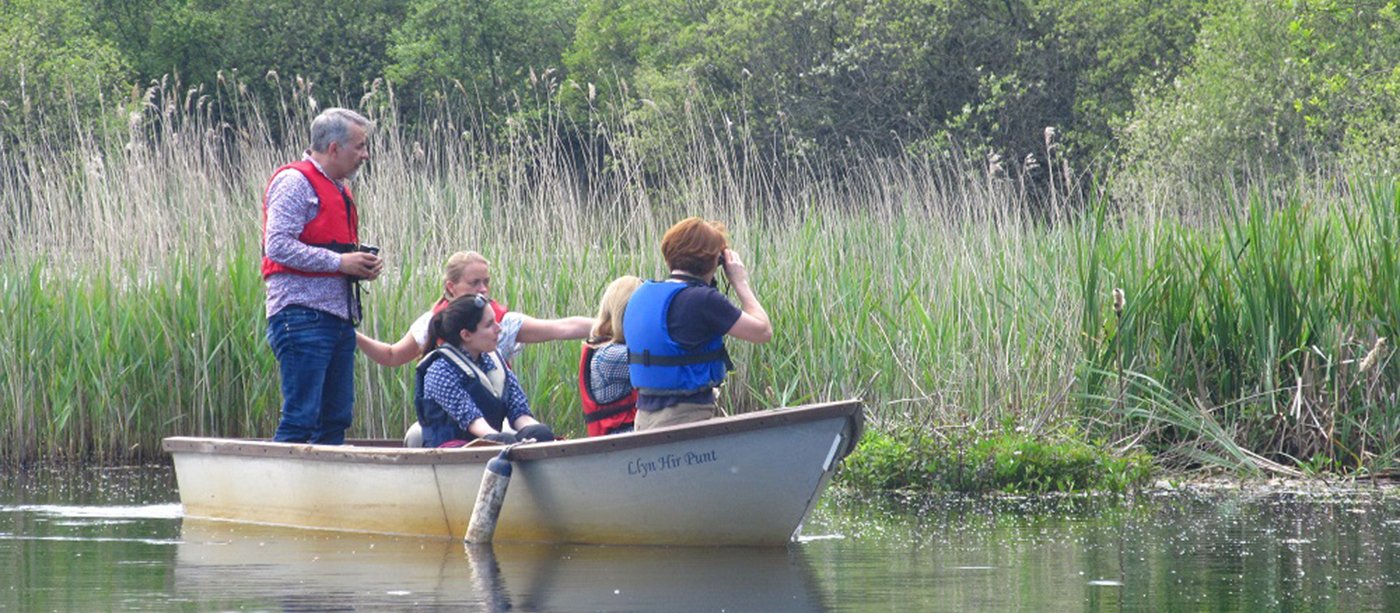
One of the events at this year’s BU Festival of Learning will highlight the research partnership between BU and the RSPB. For over two years members of the Faculty of Health and Social Sciences have been working with Tom Clarke from the RSPB on various projects that explore how accessing the natural environment can improve personal health and wellbeing.
The Festival of Learning event that is being developed in partnership with the RSPB will focus upon one stretch of the River Stour between Muscliff and Throop Mill. An exhibition, at Bournemouth Council’s new Kingfisher Barn Visitor Centre, will show how previous generations have used the area. It is hoped that through this historical narrative members of the public who visit the event will be encouraged to think about how they could enjoy this beautiful rural stretch of the river with family and friends in the future. There will also be cultural heritage activities to try.
At present the project team are gathering information on the cultural heritage of the area. This has involved searching local archives as well as Hampshire Record Office, to find information about those who have lived, worked and had fun in and by the River. The Daily Echo is also supporting the search by including an article asking any members of the public with memories of the area to send them in – and we know there are lots of people with childhood links to the location following a number of Facebook posts to members of the project team. May be colleagues or students at BU have their own memories they’d like to share – we’d love to hear them!
FM Academic co-authors paper presented at HE marketing Colloquium
Dr. Miguel Moital, from the Department of Events & Leisure, co-authored a paper presented with Marta Retamosa and Dr. Angel Millan from the University of Castilla-La Mancha (Spain), which was presented at the Higher Education marketing colloquium which took place at the EBC on the 27th April. The Colloquium was organised as part of the Academy of Marketing Special Interest Group in Marketing in Higher Education at Bournemouth University and attracted over 50 participants mainly from the UK but also from overseas.
The paper entitled “Satisfaction with public universities across business, nursing and engineering degrees: a customer based brand equity perspective” is based on a sample of over 1000 students from the University of Castilla-La Mancha. Dr. Millan and Marta will continue to work on this paper with Miguel and initiate others with Dr. Chris Chapleo during their research stay in Bournemouth this Summer.
ICERI2016 Announcement
We are glad to inform you that ICERI2016 (9th annual International Conference of Education, Research and Innovation) will be held on the 14th, 15th and 16th of November 2016, in Seville, Spain (http://iated.org/iceri)
It will be very interesting for professionals in the area of Education, Research, Innovation. After 9 years, ICERI has become an annual meeting point for lecturers, researchers, professors, educational scientists and technologists Every year, ICERI brings together over 700 delegates from 80 different countries.
It will provide the ideal opportunity to present your projects and experiences to an international audience. Also, it will offer participants an overview of the current situation of education and new learning technologies.The deadline for abstract submissions is July 14th, 2016.
Abstracts should be submitted on-line at http://iated.org/iceri/online_submission
ICERI2016 Proceedings will be reviewed for their inclusion in the ISI Conference Proceedings Citation Index (Web of Science). Previous editions are already indexed. Also, a DOI number will be assigned to each accepted paper.


REF Code of Practice consultation is open!
BU Leads AI-Driven Work Package in EU Horizon SUSHEAS Project
Evidence Synthesis Centre open at Kathmandu University
Expand Your Impact: Collaboration and Networking Workshops for Researchers
ECR Funding Open Call: Research Culture & Community Grant – Apply now

ECR Funding Open Call: Research Culture & Community Grant – Application Deadline Friday 12 December

MSCA Postdoctoral Fellowships 2025 Call

ERC Advanced Grant 2025 Webinar
Update on UKRO services
European research project exploring use of ‘virtual twins’ to better manage metabolic associated fatty liver disease