/ Full archive

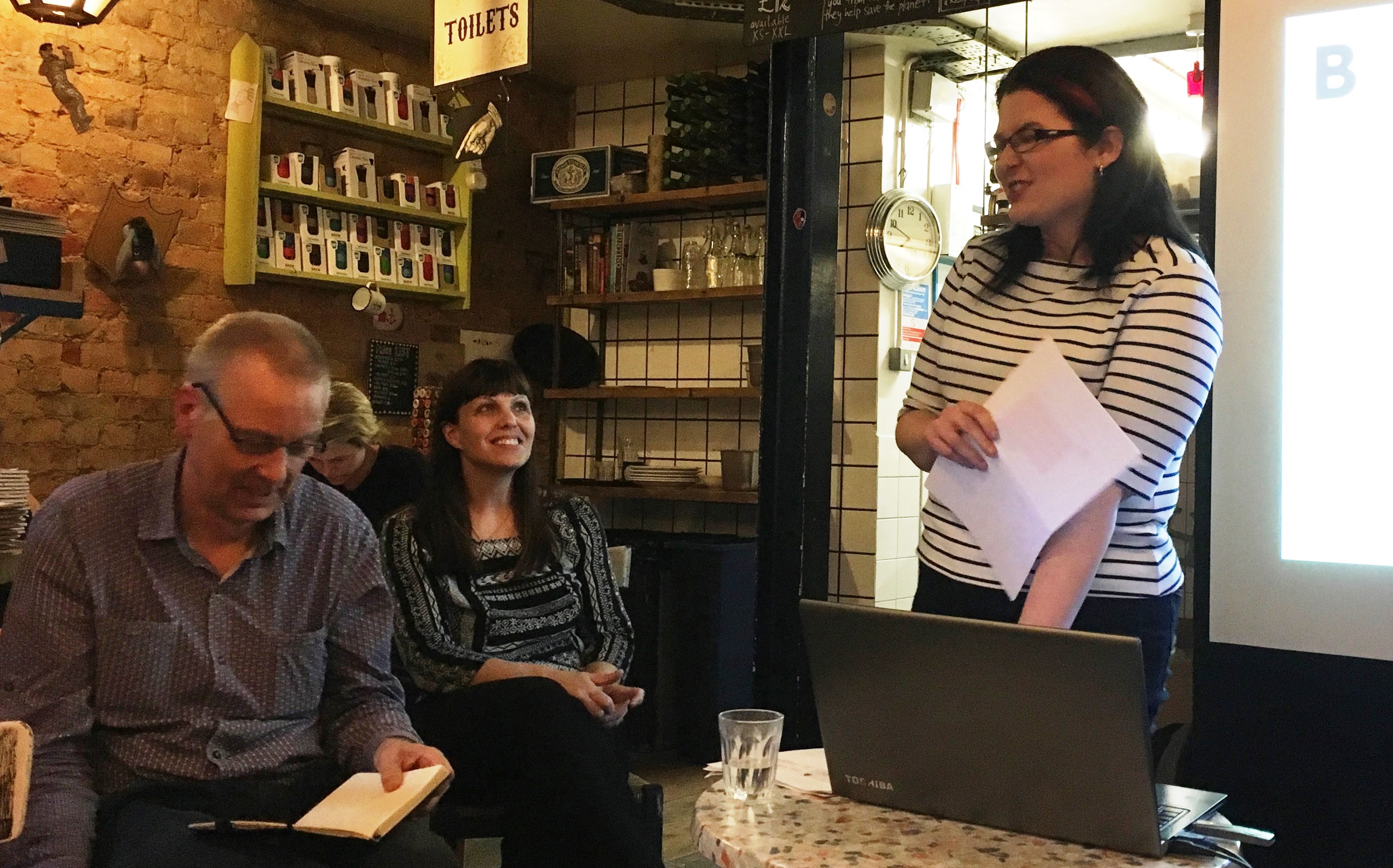
Lightning Talks TODAY – Wednesday 11th Nov 1:45-2:45pm Poole House

Come and find out about the exciting research undertaken by BU staff and student researchers!lightning talks

The first of our series of Lightning Talks will take place on Wednesday 11th November 1:45-2:45pm in the Refectory (next to Papa Johns pizza) on Talbot Campus.

We have six speakers presenting a five minute pitch about their research studies. The aim is to encourage staff awareness of the exciting research being undertaken at BU and encourage cross Faculty working.

Also if you are keen to take part in the next Lightning Talks in 2016 then please do get in touch with Rhyannan Hurst in the Research and Knowledge Exchange Office (RKEO) on 61511.

We are hoping this will be a great event and look forward to seeing you there.

BU PhD student Sheetal Sharma’s publication in MIDWIFERY

Sheetal Sharma Midw 2030


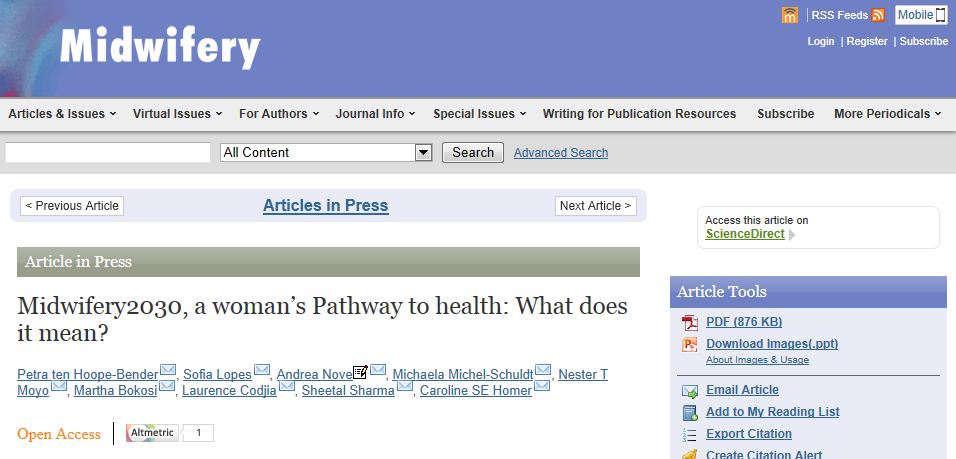
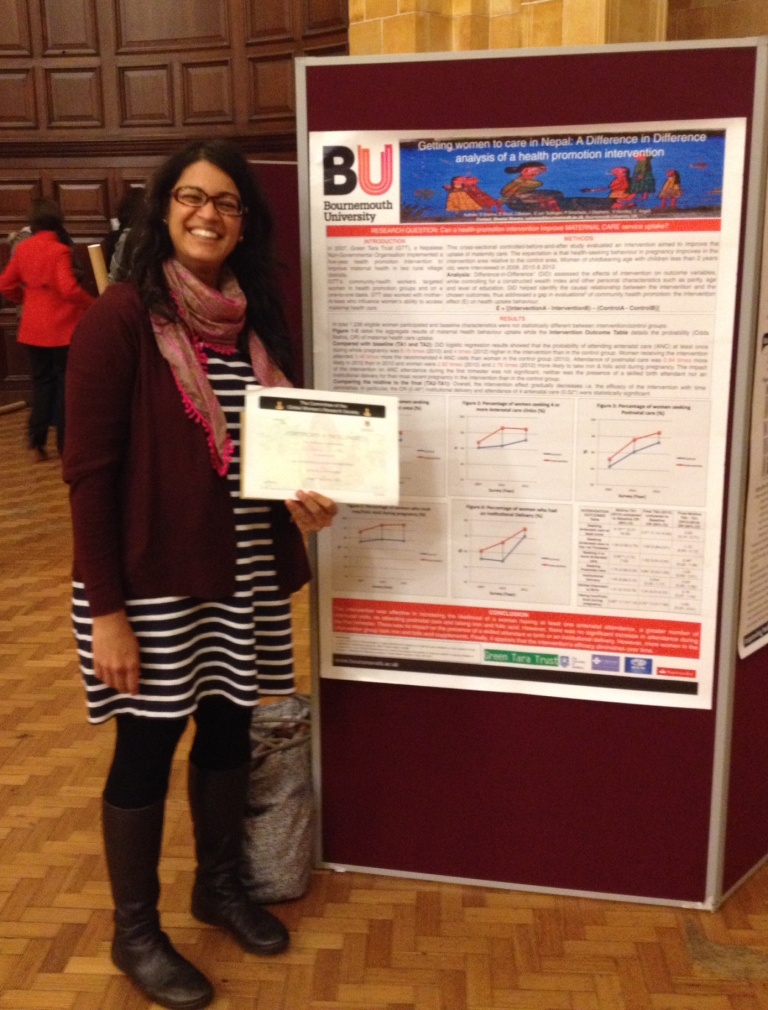
Ms. Sheetal Sharma, PhD student in FHSS, published her latest paper in Midwifery (Elsevier) this week. This latest paper ‘Midwifery2030, a woman’s Pathway to health: What does it mean?’ is co-authored by a number of illustious midwifery researchers. The 2014 State of the World’s Midwifery report included a new framework for the provision of womancentred sexual, reproductive, maternal, newborn and adolescent health care, known as the Midwifery2030 Pathway. The Pathway was designed to apply in all settings (high-, middle- and low income countries, and in any type of health system). This paper describes the process of developing the Midwifery2030 Pathway and explain the meaning of its different components, with a view to assisting countries with its implementation.

Sheetal is currently in her final year of a PhD on the evaluation of the impact of a maternity care intervention in Nepal.

Sheeta;

Sheetal Sharma

Congratulations!!


Prof. Edwin van Teijlingen, Dr. Catherine Angell & Prof. Vanora Hundley (all CMMPH)

&

Visiting Faculty Prof. Padam Simkhada (based at Liverpool John Moores University).


Reference:

ten Hoope-Bender, P. Lopes, S., Nove, A., Michel-Schuldt, M.,  Moyo, NT, Bokosi, M., Codjia, L.,  Sharma, S., Homer, CSE. (2015) Midwifery2013, a woman’s Pathway to health: What does it mean? Midwifery


BU’s research council success rates 2014-15

RCUK logoYesterday Jo added a post to the Blog about the national Research Councils’ success rates in 2014-15. This post is a follow-on from that one and provides the data at BU-level. The coverage is decisions made between April 2014 to March 2015.

BU’s success rate in 2014-15 was a respectable 17% with two bids awarded out of the 12 submitted. In 2013-14 BU’s success rate was 33%, also based on 12 applications. Although the success rate this year has decreased slightly it is still one of BU’s highest annual success rates with the research councils. The sector average success rate in 2014-15 also declined slightly, from 30% to 28%. The successful BU awards were:

  • NERC – Integrated software system for the 3-dimensional capture and analysis of footwear evidence (Prof Matthew Bennett)
  • NERC – X-band radar applications for coastal monitoring to support improved management of coastal erosion (Dr Luciana Slomp-Esteves)

The sector average success rate with NERC was 26%, compared to BU’s impressive 67%.

BU has had more grants awarded from the Research Councils over the past year than are reported here, however, the official stats only show results against the lead institution so successful bids where BU is the collaborating institution are not shown against BU in the data.

BU is especially keen to increase the quality of bids submitted to Research Councils and RKEO run a number of initiatives, such as the Grants Academy, to support you to design, write and structure competitive, fundable research proposals and to maximise your chances of being awarded funding. Anyone considering submitting a bid to a research council should speak with their Research Facilitator as early on in the process as possible. The Research Facilitators have extensive experience of reviewing research proposals and can provide you with expert guidance on how to shape your bid. You can also access guidance documents on the Research Blog here: http://blogs.bournemouth.ac.uk/research/researcher-toolbox/je-s-guidance/

Read more about the demand management measures that the Research Councils have put in place here: Demand Management. As the councils are still seeing an increase in applications received alongside declining success rates then there is a possibility that demand management requirements will be stepped up in future. This may also form part of the BIS changes likely to result from the HE Green Paper published last week and the CSR decisions announced at the end of the month. We’ll keep you posted via the Blog of any developments.

BU featured by Kidney Research Charity

Bournemouth’s biomedical research features in this season’s Kidney Research UK ‘Update’ magazine (page 13). We share  this issue with Lauren Laverne (sort of)!

KRUK is one of Britain’s leading kidney research charities and has awarded us an Innovation Award to identify genes that underpin the development of chronic kidney disease (CKD) in diabetes. The innovative part of the research is that it uses the fruit fly Drosophila – a novel tool in the research armoury that has helped us understand the genetic basis of human development and behaviour as well as cardiovascular disease. Research at Bournemouth will use unique genetic tools to establish how insulin signalling maintains the expression of evolutionarily conserved genes that regulate kidney function in both flies and humans. This simple model organism has enormous power to help us identify new pathways of clinical significance to CKD – a condition that affects and kills thousands of people every year in the UK.

If you are keen to learn more about the research – email me at phartley@bournemouth.ac.uk

Research paper by NCCA staff won the best paper award in ACM SIGGRAPH VRCAI 2015

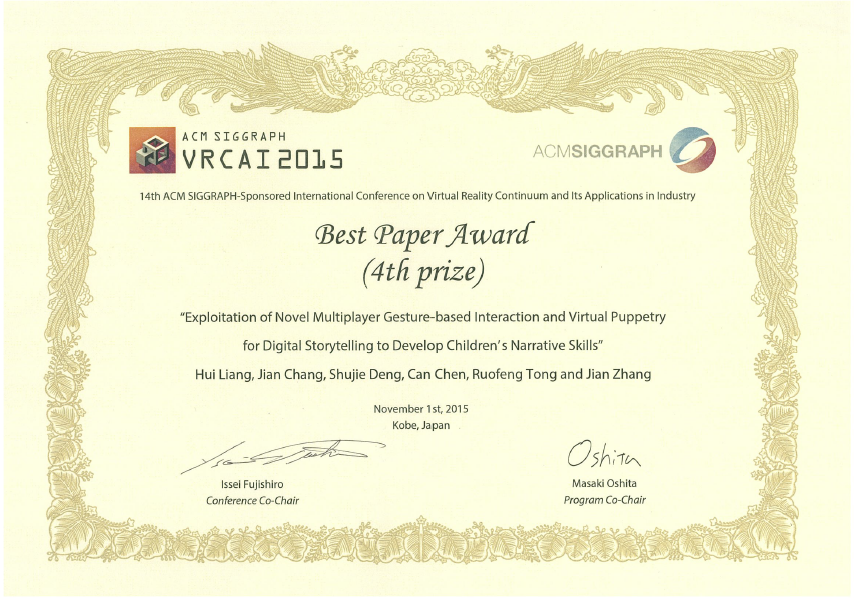
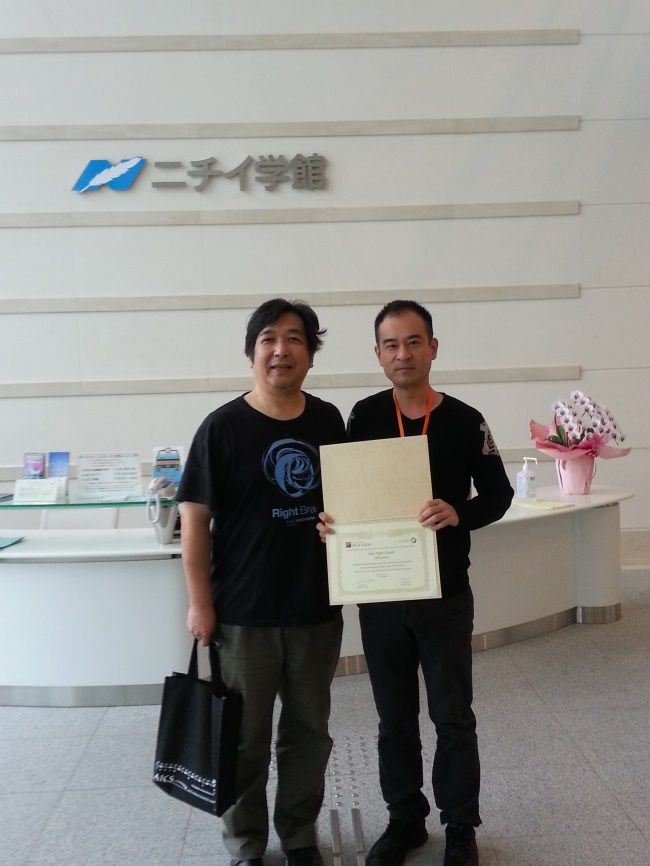
Dr Hui Liang’s paper, co-authored with Dr Jian Chang, Ms Shujie Deng, Ms Can Chen, Prof Ruofeng Tong and Prof Jian Jun Zhang, titled “Exploitation of Novel Multiplayer Gesture-based Interaction and Virtual Puppetry for Digital Storytelling to Develop Children’s Narrative Skills” was selected as the Best Paper (4th prize) in the international conference ACM SIGGRAPH VRCAI 2015 in Kobe, Japan.

Dr Hui Liang is an EU FP7 funded Marie Curie Fellow at the National Centre for Computer Animation for a two year research programme “AniM”( http://www.euanim.org/) which is supervised by Dr Jian Chang and Prof Jianjun Zhang. “AniM” – Enhanced Computer Animation by Fusing Computer Graphics Technology with Smart Data Management aims to improve the status quo by developing the “next generation computer animation data management and related techniques” through knowledge transfer and development.

The award winning paper presented a prototype of a novel multiplayer system for interactive digital storytelling assisted with virtual puppetry to provide natural interaction/control and immersive experience when narrating stories. The system integrates useful Virtual Reality techniques and novel hardware, which aims to inspire the development of young children’s abilities, such as narrative skills, cognitive skills, motor coordination and collaboration through storytelling. It integrates motion sensing technology, computer animation techniques and cloud-based network solution. The development of the prototype demonstrates the possibility of combining novel HCI and digital storytelling to inspire children’s teaching and learning practices.

Read the whole article at: http://eprints.bournemouth.ac.uk/22879/

32

Tags:

Science Budget Report

parliament-uk-logoThe House of Commons Science and Technology Committee has published their Science Budget report today, following a recent review.  A summary of the contents can be found below.

The United Kingdom is a science superpower. In terms of both quality and productivity, our research base punches above its weight’, setting a worldwide benchmark for excellence.

Government spending on the science base has been protected since 2010, with a flat-cash- ring-fenced budget for annual ‘resource’ spending distributed by the research councils, the Higher Education Funding Council and others. Annual ‘capital’ budgets have varied. The Government has already announced that capital spending within the science budget will be protected — in real terms — up to the end of 2021. The Government’s Spending Review on 25 November will determine the science — and innovation — budget allocations for the rest of this Parliament.

The UK has fallen behind its competitors in terms of total R&D investment and this will put UK competitiveness, productivity and high-value jobs at risk if it is not reversed. The Government should produce a long term ‘roadmap’ for increasing public and private sector science R&D investment in the UK to 3% of GDP — the EU target. This would send an important signal about the long term stability and sustainability of our science and innovation ecosystem, supercharging private sector R&D investment from industry, charities and overseas investors alike.

A more robust system is needed to integrate capital and resource funding allocations. The Government should urgently review existing capital allocations to ensure sufficient resource is in place to fully ‘sweat our assets’. Sufficient resource funding will only materialise, however, with an upward trajectory in the resource budget.

The Spending Review is being conducted under present accounting protocols, dealing with capital and resource budgets for science separately. ‘ESA-10’ accounting rules will in future count resource expenditure on R&D as capital, reflecting the fact that all expenditure on science research is an investment — an asset — in future economic capacity. The Government in the Spending Review should make it clear that this rules revision will not be used as a means to change the underlying funding settlement.

The ‘dual support’ system has produced a world class and highly efficient system for scientific research. Any significant changes to this system, including the balance of funding between research councils and university funding councils, would require a clear justification, which has yet to emerge. The Government should make clear its continued commitment to the dual support system, and the previous Government’s 2010 iteration of the Haldane Principle in the forthcoming Spending Review. A significant element of research funding should continue to be channelled though both the research councils and the higher education funding authorities. Clear justification will also be needed for any significant change in funding allocations between the research councils, and we caution against a radical reorganisation which could potentially harm the research programme.

Any expansion of the innovation catapult network should not come at the expense of other innovation priorities. The Government should focus on consolidating the existing catapults, to ensure that all will have the necessary operating resource and business strategies to operate at peak capacity. To show a clear commitment to innovation more generally, the Government should ring-fence Innovate UK’s budget.

The Government should also retain the current system of innovation grants — rather than loans — as a key policy tool, alongside R&D tax credits, for de-risking innovation investment.

The Spending Review will have a profound impact on our science base and our future prosperity. We have to get it right. We have a duty to take care that our spending and structural decisions in this area do more than merely maintain the status quo. If we get our spending priorities, our policies, regulatory frameworks or our immigration policy wrong, we will be on the wrong side of history. The Government must ensure that the UK remains a scientific superpower.

The Association of Research Managers and Administrators (ARMA) submitted evidence to this report, which can be found here.
Guardian article on proposed changes to the structure of research councils

guardian-logoKieron Flanagan in The Guardian has written an article on proposed changes to the structure of the Research Councils.

The article focuses on why funding cuts are not the only thing that should worry scientists.  Plans to put all research funding in England into a single body should also be of concern, and will raise eyebrows in Scotland, Wales and Northern Ireland.

Read the full article here.RCUKlogo


THE article on research council success rates

the-times-education-supplementDavid Matthews wrote an article in the THE on the fall in success rates at the research councils.

In 2014-15, there were 7,780 applications to research councils, according to calculations by Times Higher Education, a 12 per cent increase on the year before despite efforts to deter weaker bids.

Success rates fell at five out of six councils, halving in the case of the Economic and Social Research Council to just 12 per cent (the Science and Technology Facilities Council was excluded from the analysis).RCUKlogo

The overall success rate dropped by half a percentage point to just under 28 per cent, and would have fallen much further had it not been for an “abnormally” high level of funding in 2014-15 at the Engineering and Physical Sciences Research Council, where success rates shot up.

Read the whole article here, including a useful table of success rates for each research council.

‘On the Subject of Photographs…’ FMC Lunchtime PGR Research Seminar – Wed, 11 Nov, 1-2pm

Communicating PGR Research:

FMC Lunchtime PGR Seminar Series
All Welcome!

Wednesday 11 November
Weymouth House, Room 431

1-2pm
Speaker: Rutherford

Title: ‘On the Subject of Photographs…’

We are (usually) prepared to acknowledge the influence of the photographer and his/her decisions on the appearance of photographs. Yet the camera – like the microscope and the telescope – is assumed to be both objective and passive when documenting the things in front of the lens. This belief in the objective and passive role of the camera is demonstrated by the prevalence of the phrase that pictures are ‘taken’.

In this talk, I want to consider the possibility that as a result of the ways in which the medium interprets and renders objects, scenes, events and moments as well as the juxtapositions between these, the camera/medium sometimes creates – then records and depicts – scenes, events and ‘moments’ that did not exist until brought into being by the act of photographing them.


Rutherford

Previously a commercial photographer in Toronto Canada, Rutherford led a workshop series for graduate students at Toronto’s Ryerson Polytechnic University that explored the significance of the elements intuitively incorporated into our casual photographic snapshots and how these can lead to greater self-awareness and acceptance. Following withdrawal from commercial photographic practice in 1993, Rutherford’s photographic works have been exhibited in solo and group shows in Canada, the United States, France, New Zealand and Japan. Rutherford’s essays on corporate communication, visual design, advertising and their influences on how we make meaning have appeared in several academic journals, newspapers and magazines.

FMC Narrative Research Seminar, Wed, 11th Nov: “She used to get lost in a book”: approaching gendered reading using two archives

Communicating Research
FMC Cross-Departmental Seminar Series 2015-16

Venue: The Screening Room W240, Weymouth House, Talbot Campus,

A BU Narrative Research Group event

Wednesday, 11 November, 4-5pm.

All very welcome as always!

Title: “She used to get lost in a book”: approaching gendered reading using two archives (Memories of Fiction and 100 Families)

Speaker: Dr Shelley Trower and Dr Amy Tooth Murphy (University of Roehampton)

In this talk we will first introduce the Memories of Fiction project, which during 2014-2015 created an oral history archive with members of reading groups who discuss their reading experiences in the context of their life stories. We will then turn to another oral history archive from the 1980s, 100 Families, a very different kind of project which incorporated just a few questions on reading as part of a much broader interest in family life. Using NVivo to analyse the interview transcripts from 100 Families, our collaborative process led us to identify the narration of gendered reading as a key theme, and it is this that our talk will mostly discuss.

Types of reading material (including fiction and newspapers), the ways in which people describe themselves and family members as reading this material, and the value judgements they make, all contribute to a picture of reading within family life as something that often takes place along gendered lines. This gendering of both reading material and the act of reading will be viewed within a historical framework that has consistently constructed reading as highly gendered. Respondents invoke long-standing cultural tropes on the gendered nature of reading, especially involving the historical figure of the female novel-reader, whose reading has tended to be judged as compulsive and escapist, in contrast to the directed, purposeful male reader. 100 Families also helps us to identify a more complex pattern in which family members question the conventional image of the woman reader lost in romance fiction.

About the series
This new seminar series showcases current research across different disciplines and approaches within the Faculty of Media and Communication at BU. The research seminars include invited speakers in the fields of journalism, politics, narrative studies, media, communication and marketing studies. The aim is to celebrate the diversity of research across departments in the faculty and also generate dialogue and discussion between those areas of research.

Contributions include speakers on behalf of
The Centre for Politics and Media
The Centre for the Study of Journalism, Culture and Community
Narrative Research Group
Public Relations Research Group
Advances in Media Management Research Group
Emerging Consumer Cultures Research Group

Upcoming CfE / FM Event: Meet the Entrepreneur – Simon Phelps

Fluvial Logo CaptureTuesday 24 November 2015
2pm arrival for a 2:30pm start
Executive Business Centre, 89 Holdenhurst Road, Bournemouth, BH8 8EB

The Business School and Centre for Entrepreneurship are delighted to invite you to the first in our series of ‘Meet the Entrepreneur’ events.

Simon Phelps founded Fluvial Innovations Ltd alongside BU in 2006 and designed, developed and patented the modular flood barrier, Floodstop.  Floodstop was specifically designed to fill a gap within the market for a functional and rapidly deployable flood barrier.

This is a great opportunity to hear about Simon’s personal journey as an entrepreneur and learn more about his own experiences as a business owner and his approach to founding and growing an innovative business.

Floodstop is used throughout the UK, US and parts of Europe and won the Emergency Planners Society’s Award for Most Innovative Product of The Year 2009 and voted “The Most Innovative Product of 2009” by the Emergency Planning Society.

Simon’s achievements include UK South West Young Entrepreneur of the Year 2007 and HSBC Start-Up Stars Regional Finalist 2008.

THIS IS AN INTERNAL EVENT FOR BU STUDENTS & STAFF ONLY

To book please click here

KTP Academic Development Scheme – Applications Live

Staff are now invited to apply for a place at the Knowledge Transfer Partnerships Academic Development Scheme (KTPADS).

What is KTP?

KTP is part-funded by the government and the aim of this scheme is to encourage collaboration on projects between businesses and academics.  KTP had previously been called the Teaching Company Scheme (TCS), though a rebrand a decade ago saw the TCS become KTP.  KTP is managed by Innovate UK and provides benefits to all parties involved – this scheme offers a fusion of academic and industry collaboration supported by an associate (graduate).

What is to benefit to me?

KTP is an excellent way of bringing in income and developing knowledge exchange with a clear pathway to impact.

Key benefits of KTP are as follows:

  • Facilitates research impact
  • Increases research funding, including supervision time for the Knowledge Base Supervisor (academic) to the Associate (graduate), this time averages at half a day a week
  • Contributes to the University’s REF submission
  • Improve links with industry partners
  • Apply knowledge to innovative business-critical project
  • Raise your profile among colleagues/the Institution

How do I apply?

To apply for a place on the scheme, please compete this application form and send to Rachel Clarke before the application deadline on Sunday 22nd November.  This form will need to be signed by yourself and your Line Manager.  Applications open on Monday 9th November and close at midnight on Sunday 22nd November.

If you would like to discuss this scheme, please contact Rachel Clarke, Knowledge Exchange Adviser (KTP) on 01202 961347 or clarker@bournemouth.ac.uk

KTP@40-block-logo

BRAD: Robust adaptive predictive modelling and data deluge workshop

Data-science-history

To book your place on this workshop- CLICK HERE

We are currently experiencing an incredible, explosive growth in digital content and information. According to IDC [11], there currently exists over 2.7 zetabytes of data. It is estimated that the digital universe in 2020 will be 50 times as big as in 2010 and that from now until 2020 it will double every two years. Research in traditionally qualitative disciplines is fundamentally changing due to the availability of such vast amounts of data. In fact, data-intensive computing has been named as the fourth paradigm of scientific discovery [10] and is expected to be key in unifying the theoretical, experimental and simulation based approaches to science. The commercial world has also been transformed by a focus on BIG DATA with companies competing on analytics [12]. Data has become a commodity and in recent years has been referred to as the ‘new oil’.

There has been a lot of work done on the subject of intelligent data analysis, data mining and predictive modelling over the last 50 years with notable improvements which have been possible with both the advancements of the computing equipment as well as with the improvement of the algorithms [1]. However, even in the case of the static, non-changing over time data there are still many hard challenges to be solved which are related to the massive amounts, high dimensionality, sparseness or inhomogeneous nature of the data to name just a few.

What is also very challenging in today’s applications is the non-stationarity of the data which often change very quickly posing a set of new problems related to the need for robust adaptation and learning over time. In scenarios like these, many of the existing, often very powerful, methods are completely inadequate as they are simply not adaptive and require a lot of maintenance attention from highly skilled experts, in turn reducing their areas of applicability.

In order to address these challenging issues and following various inspirations coming from biology coupled with current engineering practices, we propose a major departure from the standard ways of building adaptive, intelligent predictive systems and moving somewhat away from the engineering maxim of “simple is beautiful” to biological statement of “complexity is not a problem” by utilising the biological metaphors of redundant but complementary pathways, interconnected cyclic processes, models that can be created as well as destroyed in easy way, batteries of sensors in form of pools of complementary approaches, hierarchical organisation of constantly optimised and adaptable components.

In order to achieve such high level of adaptability we have proposed a novel flexible architecture [5-6] which encapsulates many of the principles and strategies observed in adaptable biological systems. The main idea of the proposed architecture revolves around a certain degree of redundancy present at each level of processing represented by the pools of methods, multiple competitive paths (individual predictors), their flexible combinations and meta learning managing general population and ensuring both efficiency and accuracy of delivered solution while maintaining diversity for improved robustness of the overall system.

The results of extensive testing for many different benchmark problems and various snapshots of interesting results covering the last decade of our research will be shown throughout the presentation and a number of challenging real world problems including pollution/toxicity prediction studies [8-9], building adaptable soft sensors in process industry in collaboration with Evonik Industries [6-7] or forecasting demand for airline tickets covering the results of one of our collaborative research projects with Lufthansa Systems [3-4] will be discussed.

Given our experiences in many different areas we see that truly multidisciplinary teams and a new set of robust, adaptive tools are needed to tackle complex problems with intelligent data analysis, predictive modelling and visualisation already indispensible. It is also clear that complex adaptive systems and complexity science supported and driven by huge amounts of multimodal, multisource data will become a major endeavour in the 21st century.

We will hold discussions surrounding:

  • Rapidly expanding digital universe
  • New decade of advanced/predictive analytics
  • General Fuzzy Min-Max (GFMM) Neural Networks as an example of early realisation of flexible predictive system
  • To combine or not to combine? – Multiple classification and prediction systems
  • Water quality monitoring based on biomarker data – can it be done?
  • Revenue management for airlines – can we forecast anything?
  • Adaptive soft sensors for process industry – here’s a real problem!
  • Self-adapting architecture for predictive modelling
  • Complex adaptive systems and complex networks

Professor. Bogdan Gabrys

To book your place on this workshop- CLICK HERE

Researcher Development Framework

Vitae_RDF_logo_2011Vitae is an organisation set up to promote career development in both postgraduate researchers and academic staff. Their Researcher Development Framework is intended to help people monitor their skills and plan their personal development. At BU we will be using this framework to format the training on offer for the postgraduate research students and academic staff.

The Vitae website is an excellent resource and the organisation regularly runs free training events for researchers, PGRs and those involved in research development. Upcoming events include Vitae Connections: Supporting Open Researchers.

The Researcher Development Framework (RDF) is the professional development framework to realise the potential of researchers. The RDF is a tool for planning, promoting and supporting the personal, professional and career development of researchers in higher education. It was designed following interviews with many successful researchers across the sector and articulates the knowledge, behaviours and attributes of a successful researcher.

There is a planner available on the Vitae website to help you assess which stage you are at with your skills and a tutorial providing guidance on how to use the framework.

Top 10 tips from researchers on using the Researcher Development Framework (RDF):

1. You might choose to use the RDF for short term as well as long term development. The RDF can be used in planning for your long term career ambitions but also to make a feasible short term plan. It can be useful to imagine your long term ambitions in order to focus your career path however the reality of progressing through to the higher phases may be more difficult to plan. In the short term, making decisions about how to progress to the next phase or what sub-domains are most important for you will be easier. Try to be realistic when setting these short term goals.

2. Use the RDF to highlight your strengths and areas for development and how these might be used to benefit/influence your personal, professional and career development.

3. Use the RDF to highlight your applicable and transferable skills. This is important for career progression within or outside academia.

4. Prioritise those areas which are most relevant. You don’t have to try to develop in all the areas of the RDF at once. There may be some sub-domains/descriptors where there is less relevance in progressing through the phases for you.

5. Draw on experiences outside of work to evidence your capabilities.

6. Progression to the highest phase in a descriptor will not be applicable to everyone but being aware of the possibilities can aid personal and career development.

7. Talk to others to get their views about your strengths and capabilities. Your supervisor, manager, peers, family and friends are a great source of information to find out more about yourself. Talk to them about how they perceive your capabilities. By understanding how others view you, you will be able to make more informed choices about your future.

8. To move from one phase to the next why not explore attending courses. These courses may be run at a local level (within your University) or may only be run nationally or internationally so awareness of opportunities for training is important. Vitae also run a wide range of courses which address many aspects of personal and career development.

9. Some phases may only be reached through experience and practice however good self-awareness and professional development planning will aid the process.

10. Networking is likely to enable you to reach more experienced phases.