This scheme is for scientists in the UK who want to stimulate new collaborations with leading scientists overseas through either a one-off visit or bilateral travel. This scheme is not intended to support continued research between a UK applicant and co-applicant who was a former colleague or PhD student or to support other existing or recent collaborations between the applicant and co-applicant. Rather, the scheme is intended to stimulate new collaborations between scientists in the UK and overseas.
Eligibility requirements
The scheme covers all areas of the life and physical sciences, including engineering, but excluding clinical medicine.
Both the UK applicant and overseas applicant must:
- have a PhD, or be likely to have a PhD by the time the funding starts
- hold a fixed or permanent contract at an eligible organisation for the duration of the project (ineligible organisations include industrial, private and commercial organisations, university spin-out companies, government bodies and research institutes and research councils)
- be based in the respective countries at the time of the application
The funding available is dependent upon the length of the visit. Applicants may request:
- up to of £3,000 for one-off travel lasting up to 3 months
- up to £6000 for multiple visits to be completed within 1 year (including a maximum of £1000 for research expenses)
- up to £12,000 for multiple visits to be completed within 2 years and cost share projects fixed at 2 years (including a maximum of £2000 for research expenses)
Closing Date: 01/June/2015
The Royal Society offers Newton International Exchanges as mobility grants to provide international researchers with funding towards travel, subsistence and research expenses for either a one-off short visit to explore opportunities for building lasting networks or for bilateral visits to strengthen emerging collaborations. Successful candidates may wish to consider subsequently applying for a Newton International Fellowship or Newton Advanced Fellowship to consolidate partnerships.
The skills and knowledge gained should lead to changes in the well being of communities and increased economic benefits.
This award is currently available to international researchers that want to strengthen the research and innovation capacity by visiting or sending staff and students to the UK. The aims are to:
- Strengthen research capacity of the partner countries – by facilitating training and skill transfer from the UK to partner countries.
- Support excellent research – by linking the best researchers in the UK with the best researchers and their groups in partner countries and providing support for initial exploratory research.
- Establish long term research links – between both partners to ensure sustainable research capacity in partner countries and benefit to the UK research community in the longer term.
This scheme is funded by the Department for Business, Innovation and Skills as part of the Newton Fund.
Applicants must have a PhD or equivalent research experience and hold a permanent or fixed-term contract in an eligible university or research institute, which must span the duration of the project. Collaborations should focus on a single project involving overseas-based scientist (“the Applicant”) and UK-based scientist (“the Co-applicant”).
The funding available is dependent upon the length of the visit and the partner country. Applicants may request:
- up to £3,000 for one-off travel lasting up to 3 months
- up to £6,000 for multiple visits to be completed within 1 year (including a maximum of £1,000 for research expenses)
- up to £12,000 for multiple visits to be completed within 2 years (including a maximum of £2,000 for research expenses)
Closing Date: 3/June/2015
We are pleased to invite proposals for projects that will undertake cutting-edge methodological research development, within the context of substantive research problems. Projects must be focused in one or more of the following strategic areas:
- Digital devices and mobile technologies for data collection
- Participatory approaches
- Analysis of online digital and Big Data
- Bio-social data analysis
- Policy relevant research synthesis
- Small area estimation
The call is issued in partnership with the Department for International Development (DFID) which will co-fund in the Policy Relevant Research Synthesis area.
The aim of the call is to increase the quality and range of methodological skills and techniques used by the UK social science community, to enable new or existing social science research questions to be addressed more effectively. A total of £5 million (100 per cent fEC, ESRC contribution £4 million) is available. The maximum budget for an individual Research Project is £825,000 (100 per cent fEC, ESRC contribution £660,000) over a maximum of 36 months. Projects will need to commence on 1 January 2016.
Closing Date: 16/June/2015
This scheme provides a unique opportunity for the most promising postdoctoral researchers to carry out research in India. Applicants are expected to identify an important biomedical research question and design a project that would help answer this question. The proposal would also suggest how the proposed work would help develop the applicant’s future independent research program. Submitted proposals are expected to be globally competitive. Applicants may wish to set up long term training or collaborative visits (work outside Host Institution) for up to 24 months. These visits may be to other leading laboratories, anywhere in the world.
The fellowship is for five years, full time and provides:
Personal Support for the fellow.
Research expenses (materials and consumables; animals; support to attend scientific meetings; and small items of equipment, e.g. laptop)
Additional allowances (travel and overseas subsistence) for work outside the Host Institution; these are scientifically justified visits of up to 24 months to an external laboratory either in India or abroad.
Support funds for research staff or large equipments are not typically provided. It is expected that applicants will choose appropriate laboratories/ environments where majority of the necessary equipment and facilities are already available. To complete a preliminary application use our online system, IASys. Please ensure that the form is submitted by the published deadline.
Your preliminary application will normally be assessed within one month of the submission deadline. If successful, you will be invited to submit a full application. Your full application will be peer reviewed and considered by the appropriate Selection Committee and, if successful, you will be short-listed for interview. Short-listed candidates will be notified two weeks before the interview date. Applicants are not permitted to apply to multiple Fellowship schemes within the India Alliance in parallel. Only one application to one scheme will be entertained, at a time.
Preliminary application deadline: 15/June/2015
Innovate UK is to invest up to £2 million in feasibility studies to explore new ways of increasing collaboration and improving the flow of information throughout the construction supply chain. Our aim is to address problems arising from the fragmented nature of the industry. With so many layers of sub-contractors and suppliers, construction clients too often find themselves divorced from those who deliver projects on-site.
This lack of integration within the supply chain is leading to lost opportunities for innovation. We are therefore seeking proposals that will encourage the creation of more integrated, collaborative supply chains in this sector. These feasibility studies must be business-led. Projects are open to companies of any size working in collaboration. Small businesses could receive up to 70% of their eligible project costs, medium-sized businesses 60% and large businesses 50%.
We expect projects to last 6 to 12 months with total costs ranging from £50,000 to £150,000, although we may consider larger projects. This competition opens on 9 March 2015. The deadline for registration is at noon on 22 April 2015and the deadline for applications is at noon on 29 April 2015. A briefing day for potential applicants will be held in Bristol on 19 March 2015.
Collaborative Doctoral Awards (CDAs) provide funding for doctoral studentship projects, proposed by a university based academic, to work in collaboration with an organisation outside of higher education. They are intended to encourage and develop collaboration and partnerships providing opportunities for doctoral students to gain first-hand experience of work outside the university environment and enhance the employment-related skills and training a research student gains during the course of their award.
The projects also encourage and establish links that can have long-term benefits for both collaborating partners, providing access to resources and materials, knowledge and expertise that may not otherwise have been available and also provide social, cultural and economic benefits to wider society.
The AHRC are keen to see innovative applications that build diverse relationships with the non-HE sectors and would like to encourage further proposals to work with businesses, regional museums, regional arts organisations and community groups. Any topic within the AHRC’s subject domain is eligible. Selection of successful applications will not be subject to quota systems and there are no priority areas, however, PhD proposals which address AHRC’s research themes are encouraged. In 2013 AHRC named 12 Collaborative Doctoral Partnership (CDP) organisations through which a fixed number of CDAs are also available.
Closing Date: 7th/July/2015
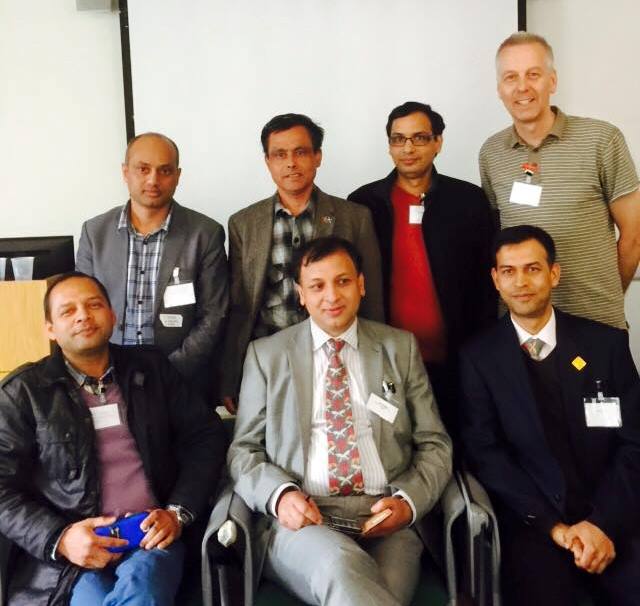
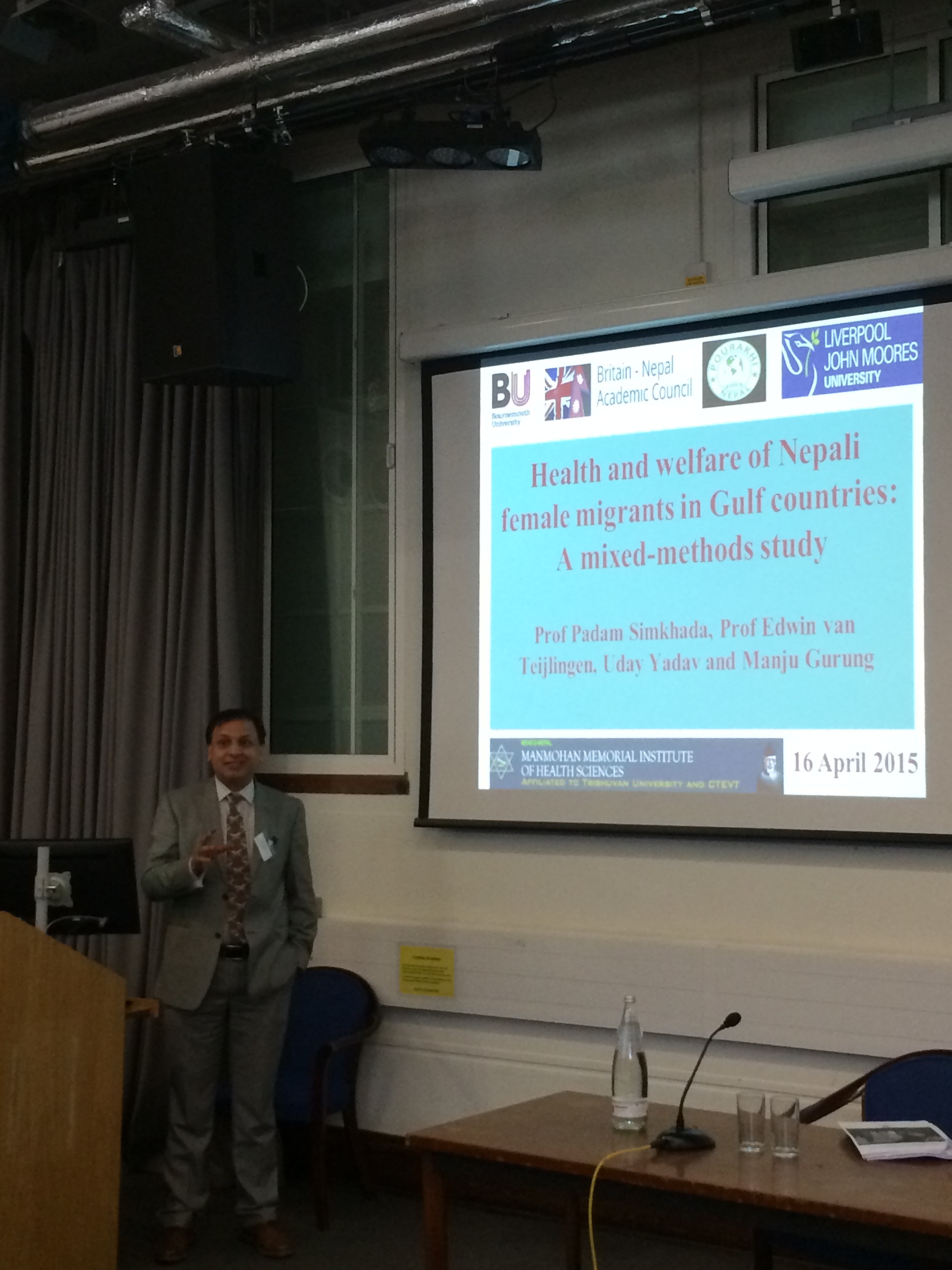 The 13th BNAC Study Day was organised by SOAS at the University of London on 16th and 17th April 2015. The conference focused on presentations of work conducted in Nepal in many different academic fields: health, education, politics, art and so on. A variety of participants took part in the conference including academicians, students, researchers and artists not only from Nepal but also from UK and other European countries. The aim of this conference was to establish a forum to present the research conducted in Nepal which focussed to discuss about Nepalese lifestyle, tradition, culture, politics, education, art, health and other aspects of Nepal.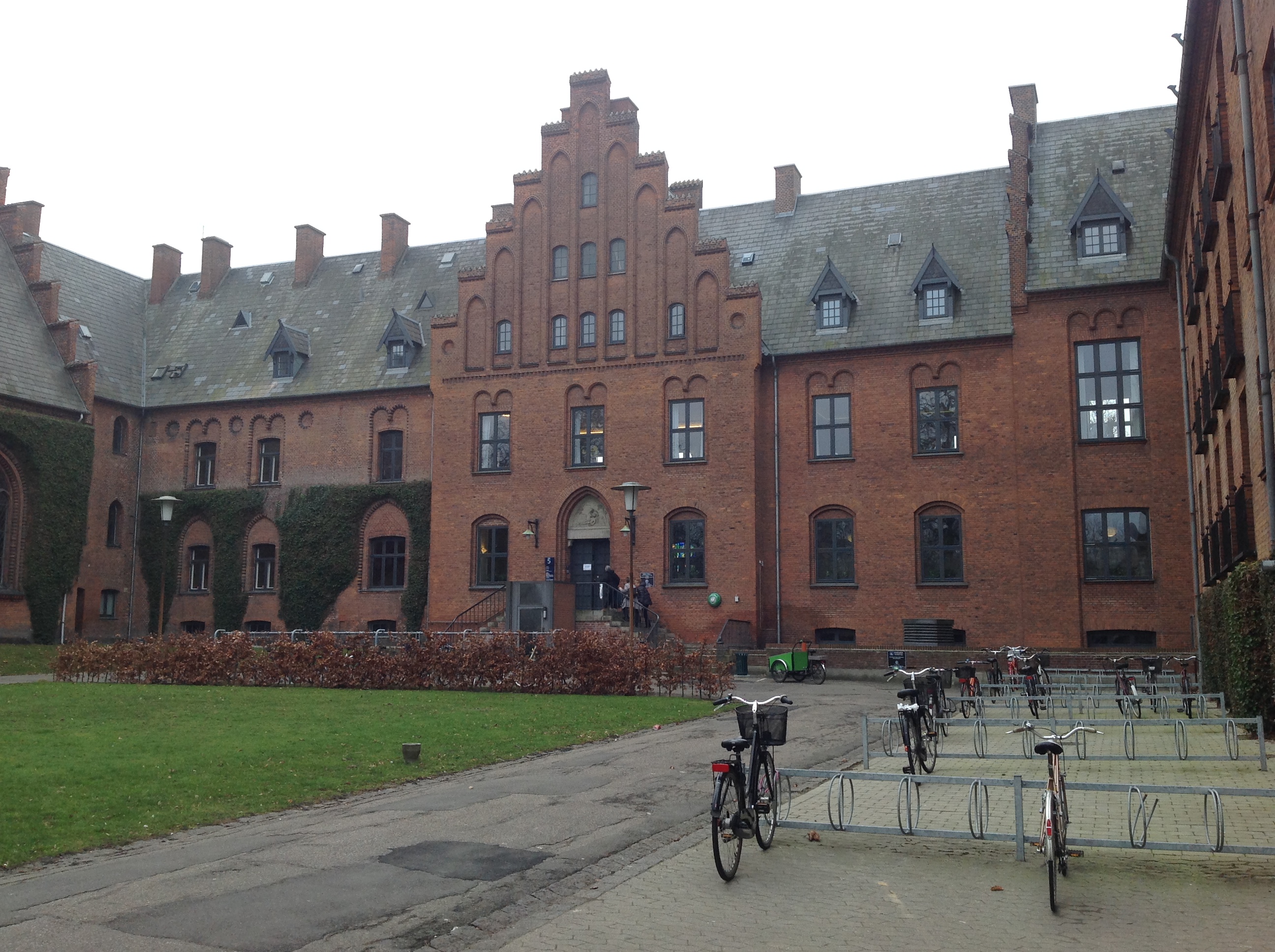















 New HIV paper by BU PhD student
 BU Annual Research Conference: Poster Exhibition Call for Applications
 Vitae Three Minute Thesis (3MT®) Competition: Applications Now Open
 3C Online Social: Thursday 26 March 1–2pm – Research Culture, Community & Can you Guess Who?
 Four BU students at national midwifery conference
 ECR Funding Open Call: Research Culture & Community Grant – Apply now
 ECR Funding Open Call: Research Culture & Community Grant – Application Deadline Friday 12 December
 MSCA Postdoctoral Fellowships 2025 Call
 ERC Advanced Grant 2025 Webinar
 Update on UKRO services
 European research project exploring use of ‘virtual twins’ to better manage metabolic associated fatty liver disease