Category / REF Subjects

New book on tourism and gender-based violence


Tourism and Gender-based Violence, Challenging Inequalities. Edited by Paola Vizcaino, Heather Jeffrey, Claudia Eger

A new book edited by Dr Paola Vizcaino (Department of Sport & Events Management, Bournemouth University), Dr Heather Jeffrey (Middlesex University, Dubai) and Dr Claudia Eger (Copenhaguen Business School) has been published by CABI. Link here

First of its kind, the book focuses on the multiple and interconnected manifestations of violence that women and girls encounter in tourism consumption and production, such as physical, sexual, emotional or socio-economic abuse. It brings together work by scholars who are engaging with the concept of gender-based violence (GBV) in a wide range of tourism settings and practices. Includes profiles of organisations and initiatives that are attempting to tackle GBV in tourism, hospitality and beyond.

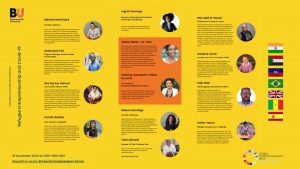
Join the editors, chapter contributors and grassroots organisations in a virtual introduction to the book this Wednesday 30th September 2020, from 4-6 pm (UK time). All welcome. Please register to see the full agenda and get the Zoom link and passcode: https://www.eventbrite.com/e/tourism-and-gender-based-violence-virtual-book-launch-tickets-122680415425

New paper concerning COVID-19 and Advance Decisions by Bournemouth academics

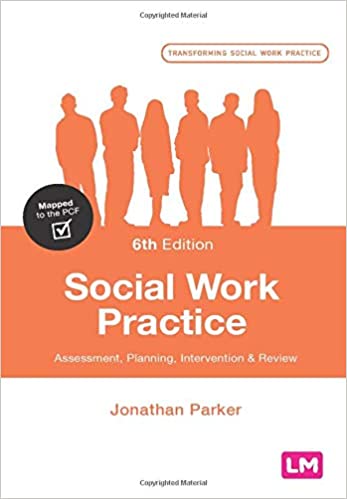
Mike Lyne and Prof Jonathan Parker of the Department of Social Sciences and Social Work and Centre for Seldom Heard Voices have published new research arguing for clarity and greater knowledge of Advance Decisions to Refuse Treatment as a means of increasing respect for people’s wishes at a time of urgency and uncertainty.

The full paper can be found on the Emerald Insight pages for advanced publication:

Lyne, M. and Parker, J. (2020), “From Ovid to COVID: the metamorphosis of advanced decisions to refuse treatment into a safeguarding issue”, The Journal of Adult Protection, Vol. ahead-of-print No. ahead-of-print. https://doi.org/10.1108/JAP-07-2020-0027

Academic Targeted Research Scheme (Sport & Sustainability): Women in Sports Leadership

Back in April I started my new post as Senior Lecturer in Sport and Sustainability – one of six appointments made under BU’s Academic Targeted Research Scheme. The Scheme has been designed to attract and recruit talented individuals to conduct research in specific, targeted areas which align with BU 2025.

My research under the scheme focuses on the area of sport and social sustainability, aiming to inform the work of National Governing Bodies of Sport (NGBs) in ensuring greater diversity on their boards, and to help create environments whereby women can fully and effectively participate in sports leadership. Attracting a more diverse workforce is a key aspect of making sports governance more socially sustainable.

The historical environment of sports governance in the UK shapes contemporary sport, providing a context in which women have often not been welcomed in positions of leadership in men’s sport – and women of colour doubly so. However, an examination of women’s sport shows that up until the 1990s many women were involved in sports governance at high levels – for example, the Women’s Cricket Association (who were the NGB running women’s cricket in England & Wales until 1998) was led entirely by women for its entire lifespan between 1926 and 1998.

The 1990s, however, seems to have been a particularly problematic period for women in sports governance. A push from the Sports Council (now Sport England) towards merged governance – that is, having women’s and men’s sport run by the same NGB – saw many of the women who had successfully run women’s sport for decades forced out of their governance roles.

My research aims to examine this process in more detail, asking:

  1. Why was a policy of merged governance introduced, and what impact has it had on women’s role and representation in the governance of sport?
  2. How can we learn from this process, to ensure that more women are represented in sports governance going forwards?

COVID-19 has inevitably affected my research plans: I am aiming to conduct interviews with those who were involved in the merger processes which took place in the 1990s, but may have to consider doing this via Zoom, instead of face-to-face.

I am also looking to create a new network which focuses on Sports Governance & Diversity, in order to bring together researchers in this area with key stakeholders including UK Sport, Sport England, NGBs, and charities like Women in Sport. It is crucial that academic research being conducted into the underrepresentation of certain groups in sport governance reaches those who are running sport, and informs their future policy.

Anyone who is interested in getting involved in this new network should feel free to email me – I’d love to hear from you.

New FHSS nutrition publication

Congratulations to Dr. Jib Acharya on the publication of his latest research paper ‘Exploring Food-Related Barriers and Impact on Preschool-Aged Children in Pokhara, Nepal: A Qualitative Review’ which is based on his PhD research [1].  Dr. Acharya has published several papers [2-3] from his PhD thesis in collaboration with his supervisors, Prof. Jane Murphy, Dr. Martin Hind and Prof, Edwin van Teijlingen.

Congratulations!


References:

  1. Acharya, J., van Teijlingen, E., Murphy, J., Hind, M., Ellahi, B., Joshi, A. (2020) Exploring Food-Related Barriers and Impact on Preschool-Aged Children in Pokhara, Nepal: A Qualitative Review, Participation 22(20): 98-110.
  2. Acharya, J., van Teijlingen E., Murphy, J., Hind, M. (2015) Assessment of knowledge, beliefs & attitudes towards healthy diet among mothers in Kaski, Nepal, Participation 17(16): 61-72.
  3. Acharya, J., van Teijlingen E, Murphy, J., Hind, M. (2015) Study of nutritional problems in preschool aged children in Kaski District Nepal, Journal of Multidisciplinary Research in Healthcare 1(2): 97-118. http://dspace.chitkara.edu.in/jspui/bitstream/1/560/1/12007_JMRH_Acharya.pdf


REF 2021 – voluntary staff disclosure form for individual circumstances

The Research Excellence Framework (REF) Guidance on Submissions sets out the measures that HEIs are required to put in place to support staff with individual circumstances, recognising that circumstances can have an impact on productivity. This includes creating safe and supportive structures for enabling staff to declare voluntarily any relevant circumstances, putting in place processes to adjust expectations of an individual’s contribution to the unit’s output pool (where the individual is entitled to a reduction), and ensuring staff are treated fairly. BU’s REF Code of Practice (CoP) contains established procedures to ensure that individuals are able to voluntarily disclose their individual circumstances so that we can take account in preparing our submission. As a consequence we are contacting every REF eligible member of staff to give them a further opportunity to make a voluntary disclosure – given that this is the second window of opportunity, it is primarily aimed at capturing any disclosures from staff appointed between November 2019 and 31 July 2020, and for staff whose circumstances have changed.

The Staff Disclosure Form for Individual Circumstances may be downloaded here. We wish to encourage colleagues to submit a form if they believe individual circumstances have affected their ability to undertake research effectively during the period. Please note that an additional provision to incorporate circumstances related to Covid-19 in the reduction process for removing the minimum of one output requirement has been added and included within the updated Staff Disclosure Form for Individual Circumstances.

Completion and return of the form is voluntary; individuals will not be required to do so if they do not wish to. This form is the only means by which we will be gathering this information; we will not be consulting any hardcopy or electronic records held by Human Resources, contract start dates, etc. You should therefore complete and return the form if any of the circumstances apply and you are willing to provide the associated information.

The form provides guidance on the purpose for collecting the information, applicable individual circumstances, the steps we will take to ensure confidentiality and how to submit the form.

If you have submitted a form following the closure of the first window of submission in January 2020, you do not need to submit a further form. You will be contacted via email within one week to confirm receipt.

If you have any questions regarding individual circumstances you can email REFcirc@bournemouth.ac.uk.

Forms should be submitted to the REF circumstances mailbox at REFCirc@bournemouth.ac.uk no later than midnight Friday 16 October 2020. Alternatively the form may be posted, marked confidential and for the attention of Sally Driver, Human Resources, Melbury House, 1-3 Oxford Road, Bournemouth, BH8 8ES.

If you wish to receive the form in an alternative format please email REFCirc@bournemouth.ac.uk or phone 01202 961133.

You can access information about BU’s REF preparation via the Research Blog and if you have any general enquiries regarding the REF you can email ref@bournemouth.ac.uk. For more information about the REF 2021 nationally please visit http://ref.ac.uk/.

PhD student paper out in print today

Congratulations to FHSS Social Worker Dr. Orlanda Harvey, whose Ph.D. paper ‘Support for non-prescribed anabolic androgenic steroids users: a qualitative exploration of their needs’ published this week in the journal Drugs: Education, Prevention and Policy [1].  

Anabolic Androgenic Steroids (AAS) are used by the general population (particularly male gym users) for their anabolic effects (increased muscle mass). Few studies have sought AAS users’ views on what information and support they need. This study focuses on ideal support wanted by people who use AAS. Interviews were conducted with 23 self-declared adult AAS users. Using thematic analysis, six themes were identified aligned to support and information wanted by AAS users: (1) specific types of information wanted: managing risks, (2) mechanisms for communication of advice, (3) specific types of support wanted: medical and emotional, (4) stigmatisation of people who use AAS, (5) paying for support services, (6) legality of AAS use.

This interesting qualitative piece of work was submitted over one year ago (August 2019) it was accepted by the journal late last year (13th Dec ember 2019 and published online the following months.  It has taken from January 2020 till mid-September to appear in the print issue!

The paper is co-authored by Orlanda’s supervisors: Dr. Margarete Parrish, Dr. Steven Trenoweth and Prof. Edwin van Teijlingen.  Moreover, this is Orlanda’s third paper from her thesis research,  her systematic literature review has been published in BMC Public Health [2] and a further findings papers  has been submitted to an academic journal.


References:

  1. Harvey, O., Parrish, M., van Teijlingen, E., Trenoweth, S. (2020) Support for non-prescribed Anabolic Androgenic Steroids users: A qualitative exploration of their needs Drugs: Education, Prevention & Policy 27:5, 377-386. doi 10.1080/09687637.2019.1705763
  2. Harvey, O., Keen, S., Parrish, M., van Teijlingen, E. (2019) Support for people who use Anabolic Androgenic Steroids: A Systematic Literature Review into what they want and what they access. BMC Public Health 19: 1024 https://doi.org/10.1186/s12889-019-7288-x https://rdcu.be/bMFon

New CMMPH midwifery paper

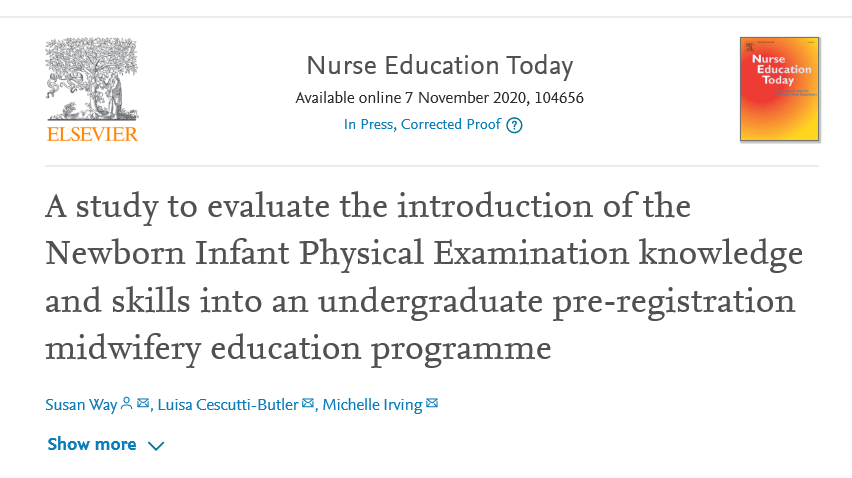
Today the European Journal of Midwifery published our paper ‘Midwives’ views towards women using mHealth and eHealth to self-monitor their pregnancy: A systematic review of the literature’.  There are many apps to help women to monitor aspects of their own pregnancy and maternal health. This literature review aims to understand midwives’ perspectives on women self-monitoring their pregnancy using eHealth and mHealth, and establish gaps in research. mHealth (mobile health) is the use of mobile devices, digital technologies for health, health analytics, or tele-health, whilst eHealth (electronic health) is the health care supported by electronic processes.

It established that midwives generally hold ambivalent views towards the use of eHealth and mHealth technologies in antenatal care. Often, midwives acknowledged the potential benefits of such technologies, such as their ability to modernise antenatal care and to help women make more informed decisions about their pregnancy. However, midwives were quick to point out the risks and limitations of these, such as the accuracy of conveyed information, and negative impacts on the patient-professional relationship.  The authors conclude that with COVID-19 making face-to-face maternity service provision more complicated and with technology is continuously developing, there is a compelling need for studies that investigate the role of eHealth and mHealth in self-monitoring pregnancy, and the consequences this has for pregnant women, health professionals and organisations, as well as midwifery curricula.


Prof. Edwin van Teijlingen

Centre for Midwifery, Maternal & Perinatal Health (CMMPH)


Reference:

  1. Vickery, M., Way, S., Hundley, V., Smith, G., van Teijlingen, E., Westwood G. (2020) Midwives’ views women’s use of mHealth and eHealth to self-monitor their pregnancy: A systematic review of the literature, European Journal of Midwifery 4: 36 DOI: https://doi.org/10.18332/ejm/126625

500 citations!

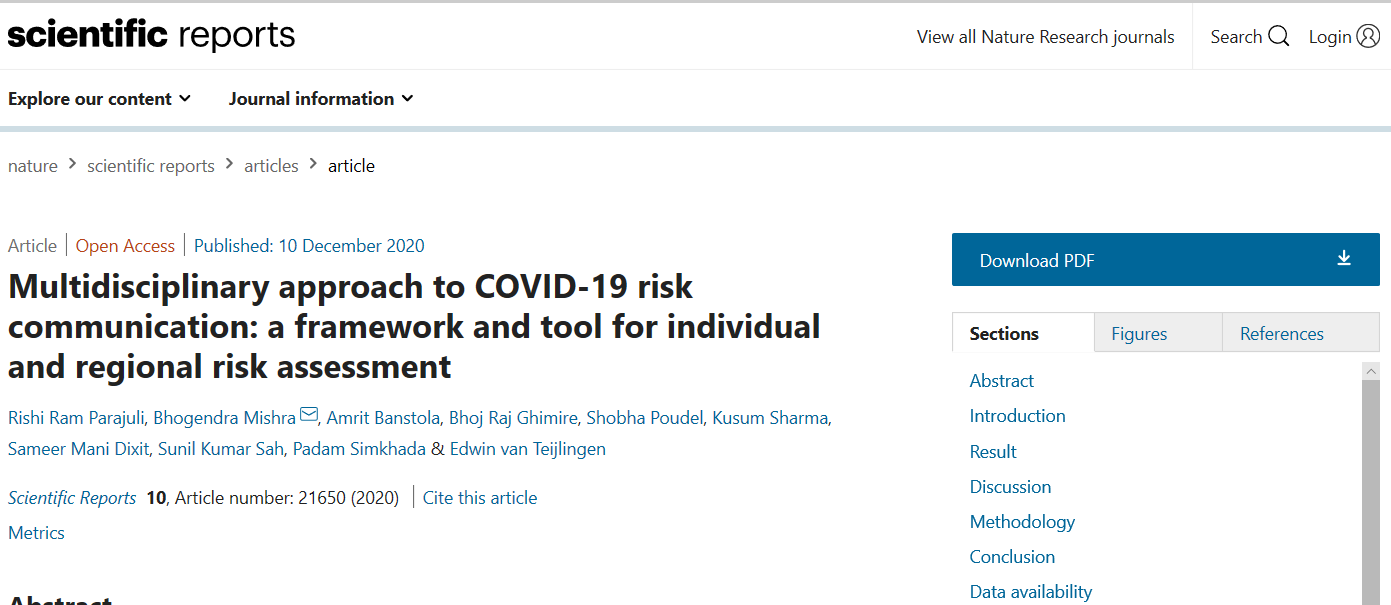
I have recently checked my Google Scholar profile and I was delighted to see that one of my papers has received a landmark number of citations – 500.

The paper was published in 2014 in co-authorship with Professors Scott Cohen (formerly at BU and now at the University of Surrey, UK) and Girish Prayag (University of Canterbury, NZ).

Focusing on a review of the literature of one of the most, if not the most researched topic in tourism – consumer behaviour -, and published in a high ranked Journal, I always felt the paper could do well, but never imagined that it could get so much traction.

The paper is scheduled to be part of the forthcoming REF submission.

New publication: International study on academic misconduct calls for collaborative approaches across the HE sector

An international, three-country study on academic integrity has been accepted for publication by the BMC Springer International Journal for Educational Integrity.

It examines academic misconduct as identified by university academics and quality control administrators.

It is a multi-voice interpretation of what constitutes academic misconduct, how it systemically manifests, and the need for proactive, innovative, diverse, and consistent approaches to management across the sector. It advocates for preventative education and technology for both staff and students in order to counter the ‘arms race’ of contract cheating services that are feeding growth in academic misconduct.

The paper “Managing the mutations: Academic misconduct in Australia, New Zealand, and the UK” is a collaboration between BU’s Prof. Stephen Tee and Dr Steph Allen with Prof. Melanie Birks at Massey, and Prof. Jane Mills at La Trobe and has been widely acclaimed by participating universities as a ‘much needed study’.


Available: https://link.springer.com/article/10.1007/s40979-020-00055-5

FHSS PhD student’s poster at prestigious GLOW conference

Today and tomorrow Sulochana Dhakal-Rai will have her poster ‘Factors contributing to rising Caesarean Section rates in South Asia: a systematic review’ online at this year’s GLOW Conference [Global Women’s Research Society Conference].  This year for the first time, this international conference is held completely online.  Sulochana’s PhD project is supervised by Dr. Pramod Regmi, P., Dr. Juliet Wood and Prof Edwin van  Teijlingen at BU with Prof. Ganesh Dangal [Professor of Obstetrics and Gynaecology at Kathmandu Model Hospital] who acts as local supervisor in Nepal.  Sulochana has already published two papers from her on-going thesis research [1-2].

References

  1. Dhakal-Rai, S., Regmi, PR, van Teijlingen, E, Wood, J., Dangal G, Dhakal, KB. (2018) Rising Rate of Caesarean Section in Urban Nepal, Journal of Nepal Health Research Council 16(41): 479-80.
  2. Dhakal Rai, S., Poobalan, A., Jan, R., Bogren, M., Wood, J., Dangal, G., Regmi, P., van Teijlingen, E., Dhakal, K.B., Badar, S.J., Shahid, F. (2019) Caesarean Section rates in South Asian cities: Can midwifery help stem the rise? Journal of Asian Midwives, 6(2):4–22.

New corporate governance book by BU scholar published

Associate Professor Donald Nordberg has published a new book, The Cadbury Code and Recurrent Crisis: A Model for Corporate Governance? (Palgrave Macmillan). It’s a critical examination of the origins of the UK code of corporate governance and how the code developed – and failed to develop – through repeated crises in corporate governance.

The 1992 Cadbury Code was a watershed in corporate governance, and not just in the UK. It influenced practice in many countries around the world, as well as the practices of many types of organisation outside the sphere of corporations listed on stock markets.

Reviewing the book, Andrew Johnstone, professor of company law at the University of Warwick, said: “This is a fascinating book, tracing the development of the UK Corporate Governance Code and highlighting its continuity through successive crises. At the same time, it identifies areas of controversy and challenge, intriguingly suggesting that ‘defeated logics’ are merely suspended, perhaps poised to return. Essential interdisciplinary reading for all those interested in the UK’s corporate governance system.”

Business school student-staff co-creation paper to be published in IJDG

Rebecca Booth (MSc, BU) and Associate Professor Donald Nordberg have produced another publication from work arising from Booth’s dissertation from the corporate governance programme taught on Guernsey. The International Journal of Disclosure and Governance (Palgrave) has accepted their qualitative study “Self or other: Directors’ attitudes towards policy initiatives for external board evaluation”, doi: 10.1057/s41310-020-00094-x. This is the second journal article to emerge from the study. In addition, the pair wrote a technical report last year for the New York-based think-tank The Conference Board Inc. and contributed to a consultation run by the UK Financial Reporting Council about the corporate governance code. The study’s insights also featured in a report published in 2019 by Minerva Analytics, a firm specialising in proxy voting research across Europe.

Responsible Project Management recommended for delivering UK Government Major Projects

A team led by Dr Karen Thompson from Bournemouth University Business School and Dr Nigel Williams, Reader of Project Management at the University of Portsmouth, have been developing the concept of Responsible Project Management (RPM).  Their work has now been recommended for Government projects.

In written evidence to the HOUSE OF COMMONS PUBLIC ADMINISTRATION AND CONSTITUTIONAL AFFAIRS SELECT COMMITTEE, the Chartered Body for the Project Profession in the UK – the Association for Project Management (APM) – suggested that the UK Government should “focus on Responsible Project Management”.

The APM’s submission to the Select Committee and included in their July 2020 Report ‘Delivering the Government’s infrastructure commitments through major projects’ used the definition from the Guide to Responsible Project Management (2019) published by BU:

“Responsible Project Management … is the concept of managing projects with specific attention to the intended and unintended impacts of the project and its outcomes, in both the short and long term, thereby delivering economic, social and environmental impact.”

Interest in Responsible Project Management (RPM) has been growing rapidly.  An initial social learning workshop was held at BU in 2018 and brought together professional project managers, educators, researchers and project management students from universities across the UK and Europe to explore the concept.  The Manifesto for Responsible Project Management was developed in 2019 and launched at BU in July.  Later in July, Karen and Nigel were guest bloggers for UK Major Projects Knowledge Hub and wrote for the International Project Management Association Blog.  In November, Sir Peter Bonfield, Vice Chancellor of the University of Westminster introduced the London launch of the Manifesto and signed up to RPM.  At the 2019 Awards of the largest global professional body for project management – the Project Management Institute (PMI) – the work was recognised with the UK Award for Innovation in Project Management and the UK Award for Community Advancement (Social Good).

By February 2020 there were more than 100 signatories to the Manifesto from across the UK, Europe and USA, and the team were receiving invitations to deliver sessions at conferences and at branch events of both APM and PMI.

Signing ceremony at Gleeds, London

Early in March 2020 the team were invited to deliver a presentation at the London office of Gleeds, Global Property and Construction Consultants.  This was followed by a corporate signing ceremony where the Manifesto was signed by Graham Harle, Gleeds Global Chief Executive, representing c2,000 project professionals.


Responsible Project Management is underpinned by the UN’s 17 Sustainable Development Goals and incorporates the UN’s Principles of Responsible Management Education (PRME) to which the BU Business School is an Advanced Signatory.  RPM now has 16 Ambassadors worldwide.

The RPM Team have recently been awarded HEIF-6 funding to study the competencies required for sustainable project behaviour using virtual reality and will work with colleagues in BU’s Faculty of Science and Technology on this project.

Since the UK lockdown for COVID-19 RPM work has continued virtually.  From April until July the Team hosted a regular series of virtual ‘Lunch and Learn’ Meetups to support project professionals around the world.   Currently they are collaborating with a range of project organisations on developing a Guide for Project Sponsors and a new syllabus to focus on developing new competencies for sustainable development.  Another response to the current crisis has been an initiative to help recent graduates into work in the face of disappearing job opportunities.  Collaboration with APM and the Major Projects Knowledge Hub has resulted in the launch of a pilot Scheme for Virtual Internships in Responsible Project Management.  Virtual internships may be one way for organisations to create the new structures and operations they will need for a post-pandemic recovery.