HE news in the media has been dominated by talk of student number controls while the sector wrestles with decisions over student exams.
Parliamentary Business
Appointments
Alex Chisholm has been announced as the new Permanent Secretary at the Cabinet Office and Chief Operating Officer for the Civil Service. Alex is currently serving as Permanent Secretary at the Department of Business, Energy & Industrial Strategy, and was previously Chief Executive of the Competition & Markets Authority. He has also held senior executive positions in the media, technology and e-commerce industries, with Pearson plc, Financial Times Group, eCountries Inc and Ecceleration Ltd.
Minister for the Cabinet Office, Michael Gove, said:
- In the medium term, much of Alex’s work will necessarily be coronavirus response related. But Alex will be responsible for supporting ministers to develop and then drive forward a reform programme for the Civil Service, building on the Government’s existing efficiency programme. He will also supervise all the Cabinet Office’s various work programmes including on preparing for the end of the transition period, strengthening the union, and defending our democracy.
Jeremy Pocklington has been appointed as the new Permanent Secretary at the Ministry of Housing, Communities and Local Government.
Health Education England has announced that current interim Chief Nurse Mark Radford has been permanently appointed.
Student Number Controls
The major news since the last policy update is speculation over the potential return of student number controls to limit recruitment. It is suggested that capping numbers (limiting the number of students a university can take for a particular programme) would help stabilise the sector by preventing some universities from taking a higher number of UK students to fill places that would have been filled by international students, who may not come because of the virus.
Alongside the domestic young population dip hitting the lowest point this year (increasing competition between providers) Coronavirus also threatens the international student recruitment. With Government intimating that lockdown or lighter restrictions last between 3 and 6 months the concern is that the much-needed funds from international students won’t be forthcoming if the students cannot enter the country or undertake face to face tuition. EU student numbers would fall too if lockdown continues to prohibit travelling.
Since the removal of student number controls in 2015 there have been regular stories about financial stability as the higher tariff or ‘prestigious’ universities recruited increased numbers of students – leaving the mid or lower tariff providers with less demand for their places, especially as the UK approached the bottom of its demographic dip in the number of 18 year olds.
The flip side is that capping student numbers means some students are unable to get a place on a programme or at their preferred provider. The government wants all students to aspire to the “higher tariff” institutions and to have a choice of providers. Of most concern in this scenario is the risk that disadvantaged students are the least likely to achieve the place at the provider they wished for due to a combination of lack of careers support, guidance, lower predicted grades, parental support and intervention and access to relevant (unpaid) work experience or social networks. And the government has said, for some time, that it does not want to cap the number of students attending university, with the social mobility benefits that this has. So the government doesn’t like student number controls.
The coronavirus pandemic has destabilised business, education, the whole economy, and this may be one way for Ministers to prevent some HE providers becoming big winners from the disruption whilst the losers collapse. The lower tariff providers are most at risk and these are the institutions that often sit at the heart of communities that have no one local or regional HE institutions, and that take higher numbers of disadvantaged students. If these institutions collapse it is a big fail for social mobility, affecting the lives of these students and future generations.
So far the Government has moved to prevent new unconditional offers being made or converting conditional offers already made to unconditional while they are finalising the exam grade awarding strategy. The Government has not spoken out on the return of student number control (yet). Although the media and HE blogging organisations seem to be doing the job for them! Here are some of the sources:
The Guardian has been at the centre of the debate from the outset:
- Strict limits on the number of students that each university in England can recruit are set to be imposed by the government in an effort to avoid a free-for-all on admissions, with institutions plunged into financial turmoil as a result of the coronavirus pandemic, the Guardian has learned.
- A government source said each university would face limits on the number of UK and EU undergraduates it could admit for the academic year starting in September, in a move backed by higher education leaders.
As the Guardian article mentions UUK’s response to the proposal has also been at the forefront. The Guardian article states the board of UUK approved the return of student number caps and an edited article quotes Alistair Jarvis (Chief Exec UUK) as saying
- “The UUK board discussed a range of measures needed to promote financial stability of the sector in these tough times. Foremost was the need for government financial support for universities. Student number controls were discussed and it was agreed that further consideration of the pros and cons were needed, with further input from members.” (Alistair tweeted to state the Board had not approved student numbers after the original Guardian article was published, hence ‘student number controls were discussed’ and RP cover the backtrack here).
The offers for students – Research Professional (RP) analyse whether degree outcomes vary based on unconditional offers (including conditional unconditional offers).
The Mail Online is convinced that student number controls are back and write as if the Government has already announced this – Government will place strict limit on student numbers in bid to avoid admissions free-for-all at universities hit by coronavirus
RP also ask in Aftershock if number controls are reintroduced then…: The Guardian’s article is well sourced but lacks detail. Are students who have had their A levels cancelled now going to be told that they cannot go to the university of their choice? That could have a significant impact on recruitment across the board come September.
The Guardian followed up their original article with Concern for A-level students over chaos on university admissions which covers exactly what RP raise above – that students holding offers may no longer have a place to attend. It also includes comment from David Willetts:
- David Willetts removed student number controls from 2015 when he was minister for universities and science. Writing for the Higher Education Policy Institute in a blog due to be published on Tuesday, he said: “University is a safe haven for young people in these tough times. We can expect many more 18-year-olds to try to get to university now as the alternatives are so poor at the moment. If the government does reintroduce number controls (which I would regret), it must not do so in a way that reduces opportunities for young people to go to university.”
The Guardian also publish an opinion piece – Covid-19 is our best chance to change universities for good.
HEPI have much to say on student number controls. Nick Hillman, Director of HEPI, worked for David Willets ex-Universities Minister and recalls that the abolishing of student number controls was announced on his last day in the job. Elsewhere on HEPI there is a blog Eight interventions for mitigating the impact of Covid-19 on higher education; number 1 is the re-imposition of student number controls to ensure that institutions have a viable first year student population. They suggest that – Realistically, given the damage to school students’ education and examination preparation, this will not be a one-year exercise. There are a number of ways this could happen, either by setting institution by institution limits on admissions (as was the case until 2011) or by limiting variance to +/-5 per cent for any institution against a three year average of admissions (from 2017 to 2019 inclusively). In the longer term, there should be a fundamental review of the operation of the market. The blog is worth a full read covering other topical elements such as impact on current student retention and progression rates, rent support, contextual admissions, ditching the NSS (national student survey for 2020), increasing quality-related research funding to stabilise the research base and establishing a digital learning leadership fund.
Nick Hillman (HEPI) is also quoted in the Guardian article:
- …there are people who have long wanted to restrict access to higher education who might see this as the chance to do it. Yet when there are fewer jobs to go around, education becomes more important, not less. And: Reintroducing number caps would protect those universities that have grown the most in recent years by locking down the number of home students that they educate and stopping others from growing at their expense. Older, more prestigious universities would be the biggest losers, as they had hoped to be able to replace lost international students with more home students.
Other HEPI blogs:
Other sources:
There may be more news on this soon.
Exams
The NUS has called for all non-essential (year 1 and 2) exams to be cancelled to reduce anxiety for these students and allow HEIs to focus on facilitating the best possible assessment experience for the final year students. Coverage in the Guardian states that NUS say: disabled, international and poorer students would be significantly disadvantaged if universities go through with plans to hold online exams and assessments next term. [Because accessibility has been lost or left behind in the swift move to online teaching and assessment.]… final-year students should be given a choice of how to complete their degrees, such as receiving an estimated grade based on prior attainment, doing an open book online exam, or taking their finals at the university at a later date.
Claire Sosienski-Smith, the NUS vice-president (Higher Education): “In the current climate, student welfare must come first…It is vital that there are no compulsory exams this year.”
NUS also call for PG students to have a 6-month extension on their submission deadlines.
Similar to student number controls there is a wealth of media attention and material on exams this week. There are nationwide reports of petitions and students campaigning on a range of factors, including ‘no detriment’ policies. No detriment means the average grade the student has already earned from previous assessments is taken as a given and any further assessments can only build to increase the overall grade awarded (not decrease). However, the devil is in the detail and the application. For example, how can students demonstrate they have met professional registration or statutory regulatory requirements? And in some approaches students have to pass this year’s assessment – if they do better their grade goes up, if worse their grade remains at previous average, if they don’t pass the assessment then their average grade may be in question. No doubt at some point a bright spark will point out that a no detriment policy when going into a final exam is much the same motivation as entering A levels with an unconditional university offer. Brace yourself for headlines not only about grade inflation but about final exam underachievement.
BU readers should know that BU has also announced a “no detriment” policy with the details being worked out on a programme by programme basis.
The Tab summarises a range of approaches and highlights which details universities are following that approach. It covers final and earlier year exams, graded assessments versus pass and fail marking, and dissertation extensions.
Other media:
Horizon Scanning
To catch up on wider regular policy issues – you can read our BU policy horizon scan.
Research & KEF
On Tuesday Wonkhe reported that the Knowledge Exchange Concordat has been postponed.
A research related parliamentary question:
Q – Dr Lisa Cameron: To ask the Chancellor of the Exchequer, with reference to Budget 2020, what proportion of the £22 billion investment in R&D he plans to allocate to (a) performing and (b) funding R&D. [33613]
A – Jesse Norman: The Government is committed to supporting the UK’s leadership in science and innovation, and set out an ambition to increase economy-wide investment in R&D to 2.4% of GDP by 2027. At the 2020 Budget, the Government announced that it would increase public investment in R&D to £22bn by 2024-25, the largest ever increase in support for R&D. This will support innovators and researchers across the UK to develop their brilliant ideas, cutting edge technologies and ground breaking research. The majority of this uplift will be allocated at the Spending Review, including support for various R&D programmes. The Government will set out further details in due course
Mental Health
The Department of Health and Social Care released new public guidance regarding mental health support during the coronavirus outbreak covering areas from medication, to managing wellbeing, medication and coping mechanisms. There is easy read guidance for those that need this. The Government have also announced £5 million for leading mental health charities, administered by Mind. And NHS Mental Health Providers are establishing 24/7 helplines.
Paul Farmer, Mind Chief Executive, stated:
- We are facing one of the toughest ever times for our mental wellbeing as a nation. It is absolutely vital that people pull together and do all they can to look after themselves and their loved ones, when we are all facing a huge amount of change and uncertainty…Charities like Mind have a role to play in helping people cope not only with the initial emergency but coming to terms with how this will affect us well into the future. Whether we have an existing mental health problem or not, we are all going to need extra help to deal with the consequences of this unprecedented set of circumstances.
Claire Murdoch, NHS mental health director, said:
- The NHS is stepping up to offer people help when and how they need it, including by phone, facetime, skype or digitally enabled therapy packages and we also have accelerated plans for crisis response service 24/7…We are determined to respond to people’s needs during this challenging time and working with our partners across the health sector and in the community, NHS mental health services will be there through what is undoubtedly one of the greatest healthcare challenges the NHS has ever faced.
The Times has an article on student mental health focusing on anxiety caused by uncertainties such as exams: Panic and anxiety after education is plunged into limbo.
Brexit & immigration
Withdrawal Agreement
The Government has published a press release outlining that the Withdrawal Agreement Joint Committee met virtually on Monday 30 March to discuss the application and interpretation of the Withdrawal Agreement. There is a factsheet about the Withdrawal Agreement Joint Committee here.
EU Settlement Scheme
The EU settlement scheme continues. However, the Home Office has clarified that while applications continue to be processed, during this challenging time they will take longer than usual. And the resolution centre will only respond to email inquiries, not telephone; all the ID document scanner locations have been suspended as is the postal route to submit identity evidence. The Home Office reminds: there are still 15 months before the deadline of 30 June 2021 for applications to the EU Settlement Scheme, and there is plenty of support available online to support those looking to apply. This includes translated communications materials and alternative formats being made available.
Visas
The Government has announced visa extensions until 31st May for all foreign nationals in the UK. Individuals who are in the UK and whose visa expired after 24th January are being urged to contact the Home Office to be issued with the May extension. The Government have confirmed they will continue to kept the timescales under review in case further extension is needed.
A dedicated Covid-19 immigration team has been set up within the Home Office to make the process as “straightforward as possible” for visa holders. To help those who want to apply for visas to stay in the UK long-term, the Home Office is also temporarily expanding the in-country switching provisions. In light of the current advice on self-isolation and social distancing, the Home Office is also waiving a number of requirements on visa sponsors, such as allowing non-EU nationals here under work or study routes to undertake their work or study from home.
Priti Patel, Home Secretary, stated: The UK continues to put the health and wellbeing of people first and nobody will be punished for circumstances outside of their control. By extending people’s visas, we are giving people peace of mind and also ensuring that those in vital services can continue their work.
NHS Visas – 1 year extension & Student Nurses
The Home Office have announced that doctors, nurses and paramedics will automatically have their visas extended for one year, free of charge. The extension also covers family members. This measure will also help bolster the number of NHS staff able to work during the coronavirus situation.
Restrictions limiting the number of hours that student nurses and doctors can work in the NHS have also been lifted.
Priti Patel said:
- Doctors, nurses and paramedics from all over the world are playing a leading role in the NHS’s efforts to tackle coronavirus and save lives. We owe them a great deal of gratitude for all that they do. I don’t want them distracted by the visa process. That is why I have automatically extended their visas – free of charge – for a further year.
NUS
NUS ran its hustings and voting for the election of the presidential and executive officers online for the first time ever. Hillary Gyebi-Ababio has been elected NUS UK’s Vice-President Higher Education for a two-year term receiving 85% of the vote. Hillary is currently the Undergraduate Education Officer at University of Bristol Students’ Union. She states she believes that education should be free, accessible and open to all, with students from all backgrounds and identities being able to engage with and shape the education they deserve. She wants students to be at the centre of their education, not viewed as metrics in a market. She will be fighting for an education system that puts students first. Hillary commented:
- “It is an honour to be elected as the new Vice President Higher Education of our new and reformed NUS. The fact that students all over the country have trusted me with this role is a sign of how much there is a need for a NUS that puts students at the heart of all it does. I am committed to ensuring that every student, regardless of background, circumstance or identity is heard, seen and cared for. This is going to be an exciting time for the student movement, and the beginning of a new and revitalised NUS.”
Student Experience
Lawyer Smita Jamdar blogs on the consequences of the changes to teaching, assessment and student services as a result of Covid-19 and what universities should be considering to ensure they stay on the right side of the Consumer Rights Act.
Accessibility & Mitigation
Wonkhe write: Is online teaching accessible to all? The sector has (mostly) shifted teaching online – but this has been the very opposite of the kind of planned migration that would be considered best practice by digital delivery experts. In the rush to ensure that students could continue their studies it is very likely that the needs of some students – specific learning needs, disabilities, and external factors – have been forgotten. The next phase of the great leap online will be unpicking where mitigations and alternatives need to be put in place to ensure every student can continue their education during the Covid-19 lockdown.
Wonkhe have one blog on the ethics sitting behind it all: The sudden shift to online provision has failed to consider the needs of all students, and may have been built on tools of uncertain provenance.
And a further blog from Martin McLean from the National Deaf Children’s Society on the mitigations required for deaf students to succeed in online teaching and assessment.
Parliamentary Questions
Student Enrolment/Employment
Q – Dr Luke Evans: To ask the Secretary of State for Education, what discussions he has had with universities on ensuring that students remain enrolled at their institution in the event (a) that they lose their part-time employment and (b) of another change in their financial situation as a result of the covid-19 outbreak. [33725]
A – Michelle Donelan: The government is working closely with the sector on a wide range of issues, and student wellbeing is at the heart of those discussions. It will be for universities to deal with individual students’ situations. Universities know how best to provide support and maintain hardship funds, which can be deployed where necessary, which is especially important for students who are estranged from their families, disabled or have health vulnerabilities.
Students will continue to receive scheduled payments of loans towards their living costs for the remainder of the current, 2019/20, academic year. If they are employed or self-employed, they may also be able to benefit from the wider measures of support announced by the Chancellor of the Exchequer. If agreed with their employer, their employer might be able to keep them on the payroll if they’re unable to operate or have no work for them to do because of coronavirus (COVID-19). This is known as being ‘on furlough’. They could get paid 80% of their wages, up to a monthly cap of £2,500.
Loans
Q – Preet Kaur Gill: To ask the Secretary of State for Education, what discussions he has had with the chief executive of the student loans company on the potential merits of refunding loans for the third term of this academic year. [33730]
A – Michelle Donelan: The Student Loans Company (SLC) will continue to make scheduled tuition and maintenance payments to both students and providers. Both tuition and maintenance payments will continue irrespective of whether learning has moved online. This has been communicated via the SLC website. We are continuing to monitor the position.
Inquiries and Consultations
Click here to view the updated inquiries and consultation tracker. Email us on policy@bournemouth.ac.uk if you’d like to contribute to any of the current consultations.
New consultations and inquiries this week:
- The Commons Education select committee is running an inquiry into the impact of COVID-19 on education and children’s services – how the outbreak of COVID-19 is affecting all aspects of the education sector and children’s social care system and will scrutinise how the Department for Education is dealing with the situation. It will examine both short term impacts, such as the effects of school closures and exam cancellations, as well as longer-term implications particularly for the most vulnerable children. Closes: 30 September 2020
- The House of Commons Women and Equalities Committee has launched an inquiry to hear about the different and disproportionate impact that the Coronavirus – and measures to tackle it – is having on people with protected characteristics under the Equality Act. Closes: 30 April 2020
Other news
- Data Futures: HESA have published the latest data futures guidance. Wonkhe write on the release: The release of version 1.0.0 of the HESA Data Futures manual offers a welcome indication that, Data Futures, the long-planned overhaul of student data collection will be going ahead. The new materials suggest three data collection points (one per “reference point”) each year, confirming the move away from continuous collection. Also from HESA, a detailed methodology statement (in two parts) on Graduate Outcomes.
- Student rent: The BBC has an article on the Bristol students staging rent strikes. They are campaigning about the lack of flexibility or forgiveness from landlords. In particular students who have lost their part time jobs or are unable to work because they are self-isolating are detailed. And Wonkhe report that Shadow Secretaries of State John Healey and Angela Rayner have written to government ministers to raise concerns about student accommodation fees for the summer term – requesting action for students living in halls and for those in the private rented accommodation sector.
Subscribe!
To subscribe to the weekly policy update simply email policy@bournemouth.ac.uk.
JANE FORSTER | SARAH CARTER
Policy Advisor Policy & Public Affairs Officer
Follow: @PolicyBU on Twitter | policy@bournemouth.ac.uk
 Yesterday Dr. Shanti Shanker (Lecturer in Psychology), BU Visiting Faculty Jillian Ireland and I produced a short three-minute video for health care workers in Nepal on the topic of living with uncertainty and the COVID-19 virus. Hopefully this will be the first in a series from our Bournemouth University team. The video is based on work funded by GCRF in the United Kingdom and supported by two NGOs (non-Governmental Organisations): (a) Sheetal Astitva and (b) Green Taral Nepal as well as Symbiosis International (Deemed University).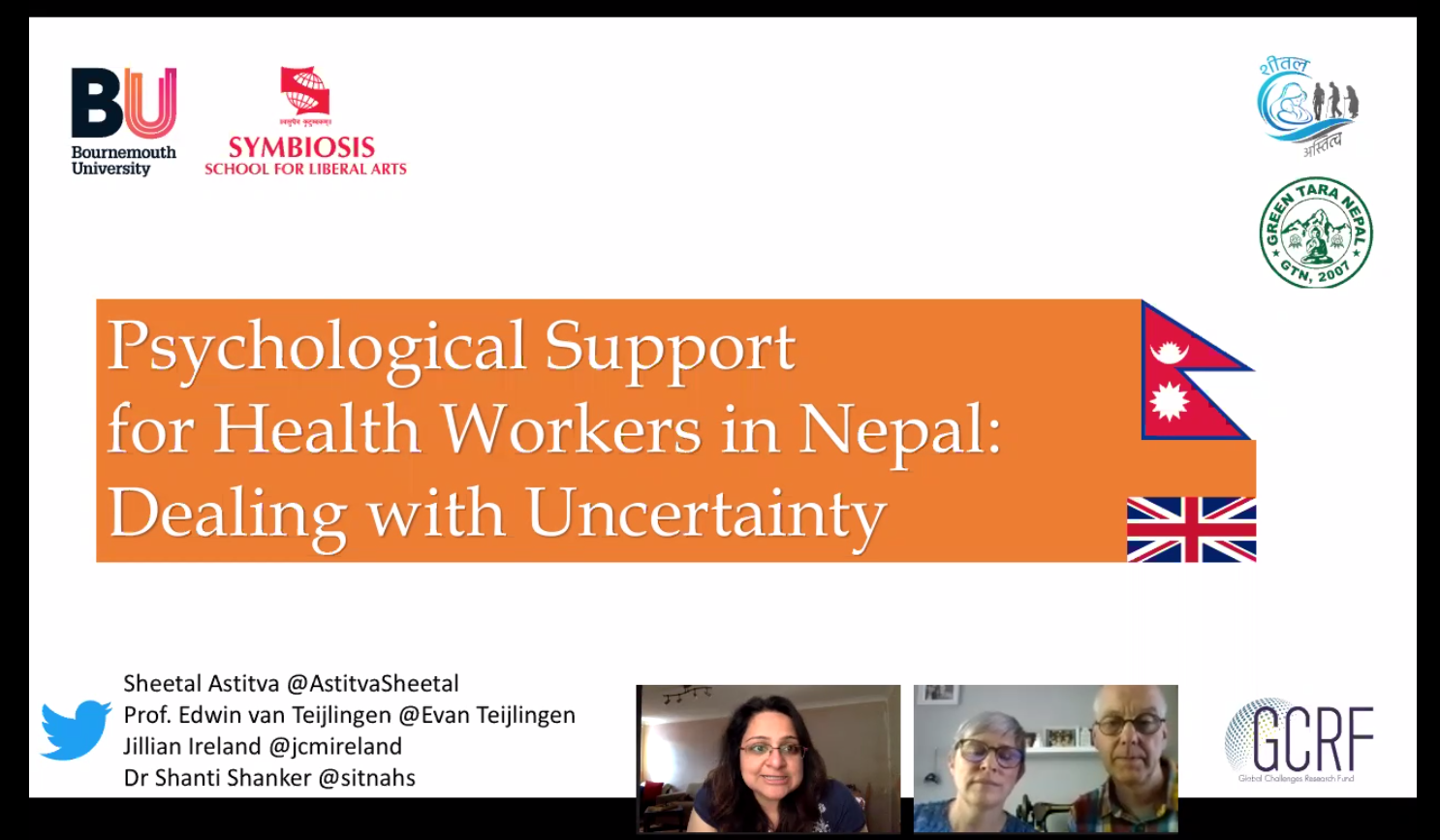
 Advance notice that the Parliamentary Academic Fellowship Scheme Open Call will be launching in June 2020, when expressions of interest will be sought.
 RDS have created a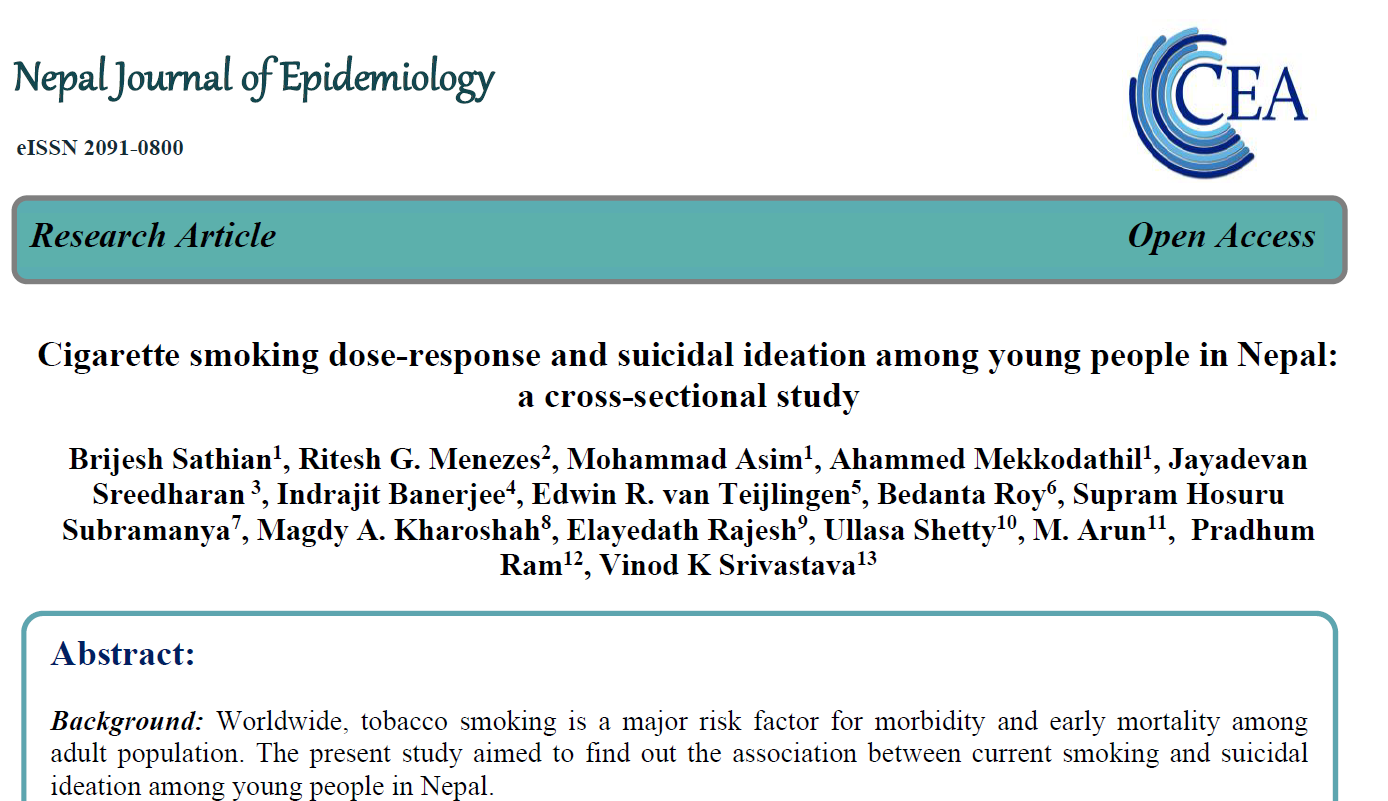


 Every BU academic has a
 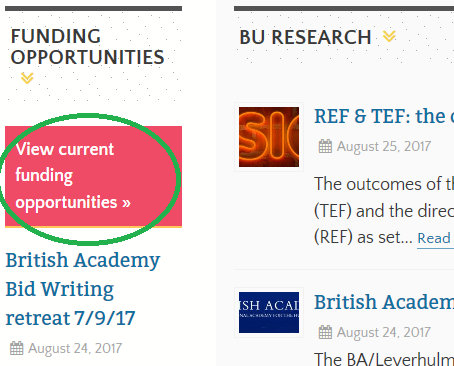 By clicking on this box, on the left of the Research Blog home page just under the text ‘Funding Opportunities‘, you access a
 UKRO is pleased to announce the latest in its series of webinars, which will take place at 10.30-11.30 (UK time) on Friday 3 April on the topic of ‘COVID-19 and EU Funding update’.
 If you would like to take the opportunity of online impact training as it relates to the UKRI Case for Support or writing the impact sections of Horizon 2020 proposals, Professor Mark Reed of Fast Track Impact is offering free, interactive webinars, giving you access to his most popular training sessions. Due to a high level of interest, there are now a further 100 tickets available for each of the two courses below:

 International Education as part of the Graduate Student Research in Progress Supplement. Contributions were made by graduate students who are currently studying in a MA, Ed.D. or Ph.D. programme from across the globe. I was very proud to have represented Bournemouth University and the UK alongside Oxford University, the other highlighted British institution. It was wonderful showcasing the impact of peer to peer employability coaching and mentoring on student confidence and awareness. With such a positive result shown by my pilot project and fieldwork where FMC students were participants, I can not wait to investigate future implementation.







 REF mock exercise 2026 – nominate your research outputs on BRIAN
 ESRC Festival of Social Science 2026: Application Deadline Extended to Thursday 25 June 2026
 First publication for two CMWH PhD students
 SPROUT Returns: Designing Sustainability in Research Practice – Wednesday 20 May 12-2pm
 Reminder: Register for the ESRC Festival of Social Science 2026 Information Session
 ECR Funding Open Call: Research Culture & Community Grant – Apply now
 ECR Funding Open Call: Research Culture & Community Grant – Application Deadline Friday 12 December
 MSCA Postdoctoral Fellowships 2025 Call
 ERC Advanced Grant 2025 Webinar
 Update on UKRO services
 European research project exploring use of ‘virtual twins’ to better manage metabolic associated fatty liver disease