Congratulations on the Faculty of Health & Social Sciences team which had its paper ‘Vital signs and other observations used to detect deterioration in pregnant women: an analysis of vital sign charts in consultant-led UK maternity units’ accepted by the International Journal of Obstetric Anesthesia (published by Elsevier).
The paper compares: (i) vital sign values used to define physiological normality; (ii) symptoms and signs used to escalate care; (iii) 24 type of chart used; and (iv) presence of explicit instructions for escalating care. The authors conclude that the wide range of ‘normal’ vital sign values in different systems used in the UK and the Channel Islands suggests a lack of equity in the processes for detecting deterioration and escalating care in hospitalised pregnant and postnatal women. Agreement regarding ‘normal’ vital sign ranges is urgently required and would assist the development of a standardised obstetric early warning system and chart. The lead author of this new paper is FHSS Visiting Professor Gary Smith, his co-authors include FHSS staff Vanora Hundley, Lisa Gale_Andrews and Edwin van Teijlingen as well as three BU Visiting Faculty: Debra Bick (King’s College London), Mike Wee (Poole Hospital NHS Foundation Trust) and Richard Isaacs (University Hospital Southampton).
Tagged / Health
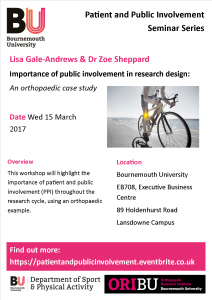
PPI Seminar 2: How the Public can Inform Research Design – A Case Study
Importance of public involvement in research design: An orthopaedic case study
Lisa Gale-Andrews & Dr Zoe Sheppard
Date Monday 15th March 2017
Time 3:00 – 4:30 pm
Location EB708, Executive Business Centre, 89 Holdenhurst Road, Bournemouth University
Overview
This workshop will highlight the importance of patient and public involvement (PPI) throughout the research cycle, using an orthopaedic example.
As part of the Public and Patient Involvement (PPI) in Research seminar series
Book your place now: https://patientandpublicinvolvement.eventbrite.co.uk
Refreshments are available and there will be plenty of time for discussion at the seminar end. Queries please contact:
Dr James Gavin
Email jgavin@bournemouth.ac.uk
Phone +44 (0)1202566303
One week: five FHSS publications
Last week was a good week for FHSS from a publishing perspective. On the last day of February Sociological Research Online published a book review with Dr. Pramod Regmi as first author, which we highlighted in an earlier BU Research Blog (see more here!) [1]. On the same the same day we received news from the Journal of Travel Medicine (published by Oxford University press) that our latest article on research in Nepal was accepted for publication. Our paper ‘Identifying the gaps in Nepalese migrant workers’ health and well-being: A review of the literature’ addresses the health and well-being of migrant health workers and ‘brings’ this to travel medicine specialists [2].
On Thursday our article ‘Vital signs and other observations used to detect deterioration in pregnant women: an analysis of vital sign charts in consultant-led maternity units’ was accepted by the International Journal of Obstetric Anesthesia published by Elsevier [3]. On Friday The Lancet published correspondence from FHSS Post-Doc. Researcher Dr. Pramod Regmi and FHSS Ph.D. student Folashade Alloh, and BU Visiting Faculty Prof. Padam Simkhada under the title: ‘Mental health in BME groups with diabetes: an overlooked issue?’ [4]. To round off the week on Friday afternoon the editorial office of Kontakt (published by Elsevier) emailed that the editorial ‘The medical and social model of childbirth’ had been accepted for publication [5].

Prof. Edwin van Teijlingen
CMMPH
References:
- Regmi, P., van Teijlingen, E. ‘Balanced Ethics Review: A Guide for Institutional Review Board Members’ by Whitney, Simon N., Springer, (2015) ISBN: 9783319207056 (pb) (book review), Sociological Research Online 2017; 22(1) http://www.socresonline.org.uk/22/1/reviews/3.html
- Simkhada, P.P., Regmi, P.R., van Teijlingen, E., Aryal, N. Identifying the gaps in Nepalese migrant workers’ health and well-being: A review of the literature, Journal of Travel Medicine (Accepted).
- Smith, G.B., Isaacs, R., Andrews, L., Wee, M.Y.K., van Teijlingen, E., Bick, D.E., Hundley, V. Vital signs and other observations used to detect deterioration in pregnant women: an analysis of vital sign charts in consultant-led maternity units, International Journal of Obstetric Anesthesia (Accepted).
- Regmi, P., Alloh, F., Pant, P.R., Simkhada, P., van Teijlingen, E. (2017) Mental health in BME groups with diabetes: an overlooked issue? The Lancet, 389: 904-905.
- van Teijlingen, E. The medical and social model of childbirth, Kontakt (Accepted.
New book review published by Dr. Pramod Regmi on research ethics
This week saw the publication of the latest issue of the internet-based journal Sociological Research Online. In this issue Dr. Pramod Regmi and Prof. Edwin van Teijlingen published a book review of Balanced Ethics Review: A Guide for Institutional Review Board Members written by the American academic Simon Whitney. [1] In doing so they continue the tradition of FHSS scholars contributing to the research ethics debate. For example, Regmi and colleagues recently had a paper accepted on their insights into research in low-income countries in the journal Developing World Bioethics.[2] Whilst a 2012 FHSS-led paper stressed that researchers conducting research in low-income countries need to apply for research ethics approval to the relevant local authority, if national legislation requires one to do so.[3]
Looking better a little further back, Professor Emerita Immy Holloway wrote about the researcher who may have (potentially) conflicting roles namely those of researcher and health care professional.[4] Whilst a combination of midwifery researchers in the Centre for Midwifery, Maternal & Perinatal Health (CMMPH) highlighted the problems faced by practitioners doing research in their field of practice with perhaps the risk of blurring professional and research ethics, as balancing competing ethical concerns between protecting research participants and over-managing the ethical process can be problematic.[5-6] The latter issue of management and regulation of research ethics has recognised as getting more and more cumbersome and bureaucratic.[7-8]
Two further publications by Prof. Ashencaen Crabtree have added to the pool of FHSS publication on research ethics.[9-10] The first one, a book, addressed the problematic issue of gate-keepers in research together with the ethics of critical observation of abuse (potential or actual), as well as the ethics of advocating on behalf of research participants.[9] The second paper covered issues around working with research participants who are regarded as ‘vulnerable’ in a study into the context of care and patient/service user experiences.[10]
Whilst Prof. Parker has highlighted the benefits and dangers of using email and the Internet for social and health research.[11] An even newer research approach is the use of discussion boards as sources of data, which brings its own ethical dilemmas.[12]
In 2010-11 Prof. Parker and colleagues explored in two separate papers the contested meanings and difficulties associated with informed consent, highlighting challenges raised by an almost unquestioned acceptance of biomedical research ethics in social research and questioning whether potential ‘harm’ is different in this context.[13-14]
Prof. Hundley and colleagues discussed the ethical challenges involved in conducting a cluster randomised controlled trial, where getting informed consent can be complication.[15] Whilst it is worth reminding researchers that in issues of informed consent during pregnancy and childbirth one has to consider the potential for harm to two participants.[16]
References
- Regmi, P., van Teijlingen, E. (2017) ‘Balanced Ethics Review: A Guide for Institutional Review Board Members’ by Whitney, Simon N., Springer, (2015) ISBN: 9783319207056 (pb) (book review), Sociological Research Online 22(1) http://www.socresonline.org.uk/22/1/reviews/3.html
- Regmi, PR., Aryal, N., Kurmi, O., Pant, PR., van Teijlingen, E., Wasti, P.P. (forthcoming Informed consent in health research: challenges and barriers in low-and middle-income countries with specific reference to Nepal, Developing World Bioethics.
- van Teijlingen E.R., Simkhada, P.P. (2012) Ethical approval in developing countries is not optional, Journal of Medical Ethics 38:428-430.
- Holloway, I., Wheeler, S. (1995) Ethical Issues in Qualitative Nursing Research, Nursing Ethics 2: 223-232. http://nej.sagepub.com/content/2/3/223.full.pdf+html
- Ryan, K., Brown, B., Wilkins, C., Taylor, A., Arnold, R., Angell, C., van Teijlingen, E. (2011) Which hat am I wearing today? Practicing midwives doing research, Evidence-Based Midwifery 9(1): 4-8.
- van Teijlingen, E.R., Cheyne, H.L. (2004) Ethics in midwifery research, RCM Midwives Journal 7 (5): 208-10.
- van Teijlingen, E. (2006) Reply to Robert Dingwall’s Plenary ‘Confronting the Anti-Democrats: The unethical Nature of Ethical Regulation in Social Science, MSo (Medical Sociology online) 1: 59-60 www.medicalsociologyonline.org/archives/issue1/pdf/reply_rob.pdf
- van Teijlingen, E., Douglas, F., Torrance, N. (2008) Clinical governance and research ethics as barriers to UK low-risk population-based health research? BMC Public Health 8(396) www.biomedcentral.com/content/pdf/1471-2458-8-396.pdf
- Ashencaen Crabtree, S. (2012) Rainforest Asylum: The enduring legacy of colonial psychiatric care in Malaysia, London: Whiting & Birch.
- Ashencaen Crabtree, S. (2013) Research ethics approval processes and the moral enterprise of ethnography. Ethics & Social Welfare. Advance Access: DOI:10.1080/17496535.2012.703683
- Bond, C.S, Ahmed, O.H., Hind, M., Thomas, B., Hewitt-Taylor, J. (2013) The Conceptual and Practical Ethical Dilemmas of Using Health Discussion Board Posts as Research Data, Journal of Medical Internet Research 15(6):e112) Web address: http://www.jmir.org/2013/6/e112/
- Parker, J. (2008) Email, ethics and data collection in social work research: some reflections from a research project, Evidence & Policy: A Journal of Research, Debate & Practice, 4(1): 75-83.
- Hundley, V., Cheyne, H.C., Bland, J.M., Styles, M., Barnett, C.A. (2010) So you want to conduct a cluster randomised controlled trial? Lessons from a national cluster trial of early labour, Journal of Evaluation in Clinical Practice 16: 632-638
- Helmreich, R.J., Hundley, V., Norman, A., Ighedosa, J., Chow, E. (2007) Research in pregnant women: the challenges of informed consent, Nursing for Women’s Health 11(6): 576-585.
- Parker, J., Penhale, B., Stanley, D., (2010). Problem or safeguard? Research ethics review in social care research and the Mental Capacity Act 2005. Social Care & Neurodisability, 1(2): 22-32.
- Parker, J., Penhale, B., Stanley, D. (2011) Research ethics review: social care and social science research and the Mental Capacity Act 2005, Ethics & Social Welfare, 5(4): 380-400.
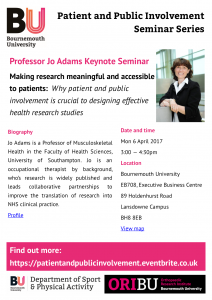
Professor Jo Adams Keynote PPI Seminar
Making research meaningful and accessible to patients: Why patient and public involvement is crucial to designing effective health research studies
Date Monday 6th March 2017
Time 3:00 – 4:30 pm
Location EB708, Executive Business Centre, 89 Holdenhurst Road, Lansdowne Campus, Bournemouth University
As part of the Public and Patient Involvement (PPI) in Research seminar series
Biography
Dr Jo Adams is a Professor of Musculoskeletal Health within the Faculty of Health Sciences, University of Southampton. Jo is an occupational therapist by background. She has led both national and international applied translational research programmes related to developing effective self- management approaches for individuals with musculoskeletal diseases. Her research is widely published and she leads collaborative partnerships to improve the translation of research into NHS clinical practice. She is also an experienced educator having taught health care professionals at pre and post registration level for over 20 years
Book your place now: https://patientandpublicinvolvement.eventbrite.co.uk
Refreshments are available and there will be plenty of time for discussion at the seminar end. Any questions please contact:
Dr James Gavin
Email jgavin@bournemouth.ac.uk
Phone +44 (0)1202566303
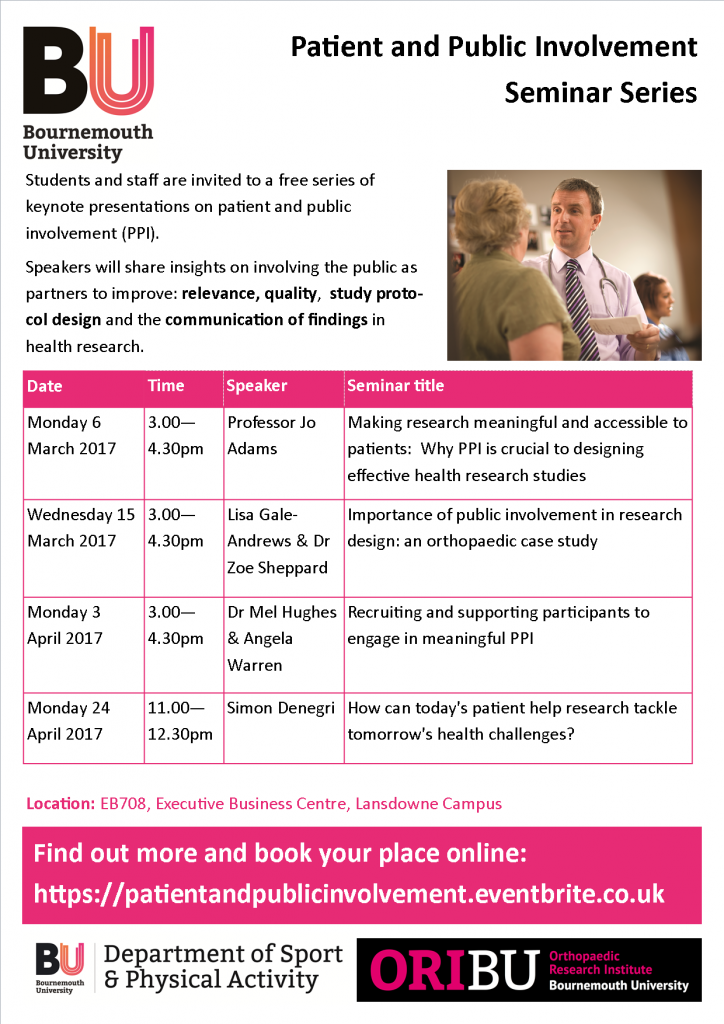
Public & Patient Involvement (PPI) – Seminar Series
Bournemouth University will be hosting a Public Involvement seminar series throughout March and April, which focusses upon the public/patients working with staff to: 1) prioritise research; 2) advise upon project methodology; 3) design recruitment campaigns; 4) develop research materials; and 5) promote the impact of findings.
Patient and Public Involvement (PPI) has broad application to research beyond Health and Social Care, allowing the public actively act as participants. Direct benefits to researchers include: ensuring research quality, credibility and relevance; public accountability and insights; and enhancing research funding.
Students, staff and the public are invited to the seminar series. UGR and PGR students attending three or more seminars will be eligible to apply for an opportunity to run their own PPI advisory group with hip-replacement patients. This will be supported by ORI and the Department of Sport and Physical Activity, and has ongoing potential for conference presentation and journal article preparation.
Patient & Public Involvement (PPI) Seminar Series
Location EB708, Executive Business Centre, Lansdowne Campus
Monday 6th March, 3-4.30 pm
Why PPI is crucial to designing effective health research studies
Professor Jo Adams, Professor Musculoskeletal Health, University of Southampton
Wednesday 15th March, 3-4.30 pm
Importance of public involvement in research design: an orthopaedic case study
Lisa Gale-Andrews & Dr Zoe Sheppard, Faculty of Health and Social Sciences, Bournemouth University
Monday 3rd April, 3-4.30 pm
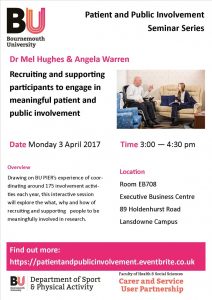
Recruiting and supporting participants to engage in meaningful PPI
Dr Mel Hughes & Angela Warren, Carer and Service User Partnership, Bournemouth University
Monday 24th April, 11-12.30 pm
How can today’s patient help research tackle tomorrow’s health challenges?
Simon Denegri National Director, Patients and the Public in Research (INVOLVE)
Book your place now: https://patientandpublicinvolvement.eventbrite.co.uk
Refreshments are available and there will be plenty of time for discussion at the seminar end. Any questions please contact:
Dr James Gavin
Email jgavin@bournemouth.ac.uk
Phone +44 (0)1202566303
New paper published by CMMPH’s Dr. Susan Way
This week saw the pre-publication of ‘Core principles to reduce current variations that exist in grading of midwifery practice in the United Kingdom’ in Nurse Education in Practice. This paper is co-authored by Dr. Susan Way in the Centre for Midwifery, Maternal & Perinatal Health (CMMPH). The authors argue that these core principles could contribute to curriculum development in midwifery and other professions internationally.
Congratulations!
Prof. Edwin van Teijlingen
Reference:
- Fisher, M., Way, S., Chenery-Morris, S., Jackson, J., Bower, H.
(2017) Core principles to reduce current variations that exist in grading of midwifery practice in the United Kingdom, Nurse Education in Practice (forthcoming) see: http://www.nurseeducationinpractice.com/article/S1471-5953(17)30092-6/abstract
Funding opportunity – Innovation in health and life sciences 2
Innovate UK – Innovation in health and life sciences 2 – Call now open!
Innovate UK is investing up to £15 million in projects addressing technical or commercial challenges in health and life sciences (H&LS).
The H&LS sector focuses on agriculture, food and healthcare. It is supported by bioscience technology, medical research and engineering and physical sciences expertise. The aim is to increase competitiveness for UK small and medium-sized enterprises (SMEs).
Grants can be awarded to projects led by a UK-based business of any size. In certain circumstances a research and technology organisation (RTO) may also be eligible to lead. (See section 5 of the briefing document.)
SMEs are encouraged to lead on projects. An SME can apply on its own for funding up to £100,000. All consortia must involve at least one SME.
We expect projects to last from 6 months to 3 years and range in size from total project costs of £50,000 to £2 million.
There are 2 options for applications to this competition:
- £5 million for projects that last from 6 months to 1 year with total project costs from £50,000 to £100,000
- £10 million for projects lasting from 1 year to 3 years with total project costs between £100,000 and £2 million
Key dates:
- Competion opens 6 February
- Register by midday 5 April
- Apply before midday 12 April
Competion brief and more information: Click here.
If you are interested in submitting to this call you must contact your RKEO Funding Development Officer with adequate notice before the deadline.
For more funding opportunities that are most relevant to you, you can set up your own personalised alerts on Research Professional. If you need help setting these up, just ask your School’s/Faculty’s Funding Development Officer in RKEO or view the recent blog post here.
If thinking of applying, why not add notification of your interest on Research Professional’s record of the bid so that BU colleagues can see your intention to bid and contact you to collaborate.
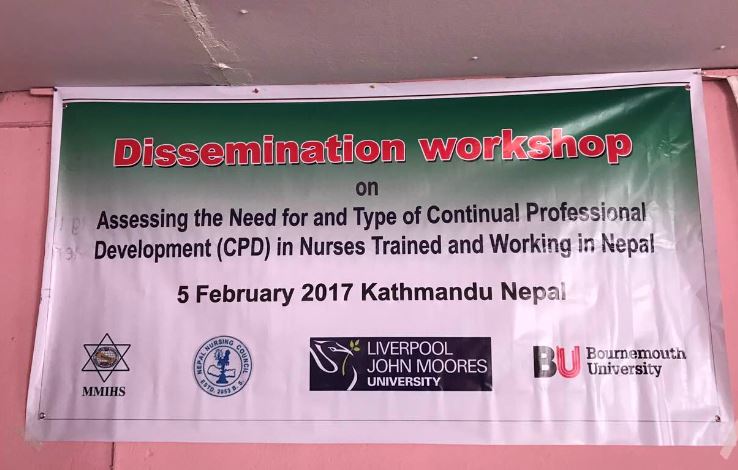
CPD study findings presented in Kathmandu
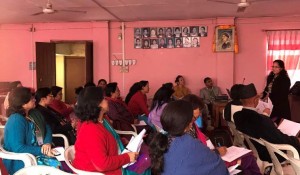
Today we offered preliminary feedback to key stakeholders in Kathmandu as part of our research into CPD (Continuous Professional Development) for nurses in Nepal. Today’s presentation is party funded by LJMU (Liverpool John Moores University) and partly funded by BU’s Centre for Excellence in Learning (CEL). Late 2016 CEL funded the qualitative part of our research project. In this CPD project we work with representatives of the Ministry of Health , the Ministry of Education, the Nepal Nursing Association and the Nursing Council, and providers of Nursing Education (both Government-run universities and private colleges).
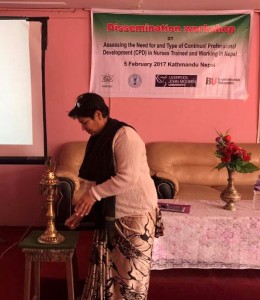
Today key presenter was BU Visiting Faculty Dr. Bibha Simkhada (based at LJMU). The event was opened by Associate Professor Chandra Kala Sharma, who is also the president of the Nepal Nursing Association (lighting the traditional lamp in photo right).
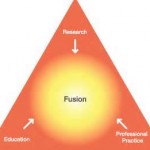
Our BU contributors, Dr. Catherine Angell and Prof. Edwin van Teijlingen, are both based in the Centre for Midwifery and Maternal & Perinatal Health (CMMPH). We are grateful to our collaborators in Nepal, especially Dr. Sujan Marahatta at Manmohan Memorial Institute of Health Sciences, for organising this event in our absence. The CPD research project is truly a FUSION project in the field of nursing & midwifery since it links Research in the field of Education to help improve Practice in Nepal. Further information can be found on a previous blog post, click here!
Prof. Edwin van Teijlingen
CMMPH
Funding opportuntity – Innovation in health and life sciences
Innovate UK – Innovation in health and life sciences 2 – opens soon!
Innovate UK is investing up to £15 million in projects addressing technical or commercial challenges in health and life sciences (H&LS).
The H&LS sector focuses on agriculture, food and healthcare. It is supported by bioscience technology, medical research and engineering and physical sciences expertise. The aim is to increase competitiveness for UK small and medium-sized enterprises (SMEs).
Grants can be awarded to projects led by a UK-based business of any size. In certain circumstances a research and technology organisation (RTO) may also be eligible to lead. (See section 5 of the briefing document.)
SMEs are encouraged to lead on projects. An SME can apply on its own for funding up to £100,000. All consortia must involve at least one SME.
We expect projects to last from 6 months to 3 years and range in size from total project costs of £50,000 to £2 million.
There are 2 options for applications to this competition:
- £5 million for projects that last from 6 months to 1 year with total project costs from £50,000 to £100,000
- £10 million for projects lasting from 1 year to 3 years with total project costs between £100,000 and £2 million
Key dates:
- Competion opens 6 February
- Register by midday 5 April
- Apply before midday 12 April
Competion brief and more information: Click here.
If you are interested in submitting to this call you must contact your RKEO Funding Development Officer with adequate notice before the deadline.
For more funding opportunities that are most relevant to you, you can set up your own personalised alerts on Research Professional. If you need help setting these up, just ask your School’s/Faculty’s Funding Development Officer in RKEO or view the recent blog post here.
If thinking of applying, why not add notification of your interest on Research Professional’s record of the bid so that BU colleagues can see your intention to bid and contact you to collaborate.
New paper CMMPH PhD student Sheetal Sharma
Congratulations to Sheetal Sharma, postgraduate student in the Centre for Midwifery, Maternal & Perinatal Health (CMMPH) whose latest paper on the process of the research in her PhD fieldwork was accepted today by the Journal of Asian Midwives [1]. Sheetal used an innovative mixed-methods evaluation which was applied to a long-running maternity intervention in rural Nepal. The intervention has been supported for nearly seven years by Green Tara Trust, a Buddhist charity based in London. Sheetal’s supervisors are supervisors are Prof. Vanora Hundley, Prof. Edwin van Teijlingen, Dr. Catherine Angell (all in CMMPH) and Prof. Padam Simkhada, who is Visiting Faculty in the Faculty of Health & Social Sciences and based at Liverpool John Moores University.
This paper is part of a larger body of health research work conducted by CMMPH in Nepal.
Reference:
Sharma, S., Simkhada, P., van Teijlingen, E., Stephens J, Hundley, V., Angell, C. (2017) Evaluation of Maternity Care Intervention in Rural Nepal: Lessons learnt, Journal of Asian Midwives (accepted Jan. 2017).
Funding opportunities : Biomedical catalyst
UK businesses can apply for a share of up to £10 million to develop innovative ideas that will help solve healthcare challenges. The project must be carried out in the UK. Projects must be led by a micro, small or medium business enterprise (SME) with companies applying either individually or in collaboration with other SME businesses or research organisations. See more information on academic led applications.
The aim of this competition is to develop innovative healthcare technologies and processes that will help provide:
- disease prevention and proactive management of health and chronic conditions
- earlier and better detection and diagnosis of disease, leading to better patient outcomes
- tailored treatments that either change the underlying disease or offer potential cures
This competition has 2 awards:
- feasibility studies award: to explore and evaluate the commercial potential of innovative scientific ideas – competition brief and competition guidance
- primer award: to conduct a technical evaluation of your idea through to proof of concept in a model system – competition brief and competition guidance
Application deadline is midday Wednesday 29 March.
Feasibility studies award
Total project costs of up to £200,000. Projects should last between 3 months and 1 year. Projects must start by 1 August 2017 and end by 1 August 2018.
Primer award
Projects are likely to range in size from total project costs of £200,000 to £1.5 million. Projects should last up to 2 years. Projects must start by 1 August 2017 and end by 1 August 2019.
The Biomedical Catalyst supports innovative solutions to healthcare challenges. Innovate UK, the Medical Research Council and Scottish Enterprise fund Biomedical Catalyst awards.
If you are interested in submitting to to this call you must contact your RKEO Funding Development Officer with adequate notice before the deadline.
For more funding opportunities that are most relevant to you, you can set up your own personalised alerts on Research Professional. If you need help setting these up, just ask your School’s/Faculty’s Funding Development Officer in RKEO or view the recent blog post here.
If thinking of applying, why not add notification of your interest on Research Professional’s record of the bid so that BU colleagues can see your intention to bid and contact you to collaborate.
Scottish Government publishes Maternity Review
Yesterday the Scottish Government has published its national maternity review ‘The Best Start – A Five Year Forward Plan for Maternity and Neonatal Care in Scotland’. The report has been widely welcomed and gained, among others, the full support from the Royal College of Midwives (RCM). Mary Ross-Davie, RCM Director for Scotland noted: “This is a defining moment for maternity services in Scotland and will be a seismic shift for our maternity services. The plan has the potential to revolutionise maternity care, to deliver safer and better services for women, babies and their families, and to improve the health of our population.”
The Best Start recognises that maternity and neonatal services matter to the health and wellbeing of Scotland’s people. The report’s underpinning is more of a social model of childbirth as it observes that “The health, development, social, and economic consequences of childbirth and the early weeks of life are profound, and the impact, both positive and negative, is felt by individual families and communities as well as across the whole of society.”
Having lived for 25 years in Scotland I am happy to have made a small contribution to this import report.
Prof. Edwin van Teijlingen
Centre for Midwifery, Maternal & Perinatal Health
It’s a girl, and then there is silence…..
The second day of THET training showed again that gender is a critical issue in Nawalparasi, southern Nepal. We asked the ANMs about things they had changed in their own practice. Several ANMs said that they had changed the way they worked. Now they see that having a baby girl can be a significant mental health issue as it causes the women a lot of stress. Interestingly, it also caused them as health workers considerable stress The ANMs said that they had started to counsel families of girl children. They say they emphasise that it is okay to have girls.
This ties in with feedback comments from yesterday in a different group of trainees. In Sunday’s training, one ANM answered when asked about stress at work, that she finds it stressful that a room falls silent when a baby girl is born. She commented that this happens when the family is obviously hoping for a boy. She added that at the very moment a baby girl is born, the family immediately falls silent. She said that this is a great source of stress to her as a health worker.
Coincidently next door to the training venue in Nawalparasi a Hindu wedding has been taking place today. This colourful spectacle represents different roles and expectations of men and women, the bride and the groom, but also the other guests here in Nepal. Weddings everywhere are ceremonies that reflect society. Seeing the wedding from close by and listening to the ANMs over these last two days, we reflected at the end of today that these ANMs are acting bravely in raising such a culturally sensitive issue in their practice, in this largely patriarchal rural society.

Flora Douglas & Edwin van Teijlingen
CMMPH
Nuffield Research Placements: A ‘win-win’
Every year the Nuffield Research Placements provides to over 1,000 students the opportunity to work alongside professional scientists, technologists, engineers and mathematicians. As a PGR student in FHSS, I want to share my experience of being involved in the scheme last summer, and hopefully, to inspire you to consider doing likewise in 2017.
The Nuffield-funded scheme encourages and supports school students to undertake work placements in universities, with the purpose of inspiring the future generation of researchers.
The placements are a unique opportunity to give a 17 year-old the chance to discover what a career in STEM (Science, Technology, Engineering or Maths) might be like, which is particularly valuable for those with no family history of attending university or working in a STEM environment.
Personally, I believe that the choices we make in life are strongly related with the people we meet, and the placements are an opportunity to share your enthusiasm for your research with impressionable minds.
Cast your own mind back to when you were 17 what did you know about research as a career? Did anyone motivate and inspired you? How did you get where you are today?
I was involved in hosting two Nuffield Research Placements students last summer. Under the guidance and support of Professors Alison McConnell, Professor Tom Wainwright, Dr James Gavin and Rachel Delourme (STEM Advisor & Sustainability Co-ordinator at Cornwall Council), I took responsibility for coordinating the placement projects of Jamie Singleton and Freddie Corrie-Deane.
I found the experience really motivating and far from distracting me from my work routine, the placement made a valuable contribution. The students’ work helped me in defining my project and refining the research processes associated with my first study of my PhD. In this regard, I would highly recommend the value of the placements, which helped me practically, and also helped to develop my skills as a mentor.
The placements were also very valuable to the students, and below are a few thoughts in Freddie and Jamie’s own words:
Freddie:
“Joining a research study, I knew I was in for a hefty chunk of reading, and with a pessimistic outlook I thought it would all be dry and bland, and that it would be the source of countless days of boredom. Thankfully I was wrong, and while I did have to spend an obligatory day or two reading background information, studies and manuals; the rest of this placement has been involved with the workings of brand-new machinery in the Orthopaedic Research Institute and going out into the local community to talk with people, both of which have been challenging and engaging in all of the right ways to make this experience an enjoyable one.
Our engagement in the community started very early into the placement, on the second day in fact, when we tagged along with Francesco (Our PhD Student overseer/mentor) to an area of sheltered housing to help him give a talk on his study, it was some really good hands on experience (it didn’t hurt that we were offered a biscuit or two). Following this line of talking to people, Jamie and I have spent the last couple of days walking around the gardens by the seaside talking to people and filling out surveys.
We have also spent a day or two engrossed in the outstanding labs in the Orthopedic Research Institute, equipped with an amazing range of equipment from a pair of surgery VR simulators that bring in experts and surgeons from all over Europe, to the intricate and ever useful Primus Machine which has more potential and customisable positions than there are hours in the day and so understandably has just as many uses.”
Jamie:
“During the past two weeks at Bournemouth University, we have had lots of hands on experience and witnessed the fun sides of research and also, the not-quite side. The latter, quite funnily enough, involved vast amounts of background reading and studying of protocols. The more enjoyable hands on experience however, consisted of being introduced to and working in the Orthopedic Research Institute Labs testing out protocols. Much to our disappointment… we had to use numerous fun and expensive pieces of equipment, it was at this point we knew this was the right place to be.
Amongst playing around with expensive machinery such as the PrimusRS and the Virtual Reality machines, we got to do some real work. This work was tough yet enriching and consisted of explaining what the research was about and why it is essential to a sheltered community, and of course when asked, accepting the offer for tea and biscuits. Visiting the shelter did give me an insight into the recruitment process for research projects, and I was quite surprised of how laid back it was.
Next, this time for real we did have work to do such as reading protocols, resources, and informative documents needed to produce our review which was not the most exciting experience however, it was made up for by the interesting walks we went on, through the Lower Gardens, in order to gather vital information that we needed for our project analysis of the PASE questionnaire.”
In conclusion, the placement are a ‘win win’ and a a great opportunity for all PGRs, not simply to share your knowledge, but also to inspire young scientists and to help them to make the first step on a career in science. Wouldn’t it be great to think that you might be one of those inspiration people who make a difference to a young person’s aspirations?
If you want to know more about the placement,please contact:
Rachel Delourme at rdelourme@cornwall.gov.uk
BU Visiting Fellow Dr. Flora Douglas speaking as THET volunteer in Nepal
Today we had our first training session of the final THET mental health in maternity care project. UK volunteer Dr. Flora Douglas spoke about key aspects of health promotion and focused particularly on notions of community-based approaches. Flora is based at the University of Aberdeen and she is also a Visiting Fellow in the Centre for Midwifery, Maternal & Perinatal Health (CMMPH). This was her first visit to Nepal. She was inspired to volunteer as she had been a MSc supervisor some years ago on a project that related to the Green Tara Nepal health promotion intervention. Bournemouth University has been working with Green Tara Trust, a Buddhist charity based in London for many years.
Yesterday Flora had visited one of the 20 birthing centres in Nawalparasi, the district where the THET training takes place. Flora was very humbled by the experiences of the community-based maternity care workers in the light of many constrains. She said: “I have seen pictures of such birthing centres and read about them in the literature, but it is not until you see them first hand that you realise how staff have to work with such limited resources.
The attendees, who are nearly ANMs (auxiliary nurse midwives) were highly enthusiastic and very keen to discuss and learn. They shared some very personal and touching stories about their practice. Flora added: “I am very struck by their understanding of the importance of the social and cultural determinants of both psychical and mental health.” Many found they had learnt something in previous THET sessions in 2016 about communication with women and counselling family members about mental health, and perhaps most importantly, listening more to women. Last, but not least, Flora commented on the dedication of the participants: “At least two of the participants told me they travelled ten hours to get here for our one-day workshop. This really shocked me, particularly having seen the quality of the roads and public transport!”
Prof. Edwin van Teijlingen
CMMPH
Training preparation in rural Nepal
Yesterday we come down from Kathmandu, the capital of Nepal, to our THET training area in Nawalparasi. Today we are starting our sixth and last training session on the Mental health training for community-based maternity care providers. Interesting we are starting training on a Sunday as Nepal is largely a Hindu country and most workers have only a one-day weekend (which is the Saturday). This BU-led project is a collaboration between the Centre for Midwifery, Maternal & Perinatal Health (CMMPH), Tribhuvan University (Nepal’s oldest university) and Liverpool John Moores University (LJMU). The project receives funding from DFID, and is managed through THET and supported locally in Nepal by a charity Green Tara Nepal.
The landscape in the photo gives an idea of how rural this part of Nepal is. Nawalparasi is situated in the south of Nepal the India border. It is also largely very flat, not like the Nepal most people envisage namely that of the Himalayans and of Mount Everest. The flatness makes a Dutchman feel at home though.
The project depends on volunteers who work in the health sector in the UK to come out and spend their time and energy preparing and delivering the training. Our project also could not work without the logistical support from Green Tara Nepal and our academic colleagues at Tribhuvan University. The last photo shows one of the UK volunteers Dr. Flora Douglas with the translator Shiwani Manandhar on the way to the training venue.

Prof. Edwin van Teijlingen (from Nepal)
CMMPH
FHSS Dr. Pramod Regmi speaking in India
Two BU papers and a poster at the International Conference on Transforming Lives & Healthcare through Technology
On 9th January 2017, I presented a paper entitled ‘Qualitative research in health technology assessment’ in a scientific session at the International Conference on Transforming Lives and Health Care through Technology (TLHTicon 2017), Wardha, India. This paper was prepared jointly with by Prof Edwin van Teijlingen and BU’s Visiting Prof Padam Simkhada (Liverpool John Moores University). At the same conference Mrs. Preeti Mahato’s poster on ‘Factors affecting health facility delivery in rural Nawalparasi, Nepal’ was also displayed. Preeti is a PhD student in FHSS. In another scientific session, BU visiting faculty Prof Padam Simkhada presented a paper around global public health and health technology assessment. Prof Edwin van Teijlingen and Dr Pramod Regmi co-authored this presentation.
The conference, which attracted more than 180 oral scientific papers and 97 posters, was organized jointly by Datta Meghe Institute of Medical Sciences, DU, Datta Meghe Institute of Engineering, Technology & Research and Yeshwantrao Chavan College of Engineering in association with the Global Consortium for Public Health Research. The Global Consortium for Public Health Research was recently formed [1]. Prof Edwin van Teijlingen, Dr Pramod Regmi, both from HSS, BU are part of it among the 14 academics/researchers from UK, India, Bangladesh, Nepal and few other Low and Middle-Income Countries. Some of them are BU visiting faculty too. Unfortunately, Prof Edwin van Teijlingen could not get a visa in time for India, so he recorded a good-luck message. This pre-recorded message was played to the conference goers.
I found the scientific sessions were a nice blend of scientific talks, plenary sessions, symposia and scientific track sessions. Overall, this conference provided a much-needed platform for academicians, researchers, practitioners and professionals from medical, engineering and industry to disseminate their innovations in interdisciplinary field of health sciences through technology. The conference show-cased innovations in health-care through technology, which shall be useful in transforming lives of people in Low and Middle Income Countries. In these two days; I have been able to all refreshed with thought-provoking & informative talks rendered by experienced researchers around technology in health care.
Dr Pramod Regmi, Post Doc Research Fellow, HSS
Reference:
- Simkhada, P., van Teijlingen, E., Regmi, P.R. et al., 2016. Need and scope of global partnership on public health research. Journal of Datta Meghe Institute of Medical Sciences University, 11 (2), 202-204.


Seeing the fruits of your labour in Bangladesh
Exploring Embodied Research: Body Map Storytelling Workshop & Research Seminar
Marking a Milestone: The Swash Channel Wreck Book Launch
No access to BRIAN 5-6th February
ECR Funding Open Call: Research Culture & Community Grant – Application Deadline Friday 12 December

MSCA Postdoctoral Fellowships 2025 Call

ERC Advanced Grant 2025 Webinar
Update on UKRO services
European research project exploring use of ‘virtual twins’ to better manage metabolic associated fatty liver disease