Category / BU research

Bournemouth University Cyber Security Researcher Wins Best Poster Award at HISC 2025

Bournemouth University (BU) is proud to announce that PhD Cyber Security researcher Serdar Akar, has been awarded Best Poster Winner at this year’s High Integrity Software Conference (HISC) 2025, held in Newport, Wales.

HISC is a leading international forum that brings together software engineers and industry practitioners to exchange knowledge, address critical challenges, and strengthen the foundations of a trustworthy software ecosystem.

Serdar’s winning poster, titled Towards Productive Cyber Resilience and Safety Analysis in Model-Based Systems Engineering (MBSE), was showcased in the conference’s Future Zone, which highlights innovative research shaping the future of high-integrity software.

Serdar was also recently named the Winner of our BU’s ‘Business Idea Challenge’, organised by the Students’ Union (SUBU). This award recognises a student-led venture that is not only highly feasible but also carries a strong social impact, aligns with the university’s sustainability priorities, and demonstrates impressive potential for future growth.

Serdar said, “To have my work recognised in both academic and entrepreneurial spheres in such a short time is immensely encouraging. It is a great privilege to be able to contribute to the research and innovation environment here at Bournemouth University.

Dr Duncan Ki-Aries at Bournemouth University, commented, “These awards reflect the high calibre of research being undertaken at BU. Serdar’s work contributes to advancing cyber resilience and safety in complex systems, and we are delighted to see it recognised on an international stage.”

Prof Huseyin Dogan mentioned, “There are challenges centred on Model Based Systems Engineering in industry, and we are bridging theoretical benefits with practical applications. Serdar’s PhD will contribute to this domain by integrating cyber resilience and safety analysis through software tool support.”

The recognition underscores Bournemouth University’s commitment to pioneering research towards safer, secure, and more resilient digital infrastructures.

If you’re interested in learning more about these impactful projects, please don’t hesitate to get in contact with Prof. Huseyin Dogan and Dr. Duncan Ki-Aries, and others.

Fourth INRC Symposium: From Clinical Applications to Neuro-Inspired Computation

We cordially invite you to the 4th Symposium of the BU Interdisciplinary Neuroscience Research Centre: From Clinical Applications to Neuro-Inspired Computation on Friday, the 16th of January 2026, 9:30-15:00 at the Lees Lecture Theatre (Talbot Campus, Poole House -outside).

This symposium encompasses a journey from clinical case studies to new, emerging experimental and computational methodologies that underpin future translational applications. It is an opportunity for informal discussions on grant proposals and to explore shared interests with our external guests from the NHS and collaborating EU universities.

The schedule is as follows:

9:30 Coffee

9:50 Opening and Welcome Address

10:00-10.50 Dr Michalis Doumas (Queen’s University Belfast): Sensory integration for postural control in healthy ageing and in people living with Parkinson’s.

10:50 Coffee break

11:00-11:50 Session I. Ageing and Neurodegenerative Disorders

Dr Ioanna Markostamou: Naming spatial relations in typical and atypical ageing: At the crossroads of language and perception.

Dr Catherine Talbot: Dementia in the digital age: exploring the promise and pitfalls of social technologies.

11:50-12.50 Lunch break (no lunch provided, but Talbot Campus facilities available)

12.50-13.40 Dr Andre Rupp: Auditory perception and clinical applications (title: TBC).

13:40 Coffee break

14:00-14.50 Session II: Neuro-inspired computation

Dr Anna Metzger: Understanding haptic perception of objects’ shape and material via DNN modelling.

Dr Hongchuan Yu: Waa3D: an open-source platform to benchmark performance of algorithms for automated neuro tracing in light microscopy datasets.

Concluding Remarks + Invitation to everybody to become a member of the INRC network

If you have any queries, please do not hesitate to contact Ellen Seiss, eseiss@bournemouth.ac.uk or Emili Balaguer-Ballester, eb-ballester@bournemouth.ac.uk.

Thank you very much; we are looking forward to seeing you there.

Kind regards,

Ellen and Emili, on behalf of all of us.

Writing policy briefs

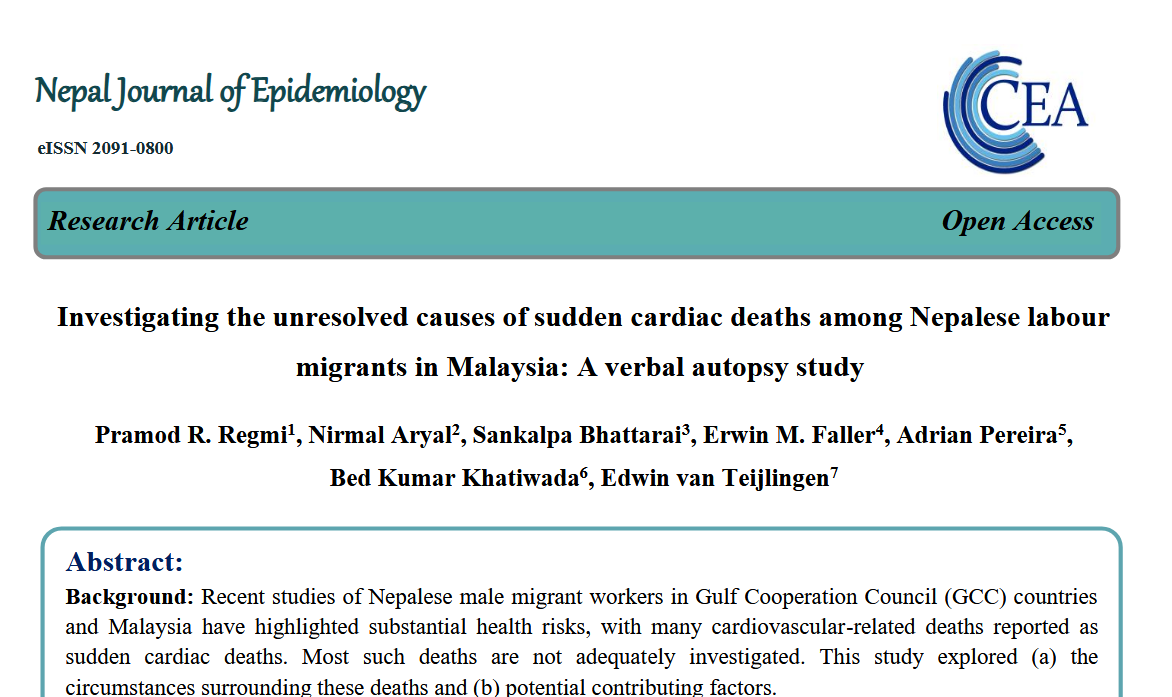
This week saw the publication of ‘Bridging Research and Policy: Practical Tips for Writing Policy Briefs‘ co-authored by Bournemouth University’s (BU) Dr. Pramod Regmi and Prof. Edwin van Teijlingen as well as former BU staff Dr. Nirmal Aryal.  An effective policy brief bridges the gap between research findings and policymaking, ensuring that evidence is presented succinctly and in a way that is accessible and usable for policymakers and relevant stakeholders. It is an important step in what is called knowledge mobilisation. However, many researchers find it hard to communicate the findings of their studies to relevant policymakers, whilst policymakers note that the evidence they need is not easily accessible and is often not presented in an accessible format. Producing policy briefs is one of the approaches which academics can use to get their research noticed by policymakers.

This practical paper outlines some of the trials and tribulations of producing policy briefs, based on real-world research. It offers several recommendations to help improve the writing and dissemination of policy briefs.  The paper is published in an Open Access journal hence freely available to anybody across the globe with internet access.


References:

  1. van Teijlingen, E., Balen, J., Regmi, P., Rushton, S., Simkhada, P., Aryal, N. (2025). Bridging Research and Policy: Practical Tips for Writing Policy Briefs. Journal of Health Promotion13(1),:89–96. https://doi.org/10.3126/jhp.v13i1.87170


Upholding Excellence: The Concordat to Support Research Integrity

We are pleased to share developments that reinforce our commitment to the highest standards of rigour, ethics, and transparency in all our research activity: Our updated Research Integrity Statement has been published on the BU Research Integrity page, alongside the adoption of the revised Concordat to Support Research Integrity.

Concordat to Support Research Integrity

The revised Concordat is a vital update for the UK research sector, setting out a clear framework for upholding and strengthening research integrity. This establishes five core commitments for researchers, institutions, and funders, ensuring that our research culture continues to be robust, ethical, and trustworthy.

Our Five Core Commitments:

  1. Maintaining the highest standards of research integrity – the principles: Responsible research is grounded in the principles of honesty, rigour, transparency, care and respect, and accountability.
  2. Maintaining the highest standards of research integrity – expectations and compliance: Research must be conducted according to all appropriate ethical, legal, regulatory, and professional frameworks.
  3. Embedding a culture of research integrity: This focuses on creating a positive research environment by making integrity central to continuing professional development, designing research to embed ethical practice throughout, and collaborating to maintain a supportive research culture.
  4. Questionable research practices and misconduct must be addressed through effective, fair investigation. The research community is responsible for honestly reporting concerns and fully supporting the process. Annex A includes the Concordat’s definitions of questionable research practices and research misconduct. 
  5. Accountability and continuous improvement in research integrity: This is a collective endeavour requiring leadership and accountability to continuously improve responsible practice. It involves upholding trust in UK research and actively seeking opportunities to implement, reward, and share good practices and learning.

You can view the full details of the commitments on the UKRIO website: The Concordat to Support Research Integrity.

For a summary of the key changes introduced in the 2025 version, please consult the official briefing document: UKRIO Briefing doc on 2025 Concordat.

Bournemouth University’s Statement

Our new Research Integrity Statement adopts the principles of the revised Concordat and details the institutional mechanisms, policies, and training we have in place to support our research community. This document reaffirms our dedication to an environment where all researchers can conduct their work responsibly and with confidence.

Read the full statement.

This commitment is central to our mission, as highlighted by Dr Fiona Knight:

“Bournemouth University is committed to embedding research integrity across all aspects of our research. Through our Research Concordat Steering Group and comprehensive training programmes, including guidance on AI and mandatory ethics modules, we support our researchers in conducting responsible and ethical research. Oversight is provided by our Research Ethics Committee and specialist panels, with additional assurance for NHS-related research through our Clinical Research Adviser. Together, these systems promote a positive and transparent research culture.” – Dr Fiona Knight, Head of Research Excellence & Governance

Up2U: New BU academic publication

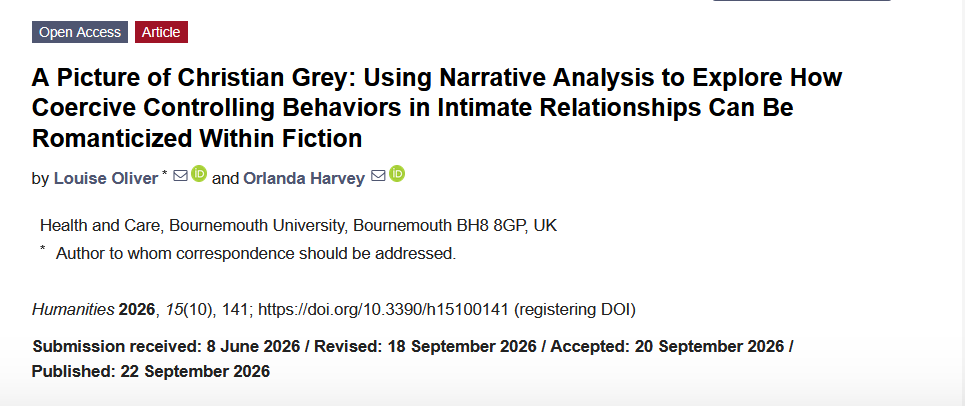
Congratulations to the interdisciplinary BU team on the publication of the paper ‘Up2U: designing and validating a new evidence-based programme for perpetrators of domestic abuse who want to change’ in Frontiers in Psychology [1].   The new paper is part of the series ‘The Dynamics of Emotion Regulation and Aggressiveness in Gender-Based Violence Contexts’, and it appeared in an Open Access journal and is therefore easily accessible.

Domestic abuse is a pervasive issue rooted in patterns of power and control, contributing to a significant number of high-harm offenses both in the UK and internationally. While programmes have been aiming to disrupt abusive cycles through the understanding and recognition of harm, there is widespread disagreement on what effective interventions should look like. This paper addresses this gap.

The authors of this paper include both psychologists and social workers, as well as a student co-author.  The lead author, Terri Cole, is a Principal Academic in Forensic Psychology.


Congratulations!

Prof. Edwin van Teijlingen


Reference:

  1. Cole, T., Oliver, L., Harvey, O., Healy, J., Sperryn, A., Barbin, A. (2025) Up2U: designing and validating a new evidence-based programme for perpetrators of domestic abuse who want to change, Frontiers in Psychology, Volume 16 – 28 Nov.2025 | https://doi.org/10.3389/fpsyg.2025.1676490

New BU midwifery paper

Congratulations to HEMS colleagues on their recently published paper in MIDIRS Midwifery Digest. This new qualitative publication focuses on the ‘Barriers to the uptake of healthy eating messages by Black African immigrant pregnant women living in the UK: midwives’ perspectives’ [1].  The paper grew out of Aniebiet Ekong’s PhD research on this topic which was supervised by Drs. Pramod Regmi, Juliet Wood, and Jaqui Hewitt-Taylor.


Reference:

  1. Ekong A, Regmi P, Wood J, Hewitt-Taylor J. Barriers to the uptake of healthy eating messages by Black African immigrant
    pregnant women living in the UK: midwives’ perspectives M
    IDIRS Midwifery Digest, 35(4):  372–383.

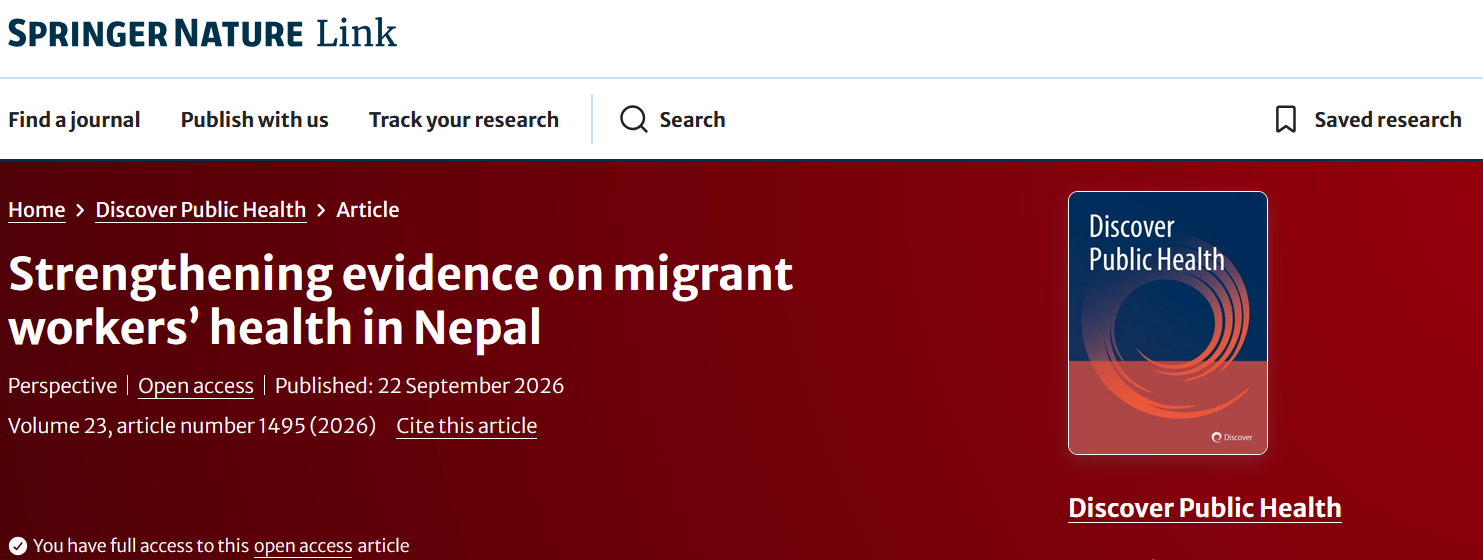
New Cyber Security Advisory Highlights Integration of Safety, Security, and Human Factors in Defence Systems

Following collaborative research on Secure by Design (SbD) conducted by Bournemouth University (BU) and Mima, with the Defence Science and Technology Laboratory (Dstl), a new Cyber Security Advisory has been released. This guidance addresses the complex challenge of balancing security, safety, and human factors in requirements practices.

The project, led by Dr Duncan Ki-Aries and Prof Huseyin Dogan centred on developing and evaluating a Minimum Viable Product (MVP) that demonstrates how these critical domains can be effectively integrated into SbD practices. The goal: to enhance the design of secure, resilient, and user-aware systems for defence applications.

Figure 1. The Secure by Design Process Framework

The advisory outlines key findings from the research, explores the challenges of merging safety and human factors into SbD processes, and offers insights into potential improvements. It also signals directions for future projects aimed at advancing this integration.

Ongoing research at BU will continue to build on this foundation, drawing on the combined expertise of BU and Mima in Human Factors, Security, Systems of Systems Engineering, Safety, and Risk Assessment. This work remains committed to strengthening future defence capabilities through a robust Secure by Design approach.

Figure 2. The project team

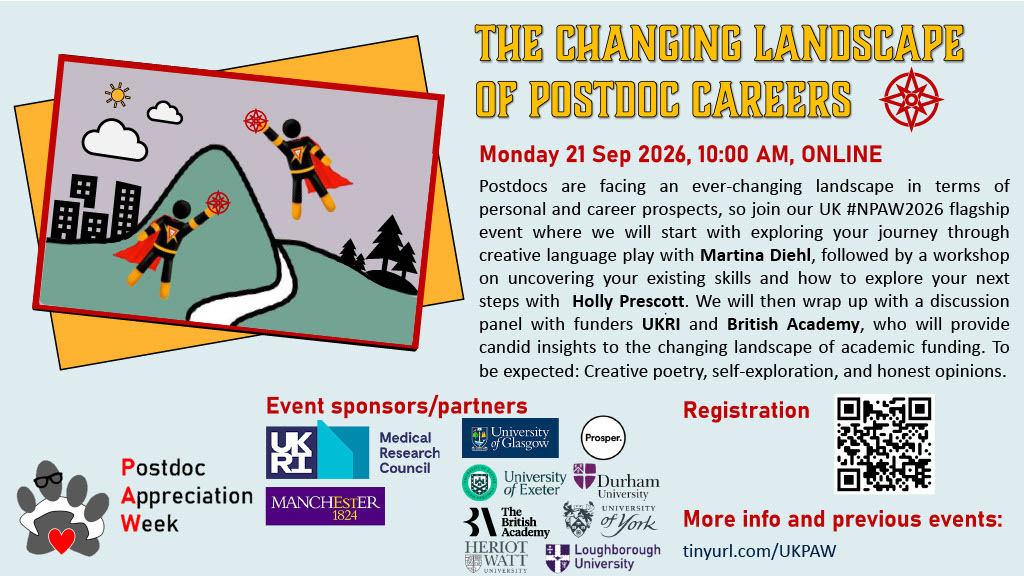
Register now to attend the 17th Annual Postgraduate Research Conference – Wednesday 3 December 2025

Register now to attend the 17th Annual Postgraduate Research Conference, hosted by the Doctoral College.

Join us for a day of showcasing some of the excellent research taking place across BU by our postgraduate research community. This event provides a platform for our postgraduate researchers to present their research, share insights, and engage in meaningful discussions with peers, university colleagues, and external partners.

Date & Time: Wednesday 3 December, 9am-4:30pm

Location: Fusion Building, Talbot Campus

This year, the Poster Exhibition will take place in FG04 & FG06, Fusion Building, with viewings taking place in the morning and during the lunch break. Oral presentations hosted in Share Lecture Theatre in the Fusion Building.

Read the full brochure here

Whether you’re a researcher, academic, colleague, or just interested in the cutting-edge work happening at BU find out more and book your place here 

From Clinical Applications to Neuro-Inspired Computation

We cordially invite you to the 4th Symposium of the BU Interdisciplinary Neuroscience Research Centre: From Clinical Applications to Neuro-Inspired Computation on Friday, the 16th of January 2026, 9:30-15:00 at the Lees Lecture Theatre (Talbot Campus, Poole House -outside).

The symposium consists of a journey from clinical case studies to new, emerging experimental and computational methodologies underpinning future translational applications. It is an opportunity for informal discussions on grant proposals and to explore shared interests with our external guests from the NHS and collaborating EU universities. The provisional schedule is:

9:30. Coffee.

9:50. Welcome Address and Keynote talk: Dr Mihalis Doumas, Queen’s University Belfast.

10.45-11:00. Coffee Break and Networking.

11:00-11:50. Session I. Clinical Neuroscience.

11.50 -12.50. Lunch and Grants Discussion.

12.50-13:45. Keynote talk: Dr Andre Rupp, University of Heidelberg.

13:45-14:00 Coffee Break and Networking.

14:00-14:50. Session II. Neuro-Inspired Computation.

14:50-15:00. Concluding Remarks and Invitation to become a member of the INRC network.

If you have any queries, please do not hesitate to contact Ellen Seiss, eseiss@bournemouth.ac.uk or Emili Balaguer-Ballester, eb-ballester@bournemouth.ac.uk.

Thank you very much, and we are looking forward to seeing you there.

Kind regards,

Ellen and Emili, on behalf of all of us.