A week is a long time at the moment. We have a mixed bag this week but we lead with Brexit to get it over with.
Brexit
In the Westminster Brexit bubble things can turn upside down several times in the space of a week. And even though many more people are watching Parliament live on TV or on the internet, it really is a bubble. The speaker in the House of Commons has had to keep reminding MPs that people are watching, as they make a spectacle of themselves being as rude and rowdy as it is possible to be within the rules about behaviour in the House (i.e. pretty rude and rowdy). And yesterday it was the turn of the Lords, where there was lengthy filibustering aimed at obstructing the debate on the Bill which seeks to force the PM to get an extension to Article 50 to avoid no deal. There was quite a lot of shouting and rudeness there as well, which is not what would usually be expected.
So when the House of Commons proceedings had to be suspended because of a huge leak in the roof, it was probably a bit of a relief. MPs will not get much of a rest, though, as some of the Easter recess has been cancelled and the rest might be too. As the February recess was also cancelled there will be some pretty cross people around.
Anyway, what next? The Bill carries on in the Lords on Monday. While it might seem irrelevant as the PM has today written to the EU to request an extension to 30th June, in these days of rapid policy reversals, it might still be needed. No deal exit is still on the table as the EU and the UK fight about the terms of an extension and the deadline for calling EU elections nears.
The PM’s letter is here. It says that she will not be asking for further changes to the Withdrawal Agreement. It looks forward to the Withdrawal Agreement being approved (although that seems vanishingly unlikely, despite ongoing meetings with Jeremy Corbyn and others). It therefore asks for an extension to 30th June so that once the WA is passed, the rest of the implementation can be done. In the meantime “lawful and responsible” preparations will be made for the EU elections. But the government would like to be able to withdraw from them before 23rd May if they are ready with everything in time.
As usual, writing this on a Friday, we have to say that everything could have changed if you are reading it on Monday. Right now it looks like we’ll be having EU elections and staying in the EU for a long time. But it is still possible we could be leaving on Friday 12th April with no deal. And least likely of all is the chance that the current deal will be approved by Friday and we then leave in May. Let’s see what next week brings.
Investment in research – a good news story?
Research Professional ran what might have sounded like a good news story against the endless doom and gloom of Brexit and specifically, the implications for research:
Writing for HE’s Sunday Reading, universities and science minister Chris Skidmore described himself as the minister for 2.4 per cent. He was referring … to the government’s pledge to raise expenditure on R&D in the UK to the equivalent of 2.4 per cent of GDP by 2027. We’ve said this before under previous science ministers, so we’ll say it again in light of Skidmore’s comments. The government does not plan to spend 2.4 per cent of GDP on research: funding and expenditure are not the same thing. The money earmarked by the government—£7 billion over five years, £4bn of which is as yet unallocated—amounts to about 0.3 per cent of GDP and much less when broken down by annual spend. The actual policy is to leverage that public spending to encourage greater private investment in R&D to bring the UK in line with the average for OECD countries…
Skidmore’s predecessor self-identified as the minister for students. Along with being the minister for the arts and humanities, Skidmore has picked up the challenge of being the minister for 2.4 per cent. He almost certainly won’t be the minister who delivers on reaching the summit of 2.4 per cent. It is to be hoped that when the time comes to pass on the baton, Skidmore will be remembered as the minister who was able to point the way to base camp.”
HE-BCI – the results
If you have been following the discussion on the Knowledge Exchange Framework (KEF) you’ll know that the HE-BCI data provides many of the metrics that sit behind the latest proposals. So it is interesting to look at this year’s outcomes.
The survey includes details of spin-off and start-up companies associated with HE providers. In 2017/18 140 new spin-off companies were formed from university-owned intellectual property. A further 4129 start-ups were formed by staff and graduates of HE providers.
Over the 2017/18 academic year HE providers were granted 1707 patents2 and generated over £207 million of revenue from intellectual property3 in 2017/18.
Business and community engagement measured by the survey includes income generated from collaborative research (£1.4 billion), contract research (£1.3 billion), consultancy (£471 million), facilities and equipment hire (£228 million), CPD and continuing education (£698 million) and regeneration and development programmes (£224 million).
The survey also measures social, community and cultural engagement, with HE providers recording over 25 million attendees at free lectures, performances and exhibitions over the academic year.
Investment by the OfS
At the end of last week the OfS announced their teaching grant allocations for 2019/20:
A total of £1.45 billion will be allocated across a range of activities for academic year 2019-20, including:
- £713 million for high-cost subject funding. This funding is provided to help with the extra costs associated with teaching subjects such as medicine, science, technology and engineering.
- £337 million to promote greater choice and boost equality of opportunity in higher education. This includes £60 million for the National Collaborative Outreach Programme (NCOP), which funds partnerships of universities, colleges and others across the country to increase the proportion of young people from disadvantaged areas going into higher education; and £277 million of student premium funding for students who may need additional support to achieve successful outcomes.
- £40 million for national facilities and initiatives. This includes support for higher education digital infrastructure through Jisc, OfS Challenge Competitions, which target priority issues affecting students, and a new ‘what works’ centre to help universities cut equality gaps.
- £100 million in financial year 2019-20 of capital funding to help universities and colleges to invest in their physical infrastructure so it remains fit for purpose for students.
As announced last year, the introduction of postgraduate masters’ loans means the postgraduate taught funding supplement, set at £8 million, now only supports students that are not eligible for these loans.
Realising the potential of technology in education
The Department for Education issued their “strategy for education providers and the technology industry” this week.
There’s a helpful summary: “Our aim is to support the education sector in England to develop and embed technology in a way that cuts workload, fosters efficiencies, supports inclusion and ultimately drives improvements in educational outcomes. Schools, colleges, universities and other providers face a range of barriers to supporting and integrating the good use of technology. This strategy aims to help address these barriers.”
There’s a lot about schools but some things for universities too. The Department’s Commitments are:
- Get the connectivity right – many education providers struggle with slow internet connections and outdated internal networking and devices.
- Set a vision, know the outcomes you want to achieve and ensure staff have the right skills – it can be hard to know where to start and to get the implementation right.
- …[we].. Have worked with the Chartered College of Teaching to publish an EdTech research journal to highlight and disseminate key research findings.
- Get the right tools, solutions and services, at the best price – it can be challenging to understand what technology to buy to meet specific needs and to get the best price. So we:
- Recommend pre-negotiated buying deals for technology and trial regional buying hubs in the South West and the North West.
- Support an online lending library allowing educators to ‘try before they buy’ through BESA’s online LendEd service.
- Will explore how to facilitate a better online marketplace for education technology to help educators to connect with trusted providers.
- Stay safe – it can be daunting to navigate the responsibilities around privacy, security and data.
- Provide guidance on monitoring, filtering, data security and cyber security.
- Support Jisc to provide training, guidance and consultancy for colleges, universities and other providers.
- Encourage EdTech suppliers to follow ‘Cyber Essentials’ minimum standards and the Code of Practice for Consumer Internet of Things Security
So far so obvious. The second lot of commitments is to the education technology industry. Under the Industrial Strategy Banner, the summary says that: Supporting the development of the UK’s innovative EdTech businesses will be key to the success of our EdTech strategy. Our aim is to stimulate a vibrant and growing sector of EdTech businesses: generating ideas, innovation, and providing high-quality, effective technology for education providers to chose from. Businesses face a range of barriers to starting and growing in the EdTech market and this strategy aims to help tackle those, including by supporting access to the investment and business assistance set out in the government’s Industrial Strategy.
And linked to the story above, the Minster launched the long heralded “money supermarket for universities” apps (thanks to Sam Gyimah for that analogy). But don’t click on the links, because one of them has never worked since the announcement was made, and the other takes you to the corporate website but there is no sign of any app. We’ll keep checking and let you know when they do go live.
- Two contracts were awarded to the winners of the Open Data Competition, one to AccessEd for ThinkUni, which offers students a ‘personalised digital assistant’ bringing together data on universities, courses and financial outcomes that are easy to explore and compare.
- While The Profs have created TheWayUp!, a game for students to simulate different graduate career paths to help them make better choices about their future. It also aims to help students from disadvantaged backgrounds set aspirational educational and career goals to increase their chances of achieving them.
- Both apps are in open beta and are available online from April 2, operating with the latest information on universities in the UK.
Participation in EU funding schemes
While the House of Commons is fighting over Brexit, the House of Lords debated a report from the EU committee on Erasmus and H2020. Many thanks to Dods for the summary. Lord Jay of Ewelme (CB) moved that the House take note of the Report from the European Union. Committee Brexit: the Erasmus and Horizon programmes (28th Report, HL Paper 283)…
- …he reminded members that associate membership would not give the UK voting rights on the budget and strategic direction of the programmes “association is also the only option that would allow the UK to access the key European Research Council and Marie Skłodowska-Curie schemes, which currently account for 44% of the total UK receipts from Horizon 2020”.
- He called on the Government to confirm their intention to seek association agreements for 2021-2027 as soon as possible but recognised this could not be achieved whilst the UK was a member state.
- …Government Spokesperson for Higher Education, Viscount Younger of Leckie confirmed that the Government would publish a formal response to the committees report shortly and recognised the important role both schemes had played.
- On Horizon, he confirmed that the UKRI would use existing payment systems to ensure continuity for UK beneficiaries, and that in a no-deal scenario, the UKRI would contact UK beneficiaries who have registered on the portal with further information on how the guarantee would operate in practice.
- On Erasmus, Viscount Younger highlighted that UK institutions had a strong track record of partnering with overseas institutions. “UK evidence suggests that around half of mobilities already take place outside Erasmus+”, he outlined.
- He stated that the Government were preparing for every eventuality and were very interested in exploring future participation in the Erasmus+ successor scheme. “I understand that the successor scheme will include increased school exchange opportunities and a greater emphasis on widening participation. The Government have welcomed proposals on this and will continue to participate in discussions while we remain in the EU”.
- On the question of associated membership, the Minister intimated his belief that all such countries should be treated as partners rather than competitors, arguing that, “the benefits that associated countries bring to the programme must be recognised and welcomed”.
- On potential alternatives to Horizon Europe, the Minister confirmed that BEIS were “working closely with the national academies and UKRI to develop ambitious and credible alternatives to association to Horizon Europe which could also enable world-class collaborative research”.
- The Minister also argued that the immigration white paper went further than MAC recommendations for international students, extending post-study work to six months for undergraduate students attending institutions with degree-awarding powers, six months for all master’s students and 12 months for PhD students.
Access and Participation
The Government have tabled the Higher Education (Monetary Penalties and Refusal to Renew an Access and Participation Plan) (England) Regulations 2019 statutory instrument, under the Higher Education and Research Act 2017 powers. Key points:
- where a registered higher education provider has an access and participation plan approved by the OfS, that provider may charge fees at the higher limit.
- The OfS may impose a monetary penalty on a registered higher education provider for breach of one of its ongoing registration conditions.
It also establishes the procedure for:
- When the OfS intends to give such a notification and provides for the OfS’s notification of a refusal to renew an access and participation plan to be treated as a provisional decision in the first instance and the procedure for the review of that decision. It also provides for the procedure when the OfS’s decision becomes final.
This statutory instrument will need to be approved by both House of Commons and House of Lords.
Cyber resilience of HE sector
HEPI and Jisc have released a paper on the cyber-resilience of universities claiming hackers are able to infiltrate systems within two hours. The paper has been picked up by the media and was mentioned on the Radio 4 Today programme on Thursday. Key points:
- Under penetration testing, there was 100% success in gaining access to high-value data within two hours;
- 173 HEIs engaged with Jisc’s Computer Security Incident Response Team in 2018 (12% increase);
- During 2018, there were 1,000+ Distributed Denial of Service (DDoS) attacks detected at 241 different UK education and research institutions.
The report recommends swift action, including the adoption of a new British Standard on cyber risk and resilience. The report comes a day after the Government urged businesses and charities to take action to prevent cyber-attacks following the publication of the Cyber Security Breaches Survey 2019.
Digital Minister Margot James commented: We know that tackling cyber threats is not always at the top of business and charities list of things to do, but with the rising costs of attacks, it’s not something organisations can choose to ignore any longer.”
Responding to the Government’s annual Cyber Security Breaches Survey 2019, Josh Hardie, CBI Deputy-Director General, said: “There’s been a real shift amongst businesses when it comes to cyber security – it’s clear to see that it’s now a top priority with concrete action being taken. But businesses can’t be complacent. Unfortunately, cyber threats lurk around every corner. The widespread attack to both public and charities sector entities underlines the importance of having robust cyber incidence response plans. Firms pro-actively assessing the risks out there and taking action to protect themselves and their customers is essential. It’s important to recognise there are opportunities for our world-leading digital economy. The cyber security sector is another example of where the UK can build a competitive advantage.”
Financial stability of the sector
The OfS have issued their first report into the financial stability of the sector, as we noted last week.
- Key findings on the sector’s performance over the latest financial year show that:
- The sector reported an income of £33 billion, a 7.4 per cent increase on the previous year. However, surpluses fell from £1.12 billion in 2016-17, to £1.02 billion in 2017-18.
- At the end of 2017-18, the sector had net liquidity of £11.2 billion (equivalent to 138 days’ expenditure). This is £1.3 billion higher than the previous year.
- At the end of 2017-18, the sector reported borrowing of £12 billion – equivalent to 36.8 per cent of income and £2.1 billion more than the previous year.
Commenting on the report, Sir Michael Barber, chair of the Office for Students, said:
- ‘The English higher education sector is in reasonable financial shape, although as this report shows performance does vary between providers. We have registered 337 universities and other higher education providers, and each must demonstrate they are financially viable and sustainable.
- ‘Our analysis suggests that the sector has made over-optimistic student recruitment forecasts – both nationally and internationally. With the number of 18-year-olds in the population falling significantly between now and 2022, not every university will be able to recruit the number of students they had hoped to. Universities should be wary of relying on over-ambitious recruitment targets, and look at student numbers realistically rather than over-optimistically.
- ‘This is particularly important at a challenging time for the sector overall. Uncertainties ahead include the UK’s future relationship with the EU, possible policy changes resulting from the Augar Review, and increased pension costs. Universities need to have a good grip on costs and base their actions on realistic forecasts.
- ‘It remains our position that we will not bail out universities or other higher education providers facing financial failure. However we are ready to work creatively with any provider facing challenges – especially if they come to us with any difficulties early. Were problems to develop, we would seek to intervene to protect the interests of students.’
Conditional unconditional offers
The Department for Education has made a splash about unconditional offers. It’s all a bit odd – the data they are using was published in January. And the story looks out of date: “The Education Secretary will be asking the OfS to take a comprehensive look at university admissions procedures, in guidance sent to the regulator setting out his priorities for the financial year.” This letter was published in February. Have they forgotten to update a draft press release they have been sitting on since January? Or is another set of instructions for the OfS planned?
The Minister has tweeted that he is “launching a review”, but the OfS had already announced a review – in January.
Aside from the strange timing (I guess it’s a quiet news week), there are some concerns about the allegations being made here. Jim Dickinson on Wonkhe asks:
- what’s interesting is Hinds’ repeating of the assertion that conditional unconditionals count as “pressure selling”. It’s a legal term with legal meaning and legal consequences – Smita Jamdar does a much better job than I ever could on reviewing the legal definitions in this area elsewhere on the site, but OfS and now Hinds must surely believe they are legally right.
- When a university offers guaranteed accommodation in exchange for a firm acceptance, is that “pressure selling” the university, the accommodation, or both? And even if just the standard “firm us up and your offer becomes unconditional” tactic really is “pressure selling”, why are Hinds and the OfS not threatening legal action over what is, in law, criminal behaviour?
And has anyone asked students what they think?
Free speech
And in a world dominated by Brexit and criticism of the sector, it is nice to some good news. We reported last week that the new Minister has backed away from the regular (and as regularly debunked) statements of his predecessor on freedom of speech at universities.
This week Dr Julian Lewis MP (New Forest East) quoted a recent story in a written question to the Minister: “To ask the Secretary of State for Education, with reference to the Daily Telegraph article entitled University cancels talk on extremist speakers, published on 26 March 2019, if he will commission an inquiry into (a) the circumstances in which the free speech society at Bristol University was prevented from hosting a meeting featuring the author of Extreme Speakers league table; (b) the nine occasions listed in that league table when allegedly extreme speakers were hosted at Bristol University; (c) the criteria applied by the University in deciding to ban meetings on security grounds; and if he will make a statement.”
And the reply from the Minister:
- Free speech plays a vital and important role in our society, and universities should be places where students are exposed to a range of issues, including those which may be controversial, and are encouraged to debate and challenge them.
- It is right that extremist views should be exposed and challenged. That is why, under the Prevent duty, (to have due regard to prevent people being drawn into terrorism), Higher Education (HE) providers must have policies in place around the management of speakers. This means ensuring the right steps are taken to contest extremist narratives and to make sure that those wishing spread hatred do not go unchallenged.
- However, challenging extremism does not mean banning lawful speech, and the Prevent duty also explicitly requires further and higher education institutions have regard to their duty to secure freedom of speech. It is up to individual institutions to determine who they deem appropriate to invite to speak on their campuses on a case-by-case basis; government does not dictate who should and should not be invited to speak in higher education providers, providing their speech is within the law.
- We do not routinely comment on individual cases. However, monitoring of the Prevent duty by the Office for Students shows us that HE providers are navigating the balance between freedom of speech and challenging extremism pragmatically and effectively. We recognise that these are complex issues, which is why the government supports the sector on Prevent implementation through our network of Further and HE Regional Prevent Co-ordinators on the ground. We have also worked alongside the Equalities and Human Rights Commission and wider stakeholders to produce the recently published Freedom of Expression guidance. This will enable universities and student unions to understand their obligations for protecting and supporting free speech, and sets out where speech may be unlawful, alongside relevant case studies to support providers in balancing their duties.
Consultations
Click here to view the latest consultation tracker. Email us on policy@bournemouth.ac.uk if you’d like to contribute to any of the current consultations.
Other news
Careers Education: Founders4Schools have published a report on Making Careers Education Age-Appropriate. They say that Schools and Colleges should:
- Begin age-appropriate, careers-related learning early, as soon as children and young people join the setting
- Ensure curriculum and middle leaders work with their teams to identify opportunities to include appropriately sequenced and age-appropriate careers-focused learning in lessons.
- Work with parents from the beginning of primary school and throughout schooling, for example by inviting parents into school to hear careers talks alongside their children, or even talk about their own careers.
- Use labour market information to help align the setting’s provision with employers’ needs locally and regionally
And that the Government should:
- Provide funding for transport costs to help pupils in rural areas or areas lacking transport infrastructure to access opportunities to work with employers
- Tailor existing support and guidance so that it is age-appropriate, for example providing resources and guidance to help speakers and employers plan age appropriate presentations and projects.
And after outrage that Ministerial posts have remained unfilled following Brexit related resignations (and other things), a few were announced this week:
- Justin Tomlinson has been appointed Minister of State for Disabled People, Health and Work, Department for Work and Pensions. He also held the role in 2015-16.
- Will Quince has taken on Tomlinson’s vacated Parliamentary Under-Secretary of State for Family Support, Housing and Child Maintenance, Department for Work and Pensions role.
- In the Department of Health Theresa May’s former PPS, Seema Kennedy, takes Steve Brine’s Parliamentary Under-Secretary of State for Public Health and Primary Care role.
- In DEXEU James Cleverly MP has been appointed as Parliamentary Under Secretary of State at the Department for Exiting the European Union
- Kevin Foster MP as Parliamentary Under Secretary of State at the Wales Office
- Andrew Stephenson MP Parliamentary Under Secretary of State at the Department for Business, Energy and Industrial Strategy.
Subscribe!
To subscribe to the weekly policy update simply email policy@bournemouth.ac.uk
JANE FORSTER | SARAH CARTER
Policy Advisor Policy & Public Affairs Officer
Follow: @PolicyBU on Twitter | policy@bournemouth.ac.uk
 The 2019 Marie Skłodowska-Curie Actions Individual Fellowships (MSCA IF) call is now open. The call documents, including the Guide for Applicants, are available on the Funding and Tenders Opportunities Portal (formerly ECAS). The call deadline is 11 September 2019, 4 PM UK time. Individual Fellowships are aimed at individual researchers who possess doctoral degree or equivalent research experience; scheme involves international and intersectoral mobility.

 e
e  The
The 


 The Research Excellence Framework (REF) is the system for assessing research in UK higher education institutions HEIs. Institutions making a submission to the REF 2021 are required to develop, document and apply a code of practice on identifying staff with significant responsibility for research, determining who is an independent researcher and the selection of outputs in their REF submissions.
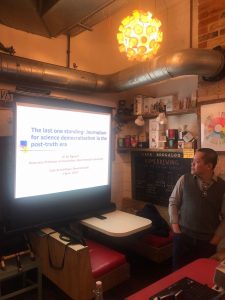
 Without proper mechanisms for citizens of democratic societies to be meaningfully informed and to voice concerns over scientific advancements, they may find themselves stripped of the right to shape the science that shapes their lives, as well as losing voice in the larger public debate in which scientific rationality and expertise is needed













 International Open Access Week: BU support for open access
 Food Price Research Shortlisted for Civil Service Prize
 3C Event: Research Culture, Community & Connections – Wednesday 11 November 3-4pm
 ECR Opportunities: New Development Programme, Researcher Grants & Upcoming Events
 Help us capture BU’s knowledge exchange activity HE-BCI survey 2025–26
 Horizon Europe Cluster 3 (Civil Security for Society) 2026 Calls Now Open
 MSCA Doctoral Networks 2026 Call Information Webinar
 ESRC Festival of Social Science 2026: Application Deadline Extended to Thursday 25 June 2026
 Reminder: Register for the ESRC Festival of Social Science 2026 Information Session
 ECR Funding Open Call: Research Culture & Community Grant – Apply now
 ERC Advanced Grant 2025 Webinar
 Update on UKRO services
 European research project exploring use of ‘virtual twins’ to better manage metabolic associated fatty liver disease