
As many as possible of the citizens of a democracy must be not only literate but critically literate if they are to behave as full citizens. (Hoggart, 2004: 189)
CEMP have published the outcomes of an ethnography funded by the United States Embassy in London, consisting of a field review, 25 interviews and four multi-stakeholder workshops, bringing together and capturing dialogue between media educators, journalists, students and information professionals, to address the educational response to ‘fake news’ and disinformation.
25 interviews with media educators and journalists were transcribed and analysed for key discursive patterns. Participative workshops were held at the Media Education Summit in Hong Kong, the English and Media Centre in London, the National Higher Research University in Moscow and Loughborough University’s campus at Olympic Park, London. The total sample, including the interviews and participants in the workshops, is 88, across the four stakeholder groups.
See the project site for the field review, workshop videos, presentations, participant blog, report, recommendations and the ‘top ten’ toolkit of media literacy resources selected by the stakeholders for dealing with fake news.
At the major event in London, with additional sponsorship from the Media Education Association, two days of activities in London at the Olympic Park on 15th and 16th March 2019 brought together the four stakeholder groups for a public event consisting of keynote presentations and a panel comprised of the US and UK academics involved in the project – Professor David Buckingham, Professor Monica Bulger, Professor Paul Mihaildis, Dr Karen Fowler-Watt and Dr Roman Gerodimos.
The workshop was designed to generate dialogue on four issues: (1) clarifying the problem (the apparent ‘information disorder’) from lived experience of the stakeholders; (2) identifying any competing or partly integrated discourses around the concept of trust in media and information; (3) evaluating a range of educational resources already in the world – we called this ‘testing the wheel’ and (4) agreeing on what media education can realistically do, to move beyond ‘solutionism’ (Buckingham, 2019) towards a more viable, modest proposal for Fake News vs Media Studies. Where do / can we have agency?
From the findings of the project, we make the argument that critical media literacy, if adopted as a mandatory subject in schools and taught as a dynamic literacy education, would better equip young citizens with resilience to ‘information disorder’ (Wardle and Derekhshan, 2017) than reactive resources (such as fact-checking and verification tools) and small-scale projects which focus primarily on competences. The latter are described, metaphorically, as ‘giving a fish’, the former are described as ‘teaching to fish’. To use an alternative analogy, the former boosts the immune system, the latter treat the infection (see Rushkoff, 2018).
Both are needed, but ‘teaching to fish’ is the key recommendation, and, in the UK schools’ context, making Media Studies a mandatory subject would be the obvious starting point.
The workshop identified a ‘top ten’ of media literacy resources for dealing with information disorder. These include more holistic, critical media literacy activities (Teaching to Fish) – a more effective and sustainable approach than ‘giving a fish’ through fact-checking tools or surface level media / information literacy competences.
The data generated from the field review, interviews and workshops, taken together, lead us to the following three recommendations:
(1) Rather than producing competence frameworks for media literacy, as though it is a neutral set of skills for citizens, media education needs to enable students to apply the critical legacies of both Media Studies and literacy education on the contemporary media ecosystem;
(2) Media education must adopt a dynamic approach to media literacy and increase the experiential, reflexive aspects of media practice in the curriculum, with reciprocal transfer between the critical rhetorics above and creative media practice in order to respond, academically, to media as primarily a question of representation. In other words, resilience to representation is enhanced by expertise in representing.
(3) We need to add the critical exploration of social media, algorithms and big data to the media education curriculum, accompanied by applied practical learning in the uses of them for social justice, as opposed to training the next generation in the use of these for even further commercial and political exploitation of one another.

 Engagement: Bournemouth University), on 14th October 2020, undergraduate Psychology Students interacted with students from Symbiosis School of Liberal Arts (SSLA) engaged in the UNESCO Story Circles. This event was planned to provide an opportunity for the stude
 On 17th September 2020 students from DePaul University, USA; SSLA, India, and Bournemouth University engaged in an online dialogue exploring the effects of the current pandemic and their understanding of Psychology.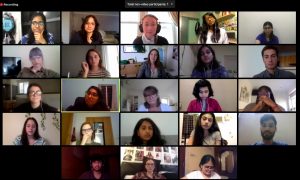
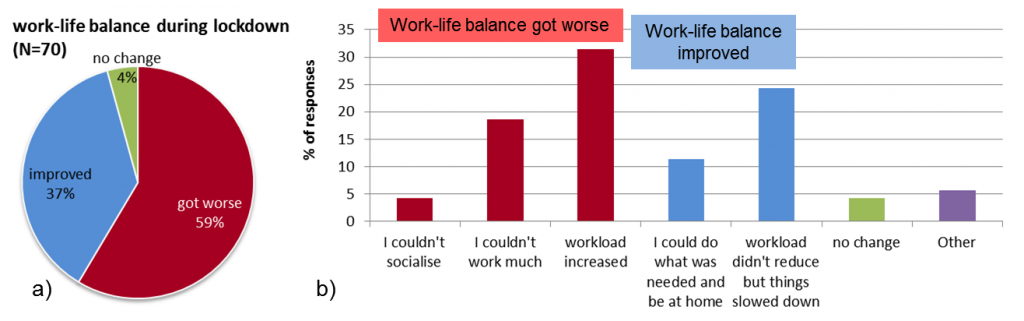 Figure 1. Changes in work-life balance of respondents during Covid-19 lockdown (a) and the selected reasons for identifying positive or negative change (b). ‘Other’ refers to other reasons for improved or worsened work-life balance.
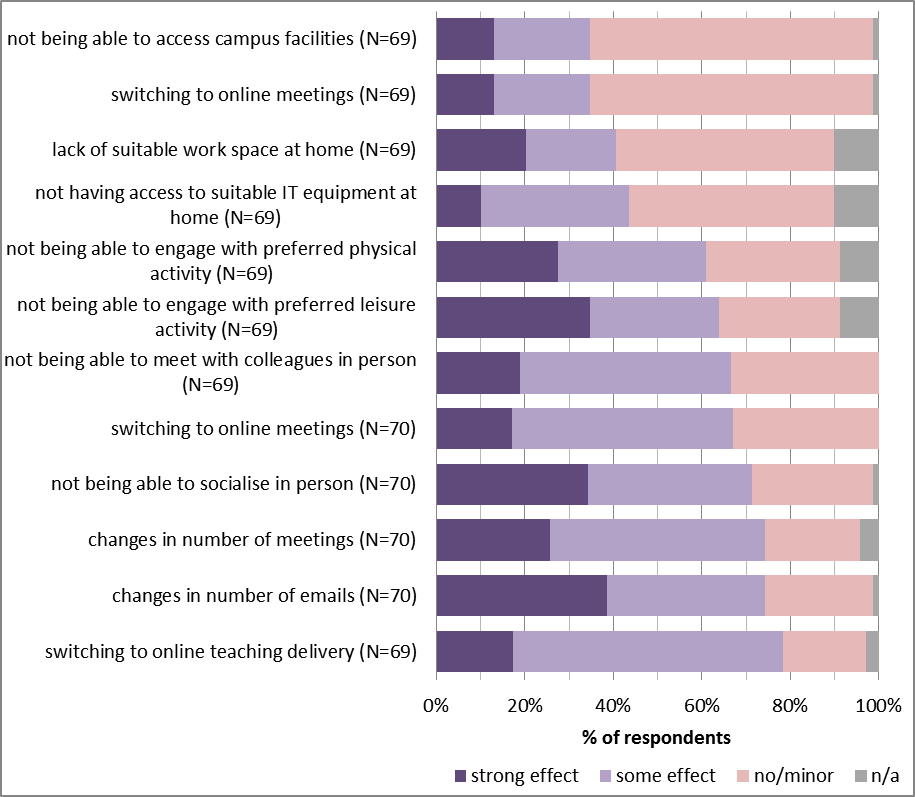 Figure 2. The level of impact of selected factors on the work-life balance of respondents during lockdown.
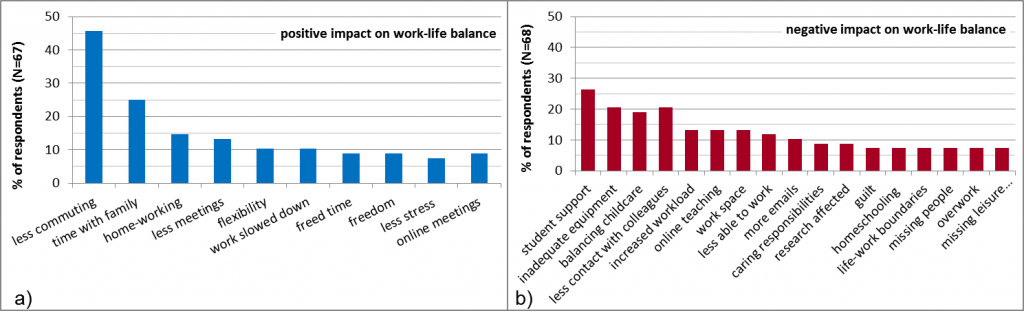 Figure 3. Most cited top two aspects that have affected respondents’ work-life balance (a) positively and (b) negatively (showing categorised responses cited at least five times).
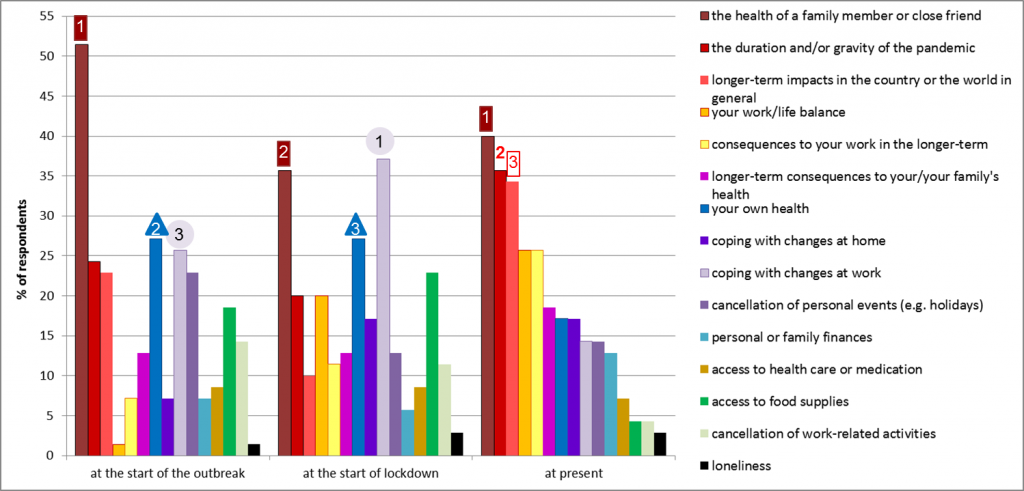 Figure 4. Respondents’ main concerns at the start of the outbreak, at the start of the lockdown and at present.
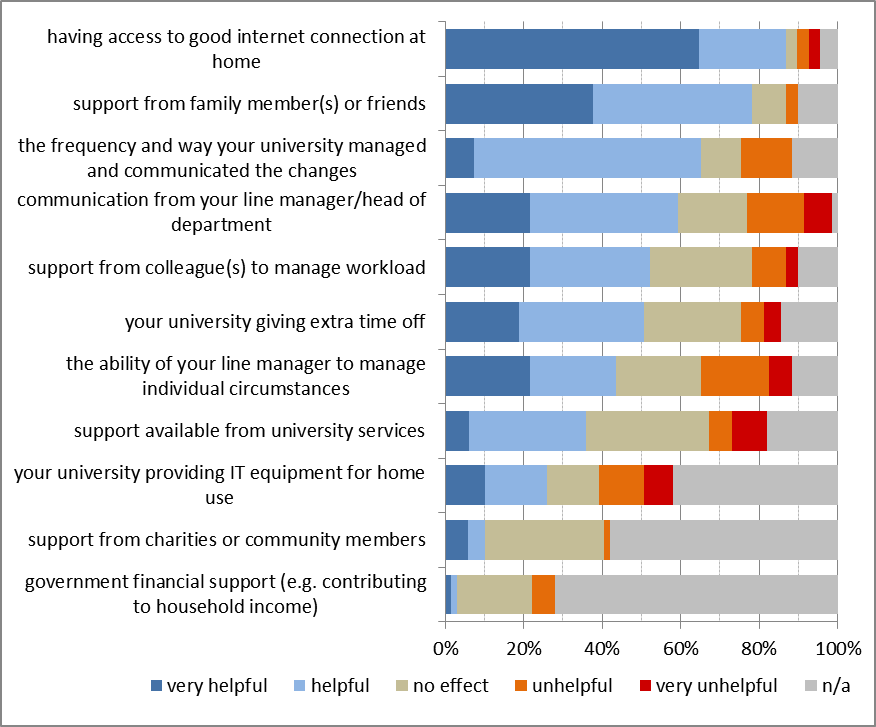 Figure 5. Respondents indication of how helpful were these particular types of support available to them.
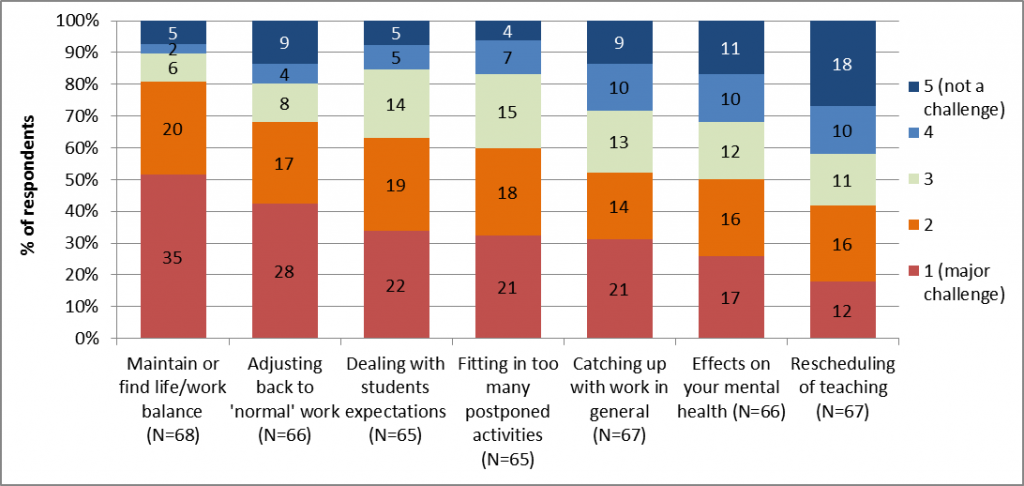 Figure 6. Major challenges identified regarding work at the end of lockdown.
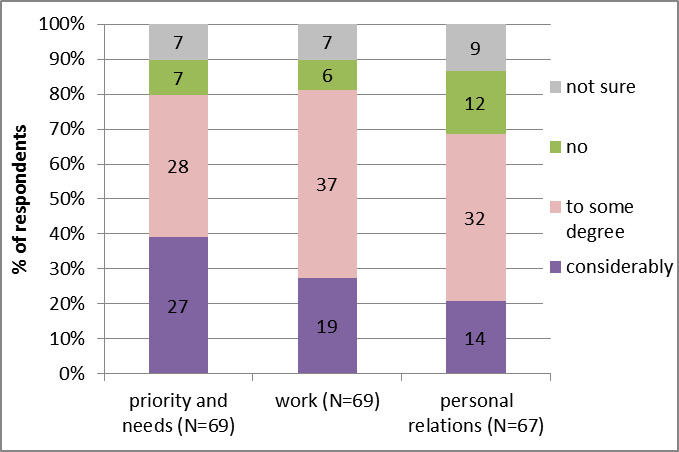 Figure 7. Perception of long-lasting changes brought by the C-19 outbreak.
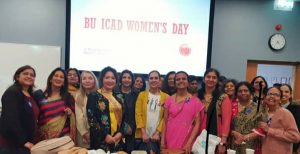
 funding to support 10 UK Psychology Students and Staff to visit India. This initiative receives further support from Global Engagement Hub, Bournemouth University.







 ESRC Studentships for 2027 Entry: Opportunity Now Open
 SONAMONI contributions to Safety Conference 2026 in South Africa
 Three CMWH presentations at Berlin conference
 New interdisciplinary paper on Nepal
 Horizon Europe Cluster 3 (Civil Security for Society) 2026 Calls Now Open
 MSCA Doctoral Networks 2026 Call Information Webinar
 ESRC Festival of Social Science 2026: Application Deadline Extended to Thursday 25 June 2026
 Reminder: Register for the ESRC Festival of Social Science 2026 Information Session
 ECR Funding Open Call: Research Culture & Community Grant – Apply now
 ERC Advanced Grant 2025 Webinar
 Update on UKRO services
 European research project exploring use of ‘virtual twins’ to better manage metabolic associated fatty liver disease