Latest research and knowledge exchange news at Bournemouth University


Congratulations to Prof. Ann Brooks in FHSS on the publication of her latest book Genealogies of Emotions, Intimacies and Desire: Theories of Changes in Emotional Regimes from Medieval Society to Late Modernity. The book has a Foreword by David Konstan (NYU) and it is published by Routledge.
Congratulations to colleagues on the recently funded project “Human Henge: Historic landscapes and mental health at Stonehenge”. This research led by the Restoration Trust. The project has been funded by the Heritage Lottery Fund, English Heritage Trust and Wiltshire County Council and has multiple partners and contributors including Wiltshire County Council, Richmond Fellowship, English Heritage Trust and Bournemouth University. From BU, Prof Tim Darvill (Director Centre of Archaeology, Faculty of Science & Technology) and Dr Vanessa Heaslip (Faculty of Health & Social Sciences) are engaged in this project.
The Human Henge research project is a therapeutic sensory experience of Stonehenge for two facilitated groups, each of up to 16 local people with mental health problems, plus carers, support workers, volunteers and staff. Over ten weekly three-hour sessions, one at night, each group walks the landscape, reaching through time to other humans whose traces are illuminated by accompanying pre-historians, curators and artists. Individual experiences cohere in a shared spoken epic which is augmented from session to session. The groups arrive inside the Stone Circle near the winter solstice and spring equinox; collaborating with their chosen artist, they decide what they do there.
Congratulations!
Prof. Edwin van Teijlingen
CMMPH
Birthrights, a national charity for the rights of women during pregnancy and childbirth has today launched the interim report of a study undertaken by staff from Bournemouth University and the University of Liverpool, about the experiences of disabled women during pregnancy, childbirth and early parenting.
The current work arises following their 2013 Dignity in Childbirth survey which highlighted less positive experiences of women who identified themselves as disabled (Birthrights 2013). In response, Birthrights commissioned research to explore the experiences of disabled women throughout pregnancy, childbirth and the first few post-natal weeks (the pregnancy continuum). A multidisciplinary team, comprising of Dr Jenny Hall, Jilly Ireland and Professor Vanora Hundley from CMMPH and Dr Bethan Collins from the University of Liverpool, have just completed the first phase of the study, which has been released by Birthrights as an interim report today. This first phase of the study used an online survey to identify experiences of women in the UK and Ireland with physical or sensory impairment or long term health conditions during the pregnancy continuum.
Although overall satisfaction with services in general was scored highly by most women, challenges were described in women’s experiences. These included lack of continuity of carer, meaning that women needed to repeat their information again and again; women feeling that they were not being listened to, which reduced their feeling of choice and control; feeling they were treated less favourably because of their disability. More than half of the women (56%) felt that maternity care providers did not have appropriate attitudes to disability. Accessibility of services was also highlighted as poor, in some situations.
These findings resonate with recommendations from the recent maternity services review (National Maternity review 2016), which highlights the importance of personalised care, that is woman-centred, with opportunity for choice and control, and continuity of carer for everyone. The current study highlights how imperative this approach is for disabled women.
A follow-up qualitative study is underway to establish in-depth views and experiences of human rights and dignity of disabled women during the pregnancy continuum to develop our understanding of how best to enable this group. This second phase is due to be completed in Spring 2017.
The Interim report outlining the results from phase 1 is released today by Birthrights and may be found on the CMMPH web site.
https://research.bournemouth.ac.uk/wp-content/uploads/2013/10/Interim-Report-Sept16.pdf
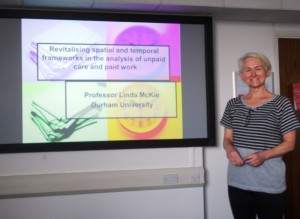
Prof. Linda McKie who is professor of Sociology at Durham University gave an excellent paper today in FHSS on Revitalising Spatial and Temporal Frameworks in the Analysis of Unpaid Care and Paid Work. Her paper highlighted that published data have documented the persistence of the gender pay gap for all women with evidence of a deepening gap following maternity leave. These data generated numerous analyses on segregation and discrimination in education and working life and the many ways in which unpaid care for children, family members and elders remains a dominant factor in everyday gendered inequalities. Often little comment was made on women’s crucial role in reproducing generations many of whom will fund future pensions and services through their taxation. These intergenerational reciprocities are generally ignored in favour of the immediate time considerations for employers, workers and families with the need to generate profit, or income and resources for household or business survival.
In her seminar Prof. McKie revisited the analytical frameworks of ‘caringscapes’ and ‘carescapes’. In earlier work, it was asserted that both offer analytical potential to enhance analyses of the temporal and spatial dynamics of caring and working over the lifecourse in different places. Caring, critical to human flourishing and evident in many aspects of women’s lives, is captured in ‘caringscapes’. The framework of ‘carescapes’ explores the relationship between policies and services as determined by employers, the state and capital. Both frameworks are informed by feminist theorising and spatial and temporal perspectives on identifying and analysing how women perceive, engage with, and reflect on, the demands and pleasures of combining informal caring and paid work. 
Yesterday Prof. McKie led a well-attended workshop for FHSS staff on preparing for the REF. She offered insight into various REF processes as well advise on strategic planning and the importance of networking. Prof. McKie has been a sub-panel member of the Research Excellence Framework 2014 (REF) Sub-panel 23: Sociology for the period 2010-2014.
Prof. Edwin van Teijlingen
CMMPH
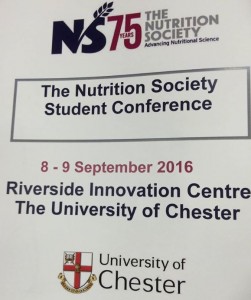
Mr. Jib Acharya presented at The Nutrition Society Student Conference in Chester last week. He presented from his PhD work Healthy eating among mothers in Nepal: A qualitative exploration, which is supervised by Dr. Jane Murphy, Dr. Martin Hind and Prof. Edwin van Teijlingen. His thesis found that mothers in Nepal misunderstand the role of healthy eating to combat nutritional problems in their children. Often their beliefs and attitudes can result in the improper feeding of young children which can lead to several complications, particularly in pre-school-aged children. There is a growing quantitative research on nutrition in Nepal but very little qualitative research. Therefore, as part of his mixed-methods study Jib explored food knowledge, beliefs and attitudes, and behaviour of mothers related to feeding preschool aged children and their perceptions of key barriers to healthier eating.
Using seven focus groups with four pharmacists, seven policy-makers, eleven health workers, five spiritual healers, seven Auxiliary Nurse midwives, seven mothers participating in a mothers’ group, and nine social workers. A thematic approach was performed for data analysis. Relevant quotes are presented. His qualitative thematic analysis revealed the following themes: poverty, education level, strong cultural beliefs, family size, household income, time and a growing preference for fast food. This particular presentation at the University of Chester highlighted the themes related to culture and societal behaviour.
Well done!
Prof. Edwin van Teijlingen
Prime Minister Theresa May has recently mooted a Germanic-turn for corporate governance in the UK, an echo of a heated debate over the shape of boards of directors in listed companies raging over the past 25 years. By coincidence, BU’s Donald Nordberg, Associate Professor in the Faculty of Management, has been examining the controversies over board design since the Cadbury Code was written in 1992, as investors, corporate chairmen and others wrestled with whether to recommend continuing with unitary boards or follow the German model of dual boards with worker representation. His paper, “Contestation over board design and the development of UK corporate governance,” has just won the prize as Best Paper in Management and Business History at the British Academy of Management conference in Newcastle. Could history be about to repeat itself? The conference paper is at http://eprints.bournemouth.ac.uk/23744/.
Public Health England has launched a Physical Activity Tool which brings together data at the local level for the whole of England on physical activity, including walking and cycling, as well as data on related risk factors and conditions such as obesity and diabetes. The tool also presents trend data and enables easy comparison of local authority data, allowing users to compare regional neighbours and local authorities with similar characteristics. The tool aims to help promote physical activity, develop understanding, and support benchmarking, commissioning and service improvement.
The data is grouped into three domains:
In addition PHE has also published a data spreadsheet: Physical activity levels among adults in England 2015, available on the PHE Obesity website. It presents physical activity measures (inactive, low activity, some activity and active) and key demographics from the Active People Survey at national, regional, upper and lower tier local authority and County Sports Partnership level.
Read more at: http://fingertips.phe.org.uk/profile/physical-activity
Women Academics Centre Stage in Presidential Roles in Major International Professional Bodies and Conference Organisation
3rd International Sociological Association Forum of Sociology
10-14 July2016, University of Vienna, Austria

Professor Ann Brooks
Bournemouth University
This year’s Third ISA was held at the University of Vienna and shortly after Brexit, so I braced myself to face a barrage of jokes and recriminations about the UK vote. Well there was some gentle humour in the plenaries but the response was mainly one of pity. The conference was based in the opulence of the University of Vienna… . With its historical and contemporary position in relation to both European and global sociology this conference attracted 4,000 sociologists from across the globe. I usually find the ISA a somewhat unwieldy conference compared to the BSA and ASA but Research Committtee (RC) 32 Women in Society, has a wonderfully inclusive feel and gave coherence to the entire conference for me (see below). Increasingly some of the best conferences have women centre stage, including the ASA 2015 Conference in Chicago, with the then ASA President, Paula England, and the current ASA President and Chair of the 2016 Program Committee, Ruth Milkman (CUNY –Graduate Centre). The ASA Conference was held in Seattle in August 2016. The current ISA President is Margaret Abraham (Hofstra University, USA) who together with a team at the University of Vienna delivered a conference which did not disappoint.
A series of important and thoughtful plenaries addressed the global dimensions of the conference with the University of Vienna organising team providing an interesting European dimension addressing the Brexit issue. A generally favourable balance was achieved between global and European dimensions. The Opening Plenary featured a number of academics from the University of Vienna and they were clearly delighted at attracting over 5,000 sociologists to this impressive university as the conference base. The Dean of the Faculty of Social Sciences at the University of Vienna, Ulrike Felt, provided an uplifting and impressive summary of the social sciences at the University Vienna and I can see the number of applicants for positions there escalating as a result. It was also great to see governmental support for the social sciences, with Barbara Weitgruber, Director General, Austrian Ministry of Science delivering a very positive statement in support of the social sciences. Margaret Abraham’s ISA Presidential Address, found here:
http://www.isa-sociology.org/forum-2016/
https://www.youtube.com/watch?v=LW44_sW4Jmc
was an important statement in equity and intersectionality and made an important contribution to this lively opening Plenary. Margaret is also an important contributor to the ASA Conference, particularly in terms of the International aspects of both conferences.
While the conference lacked the celebrity appeal of the ASA, it certainly did not lack in the seriousness of the debates. One of the most interesting debates came from the closing plenary chaired by Marcus Schultz (New School for Social Research, New York), with Asef Bayat (University of Illinois) ‘Imagining a Post-Islamist Democracy’, Akosua Adomako Ampofo (University of Ghana) ‘Black Lives Matter and the Status of the African World’, Todd Gatlin (Columbia) ‘What Kind of a World Can Weather Climate Change?’ and Alain Touraine (Ecole des Hautes Etudes en Science Sociales, France), as discussant.
Research Committee (RC) 32 Women in Society
The size of the conference meant that affiliation to specific programs proved a favoured response. I am a member of RC32 Women in Society and the program was widely regarded as one of the best at the conference. The Program Coordinators for RC32, Akosua Adomako Ampofo and Josephine Beoku-Betts (Florida Atlantic) had worked to organise an extensive range of panels and roundtables including: ‘Human Trafficking: The Labour and Sexual Exploitation of Women and Children’; ‘Twenty Years after Beijing: A Cross-National Approach to Feminist Movements and the Implementation of the Platform for Action’; ‘Global Sociology and Feminist Perspectives on Care, Care Work and the Struggle for a Careful World’; ‘Knowledge Production: Feminist Perspectives in the 21st Century’; ‘Gender, Law and the Courts: Local and Global Struggles Against Violence’; ‘ Intersectionalities of Power in Research: Strategies for Action and Justice’; ‘Gender, Culture and Technologies in the Knowledge Economy’; ‘Muslim Women’s Struggles for a Better World through Promoting Gender Equality’; and ‘The Cities We Want: Using Visionary Methodologies to Create Feminist Alternatives to Urban Planning’. My paper was in the ‘Precarity and Gender in the Era of Neoliberal Globalization’ and I focused on relational precarity as highlighted in the work of Lauren Berlant entitled: ‘Gender, Precarity and Sexuality: The Intersection of Gender, Ethnicity, Sexuality and Class in Relational Precarity in Neoliberal Society–the Influence of Lauren Berlant’. .
The double badging of sessions with RC32 with other RCs was a really valuable dimension of the conference, this was particularly the case for the RC02 Economy and Society led by the Program Coordinator, Heidi Gottfried, which included some excellent sessions including: ‘Gender Regimes or Gendered Institutions’ organised by Sylvia Walby. A particularly interesting session was the ‘Author Meets Critics: Crisis by Sylvia Walby’. Chaired by Heidi Gottfried and with discussants Stephanie Woehl (Vienna) and Christopher Chase-Dunn (California-Riverside). This proved to be one of the most coherent and intense social and political analyses including the focus on the EU and had anticipated Brexit. Sylvia’s response to criticism was powerful and wide-ranging and pointed to the next political crisis being in the EU not the UK. She also calls for a ‘regendering of the political project’.
This was a really fascinating conference, serious in its debates and commemorating the work and loss of John Urry.
Professor Ann Brooks
August 2016
Following my field-work on spiritual tourism and meditation in Chiang Mai, I (with Michael Di Giovine at West Chester University, US, Michael Hitchcock at Goldsmiths, University of London, UK, and Michael O’ Regan at Bournemouth University, UK) organized two panel sessions on Geographies of Religion and Spirituality: beyond ‘officially’ sacred at the Royal Geographical Society conference in London, 2016. The sessions had 9 interesting and diverse papers from the U.K., U.S., Ireland, Thailand, Norway and Australia. The panelists were from disciplines and fields as diverse as Geography, Anthropology, tourism studies, event management, art and design and natural resource management. I am currently communicating with several editors to make a decision as which journal these papers may be published under a special issue theme.
We also had stimulating discussions over 4 hours at the conference.
Pilgrims and tourists exist on a continuum of sacredness and secularity, and the distinction between tourism/pilgrimage, tourist/pilgrim, and secular/sacred is rather complex. While there have been ongoing discussions about categorizing ‘pilgrims’ and/or ‘tourists,’ it is still challenging despite frequent attempts. Thus, in these panel sessions, we discussed how religious spaces are central to the lives of pilgrims, and how these religious spaces have meanings to pilgrims and tourists. Beyond the ‘officially sacred,’ we explored the meanings of religious space to pilgrims and tourists to provide a blueprint for how work in the geography of religion and the field of religious tourism may move forward. I believe we have achieved moving forward with the on-going discussions and theorization process all together as an interdisciplinary team. Links to more photos:
https://mobile.twitter.com/choe_jaeyeon/status/772408406959386625/photo/1
https://mobile.twitter.com/choe_jaeyeon/status/771779060536074240/photo/1
The Centre for Qualitative Research is kicking off its new seminar series on Wednesday 7 September at 1 pm in Royal London House RLH 201 Masterclass Suite.Because CQR is keen to make information available to students and staff about qualitative METHODS, the seminars will be arranged somewhat differently than the typical lunchtime seminar.
We are asking TWO (or more) presenters to agree to present each research method as a CONVERSATION…first, between each other, and then with the audience. We are also asking that no PowerPoint be used in order that it is truly a conversation and NOT a lecture. The conversations will be about a particular research method and its pros and cons, NOT research projects or outcomes.
The “In Conversation with …” Seminar Series will be held on the FIRST WED of each month for nine months beginning in September. They will run from 1 pm until 1:50.
We are then hoping that many will join us for a CQR ‘KoffeeKlatch’ following at Naked Cafe next to RLH after the seminar.
We anticipate that by making the CQR Seminar Series really unique and exciting that they will inspire students and academics alike to investigate the wide range of qualitative methods and expertise available at CQR, and enrich their research projects by doing so.
See the list of all nine CQR Seminars over the Academic Year.
Congratulations to FHSS Prof. Ann Brooks on her latest academic article in the July issue of Cultural Politics. The article ‘The Cultural Production of Consumption as Achievement’ is co-authored with Lionel Wee.
The Cultural Production of Consumption as Achievement Cultural PoliticsCultural Politics (2016) 12 (2): 217-232
doi 10:10.1215/17432197-3592112
In 2015, I was awarded a prestigious Visiting Fellowship at the University of Oxford- Reuters Institute for the Study of Journalism (RISJ). The next question was how do I fund such an initiative? Having looked at the various Fusion Investment Fund strands, the Santander Scheme appeared to be the most appropriate since it provides BU staff with travel and subsistence funds to support individual staff mobility and networking in the development of research, education and or professional practice.
During the fellowship period I conducted British Academy/Leverhulme funded research into the successful digital transformations of media firms. This work integrated three primary areas: business models, organisational strategy and dynamic capabilities in a longitudinal analysis (1995-2015).
Being able to conduct this research at one of the world’s greatest institutions has been an incredible experience. Whilst I have undertaken small project work with the RISJ over the past few years, there was a world of difference in living and working at the University. Academic work at the University of Oxford is a ‘lifestyle’ and one based on the pursuit of academic excellence. The work doesn’t stop at 5pm as there are numerous talks and lectures by distinguished people every night of the week!
The RISJ is a part of Green Templeton College which is a postgraduate college whose provision centres on health and management disciplines. At first, one might think that this is a strange combination, but their researchers were able to help with me some innovative work that I’m currently doing with the Boston Consulting Group in New York.
Perhaps the most striking aspect of my stay was the university’s focus on conducting research that aims to produce both conceptual and instrumental impact (vanity based research is clearly not on their radar). There is also a real ‘simplicity’ about the University of Oxford. You can see it everywhere, from the clean toilets, the pristine gardens, the student dress codes and the quality of their research. That ‘simplicity’ can be summed by saying that “everything they do has to be excellent!”
Dr John Oliver
Associate Professor of Media Management
Faculty of Media & Communication

Professor Christoph Teller, Chair in Retailing and Marketing at the University of Surrey, will discuss why shoppers shop where they do through a presentation of a meta-analyses study. The study he presents aims to identify the major antecedents of offline and online retail patronage. In his talk he will outline the retail patronage work of Pan and Zinkhan (2006) and discuss how he extends their view and develops conceptual models of offline and online retail patronage based on Sheth’s (1999) integrated theory of patronage behaviour and Finn and Louviere’s (1996) specification in a retail patronage context. The models he identifies proposes direct effects between antecedents (stimuli), i.e., mainly manageable attributes of retailers, and the retail patronage (response or shopping predisposition). The study is based upon a meta-analysis of more than 300 empirical studies and makes a theoretical as well as practical contribution to the topic area as it provides an overview on, and detailed insights into, patronage research in an offline as well as online context.
This free event, hosted by the Influences on Consumer Behaviour Research Cluster, will take place on Friday 16th September 2016, 2-3.30pm in the Inspire Lecture Theatre. Please book your place through Eventbrite: ‘Why consumers shop where they do’
The Building Roman Britain project is investigating the source of stone and ceramic materials (e.g. bricks, tiles, flues, etc.) from key sites in Roman Britain. Using Roman Bath and Fishbourne Roman Palace as our main sites, we have been using x-ray floresence (XRF) to profile these materials and to look for patterns in their production, distribution and use. Funded by HEIF 5+1, the current phase of work will soon be concluded, although it is hoped to carry on with our partners over the coming year, producing joint publications as well as museum displays and interactives.

Analysing a quarry near Bath
We have now completed over 2400 analyses, a full GIS plan of the Fishbourne ‘92 excavations, and numerous visits to both Bath and Fishbourne to undertake in situ analysis, using a portable XRF device. The team was ably assisted in this work by the appointment of an URA, Dominique Druce, who is now planning her dissertation around a related pXRF study.
In early April the team presented a paper at the Computer Applications and Quantitative Methods in Archaeology (CAA) conference in Oslo that focused on the analysis of ceramic building material and presented some interesting interim results. The paper was well received and the methods and approaches outlined stimulated some very useful discussion.
With an ever increasing mass of data it was decided to begin processing and interpreting the data alongside some lab-based analysis, with the aim of identifying the most promising areas on which to focus our final investigations. However, we still found time to visit Fishbourne and examine some of the in-situ mosaics. Meanwhile, the preliminary examination of data drove a renewed focus on exploring quarry sites in the Bath area and we have since returned to the quarries at Brown’s Folly near Bath to conduct intensive, quarry-face analyses.
As an offshoot from the project, Derek Pitman (the project’s RA) took the pXRF kit to the Purbeck School’s science fair along with members of BU’s STEM outreach team, where he was able to show how scientific methods help archaeologists understand ancient materials. Continuing with the public understanding of science theme, we are now working with our partners at Bath and Fishbourne Museums to develop new, innovative display methods for our results that will include the use of video and digital media to communicate project results and STEM to a wider audience.
While the summer of 2016 sees our HEIF 5+1 funding coming to an end, the Building Roman Britain team will carry on into 2017 in order to help bring the HEIF phase of the project to publication and to build the next phase of further investigations into Roman building materials. This includes our project’s inclusion in a multi-million pound bid to the HLF for redisplay work at Roman Bath Museum as part of their Archway Project. For further details, see our research project page.
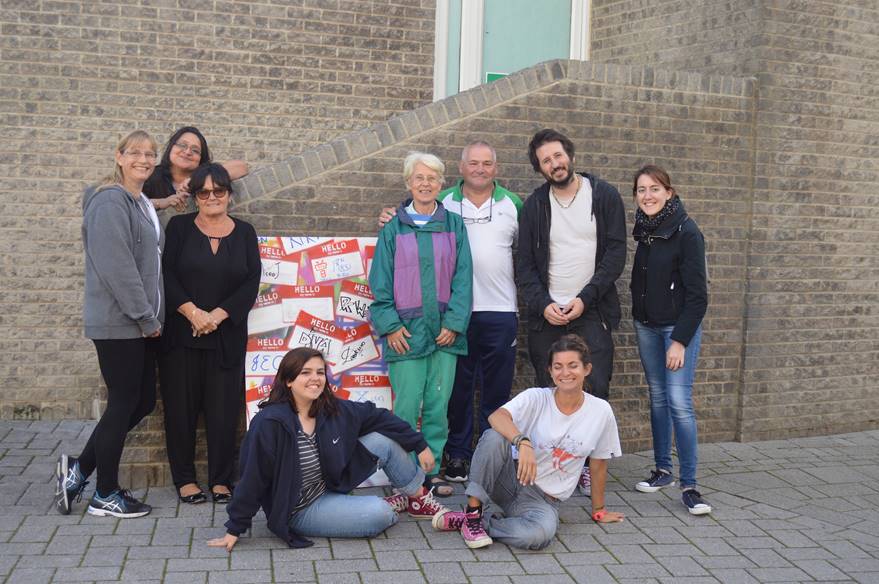
BU’s Fair Access Research project concentrates on the idea of learning and working together to transform higher education. We are interested in how widening participation works differently in different institutions.
With this in mind, Maggie Hutchings and Alex Wardrop have been doing some fieldwork with colleagues in the north of England.
Widening participation is emerging as emotional work. It is an emotional labour which sees personal stories intersect with and sometimes rub up against complex economic and political landscapes.
You can join us in this collective reflection and learning exercise by contributing to our survey. For more information about the organisational learning project, email Maggie on mhutchings@bournemouth.ac.uk
For more information about BU’s innovative Fair Access Research, email the Principal Investigators, Dr Vanessa Heaslip (vheaslip@bournemouth.ac.uk) and Dr Clive Hunt (chunt@bournemouth.ac.uk)
BU researchers Dr Caroline Ellis-Hill and Dr Carole Pound, from the Centre for Qualitative Research have been working with a team of older people with experience of stroke and staff from the Royal Bournemouth Hospital stroke team to explore the human dimensions of stroke care.
In August the team launched a Humanising Care Toolkit in a celebration attended by service users, relatives, staff and Board members at the Royal Bournemouth Hospital Foundation NHS Trust. The toolkit is a flexible resource which can be used by staff members once they have been through their own humanisation development. It includes a DVD of stories of humanising care, a set of creative materials to use in workshops and a pack of humanising care cards as well as a user manual and electronically produced presentations and handouts. Feedback from the launch event suggests hospital staff and managers are keen to explore ways the framework and toolkit may enable different units and staff groups across the Trust to notice, value and reconnect with compassionate, human centred care and practice.
‘It’s absolutely fantastic work that is going to be crucial to developing an inclusive human culture in the Trust.’
Service user stories also highlighted the value they placed on both humanising care and being part of a research team. For example, Wynn New one of the service user participants commented:
When I first joined the action research group I was terrified of having another stroke. I thought I would never go out by myself again. Taking part in the group allowed me to share my experiences and feedback – what worked and what truly made a difference to my recovery. I finally have my confidence back and my fear has disappeared. I count my blessings everyday.’
Funded by the Burdett Trust for Nursing and inspired by the ground-breaking work of Les Todres (Emeritus Professor of Health Philosophy at BU) and Kate Galvin (Professor of Nursing Pract
ice, Brighton University) the research team explored experiences of both stroke service users and providers in relation to a conceptual framework of humanising care. This framework, described in a seminal paper by Todres et al (2009) describes eight interacting dimensions that help capture the depth and breadth of being treated as human within complex, busy healthcare systems. The work is part of a larger study led by Professor Kate Galvin. A second site in Yorkshire worked with service users and NHS providers in a Dermatology out-patient department in order to look at the transferable aspects of humanisation theory and learning.
The project used action research methods with a focus on creative methods and collaborative sharing of stories and experiences. The team aimed to explore the relevance of the humanising care framework and get beneath the surface of what makes care feel more or less human. The stories, techniques and findings were then collated into a resource to support a new wave of busy NHS practitioners to understand and sustain humanising care in practice and become ‘Humanising Care Champions’.
For more information on the Humanising Care Toolkit contact Carole Pound cpound@bournemouth.ac.uk or Caroline Ellis Hill cehill@bournemouth.ac.uk
For further information about the breadth of work at BU inspired by the humanisation framework please visit the Humanisation pages of the Faculty for Health and Social Care.
The launch of the toolkit was reported in a number of local papers, including the Blackmore Vale magazine.
Congratulations to FHSS’s Dr. Pramod Regmi on the publication of his latest paper in the SAARC Journal of Tuberculosis, Lung Diseases and HIV/AIDS under the title ‘Knowing is not enough: Migrant workers’ spouses vulnerability to HIV’ [1]. The paper was specifically highlighted in the editorial of the journal’s latest edition.
Prof. Edwin van Teijlingen
CMMPH
Reference