The Ageing and Dementia Research Centre are welcoming colleagues from Plymouth University to talk about the ICONIC project (see more details below) and showcase some of the technologies they have created.
The team are interested in talking to any BU colleagues who work on co-design/digital health or immersive technologies and AI so please do come along (and let Michelle mheward@bournemouth.ac.uk know if would like to give a short presentation about your research).
12th February 2025
11-1pm (presentations will be first and then tech showcase)
P222, Poole House, Talbot Campus
ICONIC Project
The ICONIC (Intergenerational Co-design Of Novel technologies In Coastal communities) project is exploring how co-design of novel technologies can support digital inclusion in Cornwall and Devon. The project recruited 99 participants to join intergenerational co-design workshops to create technologies that support access to environment, heritage, and community resources. The technologies include a social game, immersive heritage and underwater experiences, and a voice AI system accessed via a telephone call. The research team will be sharing their insights from the co-design process for each technology and discuss the effects of participation on digital inclusion.
- Dr Rory Baxter is a Research Fellow at the Centre for Health Technology, University of Plymouth, working on the EPSRC funded Intergenerational Codesign Of Novel technologies In Coastal communities (ICONIC) project to address digital exclusion in Cornwall and Devon. The project involves the intergenerational co-design of technologies for supporting access to heritage, environment, and community resources. His previous work includes the ESRC funded GOALD and ERDF funded EPIC projects, which focused on digital health innovation co-design and evaluation to support healthy ageing. Prior to that he completed an EPSRC funded iCASE PhD, exploring human navigation and search behaviour, during which Rory developed VR-based experimental tasks using Unity, which were adapted for online platforms during the COVID-19 pandemic.
- Dr Oksana Hagen earned a BSc in Electrical and Computer Engineering from NCTU (Taiwan), MSc in Computer Vision and Robotics through the Erasmus Mundus ViBOT program, and a PhD in Computing at the University of Plymouth. After a brief period in industry, Oksana joined Aldebaran AI Lab (France) under a Marie Curie Fellowship to focus on research in machine learning. She subsequently contributed to social robotics research for AgeIn project at the University of Plymouth. Currently, she is part of the ICONIC project, developing VoiceAI and underwater telepresence applications through co-design. Her research interests include machine learning, robotics and HCI.
- Dr Marius Varga’s expertise sits at the intersection of game technology and user experience, with a focus on serious games and immersive experiences. Currently, a Research Fellow part of the ICONIC project, using a co-design approach, Marius leads the development of a multiplayer Social Game focused on seagrass conservation and for Extended Reality (XR), he is developing an immersive heritage experience in partnership with National Trust. Marius is also involved in digital health projects such part of Bridging project – focused on using XR training with autistic employees and employers and Glider project – addressing challenges in frailty through robotics, play and immersive technology.
- Dr Linan Zhang holds an MA in East Asian Studies (Japanese) and an MSc in International Development from the University of Edinburgh. She later earned a PhD with Transtechnology Research at the University of Plymouth, where she developed a philosophical framework to ease the paradigm conflicts in knowledge sharing, drawing inspiration from an international health collaboration, a global health crisis, and the development discourse. She is currently an Associate Lecturer for i-DAT, a Research Fellow in Orbital Science, and the Media and Admin officer for the ICONIC Project at the University of Plymouth. Additionally, she serves as an Associate Editor for Leonardo Review.







 Recently, I was fortune enough to become the Research Assistant on the HEIF-6 project run by Dr Ben Hicks. This is a one year project that aims to develop and evaluate a free Virtual Learning Environment tool that will support practitioners and care home staff wishing to use commercial gaming technology (iPads, Nintendo Wii) with people with dementia and their care partners. We have a number of experts involved in the research, such as Dr Samuel Nyman from Psychology Department and ADRC, Professor Wen Tang from Department of Creative Technology, Dr Sarah Thomas who is Deputy Director BUCRU and Dr Clare Cutler who is Research Skills and Development Officer. We also collaborate with Alive! who are a charity dedicated to improving the lives of older people and people with dementia through delivering innovative activities (e.g. the use of technology) and training dementia care practitioners. They work with 350 Care Homes and Day Centers across the South West of England and we are lucky to have Malcolm Burgin onboard who as the Regional Manager of Alive!.
 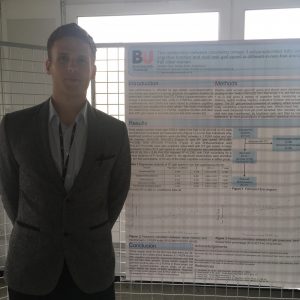 I was given the opportunity to present some preliminary results from an ongoing study I am conducting as part of my PhD, looking into the effects of a multi-nutrient omega-3 fatty acid supplement and exercise on mobility and cognitive function in ladies aged 60+. Analysis of the baseline data revealed relationships between levels of omega-3 fatty acids in the blood with cognitive and gait outcomes, however this effect differed between non-frail and pre-frail participants.
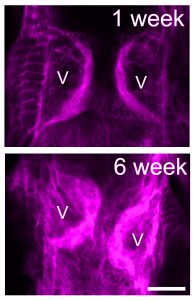 Research funded by the British Heart Foundation looking at tissue fibrosis (scarring), will soon be published in Experimental Gerontology, one the world’s leading journal on ageing. Fibrosis occurs naturally as part of our injury response process but also develops in ageing and chronic disease. Treatments are scant despite fibrosis leading to organ failure and increased risk of death.












 SONAMONI contributions to Safety Conference 2026 in South Africa
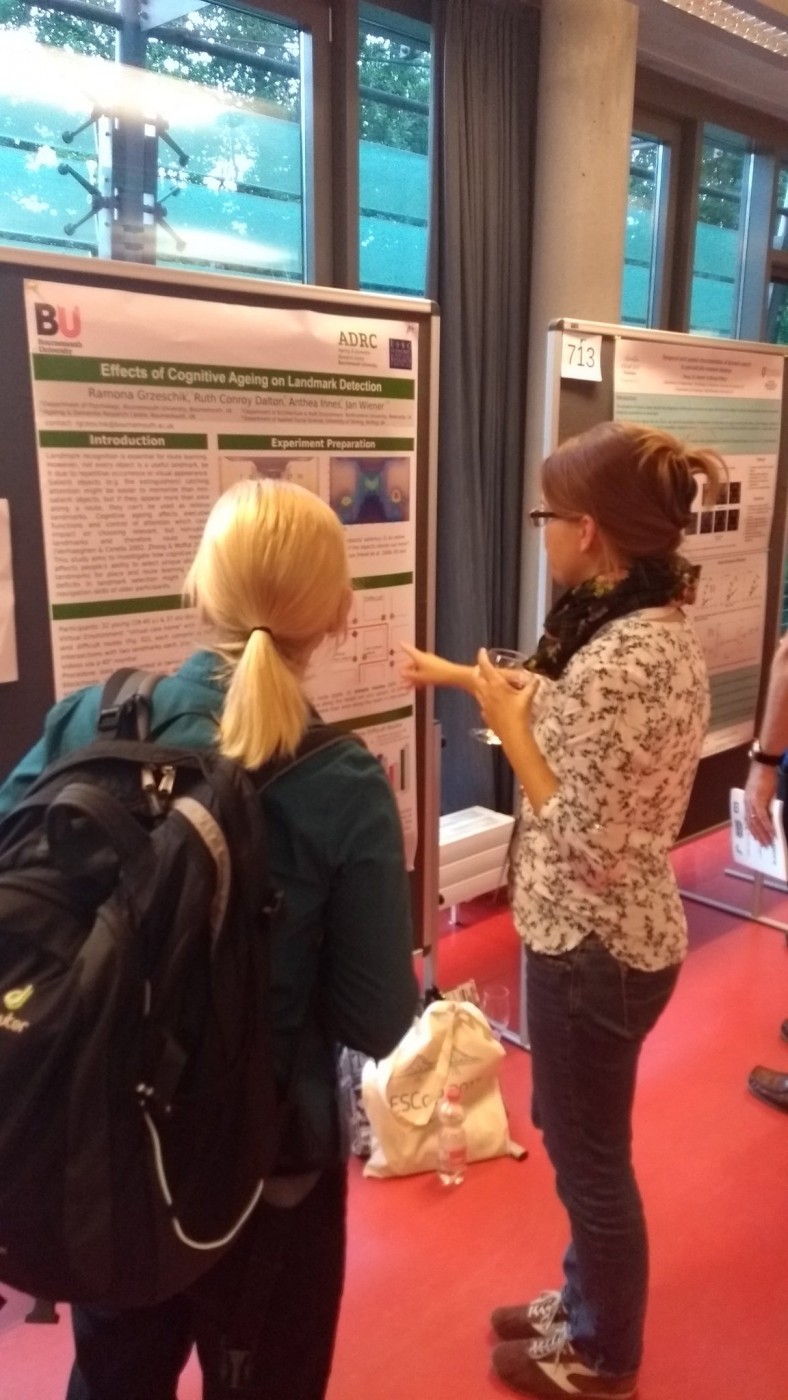
 Three CMWH presentations at Berlin conference
 New interdisciplinary paper on Nepal
 Horizon Europe Cluster 3 (Civil Security for Society) 2026 Calls Now Open
 MSCA Doctoral Networks 2026 Call Information Webinar
 ESRC Festival of Social Science 2026: Application Deadline Extended to Thursday 25 June 2026
 Reminder: Register for the ESRC Festival of Social Science 2026 Information Session
 ECR Funding Open Call: Research Culture & Community Grant – Apply now
 ERC Advanced Grant 2025 Webinar
 Update on UKRO services
 European research project exploring use of ‘virtual twins’ to better manage metabolic associated fatty liver disease