RKEO Academic Induction
Latest research and knowledge exchange news at Bournemouth University
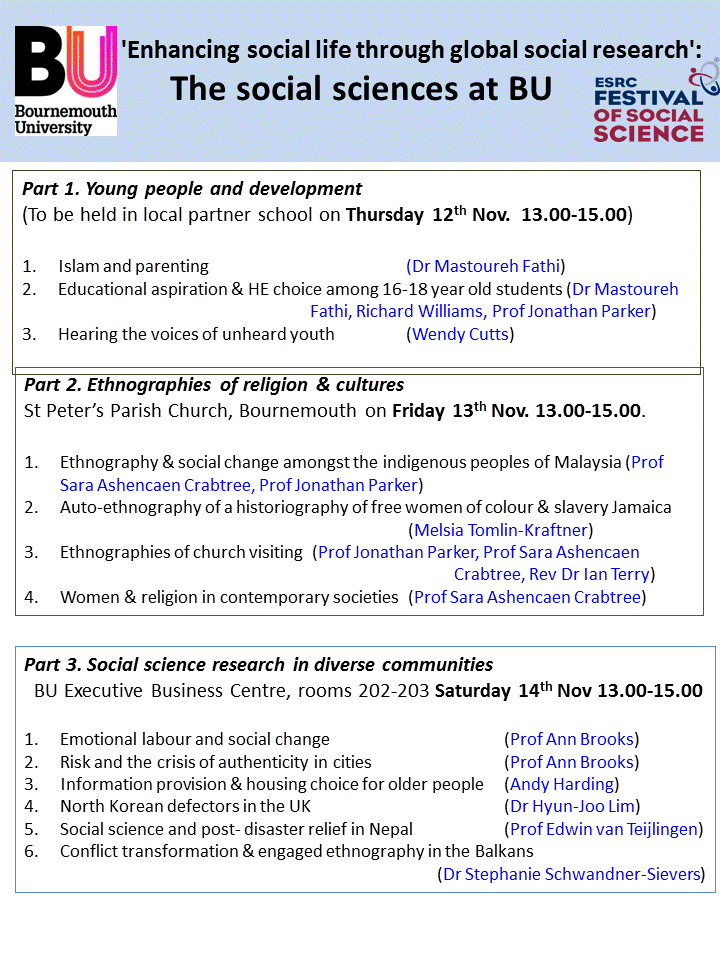
Get some of these interesting presentations in your diary now ‘Enhancing social life through global social research’:The social sciences at BU. For details click here!
Three sessions:
Part 1. Young people and development
Part 2. Ethnographies of religion & cultures
Part 3. Social science research in diverse communities
Prof. Edwin van Teijlingen
CMMPH
On Tuesday 13 october 2015, Dr. Darren Lilleker, Dr. Dan Jackson and Dr. Anna Feigenbaum from the Faculty of Media and Communication travelled up to London to lead sessions at the Political Studies Association’s first annual PSA Schools Conference. The event brought together 150 Sixth Form students from schools around London and the South East for an afternoon of exploring Pressure Groups, Anti-politics and Representation. In packed out workshop room, Dr. Lilleker and Dr. Jackson sparked debate over the rise of digital politics, asking in their session on Social Media and Political Communication, “Does social media offer a new way to develop a more dialogical relationship between citizens and their elected representatives?” Reflecting on the workshop, Dr. Lilleker said, ““It was interesting to hear the views of young people on digital media use and get them thinking about how their behaviour links to broader social trends in political engagement.”
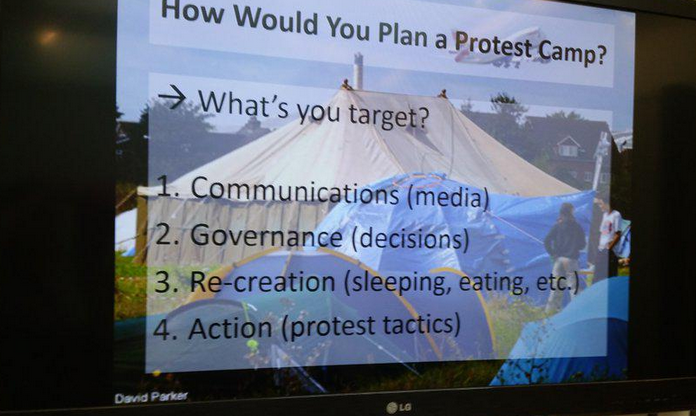
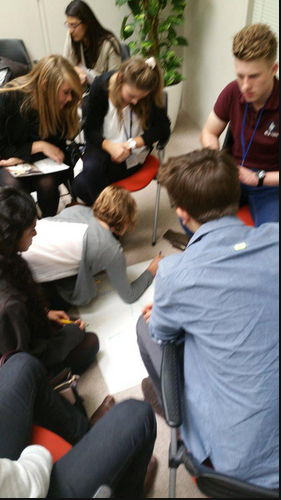
Dr. Anna Feigenbaum’s session drew from her research into protest camping. She engaged students in a hands-on activity, designing blueprints and political strategies for their own hypothetical protest camps. Choosing Women’s Equality as their campaign issue, following a compelling keynote by Sophie Walker, Leader of the Women’s Equality Party, the students choose their protest sites, including Parliament and the Playboy Mansion. From clever hashtags to lodging people on houseboats in the Thames to politically subversive games of pin-the-tail-on-the-bunny, students showed their creativity and tactical savvy.

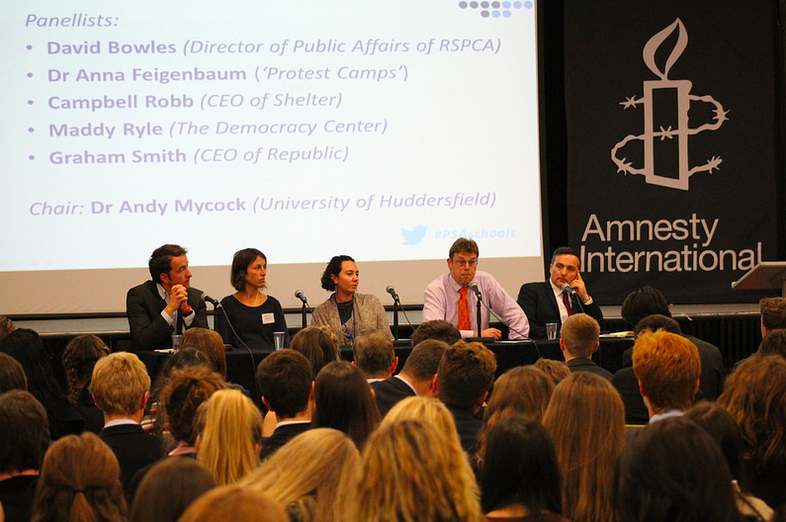
Taking part in the Question and Answer Panel Session that rounded out the day, Dr. Anna Feigenbaum joined Campbell Robb, CEO of Shelter; David Bowles, Director of Public Affairs of RSPCA; Graham Smith, CEO of Republic and Maddy Ryle of the Democracy Centre in a lively discussion facilitated by Dr Andy Mycock (University of Huddersfield) that ranged from the purpose of direct action to strategic uses of the law in political campaigning. Covering questions of Britishness and the Monarchy and the ethics of lobbying, sixth formers in the audience showed they were far more than an apathetic generation of youth. Politically reflective and insightful, they spoke of media misrepresentations of the working class, the need to scrutinise profiteering bankers, growing inequality in representative politics and when engaging in civil disobedience might be justified.
Speaking
of his participation in the event, Dr. Jackson – who also convenes the PSA Media and Politics Specialist Group – said, “It is great to engage young people with some of the big political challenges of our day. Plus, this is a great way to put Bournemouth on the map, in terms of politics education at BU, as we develop our curriculum around politics, political communication and social movements.” Based on the success and positive feedback from this first event, the Political Science Association has plans to make the conference an annual affair. An exciting opportunity to share our BU Research in an interactive way with young people, we would encourage colleagues to join in future events!
With thanks to James Ludley and Helena Djurkovic of the PSA for organising this innovative event.
Attend our Research Professional visit taking place on the 3rd Nov and get expert help with setting up your personal account and searches!
Every BU academic has a Research Professional account which delivers weekly emails detailing funding opportunities in their broad subject area. Jordan Graham from Research Professional is visiting BU on the 3rd of November 2015 to demonstrate to academics and staff how to make the most of their Research Professional account.
This will include:
Location and the session timings are:
Talbot campus P424
10.15 – 11.15 – Research Professional presentation
11.15 – 11.45 – RKEO interactive session setting up searches
Lansdowne campus S103
13.30 – 14.30 – Research Professional presentation
14.30 – 15.00 – RKEO interactive session setting up searches
After the presentation, the RKEO Funding Development Team will be on hand for an interactive session where they will help you set up your Research Professional account, searches and offer advice from a BU perspective.
This is a great opportunity to learn more about funding opportunities and to meet the Funding Development Team, particularly if you are new to BU.
Please reserve your place now at a BU Campus to suit through Organisational Development
The ESRC website lists its Festival events for 2015 and amongst the interetsing events is a record number of BU events! The full list can be found on the ESRC webpages, click here!
Pathways to impact: part deux!
This event aims to engage participants who attended a previous one-day ESRC Festival of Science event which took place in 2012 entitled, “Pathways to Impact: ageing, diversity, connectivity and community”.
Children will have the chance to take part in a creative mapping exercise using coastal artefacts and pictures to create their own sensory and emotional maps of the topic, starting with the question of ‘how does it make me feel to be here?’
Older people are increasingly at risk of falling victim to financial scams that target vulnerable people, including mass marketing fraud via post, telephone or email and doorstep fraud.
This event will give practitioners, agencies and members of the public, the opportunity to come together to learn more about the threats posed.
This event asked the question:
Bournemouth University Dementia Institute (BUDI) will bring dementia awareness to life through running creative activities including a performance from the BUDI Orchestra – made up of people affected by dementia and musicians – poetry and technology such as IPads and Nintendo Wii.
Are British children disadvantaged compared to children in other Western countries? An analysis of data from global sources compares the standards of mortality, poverty and health funding for children and adults in Britain vs. those in 20 other Western countries.
One year ago, in October 2014, the UK Government introduced major changes to the Copyright Law with the aim of promoting innovation and creativity. These included a range of exceptions and limitations benefiting users as well as educational and cultural institutions.
These exhibitions run over the course of three days presenting a showcase of Bournemouth University research projects demonstrating our research impacts on social and community wellbeing and our concern for diverse groups and work with a wide variety of stakeholders.
A group of researchers from Bournemouth University are researching the lived experience of students entering higher education from and in ‘non traditional’ contexts. By bringing together research, educational practice and students as research co-creators, a unique lens is created through which to observe the question.
The 5-a-day campaign went global after a recommendation from the World Health Organisation that we should all be eating a least 400g of fruit and vegetables per day. Variations on this message are repeated in countries all across the world. But does the message cause more confusion than good?
These exhibitions run over the course of three days presenting a showcase of Bournemouth University research projects demonstrating our research impacts on social and community wellbeing and our concern for diverse groups and work with a wide variety of stakeholders.
Prof. Edwin van Teijlingen
CMMPH
Communicating Research
FMC Cross-Departmental Seminar Series 2015-16
When: Wednesdays, 3-5 pm
Where: The Screening Room W240, Weymouth House, Talbot Campus,
Bournemouth University, Fern Barrow, Poole, Dorset, BH12 5BB
Wednesday 14 October, 3-4pm
Dr. Rebecca Watkins (Cardiff University) and Dr. Mike Molesworth (University of Southampton)
Title: Digital Possessions
This session will provide an introduction to digital virtual consumption, exploring the emergence of digital consumption objects and the opportunities and issues they present for consumers and for marketers.
Dr. Mike Molesworth is Principal Teaching Fellow at the University of Southampton. Principal Teaching Fellow. He has been lecturing since 1996, for most of that time focussing on online consumer behaviour and emerging consumer cultures. He was a Teaching Fellow in the Centre of Excellence in Media Practice at the Faculty of Media and Communication at Bournemouth University, where amongst other things, he was involved with innovations in online course delivery. More recently he helped set up the Creative Enterprise Bureau, a unique staff/student collaborative consultancy at Bournemouth University, working for clients such as ITV, Channel 4, Toyota and Samsung. With colleagues he has won several best paper awards in journals and at conferences, including my work on digital consumption with Dr Janice Denegri-Knott in Consumption, Markets and Culture, and with Becca Watkins at the international Consumer Culture Theory Conference. He has also won a ‘most cited’ award in Teaching in Higher Education, for his work on the marketisation of Higher Education
Dr Rebecca Watkins is a Lecturer in Marketing at Cardiff University. She holds a PhD in Marketing from the University of Southampton, and a BA (Hons) in Advertising and Marketing Communications from Bournemouth University. Rebecca’s research uses qualitative methods to explore the impact of digital media upon consumer culture, in particular the ways in which notions of owning and possessing are transformed in the context of digital objects. Her work has been published in the Journal of Marketing Management, the Journal of Consumer Culture & Research in Consumer Behaviour, whilst her work in human-computer interaction, in collaboration with the Human Experience and Design research group at Microsoft Research, has been presented at the world’s leading HCI conference.
Wednesday 14 October, 4-5pm
Dr Katy Shaw (Leeds Beckett University)
Title: Financialised Masculinities: Men, Fiction and the Credit Crunch
After the height of the credit crunch, the blame game began, and focus fell firmly on bankers, and male bankers in particular, as being responsible for the crash. Variously dubbed the ‘Man-cession’ or the ‘He-Cession’ by media and political commentators, accusations that an excessively ‘masculine economy’ contributed to the crunch grew in the weeks and months following the economic downturn. Contemporary fiction was quick to respond to the global economic crisis as a source of inspiration for post-millennial narrative. Through this new genre of ‘Crunch Lit’, fiction continued its historical commitment to demystifying the financial world. Examining two case study examples of the new genre – Faulks’ A Week in December (2009) and Lanchester’s Capital (2012) – the paper will interrogate how and why fiction represents the twenty-first century impact of financialisation and its penetration of language, fashion and financial culture to question dominant narratives of the male banker as a new cultural villain for the post-millennial period.
Dr Katy Shaw is Principal Lecturer in Contemporary Literature at Leeds Beckett University. She is also editor of the internationally peer reviewed C21 Literature: journal of 21st-century writings. Her research interests include contemporary writings, working class literatures, regeneration and the languages of comedy. She has published extensively on working class women’s writings, the contemporary novel and twenty-first century literature. Her monograph Crunch Lit examines fictional responses to the global credit crunch.
About the series
This new seminar series showcases current research across different disciplines and approaches within the Faculty of Media and Communication at BU.The research seminars include invited speakers in the fields of journalism, politics, narrative studies, media, communication and marketing studies. The aim is to celebrate the diversity of research across departments in the faculty and also generate dialogue and discussion between those areas of research.
Contributions include speakers on behalf of
The Centre for Politics and Media
The Centre for the Study of Journalism, Culture and Community
Advances in Media Management Research Group
Emerging Consumer Cultures Research Group
Public Relations Research Group
Candida Yates, BA, MA, PhD, FHEA,
Professor of Culture and Communication
Bournemouth University
Faculty of Media and Communication
Weymouth House
Fern Barrow, Poole
Dorset, BH12 5BB
Text Box:
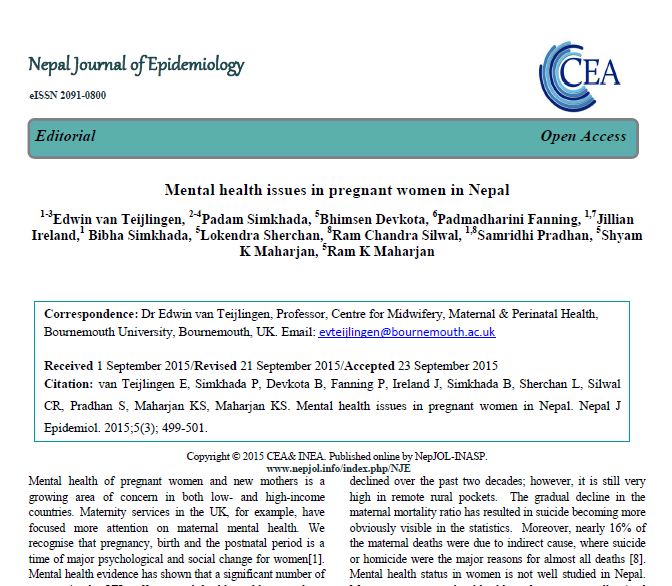
The current issue of the Nepal Journal of Epidemiology published today carries an editorial by a BU-led team of researchers and development workers. The editorial Mental health issues in pregnant women in Nepal highlights the intervention funded by THET which aims to improve the knowledge and attitude of maternity care workers in a rural district in the south of Nepal. The BU authors include Visiting Faculty: Padam Simkhada, Samridhi Pradham, Jillian Ireland and Bibha Simkhada, the other co-authors are affiliated with the charity we work with in Nepal (Ram Chandra Silwal), the Buddhist charity based in London Green Tara Trust (Padmadharini Fanning), and our Tribhuvan University based colleagues (Lokendra Sherchan, Shyam K Maharjan, and Ram K Maharjan.
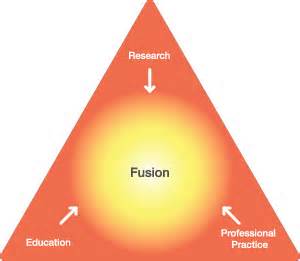
This THET-funded project will involve over 15 UK short-term volunteers. It is important to bring UK volunteers, who as health professionals will bring their experience of, and training in, the provision of mental health and maternity/midwifery services including the area of mental ill health prevention and health promotion. These experienced health workers (such as midwives, family doctors, mental health nurses, health visitors, psychiatrists) from the UK are invited to volunteer for two to three weeks at a time to design and deliver training. The mixture of training staff abroad (= Education) by UK professionals (=Practice) through an intervention which is properly evaluated (=Research) is a perfect example of BU’s FUSION in action.
This project is supported by the Tropical Health & Education Trust (THET) as part of the Health Partnership Scheme, which is funded by the UK Department for International Development (DFID) and runs from this year May 1st until the autumn of 2016. The paper is freely available on line, click here!
Prof. Edwin van Teijlingen
CMMPH
Refererence:
van Teijlingen E, Simkhada P, Devkota B, Fanning P, Ireland J, Simkhada B, Sherchan L, Silwal CR, Pradhan S, Maharjan KS, Maharjan KS. Mental health issues in pregnant women in Nepal. Nepal J Epidemiol. 2015;5(3); 499-501.
THE BOX SET MINDSET AND THE FORENSICS OF POPULAR CULTURE
A day conference organised by
The International Association of Forensic Psychotherapy
and
Media and Inner World Research Network
in association with
Bournemouth University and the University of Roehampton
28 November 2015, 9.30am – 6pm
The Wesley Centre, London, 81-103 Euston Street, London NW1 2EZ
Representations of crime and criminal behaviour have long been central to the history of popular culture and now seem to dominate the landscape of the popular cultural imagination. From Arthur Conan Doyle’s Sherlock Holmes books through to Hollywood films such as The Silence of the Lambs and television shows such as Law and Order, the forensic dilemmas underpinning dramatic fiction have regularly fascinated audiences. In recent years, there has been an explosion of interest in long-form television series that grapple with forensic dilemmas involving gangster and mafia groups, murderers, drug barons and corrupt political figures and organisations. Our fascination with these shows has been intensified by technological shifts that allow us to ‘binge-watch’ box sets so that aspects of the experience of addiction also arise in us as avid viewers and fans.
This one-day symposium brings together members of IAFP and the Media and the Inner World research network to explore the psycho-cultural appeal of well-known television dramas, in which the forensic themes of murder, violence, and revenge play a key narrative role. Focusing on highly successful television series such as Forbrydelsen/The Killing, Breaking Bad and House of Cards, this event will apply the expertise of eminent forensic psychotherapists and senior academic researchers to discuss why and how audiences relate to such programmes and their dark, compelling themes and characters. The production of such drama is now big business thanks to the box-set mindset it invokes, and it is significant that forensic ideas often lie at the heart of the storylines.
What fantasies are at play when engaging with the psychopathologies of crime on show in such programmes and what makes them such compulsive viewing? What do these forensic themes and their dominance in popular culture tell us about the psychodynamics of contemporary society and the fantasies that circulate within it? How can an understanding of these processes enhance the practice and theories of forensic psychotherapy and also create a dialogue with academic researchers in the field of media and cultural studies? We hope to address these questions throughout the course of the day through an exciting programme of panels and discussion groups.
To register and pay for the seminar please go to: http://forensicpsychotherapy.com/events/47-the-box-set-mindset/event-details
For assistance please contact Genevieve.Baker@uwclub.net
ESRC Festival by the Sea
A Study Day on the Forensics of Murder and Identity Theft in The Talented Mr. Ripley.
Date Saturday 14th November 1-5.30 pm
Venue: Allsebrook Lecture Theatre, Talbot Campus, Bournemouth University, Poole, Dorset BH12 5BB
Description
It is 60 years since Patricia Highsmith first published her psychological thriller, The Talented Mr Ripley, and its forensic themes have fascinated readers ever since. Following its successful adaptation on stage and screen, this study day links the enduring appeal of the story to the theme of identity theft, which is foregrounded throughout the narrative.
The event combines insights from the arts, psychology and sociology to both dramatise and discuss the motivations and emotions underpinning identity theft as a pervasive psychosocial issue. The session begins with a screening of the film The Talented Mr. Ripley (Anthony Minghella, 1999), followed by discussion with experts and the audience. The discussion of the film is followed by a live performance from the theatre adaptation of the book in the form of a monologue by a member of the award winning Faction theatre cast. After the performance there will be an interactive panel discussion with a psychotherapist, Faction theatre members and BU academics.
The panel will include psychotherapist Professor Brett Kahr, Faction Theatre Actor, Christopher Hughs, Director and scriptwriter of the Faction stage adaptation of The Talented Mr.Ripley, Mark Leipacher and BU Media and Communication Professors Iain MacRury and Candida Yates. This event is funded by the ESRC, and is also supported by the Narrative Research Group and builds on research carried out by Professor Yates as a Director (with Professor Caroline Bainbridge, Roehampton University) of the UK Media and Inner World Research network (MiW) that combines sociology, media studies and psychoanalysis to explore the role of emotion in culture and society.
Timing: 1- 5.30pm
1–3.15pm Film Screening: The Talented Mr. Ripley (Anthony Minghella, 1999) (This is optional for those who have seen it)
3.15-3.30pm Break
3.30-4.00 pm Discussion of film
4.00- 5.30pm Actor’s performance and discussion panel.
Dear colleagues,
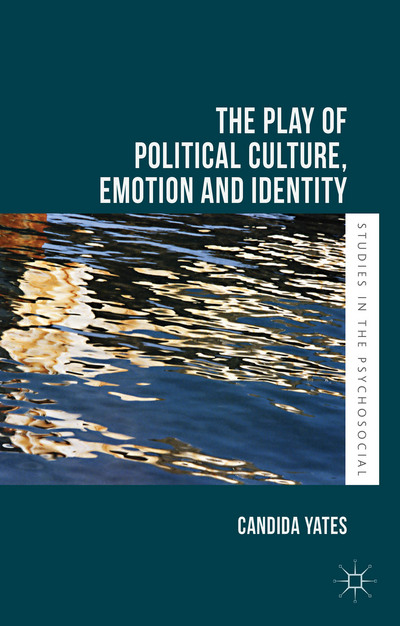
I am writing to let you know about the publication of my new book, The Play of Political Culture, Emotion and Identity.
Candida Yates, Professor of Culture and Communication, Bournemouth University
cyates@bournemouth.ac.uk
The Play of Political Culture, Emotion and Identity offers a new ‘psycho-cultural’ perspective on the psycho-dynamics of UK political culture and draws on psychoanalysis, cultural and media studies and political sociology to explore the cultural and emotional processes that shape our relationship to politics in the late modern, media age. Against a backdrop of promotional, celebrity culture and personality politics, the book uses the notion of ‘play’ as a metaphor to explore the flirtatious dynamics that are often present in the mediatised, interactive sphere of political culture and the discussion is elaborated upon by discussing different aspects of cultural and political identity, including, gender, class and nation. These themes are explored through selected case studies and examples, including the flirtation of Tony Blair, Joanna Lumley’s Gurkha campaign, Margaret Thatcher’s funeral, David Cameron’s identity as a father and the populist appeal of UKIP politician, Nigel Farage.
Table of contents
Further details can be found at Palgrave Macmillan:
http://www.palgrave.com/page/detail/the-play-of-political-culture–emotion-and-identity-candida-yates/?sf1=barcode&st1=9780230302525
Some reviews
‘Whether she is discussing the political manifestations of a contemporary crisis in masculinity and fatherhood, postmodern feminism, nostalgia, narcissism, play, or therapy culture, Yates’s psychoanalytic lens illuminates, in a nuanced fashion all too rare today, both regressive social trends toward mastery and progressive, creative potentials for change. This book is essential reading for anyone wishing to understand the complex interplay of fantasy, emotion, identity, media, and politics in the era of neoliberalism.’ – Lynne Layton, Harvard Medical School, USA
‘Exploring the entanglement of media, politics and emotions, this is a bold and original book that should be read by students and scholars in Sociology and Media Studies,and anyone with an interest in contemporary political life. It articulates a psycho-cultural perspective, moving with verve and insight from election politics to celebrity culture and from Russell Brand to poverty porn, offering a psychoanalytically informed reading of British political life and its structures of feeling. A satisfying and thought-provoking read.’ – Professor Rosalind Gill, Professor of Social and Cultural Analysis, City University London, UK
‘Through a psychoanalytic critique of the anxieties, fantasies and obsessions that characterise today’s intensely emotional political culture, Candida Yates’ new book makes a powerful case for the argument that Psychosocial Studies is the new Cultural Studies.’ – Sasha Roseneil, Professor of Sociology and Social Theory, Birkbeck, University of London, UK.
Every BU academic has a Research Professional account which delivers weekly emails detailing funding opportunities in their broad subject area. Jordan Graham from Research Professional is visiting BU on the 3rd of November 2015 to demonstrate to academics and staff how to make the most of their Research Professional account.
This will include:
Location and the session timings are:
Talbot campus P424
10.15 – 11.15 – Research Professional presentation
11.15 – 11.45 – RKEO interactive session setting up searches
Lansdowne campus S103
13.30 – 14.30 – Research Professional presentation
14.30 – 15.00 – RKEO interactive session setting up searches
After the presentation, the RKEO Funding Development Team will be on hand for an interactive session where they will help you set up your Research Professional account, searches and offer advice from a BU perspective.
This is a great opportunity to learn more about funding opportunities and to meet the Funding Development Team, particularly if you are new to BU.
Please reserve your place now at a BU Campus to suit through Organisational Development
Sometimes my co-authors and I wonder why a particular paper get more cited after a few years of publication. Is is because the paper and the research were are ahead of their time? Or is there simply a lag time between publication and other researchers publishing in the field finding your paper (or stumbling upon it perhaps)?
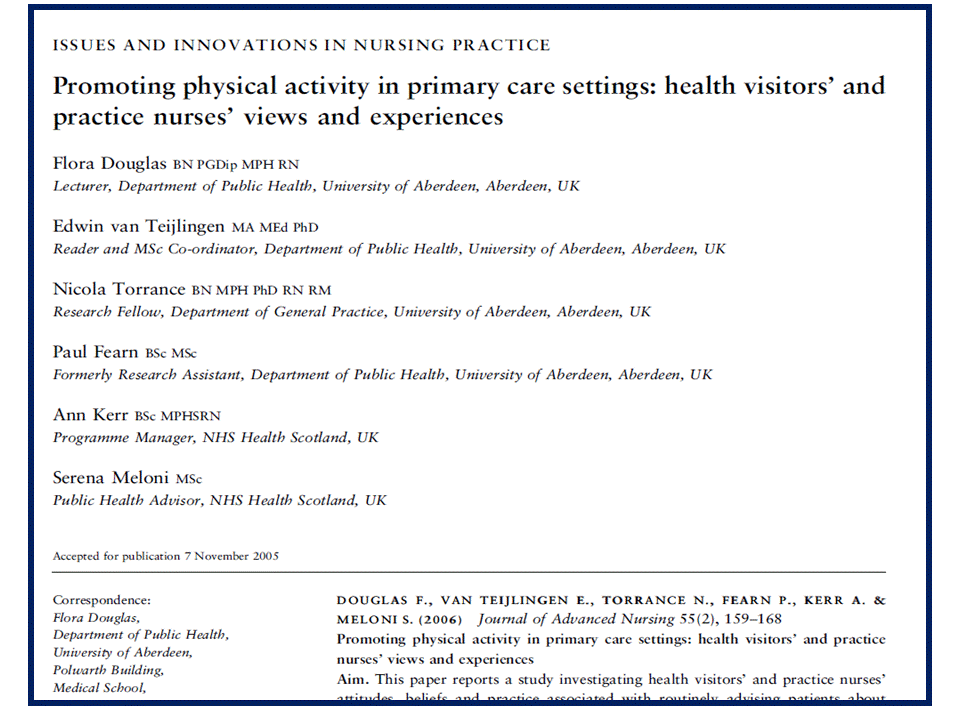
Take for example the following paper published in 2006 when I was still based in the Department of Public Health at the University of Aberdeen: Promoting physical activity in primary care settings: Health visitors’ and practice nurses’ views and experiences in the Journal of Advanced Nursing.[1]
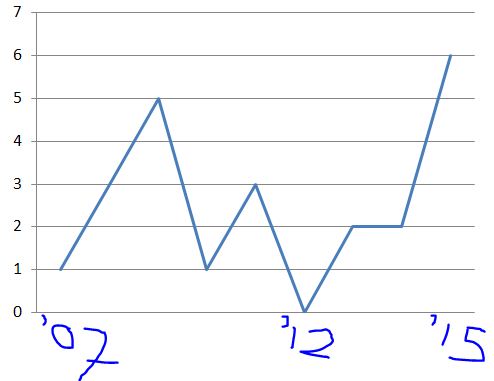
Published in 2006 our paper was first cited in Scopus in 2007 (just once),three time in the following year (2008), five times in 2009 and then just a few times per year until this year. In 2015 we have six citations already and the year is not even finished.
We really wonder what lies behind that increased popularity of this 2006 paper.
Prof. Edwin van Teijlingen
CMMPH
Reference:
Bournemouth University ranked just over the half way line in the top 800 universities in the world. Bournemouth University is in good company in the bracket (401-500) with other well-known universities such as the University of Cagliari (Italy), Charles University in Prague (Czech Republic), Curtin University (Australia), University of Waikato (New Zealand), Louisiana State University (USA) or the University of Tampere (Finland) to name but a few.
The full list of 800 universities is available here!
Prof. Edwin van Teijlingen
CMMPH
The following funding opportunities have been announced. Please follow the links for more information.
Arts and Humanities Research Council, GB
The Arts and Humanities Research Council invites applications for its short-term fellowships at the Harry Ransom Center under the international placement scheme, Fellowships allow the recipient to undertake research at the Harry Ransom Center at the University of Texas. The centre specialises in literature, photography, film, art and the performing arts, and is dedicated to advancing the study of the arts and humanities by acquiring, preserving and making accessible original cultural materials. Applicants must be resident in the UK and be one of the following: doctoral students who are enrolled at an approved UK research organisation and receive AHRC fees or full funding for their PhD; doctoral-level research assistants who have a PhD or equivalent research experience; early-career researchers, who must have a contract of employment with an approved UK research organisation and who may either be within eight years of the award of their PhD or equivalent professional training, or within six years of their first academic appointment. Placements last two to three months and may be taken between 1 September 2016 and 31 May 2017. Fellowships are worth up to £750 towards travel, coverage of visa costs and include a monthly allowance of £1,200. Fellows also receive a shared office space as well as access to the collections, resources, facilities, curators and other scholars at the centre and at the university. Networking and collaborating opportunities are also available.
Maximum award: Not specified. Closing date: 4pm, 21/01/16.
AXA
The AXA Research Fund invites applications for its chairs programme. The scheme aims to create an academic full time position in the host institution and at encourage a step change in the career of the appointed AXA professor, whilst promoting scientific excellence, innovative and groundbreaking research relevant beyond the borders of the institutions geographic location. The focus areas are: environmental risks including climate change, natural hazards and human-driven environmental changes; life risks including ageing, biomedical risks and addictions and risky behaviours; socio-economic risks including geopolitical risks, macro-economic and systematic financial risks, individual and collective behaviours when facing uncertainties and large corporate risks. There are two types of chairs; the AXA chair position, held on a long term basis by an individual chair holder, and the AXA successional chair programme, where the endowment will serve to support a series of temporary short term appointments. The proposed chair holder must have at least 10 years of experience since receiving his or her PhD. The schemes is tenable from five to 30 years and long term partnerships are favoured by the AXA scientific board. The grant for the AXA chair position is €90,000 to €120,000 a year and the successional chair grant is €80,000 to €90,000 a year. Funding is expected to cover salary for the chair holder, but can also be used on PhD and postdoc expenses, equipment and costs incurred while attending academic and public engagement activities.
Maximum award: Not specified. Closing date: 12pm (Paris time), 04/12/15.
The Bank of England invites applications for the Houblon-Norman and George fellowships, which promote research into, and disseminate knowledge and understanding of, the working, interaction and function of financial business institutions in Great Britain and elsewhere, and the economic conditions affecting them. These are full-time Fellowships (between one month and one year) and will be on an economic or financial topic studied with particular advantage to the Bank of England. The trustees will pay particular regard to the relevance of the research to current problems in economics and finance. Senior fellowships will be awarded to distinguished research workers who have established a reputation in their field. Fellowships are also available to younger postdoctoral or equivalent researchers. The total amount distributed in any one year will not normally exceed £120,000. A further allowance may be made to cover travel expenses or other costs incurred.
Maximum award: Not specified. Closing date: 01/11/15.
Biotechnology and Biological Sciences Research Council, GB
The Biotechnology and Biological Sciences Research Council invites applications for its stand-alone LINK programme. This supports pre-competitive research projects that address any topic within the council’s remit, and where industry contributes funding. Applications should be made to the following committees according to the research topic: research committee A – animal disease, health and welfare; research committee B – plants, microbes, food and sustainability; research committee C – genes, development, science, technology, engineering and mathematical approaches to biology; research committee D – molecules, cells and industrial biotechnology. Teams must include at least one company, (preference will be given to small and medium-sized enterprises), and one science-based partner. Principal applicants must be resident in the UK and hold an academic staff appointment, at the lecturer level or equivalent, at a higher education institution, research council institute or a BBSRC approved research organisation. Company partners should be registered in the UK or have a UK research and development or manufacturing site. Where a suitable company cannot be found in the UK, an overseas company may be used. Industry partners must contribute in cash at least 50%of the fEC of projects.
Maximum award: Not specified. Closing date: 13/01/16.
The Biotechnology and Biological Sciences Research Council invites applications for its new investigator scheme, which helps early-career researchers to secure their first major element of research funding. Applications should be made to the following committees according to the research topic: research committee A- animal disease, health and welfare; research committee B evaluates – plants, microbes, food and sustainability; research committee C – genes, development, and science, technology, engineering and mathematics approaches to biology; research committee D – molecules, cells and industrial biotechnology. Applicants should be newly employed university lecturers, fellows at the lecturer level whose awards were secured in open competition, or researchers in research council institutes at the unified research council band E or its equivalent. Applicants must not have more than three years of full-time employment at lecturer or equivalent level. They must not have received competitive research funding as a principal investigator from any source that included postdoctoral research assistant staff support costs.
Maximum award: Not specified. Closing date: 4pm, 13/01/16.
The Biotechnology and Biological Sciences Research Council invites proposals for its tools and resources development fund programme call one. The aim of this call is to pump prime the next generation of tools, technologies and resources required by bioscience researchers within BBSRC’s remit. The fund will support small or short-duration pump priming projects, enabling excellent bioscience; encourage development of novel tools, technologies and methods within BBSRC’s remit; underpin research in BBSRC’s strategic priorities and the wider biosciences. Proposals should demonstrate collaborative connections with interdisciplinary and multidisciplinary approaches and must be relevant to the output of new biological knowledge. Types of proposals eligible are: early concept, exploratory investigations of new tools, technologies and resources. The key feature of a successful ‘early concept, exploratory’ research project application is a technology or methods oriented approach that is enabling and adventurous, and encapsulates the concept of ‘high-risk/high reward’. Funded projects are expected to test the ‘high-risk, high reward’ concept and, where successful, demonstrate proof-of-principle’; rapid access to, and novel deployment of, the very latest cutting edge technology. It is anticipated that these proposals would include collaboration with the technology provider; radical, novel modifications to existing tools, technologies and resources to facilitate new biological understanding and an expansion in use.
Maximum award: £150k. Closing date: 4pm, 04/11/15.
The Biotechnology and Biological Sciences Research Council and the State of São Paulo Research Foundation (FAPESP) invite applications for their joint research funding. This supports applications that cut across national boundaries and involve international collaborative teams. Proposals may be submitted in any area of science within the remit of both supporting organisations.
Maximum award: Not specified. Closing date: 4pm, 13/01/16.
The Biotechnology and Biological Sciences Research Council invites applications for its industrial partnership awards. These support science-led research projects that address any topic within the council’s remit, and where industrial partners contribute in cash funding. Applications should be made to the following committees according to the research topic: research committee A – animal disease, health and welfare; research committee B – plants, microbes, food and sustainability; research committee C – genes, development, and science, technology, engineering and mathematics approaches to biology; research committee D – molecules, cells and industrial biotechnology. Principal applicants must be resident in the UK and hold an academic staff appointment, at the lecturer level or equivalent, at a higher education institution, research council institute or a BBSRC approved research organisation. Company partners should be registered in the UK or have a UK research and development or manufacturing site. Where a suitable company cannot be found in the UK, an overseas company may be used. Industrial partners must contribute in cash at least 10 per cent of the full economic cost of projects.
Maximum award: Not specified. Closing date: 4pm, 13/01/16.
The Biotechnology and Biological Sciences Research Council and Science Foundation Ireland invite applications for their joint research funding. This supports applications that cut across national boundaries and involve international collaborative teams led by researchers from the UK and the Republic of Ireland. The scope of pertnerships is restricted to research projects, including technology development projects but excluding embryonic stem cell research. Principal applicants must be resident in the UK and hold an academic staff appointment, at the lecturer level or equivalent, at a higher education institution, research council institute or a BBSRC-approved research organisation. Irish co-investigators must be based at a research body which is eligible for SFI support, they must be members of the academic staff of an eligible research body, and must have the capability and authority to mentor and supervise postgraduate students and team members.
Maximum award: Not specified. Closing date: 4pm, 13/01/16.
British Council, GB
The British Council, invites expressions of interest for its UK-Iran researcher links workshop on water management. This workshop wll bring together early career scholars and experienced researchers from the UK and Iran to discuss water management with subthemes of hydrology, extreme events, agriculture and food security, climate change, and water management/policy. participants will share their knowledge and build links for future collaboration. There will also be sessions on finding and applying for funding opportunities. Applicant must hold an academic position in the UK or Iran; have been awarded their PhD no earlier than January 2005; be able to evidence that their publications and awarded degree are relevant to the workshop themes; be proficient in English to level 6 IELTS (Iranian applicants). Visa, travel, subsistence and accommodation costs will be covered.
Maximum award: Not specified. Closing date: 15/10/15.
Engineering and Physical Sciences Research Council, GB
The Engineering and Physical Sciences Research Council invites outline proposals for its future manufacturing research hubs. The hubs will address major, long-term challenges facing manufacturing industries and capture opportunities from emerging research areas. Each hub can receive up to £10 million over seven years, to support a programme of innovative research in the engineering and physical sciences, related to the challenges in commercialising early stage research. The Hubs will feature high quality, multidisciplinary research, strong engagement with relevant manufacturing industries, and will take a leadership role in their national network. Each programme must: draw on advances in underlying science and technology; focus on the design and development of new and existing manufacturing processes, systems and networks; explicitly consider the pathway to manufacture. Funding can be used as platform research funding, grand challenge research funding, operational funding, or pathways to impact and commercialisation activities. Funding may also cover equipment costs.
Maximum award: £10m. Closing date: Outline proposals by 4pm, 19/11/15. Invited full proposals late March.
Research Councils UK and Innovate UK invite expressions of interest for their call on urban living partnership – pilot phase. This call will promote integrated research and innovation to address challenges in urban areas of the UK and help them realise their visions for future urban living. Partnerships will bring together the capabilities needed to address a wide range of challenges in areas such as infrastructure and environment; crime and social inclusion; health and wellbeing; heritage and culture; economy and employment; smart cities and big urban data. Consortia can include cross-disciplinary research expertise, city leaders, businesses, civic organisations and community groups, public, third sector and other urban innovators. Each of the consortia will be expected to conduct an initial pilot diagnostic phase focused on building integrated understanding of the challenges, opportunities and future visions of a specific UK city / urban area and developing agendas for future research and innovation.
Maximum award: £400k. Closing date: EOI 26/11/15. Full applications by 4pm, 21/01/16.
European Railway Agency, EU
The European Railway Agency invites tenders to conduct a study on implementation of fees and charges in the framework of the fourth railway package. The tenderer will: collect and analyse data with a view to establishing a framework for fees and charges; propose models for financial apportioning between the ERA and the national authorities; establish a list of criteria for differentiating fee structure, with special attention given to small and medium-sized enterprises. Legal and natural persons based in EU member states are eligible and must apply as a joint venture or consortium with a nominated leader.
Maximum award: €120,000 and €150,000 over six months. Closing date: 31/10/15.
Horowitz Foundation for Social Policy, US
The Horowitz Foundation for Social Policy invites applications for its research grants. Grants are awarded for work in major areas of the social sciences, including anthropology, area studies, economics, political science, psychology, sociology and urban studies, as well as newer areas such as evaluation research. Preference will be given to projects that deal with contemporary issues in the social sciences and issues of policy relevance. Phd candidates whose projects have received approval from their appropriate department head or university are eligible to apply.
Maximum awarrd: US$7,500. Closing date: 31/01/16.
Innovate UK, GB
Innovate UK and the Department for Culture, Innovation and Media invite applications for the nuisance calls competition. The competition aims to address and find solutions for the problem of nuisance calls, especially to vulnerable members of society who are at higher risk of financial harm and personal distress. Solutions can use any technology including, but not limited to, any of the following areas: Home- installed equipment that filters and blocks calls, based on Calling Line Identification (CLI) or other techniques; As before but with a “community” or central database to block calls from known “problem sources”; A network level solution that will filter and block calls before they are offered to the end user. Key challenges that bids will need to address are: Blocking/filtering calls as an option where the number is ‘withheld’ or ‘unavailable’, including where these are international in origin; How legitimate callers using networks that present with no CLI are processed, for example gathering a list of legitimate callers (sometimes referred to as ‘whitelists’); How the system can block calls that offer malformed CLI; Whether the system is capable of detecting spoofed but valid CLI; How calls from mobile and non-geographic numbers are handled – i.e. can they be configured as blocked/filtered; How a network level solution can be implemented on existing communication networks.
Maximum award: £50k. Closing date: Registration by 12pm, 04/11/15. Full applications by 12pm, 11/11/15.
Middle East Economic Research Centre, TR
The Middle East Economic Research Centre invites applications and nominations for the Ibn Khaldun prize, whic recognises outstanding individual and co-authored papers by young scientists on Middle East economics. Candidates must be no more than six years post-PhD .Winners of the award receive a certificate, a cash award of $250 and exemption from dues and submission fees for two consecutive calendar years.
Maximum award: $250. Closing date: 10/12/15.
Natural environment Research Council, GB
The Natural Environment Research Council, in collaboration with the Medical Research Council in the UK, and the Earth System Science Organisation, Ministry of Earth Sciences, and the Department of Biotechnology in India, invites initial proposals for the atmospheric pollution and human health in an Indian megacity programme. This aims to provide new knowledge on air pollution issues and impacts on health in a rapidly urbanising society and the evidence to support cost effective measures for health improvements related to atmospheric pollutants in Delhi, India. The programme is split into four themes; emission validation and sources; processes: physical and chemical; exposure validation and health outcomes; mitigations and interventions. Applications must be collaborative between UK and Indian researchers.
Maximum award: Not specified. Closing date: initial proposals 4pm, 10/12/15. Full proposals due early July 16.
Swedish Foundation for Strategic Research, SE
The Swedish Foundation for Strategic Research invites proposals for its industrial research centres, which aim to improve long-term problem- and application driven research centres comprising collaborative research ecosystems between industry, research institutes and academia. Centres should be strategically defined around formulated industrial needs with formidable research challenges. Research problems should be defined and pursued by both the industrial and academic partners. Research centres must be concentrated on disruptive innovation, including new enabling technologies or emerging technology shifts in a long-term perspective.Each centre will have two to five industrial partners, with one to five academic or research institute partners. At least one of the partners must be a department at a Swedish university, which will administer the grant. The main applicant must be a researcher based at a Swedish university or research institute. Partners can be researchers from industry, public authorities, research institutes and university departments. Companies should normally be registered in Sweden or close to Sweden so that the exchange can work practically and be justified strategically for Sweden. Industrial partners may be hospitals if the centre involves clinical research. International partners may participate on their own budget. Industry partners must fund their participation with a combination of in-kind and cash by at least 20 per cent of the total budget of the centre.
Maximum award: SEK100m. Closing date: 2pm CET, 04/05/16.
Wellcome Trust, GB
The Wellcome Trust and the Academy of Medical Sciences invite applications for their springboard awards, which enable UK biomedical scientists to develop their independent research careers. Applicants must be within three years of being appointed their first independent post, hold a current post with salary, not be receiving significant research funding, be supported by the host organisation.
Maximum award: £100k. Closing date: 07/12/15.
The Wellcome Trust invites applications for its collaborative awards in science, supporting teams of independent researchers pursuing problems across the areas of science, humanities and social science and innovation. Interdisciplinary research collaborations between basic scientists or medical and veterinary clinicians, and non-biologists, such as mathematicians, physicists, chemists, engineers and social scientists, are encouraged. Funding may be used for research expenses, travel and subsistence, overseas allowances, research management and support costs. A provision for public engagement costs may also be awarded.
Maximum award: £4m. Closing date: preliminary applications due 05/01/16. Full applications by 13/04/16.
The Wellcome Trust invites applications for its our planet, our health awards. These support high-quality, transdisciplinary programmes of research that investigate novel aspects of, and build evidence for, how complex changes in our environment affect our health. Supported proposals will consider the interplay between different environments, drive collaborative research and lead to outputs with a significant impact on our health. Programmes should use a range of relevant disciplines and research methodologies and may consist of predictive modelling, developing innovative products or processes, policy development or evaluating specific interventions. Proposals from a broad range of disciplines involving cross-sector collaborations are encouraged. Eligible costs include salary costs for research staff, consumables and small equipment costs, travel costs for conferences and research meetings, office support and communication cost.
Maximum award: £10m. Closing date: 29/01/16.
The Wellcome Trust invites applications for its society awards. These support projects that encourage the public to explore biomedical science, its impact on society and culture, its historical roots and the ethical questions that it raises Projects should stimulate interest, excitement and debate about biomedical science and/or the history of medicine; support formal and informal learning; reach audiences of all ages and from all walks of life and inform, inspire and involve them; encourage high-quality interdisciplinary practice and collaborations; investigate and test new methods of engagement, participation and education. Applicants and activities must be based in the UK or the Republic of Ireland and applicants may be mediators, facilitators and practitioners of science communication; science centre or museum staff; artists; educators; film-makers; theatre producers; games developers; public participation practitioners; health professionals; and academics in bioscience, social science, bioethics, and medical history and the humanities.
Maximum award: Not specified. Closing date: 5pm, 11/03/16.
Please note that some funding bodies specify a time for submission as well as a date. Please confirm this with your RKEO Funding Development Officer
You can set up your own personalised alerts on Research Professional. If you need help setting these up, just ask your School’s/Faculty’s Funding Development Officer in RKEO or view the recent blog post here.
If thinking of applying, why not add notification of your interest on Research Professional’s record of the bid so that BU colleagues can see your intention to bid and contact you to collaborate.
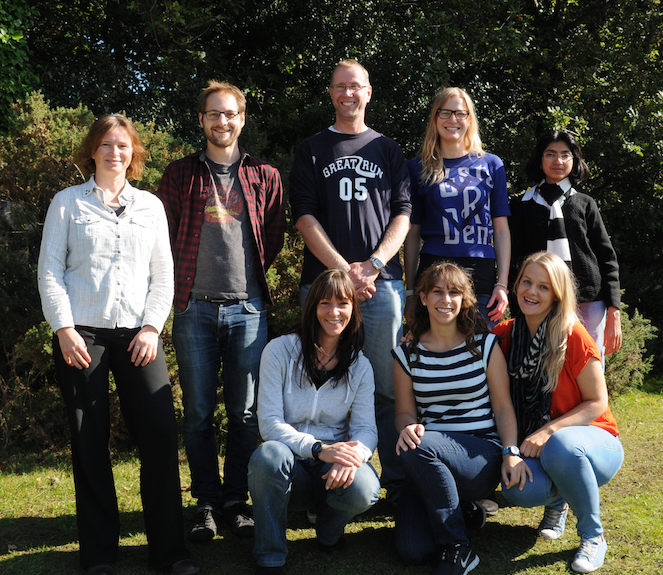
Congratulations to BU’s Dr. Pramod Regmi on the acceptance of the manuscript: “Importance of health and social care research into gender and sexual minority populations in Nepal” by the Asia-Pacific Journal of Public Health.
Dr. Pramod Regmi is originally from Nepal and currently a post-doc researcher in the Faculty of Health & Social Sciences.
Prof. Edwin van Teijlingen
CMMPH
The modern university is a troubled place. Under the pressure of reduced government funding and the rising expectations that come with increased student fees, the emphasis in contemporary media is on degrees that lead directly to a career.
As a result humanities subjects, such as English Literature and cultural studies, have come under criticism for being too broad, too wide reaching. It has been suggested that these degrees should focus solely on those subjects and skills that will ‘guarantee’ employment – a return to the so-called classics of Shakespeare and Dickens.
This decision would limit the texts and scope of the humanities and undermine the ability of scholars to pursue research, ultimately damaging the student experience in the process.
Using high-profile examples from contemporary popular culture, such as Taylor Swift, and the rise of the Zombie in video games, film and TV, BU’s Dr Sam Goodman will argue that the value of diverse humanities and the importance of academic freedom has never been greater.
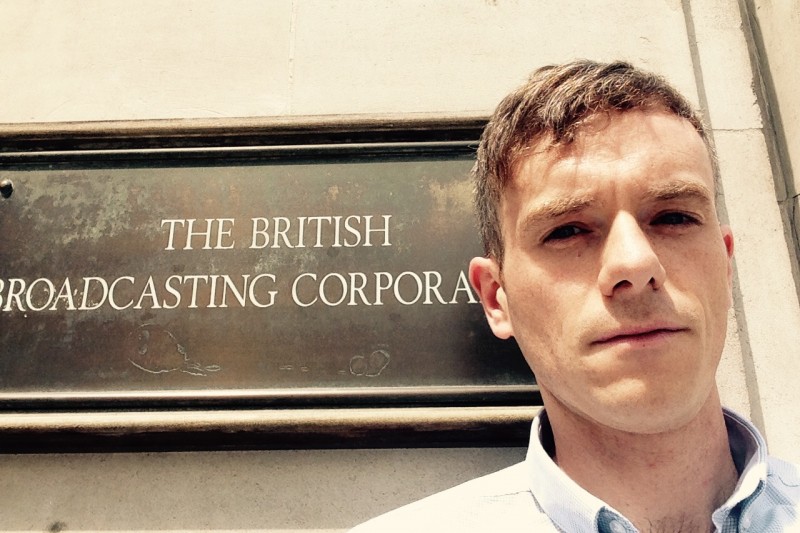
Sam lectures in linguistics at BU and his research interests include 20th Century literature with a broad focus on identity, medicine, notions of Englishness and Empire, and post-World War 2 popular culture. This year he was selected as a BBC Radio 3 New Generation Thinker and has recently published a book on spy novels, entitled “British Spy Fiction & the End of Empire”.
Talk BU Live is a series of free on-campus events designed to get people talking and thinking. Talks are no more than 20 minutes long and open to all students and staff at BU.
You can get involved by tweeting #TalkBU or find out more by contacting the team or visiting the Talk BU page on the website.
Congratulations to FHSS Ph.D. student Jib Acharya on the publication of his latest paper on childhood nutrition in Nepal.[1] Mr. Acharya’s study included a cross-sectional, community-based survey of 524 mothers in one district of Nepal. These were mothers of young children aged 36-60 months who are no longer breastfed at the time. The questionnaire survey included: socio-demographic measurements, knowledge, beliefs and attitudes about nutritious food, as well as child feeding patterns, food recommendation, major barriers, food insecurity and health-seeking behaviours. Jib’s mixed-methods Ph.D. work is supervised by Dr. Jane Murphy, Dr. Martin Hind and Prof. Edwin van Teijlingen.
The study found that both urban and rural mothers lacked knowledge of what food is nutritious. Moreover, their attitudes and views appeared often ill informed. This study suggests that a different approach was needed because the public health problems are associated with behaviour. Thus, more attention should be paid to appropriate intervention of under-nutrition in poor communities like this one studied in Nepal.
Prof. Edwin van Teijlingen
CMMPH
Reference:
Researchers from the Faculty of Health and Social Sciences, Fotini Tsofliou, Angela Turner-Wilson, Anne Mills and Juliet Wiseman, working in collaboration with Sarah Watson (Sustainable Food City Partnership) received a Grants Academy Pilot Scheme Award from BU. This funding has enabled us to undertake some exciting new work in the field of Community Food Programmes (CFP). These are widely used services that support people to access food. However at present there is little information from the users on the role of CFPs in building the capacity of the community towards healthy eating.
Focus groups provided fascinating insights into people’s views around food growing in the community. For example, participants said:
“it’s (community gardens) really good for your mental health, your physical health, growing things and for the children as well ‘cos a lot of children think peas come from a pan or from the freezer.”
“they (children ) enjoyed harvesting.”
“yes and they’ve (children ) learnt they can and they’ve eaten them”
“if it brings people together kids take ownership of it”
Work continues with gaining understandings of the role of cooking classes and lunch clubs in relation to community’s health and wellbeing.