Hello, I am the new Research Development Officer (Public Engagement) in the Research Development Unit. I wanted to take the opportunity to introduce myself (you can learn more about me here) and give you a brief introduction to the work that I will be doing. My remit is to support public engagement activities across all research themes at BU by identifying opportunities, supporting funding applications and using all my creative skills to think about how we can ensure that research findings reach a far wider audience. Specifically, this will mean activities such as signing up to the National Co-ordinating Centre for Public Engagement’s manifesto for public engagement, organising a research festival (amongst many other events), supporting the public engagement angle of BU’s first Festival of Learning next year, providing training on public engagement and highlighting opportunities for public engagement. However, my role is flexible and I will be consulting the academic community on how I can best support public engagement activities. Please do not hesitate to feedback to me either at redwards@bournemouth.ac.uk or via the consultation opportunities that will be featured on this blog in the next few weeks.
My appointment demonstrates a serious commitment by BU to supporting public engagement to build on some of the existing excellent public engagement work and develop a broader culture of public engagement. This recognises the growing public engagement agenda which presents many opportunities and challenges for the Higher Education sector. My personal passion for public engagement stems from my academic career; which started with a PhD in geography at Royal Holloway (University of London) before research posts at Cardiff University (in the Regeneration Institute and WISERD) and University of Southampton (TSRC). Throughout my research career, public engagement has formed a vital part of informing research design, data collection and the dissemination of research findings. I have been lucky enough to witness firsthand the powerful impact that public engagement can have and what a rewarding experience it can be for all concerned. I am also very aware of the pressures of academic life; embarking on a public engagement project when you are already juggling your teaching load, research commitments, REF and everything else that you are already asked to do, can feel very daunting – only last week I was simultaneously revising a journal article whilst organising an event for third sector practitioners.
I will be writing in much more detail about public engagement on this blog and through a series of information guides. However, if you’re looking for some introductory information, there are some great resources online. Just a flavour of them can be found via the links below, but in the meantime, please do not hesitate to get in-touch!
What is public engagement? NCCPE’s definition:
“Public engagement describes the myriad of ways in which the activity and benefits of higher education and research can be shared with the public. Engagement is by definition a two-way process, involving interaction and listening, with the goal of generating mutual benefit”.
Further information can be found here
Key sources of information
– National Co-ordinating Centre for Public Engagement: This website provides a great introduction to public engagement in the HE sector.
– The Engaged University: A manifesto for public engagement: It is BU’s aspiration to sign up to the manifesto as part of the wider public engagement strategy.
– RCUK’s public engagement pages: Outlining RCUK’s approach to public engagement.
– RCUK’s Concordat for Engaging the Public with Research: This outlines the expectations of research funders of research institutes for good practice in public engagement.
A few examples of public engagement
This list gives a tiny flavour of projects that are included as public engagement. I will be developing a more comprehensive guide in the forthcoming weeks:
– Seven days of social science research. This is an ESRC initiative which demonstrates through a series of videos how ESRC funded research is exploring our lives.
– Bristol Festival of Nature. This is a consortium of universities, third sector organisations and other partners, working together to celebrate nature through a very popular festival.
– Zombie Science is a spoof lecture series and portfolio of materials to engage young people in science through the theme of ‘Zombieism’.
– Informing civil society: the work of the Third Sector Research Centre. This link details an event held at the British Library which engaged policy makers, practitioners and academics to explore how research findings from the Third Sector Research Centre could be used in practice and considered the direction of future research.
– University of Southampton’s Science and Engineering Day. This video gives a snapshot of the range of activities that families were invited to take part in on the day.
– The Life Scientific. This BBC Radio 4 programme presented by Jim Al-Khalili (Professor of Physics and Professor of Public Engagement in Science at University of Surrey) features leading scientists talking about their research and the inspiration behind them.
– More great case studies can be found on the NCCPE’s website
Join the debate
Public engagement is a topic that it is increasingly being discussed on online. Here are just a few examples how public engagement is being talked about:
– The LSE impact blog has a number of articles, such as this one that explores public engagement.
– Mentions of public engagement also appear in the Times Higher, for example in this article talking about Rowan Williams’ new role.
– The following twitterers are examples of those talking about public engagement: @KingsEngages, @NCCPE, @DrAliceRoberts, @TCsocialimpact, @amyplatypus, @bulletinac, @LSEpoliticsblog – amongst many others!
 For further information and details on how to enter visit the website:
 The blogosphere sounds like a strange galaxy in another dimension, but is the term used to refer to all blogs (such as this one!) and their interconnections. Readers of blogs share their thoughts and views in a collected community. Academic blogs tend to focus on professional topics, showing explicit connections between blog content, research issues and academic life, and more academics than ever are now engaging with the blogosphere to share their work, establish networks and connections, and to develop their careers. But are the benefits really that great?
 he National Co-ordinating Centre for Public Engagement (NCCPE) held their second national conference on 29 and 30 November 2011 in Bristol and three members of staff from Bournemouth University School of Health and Social Care were lucky enough to attend this highly stimulating, engaging and informative conference.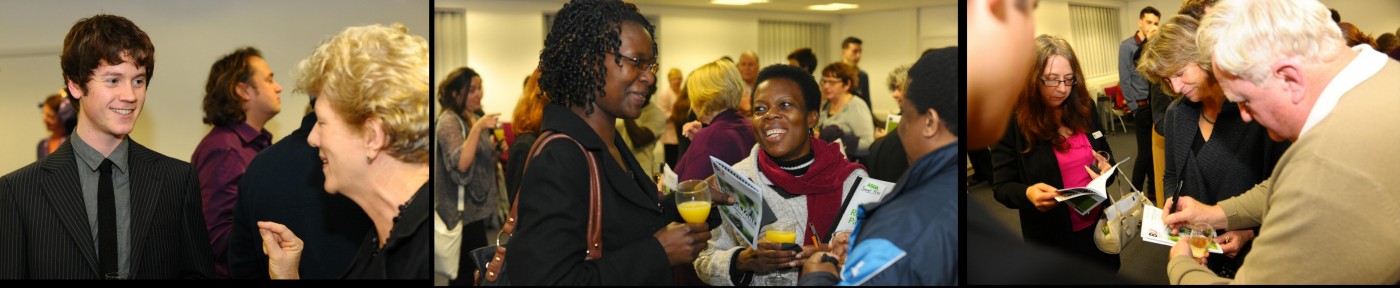

 On Monday 12th March SET for BRITAIN will hold a poster exhibition and reception in the House of Commons Terrace Marquee during National Science and Engineering Week. The exhibition will be of posters submitted by applicants to the SET for BRITAIN competition. The closing date for entries is Saturday 24 December 2011. There will be an initial selection by the judges and applicants will be informed by the end of January 2012 whether their application to take part in the exhibition has been successful.
 The academics selected were chosen from a group of 57 finalists who attended a series of day-long workshops at the BBC exploring the key to making scholarly research into good programmes. They’ve gone on to work with BBC producers to develop their broadcasting ideas, contributed to Radio 3’s Free Thinking festival, made regular appearances on Radio 3’s arts and ideas programme Night Waves and pitched ideas for full length programmes based on their research.
 The Wellcome Trust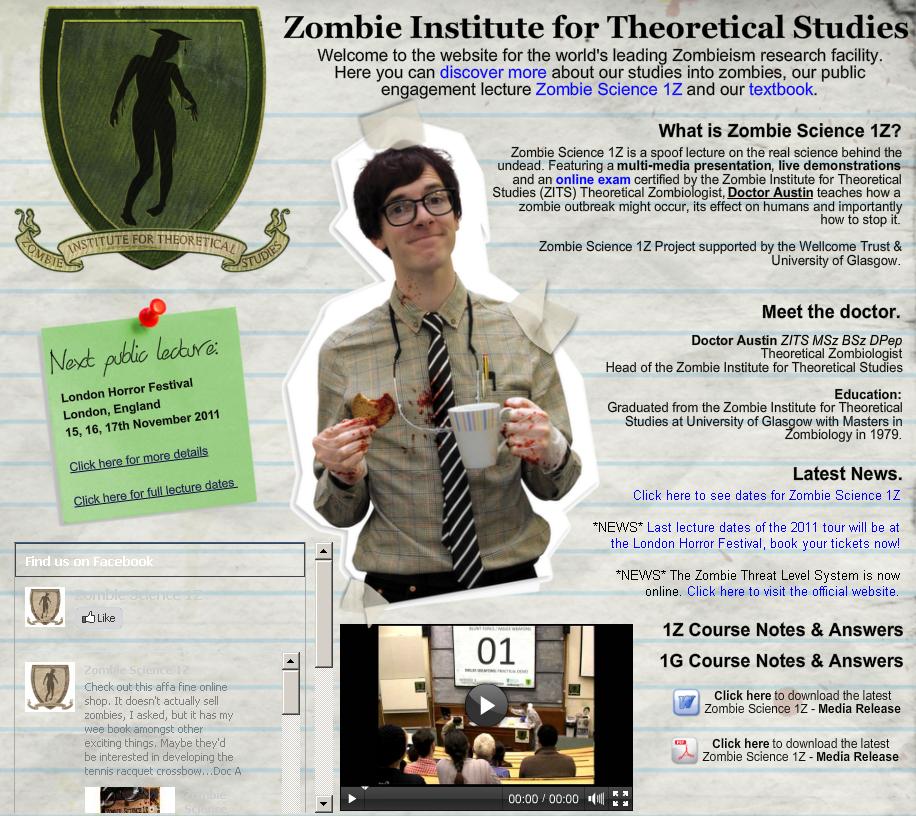

 Following the BU Research Blog entry of 12th July, entitled ‘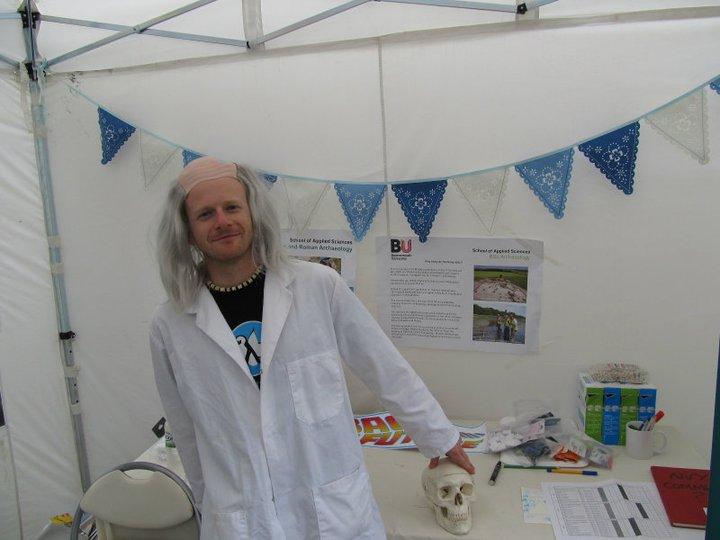
 The event was massively successful with well in excess of 1,000 people of all ages visiting the stall and engaging in activities over the weekend. Feedback was hugely positive and follow up events at other festivals are already in the initial stages of planning.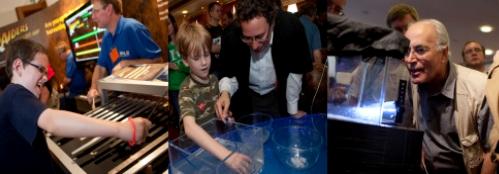




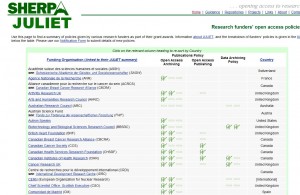
 Hopefully this will help to increase BU’s compliance with funders’ open access requirements as well as increasing the visibility and impact of BU’s research 🙂
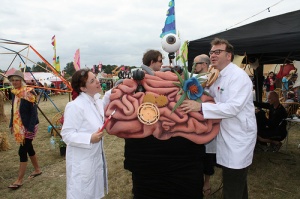 Since 2007
 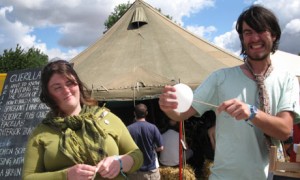 A survey in 2010 demonstrated that ca. 80% weren’t expecting to encounter science at a festival and that many participants said they stumbled across the activities by accident but stayed because they looked fun. In addition 84% said they would ‘definitely take part again’.







 Verbal autopsy paper published two days ago
 ESRC Studentships for 2027 Entry: Opportunity Now Open
 SONAMONI contributions to Safety Conference 2026 in South Africa
 Three CMWH presentations at Berlin conference
 Horizon Europe Cluster 3 (Civil Security for Society) 2026 Calls Now Open
 MSCA Doctoral Networks 2026 Call Information Webinar
 ESRC Festival of Social Science 2026: Application Deadline Extended to Thursday 25 June 2026
 Reminder: Register for the ESRC Festival of Social Science 2026 Information Session
 ECR Funding Open Call: Research Culture & Community Grant – Apply now
 ERC Advanced Grant 2025 Webinar
 Update on UKRO services
 European research project exploring use of ‘virtual twins’ to better manage metabolic associated fatty liver disease