We are very excited about taking our financial scams research to the Glastonbury Festival, 2017. This offers an amazing opportunity to engage with a very different, and potentially huge, audience.
 But this offers a challenge – we are well practiced in presenting our research at conferences, public engagement events and more formally at policy forums – but how to do it in a tent, in a field, with a moving audience, at probably the best-known music festival in the country???
The first response I get from people when I tell them about taking our scamming research to Glastonbury is: ‘are you going to scam people?’, and the answer is of course, yes (though we promise to return their personal information). Using an exercise that demonstrates how humans tend to want to please and are generally reciprocal by nature, we will demonstrate the characteristics scammers use to their advantage (Langenderfer, and Shimp, 2001).
To make our research attractive, and draw in an audience, we have turned to games which offer information in bite size chunks and reward players who use their scam ‘antennae’.
With such a diverse audience as Glastonbury we have a range of activities to appeal to children (and the sleep deprived) and older participants. So, we have designed a colourful ‘scams and ladders’ game where getting caught by scamming snakes means sliding down the board, while beating the scammers is rewarded by racing up the ladders.
Others may try a card sorting game where different scams are depicted with colourful illustrations. Players must sort into scam type and the correct sequence of events. For the detectives, we have hidden clues to be found within letters and emails (including clues only revealed with the use of a UV torch).
These will be fun activities, but our attendance at Glastonbury is also a serious research endeavour. Not only will we be collecting data about the general public’s awareness of scams, it is an opportunity for us to trial alternative ways of presenting research which break through the barriers between ‘research’ and ‘real life’. We will be evaluating our project and building on our findings to develop improved resources.
Scamming is an extremely serious issue affecting more that 3.25 million annually in the UK (Age UK, 2015), and can result in significant harm to victims’ health and well-being. This means finding diverse ways of communicating knowledge which empowers people and increases prevention through raising awareness is essential – including games.
Listen to Dr Sally Lee’s email to Mark Kermode and Simon Mayo being read on the BBC’s flagship film programme CLICK HERE. 1:55:20
References:
Age UK (2015) Only the Tip of the Iceberg: Fraud Against Older People, Age UK, London
Langenderfer, J. and Shimp, T. (2001) Consumer vulnerability to scams, swindles and fraud: A new theory of visceral influences on persuasion, Journal of Psychology and Marketing, 18:7, 763-783
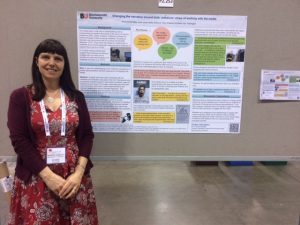
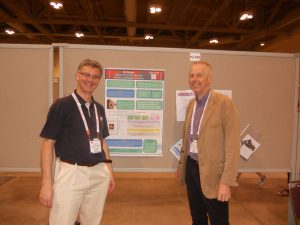
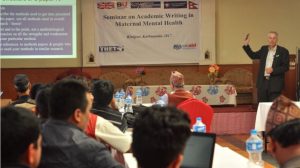
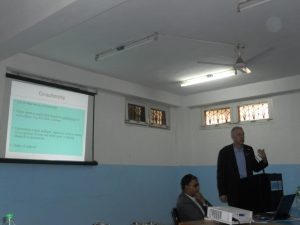
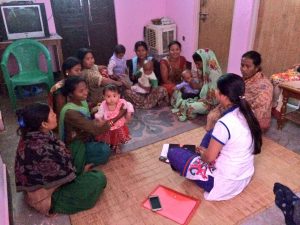 As promised to our audience at the 31st International Confederation of Midwifery Triennial Congress in Toronto today: the slides used on our session ‘Mental health training for community maternity workers in Nepal. The slides in PDF format can be accessed here: Nepal THET ICM 2017. Our project brought together academics, midwives, nurses, and other health workers in Nepal and the UK to help in the training of Auxiliary Nurse Midwives in Nawalparasi on key aspects of mental health and mental health promotion. The project led by Bournemouth University was funded under the Health Partnership Scheme (HPS) which is managed by a London-based organisation called THET (Tropical Health & Education Trust).






 Who can apply










 New HIV paper by BU PhD student
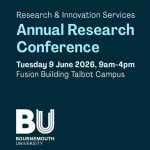 BU Annual Research Conference: Poster Exhibition Call for Applications
 Vitae Three Minute Thesis (3MT®) Competition: Applications Now Open
 3C Online Social: Thursday 26 March 1–2pm – Research Culture, Community & Can you Guess Who?
 Four BU students at national midwifery conference
 ECR Funding Open Call: Research Culture & Community Grant – Apply now
 ECR Funding Open Call: Research Culture & Community Grant – Application Deadline Friday 12 December
 MSCA Postdoctoral Fellowships 2025 Call
 ERC Advanced Grant 2025 Webinar
 Update on UKRO services
 European research project exploring use of ‘virtual twins’ to better manage metabolic associated fatty liver disease