-
Harvey, O., van Teijlingen, E., Parrish, M. (2022) Mixed-methods research on androgen abuse – a review, Current Opinion in Endocrinology & Diabetes (accepted)
- Harvey, O., Parrish, M., van Teijlingen, E, Trenoweth, S. (2021) Libido as a reason to use non-prescribed Anabolic Androgenic Steroids, Drugs: Education, Prevention & Policy 29:3,276-288,DOI: 10.1080/09687637.2021.1882940
- Harvey, O., Keen, S., Parrish, M., van Teijlingen, E. (2019) Support for people who use Anabolic Androgenic Steroids: A Systematic Literature Review into what they want and what they access. BMC Public Health 19: 1024 https://doi.org/10.1186/s12889-019-7288-x https://rdcu.be/bMFon
- Harvey, O., Parrish, M., van Teijlingen, E., Trenoweth, S. (2020) Support for non-prescribed Anabolic Androgenic Steroids users: A qualitative exploration of their needs Drugs: Education, Prevention & Policy 27:5, 377-386. DOI 10.1080/09687637.2019.1705763
- Harvey, O., (2019) ECR Spotlight: From Social Work to Studying Steroids, HED Matters 2(2):16-19.
Category / international
Dealing with difficult reviewers
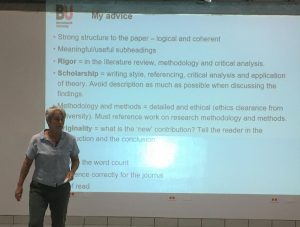
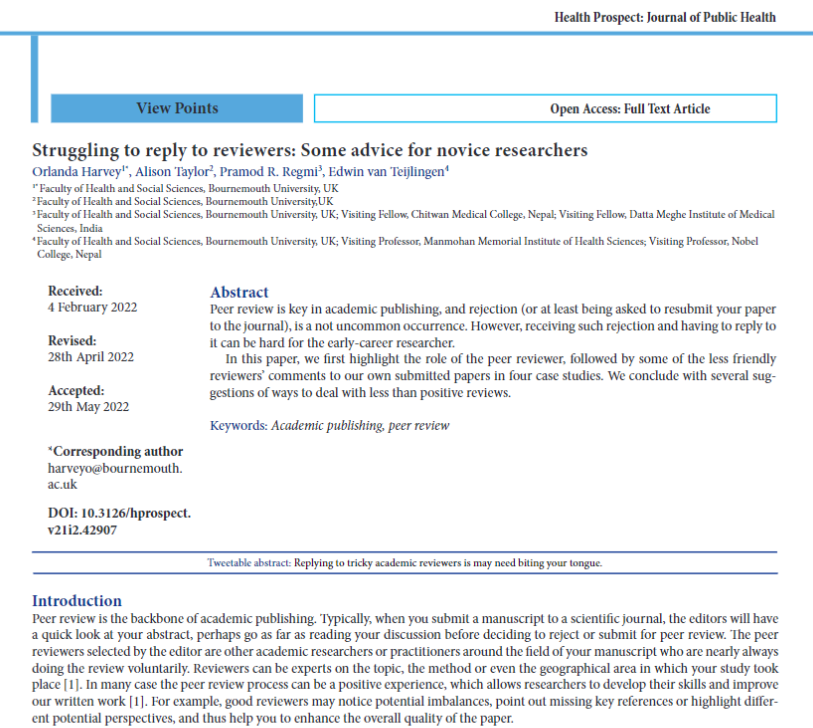
This week saw the publication of another Bournemouth University paper on academic writing and publishing. This latest paper ‘Struggling to reply to reviewers: Some advice for novice researchers‘ has been published in the scientific journal Health Prospect: Journal of Public Health. This journal is published in Nepal and it is Open Access, hence freely available across the globe.
Peer review is the process by which academic journals assess and regulate the quality of content they publish, by inviting academic experts to review your submitted manuscripts. It is a process of quality control. Once you have submitted your paper to a journal the editor will select potential peer reviewers within the field of research to peer-review your manuscript and make recommendations. In many case the peer review process can be a positive experience for you as it allows you to develop your skills and improve your written work. For example, good reviewers may notice potential imbalances, point out missing key references or highlight different potential perspectives, and thus help you to enhance the overall quality of the paper. On some occasions, however a reviewer can be a complete pain in the neck!
The paper is written by a multidisciplinary team based in the Department of Nursing Sciences (Dr. Regmi), the Department of Social Sciences and Social Work (Dr. Harvey), and the Department of Midwifery & Health Sciences (Dr. Taylor & Prof. van Teijlingen). The authors bring their combined expertise in midwifery, social work, health education, sociology and health services research to offers the readers advice how to deal with the more difficult reviewers.
Reference:
- Harvey, O., Taylor, A., Regmi, P.R., van Teijlingen, E. (2022) Struggling to reply to reviewers: Some advice for novice researchers Health Prospect: Journal of Public Health 21(2):19-22
New paper on COVID-19 rumours in Nepal
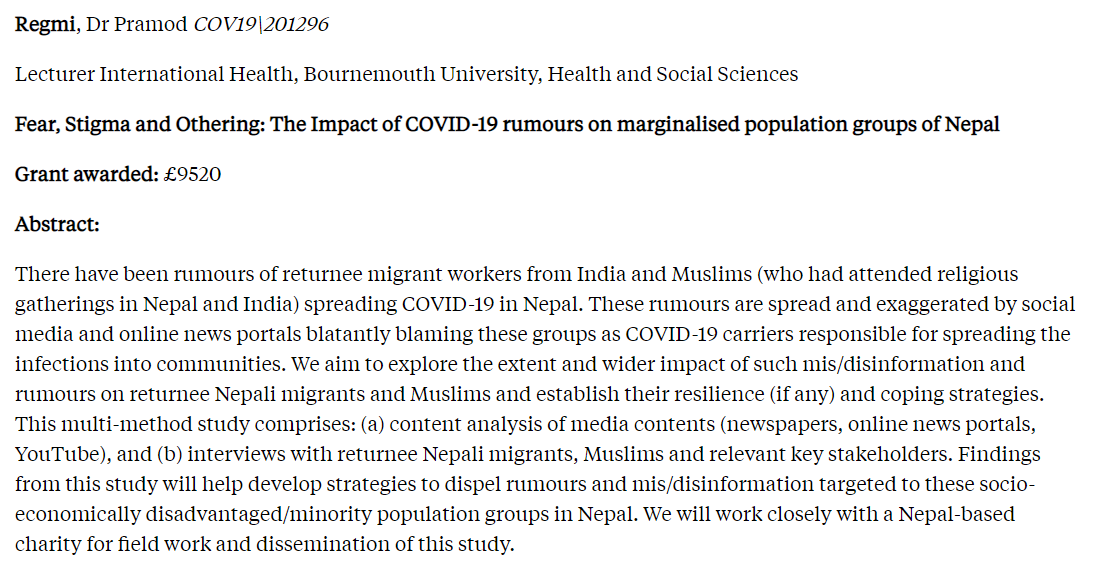
Today the International Journal of Environmental Research and Public Health accepted the latest COVID-19 paper from an multidisciplinary team in the Faculty of Health & Social Sciences (FHSS). The paper ‘Fear, Stigma and Othering: The Impact of COVID-19 Rumours on Returnee Migrants and Muslim Populations of Nepal’ is based on research funded by British Academy Special Research Grants: COVID-19 Awards. This British Academy funded-study brought together social scientists and health researchers interested in social and media aspects of the COVID-19 pandemic.
The project is apart of the Health Research Network for Migrant Workers in Asia and it is led by Dr. Pramod Regmi (Department of Nursing Sciences), Dr. Shovita Dhakal-Adhikari (Department of Social Sciences and Social Work), Dr. Nirmal Aryal (formerly Department of Midwifery & Health Sciences and soon to be appointed in the Department of Nursing Sciences), external collaborator Dr. Sharada Prasad Wasti from the University of Huddersfield, and Prof. Edwin van Teijlingen (Department of Midwifery & Health Sciences).
Reference:
- Regmi, P., Dhakal Adhikari, S., Aryal, N., Wasti, S.P., van Teijlingen, E. (2022) Fear, Stigma and Othering: The Impact of COVID-19 Rumours on Returnee Migrants and Muslim Populations of Nepal, International Journal of Environmental Research and Public Health Accepted
My Turing Scheme experience in Nepal
My name is Sulochana Dhakal-Rai. I am a final-year PhD student at Faculty of Health and Social Sciences (FHSS). My PhD research is related to factors affecting the rising rate of CS in urban hospitals in Nepal. There are several reasons to choose BU to do PhD study. Firstly, this university offers strong professional orientation with focus on academic excellence and employability to multinational students from multicultural background. Secondly, it provides opportunities to students for undertaking different activities, for example – international student exchange programme. I am always keen to be involved in such types of activities for my personal and professional development.
I applied for Turing Scheme Fund to do research activities in Nepal. The application process was very easy. I had received positive support from my supervisors and team of international grants. I was delighted to participate in international mobility, because I had a chance not only sharing my research experience to student and teachers at Manmohan Memorial Institute of Health Sciences (MMIHS), Kathmandu, but also to do my own research activities (secondary data verification and analysis).
Although, it was hot weather, polluted and over-crowded in Kathmandu, I enjoyed eating Nepali cuisine, meeting own people and speaking Nepali language. For me, there was not any problem in local language and culture. However, it was uncomfortable using public transport at times. I had suffered from of an episode of indigestion problem as well.
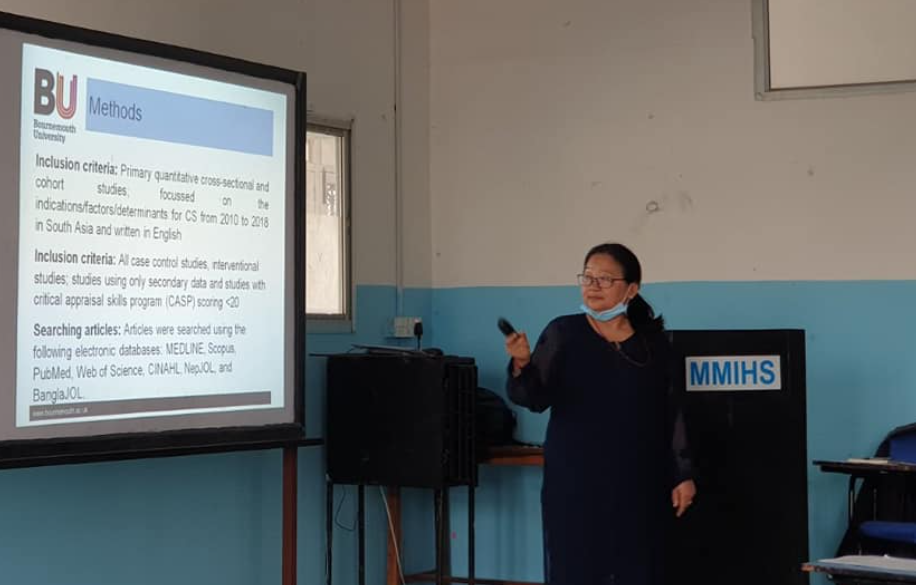
I loved meeting students and teachers of MMIHS. During my stay in MMIHS, I had the opportunity to share experience about my research study, using mixed methods in research study and my experience working as a foreign nurse in UK to relevant teachers and students. They were really good and inspiring people. I always received respect and support from them while I was there.
After this international activity, I have learnt how to work with people from different organisation and different place. I have developed my confidence in employability and career skills. I would like to express my thanks to Bournemouth University for providing me such a golden opportunity. I strongly recommend to other student at Bournemouth University to participate these kinds of international mobility programmes.
Sulochana Dhakal-Rai.
Bournemouth University Turing Scheme recipient in Kathmandu
Last month Ph.D. student Sulochana Dhakal-Rai in the Faculty of Health & Social Sciences (FHSS) returned from her successful trip to Nepal. Sulochana was awarded funding for her traineeship ‘Induction and sensitisation to field research health in Nepal.’ She presented at sessions organised for M.Sc. Nursing students at Manmohan Memorial Institute of Health Science (MMIHS) in Kathmandu. The feedback she received helped her prepare for her fieldwork in Nepal, moreover it was especially helpful in focusing her qualitative analysis of the thesis data. Soluchana also met with various academics at MMIHS to exchange ideas and research plans. Sulochana also took the opportunity to visit staff in maternity hospitals which are taking part in the Ph.D. research study which focuses on ‘The Rising Rates of Caesarean Section in Urban Nepal’. Sulochana has three FHSS supervisors, Dr. Juliet Wood, Dr. Pramod Regmi and Prof. Edwin van Teijlingen as well as Nepal-based supervisors Dr. Ganesh Dangel (FHSS Visiting Faculty) and Dr. Keshar Bahadur Dhakal.
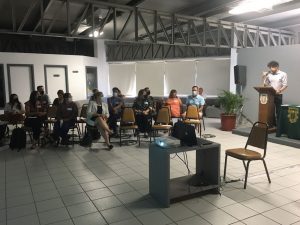
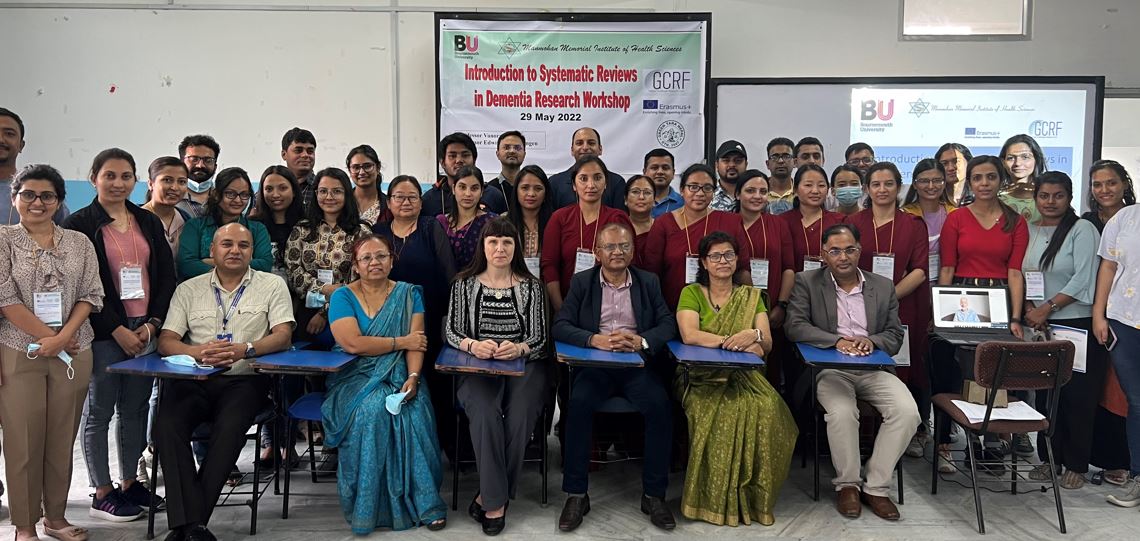
Sulochana also contributed to a one-day workshop introducing systematic reviews as a methodology which ran on Sunday 29th May. This event was jointly organised between MMIHS and Bournemouth University as part Professors Vanora Hundley and Edwin van Teijlingen’s visit to Nepal.
Can you help, sir?
Working in South Asia over the past two decades I have learnt to expect emails asking for help. Often from people I have met perhaps just once or twice or who are my friends on Facebook or LinkedIn. I tried to help if I can, but often I can’t. My friends and colleagues in Nepal, Pakistan, Bangladesh and India have a slightly different idea of how UK officialdom works. Perhaps they have a better and more realistic idea than I have, but that’s a different blog one day.
This week I wrote a reference for an employee of Green Tara Nepal, a charity we have been collaborating with for decades. This is someone I have had general dealing with, not someone who work on one of our projects. I have had interesting research discussions with her in Kathmandu, so I was happy to write her a reference. This morning I received a request via Facebook from someone from Nepal whom I have been advising on a number of job applications in Australia and the UK. On my advice, he had recently applied to a post at a university in London. Yesterday I asked me what to do as he had not heard from them. I advised him to email HR at that university and ask for an update. This morning his question was: “Can you ask them on my behalf, Sir”. I kindly replied: “Sorry, not my university”, not going into confidentiality issues, the data protection act, etc.
What I find fascinating as a sociologist is the ‘traditional society’ thinking behind these questions, which must be something along the lines of: “Edwin is in a senior position, he must be powerful, hence, he has influence in high places. I know him so he can help me achieve my goals.” The interesting other side of the coin is, of course, that if I do something, speak to someone on their behalf, write a reference or recommendation, etc. and the person is successful this success is (partly) attributed to me. And when I say that that’s not the way decision-making works in the UK, it is likely to be regarded as false modesty.
Prof. Edwin van Teijlingen
Centre for Midwifery, Maternal & Perinatal Health (CMMPH)
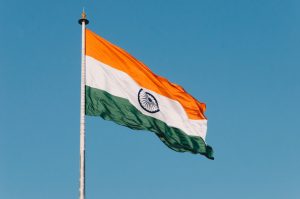
India @ 75 – a conference from BU on 22 July
About this event
The workshop INDIA@75 celebrates the 75th anniversary of Indian independence and the myriad facets of the UK-India bilateral relationship, which is poised at a critical point this year with the Free trade agreement (FTA) negotiations going ahead towards a Diwali timeline.
The workshop also examines the growing role and importance of India at the Commonwealth and the multilateral level at the WTO. The FTA talks are expected to the central to the wide ranging deliberations and interactions but will also touch on the trade and economic exchanges that touch on all areas of lives from the cultural and creative collaboration in crucial sectors such as climate change, healthcare, technology, innovation and much more, with the Indian diaspora in the UK acting as the living bridge of this deep bond.
For this event, the keynote speakers and members of the panel include specialists from international trade, UN Sustainable Development Goals and IB fields. The workshop will include both academics and practitioners, and provide meaningful insight and impact, for fusing policy, business and trade within the context of ever growing UK-India relationship.
We also invite researchers, doctoral research students and collaborators, who will pick up key themes and findings from the workshop, to attend and facilitate research culminating in a series of Policy Briefs and research papers for submission to appropriate 3-star journals.
Refreshments will be provided, including lunch.
Host institution: Centre for Trade, Development and Transition Economics, Bournemouth University
Sign up
Contacts
Prof. Sangeeta Khorana skhorana@bournemouth.ac.uk
Dr Peter Howard-Jones phowardjones@bournemouth.ac.uk
Dr Festus Fatai Adedoyin fadedoyin@bournemouth.ac.uk
Celebrating FHSS Visiting Faculty’s contribution
Some people are unsure (or unaware) of the contribution of Bournemouth University’s Visiting Faculty. At many UK universities eminent scholars (researchers, teachers and/or professionals) are offered honorary unpaid appointments to enhance the skills and knowledge of that institution’s academic staff and/or students. Unusually, these Visiting Faculty members are hosted when there already exists a well-developed professional relationship between the Visiting Faculty and the university’s staff. The Faculty of Health & Social Sciences (FHSS) has a number of Visiting Faculty members, including some local, national and international collaborators.
It just occurred to me this morning that my last two scientific publications, including the one highlighted yesterday on the BU Research Blog are co-authored with academics who are FHSS Visiting Faculty. Yesterday’s paper ‘‘A survey of Post-Traumatic Stress Disorder, Anxiety and Depression among Flood Affected Populations in Kerala, India‘ [1], was co-authored by two of our Visiting Faculty: Prof. Padam Simkhada (in the School of Human & Health Sciences at the University of Huddersfield) and Dr. Brijesh Sathian (in the Geriatrics & Long-term Care Department at Rumailah Hospital, Qatar).
Whilst last week’s publication ‘COVID-19 restrictions and psychological well-being of fathers with infants admitted to NICU (neonatal intensive care units)—an exploratory cross-sectional study‘ in the journal Acta Paediatrica [2] was co-authored by two Visiting Faculty members from University Hospitals Dorset NHS Foundation Trust.
The two clinicians, who co-authored this international paper, are both based at Poole Maternity Hospital: Prof. Minesh Khashu (Lead Consultant Neonatologist) and Ms. Jillian Ireland (Professional Midwifery Advocate).
Both papers are Open Access, and hence free to access for anybody across the globe.
References:
- Asim, M., Sathian, B., van Teijlingen, E., Mekkodathil, A. A., Babu, M. G. R., Rajesh, E., Kumar, R. N., Simkhada, P., & Banerjee, I. (2022). A survey of Post-Traumatic Stress Disorder, Anxiety and Depression among Flood Affected Populations in Kerala, India . Nepal Journal of Epidemiology, 12(2), 1203–1214. https://doi.org/10.3126/nje.v12i2.46334
- Adama E.A., Koliouli F., Provenzi L., Feeley N., van Teijlingen E., Ireland J., Thomson-Salo F., Khashu M and FINESSE Group (2022) COVID-19 restrictions and psychological well-being of fathers with infants admitted to NICU—an exploratory cross-sectional study, Acta Paediatrica (forthcoming) https://onlinelibrary.wiley.com/doi/full/10.1111/apa.16455
New BU disaster publication
Yesterday the latest issue of the Nepal Journal of Epidemiology carried our paper ‘A survey of Post-Traumatic Stress Disorder, Anxiety and Depression among Flood Affected Populations in Kerala, India‘ [1]. This paper was co-authored by two Faculty of Health & Social Sciences (FHSS) Visiting Faculty, namely Prof. Padam Simkhada (in the School of Human & Health Sciences at the University of Huddersfield) and Dr. Brijesh Sathian (in the Geriatrics & Long-term Care Department at Rumailah Hospital, Qatar). This study is longer-term follow-up of the 2018 floods in Kerala. The authors conducted a cross-sectional household survey between November 2019 to January 2020 in one district of Kerala with adults who had been directly exposed to the 2018 flood. The paper concludes that the vast majority of respondents (92% of women & 87% of men) still showed sub-clinical psychiatric symptoms one year after the flood. An earlier paper had argues for further research in India to explore “the long-term sequelae of catastrophic floods on physical and mental trauma on disaster-affected populations” [2].
Prof. Edwin van Teijlingen
Centre for Midwifery, Maternal & Perinatal Health (CMMPH)
References:
- Asim, M., Sathian, B., van Teijlingen, E., Mekkodathil, A. A., Babu, M. G. R., Rajesh, E., Kumar, R. N., Simkhada, P., & Banerjee, I. (2022). A survey of Post-Traumatic Stress Disorder, Anxiety and Depression among Flood Affected Populations in Kerala, India . Nepal Journal of Epidemiology, 12(2), 1203–1214. https://doi.org/10.3126/nje.v12i2.46334
- Asim, M., Mekkodathil, A., Sathian, B, Elayedath, R., Kumar N.R., Simkhada, P., van Teijlingen, E. (2019) Post-Traumatic Stress Disorder among the Flood Affected Population in Indian Subcontinent, Nepal Journal of Epidemiology 9(1): 755-758. https://www.nepjol.info/index.php/NJE/article/view/24003
Building International Partnerships
On Monday 27th June Prof. Edwin van Teijlingen will be presenting at the ‘Global Partnership for International Research Meeting’ at the University of Huddersfield. The meeting is organised by Prof. Padam Simkhada, who is Associate Dean International and Professor of Global Health, as well as Visiting Professor at Bournemouth University. Edwin will be talking about his experience in building long-term sustainable and effective international partnerships, using examples from both the health and sociology field.A current example he will highlight is one of Bournemouth University’s international research collaborations is the Nepal Federal Health System Project, led by the University of Sheffield. This three-year project (2020-2023) is funded by the Health Systems Research Initiative (incorporating the MRC, DFID, Wellcome Trust), it has partners in the UK and Nepal and bring together an interdisciplinary team of specialists in public health, sociology, health systems, social geography, health economic, political science, anthropology, medicine, emergency management, nursing & international development.
Sorry, the publication of your paper is being delayed because….
Yesterday a colleague in Nepal notified me that the publication of our latest paper has been delayed. This paper ‘Writing and publishing a reflective paper: Three case studies’ [1] is another method-type paper on aspects of academic writing and publishing published by BU academics and FHSS Visiting Faculty. A delay in getting in print is not uncommon in academic publishing, but usually the justification is that reviewers are sitting on the manuscript and not returning their report, or the journal editor can’t find academics to volunteer as reviewers, or the editor is ill. Occasionally the journal has too few papers to publish the next issue yet with your accepted paper in it, but this time the excuse was ever rarer. 
We had submitted our paper to a brand new journal. A research collaborator in Kathmandu had asked me to submit a paper for the journal’s inaugural issue, which we did as we saw this a part of our role in academic capacity building in Nepal. The delay in publishing this journal is the shortage of ISSN [International Standard Serial Number] numbers in Nepal. Every good academic journal across the globe will have registered for a unique ISSN number [2]. Apparently the office issuing ISSN numbers in Paris head office has not delivered ISSNs to Nepal, and according to my colleague “many journals are waiting for a number …It’s not good news for the academic writers and scholars but we’re really sorry for late due to the unavailability of ISSN.”
Prof. Edwin van Teijlingen
Centre for Midwifery, Maternal and Perinatal Health
References:
- Arnold, R., Ireland, J., Mahato, P., van Teijlingen, E., (2022) Writing and publishing a reflective paper: Three case studies, Welham College Journal (accepted for publication)
- van Teijlingen, E.R., Dhakal Adhikari, S., Regmi, P.R., van Teijlingen, A., Aryal, N., Panday, S. (2021). Publishing, identifiers & metrics: Playing the numbers game. Health Prospect, 20(1).
Workshop ‘Sensitive Pasts and Difficult Presents: working with young people through participatory arts’ – 27th June, 2022
Some of you might be interested in this workshop, titled ‘Sensitive Pasts and Difficult Presents: working with young people through participatory arts‘, taking place this upcoming Monday, 27th June 2022, at BU (Talbot Campus). The workshop aims to bring together colleagues from across BU’s research centres, exploring how working with and for young people in sensitive contexts, both, locally and across the world, can be informed by interdisciplinary approaches (including Social Sciences, the Arts, and arts-based technologies).
Several colleagues will provide short presentations and thought pieces based on their research and experiences in the application of participatory arts-based methods in such contexts. Including a ‘world café’, the workshop aims to provide a forum to compare and exchange our experiences, learning and research outcomes rather than a classic, entirely lecture-based format.
This event is organised by the Centre for Seldom Heard Voices (Stephanie Schwandner-Sievers; RA Emily Fisher). The workshop includes colleagues from CEMP, CESJ, EMERGE, and further members are warmly invited to attend. We hope this event will be of particular interest to colleagues working in and through the participatory arts, specifically with vulnerable or marginalised groups, internationally or closer to home.
New paper on federalisation of health system in Nepal
Earlier this week the editor of the Journal of Nepal Public Health Association informed us the journal had accepted our latest paper ‘Health System Strengthening: The Role of Public Health in Federal Nepal’ [1]. This article addresses some of the key Public Health approaches around the ongoing federalisation of the state of Nepal and the associated decentralisation processes in its health system. This is the third paper of our three-year project, which is UK-funded by the MRC, Wellcome Trust and DFID under the Health Systems Research Initiative and led by Dr. Julie Balen and Prof. Simon Rushton based at the University of Sheffield. The first two papers introduced our international research project ‘The impact of federalisation on Nepal’s health system: a longitudinal analysis’ [2], and focused on COVID-19 when examining the effects of changing Nepal’s constitution towards a federal republic on its health system [3].
Prof. Edwin van Teijlingen
CMMPH (Centre for Midwifery, Maternal & Perinatal Health Research)
References
- Sapkota, S., Panday, S., Wasti, S.P., Lee, A., Balen, J., van Teijlingen, E., Rushton, S., Subedi, M., Gautam, S., Karki, J., Adhikary, P., Marahatta, S., Simkhada, P. for the Nepal Federal Health System Team (2022) Health System Strengthening: The Role of Public Health in Federal Nepal, Journal of Nepal Public Health Association (forthcoming).
- Rushton, S., Pandey, S., van Teijlingen, E., Subedi, M., Balen, J., Karki, J., Simkhada, P. on behalf of the Nepal Federal Health System Team (2021) An Investigation into the Impact of Decentralization on the Health System of Nepal. Journal of Manmohan Memorial Institute of Health Sciences, 7(1): 3–14. https://doi.org/10.3126/jmmihs.v7i1.43146
- Adhikary, P., Balen, J., Gautam, S., Ghimire S., Karki J.K., Lee A.C., Marahatta S.B., Pandey S., Pohl G., Ruston S., Sapkota S., Simkhada P.P., Subedi M., van Teijlingen E.R., on behalf of the NFHS Team. The COVID-19 pandemic in Nepal: Emerging evidence on the effectiveness of action by, and cooperation between, different levels of government in a federal system. Journal of Karnali Academy of Health Sciences. 2020; 3(3)
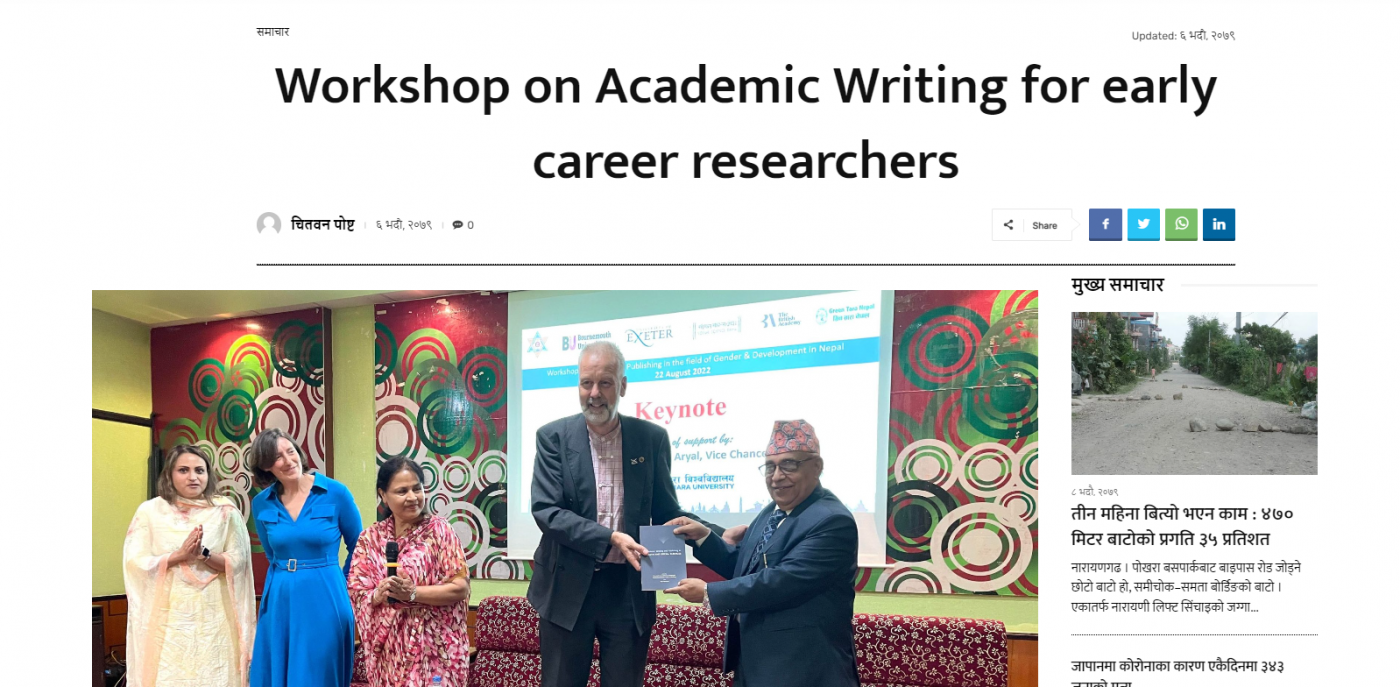
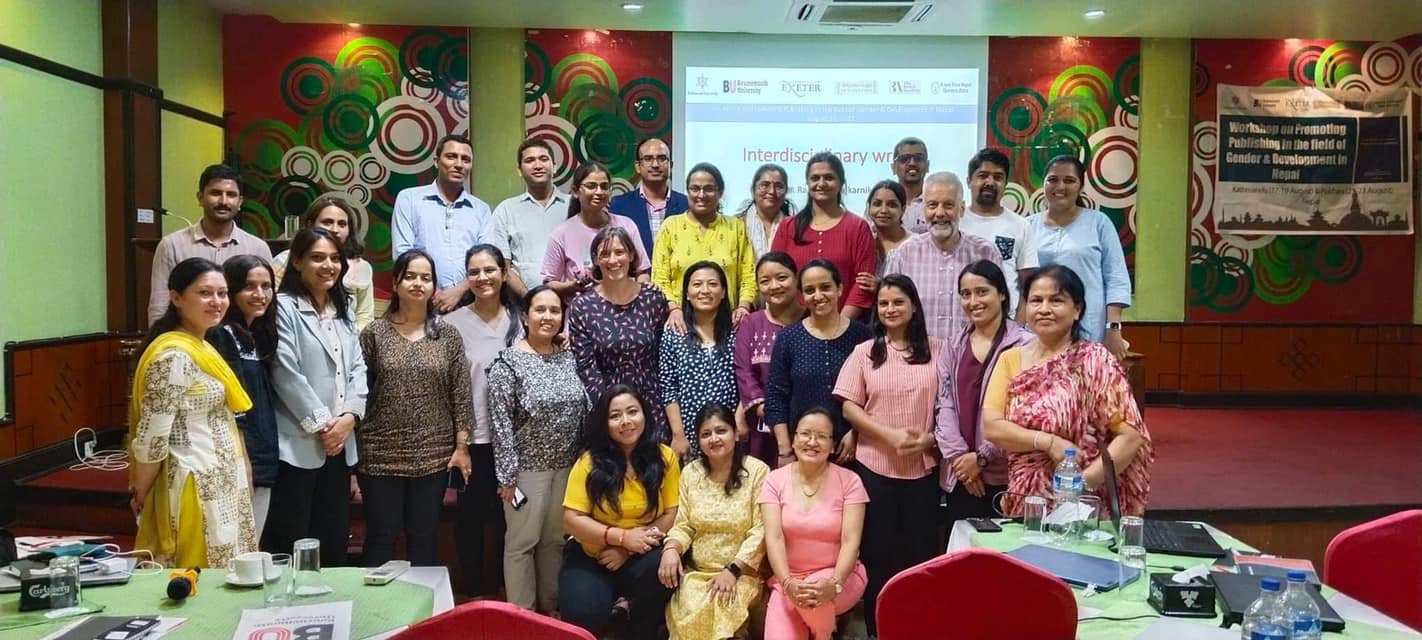
British Academy Writing Workshop in Nepal: Call for participants
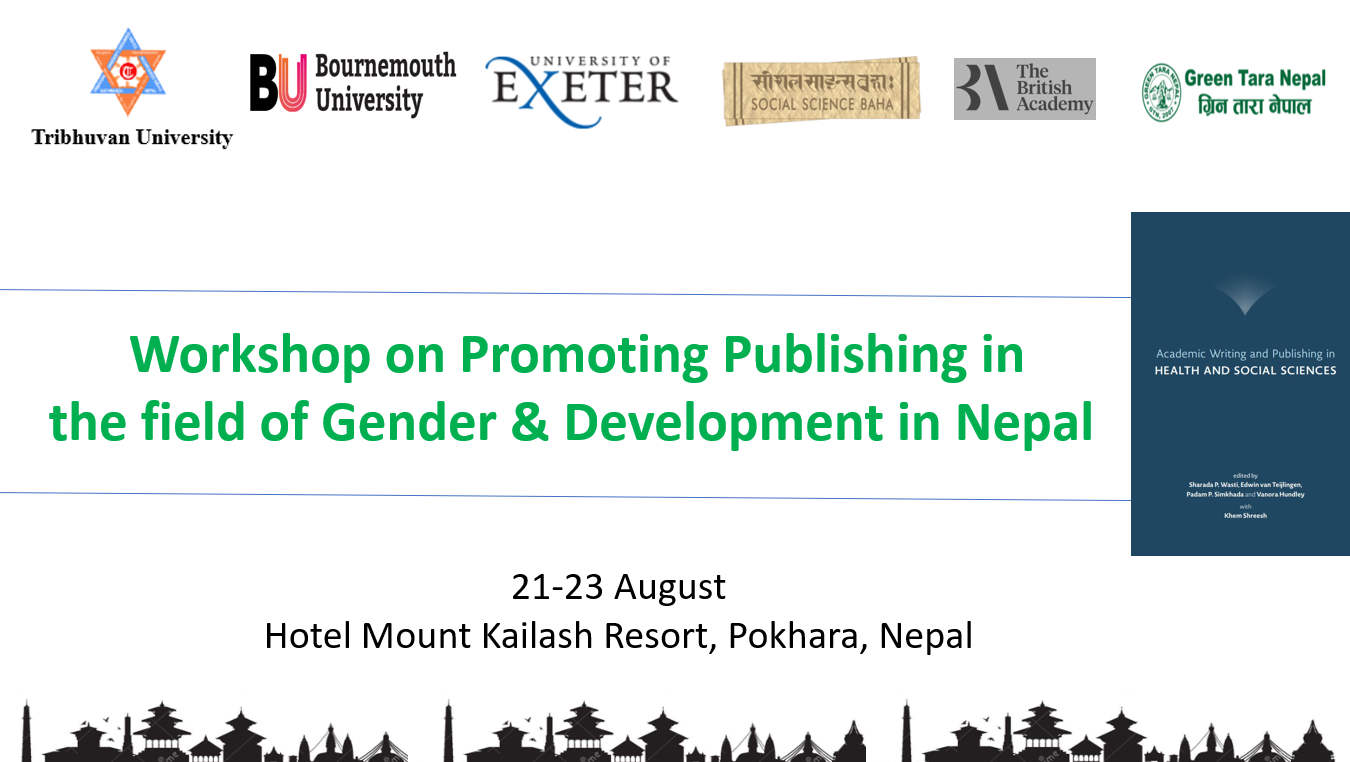
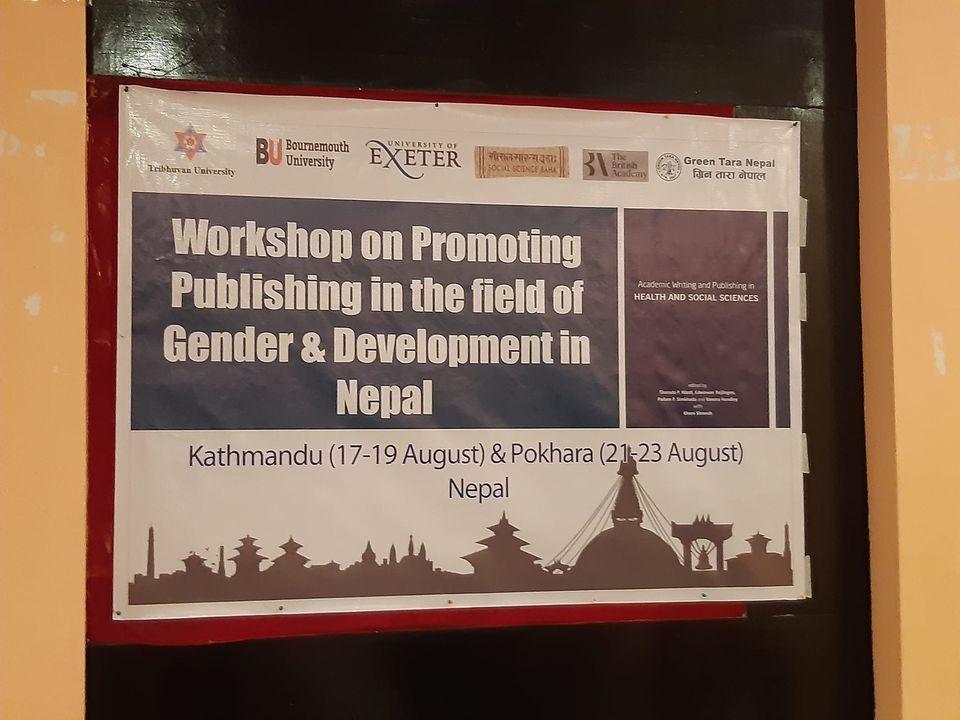
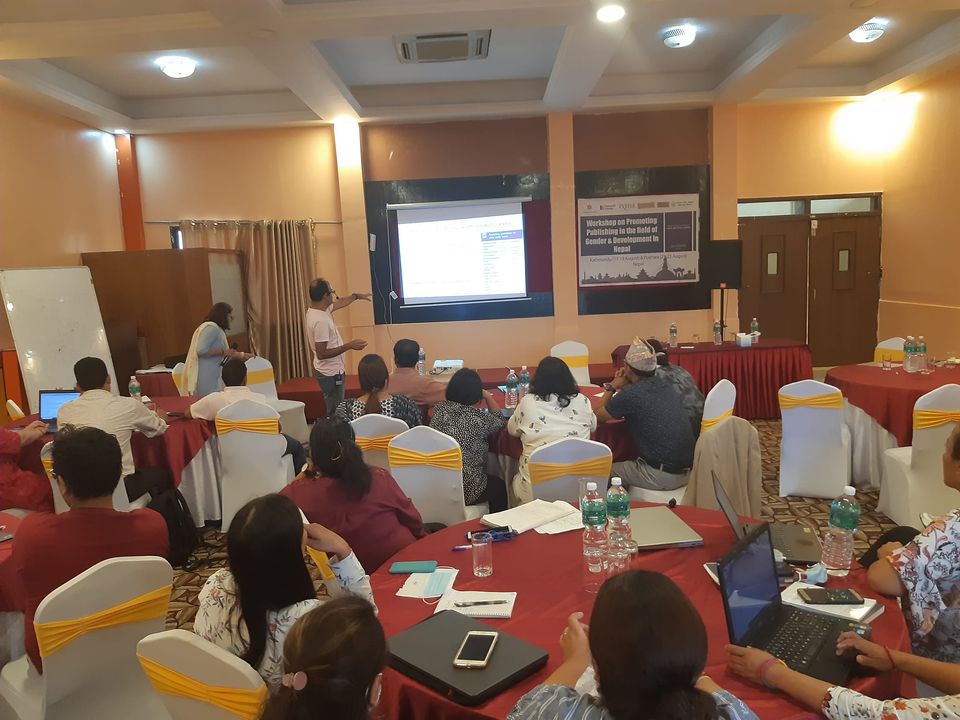
We are inviting expressions of interest for Nepal-based academic with an interest in gender and development issue to participate in our Writing Workshop: “Promoting Publishing in the field of Gender and Development in Nepal”. Bournemouth University is leading two separate three-day workshops for early career researchers (ECRs) working across various universities in Nepal to encourage and support them to publish in peer reviewed journals in the field of social sciences, in Kathmandu (from 17-19 August 2022), and in Pokhara (from 21-23 August 2022). The funding for these exciting workshop is provided by the British Academy. 
There will be a mixture of presentations, group discussion and other interactive exercises, and independent writing exercises. The workshop involves practical sessions to help attendees to make their research idea clear and compelling to reviewers, and finalise their papers for publications. One-to-one sessions with our expert advisers will allow attendees to work through different aspects of their own research papers, methods and ideas.
How to apply: If you are an ECR based in Nepal and have some idea (or/and data) to work towards publication in gender and development, then please send us:
- A short CV – 3 pages maximum;
- An abstract or summary of the proposed paper you wish to develop through the writing workshop- (300 words maximum) by 30thJune 2022.
Female ECRs are highly encouraged to apply. Please use Subject British Academy Writing Workshop 2022 and email to sdhakaladhikari@bournemouth.ac.uk, with a copy to both: pregmi@bournemouth.ac.uk and rashmi.rajkarnikar@cdec.tu.edu.np . The faciliators will inform you about your selection for the workshop by the middle of July 2022. Selected participants will be asked to to submit their first rough draft by 3rd August, so that this can be discussed further during the workshop (17-19 August 2022).
The Writing Workshop facilitators are three BU scholars, Dr Shovita Dhakal Adhikari, in the Department of Social Sciences & Social Work, Dr. Pramod Regmi in the Department of Nursing Sciences, and Prof. Edwin van Teijlingen in the Department of Midwifery & Health Science in collaboration with Dr. Rashmee Rajkarnikar, at Nepal’s oldest and largest university, namely Tribhuvan University.
Another CMMPH COVID-19 publication on fathers
Congratulations to Centre for Midwifery, Maternal & Perinatal Health (CMMPH) Visiting Faculty members Prof. Minesh Khashu and Ms. Jillian Ireland on the acceptance of their paper “COVID-19 restrictions and psychological well-being of fathers with infants admitted to NICU (neonatal intensive care units)—an exploratory cross-sectional study” has been accepted by Acta Paediatrica [1]. 
These authors, both employed by University Hospitals Dorset NHS Foundation Trust, are part of an international team of researchers studying the role of fathers in maternity care. The first author on the paper, Dr. Esther Adama is Lecturer in the School of Nursing and Midwifery at Edith Cowan University in Australia. Previous papers produced by some members of this team were both published in the Journal of Neonatal Nursing [2-3].
Congratulations to my colleagues!
Prof. Edwin van Teijlingen
References:
- Adama E.A., Koliouli F., Provenzi L., Feeley N., van Teijlingen E., Ireland J., Thomson-Salo F., Khashu M and FINESSE Group (2022) COVID-19 restrictions and psychological well-being of fathers with infants admitted to NICU—an exploratory cross-sectional study, Acta Paediatrica (accepted).
- Fisher, D., Khashu, M., Adama, E., Feeley, N., Garfield, C., Ireland, J., Koliouli F., Lindberg, B., Noergaard, B., Provenzi, L., Thomson-Salo, F., van Teijlingen, E. (2018) Fathers in neonatal units: Improving infant health by supporting the baby-father bond & mother-father co-parenting, Journal of Neonatal Nursing 24(6): 306-312 https://doi.org/10.1016/j.jnn.2018.08.007
- Ireland, J., Khashu, M., Cescutti-Butler, L., van Teijlingen, E., Hewitt-Taylor, J. (2016) Experiences of fathers with babies admitted to neonatal care units: A review of literature, Journal of Neonatal Nursing 22(4): 171–176
Another research league table
This week Research.com, a prominent academic platform, published its 2022 Edition of the Ranking of Top 1000 Scientists in the area of Social Sciences and Humanities. Professor Edwin van Teijlingen, in the Centre for Midwifery, Maternal & Perinatal Health (CMMPH), is listed as number 234 in United Kingdom ranking as well as number 1238 in the Social Sciences and Humanities world ranking.
FMC Researcher Lyle Skains Co-Edits Field-Defining Collection
THE ELECTRONIC LITERATURE ORGANIZATION PRESENTS VOLUME 4 OF FIELD-DEFINING COLLECTION
Announcing the publication of the ELECTRONIC LITERATURE COLLECTION VOLUME 4, a freely accessible, Creative Commons-licensed collection of 132 digital-born literary works from 42 author nationalities in 31 languages. ELC4 debuted at the Electronic Literature Organization Conference in Como, Italy, May 30-June 1, 2022.
The Electronic Literature Collection, hosted by the Electronic Literature Organization, defines the field of electronic literature. Each volume recognises contemporary works, trends, and emerging creators in born-digital narrative and poetry. This collection is used as a foundational teaching text in university programs incorporating studies of electronic literature, interactive narratives, and e-poetry around the world.
Selected from more than 450 works, ELC4 presents the largest group yet of author/makers writing in Afrikaans, Ancient Chinese, Arabic, Catalan, Chinese, Danish, Dutch, English, French, German, Greek, Hungarian, Indonesian, isiXhosa, Italian, Japanese, Korean, Mezangelle, Norwegian, Polish, Portuguese, Romanian, Russian, Setswana, Simplified Chinese, Slovak, South African Sign Language, Spanish, Swedish, Turkish, Yoruba.
The Collection includes commercial works such as groundbreaking VR experiences and narrative video games. These join the many other works that are open access: database fictions, autoethnographies by GenZ makers, works that play with AI, geospatial storytelling via mobile phones–among many other styles and platforms.
The Electronic Literature Collection Volume 4 was edited by Kathi Inman Berens, John T. Murray, R. Lyle Skains, Rui Torres, and Mia Zamora with the assistance of an international advisory board and three student fellows.
“We made a strong effort to discover artists who were previously unknown to us,” said the Editors. “Curators in Mexico, India, West Africa, and international consultants from six continents helped us discover and evaluate works in languages we don’t speak.”
“Our driving purpose was to expand the collection in terms of diversity,” added Skains, “and to make the origins of these works searchable and transparent to all collection users.”
Teachers looking to engage students in cutting-edge literary works will find they can freely access ELC4 on their phones. Classroom computers aren’t necessary. It’s like a free textbook!
Scholars will appreciate being able to download and study the code and media assets of featured works. The Electronic Literature Organization hosts versions of the works to ensure perpetual access, even after operating systems and software are updated or become obsolete.
FREELY ACCESS THE ELECTRONIC LITERATURE COLLECTION VOLUME 4 here:
https://collection.eliterature.org/4/
ELC4 is the fourth collection published by the Electronic Literature Organization in 22 years. All four are available freely via Creative Commons license: https://collection.eliterature.org/
The Electronic Literature Organization was founded in 1999 to foster and promote the reading, writing, teaching, and understanding of literature as it develops and persists in a changing digital environment. A 501c(3) non-profit organization, ELO includes writers, artists, teachers, scholars, and developers from around the world.
Teaching exchange through ERASMUS+ with Nepal
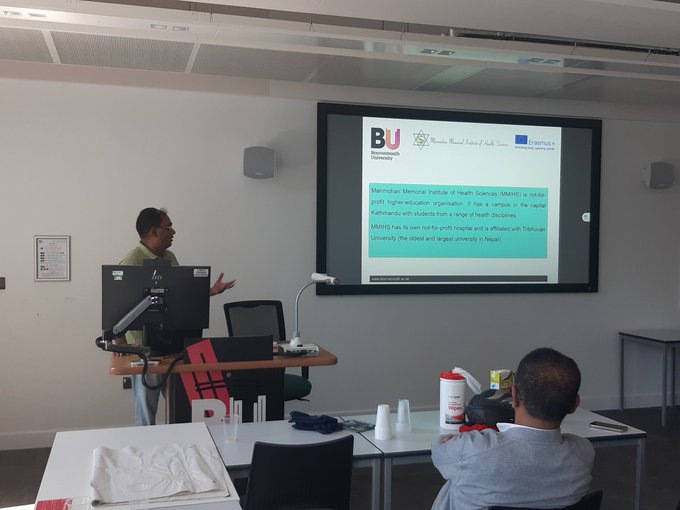
Professors Vanora Hundley and Edwin van Teijlingen just completed their ERASMUS Plus exchange with Manmohan Memorial Institute of Health Sciences (MMIHS) in Nepal. This was a very successful collaboration with colleagues in Nepal, despite the various turns of fate that were sent to challenge us. Indeed, the Profs toiled with the idea of giving this BU Research Blog the heading ‘The show must go on’ or ‘One man down….’ or even the far less punchy ‘The irony of doing a workshop by ZOOM in Nepal from a hotel 200 meters across the road’! In the end we decided that excellent collaboration requires resilience and a wee bit of ingenuity.
The trip to Nepal was marred by many little hiccups. It started at Heathrow where the airline insisted that they complete a now obsolete form about COVID-19 for the Government of Nepal, otherwise they would not let us on the flight. Arguing that Edwin had been to Nepal in April, and that no one then had asked for that particular piece of paper was fruitless. A quick online completion solved that first hurdle. The next hurdle was the flight leaving Heathrow over two hours late, which in turn meant missing the connection in Doha. Fortunately, the airline booked our academics on a replacement flight which left only hours after the original onwards flight had been scheduled to leave for Kathmandu. ingenuity. The trip to Nepal was marred by many little hiccups. It started at Heathrow where the airline insisted that they complete a now obsolete form about COVID-19 for the Government of Nepal, otherwise they would not let us on the flight. Arguing that Edwin had been to Nepal in April, and that no one then had asked for that particular piece of paper was fruitless. A quick online completion solved that first hurdle. The next hurdle was the flight leaving Heathrow over two hours late, which in turn meant missing the connection in Doha. Fortunately, the airline booked our academics on a replacement flight which left only hours after the original onwards flight had been scheduled to leave for Kathmandu.
The first five days in Kathmandu went well, apart from the to be expected tummy problems that go with monsoon in all low-income countries in South Asia. The teaching at MMIHS mainly focused on methodological issues. Our scheduled teaching sessions focused on the first-year MSc Nursing students (Vanora) and the first-year MSc Public Health students at MMIHS (Edwin).
A more informal one-hour tutorial session was organised for the second-year MSc Public Health students who had applied to come to the UK as part of ERASMUS Plus. This question-and-answer-type session was run by both Vanora and Edwin as well as BU PhD student Sulochana Dhakal-Rai. Overall, the teaching was all organised at very short notice, but BU’s professors are flexible and had a broad range of expertise to share.
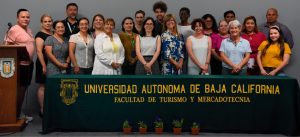
In addition, with extra funding from GCRF (Global Challenges Research Fund), Bournemouth University and MMIHS supported by the local charity Green Tara Nepal planned ran a one-day research workshop in Kathmandu. This GCRF- funded ‘Systematic Review on Dementia Research Workshop’ was very well attended. Although the workshop budgeted for 30 people the attendance register shows that nearly double (n=59) the number of people attended at least part of the workshop. However, running the workshop was not without is problems. Two-days before the workshop Prof. van Teijlingen first had a positive COVID-19 lateral flow test followed by a positive PCR test. This put the burden of running the show very much on Prof. Vanora Hundley with Edwin being called in through Zoom. This is where the potential ‘irony’ title comes in. The irony of doing a workshop by ZOOM in Nepal ….. not from halfway across the globe but from a local hotel 200 meters across the road from MMIHS! The hotel’s internet connection was not as good as most of us have grown used to in Dorset, which added to the difficulty of running the workshop smoothly.
Despite all these challenges, the result was a very successful workshop that will continue to build our collaboration with colleagues in MMIHS and more widely across Nepal.
Finally, to end the story of hiccups, MMIHS forgot to inform the hotel that Edwin would be staying four extra nights. On the day he was originally scheduled to leave Nepal he received a phone call from reception asking what time he was checking out. When he said he thought extra nights had been booked for him, there was no reply. A little later he was told he could get another night, but he would have to move to another floor, and it would be for one night only, since all 91 room of the hotel were booked for the weekend for a big Asian wedding party. Luckily MMIHS found him another hotel a bit more outside the city centre for the remaining three nights.
We are incredibly grateful for the support of colleagues and friends in Nepal and at home in the UK, which helped smooth out some of the more interesting challenges.
Lessons learnt:
· Be ready to change and adapt to the needs of the situation.
· Strong relationships will help you deal with the unexpected.
· Keep positive when things get tough.
In the words of Steve Maraboli “Life doesn’t get easier or more forgiving, we get stronger and more resilient.”


Poverty in the UK: book launch today at BU
BU contributions to successful Global Health conference
New paramedic science paper by BU’s Dr. Ursula Rolfe
Congratulation on newly published systematic review
Horizon Europe Cluster 3 (Civil Security for Society) 2026 Calls Now Open

MSCA Doctoral Networks 2026 Call Information Webinar

ESRC Festival of Social Science 2026: Application Deadline Extended to Thursday 25 June 2026

Reminder: Register for the ESRC Festival of Social Science 2026 Information Session

ECR Funding Open Call: Research Culture & Community Grant – Apply now

ERC Advanced Grant 2025 Webinar
Update on UKRO services
European research project exploring use of ‘virtual twins’ to better manage metabolic associated fatty liver disease