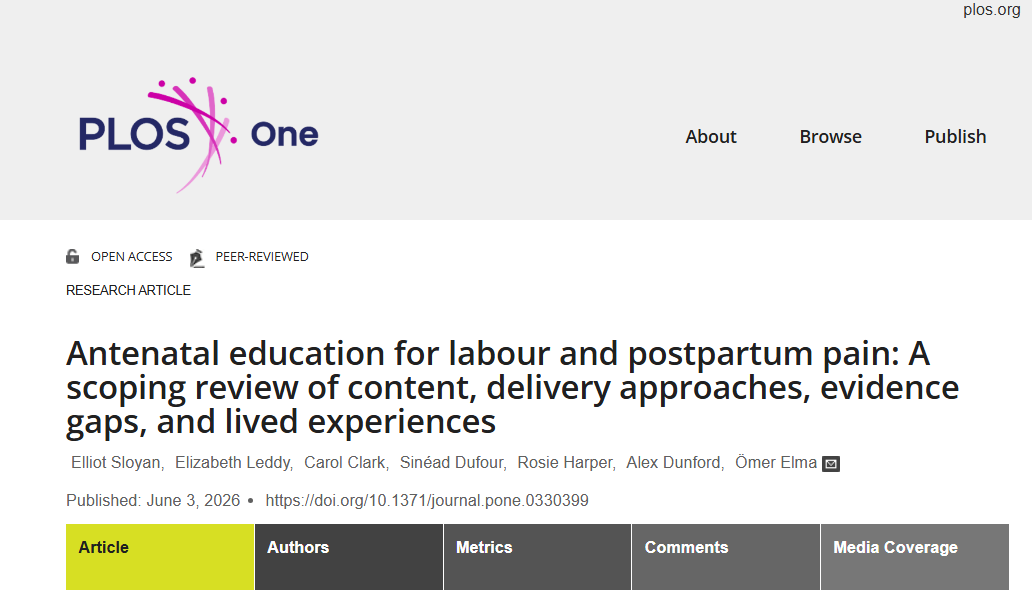
- Sloyan E, Leddy E, Clark C, Dufour S, Harper R, Dunford A, Elam, Öl. (2026) Antenatal education for labour and postpartum pain: A scoping review of content, delivery approaches, evidence gaps, and lived experiences. PLoS One 21(6): e0330399. https://doi.org/10.1371/journal.pone.0330399
Category / nhs
First publication for two CMWH PhD students
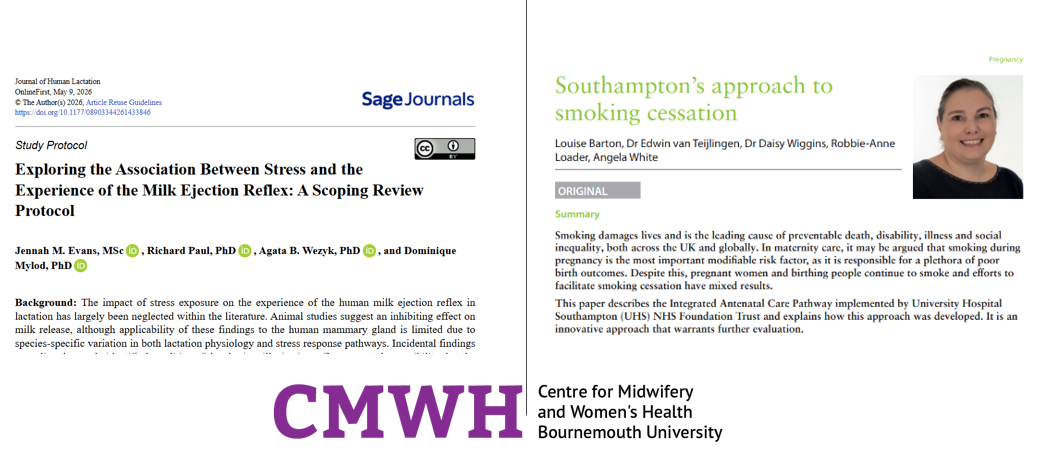
Congratulations to CMWH doctoral student Jennah Evans who has published the first paper from her PhD in the Journal of Human Lactation. The scoping review protocol outlines a transparent and reproducible method for investigating the relationship between stress and the human milk ejection reflex, addressing a significant knowledge gap in the literature. Jennah and her supervisors (including CMWH member Dr Dominique Mylod) are also aiming to improve understanding of D-MER, a challenging condition associated with intense negative emotions during breastfeeding.
Congratulations are also due a second CMWH doctoral student Louise Barton, whose paper ‘Southampton’s approach to smoking cessation has been accepted by MIDIRS Midwifery Digest and the paper will be pubished its June issue. Smoking during pregnancy is the leading yet preventable causes a whole range of illnesses. Louise’s PhD is an assessment of Southampton’s Midwifery-led Integrated Antenatal Care Pathway. Her PhD is supervised by CMWH academics Dr. Daisy Wiggins and Prof. Edwin van Teijlingen.Barton, L., van Teijlingen, E., Wiggins, D., Loader, R.-A., White, A. (2026) Southampton’s approach to smoking cessation, MIDIRS Midwifery Digest, 36(2): 145–151.
New BU midwifery publication
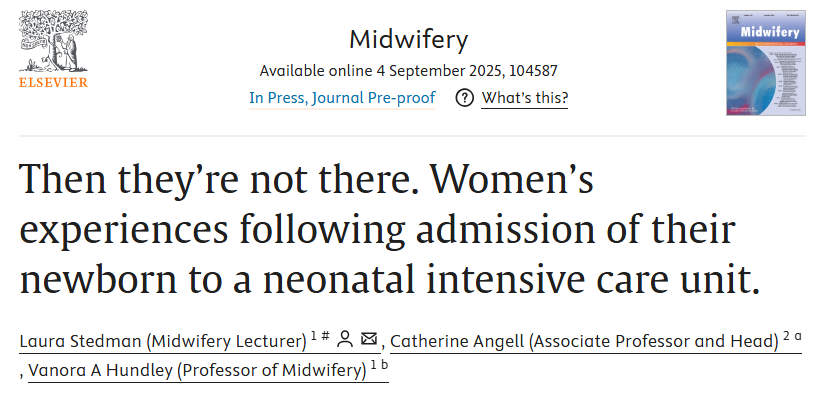
Congratulations to Laura Stedman in the Centre for Midwifery & Women’s Health (CMWH) on the publication of a new paper in the international academic journal Midwifery. This new paper ‘Then they’re not there. Women’s experiences following admission of their newborn to a neonatal intensive care unit‘ [1], has been co-authored with two fellow midwives: Associate Prof. Catherine Angell and Prof. Vanora Hundley.
The paper reports an online study into the experiences of UK women been diagnosed with Gestational diabetes mellitus (GDM) whose baby was admitted to a Neonatal Intensive Care Unit (NICU) at or shortly after birth. The qualitative analysis identified two themes: ‘experience’ and ‘understanding’; the former had five sun-themes and the latter was based on three sub-themes. A lack of understanding and knowledge was identified, with calls for enhanced education and joint decision making. Women recalled feelings of grief, isolation and stress as a result of the admission. For many, this experience was traumatic with lasting effects. For babies born at term, feelings of surprise and separation were paramount, in contrast to those born pre-term. The authors concluded that there is need for more education and improved material to support for those facing this outcome. Future research should also focus on reducing the incidence of admission to NICU for women who have received a diagnosis of GDM.
- Stedman, L., Angell, C., Hundley, V. (2025) Then they’re not there. Women’s experiences following admission of their newborn to a neonatal intensive care unit, Midwifery [online first]
Second NIHR MIHERC meeting in Bournemouth this week
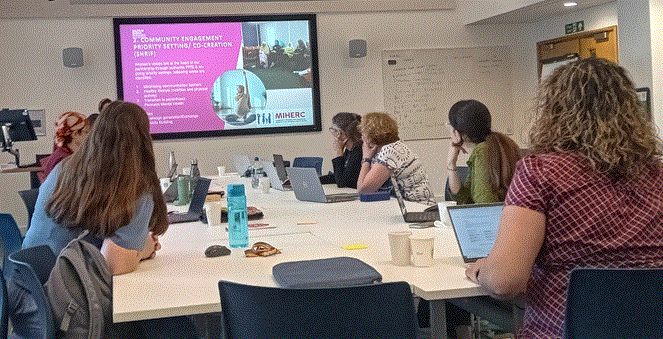
Today was the first day of strategic planning for the MIHERC project. Our collaborators from Sheffield and Doncaster came down to Bournemouth University to discuss progress, meet with midwifery practitioners from University Hospital Dorset NHS Foundation Trust,
and plan action for the coming year.
MIHERC comprises an interdisciplinary team, led by Prof. Hora Soltani at Sheffield Hallam University, which has members from ethnically and professionally diverse colleagues from Sheffield Hallam University, Bournemouth University and Doncaster City Council.
Professors Vanora Hundley and Edwin van Teijlingen from the Centre for Midwifery and Women’s Health (CMWH), and Prof. Huseyin Dogan and Dr. Deniz Cetinkaya from the Department of Computing and Informatics are the key Bournemouth University applicants in MIHERC (Maternal & Infant Health Equity Research Centre). Further Bournemouth University academics have been incorporated since its start, these include: Drs. Malika Felton, Orlanda Harvey, Dominique Mylod and Daisy Wiggins. MIHERC is one of the nine NIHR-funded groups to tackle inequalities in UK maternal healthcare as part of the NIHR Challenge Call: Maternity Disparities Consortium. We are proud that of the nine funded groupings across the UK, MIHERC is the only one that is midwifery led.
Digital Health and AI: Paving the Way for Health Equity in Maternal and Infant Care
The long awaited 10-year health plan for England emphasises the use of digital technologies and the aspiration to “make the NHS the most AI-enabled health system in the world”. This requires expertise in artificial intelligence and data science, but interdisciplinary collaboration is also essential if we are to make this a reality.
The Maternal and Infant Health Equity Research Centre (MIHERC) aims to do this by bringing together experts in maternal health, behavioural science, AI and digital health to help drive innovative solutions through co-production and real partnership, ensuring better outcomes for all women and babies. MIHERC is led by Professor Hora Soltani at Sheffield Hallam University (SHU) in collaboration with key partners including Bournemouth University (BU), the City of Doncaster Council and South Yorkshire Digital Health Hub.
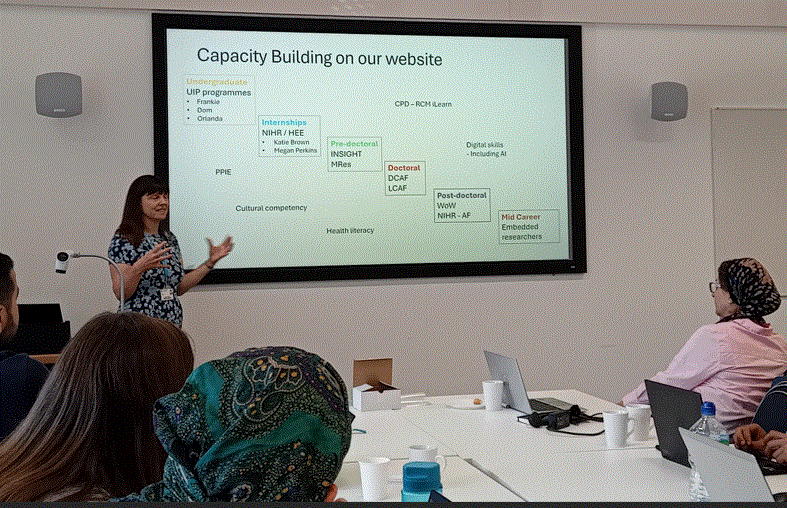
Alongside Professor Vanora Hundley, who has been appointed as a Capacity Training and Development Lead, Professor Huseyin Dogan and Prof Alessandro Di Nuovo from MIHERC will be co-leading the cross-cutting workstream titled “digital, data, monitoring, evaluation and implementation science” as part of the NIHR Maternity Disparities consortium. This workstreams aims
– to identify and test trusted, reliable AI technologies for deployment by the NHS to help reduce disparities;
– to develop and refine equity monitoring, real-world evaluation and implementation science methods for use in maternity disparities research, with a focus on enhancing their robustness and practical application;
– to embed advanced analytic and digital tools and implementation frameworks into maternity disparities research to improve the rigor and impact of studies on equity; and
– to build a community of practice within and external to consortium to develop analytical, methodological, and implementation science capacity.
The BU key academics are: Huseyin Dogan, Vanora Hundley, Edwin van Teijlingen, and Deniz Çetinkaya. Please do get in touch with the MIHERC team for further information.
NIHR-funded research launches website
On World Refugee Day 2025, Friday 20 June, the new Maternal and Infant Health Equity Research Centre (MIHERC) website was launched. MIHERC is a hub for research, collaboration and action on maternal and infant health equity. MIHERC) is a collaborative effort between Sheffield Hallam University, Bournemouth University and City of Doncaster Council working to reduce health inequalities for mothers and babies. This year’s World Refugee Day’s theme, hashtagSolidarity, reflects MIHERC’s mission to stand with all mothers and babies – especially those facing health and social inequalities or barriers to care.
CMWH academics promoting women’s health in Dorset
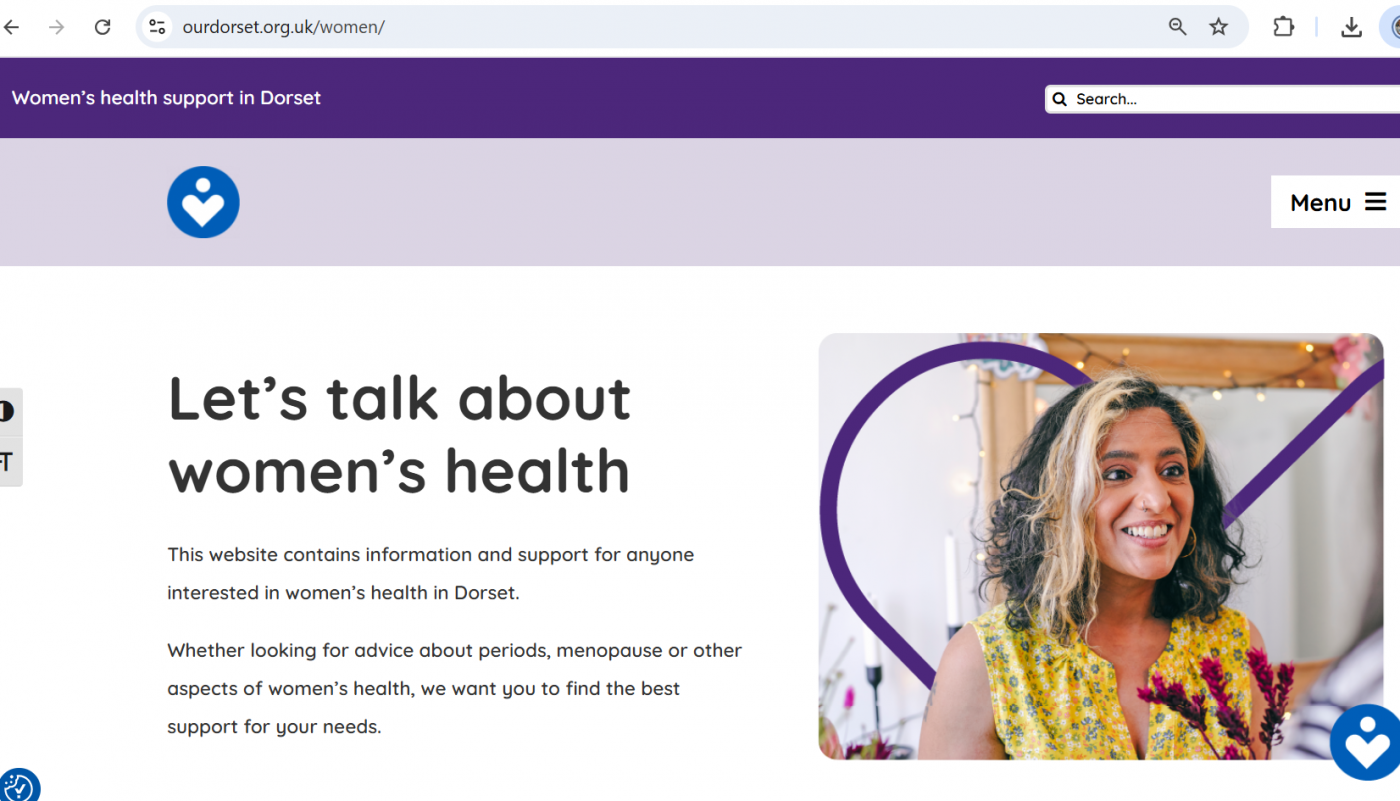
Women’s Health is now firmly on the Dorset map [i.e. online]. The new website, produced by Dorset Women CIC in conjunction with the NHS in Dorset, Bournemouth University, clinicians and the public, raises awareness of local community services. The website also provides resources to empower people with an interest in women’s health to make informed decisions about women’s mental and physical well-being. This is expected to improve access and quality of care – a priority identified by women – and ease pressures on the NHS.
Prof. Vanora Hundley and Carol Clark from the Centre for Midwifery and Women’s Health and colleagues from the Centre for Wellbeing and Long-Term Health have been central to the development of the website. There is an opportunity to hear about how we have been involved on Thursday 24th April 2025, where Bournemouth University’s academics Linda Agyemang and Sarah Hillier will present.
If your are interested, you can registered to attend the event here.
First paper by PhD student

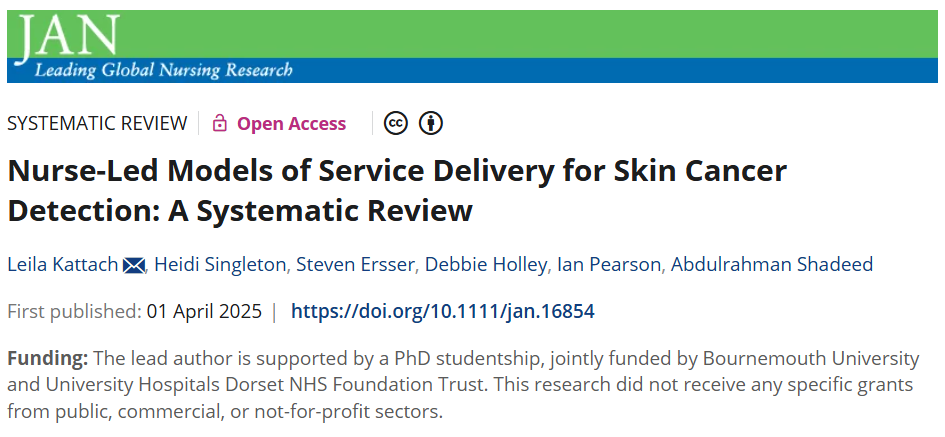
The systematic review, co-authored with Heidi Singleton, Steven Ersser, Debbie Holley, Ian Pearson, and Abdulrahman Shadeed, rigorously analyzed studies from 1992 to 2024, assessing the role of nurses in diagnosing, treating, and supporting skin cancer patients. The findings demonstrate that nurse-led models can complement or even substitute traditional physician-led care, offering high diagnostic accuracy, improved access to care, and enhanced patient education.
The study also emphasizes the need for further research and standardized national guidelines to scale and integrate nurse-led models effectively into healthcare systems.- Kattach, L., Singleton, H., Ersser, S., Holley, D., Pearson, I. & Shadeed, A. (2025), Nurse-Led Models of Service Delivery for Skin Cancer Detection: A Systematic Review. Journal of Advanced Nursing.[online first] https://doi.org/10.1111/jan.16854
Public lecture looks to the future of the NHS
The future of the NHS is the subject of the first Spotlight Public Lecture delivered by Bournemouth University.
The Spotlight Public Lecture Series will shine a light on societal issues and areas of university strength, focussing on research conducted at the university and its real-world impact.
The first lecture will look at building an NHS fit for the future, featuring experts in women’s health, social care, and orthopaedics.
The event will be hosted at Royal Bournemouth Hospital from 5.30pm on Tuesday 18 March, with free tickets available. University Hospitals Dorset NHS Foundation Trust (UHD) CEO Siobhan Harrington will be opening the event.
Guests will hear from Professor Tom Wainwright, an expert in orthopaedics who also works at UHD; Professor Vanora Hundley, an expert in midwifery and women’s health; and Professor Lee-Ann Fenge, a leader in social work and care. The panel will each share their own research and how their work can help to inform future NHS plans and help people live better for longer.
Professor Sarah Bate, Interim Associate Pro Vice-Chancellor for Research and Knowledge Exchange at Bournemouth University, said, “I am always amazed by the work of our wonderful experts here at BU, who advance knowledge, solve societal issues and conduct research for a better future.
“I am excited for this first research-focused public lecture, centred around the health of the NHS – we want to see the NHS thrive and have academics actively working alongside NHS colleagues to support the health of people in the local area – I’m pleased that we’re able to share this research with you at this event.”
Future dates for events in the series will be announced shortly, with topics including tackling misinformation and the power of the past.
Tickets for the event can be reserved via Eventbrite: https://Spotlight-on-the-NHS.eventbrite.co.uk
For more information about the Spotlight Public Lecture Series, visit: www.bournemouth.ac.uk/spotlight-lectures
Cancer Awareness Event at BU
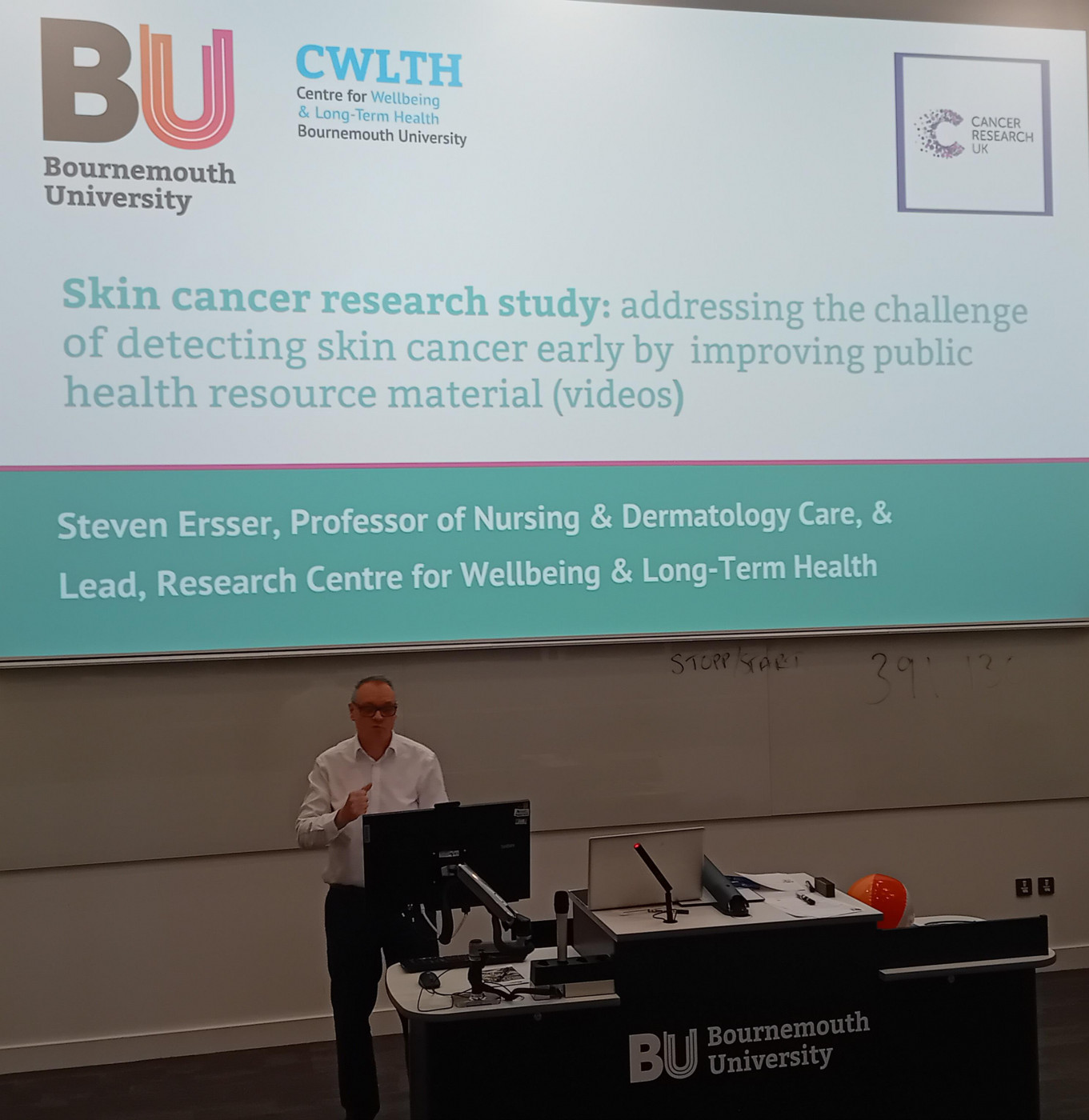
The Dorset Indian Association in collaboration with the NHS Wessex Cancer Alliance and Bournemouth University ran a very successful Cancer Awareness Event at Bournemouth University today Saturday, 25th January 2025. At the event a range of experts from University Hospitals Dorset NHS Foundation Trust spoke about the risks and prevention and early detection of various cancers, including bowel, lung, breast, skin, head and neck and other cancers. The presentations also included early detection and aspects of mental health in cancer patients. BU’s Professor Steve Ersser, for example, spoke about a currently on-going interdisciplinary health education project in the cancer field.
There were separate opportunities for the audience to get on breast screening and health checks, provided by the Dorset Breast Screening Unit, LiveWell Dorset and staff based in BU’s Faculty of Health and Social Science.
Prof. Edwin van Teijlingen
Faculty of Health & Social Sciences
Pregnancy & COVID-19 in UK: New study published
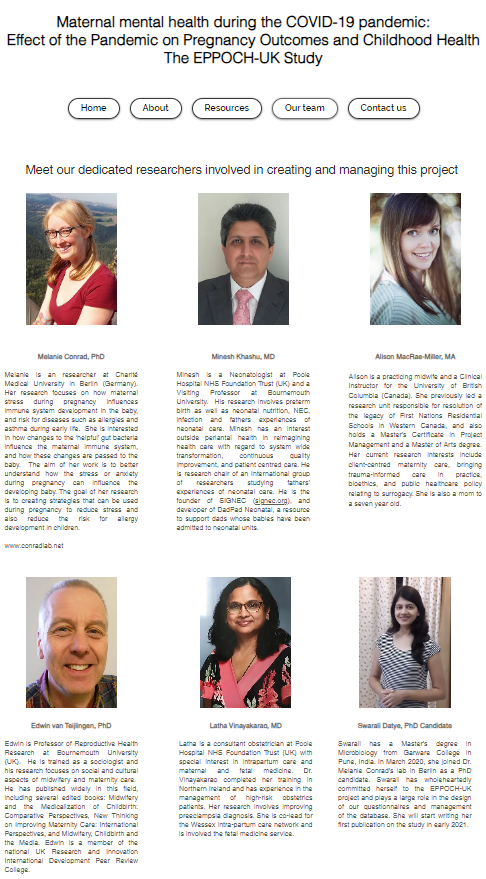
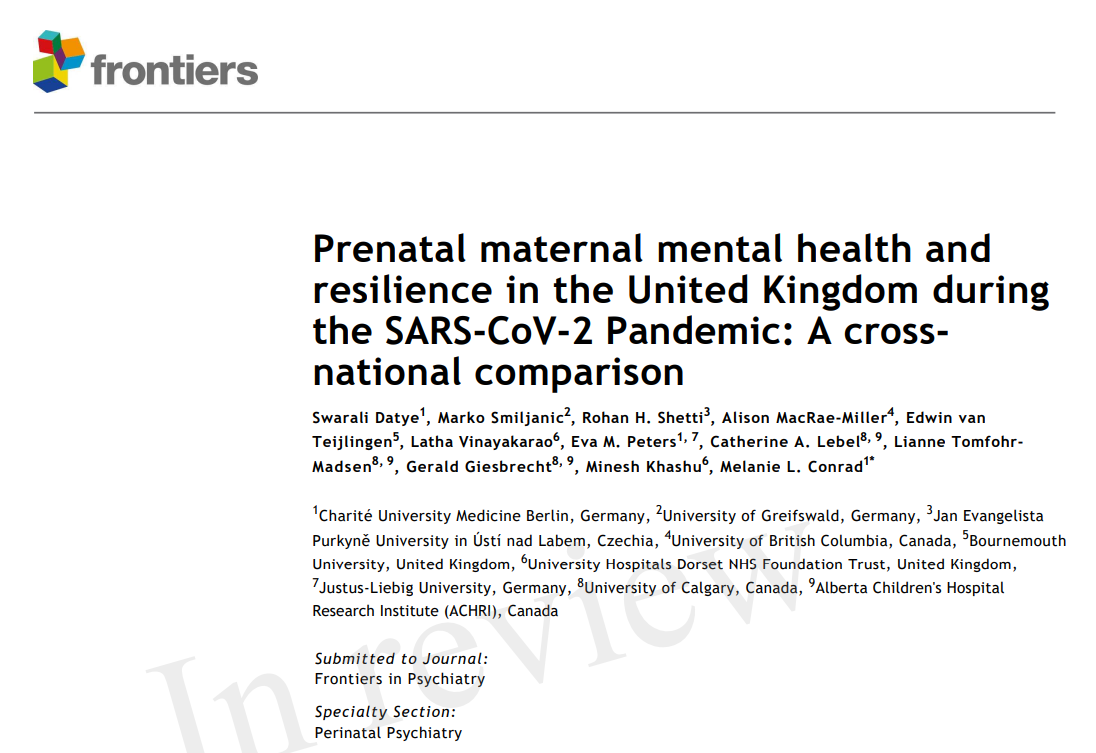
This morning the editor of the Frontiers in Psychiatry emailed us that the paper reporting the findings of the baseline data of a large-scale epidemiological study into pregnancy during COVID-19 in the UK has been published [1]. The interdisciplinary research team includes researchers from University Hospitals Dorset NHS Foundation Trust (Dr. Latha Vinayakarao & Prof. Minesh Khashu) and Bournemouth University (Prof. Edwin van Teijlingen). 
This longitudinal study explores how the SARS-CoV-2 [COVID-19] pandemic affected the mental health of pregnant people in the UK. In mid-to-late 2020, we recruited 3666 individuals in the UK for the EPPOCH pregnancy cohort (Maternal mental health during the COVID-19 pandemic: Effect of the Pandemic on Pregnancy Outcomes and Childhood Health). Participants were assessed for depression, anxiety, anger and pregnancy-related anxiety using validated scales. Additionally, physical activity, social support, individualized support and personal coping ability of the respondents were assessed as potential resilience factors.
Participants reported high levels of depression (57.05%), anxiety (58.04%) and anger (58.05%). Higher levels of social and individualized support and personal coping ability were associated with lower mental health challenges. Additionally, pregnant individuals in the UK experienced higher depression during the pandemic than that reported in Canada. Finally, qualitative analysis revealed that restrictions for partners and support persons during medical appointments as well as poor public health communication led to increased mental health adversities and hindered ability to make medical decisions.
The study highlights the increased mental health challenges among pregnant individuals in the UK during pandemic. These results highlight the need for reassessing the mental health support measures available to pregnant people in the UK, both during times of crisis and in general.
Reference:
- Datye, S., Smiljanic, M., Shetti, R.H., MacRae-Miller, A., van Teijlingen, E., Vinayakarao, L., Peters, E.M.J., Lebel, C.A., Tomfohr-Madsen, L., Giesbrecht, G., Khashu, M., Conrad, M.L. (2024) Prenatal maternal mental health and resilience in the United Kingdom during the SARS-CoV-2 Pandemic: A cross-national comparison, Frontiers in Psychiatry, 15 https://doi.org/10.3389/fpsyt.2024.1411761
First EPPOCH study paper accepted for publication
This afternoon the editorial office of Frontiers in Psychiatry informed us that our manuscript “Prenatal maternal mental health and resilience in the United Kingdom during the SARS-CoV-2 Pandemic: A cross-national comparison” [1] has been accepted for publication in Frontiers in Psychiatry, section Perinatal Psychiatry. An interdisciplinary team from Germany, Canada and the UK designed and initiated a longitudinal pregnancy cohort in the United Kingdom titled Maternal mental health during the COVID-19 pandemic: Effect of the Pandemic on Pregnancy Outcomes & Childhood Health (EPPOCH). In the second half of 2020, we recruited 3,600 pregnant individuals via self-enrollment through our website ‘www.eppoch-uk.org’. Our EPPOCH study has since collected a wealth of validated questionnaire data at multiple time points, from mothers (during pregnancy and postpartum) and their children (from birth to age 3), and we are currently distributing our 4-year childhood follow-up questionnaire. This is the first paper from the EPPOCH study.
The UK team is a collaboration between Bournemouth University and University Hospitals Dorset NHS Foundation Trust, the latter through Professor Minesh Khashu and Dr. Latha Vinayakarao based in Poole Maternity Hospital. The German team is led by Dr. Melanie Conrad, previously at Charité University Medicine Berlin, and now associated with the University of Augsburg, and includes Swarali Datye, PhD student at Charité University Medicine Berlin, whilst our Canadian collaborator, Alison MacRae-Miller, is based at the University of British Columbia, Victoria. This EPPOCH cohort is closely linked with a sister cohort in Canada called the Pregnancy During the Pandemic (PDP) study.
Prof. Edwin van Teijlingen
Centre for Midwifery & Women’s Health
Reference:
- Datye, S., Smiljanic, M., Shetti, R.H., MacRae-Miller, A., van Teijlingen, E., Vinayakarao, L., Peters, E.M.J., Lebel, C.A., Tomfohr-Madsen, L., Giesbrecht, G., Khashu, M., Conrad, M.L. (2024) Prenatal maternal mental health and resilience in the United Kingdom during the SARS-CoV-2 Pandemic: A cross-national comparison, Frontiers in Psychiatry, (accepted).
Dr Rachel Arnold on Appreciative Inquiry
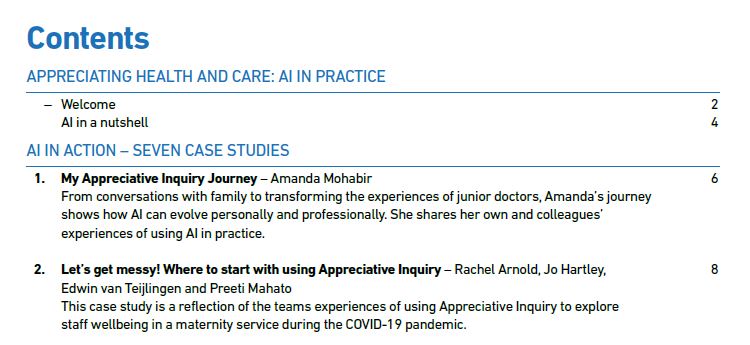
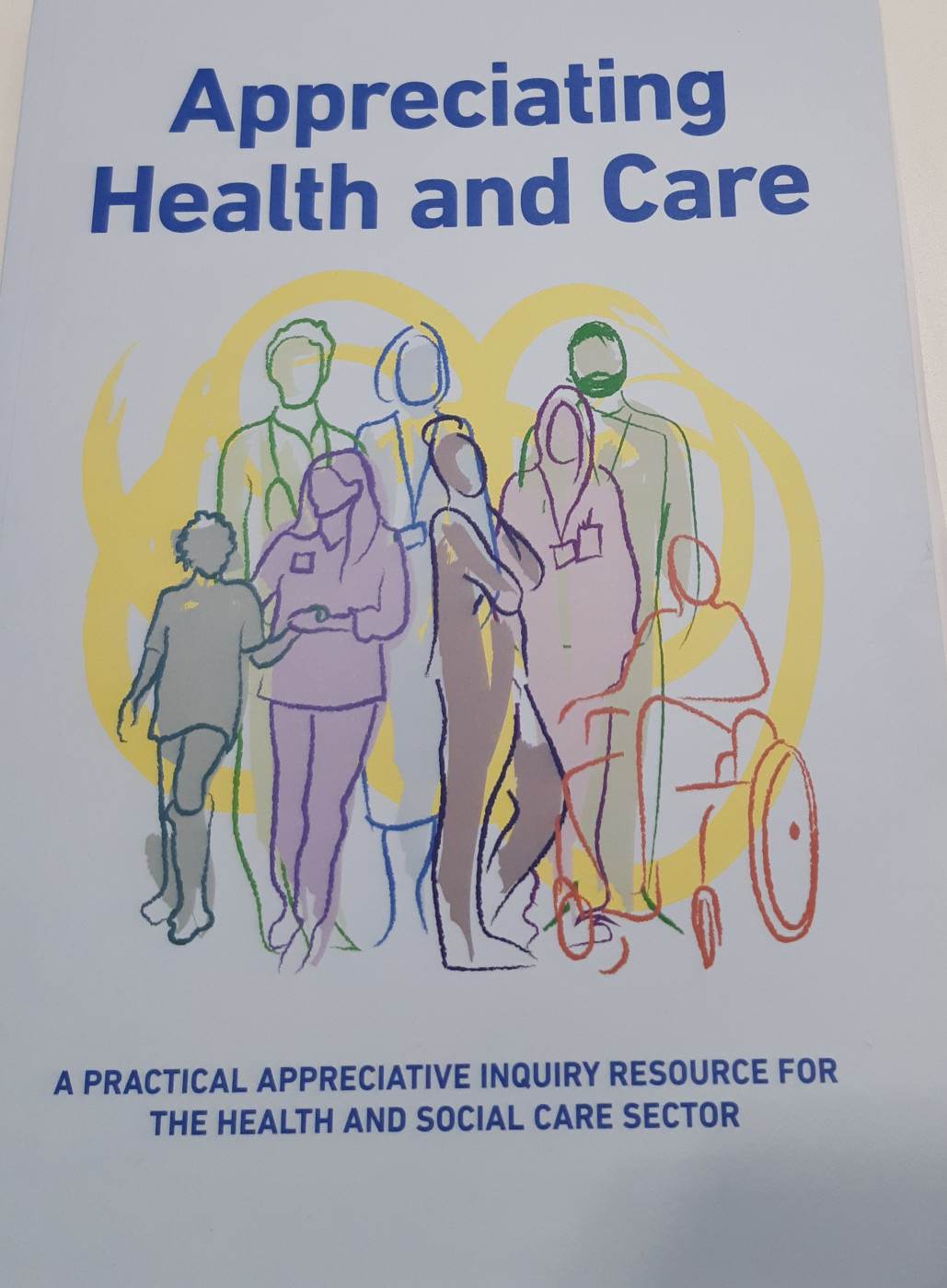
In March of this year I had the pleasure of announcing in a BU Research Blog the publication of Dr. Rachel Arnold’s contribution to the book Appreciating Health and Care: A Practical Appreciative Inquiry Resource for the Health & Social Care Sector [1]. There is also a supplementary eBook, called Appreciating Health and Care: AI in practice [2], which introduces more professional experiences of using AI (not Artificial Intelligence, but Appreciative Inquiry) in the health and care sector. Rachel is the lead author of the contribution ‘Let’s get messy! Where to start with using Appreciative Inquiry’ and her co-authors are Dr. Jo Hartley, Prof. Edwin van Teijlingen and Dr. Preeti Mahato. ‘Let’s get messy! Where to start with using Appreciative Inquiry’ is a case study which reflects on our experiences of using Appreciative Inquiry to explore staff well-being in an NHS maternity service during the COVID-19 pandemic. We explain how we adapted and overcame some of the challenges, strategies that worked, and practical ideas for anyone interested in using Appreciative Inquiry in health or social care.
References:
- Hodgkiss, D., Quinney, S., Slack, T., Barnett, K., Howells, B. (2024a) Appreciating Health and Care: A practical Appreciative Inquiry resource for the Health and Social Care sector, Forres: Appreciating People; ISBN: 978-1-9160267-6-6
- Hodgkiss, D., Quinney, S., Slack, T., Barnett, K., Howells, B. (2024b) Appreciating Health and Care: AI in practice, Forres: Appreciating People.
Promoting interdisciplinary research
This week’s Bournemouth University (BU) advertised a forthcoming event in February 2024 ‘Early Career Researchers and Interdisciplinarity in the Medical Humanities – South West‘. To promote this event I would like to highlight some papers published recently by BU academics on interdisciplinarity.

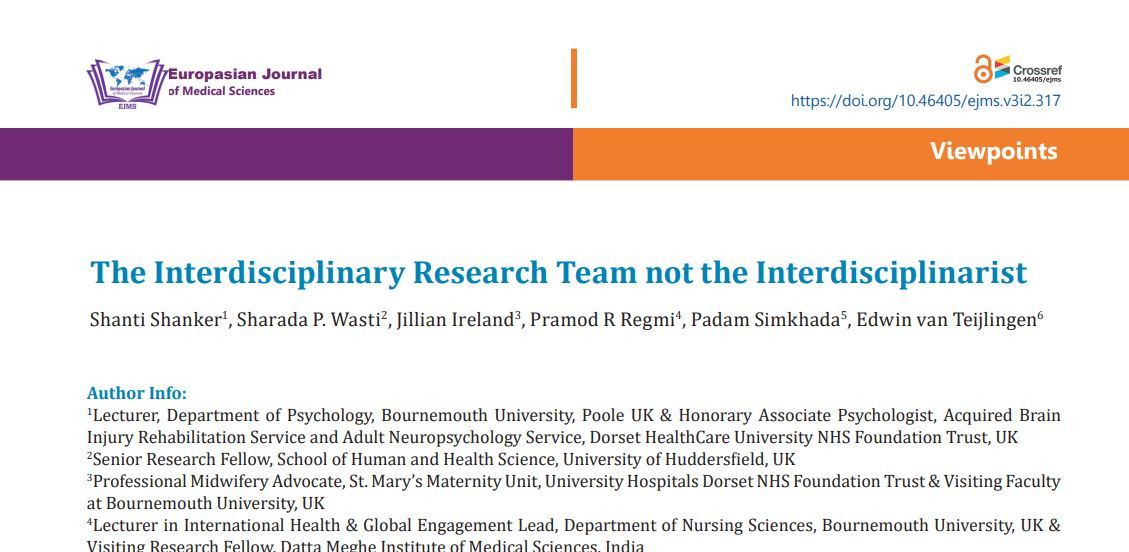
First, Dr. Shanti Shanker in the Department of Psychology and Dr. Pramod Regmi in the Department of Nursing Science and Prof. Edwin van Teijlingen in the Department of Midwifery & Health Sciences published the paper ‘The Interdisciplinary Team Not the Interdisciplinarist: Reflections on Interdisciplinary Research’ [1]. This interesting paper is co-authored with two BU Visiting Faculty, Ms. Jillian Ireland, Professional Midwifery Advocate in Poole Maternity Hospital (University Hospitals Dorset NHS Foundation Trust) and Prof. Padam Simkhada based at the University of Huddersfield. This paper argues that interdisciplinary working is within the team, not the person being interdisciplinary . Multidisciplinary teams provide unique opportunities for researchers from different disciplines (and hence different ways of working and thinking) to collaborate with one another. We need to be careful not to try to create interdisciplinarists, or at least, not too many. The worlds needs people who are strong in their discipline and open-minded/flexible/reflective enough to see the value of other people’s disciplines. 
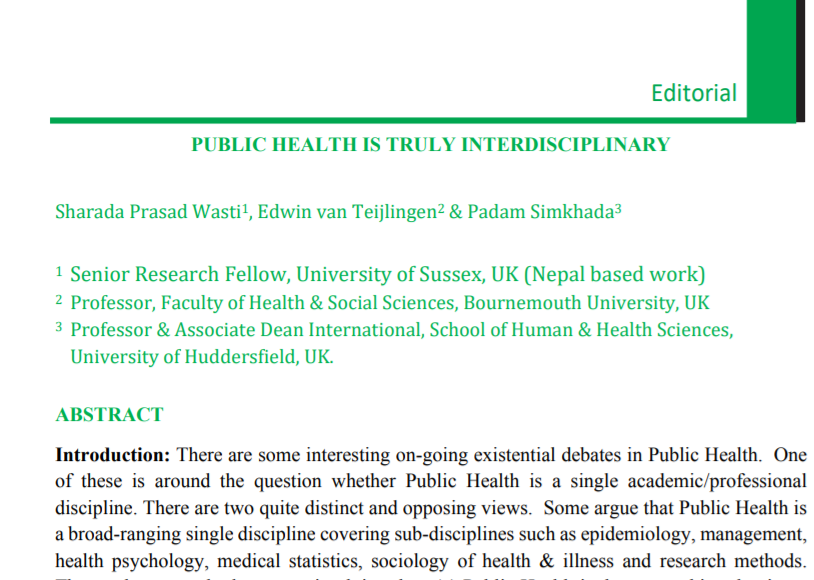
Secondly, the Journal of Manmohan Memorial Institute of Health Sciences published our editorial ‘Public Health is truly interdisciplinary’ [2]. This editorial was largely written to counteract some of the jurisdictional claims made in Nepal by certain people in Public Health. These claims express themselves in arguments around the question whether Public Health is a single academic discipline or a broad interdisciplinary profession comprising many different individual academic disciplines. There are two quite distinct and opposing views. Some argue that Public Health is a broad-ranging single discipline covering sub-disciplines such as Epidemiology, Management, Medicine, Nursing, Health Psychology, Medical Statistics, Sociology of Health & Illness and Public Health Medicine. Those who support this argument, typically see: (a) Public Health is the overarching dominant discipline, which brings these sub-disciplines together; and (b) that a true Public Health practitioner amalgamates all these individual elements. Others argue that Public Health is more an overarching world view or interdisciplinary approach for wide-ranging group of professionals and academics [2]. In this view some Public Health professionals are first trained as clinicians, others as psychologists, health economists, health management, statisticians, or demographers, and so on and have later specialised in Public Health.
Thirdly, doing multidisciplinary research is not without its problems, hence we reflect on some of these in the paper ‘Interdisciplinary Research in Public Health: Not quite straightforward’ [3]. The authors are BU’s Dr. Pramod Regmi, Dr. Nirmal Ayral in the Department of Nursing Science and Prof. Edwin van Teijlingen, and BU Visiting Professor Padam Simkhada and BU graduate Dr. Pratik Adhikary (currently at the University of the West of England). We all are Public Health researchers, with very different educational backgrounds and training, reflecting the diversity of and interdisciplinarity in the field. Several of us have a first degree in Education or Health Education, but one has a first degree in Sociology. Whilst four of the five authors have Master degree in Public Health and/or Health Promotion, two have a Master in Education. Most of the authors have a Ph.D. in Public Health, but again the Ph.D. of one of us is in Sociology. The key point is that we are all working in Public Health.
Unfortunately the ‘Early Career Researchers and Interdisciplinarity in the Medical Humanities – South West’is for ECRs from the South West Hub only.
Prof. Edwin van Teijlingen
CMWH
References:
- Shanker, S., Wasti, S.P., Ireland, J., Regmi, P., Simkhada, P., van Teijlingen, E. (2021) The Interdisciplinary Team Not the Interdisciplinarist: Reflections on Interdisciplinary Research, Europasian Journal of Medical Sciences 3(2):1-5.
- Wasti, S.P., van Teijlingen, E., Simkhada, P. (2020) Public Health is truly interdisciplinary. Journal of Manmohan Memorial Institute of Health Sciences 6(1): 21-22.
- van Teijlingen, E., Regmi, P., Adhikary, P., Aryal, N., Simkhada, P. (2019). Interdisciplinary Research in Public Health: Not quite straightforward. Health Prospect, 18(1), 4-7.
Introduction to Patient and Public Involvement
This half day course is an introduction to PPI and will:
1. Define PPI and why it matters
2. Explore the links between PPI and health equity
3. Explain how to deliver PPI and support those involved
It will be an interactive session, including input from someone with lived experience, talking about their involvement in research.
It will be delivered by Sue Bickler from the Involving People team at Help and Care, an organisation that ‘helps people and communities live the lives they choose’.
Sue has worked in the voluntary sector, local authorities, and health, and has substantial experience engaging with people and communities to ensure that services meet their needs. Her current role brings together the four Healthwatch in Hampshire and the Isle of Wight (HIOW), ensuring that patient voice is central to decision making in the HIOW Integrated Care System and that people are equipped to support effective Patient and Public Involvement (PPI).
The session is funded by Clinical Research Network Wessex and is open to all health and care researchers working in Wessex including public contributors and community organisations.
Book your place here. A link to the online training will then be sent to you.
Improving information for people taking part in clinical research
The Health Research Authority (HRA) has launched new Quality Standards to improve information given to people who are invited to take part in research. The Quality Standards have been launched alongside Design and Review Principles, which show researchers and Research Ethics Committees (REC) what the important ethical considerations are for participant information.
- The new HRA Participant Information Quality Standards will help research organisations to understand what good participant information looks like, and will make clear to researchers what the Research Ethics Committees will consider as part of the ethics review, including the review of participant information. The REC will support researchers to create information that meets the Quality Standards.
- The aim of the Quality Standards and Design and Review Principles is to make participant information better, and to make the way that RECs review that information more consistent. The documents set out the basic criteria that all participant information must meet, and covers language, accessibility, and mandatory content.
Next steps
The Quality Standards and Design and Review Principles will be phased in from autumn 2023. As study materials are prepared in advance, REC reviews of participant information will initially be presented to research organisations as recommendations as opposed to actions required for approval.
From December 2023, the Quality Standards and Design and Review principles will become mandatory and will be applied to all research applications submitted for review.
Changes to participant information are currently the most likely reason for ethics committees to give a provisional opinion. Using this guidance will increase the possibility of receiving a favourable opinion.
Available templates
Remember that BU has Participant Information Sheet templates that provide much of the required wording to ensure your participants are making a fully informed decision before agreeing to participate.
It is vital that when compiling your information sheets that you remember to include the HRA GDPR transparency wording.
Questions or concerns?
If you have any questions regarding these new standards or about clinical research in general, please email Suzy Wignall, Clinical Governance Advisor – swignall@bournemouth.ac.uk or clinicalresearch@bournemouth.ac.uk
NIHR Be Part of Research platform
The NIHR Be Part of Research platform is an online service that makes it easy for research participants to find and take part in health and social care research. Participants may search for trials and studies taking place looking at certain health conditions and in locations accessible to them.
Clinical researchers may also make use of the service to extend their recruitment and widen their recruitment methods, as the platform has been designed to make it easier for researchers and potential study participants to find each other.
Using Be Part of Research to recruit participants
To use the service for your recruitment, the study must meet the following requirements:
- Be funded or supported by the NIHR. This includes studies on the NIHR Clinical Research Network Portfolio.
- Have Research Ethics Committee approval to use the service as a recruitment tool.
- Have a dedicated point of contact such as a pre-screener or website for interested volunteers to engage with your research team.
Getting your study onto the Be Part of Research platform
- Keep it short – but don’t oversimplify it. The reader must understand what the study is trying to achieve.
- Imagine you are talking to the reader.
- Take out any jargon.
- Make sure you cover the what, why, when, where and how so they have the basics of your study.
Additionally, to make sure that participants contact the appropriate person, the contact details provided on ISRCTN or ClinicalTrials.gov should be up to date and accurate. In general, the registry record should be monitored continuously so that any changes are reflected on Be Part of Research as soon as possible.
Further support/contact
If you have any questions regarding the platform or regarding clinical research in general, please email Suzy Wignall, Clinical Governance Advisor: swignall@bournemouth.ac.uk or clinicalresearch@bournemouth.ac.uk
Advertising BU’s Systematic Review Masterclass
The Faculty of Health & Social Sciences shall be running the two-day ONLINE Masterclass ‘Introduction to conducting a systematic literature review’. The aim is to provide participants with an understanding of how to collate and assess the best possible evidence in the form of a systematic literature review. This masterclass will examine the rationale for systematic literature reviews and take participants through the structured, rigorous, and objective approach used to provide a critical synthesis of the available evidence on a particular topic.
The Masterclass is facilitated by (1) Vanora Hundley, Professor in Midwifery with experience of conducting systematic reviews of health care interventions in both low-and-high-income countries; (2) Edwin van Teijlingen, a medical sociologist with extensive experience in conducting systematic reviews. He has run similar workshops reviews internationally and has published on the importance of systematic reviews; and (3) Caspian Dugdale is Research Librarian with considerable experience in running health information literacy workshops for students, academics and postgraduate researchers.
The masterclass is suitable for anyone who wishes to explore the basic principles involved in conducting a systematic literature review. No previous knowledge is required. Attendees include health and social care practitioners, postgraduate students, and academics. There will be two online days – 8th and 15th November – which will focus on:
- Designing a review protocol
- Formulating a question
- Identifying and selecting relevant studies
- Systematic data extraction and collection
- Synthesis and analysis of the data
- Writing up and reporting systematic reviews.
Booking Information:
The fee of £400 includes two full days with the course facilitators. We are happy to announce that NHS partner organisations are eligible for a reduced fee £200.
You are now able to book on line for our masterclass: https://www.applycpd.com/BU/courses/116678
The application deadline is 11th October 2023.
For more information contact:
Tel: 01202 962184 or email HSSRKEAdministrator@bournemouth.ac.uk


BU students’ publishing success
BU presentation at the University of Bristol
Art and Design: History, Practice and Theory academics – would you like to get more involved in preparing our next REF submission?
UKCGE Recognised Research Supervision Programme: Final Deadline Reminder
The significance of Rights and Protocols in Disaster Response
Horizon Europe Cluster 3 (Civil Security for Society) 2026 Calls Now Open

MSCA Doctoral Networks 2026 Call Information Webinar

ESRC Festival of Social Science 2026: Application Deadline Extended to Thursday 25 June 2026

Reminder: Register for the ESRC Festival of Social Science 2026 Information Session

ECR Funding Open Call: Research Culture & Community Grant – Apply now

ERC Advanced Grant 2025 Webinar
Update on UKRO services
European research project exploring use of ‘virtual twins’ to better manage metabolic associated fatty liver disease
Explore our work, meet our partners, and find out how you can collaborate with us by clicking here! MIHERC is led by Sheffield Hallam University, with Bournemouth University as a key partner and the important funding coming from NIHR (National Institute for Health and Care Research) Maternity Challenge Initiative. The BU key academics are: Huseyin Dogan, Vanora Hundley, Edwin van Teijlingen, and Deniz Çetinkaya. Please share with all who may be interested.