Now that the calls for Horizon 2020 have been released, I have been asked by several people how to find partners to participate in the calls. I always recommend partnering with at least one person you already know, either through previous projects, publications or simply having met at a conference. The lifespan of a project can be many years and you need to be confident that your approach to work is complementary and that you feel you can trust your partners to deliver.
It’s not always possible to partner up with people you already know and below are some of the resources you can utilise to help for all subject areas:
- National Contact Points – these figures are the main contacts who can provide guidance, practical information and assistance on all aspects of participation in Horizon 2020 including searching for partners. There is an NCP for each subject area and also one for Marie Curie Fellowships.
- CORDIS Partner Service – one of the largest databases of partner profiles (self-registered profiles). It has a list of Partnership Requests and you can also launch your own.
- UKRO– BU subscribes to the UKRO service which is a fantastic information resource and which can help you find partners.
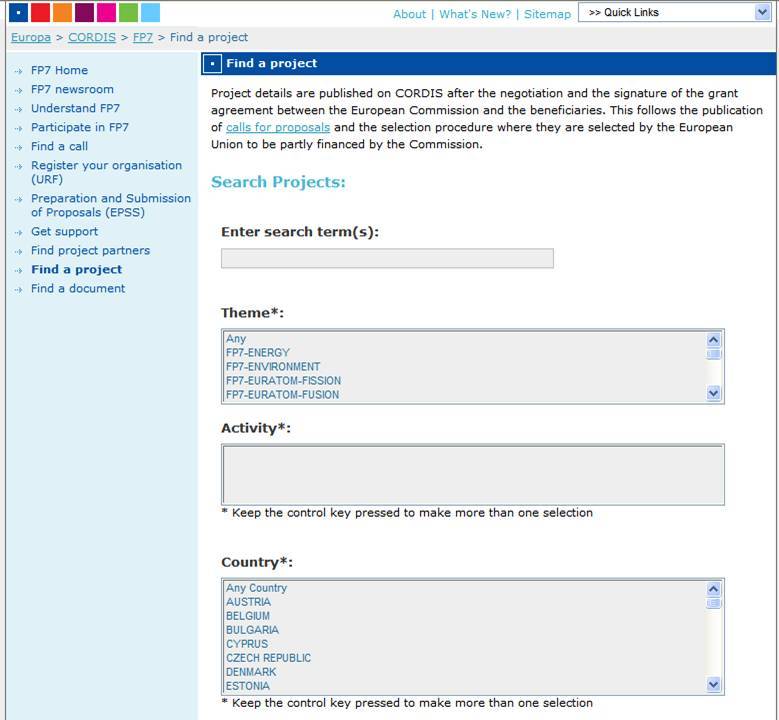
- Previously awarded bids: all proposals funded under FP7 are available to view on line and have the PI listed. Many people have found emailing the PI from a relevant project to outline their own area of expertise and request a collaboration, very successful.
There are also several subject specific searches, such as:
- ICT Idealist Partner Search – the service includes advice on creating your profile by your local National Contact Point and there is a quality control of all the published data.
- Net4Society – this features partner search requests in the socio-economic sciences and humanities
- Nanosciences and nanotechnologies, Materials and new Production technologies Partner search – this lists those looking for partners and also allows you to launch a partner search
- Fit for Health – this is a quality checked database contains expertise profiles of researchers and SMEs acting in the Health / Life sciences sector. The service includes partner search activities advice on all aspects related to a research project, starting with help in first orientation and strategy development to proposal preparation, implementation, exploitation and promotion.
- Innovative Medicines Initiative Partner Search – the IMI supports collaborative research projects and builds networks of industrial and academic experts to boost pharmaceutical innovation and this site displays the partner searches which includes SMEs, large organizations and Universities.
- Enterprise Europe Network Cooperation Opportunities Database – this site publishes an extensive number of innovation and technology profiles from international companies and research organisations to help identify suitable partners for bilateral business, innovation and technology cooperation.








 Upcoming opportunities for PGRs – collaborate externally
 BU involved in new MRF dissemination grant
 New COVID-19 publication
 MSCA Postdoctoral Fellowships 2024
 Horizon Europe News – December 2023