Category / Art & Design

The Future of Research Practice

NealWhite


Blog post by Professor Neal White, Faculty of Media and Communication


The Future of Research Practice

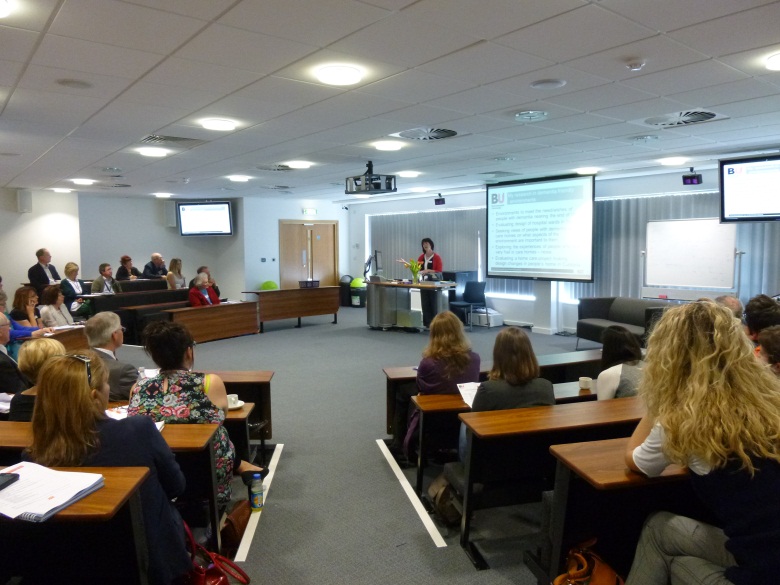
At a HEFCE sponsored conference run at Goldsmiths in London last week, a very large body of academics invested in the Future of Practice Research in the Arts and Humanities, gathered to hear HEFCE’s position on the area.

Following a stimulating keynote on the history and value of Undergraduates in this area by the artist Anne Tallentire, Professor Emeritus Central Saint Martens University of the Arts London, the audience was given an update on the state of play from HEFCE’s perspective.

In doing so Ben Johnson, Research Policy Adviser and then Steven Hill, Head of Research Policy at HEFCE, underlined the critical importance of practice research and the wide range of outputs considered in the recent REF. Central to their statements was an analysis of the amount and the impact of practice research submitted to the Panels. Writ large was the fact that one third of the overall REF submission was practice research and here was the first surprise, from HEFCE and REF position, this was a disappointing figure.

The reason for this, as Professor Bruce Brown (Pro VC Research at of Brighton University, lead of Arts and Humanities Panel D) expressed, was the overall balance of text and non-text outputs; simply put, there were not enough non text outputs at 36% of the submission. The apprehension had been that in UoAs 34-35 at least, these figures should have been reversed, with 64% practice research expected.

With many institutions hesitant about how to capture and articulate not only practice research, but specifically Impact, we were reassured that we had nonetheless delivered exceedingly high levels of world leading and international research in the REF – around 80% in total (BU return to Impact in UoA34 was 60/40 – 4*/3*), underlining our role in articulating and facing head on societal challenges to the human condition and ways of life. And so we were reminded of our contribution to not only the search for new knowledge, but our contributions to ‘enhanced understanding’ (a key definition outlined by HEFCE) in terms of the recovery of lost knowledge, and the testing of existing knowledge.

So what do we need to do in order to increase the amount and quality of practice research as will be expected, to deal with a problem that has for many been attributed to the confidence of our institutions, and those who lead the returns, for we were told, it does not reflect what is going on in UK Higher Education, as designers, performers, artists and other creative intellectuals continue to undertake and are leading the world in practice research.

In later presentations, and woven throughout the day were themes and concerns about practice research and its status in the Academy, running from staff requiring PhD’s, to the poor auditing tools available to them and the lack of understanding in the sciences, who largely run the exercises. Many points were highly valid, and some very familiar, but at the end of the day, HEFCE, who was in listening mode noted down and responded to the key suggestions and proposed actions.

More practice research figures it was agreed should and will be appointed to bodies like the British Academy. There would be less emphasis on the PhD from HEFCE in this area. A separate research practice policy lobbying body such as exist in Science would be supported. Overall, it was clear the value that practice brings, with HEFCE underlining the contributions to economic, social and cultural values in particular.

HEFCE and the REF need and expect much more non-text outputs – the role of practice in particular in the communication and engagement with research across the board should not and cannot be underestimated, they declared. They want and expect more scholarly forms of practice research, an area in which we now lead the World. But together, the next job is also to ensure that the government does not dismantle one of the liveliest and most engaged research bases in the World, aided and abetted by disciplinary divisions; the power bases of science and the arts respectively. Least we forget, the contribution to GDP from the fast growing sector of our economy, the creative industries was recorded in 2014 at £71.4 Billion (https://www.gov.uk/government/news/creative-industries-worth-8million-an-hour-to-uk-economy).

In briefly summarising all of the fascinating discussions and agreements, for there was much consensus, was a single line, delivered by Bruce Brown at the end of his own presentation in the morning that made an awful lot of sense to those of us trying to persuade our colleagues of our own value. The argument for practice research is won he declared on behalf of HEFCE and REF, the future of research practice is clear. We simply need to ensure that we can now; ‘Get over it and get on with it’.

Neal White is Professor of Media Art. He contributed to BU’s leading return in the RAE in 2008 and REF 2014, with one of two Impact Case Studies. He currently is REF leader for UoA34 and heads Experimental Media Research in the Faculty of Media and Communication.

Latest Major Funding Opportunities

The following funding opportunities have been announced. Please follow the links for more information:

 Arts and Humanities Research Council

Ten debates with themes of ‘The Way We Live Now’ and other individual debates, will be held to mark the tenth anniversary of the AHRC at universities and cultural organisations around the UK over the next year. An essay competition linked to the debates, with a series of three deadlines for each debate series, will be opened to help capture the ideas expressed at the debates. The first essay will relate to the first four four debates (Curating the Nation, The Challenge of Change, Faith and Education and Social Cohesion and the Common Good).  there will be ten prizes of £250 for the best essay on each of the ten debates and a best overall essay prize of £500.  Closing Date:  30/10/15.

Biotechnology and Biological Sciences Research Council

The Sustainable Agriculture Research & Innovation Club (SARIC) has funding available for research grants (£3.5M) and research translation grants (£1.5M). Applications must fit the key challenge of predicitve capabilities for sustainable agriculture.  Closing Date: 16/09/15 at 16:00.

Engineering and Physical Sciences Research Council

The Commitment to Privacy and Trust in Internet of Things Security (ComPaTrIoTS) Research Hub  is seeking to make a step-change in the broad research areas of cyber security.  This call aims to invest up to £9.8M over three years to support a small number of leading UK universities working coherently together as a single internationally recognised “Research Hub”, across the relevant disciplines, carrying out inter-related and interdisciplinary research into privacy, security and trust in the Internet of Things. Deadline for Registration of Intent: 20/07/15 at 17:00 Closing Date: 02/09/15 at 16:00.

Synthetic Biology Applications for Protective Materials. The EPSRC and the Defence Science and Technology Laboratory (DSTL) seek to establish a number of cross-disciplinary consortia to expand research capability in the area of Synthetic Biology around the central challenge of creating stronger, and more resilient protective materials. Funds of up to £2 million are available for projects up to three years in duration. Closing Date: 1/10/15 at 16:00.

The Thermal Energy Challenge  invites proposals for collaborative research projects to undertake fundamental research that will investigate novel solutions in the thermal energy area.  Up to £5M is available tfor proposals related to the themes of Integration of thermal energy solutions into buildings, Thermal energy conversion technologies and  Hot and Cold energy storage.  Deadline for Registration of Intent: 30/06/15 at 23:59 Closing Date: 4/8/15 at 16:00.

Innovate UK

Fuels and lubricants: reducing cost of ownership. This MOD call seeks proposals with a value of up to £1M for novel ideas to reduce the cost of ownership of military assets through innovative approaches to fuel and lubrication use. Application Registration Deadline: 29/7/15 Closing Date: 5/8/15

Medical Research Council

The MRC and Global Alliance for Chronic Diseases (GACD) are investing up to £2M into the Prevention and management of chronic lung diseases. Proposals are welcomed that will generate new knowledge on interventions and their implementation. Closing Date: 15/09/15 at 16:00.

Natural Environment Research Council

CONICYT-NERC joint call on “Determining the impacts of ice loss and deglaciation on marine and terrestrial ecosystems in a region of rapid climate change“. Up to £1.5m is available to fund  three grants at ~£500k each (at 80% FEC) and an additional £300K from the overall budget is set asside in total to cover collective logistics of the projects. Closing Date: 27/7/15.

South African National Research Foundation

The National Research Foundation (NRF) of South Africa in partnership with prominent UK academies (i.e. the British Academy, the Royal Academy of Engineering, and the Royal Society) and the British Council is pleased to invite applications for the UK – South Africa Researcher Links grants. Closing Date: 30/06/15.

Wellcome Trust

Four-year PhD Studentship has been created to allow promising students undertake in depth post-graduate training inclusive of a first year of taught courses and laboratory rotations followed by a three year PhD project at one of the 31 programmes based in centres of excellence which can provide specialist training in developmental biology and cell biology, genetics, statistics and epidemiology, immunology and infectious disease, molecular and cellular biology, neuroscience, physiological sciences or structural biology and bioinformatics.  Students are recruited annually by the individual Programmes for uptake in October each year but the recruitment begins in the preceding December. Closing Date: Open.

 Intermediate Clinical Fellowships fund is for medical, dental, veterinary or clinical psychology graduates who have had an outstanding start to their research career.  Fellowships can be for up to five years and will cover research expenses and salary. Closing Date: 30/10/15.

A Postdoctoral Research Training Fellowships for Clinicians has been created to allow the refreshing their research skills or to explore a new research field or environment, to gain the skills  that will  help with longer-term research visions.  Awards are two to four years and fellowships typically would range from £250K to £400K and would cover salary and some non-salary costs.  Closing Date: 30/10/15 at 17:00.

The Research for Health in Humanitarian Crises (R2HC)programme funds public health research aiming to improve health outcomes of what works in humanitarian crises.  Proposals are being requested on Communicable diseases, including epidemics, Sexual and reproductive health and/or gender based violence, Cost effectiveness of health interventions or Ethical issues in the context of public health operations or research during humanitarian crises.  Those interested should send an expression of interest. Closing Date: 20/07/15.

The Translation Fund aims to develop new technologies in the biomedical area to help with unmet healthcare need. Concept notes must be provided in the first instance. Closing Date: 16/10/15 at 17:00.

Please note that some funding bodies specify a time for submission as well as a date. Please confirm this with your  RKEO Funding Development Officer


You can set up your own personalised alerts on Research Professional. If you need help setting these up, just ask your School’s/Faculty’s Funding Development Officer in  RKEO or view the recent blog post here.

If thinking of applying, why not add notification of your interest on Research Professional’s record of the bid so that BU colleagues can see your intention to bid and contact you to collaborate.

Working creatively to explore abuse in young people’s relationships – the CATCAM project

There is increasing awareness of the risks that young people face in terms of abusive personal relationships and intimate partner violence (IPV), and the Home Office has recently widened the definition the government uses to include abuse against those aged 16-17 as well as adults

Intimate partner violence concerns physical violence directed against a partner and often includes sexual violence and psychological abuse (Jewkes, 2002). This is a global issue and increasing concern is now being expressed about IPV in teenage and young people’s relationships (Keenan-Miller et al. 2007). US research suggests that 66 % of college-aged dating students experience at least one incident of IVP (Smith et al. 2003).

CATCAM picThe project which has received Fusion Funding from BU aims to:

  • Develop creative methodologies/animation to explore the nature of abuse in young people’s relationships;
  • Explore how such methods might be used in domestic abuse prevention education

To date we have had two creative workshops which have used a range of materials and motion capture to produce a short piece of animation visualising mood and emotion. Those involved have enjoyed trying newapproaches to express and visualise meaning associated with relationships and abuse. It is great to be a co-learner in this process and to be taken out of my comfort zone as we are encouraged to use ‘visualisation’ techniques in a co-produced piece of work. Here are some examples of some of our visualisation work to date.

For more information on the CATCAM project please contact:

Dr. Lee-Ann Fenge lfenge@bournemouth.ac.uk


Bournemouth University Students in Santander 60 Second Pitch!

The Centre for Entrepreneurship is delighted to announce that Bournemouth University student Alice Parlett’s Bumblebee Nest business idea – called Cub-Bee-Hole – and Peter Ramsey’s student website – Move’m – have been short-listed as two of the 10 most outstanding business ideas for the Santander 60 Second Pitch.  Vote for your favourite Student Business


Alice, a final year Industrial Design student at BU, recently attended the CfE’s Business Ideas Generator Hackathon and successfully pitched to our Dragon’s Den-style event for a small amount of funding to investigate an early prototype of her product.  Alice’s business idea is conservation and stunning design beautifully interwoven with current market trends. The Cub-Bee-Hole is an aesthetically pleasing hive for bees that adheres to your window, allowing you to view the bees in action whilst encouraging nesting and reproduction in a safe, nurturing home for the bees.

Essential to our ecosystem, bumblebees are dying out.  Yet, bumblebees pollinate 1/3 of our food!  Alice’s product is a woven wicker bee home that sticks to your window, with a design that allows you to see the bees nesting and at work, whilst preventing the bees from being disturbed by you.

Targeting conservationists, gardeners, farmers, parents, this product is a registered design and could be seen at the Flower Shows, Chelsea stores and garden stores nationwide soon… with your help.

Stunning aesthetics – on trend – conservation-minded – raising awareness – educational – fun.

Alice is pitching for £1500 to create a prototype that she can use to launch her business.

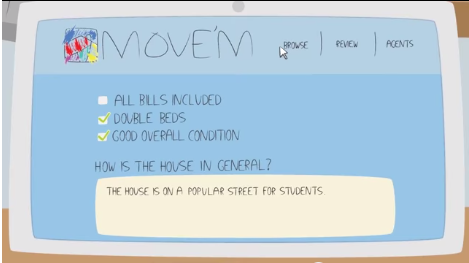
Move’m are also a Bournemouth University student business who have set up a website that helps student find out about rental properties from other students reviews before starting a tenancy.

Have you ever moved in to a property to find that there is mould on the bathroom ceiling, the roof is leaking and the landlord isn’t answering his phone…ever!? These are things that were certainly not mentioned on the viewing, yet when you take the tenancy, it is too late.


Have you ever moved in to a property to find that there is mould on the bathroom ceiling, the roof is leaking and the landlord isn’t answering his phone…ever!? These are things that were certainly not mentioned on the viewing, yet when you take the tenancy, it is too late.

Move’m has created a website where any student can review his/ her experience so that the next tenant can be confident in the property that they are moving into.

Searching for the right student accommodation has never been easier… and Move’m need £1,500 to help them develop their business further to help more students


***At the time of going to press, Alice’s bumblebee Nest Concept business is in 2nd place with 109 votes to Ulster University’s Little Creation’s 171 votes. Move’m is currently in 8th place with 30 votes.***

Do you have time to vote for one of the student businesses? Registering is as simple as inserting your email address and password and you have just one vote, so please make it count by voting for your favourite student entrepreneurs – Vote for your favourite Student Business 

We wish both businesses all the best of luck! #BUPROUD

Are you in the know? – Creative, digital and design communities


Trying to keep up with what is happening within this sector.?

Why not sign up for a comprehensive newsletter emailed to you on a regular basis summarising upcoming events, funding programmes and awards within this sector. Packed full of information this is an easy read and a useful tool to keep up to speed with news and information in this fast moving creative arena.

Published by the Knowledge Transfer Network.


.

SW businesses can benefit from £5k of funding from Creative England

Creative England is offering creative digital businesses in the South West the chance to apply for a third round of Business Strategy and Innovation Vouchers.

The scheme provides companies with £1,000 – £5,000 to subsidise much of the cost of procuring expert third party services in order to aid growth.

Funded by the Creative Industries iNet programme through the European Regional Development Fund (ERDF) and the Regional Growth Fund (RGF), the initiative focuses strongly on digital innovation and business strategy.

The Creative England Innovation Programme helps creative companies build and sell innovative products and services more successfully. This work is delivered through structured projects – which include seed investment, mentoring, marketing, and business support, planning and strategy. These projects help companies jump over business barriers to grow more quickly and profitably.

In order to apply to this round, businesses must be based in Bristol, Bath, Dorset, Devon, Wiltshire, Somerset or Gloucestershire, and be able to provide a total equalling 30% of the requested amount in match funding.

The voucher scheme is part of a wider £314k programme of support through the Creative England Innovation Programme.

Applications for the Voucher Scheme close on February 27th, 2015. For more information please read the guidelines below. Companies can apply directly here.


Cloud and Weather Simulation for computer graphics

We would like to invite you to the next research seminar of the Creative Technology Research Centre.


Speaker: Leigh McLoughlin

Title: Cloud and Weather Simulation for Computer Graphics

Time: 2:00PM-3:00PM

Date: Wednesday 18th February 2015

Room: P335, Poole House, Talbot Campus


Abstract:

In this talk I will discuss my work on cloud simulation for computer graphics. This work was designed to provide a means of simulating clouds and weather features, such as rain, using desktop graphics hardware. This involves elements of meteorology, numerical weather simulation and computational fluid dynamics, taken from the sciences and adapted to meet the more artistic requirements of computer graphics in which an element of control is required and the laws of physics may be wilfully disobeyed. The result is a lightweight physically-inspired cloud simulation scheme, capable of emulating the dynamic properties of cloud formation and weather effects.

We hope to see you there.

Cyber Security Seminar: Persuasive Technology for Information Security – Today, 4pm

Our next Interdisciplinary Cyber Security Seminar will take place TODAY (Tuesday, 27th January) at 4pm. The seminar will take place at Poole House in P335 LT, and will be free and open to all.

Our speaker will be Marc Busch. Marc is scientist at the AIT – Austrian Institute of Technology and is active at the intersection of persuasive technology and usable privacy and security. Furthermore, he is specialized in advanced quantitative and qualitative usability and user experience methodology, research methods and statistics in Human-computer interaction. Marc is involved in several international and national research and industrial projects, such as MUSES – Multiplatform Usable Endpoint Security. Before joining AIT, Marc was at CURE – Center for Usability Research & Engineering, where he focused on user experience and usability.

Abstract: Persuasive Technology is a vibrant field of research and practice, aiming to change the attitude or behavior of people. Persuasive technology has various different application areas, e.g. games motivating physical activity. An emerging application area is persuasive technology to increase information security and to engage people to protect their privacy. In the seminar, participants will hear about design principles for persuasive technology for promoting information security and also about methods to evaluate persuasive technology. Concrete examples and “best practices” will be given from a recent research project, in which persuasive technology is used in organizations to make employees comply with information security policies.

Cyber Security seminars for 2014-2015 start with a bang

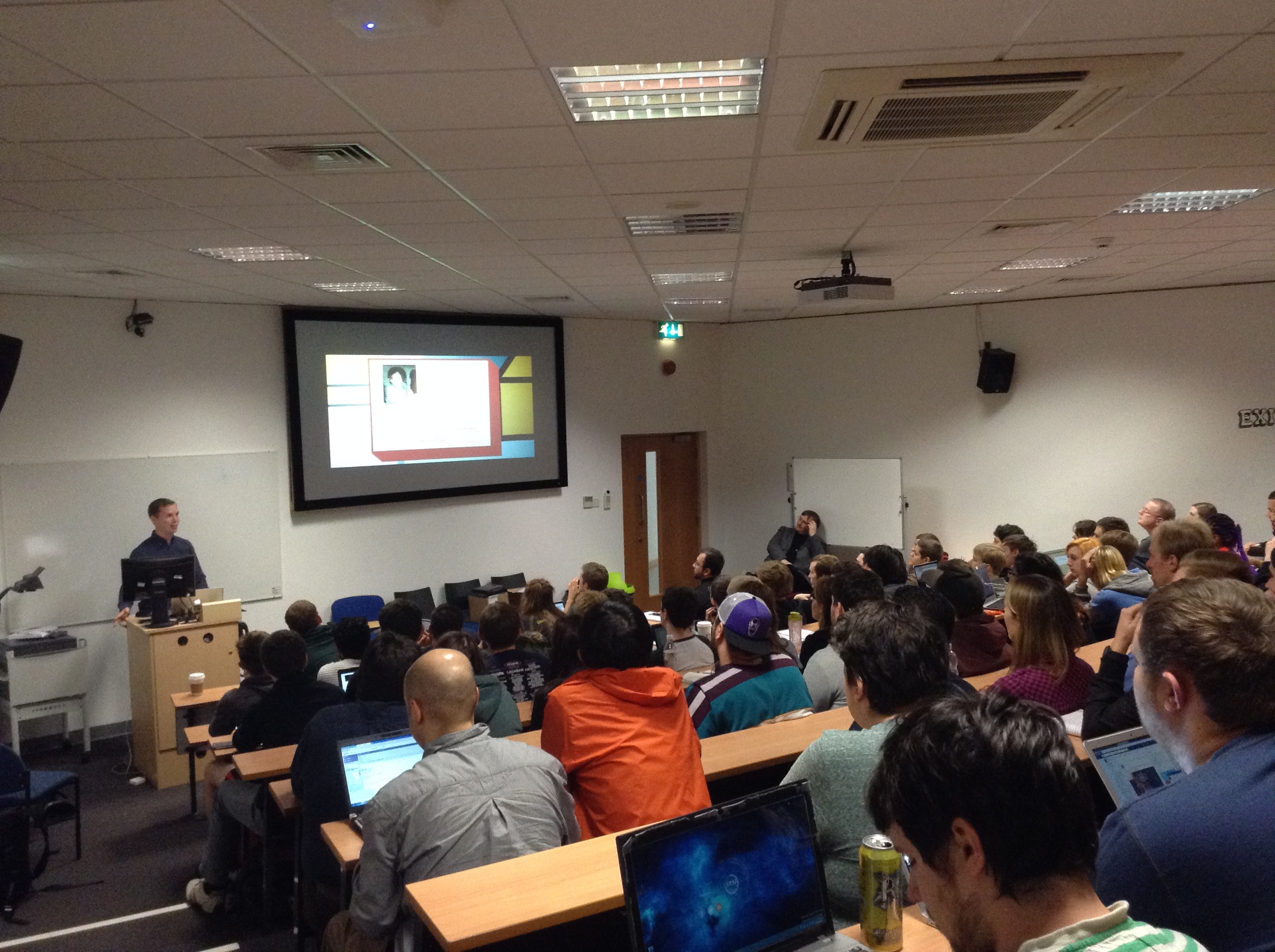
Yesterday, we held the first of this academic year’s cyber security seminars.  We hosted Dr John Lyle from Facebook, who spoke to a packed audience in the Barnes Lecture Theatre about some of the challenges fighting spam at Facebook.  After his talk, John described how impressed he was with some of the thought provoking questions raised by audience.

Our next seminar will be on Tuesday, 25th November and will be delivered by Dr Andrea Atzeni from the Computer and Network Security group at Politecnico di Torino.  Andrea will be visiting us that week as part of our Fusion funded Bournemouth European Network in Interdisciplinary Cyber Security (BENICS) project.  Watch this space for more details about  Andrea’s talk.

Our interdisciplinary seminar series on Cyber Security is a wonderful opportunity to hear interesting, thought-provoking talks on a variety of topics related to security and privacy.  Although some of these speakers will be academic, their talks will be approachable and require nothing more than a general interest in security, and an enquiring mind.  We’re also interested in ideas about possible speakers or seminar topics, so please get in touch if you have any suggestions.

BUDI Open Public Meeting – 14 May 2014


This is a reminder that the BUDI Open Public meeting is tomorrow (14 May) there are still a few spaces available. 

This year’s event focuses on dementia friendly environments, how design helps to support people living with dementia.  The hospital environments and the philosphy of dementia friendly environments will  be covered by external speakers.

To book your free place please go to eventbrite http://www.eventbrite.co.uk/e/budi-open-meeting-dementia-friendly-care-environments-tickets-9876528964


Bournemouth European Network in Cyber Security (BENICS)

In recent years, the field of Cybersecurity has attracted researchers and practitioners from academic fields ranging from Computer Science and Design, through to Psychology and Business Studies. To date, however, these communities have not been influenced by each other. Their research are disseminated in a variety of workshops and conferences across these fields. As a result, there is a misunderstanding of the role these different fields play in improving cybersecurity. For example, some researchers describe people are “the weakest link” and encourage designers to build systems that “Homer Simpson” can use safely. Unfortunately, treating users as a problem limits opportunities for innovation when people are engaged as part of a solution. Similarly, treating practitioners like cartoon characters disenfranchises the very people that a design is meant to support. Bournemouth University is one of the few institutions in the world with interests across the disciplines contributing to Cybersecurity, a small enough size for academics across these disciplines to engage with each other, and the vision necessary to fuel this engagement. To take advantage of the opportunities afforded to Bournemouth, an interdisciplinary seminar series in cybersecurity was launched in September 2013. The seminar series has attracted both staff and students from across the university, together with practitioners from local industry with interests in cybersecurity. So far, this has led to connections forming across the Faculty of Science & Technology, and the Media and Business schools. Resulting collaborations with our seminar speakers have also led to prospective KTP and Horizon 2020 proposals, and invitations to deliver guest lectures at other universities.

To build on this momentum in interdisciplinary cybersecurity activity at Bournemouth, we have created the Bournemouth European Network for Interdisciplinary Cyber Security (BENICS): a FUSION funded SMN activity. Over the coming year, BENICS will bring five invited European cybersecurity academics to Bournemouth to engage in short (one-week), focused collaborative visits. These visits will introduce invited academics to Bournemouth’s cybersecurity capabilities, allow them to share their interests with us as part of the cybersecurity seminar series, and engage in short and focused proposal building, research, or teaching resource creation activities.

Following each visit, Bournemouth and the visiting academic will engage in pump-priming activities; these will refine deliverables produced to sustain the momentum created during the visit. These deliverables will form the basis of a joint publication at an agreed international conference or journal.

Watch this space for more information about these visits, and please get in touch if you’re interested in engaging with BENICS and our cybersecurity research in general.

Cyber Security Seminar: Everyday Security for Everyday Lives (Lizzie Coles-Kemp, Royal Holloway)

Our next Interdisciplinary Cyber Security Seminar will take place on Tuesday, 4th March at 5pm.
The seminar will take place in EB202 in the Executive Business Centre, and will be free and open to all. If you would like to attend, please register at https://www.eventbrite.co.uk/e/interdisciplinary-seminar-in-cyber-security-tickets-10691914805

Our speaker will be Dr Lizzie Coles-Kemp. Lizzie is a qualitative researcher, interested in the everyday practices of information production, circulation, curation and consumption within a broad range of communities. She works in Possible Futures Lab within the Information Security Group at Royal Holloway University of London. Her main focus is the interaction between people and security and privacy technologies, how each influences the other and the communities of practice that emerge. As part of this focus, she explores topics such as identity and technology use, gender and information management and information control as a means of power. Current interdisciplinary work includes: value sensitive design in public service delivery, cultural analysis in institutional security and the use of visual research methods in interdisciplinary research.

Abstract: Over the last five years at the Information Security Group, Royal Holloway, a research group called Possible Futures Lab has been working on projects that explore what notions of information control mean in the context of everyday lives. We have two primary objectives: to improve designs related to everyday information production and control and to influence thinking on topics of everyday information security. Each of our projects has started with ethnographic research that has enabled us to identify and observe the relevant spaces and places. From there we have co-designed with each community discovery tools for seeing, experiencing and exploring these spaces. These tools help us to better understand the community viewpoints on information and its control and to design/re-design services and technologies to better support this position. This talk gives examples of this approach in two of our projects that focus on cyber security decision making.

CEMP Bulletin Feb 2014

    CEMP bulletin Feb 2014

Here’s the updated CEMP Research, Innovation and Funding Bulletin.

To follow up any of these funding opportunities, or to talk about working with CEMP on research / innovation in other ways, please contact Julian McDougall or:

Media School – the CEMP Fellow in your academic group (Anna Feignbaum, Richard Wallis, Neal White or Ashley Woodfall)

Non Media School – Milena Bobeva (the CEL / CEMP Fellow)