Category / Art & Design

Sound recording, stories and memory: listening to stories ‘told’ by a tree

We would like to invite you to the latest research seminar of the Centre for Games and Music Technology Research.

sellasia

Speaker: Dr Panos Amelidis  (Bournemouth University Lecturer In Music & Audio Technology).


Title:     Sound recording, stories and memory: listening to stories ‘told’ by a tree


Time: 2:00PM-3:00PM

Date: Wednesday 7th December 2016

Room: P409, Poole House, Talbot Campus


Abstract: The village of Sellasia in Southern Greece has perfect conditions for the cultivation and production of olives and olive oil, an activity very important for the economy of its inhabitants. But, can an olive tree be transformed into a fictional conduit of storytelling using audio recording technology and its possibilities? This seminar refers specifically and discusses three aspects of a practice-based research project, an audio-visual installation, ‘Stories of a Tree’ based on the sound produced by the olive tree as well as the soundscape of Sellasia. The first aspect is the concept and research questions of the project. The second concerns the methodology which was implemented for its realization, and the content in which it was placed. The third is the artistic challenge of communicating something about history and memory, related to the Sellasia village, through the medium of composed sound and interactive technology using a mixture of field recordings and interviews collected during the author’s staying at the village, as part of a residency organized by McGill University.


We hope to see you there.

Security by Design through “Human Centered” Specification Exemplars

IMG_2778-300x300

A year ago, we received Fusion funding to build the Bournemouth-Athens Network in Critical Infrastructure Security. The aim of this project was to build collaborative links between the BU Cyber Security Research group and the Information Security & Critical Infrastructure Protection Laboratory at Athens University of Economics & Business (AUEB). We built these links by working on a joint project, which we advanced through visits and other activities.

The aim of our joint activities was to build human-centered specification exemplars of Critical Infrastructure (CI) operating environments.
We depend on infrastructure associated with things like water, gas, electricity, or transport, but the criticality of such infrastructure is usually lost on us because it fades into the background of our everyday lives. The damage or loss of such infrastructure is only felt when it becomes unavailable, and its significance can range from mild annoyance if its means the trains are late, through to civil disorder and loss of life if we are unable to access clean water for a prolonged period. Despite their importance, there are no useful models of environments that people can use when developing or evaluating technology for CI. Our work aimed to remedy this by building specification exemplars for typical CI companies. In doing so, these would capture the human nuances associated with different aspects of CI, and help people identify possible security issues associated with new ideas before, rather than after, they are deployed in the field.

Together, a team of BU and AUEB researchers carried out work to build two specification exemplars of hypothetical CI companies. One of these was a UK Water Company (ACME Water). The other was a rail company in South East Europe (Balkan Rail). BU hosted researchers from AUEB and ran a number of workshops to identify different security aspects of these companies. In return, AUEB hosted BU undergraduate research assistants as they collected data from a Greek CI company, and ran workshops to develop and evaluate different aspects of the exemplars with AUEB researchers.

The exemplars have been made publicly available, and are modelled using CAIRIS – an open-source security design tool maintained by researchers at BU. To date, several publications have so far arisen from our preliminary work building [1] and applying the ACME Water exemplar [2, 3, 4]. We’re also using the exemplars as part of our teaching to provide case studies for Forensic & Computer Security lab exercises and seminars. Although the studies provided are hypothetical, they are grounded in real world data, and make visible to students the root causes of a variety of cybersecurity risks.

Looking forward, our work has gained the interest of a number of UK and international collaborators, and we’re looking for opportunities to build a library of human-cantered specification exemplars for many other, non-CI, environments. Such environments might include homes, and different types of ‘soft target’. Our long term aim is to make sure people don’t design security as an afterthought. Our work on BANCIS has made a small, but significant, step towards achieving this goal.

References

[1] S. Faily, G. Lykou, A. Partridge, D. Gritzalis, A. Mylonas, and V. Katos, “Human-Centered Specification Exemplars for Critical Infrastructure Environments,” in Proceedings of the 30th British HCI Group Annual Conference on People and Computers, 2016.

[2] S. Faily, C. Iacob, and S. Field, “Ethical Hazards and Safeguards in Penetration Testing,” in Proceedings of the 30th British HCI Group Annual Conference on People and Computers: Fusion, 2016. 

[3] D. Ki-Aries, S. Faily, and K. Beckers, “Persona-Driven Information Security Awareness,” in Proceedings of the 30th British HCI Group Annual Conference on People and Computers: Fusion, 2016. 

[4] A. Partridge and S. Faily, “The application of useless japanese inventions for requirements elicitation in information security,” in Proceedings of the 30th British HCI Group Annual Conference on People and Computers: Fusion, 2016. 

Creative Europe – current funding calls

Through the Creative Europe programme, the Education, Audiovisual and Culture Executive Agency is promoting the following calls and their closing dates:

All closing dates are at 12:00 (CET/CEST, Brussels time)

If you are interested in applying to these funds, please contact Emily Cieciura, REKO’s Research Facilitator for EU & International funding or your relevant faculty Funding Development Officer.


Shakespeare festival: open call for digital ideas

British Council

What is it about?

BBC Arts Online and the British Council, supported by the GREAT Britain campaign, are collaborating to enable audiences, in the UK and overseas, to experience and discover the best of British Shakespeare in all art forms. The plan is to open with a 24 hour live-stream on 23 April 2016 and to offer new content on a regular basis over six months.

The British Council, on behalf of the GREAT Britain campaign, is calling for ideas from artists and cultural organisations across the UK. Funding is available for international rights clearances and to support the production of new content.

Five key cultural organisations are already working with  to provide world-class content – Shakespeare’s Globe, The Royal Opera House, the British Film Institute, Hay Festivals and the Royal Shakespeare Company and the Shakespeare400 consortium coordinated by King’s College.

The content will be hosted on BBC Shakespeare Lives (bbc.co.uk/shakespearelives ) and promoted internationally by BBC Worldwide online ( bbc.com/culture) so global rights need to be cleared . The campaign will be supported by social media campaigns in order to drive audiences to this unique festival.

This is an unprecedented partnership project for the BBC and the British Council and  believe it has great potential for all organisations involved to increase their international reach and reputation.

How can I get involved?

We are particularly looking for ideas which appeal to younger audiences and convey the diversity and creativity of the UK’s Arts sector. If you are interested in applying, please complete the attached form.

APPLICATIONS CLOSE TUESDAY 16 FEBRUARY 2016

Click here for more information including the application form.

Creative Europe -measuring the creative industries of Europe

Euro_FlagThe origins of the EU – a coal and steel free trade agreement – lie elsewhere; however Europe’s creative industries are likely to be an increasingly important part of its economic future. Creative industries provide jobs that are highly skilled and more resistant to automation, jobs that are therefore more likely to be sustainable. [1] Understanding them is therefore of strategic importance.

A challenge in thinking about creative industries at a European level has been the absence of comparable statistics across the countries of the EU. Nesta’s report by Max Nathan, Andy Pratt and Ana Rincon-Aznar, published today, helps address this by providing consistent estimates of employment in the creative industries of the EU’s 28 member states and, where data has allowed, the wider ‘creative economies’ of 20 member states (the ‘creative economy’ consists of jobs inside the creative industries and creative jobs in other industries, for example a designer working for a car manufacturer).

For more information on this report click here.

If this is the type of information you would find interesting why not sign up to receive updates into your inbox from Nesta

HSS Writing Week 4th-8th January – How can Bournemouth University Clinical Research Unit support you?

bucru identity

The Faculty of Health and Social Sciences is holding a Writing Week between 4th-8th January 2016 aimed at supporting staff to find time in their busy academic diaries to prioritise writing grant applications and papers for publication.

The Bournemouth University Clinical Research Unit offers methodological and statistical collaboration for all healthcare researchers in the area. It supports researchers in improving the quality, quantity and efficiency of research across Bournemouth University and local National Health Service (NHS) Trusts. It incorporates the Dorset office of the National Institute for Health Research (NIHR) Research Design Service who offer free methodological support to researchers who are developing research ideas in the field of health and social care.

BUCRU will be supporting Writing Week in HSS by holding two drop-in sessions on Tuesday 5th January and Thursday 7th January 12-2pm in R508 Royal London House. We would also like to extend the invitation across the other Faculties for anyone who feels we may be able to support them. For those unable to attend the drop-in sessions, we would be delighted to arrange an alternative appointment.

Please see further information here, contact our adminstrator Louise Ward on 01202 961939 / bucru@bournemouth.ac.uk or visit our website. We look forward to seeing you!

Symposium on Interagency in Technologically-Mediated Performance

29-30 January 2016

Thanks to Fusion Investment funding I will be co-running with Dr Paul Stapleton (QUB) a symposium exploring Interagency in Technologically-Mediated Performance. Despite a growing community of people creating digital musical instruments and a growing associated academic field, there has been little recognition within these communities of the associated approaches to a Philosophy of Technology that examines human-technology interactions from a variety of social, political and philosophical perspectives.

This event will bring together researchers and industry representatives from the fields of Philosophy of Technology and Digital Musical Instrument (DMI) design to establish an overview of best practice of new musical instrument creation and set out a road map for future research in this area. The symposium will feature talks by five keynote speakers that are all internationally recognised experts in their fields. Workshop and discussion will form a large part of the symposium in order to have time to fully establish an overview of best practice and to define the future research agenda.

The symposium will run 29th and 30th of January 2016. There will soon be a call for attendance, places will be limited so sign up quick if you are interested. There will also be a short concert on Friday 29th Jan from 17:30- 18:30 attendance for this is open to everybody.

Tom Davis

Creative, Digital, Design – October briefing now live !


theme - creative-digital

This is a monthly publication that provides a digest of useful information about funding, financing, support and events to assist creative, digital and design businesses with their innovation and growth strategies.

You can sign up to receive the newsletter in your inbox or alternatively follow the Knowledge Transfer Network group on social media.

This is a great way to get a quick heads up on what is happening in these sectors with links to further information.

Click here for more information.


Creative, Digital & Design Business Briefing – September 2015

theme - creative-digitalThis is a monthly publication that provides a digest of useful information about funding, financing, support and events to assist creative, digital and design businesses with their innovation and growth strategies.

Highlights include:

European Funding Guide – Creative Industries

A short KTN guide to help you submit a proposal for the Horizon 2020 funding programme (H2020) & other European funding sources. It provides a brief overview of support, how to apply and useful links.

More information »

Internet of Things Cites Demonstrator

Up to £10 million funding competition to demonstrate the capability of the Internet of Things in a city region. Projects should involve at least one local authority, one local enterprise partnership and several businesses.

More information »

Digital forensics – up to £300K phase 1

The challenge from the Home Office, is to improve the speed, efficiency and effectiveness of recovering and automatically analysing data from the seized digital devices of suspects under investigation. Maximum value of £40K per project.

More information »

Fusion Investment Fund — Introducing the Bournemouth-Athens Network in Critical Infrastructure Security (BANCIS)

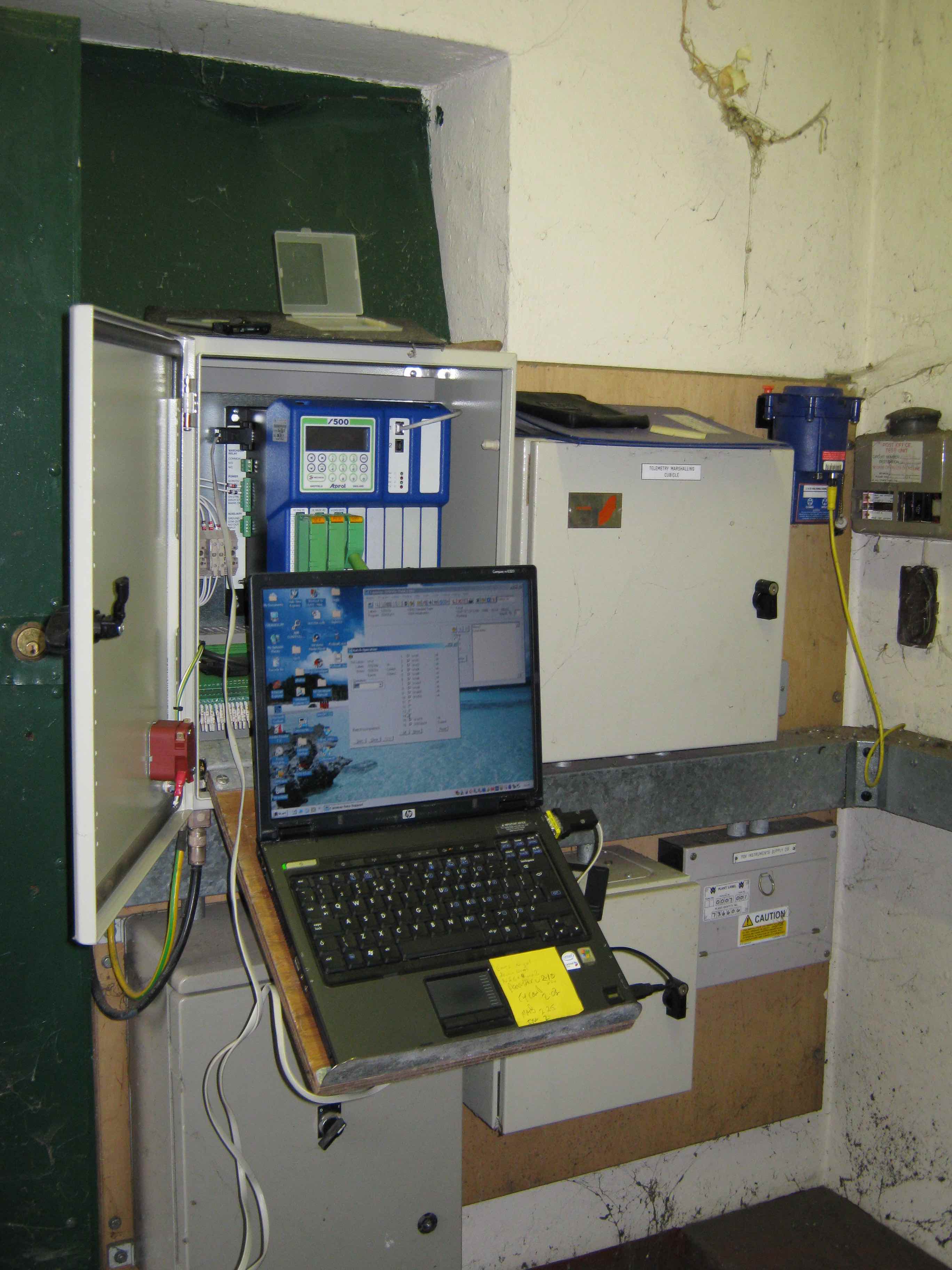
Although largely invisible to us, our lives are dependent on critical infrastructure (CI).  CI is made up of roads, rail, pipelines, power lines, together with buildings, technology, and people.  Some of this infrastructure is modern, but much of it is ageing and interconnected in so many ways that we fail to realise our dependency on CI or its dependencies until its loss disrupts our day-to-day lives.

tech_laptop


This dependency has not been lost on governments, which now invest significant sums on securing this infrastructure from cybersecurity threats. Unfortunately, in most cases, this investment entails bolting security mechanisms onto existing infrastructure.  Such investment decisions are made by people with little knowledge of the infrastructure they are securing and, has such, little visibility of the impact that poorly designed security might have on the day-to-day delivery of these critical services.  Moreover, because technology innovation does not evolve at the same pace in different cultures, and security which mitigate the risks faced by critical infrastructure in one country may not be as effective in another.   The reason for these differences are myriad, and range from differences in working practices to expectations about the scale of infrastructure being secured.  There is, therefore, a need to evaluate security solutions against specification exemplars based on these nuanced, representative environments.  However, to develop exemplars of such environments requires data collection and knowledge sharing about nuances associated with particular forms of critical infrastructure for different cultures.

The Bournemouth-Athens Network in Critical Infrastructure Security (BANCIS) project will examine and model the nuances associated with two forms of critical infrastructure in different national cultures.  It will do so by building a network between Cybersecurity researchers at BU, and the Information Security & Critical Infrastructure Protection Laboratory at Athens University of Economics & Business (AUB). These nuances will be modelled as specification exemplars of UK and Greek water and rail companies. By developing these exemplars, researchers and practitioners will be able to conduct a cost-effective evaluation of new ideas based on realistic CI environments.  The exemplars will also help students appreciate the challenges associated with designing security for complex, real-world systems.  The exemplars will be modelled using the CAIRIS security design tool; this is an open-source software product maintained by researchers at BU. The data necessary to build these exemplars will be collected over a series of visits by AUB researchers to BU, and BU researcher to AUB.

Please contact Shamal Faily if you’re interested in finding out more about BANCIS, or getting involved in the project.

Digital Project Grants – Awards up to £40,000

Digital Project Grants – Awards up to £40,000

The Paul Mellon Centre for Studies in British Art invites applications for its digital project grants. These provide institutions and individuals help to support a curator or research scholar undertaking a digital research project which will lead to a digital or online project. Closing date 30th September 2015. Projects may include: online exhibition or curation…

Read more