Category / Art & Design

Iridescent Spider Webs: BU NCCA Undergraduate Student Success at SIGGRAPH’24

The 51st International Conference & Exhibition on Computer Graphics and Interactive Techniques (SIGGRAPH’24), the international annual conference for the Special Interest Group on Computer Graphics and Interactive Techniques of the Association for Computing Machinery (ACM, the world’s foremost computing society) was held in Denver, Colorado in August.

Among the work showcased at the conference was the poster “O, What an Iridescent Web We Weave: Rendering Physically Inspired Spider Webs for Visual Effects” by Vaya Simeonova (Grigorova) from this year’s graduating cohort (Computer Animation Technical Arts – CATA, Level 6) of the National Centre for Computer Animation (NCCA, Faculty of Media and Communication) and co-authored by Dr Eike Falk Anderson.
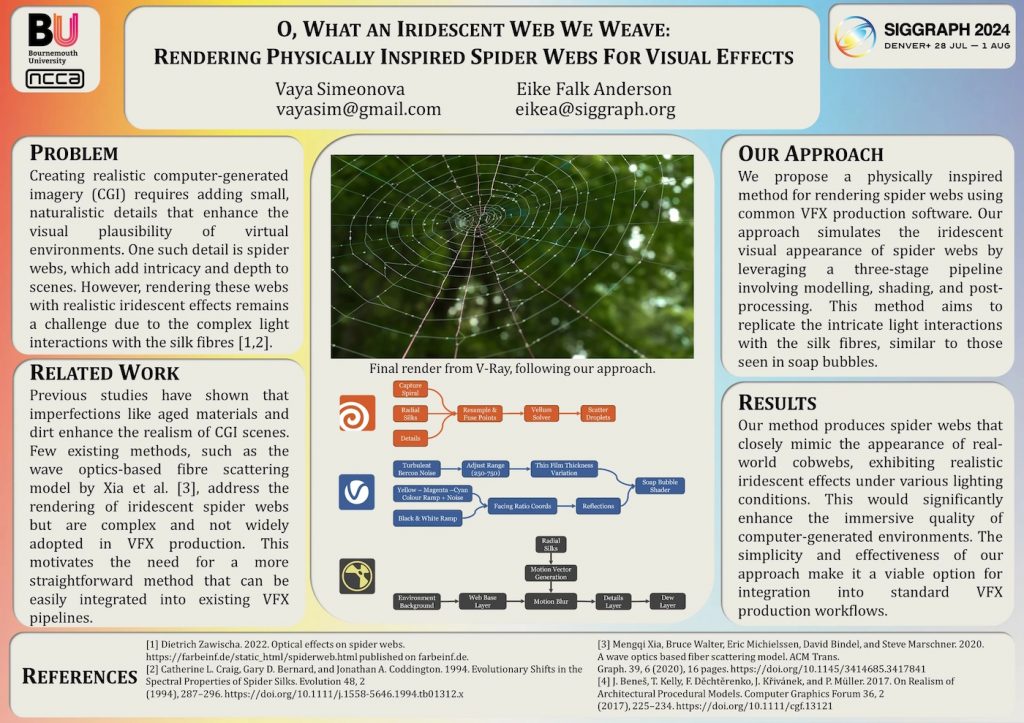
Poster presented at SIGGRAPH’24

The poster paper is based on Vaya’s final year Research & Development Project unit project “An Exploration of the Optical Properties of Spider Web Fibres”, which resulted in the development of a physically inspired method for rendering CG spider webs that display the iridescent properties, observable in real-world spider webs.

The method achieves this in a manner that does not require a computationally expensive and bespoke/proprietary software solution, but instead works with industry standard, off-the-shelf, visual effects (VFX) software, meaning it can effortlessly be integrated into existing VFX production pipelines. The project was also one of five submissions featured in the SIGGRAPH’24 “Posters Highlights” video.

After being accepted as one of the 70 posters presented at this year’s SIGGRAPH conference, the world’s Premier Conference & Exhibition on Computer Graphics & Interactive Techniques, Vaya’s contribution (poster 32), was invited to the first round of the prestigious ACM Student Research Competition (SRC) sponsored by Microsoft, shortlisted as a semi-finalists, and presented to a panel of experts in the SRC Final Presentation. The jury, who enjoyed Vaya’s presentation and appreciated her demonstrated knowledge of prior research, were impressed by her execution of the work and its practicality, for which they awarded Vaya the Second Place in the ACM SIGGRAPH 2024 Student Research Competition in the undergraduate category.
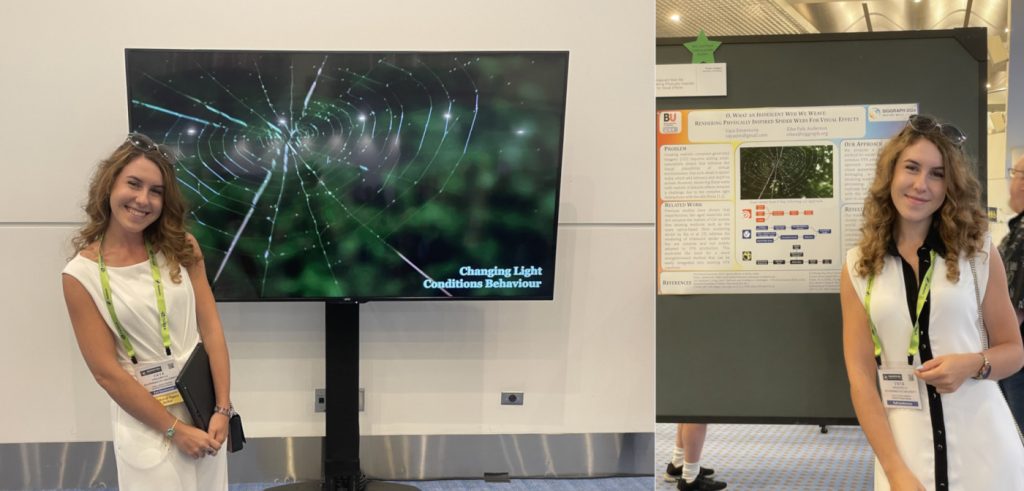
Vaya Simeonova, presenting her poster (2nd place SRC, undergraduate category) at SIGGRAPH'24

After Ben Knowles (with Dr Oleg Fryazinov) who was awarded second place at SIGGRAPH’15 for “Increasing realism of animated grass in real-time game environments“, Teemu Lindborg and Philip Gifford (with Dr Oleg Fryazinov) who were semi-finalists at SIGGRAPH’17 for “Interactive parameterised heterogeneous 3D modelling with signed distance fields”, Quentin Corker-Marin (with Dr Valery Adzhiev and the late Professor Alexander Pasko) who achieved second place at SIGGRAPH’17 for “Space-time cubification of artistic shapes“, Bianca Cirdei (with Dr Eike Falk Anderson) who was awarded 1st place at SIGGRAPH’18 for her exceptional projectWithering fruits: vegetable matter decay and fungus growth” and Laura Mann (with Dr Oleg Fryazinov) who won second place at SIGGRAPH’19 for “3D printing for mixed reality hands-on museum exhibit interaction“, this is the first time since the start of the COVID’19 pandemic that an NCCA undergraduate student has progressed to the final round in this prestigious competition.
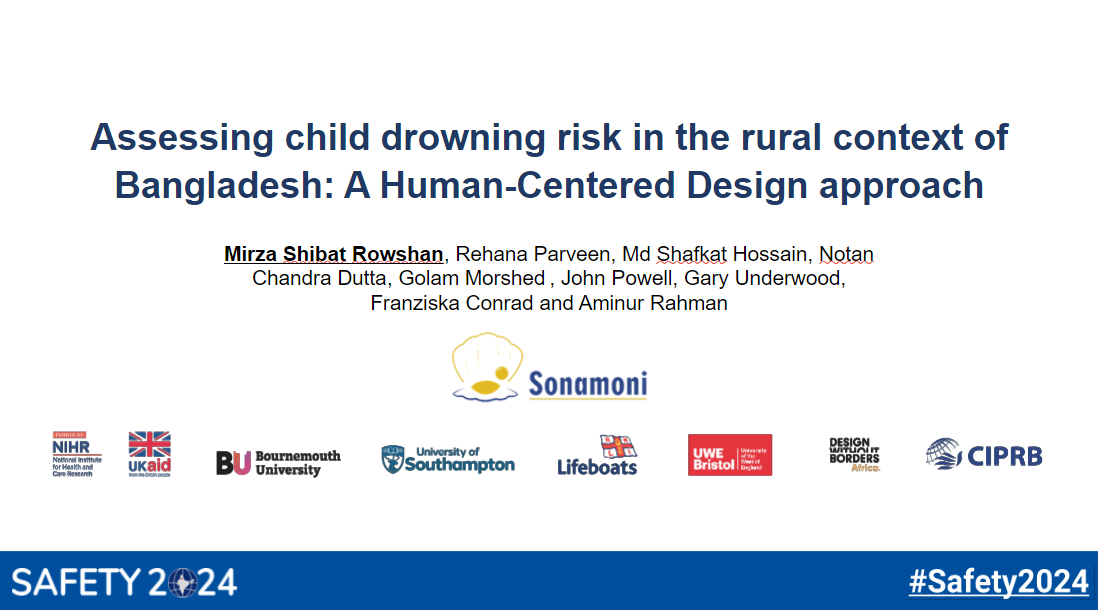

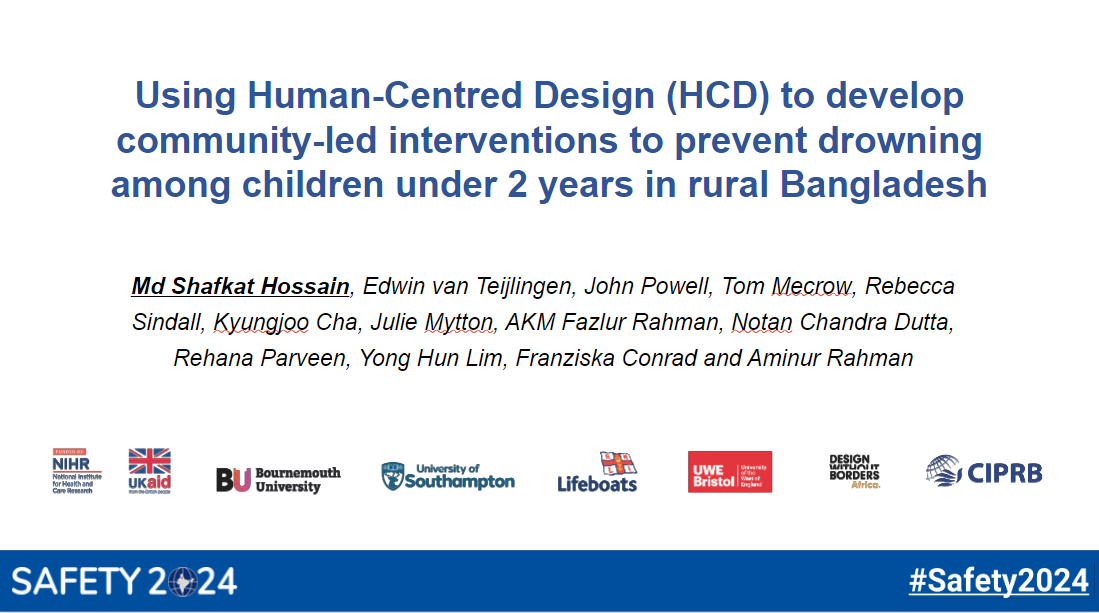
Drowning prevention meeting for NIHR-funded study

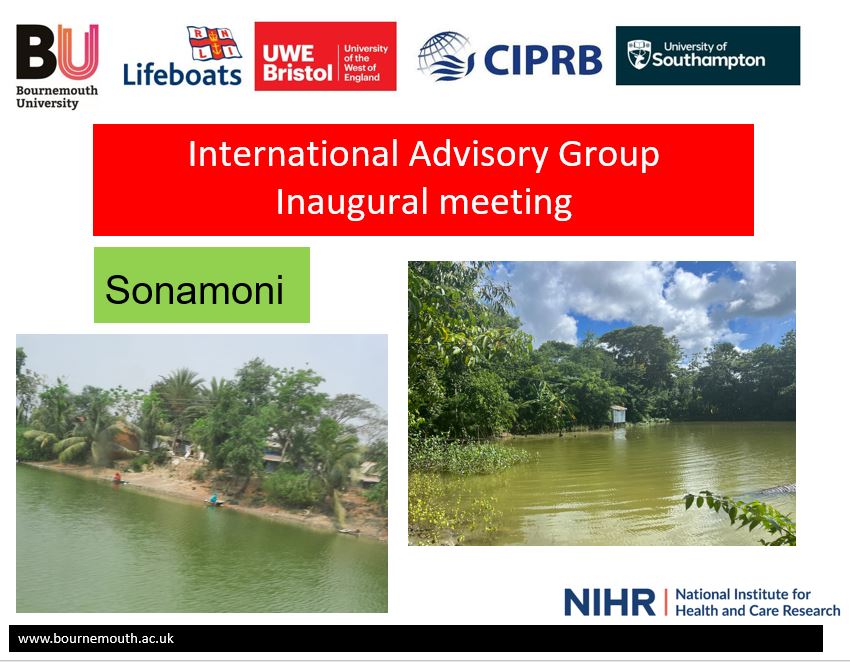
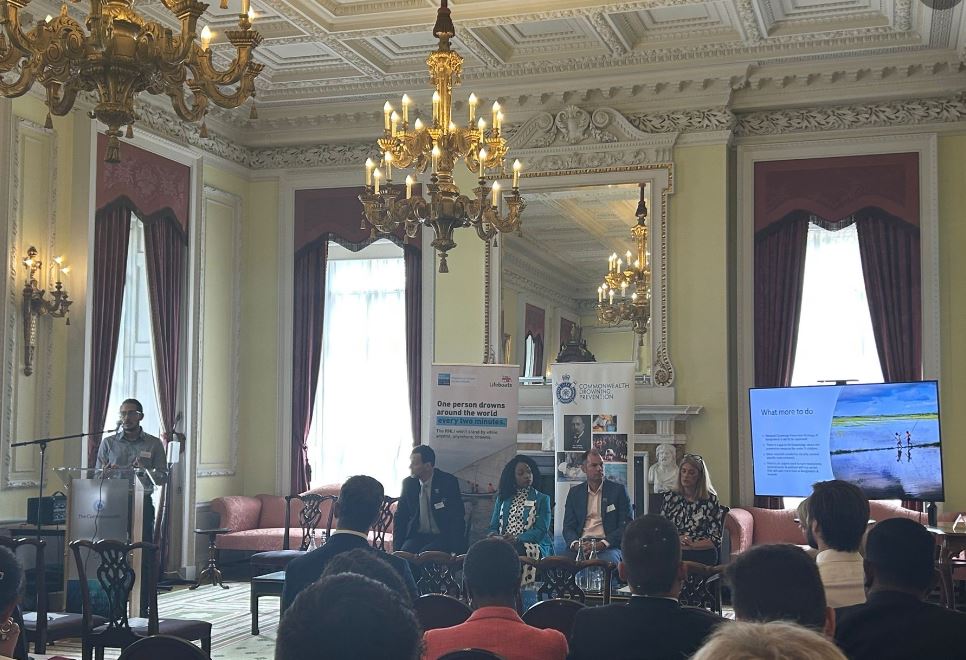
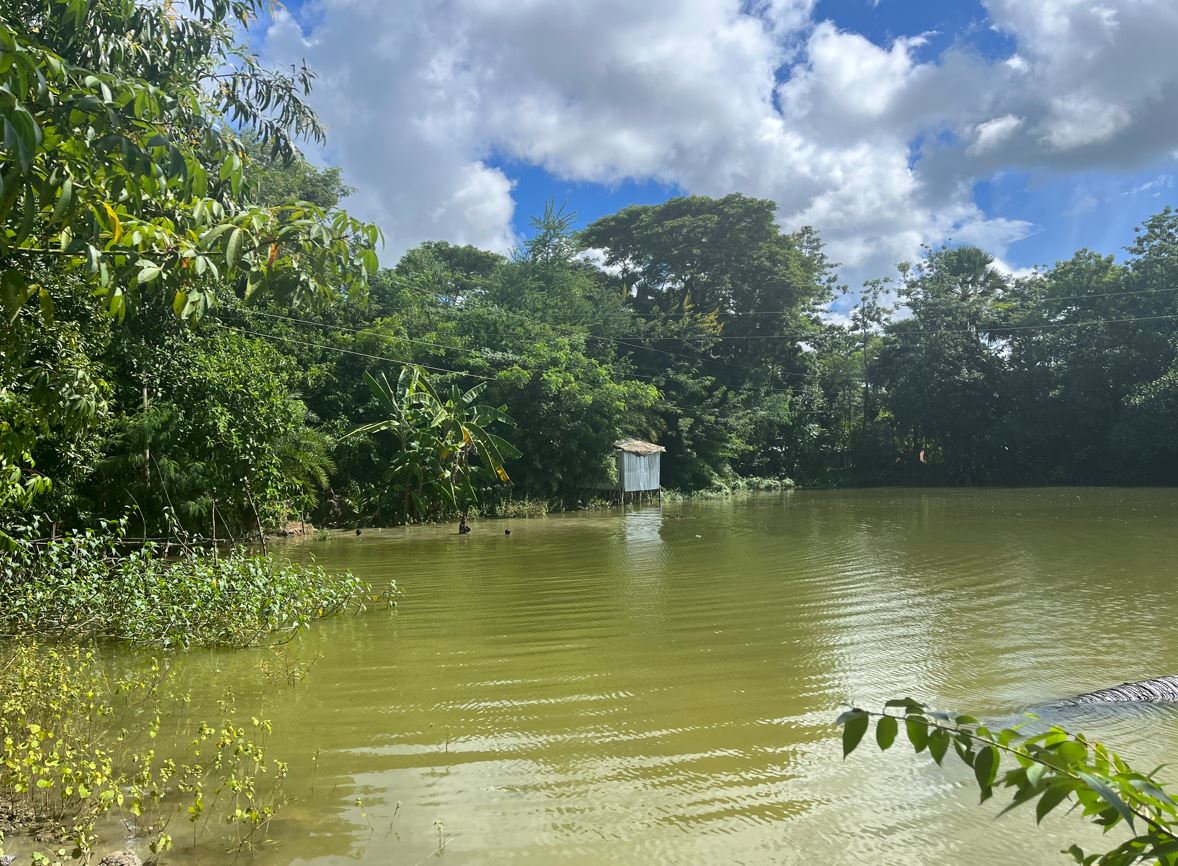
This week our collaborators on the Sonamoni project traveled from Bangladesh and Uganda to Dorset for a set of research planning meetings.  The visitors represented CIPRB (The Centre for Injury Prevention and Research, Bangladesh) and DWB (Design without Borders).  They were hosted by colleagues from Bournemouth University, the RNLI (Royal National Lifeboat Institute) and from the University of Southampton.  Since Monday we managed to have an intensive week of design workshops, reviewing and incorporating local-community prioritised interventions for child drowning prevention (aged <2years) in Bangladesh.  I say ‘we managed’, but I have been at home all week with COVID-19.  The past few days I was beginning to feel quite well again, so I was unpleasantly surprised that I was still positive when I tested yesterday, and even more so this morning.  Consequently, missing the whole week working with our visiting collaborators.

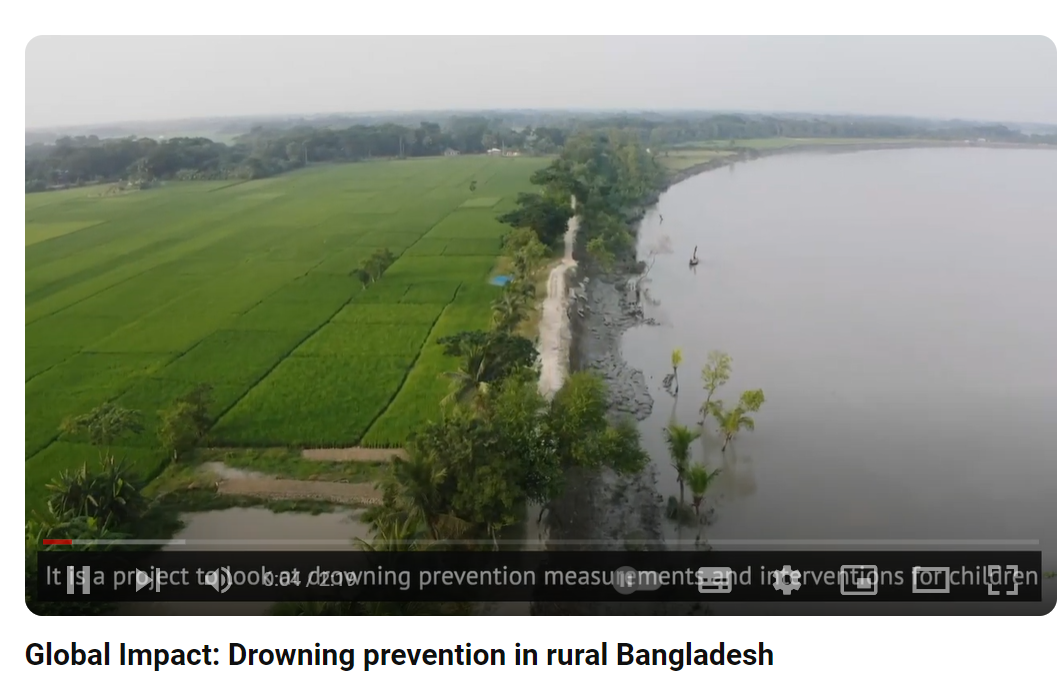
The Sonamoni project recently presented its own video recording on YouTube,which you can watch here!

Sonamoni is a public health project is funded by the National Institute for Health and Care Research (NIHR) through its Research and Innovation for Global Health Transformation programme. For more information, visit the NIHR website.


Prof. Edwin van Teijlingen

Centre for Midwifery & Women’s Health (CMWH)

New guide to Practice-Based Research published today!

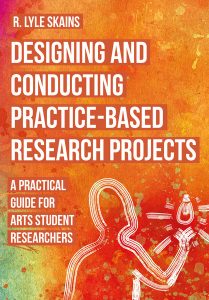
Book cover image with title, subtitle, author. Background is variegated orange, with the white outline of a human figure holding an upside-down light bulb.Designing and Conducting Practice-Based Research Projects: A Practical Guide for Arts Student Researchers by Bournemouth University Associate Professor Lyle Skains is available from today.

The book is aimed primarily at upper undergraduate and Master’s students undertaking practice-based research in the arts, though it is also suitable for PhD candidates and researchers and supervisors new to practice-based research projects.

The discussion starts with definitions and a brief background to practice-related research in the arts and contextualization of practice-based methods within that frame. The bulk of the text is a step-by-step approach to designing, conducting, and writing-up practice-based research projects; each step is supplemented with examples of practice-related research, exercises for progressing methods design and evaluating research approach, and lists for further reading.

Designing and Conducting Practice-Based Research Projects has been requested and should soon be available through the Bournemouth University Library.

Art and Design: History, Practice and Theory academics – Would you like to get more involved in preparing our next REF submission?

We are currently recruiting for an Output Champion to help support preparation for our next REF Submission to Art and Design: History, Practice and Theory. The deadline for expressions of interest is 1 March 2024. 

This role is recruited through an open and transparent process, which gives all academic staff the opportunity to put themselves forward. Applications from underrepresented groups (e.g. minority ethnic, declared disability) are particularly welcome.

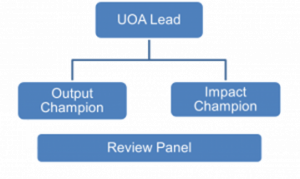
We are currently preparing submissions to thirteen units (otherwise known as UOAs). Each unit has a leadership team with at least one leader, an output and impact champion. The leadership team are supported by a panel of reviewers who assess the research from the unit. This includes research outputs (journal articles, book chapters, digital artefacts and conference proceedings) and impact case studies.

We currently have vacancies in the following roles:

Output Champion – 32 – Art and Design: History, Practice and Theory

All roles require a level of commitment which is recognised accordingly with time to review, attend meetings, and take responsibility for tasks.

Undertaking a UOA role can be enjoyable and rewarding as two of our current champions testify:

“As UOA Outputs Champion you develop a detailed knowledge of all the great work that colleagues are doing related to the subject, and the different outlets used for disseminating their work.  As an outputs committee member, you also get to know what research is going on across BU, and it’s interesting to see the differences between disciplines.  It’s a good way develop your knowledge of the bigger picture of BU’s research, and also to understand the importance of REF and how it works in practice.  You do spend quite a bit of time chasing colleagues to put their outputs on BRIAN for REF compliance but hopefully they forgive you!”

Professor Adele Ladkin – UOA 24 Output Champion

“As a UoA 17 impact champion, I work closely with the UoA 17 impact team to encourage the development of a culture of impact across BUBS. I try to pop into Department / research group meetings when I can to discuss impact, and I’ve enjoyed meeting people with a whole range of research interests. Sometimes it can be tough to engage people with impact – understandably; everyone is busy – so it’s important to be enthusiastic about the need for our BU research to reach the public. Overall, the role is about planting the seeds to get researchers thinking about the impact their work might have in the future (as well as the impact they have already had, sometimes without realising!)”

Dr Rafaelle Nicholson – UOA 17 Impact Champion

How to apply

All those interested should put forward a short case (suggested length of one paragraph) as to why they are interested in the role and what they think they could bring to it. These should be clearly marked with the relevant role and unit and emailed to ref@bournemouth.ac.uk by 5pm on 1 March 2024

Further detail on the role and the process of recruitment and selection criteria can be found here:

Role descriptor

Process and criteria for selection

For further information please contact ref@bournemouth.ac.uk, a member of the current UOA Team or your Deputy Dean Research and Professional Practice with queries.

BU Sonic Arts concert featuring Jonty Harrison

You are warmly invited to the first BU Sonic Arts concert of 2023/24. Come and experience the magic of immersive, spatial music and sound!

We are delighted to welcome composer Jonty Harrsion, an inspirational and acclaimed figure in electroacoustic music. This is a rare opportunity to hear Harrison’s work projected on our multichannel loudspeaker system, here in Bournemouth University’s Screening Room, Poole Gateway Building, Talbot Campus. The programme will be a historical retrospective, charting his evolving compositional practice, moving from stereo to 8-channel, to extensive multichannel, and then to ambisonic sound. Jonty is Emeritus Professor of Composition and Electroacousitc Music at University of Birmingham.


http://www.electrocd.com/en/bio/harrison_jo/

Date: Thursday 7th December 2023
Time: 17:30-19:30
Location: Screening Room PG217, 2nd Floor, Poole Gateway Building, Talbot Campus
Admission is free but please book a ticket : https://www.eventbrite.co.uk/e/bu-sonic-arts-concert-featuring-jonty-harrison-tickets-760552030597?aff=oddtdtcreator

International Composer Residencies for BU academic

I was recently selected for two composer residencies in Sweden, first at Elektronmusik Studion (EMS), Stockholm (June 2023), and then at Studio Alpha, Visby International Centre for Composers (VICC), Visby, Sweden (September 2023). Both studios feature immersive multichannel surround sound systems of extremely high quality, enabling me to explore in-depth the compositional possibilities of spatial audio. 

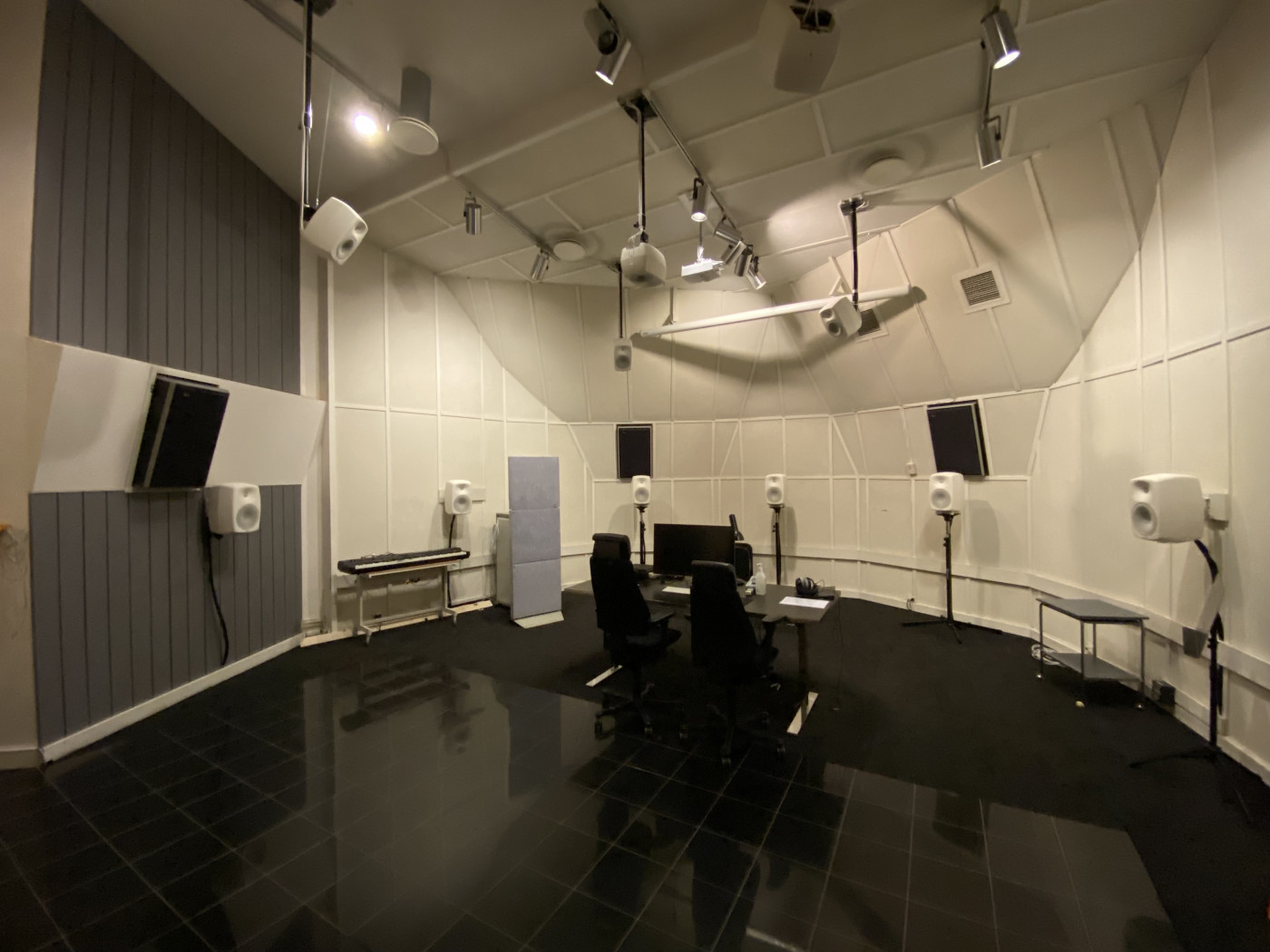
Studio 2 at EMS Stockholm

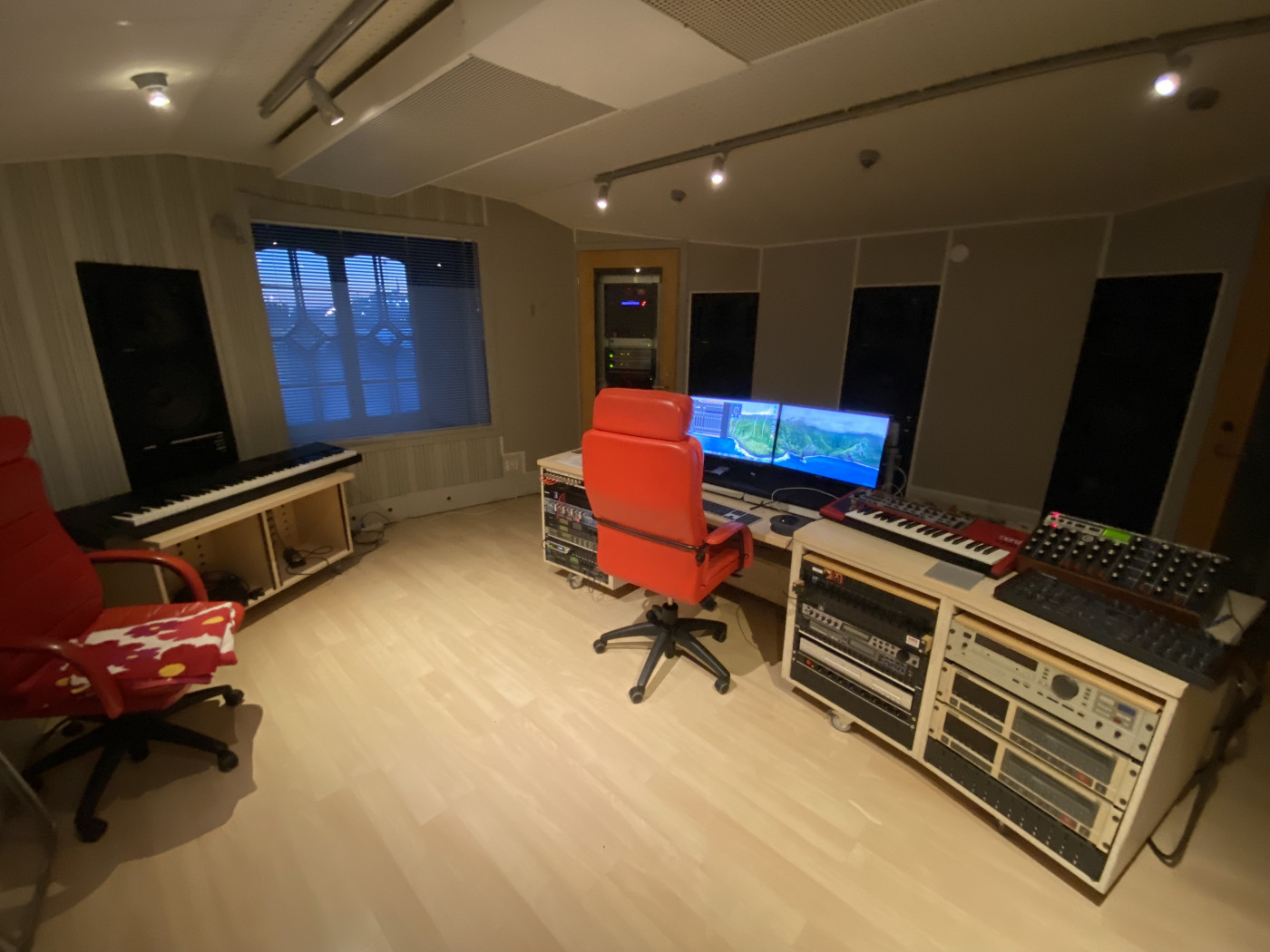
Studio Alpha at Visby International Centre for Composers

During these residencies I was able to focus on the use of ambisonic sound. Ambisonic sound is used in many areas of the creative industries, such as music and sound recording, music creation, cinema and TV sound design, and game audio. The format allows for spatial audio ‘environments’ to be created within a virtual listening space using computer software, positioning and moving individual sounds around the listening area. Most significantly, this spatial audio can then be decoded for any playback system – from binaural for earbuds, conventional stereo, and on to immersive audio systems of 64 loudspeakers or more, yet always retaining the composed spatial image.

This scalability of ambisonic sound makes it extremely flexible when presenting immersive audio work in different venues of different sizes, and with different loudspeaker layouts. At EMS, I was able to work using their 15.1 Genelec sound system, which features an array of ceiling loudspeakers, as shown in the photo.

These residencies gave me fantastic opportunities to commence composing new electroacoustic work whilst exploring the ambisonic technique in-depth, using a variety of software tools in different music studio environments.

Ambrose Seddon, Department of Creative Technology and EMERGE


New Book from BU Researcher: The Popular Emergence of Digital Fiction

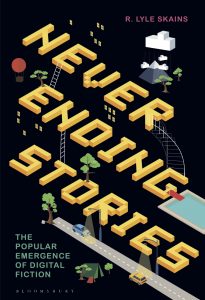
Lyle Skains’ Neverending Stories: The Popular Emergence of Digital Fiction (Bloomsbury) has just been released, exploring the many ways narrative storytelling has evolved and risen to popular awareness since the “disruptive” innovation of the computer.

Digital fiction has long been perceived as an experimental niche of electronic literature. Yet born-digital narratives thrive in mainstream culture, as communities of practice create and share digital fiction, filling in the gaps between the media they are given and the stories they seek.

“By putting the work of authors historically marginalized in discussions of the ‘computational’ at the forefront, [R. Lyle Skains] offers an alternative history of digital fiction that points to an exciting and expansive future.” Anastasia Salter, Associate Professor of English, University of Central Florida, USA

Neverending Stories explores the influences of literature and computing on digital fiction and how the practices and cultures of each have impacted who makes and plays digital fiction. Popular creativity emerges from subordinated groups often excluded from producing cultural resources, accepting the materials of capitalism and inverting them for their own carnivalesque uses. Popular digital fiction goes by many different names: webnovels, adventure games, visual novels, Twitter fiction, webcomics, Twine games, walking sims, alternate reality games, virtual reality films, interactive movies, enhanced books, transmedia universes, and many more.

“Unlike many exclusionary scholarly works in the field, Neverending Stories celebrates inclusiveness and diversity by tracing the emergence and development of digital fiction variations in various languages and cultures around the world. As foundational and comprehensive, this book is indispensable for scholars and students interested in perceiving the creativity and versatility of popular culture and fiction in digital environments.” Reham Hosny, Digital Creative Writer and Assistant Professor of Literary Theory and Criticism, Minia University, Egypt

The book establishes digital fiction in a foundation of innovation, tracing its emergence in various guises around the world. It examines Infocom, whose commercial success with interactive fiction crumbled, in no small part, because of its failure to consider women as creators or consumers. It takes note of the brief flourish of commercial book apps and literary games. It connects practices of cognitive and conceptual interactivity, and textual multiplicity-dating to the origins of the print novel-to the feminine. It pushes into the technological future of narrative in immersive and mixed realities. It posits the transmedia franchises and the practices of fanfiction as examples of digital fiction that will continue indefinitely, regardless of academic notice or approval.