Category / Sociology & Social Policy

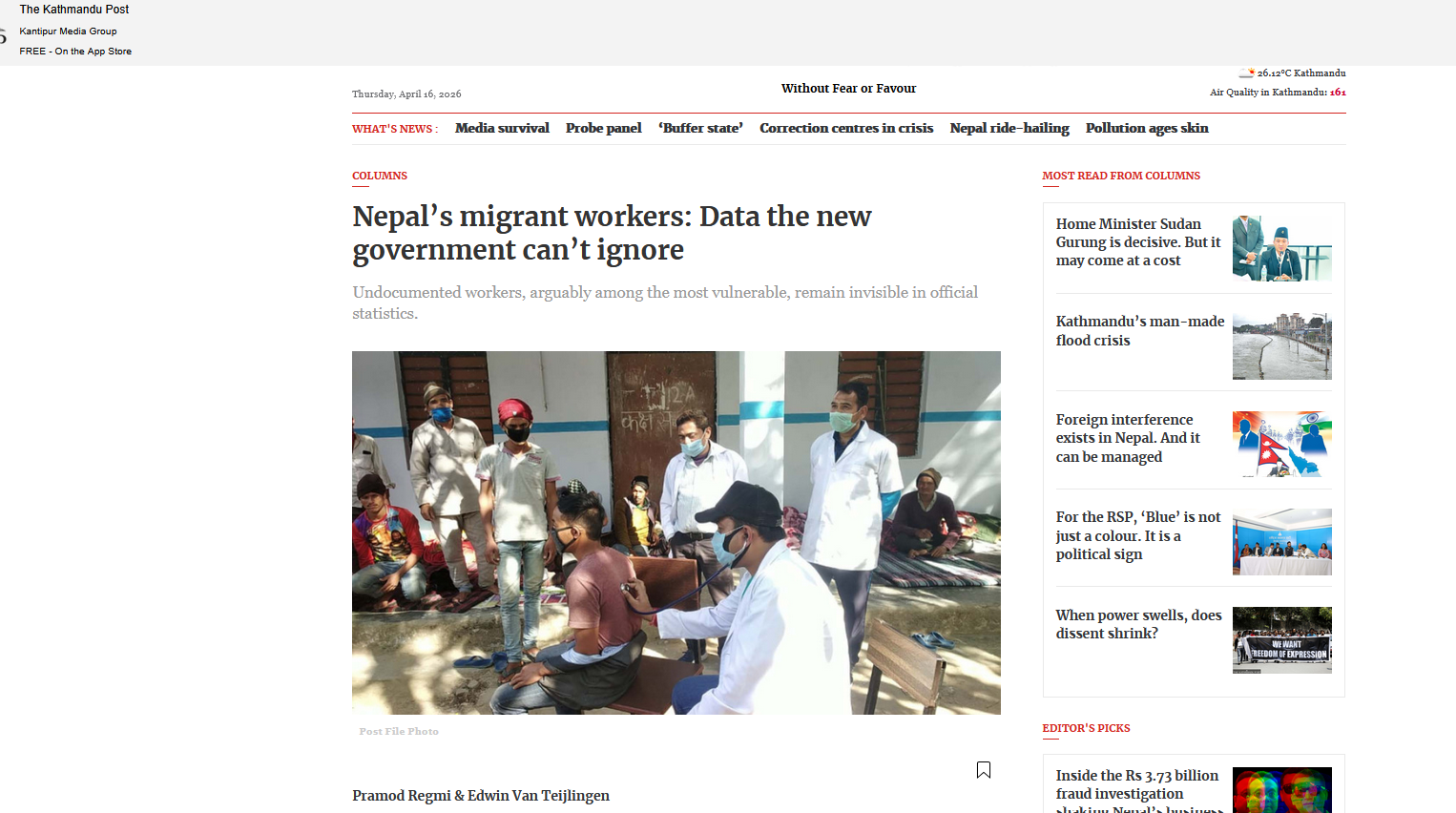
BU academics publish in Nepal national newspaper

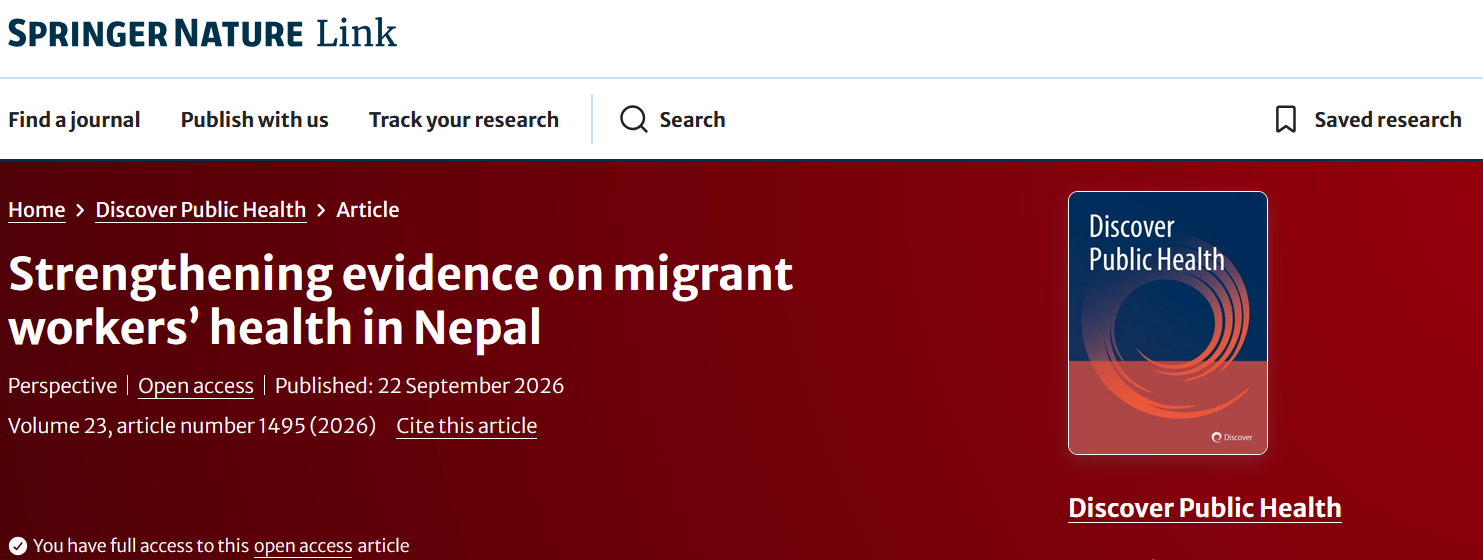
Dr. Pramod Regmi and prof. Edwin van Teijlingen had a long article published today related to their work on migrant workers in Nepal.  The article ‘Nepal’s migrnat wporkers: Data the new government can’t ignore’ appeared in both the print eidtion and the online version of The Kathmandu Post, which is one of the three English-language national papers in Nepal.  Both academics are based in the Faculty of Health, Environment & Medical Sciences.

Gender and street names

Last week I was contacted by a Dutch journalist, Els Knaapen, about the live and work of Francijntje de Kadt.  The latter was the first chair of the Dutch Midwifery Association and I had come across her 30 years ago as part of my own PhD research.  Els was interested in the contribution Francijntje had made in the town of Enkhuizen after her retirement as a midwife.  As part of a radio programma called ‘Meer Vrouw op Straat’, refering to the fact that too few women have been given streetnames to honour their contributions to society.  Els was calling for the Enkhuizen town council to name a straat after Francijntje, just like the town of Vlaardingen had done a decade ago.
Some 15 years ago I proposed to the city of Vlaardingen argueing that Francijntje de Kadt deserved a street name, as highlighted in an earlier BU Research Blog. With my recommendation I sent the ‘Street Name Committee’ in Vlaardingen my Dutch-language publications on the work of Francijntje de Kadt [1-3]. A few months later the secretary to the Street Name Committee wrote to say that my proposal had been accepted and that her name would be given to a street in a new development of the former local hospital grounds.
Yesterday the radio programme, which is part of a progressive station BNNVARA, was aired in which Els Knaapen justified why Enkhuizen needs to honour its former citizen.  In Enkhuizen Francijntje was active in maternity care education and she was a member of the Assocation for Women’s Votes.  All this after she retited from being the town’s midwife of Vlaardingen.
Prof. Edwin van Teijlingen
References:
  1. van Teijlingen, E. (2002) Ondergang eerste pensioenfonds voor vroedvrouwen (in Dutch: Decline of the first pension fund for midwives), Tijdschrift voor Verloskundigen (in Dutch: Journal for Midwives), 27(12): 684.
  2. van Teijlingen, E.R. (2003a) Berichten – Francijntje de Kadt (1858-1929), Tijdschrift voor Verloskundigen (in Dutch: Journal for Midwives), 28(12): 630-633.
  3. van Teijlingen, E.R. (2003b) Francijntje de Kadt (1858-1929). Vroedvrouw te Vlaardingen en eerste voorzitter van de Nederlandsche vroedvrouwenvereeniging, Tijd-schrift (in Dutch: Time-Magazine) 88: 14-23.

New academic paper on Nepal

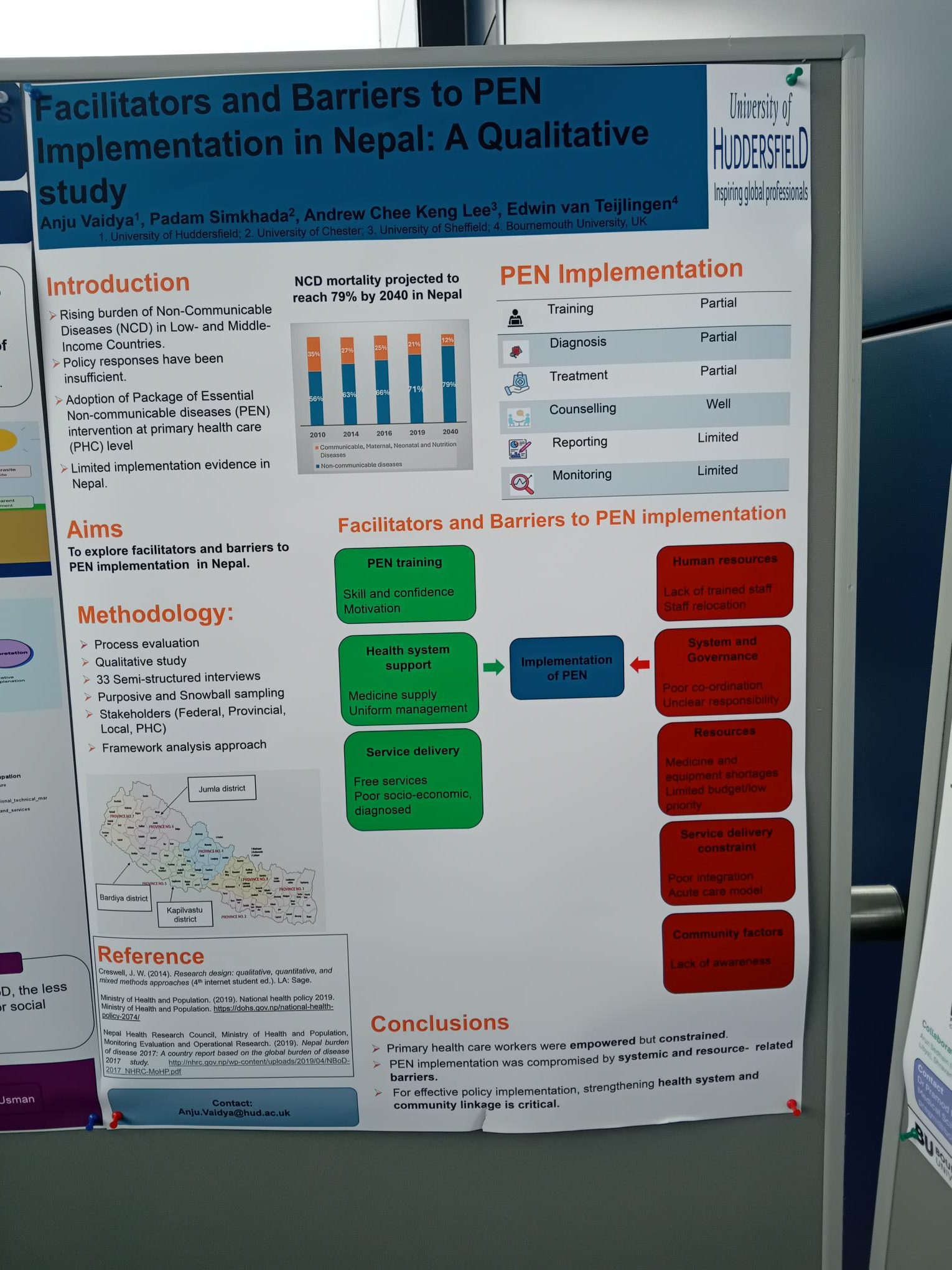
Yesterday the international journal Health Policy & Planning published our latest article with the title ‘Understanding the formulation of non-communicable disease policies in Nepal: A qualitative study[1].  The paper is part of the PhD work (at the University of Hudderfield) by the first author, Dr. Anju Vaidya, who is originally from Nepal. Anju’s thesis was supervised by Prof. Padam Simkhada (University of Chester), Prof. Andre Lee (The University of Sheffield) and by Bournemouth University’s Prof. Edwin van Teijlingen.


The paper recognises that there is limited evidence about the process through which health policies were formulated in Nepal. This study used Kingdon’s multiple streams framework to explore how NCDs (non-communicable diseases) were recognised and prioritised, how policy alternatives were decided, how policy windows were opened, and which contextual factors influenced the policy formulation process.  Anju’s PhD included a qualitative study to gain a comprehensive understanding of the formulation of major NCD-related policies in Nepal. Semi-structured interviews were conducted with 12 key stakeholders, and policy documents were analysed using framework analysis.

The NCDs were gradually prioritised through the convergence of global and local evidence, sustained advocacy, and international commitments. Policymakers encountered several challenges, such as competing health priorities, the chronic nature of NCDs, donor preferences for communicable diseases, financial constraints, and multisectoral complexities of NCDs. The Package of Essential Non-communicable diseases (PEN) interventions were adopted as a policy alternative, informed by global evidence, World Health Organization (WHO) recommendations, and lessons from other countries.  While coordinated efforts by stakeholders brought the problem, policy and politics streams together, the role of policy entrepreneurs was found to be less relevant in Nepal’s context.

Health Policy & Planning is an Open Access journal, hence the paper is available worldwide to anybody with internet access.

Prof. Edwin van Teijlingen

Centre for Midwifery & Women’s Health

References:

  1. Vaidya, A., Simkhada, P., van Teijlingen, E., Lee, A.C.K. (2026) Understanding the formulation of non-communicable disease policies in Nepal: A qualitative study, Health Policy and Planning, [online first] czag048, https://doi.org/10.1093/heapol/czag048

New HIV paper by BU PhD student

The editor of HIV Research & Clinical Practice informed us that the paper ‘Stigma in UK health care: A key barrier to reaching zero HIV transmission by 2030’ has been accepted for publication [1].   This paper is based on the PhD research currently conducted by Mr. Tom Weeks in the Faculty of Health, Environment & Medical Sciences (HEMS).  Tom’s thesis focuses on the perceptions of stigmatisation of People Living with HIV in care settings in the UK and the kind of education health care staff (clinical and non-clinical) receive in relation to HIV.  His long-term aim in the PhD is to help improve education to reduce such stigma.  Tom is being supervised by Dr. Pramod Regmi and Prof. Edwin van Teijlingen. 

Both supervisors have a long experience in studying social and health promotion aspects of HIV and AIDS.  Thirty years ago Prof. van Teijlingen worked in the NHS as a researcher in the Centre for HIV/AIDS and Drugs Studies based in Edinburgh.  Whilst Dr. Regmi conducted his PhD research on sexual health and health promotion in young people in Nepal.  Both supervisors themselves have published widely on the topic of HIV and AIDS [2-23].  The first of these many publication was a letter on community care for people living with HIV in the community which was published in the Lancet in 1993 [2]


References

  1. Weeks, T., Regmi, P., van Teijlingen, E. (2026) Stigma in UK health care: A key barrier to reaching zero HIV transmission by 2030, HIV Research & Clinical Practice (accepted).
  2. Huby, G, van Teijlingen E, Porter M., Bury, J (1993) Care for HIV in community (letter) Lancet 342: 1297-1298.
  3. Huby, G, van Teijlingen, E, Robertson J, Porter, AM (1993) Community care & support for women, In: Johnson F & Johnstone M. (Eds.) HIV Infection in Women, Edinburgh: Churchill Livingstone, 123-32.
  4. Bury, J.K., Ross, A., van Teijlingen, E., Porter, AMD, Bath, G. (1996) Lothian GPs, HIV infection & Drug Misuse: Epidemiology, Experience & Confidence 1988-93 Health Bulletin, 54: 258-269.
  5. Huby, GO, van Teijlingen E, Porter, AMD, Bury, J. (1997) Co-ordination of care on discharge from hospital into the community for patients with HIV/AIDS in Lothian, Health Bulletin, 55:338-50.
  6. van Teijlingen, E, Huby, G. (1998) Evaluation within a policy-making and contracting culture: reflections of practice, In: Barbour R.S., Huby G. (Eds.), Meddling with mythology: AIDS & the social construction of knowledge, London: Routledge, 218-33.
  7. Lowis, G, van Teijlingen, E, Sheremata, W. (2000) AIDS in developing countries: A comparative epidemiological analysis, In: Rose, J. (Ed.), Population Problems, Reading: Gordon & Breach Science Publishers: 133-61
  8. Scotland, G., van Teijlingen E., van der Pol, M, Smith, WCS. (2003) A review of studies assessing costs & consequences of interventions to reduce mother-to-child HIV transmission in sub-Saharan Africa, Aids, 17: 1045-52.
  9. Nicholson, D., van Teijlingen E. (2006) Comparing level of expenditure on HIV health promotion & incidence of HIV in Greater Glasgow & Lothian Health Boards (1988-98), Salusvita, 25(1): 13-22 usc.br/Edusc/colecoes/revistas/salusvita_pdf/salusvita_v25_n.1_2006.pdf
  10. Regmi, P., Simkhada, P., van Teijlingen E. (2008) Sexual & reproductive health status among young people in Nepal: opportunities & barriers for sexual health education & service utilisation, Kathmandu University Medical Journal 6(2): 248-256.
  11. Wasti, S.P., Simkhada, P.P, Randall, J., van Teijlingen E. (2009) Issues & Challenges of HIV/AIDS Prevention & Treatment Programme in Nepal, Global Journal of Health Science 1(2): 62-72. http://ccsenet.org/journal/index.php/gjhs/article/viewFile/2460/3474
  12. Regmi P, Simkhada PP, van Teijlingen E (2010) “Boys Remain Prestigious, Girls become Prostitutes”: Socio-Cultural Context of Relationships & Sex among Young People in Nepal, Global Journal of Health Science 2(1): 60-72.
  13. Regmi P., Simkhada, P., van Teijlingen E. (2010) “There are too many naked pictures found in papers and on the net”: Factors encouraging pre-marital sex among young people of Nepal. Health Science Journal 4(3): 162-174. hsj.gr/volume4/issue3/437.pdf
  14. Regmi, P., Simkhada, P., van Teijlingen E. (2010) Dating and Sex among Emerging Adults in Nepal. Journal of Adolescence Research 26 (6): 675-700.

  15. Regmi, P., van Teijlingen, E, Simkhada, P., Acharya, D. (2010) Barriers to sexual health services for young people in Nepal. Journal of Health Population & Nutrition 28: 619-27.
  16. Wasti, SP, Simkhada, PP, van Teijlingen E (Eds.) (2015) Socio-Cultural Aspects of HIV/ AIDS. The Dynamics of Health in Nepal, Kathmandu: Soc Sci Baha/Himal Books: 47-62.
  17. Aryal, N., Regmi, P.R., van Teijlingen, E., Dhungel, D., Ghale, G., Bhatta, G.K. (2016) Knowing is not enough: Migrant workers’ spouses vulnerability to HIV, SAARC Journal of Tuberculosis, Lung Diseases & HIV/AIDS 8(1):9-15.
  18. Ochillo, M., van Teijlingen, E., Hind, M. (2017) Influence of faith-based organisations on HIV prevention strategies in Africa: systematic review. African Health Sciences 17(3): 753-61.
  19. Sathian, B., Sreedharan, J., Asim, M., Menezes, R.G., van Teijlingen, E., Unnikrishnan, B. (2018) Estimation of burden of people living with HIV/AIDS in Kerala state, India. Nepal Journal of Epidemiology 8(3): 738-44.
  20. Hamidi, A., Regmi, P., van Teijlingen, E. (2021) HIV epidemic in Libya: Identifying gaps, Journal of the International Association of Providers of AIDS Care, 20 :1-5 https://doi.org/10.1177/23259582211053964 .
  21. Regmi, P.R., van Teijlingen, E.R., Silwal, R.C., Dhital, R. (2022) Role of social media for sexual communication and sexual behaviors: A focus group study among young people in Nepal. Journal of Health Promotion, 10(1):153–166. https://doi.org/10.3126/jhp.v10i1.50995
  22. Hamidi, A., Regmi, P., van Teijlingen, E. (2023) Facilitators and barriers to condom use in Middle East and North Africa: a systematic review, Journal of Public Health, 32: 1651-81 https://doi.org/10.1007/s10389-023-01923-3
  23. Hamidi, A., Regmi, P, van Teijlingen, E. (2024) Islamic perspectives on HIV: a scoping review, Discover Social Science & Health 4:6 https://link.springer.com/content/pdf/10.1007/s44155-024-00063-7.pdf

BU academics in the news in Nepal

Yesterday (5th March) Dr. Pramod Regmi and Prof. Edwin van Teijlingen published a topical piece in an online newspaper in Nepal called ‘NepaliLink.  This newspaper article coincided with the national elections taking place in the country.  This is the first general election since Gen Z protests overturned the Government of Nepal in the autumn of 2025.  Migrant labour is key to Nepal’s economy as no country in the world relies so much on workers going abroad to work and sending money home.  The latter is called remittance and the total amount sent home comprises more than a quarter of the national income.

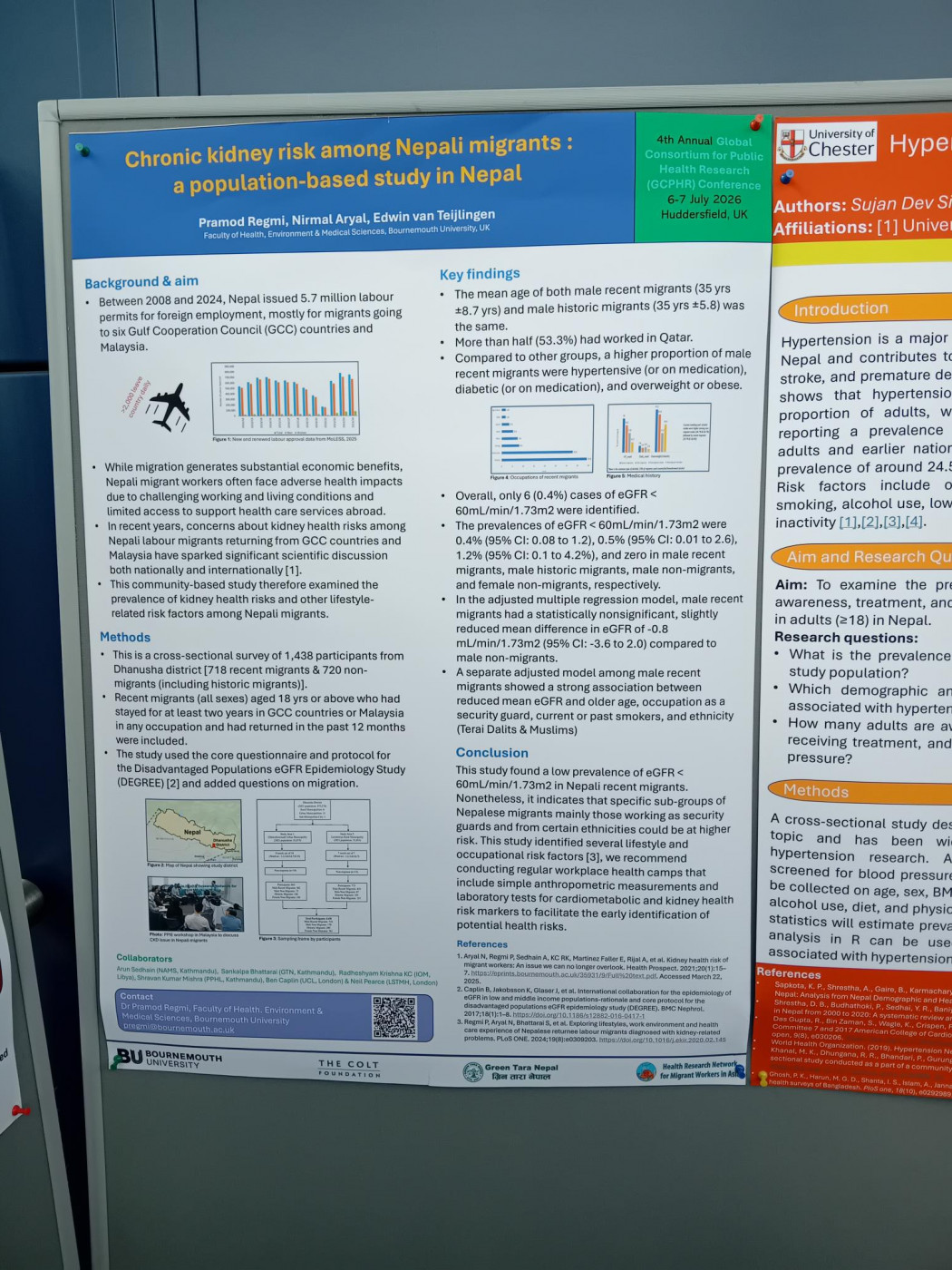
Dr. Regmi and Prof. van Teijlingen have conducted a great number of studies on the health and well-being of migrant workers from Nepal. This includes a paper ‘A comparison of chronic kidney risk among returnee Nepalese migrant workers in the countries of Gulf and Malaysia and non-migrants in Nepal: a population-based cross-sectional study’ whixh was recently accepted for publication in BMC Nephrology. With a grant from the COLT Foundation, our BU team led the first large-scale population-based interdisciplinary study examining kidney health among Nepalese migrants. Conducted in mid-2023 in one of Nepal’s highest out-migration districts, the forthcoming study compared risks between migrants and non-migrants from the same community [1].  Our study identified significantly higher rates of hypertension, diabetes, and obesity among male migrant workers compared to non-migrants. Interestingly, smoking and alcohol consumption were more common among non-migrant men. However, one in seven male migrants reported consuming potentially hazardous counterfeit or home-brewed alcohol while abroad. The findings suggest that both adverse working environments and lifestyle factors may contribute to increased heart disease among migrant workers.

Both Dr. Regmi and Prof. van Teijlingen are based in the Faculty of Health, Environment & Medical Sciences (HEMS) and in the last five years alone they have published over twenty publications about the health and well-being of migrant workers [2-21].


References

  1. Aryal, N., Regmi, P., Sedhain, A., Bhattarai, S., KC, R.K., Mishra, S.K., Caplin, B., Perce, N., van Teijlingen E. (2026) A comparison of chronic kidney risk among returnee Nepalese migrant workers in the countries of Gulf and Malaysia and non-migrants in Nepal: a population-based cross-sectional study, BMC Nephrology 1186/s12882-026-04872-7 (forthcoming)
  2. Paudyal, P., Wasti, S.P., Neupane, P., Sapkota, J.L., Watts, C., Kulasabanathan, K., Silwal, R., Memon, A., Shukla, P, Pathak, R.S., Michelson, D., Beery, C., Moult, A., Simkhada, P., van Teijlingen, E., Cassell, J. 10, (2025) Coproducing a culturally sensitive storytelling video intervention to improve psychosocial well-being: a multimethods participatory study with Nepalese migrant workers, BMJ Open 15:e086280.
  3. Regmi, P., Aryal, N., Bhattarai, S., Sedhain, A., KC, R.K., van Teijlingen, E. (2024) Exploring lifestyles, work environment and health care experience of Nepalese returnee labour migrants diagnosed with kidney-related problems. PLoS ONE 19(8): e0309203.
  4. Paudyal, A.R., Harvey, O., Teijlingen, E. van, Regmi, P. R., Sharma, C. (2024). Returning Home to Nepal after Modern Slavery: Opportunities for Health Promotion. Journal of Health Promotion12(1), 125–132. https://doi.org/10.3126/jhp.v12i1.72713
  5. Regmi, P.Aryal, N.van Teijlingen, E., KC, R.K., Gautam, M. and Maharjan, S. (2024). A Qualitative Insight into Pre-Departure Orientation Training for Aspiring Nepalese Migrant Workers. Tropical Medicine and Infectious Disease, 9 (7).
  6. Aryal, N.Regmi, P., Adhikari Dhakal, S., Sharma, S. and van Teijlingen, E. (2024). Moral panic, fear, stigma, and discrimination against returnee migrants and Muslim populations in Nepal: analyses of COVID-19 media content. Journal of Media Studies, 38 (2), 71-98.
  7. Simkhada, P.P., van Teijlingen, E., Gurung, M., Bhujel, S., Wasti, S.P. (2024) Workplace harassment faced by female Nepalese migrants working aboard, Global Health Journal 8(3): 128-32. https://doi.org/10.1016/j.glohj.2024.08.001
  8. Mahato, P., Bhusal, S., Regmi, P.,  van Teijlingen, E. (2024). Health and Wellbeing Among Nepali Migrants: A Scoping Review. Journal of Health Promotion12(1): 79–90. https://doi.org/10.3126/jhp.v12i1.72699
  9. Regmi, P.Aryal, N., Bhattarai, S., Sedhain, A., KC, R.K. and van Teijlingen, E. (2024) Exploring lifestyles, work environment and health care experience of Nepalese returnee labour migrants diagnosed with kidney-related problems, PLoS One 19(8): e0309203. https://doi.org/10.1371/journal.pone.0309203
  10. Khanal, S.P., van Teijlingen, E., Sharma, M., Acharya, J., Sharma, C., Kharel, S., Gaulee, U., Bhattarai, K., Pasa, R.B., Bohora, P. (2024) Risk Perception and Protective Health Measure Regarding COVID-19 among Nepali Labour Migrants’ Returnee from India. KMC Journal6(1): 313–330
  11. Chaudhary, M.N., Lim, V.C., Faller, E.M., Regmi, P.Aryal, N., Zain, S.N.M., Azman, A.S. and Sahimin, N. (2024). Assessing the basic knowledge and awareness of dengue fever prevention among migrant workers in Klang Valley, Malaysia. PLoS ONE, 19 (2).
  12. Chaudhary, M.N., Lim, V.C., Sahimin, N., Faller, E.M., Regmi, P.Aryal, N. and Azman, A.S. (2023). Assessing the knowledge of, attitudes towards, and practices in, food safety among migrant workers in Klang Valley, Malaysia. Travel Medicine and Infectious Disease, 54.
  13. Gyawali, K., Simkhada, P., van Teijlingen, E.R., Manandhar, S., Silwal, R.C. (2023). Sexual Harassment Among Nepali Non-Migrating Female Partners of International Labor Migrant Men. Journal of Health Promotion, 11(1): 22–31
  14. Adhikari, Y., Regmi, P., Devkota, B. and van Teijlingen, E. (2023). Forgotten health and social care needs of left-behind families of Nepali migrant workers. Journal of Health Promotion, 10, 1-4.
  15. Regmi, P., Dhakal Adhikari, S., Aryal, N., Wasti, S.P., van Teijlingen, E. (2022) Fear, Stigma and Othering: The Impact of COVID-19 Rumours on Returnee Migrants and Muslim Populations of Nepal, International Journal of Environmental Research & Public Health 19(15), 8986; https://doi.org/10.3390/ijerph19158986
  16. Regmi, P., Simkhada, P., Aryal, N., van Teijlingen, E. (2022) Excessive mortalities among migrant workers: the case of the 2022 FIFA World Cup. Europasian Journal of Medical Sciences, 4:31-32. https://doi.org/10.46405/ejms.v4i0.455
  17. Simkhada, P., van Teijlingen, E. and Regmi, P. (2022). Migrant Workers in Qatar: Not just an important topic during the FIFA World Cup 2022. Health Prospect: Journal of Public Health, 21 (3), 1-2.
  18. Aryal, N., Sedhain, A., Regmi, P.R., KC, R. K., van Teijlingen, E. (2021). Risk of kidney health among returnee Nepali migrant workers: A survey of nephrologists. Asian Journal of Medical Sciences, 12(12), 126–132. https://doi.org/10.3126/ajms.v12i12.39027
  19. Aryal, N., Regmi, P.R., Sedhain, A., KC, R.K., Martinez Faller, E., Rijal, A., van Teijlingen, E. (2021) Kidney health risk of migrant workers: An issue we can no longer overlook. Health Prospect 20(1):15-7
  20. Simkhada, B., Sah, R.K., Mercel-Sanca, A., van Teijlingen, E., Bhurtyal, Y.M. and Regmi, P. (2021). Perceptions and Experiences of Health and Social Care Utilisation of the UK-Nepali Population. Journal of Immigrant and Minority Health, 23 (2), 298-307.

New CMWH paper on maternity care

The editor of Frontiers in Public Health have accepted our latest article from the EPPOCH study.  This latest paper ‘Prenatal substance use during the COVID-19 pandemic in the UK: Associations with depression, anxiety, and pandemic stressors‘ focuses on the use of substances in pregnancy in the UK during the COVID-19 pandemic [1].  Our previous EPPOCH paper, in line with several other population-based studies, highlighted that COVID-19 was associated with high levels of depression and anxiety during pregnancy in the UK [2].

This new publication reports on a cross-sectional analysis of baseline EPPOCH data (n = 3292; June – Nov. 2020). Participants reported alcohol, tobacco, cannabis, and illicit drug use before and after recognition of pregnancy, alongside validated measures of depression, anxiety, pregnancy-related anxiety, and pandemic stressors. Linear regression models examined associations between mental health, COVID-19 stressors, and substance use after pregnancy recognition. A qualitative thematic analysis of 380 open-ended responses explored perceptions of substance use post-pregnancy recognition. Results: Alcohol was the most commonly used substance before pregnancy. Following pregnancy recognition, tobacco (8.75%) and alcohol (8.60%) were the most frequently reported substances, followed by cannabis (1.49%) and illicit drugs (0.12%). Tobacco use after pregnancy recognition was associated with higher levels of depressive symptoms and pandemic stressors, including perceived personal health threat and not receiving necessary care. Prenatal co-use of substances was associated with higher depressive symptoms and pandemic-related financial difficulties. Qualitative themes included continued substance use until pregnancy detection, vaping as a perceived safer-use strategy, and midwifery advice influencing prenatal substance use decisions.

In this large UK pregnancy cohort recruited during the COVID-19 pandemic, substance use following pregnancy recognition – particularly tobacco – was linked to depression and pandemic-related stressors. These findings highlight the importance of equipping midwives and other healthcare professionals with clear, evidence-based guidance on prenatal substance use, particularly during global health crises.

This interdisciplinary project is led by Dr. Melanie Conrad in Germany.  The lead author for the paper is Ph.D. candidate Swarali Datye, whilst three members of the Centre for Midwifery & Women’s Health (CMWH): Dr. Latha Vinayakarao and Prof. Minesh Khashu both working in University Hospitals Dorset NHS Foundation Trust (UHD) and both Visiting Faculty at BU and Prof. Edwin van Teijlingen are team members and co-authors on this paper.


References:

  1. Datye, S., Peters, E.M.J., Windhorst, A.C., van Teijlingen, E., MacRae-Miller, A., Vinayakarao, L., Khashu, M., Fahlbusch, F.B., Conrad, M.L. (2026) Prenatal substance use during the COVID-19 pandemic in the UK: Associations with depression, anxiety, and pandemic stressors Frontiers in Public Health. (forthcoming)
  2. Datye, S., Smiljanic, M., Shetti, R.H., MacRae-Miller, A., van Teijlingen, E., Vinayakarao, L., Peters, E.M.J., Lebel, C.A., Tomfohr-Madsen, L., Giesbrecht, G., Khashu, M., Conrad, M.L. (2024) Prenatal maternal mental health and resilience in the United Kingdom during the SARS-CoV-2 Pandemic: A cross-national comparison, Frontiers in Psychiatry, 15 https://doi.org/10.3389/fpsyt.2024.1411761

On Christmas Day in the Morning…

On Christmas Day (25 December 2025) the Journal of Mixed Methods Studies published Dr. Orlanda Harvey’s latest paper ‘Using A Range Of Recruitment Strategies To Recruit Those Who Use Anabolic Androgenic Steroids[1]. The Journal of Mixed Methods Studies is an Open Access journal, hence this paper is freely available to anybody with internet access.

Dr. Harvey is a Senior Lecturer in Social Work in the Faculty of Health, Environment & Medical Sciences. This is the latest in a series of publications based on Orlanda’s Ph.D. work at Bournemouth University.  She has published a steady stream of papers over the past six years [2-7].

Congratulations!

Prof. Edwin van Teijlingen

References:

  1. Harvey, O., van Teijlingen, E., Parrish, M. (2025). Using A Range Of Recruitment Strategies To Recruit Those Who Use Anabolic Androgenic Steroids. Journal of Mixed Methods Studies, 11: 43–60. https://doi.org/10.59455/jomes.42
  2. Harvey, O., van Teijlingen, E., Parrish, M. (2024) Using a range of communication tools to interview a hard-to-reach population, Sociological Research Online 29(1): 221–232 https://journals.sagepub.com/doi/pdf/10.1177/13607804221142212
  3. Harvey, O., Keen, S., Parrish, M., van Teijlingen, E. (2019) Support for people who use Anabolic Androgenic Steroids: A Systematic Literature Review into what they want and what they accessBMC Public Health 19: 1024
  4. Harvey, O., Parrish, M., van Teijlingen, E., Trenoweth, S. (2020) Support for non-prescribed Anabolic Androgenic Steroids users: A qualitative exploration of their needs Drugs: Education, Prevention & Policy 27:5, 377-386. doi 10.1080/09687637.2019.1705763
  5.  Harvey, O., Parrish, M., van Teijlingen, E, Trenoweth, S. (2022) Libido as a reason to use non-prescribed Anabolic Androgenic Steroids, Drugs: Education, Prevention & Policy 29(3):276-288.
  6. Harvey, O., van Teijlingen, E., Parrish, M. (2022) Mixed-methods research on androgen abuse – a review, Current Opinion in Endocrinology & Diabetes 29(6):586-593.
  7. Harvey, O., van Teijlingen, E. (2022) The case for ‘anabolics’ coaches: selflessness versus self-interest? Performance Enhancement & Health 10(3) August, 100230

Writing policy briefs

This week saw the publication of ‘Bridging Research and Policy: Practical Tips for Writing Policy Briefs‘ co-authored by Bournemouth University’s (BU) Dr. Pramod Regmi and Prof. Edwin van Teijlingen as well as former BU staff Dr. Nirmal Aryal.  An effective policy brief bridges the gap between research findings and policymaking, ensuring that evidence is presented succinctly and in a way that is accessible and usable for policymakers and relevant stakeholders. It is an important step in what is called knowledge mobilisation. However, many researchers find it hard to communicate the findings of their studies to relevant policymakers, whilst policymakers note that the evidence they need is not easily accessible and is often not presented in an accessible format. Producing policy briefs is one of the approaches which academics can use to get their research noticed by policymakers.

This practical paper outlines some of the trials and tribulations of producing policy briefs, based on real-world research. It offers several recommendations to help improve the writing and dissemination of policy briefs.  The paper is published in an Open Access journal hence freely available to anybody across the globe with internet access.


References:

  1. van Teijlingen, E., Balen, J., Regmi, P., Rushton, S., Simkhada, P., Aryal, N. (2025). Bridging Research and Policy: Practical Tips for Writing Policy Briefs. Journal of Health Promotion13(1),:89–96. https://doi.org/10.3126/jhp.v13i1.87170


Up2U: New BU academic publication

Congratulations to the interdisciplinary BU team on the publication of the paper ‘Up2U: designing and validating a new evidence-based programme for perpetrators of domestic abuse who want to change’ in Frontiers in Psychology [1].   The new paper is part of the series ‘The Dynamics of Emotion Regulation and Aggressiveness in Gender-Based Violence Contexts’, and it appeared in an Open Access journal and is therefore easily accessible.

Domestic abuse is a pervasive issue rooted in patterns of power and control, contributing to a significant number of high-harm offenses both in the UK and internationally. While programmes have been aiming to disrupt abusive cycles through the understanding and recognition of harm, there is widespread disagreement on what effective interventions should look like. This paper addresses this gap.

The authors of this paper include both psychologists and social workers, as well as a student co-author.  The lead author, Terri Cole, is a Principal Academic in Forensic Psychology.


Congratulations!

Prof. Edwin van Teijlingen


Reference:

  1. Cole, T., Oliver, L., Harvey, O., Healy, J., Sperryn, A., Barbin, A. (2025) Up2U: designing and validating a new evidence-based programme for perpetrators of domestic abuse who want to change, Frontiers in Psychology, Volume 16 – 28 Nov.2025 | https://doi.org/10.3389/fpsyg.2025.1676490

BU PhD student attending HIV conference on scholarship

Congratulations to Tom Weeks, PhD student in the Faculty of Health, Environment & Medical Sciences at Bournemouth University, who has been awarded a scholarship from Gilead Sciences to attend the 2025 British HIV Association (BHIVA) Conference. His PhD research focuses on HIV stigma in the UK.  Tom is supervised by Dr. Pramod Regmi (Principal Academic in International Health) and Prof. Edwin van Teijlingen. The BHIVA conference features key sessions including:

  • What’s happening in HIV in 2025: New guidelines, new data, and new plans
  • Towards zero HIV transmission by 2030: Where are we now and where do we go next?

 Tom is eager to engage with the latest developments in HIV care and contribute to the ongoing dialogue around stigma reduction and equitable access to treatment.

Well done!

Prof. Edwin van Teijlingen & Dr. Pramod Regmi