PM’s speech
This speech by the PM today was trailed in the press and here is the link to it as delivered. The Brexit bit is towards the end. [Selection of quotes below, my formatting and edited as otherwise it is a bit hard to follow, it was a long speech]
Government has always had a crucial role in supporting scientific research and the technological advancements that flow from it……from the founding of the learned societies under royal patronage in the seventeenth century to the expansion of state-funded research in universities through the twentieth century.
- In the last few years, government support has helped create new landmark institutions,…
- And in the Industrial Strategy, we have made a commitment to take our support for UK science and technology to another level. £7 billion in new public funding for science, research and innovation: the largest increase for 40 years.
But to truly succeed we will go even further.
- As a government, we have set the goal of research and development investment reaching 2.4 per cent of GDP by 2027 – more than ever before. That could translate to an additional £80 billion investment in the ideas of the future over the next decade.
- But even that figure fails to capture the scale of the possibility this will create. Because science and technology have a dynamic relationship. The scientific breakthroughs of today will lead to technological advances which themselves open the door to further scientific discovery, the likes of which are beyond our imagination.
- And it won’t just be public funding – our R&D target covers the combined power of government and business alike. That is what the Industrial Strategy is all about – not just the state spending money but using smart public investment to harness private funding. Not government running enterprise, but a strategic state using its power and influence to create the right conditions to allow us to thrive in the long term. A strategic approach means ensuring we have an education system that gives young people the skills they need to contribute to the economy of the future.
- That means more free schools and academies providing great school places, a curriculum that sets the highest standards, and proper support for our teachers to deliver it…It means more rigorous science GCSEs preparing young people better for further study and work, and more young people going on to do sciences at A-level. And to attract talented science graduates into the teaching profession, we are offering tax-free bursaries worth up to £26,000 in priority subjects.
- And it means going even further in the future. Transforming technical education with new high-quality T-levels that are every bit as good as A-levels. New Institutes of Technology to provide higher-level education and training. And a national re-training scheme to help workers of all ages adapt their skills to the jobs of tomorrow.
This is action from a strategic state to drive policy changes that will benefit our economy, our society and the individuals we serve.
……
So today I am setting the first four missions of our Industrial Strategy – one in each Grand Challenge. If they are to be meaningful, they must be ambitious and stretching. That means that our success in them cannot be guaranteed. But I believe that by setting a high ambition, we can achieve more than we otherwise would. So these are the missions I am setting today.
AI and data
First, as part of the AI and Data Grand Challenge, the United Kingdom will use data, artificial intelligence and innovation to transform the prevention, early diagnosis and treatment of diseases like cancer, diabetes, heart disease and dementia by 2030.
- Late diagnosis of otherwise treatable illnesses is one of the biggest causes of avoidable deaths.
- And the development of smart technologies to analyse great quantities of data quickly and with a higher degree of accuracy than is possible by human beings opens up a whole new field of medical research and gives us a new weapon in our armoury in the fight against disease.
- In cancer, our ambition is that within 15 years we will be able to diagnose at a much earlier stage the lung, bowel, prostate or ovarian cancer of at least 50,000 more people a year. Combined with the great treatment and care provided by our NHS, that will mean every year 22,000 fewer people will die within five years of their diagnosis compared to today.
- We will work with industry and the medical research community to announce specific ambitions in a range of other disease areas over the coming weeks and months. Achieving this mission will not only save thousands of lives.
- It will incubate a whole new industry around AI-in-healthcare, creating high-skilled science jobs across the country, drawing on existing centres of excellence in places like Edinburgh, Oxford and Leeds – and helping to grow new ones.
Healthy ageing
Second, through our healthy ageing grand challenge, we will ensure that people can enjoy five extra healthy, independent years of life by 2035, whilst narrowing the gap between the experience of the richest and poorest.….
- We can do that by supporting more people to stay happy, healthy and independent in their own homes for longer, instead of going into hospital. It will take a collective effort to achieve this.
- Employers can help, by meeting the needs of people who have caring responsibilities and by doing more to support older people to contribute in the workplace – and enjoy the emotional and physical benefits of having a job if they want one.
- Businesses can contribute, and benefit, by supplying the needs of a growing market.
- Innovative and well-designed products and services – from housing adaptations that make our homes safer for older people to live in, to smart technologies that help people continue to enjoy life if they have a health condition. These innovations can also be exported to a rapidly growing market around the world.
- And we can all play our part – by making healthier lifestyle choices ourselves, and by supporting our friends and neighbours as they get older.
- We can build a stronger society, where more people can contribute their talents for longer and fewer people face loneliness and isolation.
Future of mobility
Third, in the future of mobility grand challenge, we have a mission to put the UK at the forefront of the design and manufacturing of zero emission vehicles and for all new cars and vans to be effectively zero emission by 2040. Technology is revolutionising how we power vehicles, how they are driven, how we navigate and how we access information about public transport.
- …We can make our towns and cities cleaner, safer and more productive places to live and work.
- We can set a global standard for managing technological change to maximise economic and environmental benefits.
- We will work with industry to achieve this ambition, and share the benefits this opportunity presents.
Clean growth
And fourth, in the clean growth grand challenge, we will use new technologies and modern construction practices to at least halve the energy usage of new buildings by 2030.
- Heating and powering buildings accounts for 40 per cent of our total energy usage. By making our buildings more energy efficient and embracing smart technologies, we can slash household energy bills, reduce demand for energy, and meet our targets for carbon reduction.
- By halving the energy use of new buildings – both commercial and residential – we could reduce the energy bills for their occupants by as much as 50 per cent. And we will aim to halve the costs of reaching the same standard in existing buildings too.
- Meeting this challenge will drive innovation and higher standards in the construction sector, helping it to meet our ambitious homebuilding targets and providing more jobs and opportunity to millions of workers across the country. It will be a catalyst for new technologies and more productive methods, which can be exported to a large and growing global market for clean technologies.
….These four missions are just the beginning – and in setting further missions across the four grand challenge areas, we will work closely with businesses and sectors. ….
Science is an international enterprise and discoveries know no borders. The United Kingdom today is at the centre of a web of international collaboration.
- Our immigration system supports this, with no cap on the number of the students who can come to our universities, and thousands coming every year, learning from some of the finest academics and contributing to the success of some of the best universities in the world. Indeed, since 2010 the number of overseas students coming to study at UK universities has increased by almost a quarter.
- The UK will always be open to the brightest and the best researchers to come and make their valued contribution. And today over half of the UK’s resident researcher population were born overseas.
When we leave the European Union, I will ensure that does not change.
- Indeed the Britain we build together in the decades ahead must be one in which scientific collaboration and the free exchange of ideas is increased and extended, both between the UK and the European Union and with partners around the world.
- I know how deeply British scientists value their collaboration with colleagues in other countries through EU-organised programmes. And the contribution which UK science makes to those programmes is immense.
- I have already said that I want the UK to have a deep science partnership with the European Union, because this is in the interests of scientists and industry right across Europe. And today I want to spell out that commitment even more clearly.
- The United Kingdom would like the option to fully associate ourselves with the excellence-based European science and innovation programmes – including the successor to Horizon 2020 and Euratom R&T. It is in the mutual interest of the UK and the EU that we should do so.
- Of course such an association would involve an appropriate UK financial contribution, which we would willingly make.
- In return, we would look to maintain a suitable level of influence in line with that contribution and the benefits we bring.
The UK is ready to discuss these details with the Commission as soon as possible.
Grand challenges
And to go with the speech, new Grand Challenges content.
- AI and data: “To begin, we have one question: Where can the use of AI and data transform our lives?”
- Ageing society: “To begin, we would like to hear your thoughts on the following: How can we best support people to have extra years of being healthy and independent?”
- Clean Growth: “To begin, we would like to hear your thoughts on the following: How can our construction industry use its existing strengths to halve energy use in buildings?”
- Future of mobility: “To begin, we have one question: How can we ensure that future transport technologies and services are developed in an inclusive manner?”
They want new ideas, case studies etc – please contact policy@bournemouth.ac.uk if you would like to be involved


 Our
Our  Our
Our  Our
Our  Our
Our  Our
Our  Our
Our  Our
Our  Our
Our 



 Our
Our  Our
Our  Our
Our  Our
Our  Our
Our 







 New academic paper on Nepal
 3C Event: Research Culture, Community & Cherry Blossom
 Boost Your Research Profile: Training Sessions with The Conversation
 ESRC Festival of Social Science 2026: An Opportunity to Engage New Audiences
 New HIV paper by BU PhD student
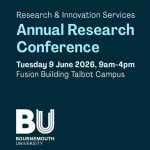 BU Annual Research Conference: Poster Exhibition Call for Applications
 ECR Funding Open Call: Research Culture & Community Grant – Apply now
 ECR Funding Open Call: Research Culture & Community Grant – Application Deadline Friday 12 December
 MSCA Postdoctoral Fellowships 2025 Call
 ERC Advanced Grant 2025 Webinar
 Update on UKRO services
 European research project exploring use of ‘virtual twins’ to better manage metabolic associated fatty liver disease