Category / international

HE Policy Update for the w/e 6th May 2020

Dissection of the Government’s HE support ‘package’ has dominated all this week and the Sutton Trust have a new report reminding us of the importance of considering disadvantage within HE access and participation.

HE ‘package’

The Government announced its ‘package’ to support the HE sector through the financial trauma caused by C-19. It has dominated all HE news this week so we’ve included a big feature on the most relevant content here. We will outline the facts, then unpack and interpret it, followed by sector stakeholder reaction, and a little humour.

The package doesn’t provide new money for the HE sector, it is not a bailout, rather it moves payments forward (a bit) to ease cash flow and, although it has not been explicitly stated, the Government continue their watch and see approach awaiting the outcome of the autumn term recruitment. There may be some emergency cash earmarked for OfS distribution should recruitment turn disastrous, however, Government have consistently stated they will not bail out what they consider as poor quality or failing HE providers and this will be an absolute last resort.

The ‘package’ has been about as popular as the proverbial regifted toiletry set from Great Auntie Doris. While the wait and see is an understandable policy measure (universities are way down the priority list, and it isn’t “urgent” (yet),  the C-19 crisis has finally provided an opportunity for the Government to change aspects of admissions and quality that were previously limited by institutional autonomy (as enshrined in the Higher Education and Research Act 2017). While student number controls and new licence conditions are described as temporary, there may be long term impacts of these changes.

The (English) package aims to stabilise admissions across all providers as the recruitment of domestic students takes higher precedence against the expected drop in international student enrolment. To this end:

Stabilising admissions

Temporary student number controls will be put in place for domestic and EU students for academic year 2020/21, to ensure a “fair, structured distribution of students across providers”. These measures mean that providers will be able to recruit students up to a temporary set level, based on provider forecasts, which allows additional growth of up to 5% in the next academic year. We await more details of the actual numbers by institution.

If a provider does not abide by its student number controls, the Government will reduce the sums available to the provider through the student finance system in the subsequent academic year.

The Government have also made funding provision for an additional 10,000 places on top of 5% growth student number controls. 5,000 of these places are ringfenced for students studying nursing or allied health courses. The remaining 5,000 places will be allocated at the discretion of the Secretary of State for Education. Again, we await more details of where these will go.

The OfS is running a consultation on a new temporary condition of registration which intends to  prohibit (registered) HE providers from any form of conduct which would have what they describe as a negative effect on the stability and/or integrity of the English HE sector.

  • Examples include conditional unconditional offers, mass unconditional offers, offers not linked to prior educational attainment, tempting students with incentives such as free laptops (a strange choice of example given the current virtual learning concerns for disadvantaged students) or cash incentives.
  • Any admissions tactics which are considered to put undue pressure on students or conduct leading to commercial advantage over other providers are a big no no, with a whopping fine per case (£500,000+) if the institution breaches this. The justification for the fine is to negate the positive financial effects any institution would feel from the recruitment boost as a result of engaging in the prohibited behaviour.
  • There is also concern over how the OfS intend to implement this retrospectively – with some concerns it may seek to outlaw and punish activity that was not prohibited before the C-19 crisis. The proposal is to look back to behaviour since 11th March and for patterns or linked actions by institutions since then.
  • Although this is a consultation, the sector is expecting the conditions to be implemented and there are questions over how temporary it will actually be given the expected long term effect of C-19 on university finances. This condition is seen as a significant erosion into the autonomy of universities over their admission policies which has always been enshrined in law, most recently in the HERA legislation.
  • OfS have blogged regulator warns of penalties for recruitment practices.

UUK is working on a new sector agreement and statement of fair admissions practice. Including adhering to a new principle where HE providers will not put undue pressure on students, and new rules to restrict destabilising behaviours such as use of unconditional offers at volume. Both key aims the Government has been trying to influence for several years.

Wonkhe added more detail on the conditions:

  • Outlawed actions would include making conditional unconditional offers, making a lot of unconditional offers (or very low offers), offering gifts or discounts designed to attract students away from their original choices, and making false or misleading statements (including comparative claims) about one or more providers.
  • Outlawed actions would also include using financial support packages made available by the government for purposes that do not serve the interests of students or the public, failing to secure the standard of qualifications awarded to students, making offers to international students that significantly lower the academic or language requirements for a course, taking advantage of OfS relaxing particular regulatory requirements during the pandemic, and even “bypassing, or seeking to bypass, the admissions processes of the University and Colleges Admissions Service (UCAS), where the provider would normally use UCAS processes”.
  • If that all sounds wide, it’s because it is. It’s another of these huge, open-to-interpretation regulatory nets designed to catch all sorts of behaviour. It’s significant – the new condition would enable OfS to consider imposing penalties that would “cancel out any financial benefit to providers of acting inappropriately”. It doesn’t so much chip away at as kick a big chunk out of institutional autonomy. But the question remains whether now is the right time for providers to kick up a fuss about autonomy, when the sector is desperate for financial support?

Research Professional reported that failing to abide by “voluntary requirements” is also included. Quite the catchall! On the conditions consultation Research Professional state: …But these are not normal times. The condition—which is out for consultation but is almost certain to be implemented—could even be “actively renewed” in the future. Take a look at RP’s article here –  well worth a read! Key excerpts:

  • When considering a fine, the OfS would look at whether universities have stuck to Universities UK’s framework on fair admissions practices for 2020-21, agreed as part of the government’s so-called bailout package to help institutions through the coronavirus crisis.
  • But Smita Jamdar, head of education and partner at law firm Shakespeare Martineau, warned the proposals in the consultation were “so much broader” than admissions and could mean the condition applied to institutions’ actions in other areas such as employment.
  • “It has got a huge potential for unintended consequences”, Jamdar told Research Professional News, adding it was a “quite frightening set of proposals when you put it all together”. Jamdar also warned universities could expect fines to be handed out if the current proposals are carried out, and pointed out that breaches could be back-dated to 11 March. “It’s quite clear they are putting this in place and they intend to use it,” she said.

Smita has more detail on her viewpoints in her own blog on the topic.

Supporting Students

The last few years have seen an increase in the number of students entering clearing, many joining the admissions process for the first time at clearing having not previously applied to university. The government package sets out to boost the role of clearing – and specifically the adjustment part of it – even further.

In conjunction with UCAS the Government have arranged for both ‘placed’ and ‘unplaced’ students to have a greater – or at least more visible – opportunity  to change their choice of provider/course once they receive their grades. This will be supported by a new service that can suggest alternative opportunities, based on their achievements, their course interest, and other preferences.

UCAS is also working with BBC Bitesize to give students enhanced advice on applying to university and Clearing. In the weeks leading up to results day, UCAS will be running a high-profile and multi-channel campaign, ‘Get Ready for Clearing’.

This fits well with the Government’s agenda – they are concerned that able students, especially disadvantaged ones, are not accessing high tariff ‘prestigious’ institutions– and therefore not receiving the social mobility employment boost associated with graduating from certain HE institutions. As has been pointed out by many, this does not support the stability of the sector, and confirms that protecting the sector is not the government’s first priority .

  • The 5% increase cap will allow room for growth and many “prestigious” institutions will have a significant amount of capacity as they usually take high numbers of international students, who are expected not to come this autumn. This is interesting as these same institutions have fought back for a long time against arguments that “foreign” students take places that home students could take. The reality of course is that international students help to fund places for home students by paying higher fees – so the financial impact of this change in balance is quite complex.
  • The UK is still coming out of the demographic dip and there was already increased competition for domestic students. The lowest tariff institutions are expected to fare worst. These may be the institutions which also have the lowest financial reserves, take the highest number of disadvantaged and local students, and have higher associated drop out rates (at least partly as a result of their student profile). A gloomy picture given the Government has stated it won’t bailout “failing” or “poorer quality” providers.
  • However, a little discussed element in recruitment is localisation – students attending institutions near to them locally or regionally. This year, students may choose to stay close to family for lots of reasons, including ongoing restrictions on travel, or a wish by students to stay closer to home. Given the publicity about rent payments this summer, some new students may decline to commit to accommodation contracts and choose to stay closer to home instead.

On the 5% admissions cap Research Professional state:

  • That is quite a loose cap and for some institutions it represents the opposite of a bailout—they will feel that the pistol has been fired for open season on their students. For universities struggling to recruit before the pandemic, the news that other institutions can now maximise recruitment of the limited number of UK school leavers will seem like the government has just poured a bucket of water into an already sinking canoe.

Wonkhe comment:

  • From a student perspective, the offer is even thinner – the Office for Students has clarified that universities can allocate student premium funding and expenditure committed in access and participation plans to provide additional financial support for students, which is far from addressing the economic impacts of Covid-19 on students’ families or the inherent lack of protections in the system for students.

Michelle Donelan also confirmed that students should continue to pay full tuition fees even if provision from Autumn 2020 is online. While this supports Universities (and stops Government from having to fund even more to stabilise them) there is, of course, a policy point emphasised in her tweet: To be clear, we only expect full tuition fees to be charged if online courses are of good quality, fit for purpose & help students progress towards their qualification. If Unis want to charge full fees they will have to ensure that the quality is there. Reading the comments to Donelan’s tweet also paints an interesting picture of the public’s perspective.

Student Fee Petition

The Commons Petitions Committee has rejected the government’s initial response to a petition requesting the reimbursement of 2019-20 student fees due to Covid-19 and industrial action. The committee felt the initial response did not address the issue directly. The petition received 336,265 signatures (see this map of the signatures’ locations, including Bournemouth West – BU’s constituency). The Petition is now awaiting a date for a parliamentary debate (which may not be as exciting or drastic as it sounds, and potentially will go over the same Government messaging we have heard already).

The petition stated:

  • All students should be reimbursed some of this year’s tuition fees as universities are now online only due to COVID-19, with only powerpoints online for learning materials which is not worthy of up to £9,250. Furthermore, all assessments are being reconsidered to ‘make do’ and build up credits.
  • Field trips have also been cancelled which our tuition fee was to pay for. There is also no need for accommodation which students have paid between £4,000-£8,000 for in advance and adding to their student debt. Lastly, the extended strikes of this year have severely disrupted student-staff interaction and personalised help, with staff not replying to emails or available for meetings. Grading is also being delayed. Overall, university quality is poor this year and certainly not worth up to £9,250.

If you scroll down on this page you can read the Government’s response to the petition. The Petition’s Committee rejected the government response. They require the Government to provide another response because they felt that the response did not directly address the request of petition. Once the Government issues a further response it will be published on the same page.

Parliamentary Question:

Q – Caroline Lucas: To ask the Secretary of State for Education, whether (a) his Department and (b) the Student Loans Company plan to provide support to (i) current and (ii) prospective students whose parents have lost their jobs as a result of the covid-19 outbreak by (A) facilitating access to full maintenance loans and (B) reinstating maintenance grants. [38455]

A – Michelle Donelan:

  • Many higher education providers will have hardship funds to support students in times of need, including emergencies. The expectation is that where any student requires additional support, providers will support them through their own hardship funds. Contact details are available on university websites.
  • In addition, students will continue to receive payments of maintenance loans for the remainder of the current academic year, 2019/20. Students who need to undertake additional weeks of study on their course in the current academic year may also qualify for additional long courses loan to help with their living costs.
  • Parents who have lost their jobs and whose income has dropped by 15% or more in the current financial year will be able to apply to Student Finance England to have their children’s living costs support reassessed for the 2020/21 academic year from 1 August 2020 onwards. This will increase the amount of support students and prospective students are entitled to in 2020/21.
  • Information for parents on how to apply for a current year assessment is available on the Student Finance England website at: https://media.slc.co.uk/sfe/currentyearincome/index.html.

International Students

The Government has stated it will work to update the International Education Strategy, designed to support the recruitment of international students, by autumn 2020, in respond to the impact of COVID-19.

They have also restated the commitment to a graduate immigration route launching in summer 2021, giving international students (who graduate summer 2021 onwards) the right to remain for two years after their studies and providing an incentive to study in the UK. This includes students who have already started their courses, even if, due to coronavirus, they have needed to undertake some of their learning remotely.

The Government is ‘applying discretion’ to ensure that international students are not negatively impacted if they find themselves in a position where they cannot comply with certain visa rules as a result of the COVID-19 outbreak.

Much of the media coverage on the prospects of international students to commence HE provision in autumn 2020 has been negative. However, several opinion surveys have hinted that prospective students remain committee to UK study. Here is another one – Wonkhe report that it might not be all bad news for international recruitment – a new survey today from IDP Connect finds that 69 per cent of a sample of nearly 6,900 prospective students applying to universities in Australia, Canada, New Zealand, the UK, and the US are intending to commence their studies this year as planned. Only 5 per cent expect to abandon plans to study overseas.

However, the UK face to face nature still seems to be the sticking point. Wonkhe continue: The survey found a huge willingness to start learning in January 2021 if this meant that the course could begin with face-to-face learning. Just 31 per cent would be happy to start online and move to the campus later on. Exposure to international culture is clearly a key component of the decision to travel for study.

Of course, another unanswered question is what happens if lockdown goes really long – would the post-study work visa still be honoured if all of the course is delivered online and the student is never resident in the UK?

Financial Sustainability

The Government will bring forward the second term tuition fee payments (expected to be worth £2.6bn) for providers so that they receive more cash in the first term of academic year 20/21 to help with cashflow issues. Currently HE providers receive the tuition fee payments in this profile: **25% on October, 25% in February, 50% in May. Instead the second payment will be brought forward – it’s not clear when it will be paid.  That’s not a big shift.

Alongside this the Government have reiterated that HE providers are eligible to apply for Government support schemes, including the Coronavirus Business Interruption Loan Scheme (CBILS), Coronavirus Large Business Interruption Loan Scheme (CLBILS, COVID Corporate Financing Facility (CCFF) and the Coronavirus Job Retention Scheme. All of which are not straightforward for the HE sector due to the sources from which our finance comes. However, the OfS estimates these schemes could be worth £700m to the sector.

It comes with strings attached. HE providers are expected to make efficiencies. Furthermore, the bringing forward of tuition fee payments will mean very careful management of finances to cover the whole academic year and avoid fresh cashflow problems further down the track.

The Government state that they

  • will only intervene further where we find there is a case to do so, and only where we believe intervention is possible and appropriate, and as a last resort. In such instances, DfE will be working with HMT and other Government departments to develop a restructuring regime, through which we will review providers’ circumstances and assess the need for restructuring”.

The sector has interpreted this as bespoke individual support, with a host of conditions attached (potentially including losing land), and the erosion of the management of the institution.

Research Professional comment:

  • The £2.6bn on offer is neither a grant nor a loan. It is an advance payment of tuition fees from the next academic year. Theoretically, this will smooth immediate financial shortfalls. But it will also mean that universities have to cut their cloth further down the line.
  • A haircut is coming, says the department. The advance payments will “help universities better manage financial risks over the autumn, including taking steps to improve efficiencies and manage their finances in order to avoid cash flow problems further ahead.” ‘Efficiencies’ is an ominous word at the best of times… It is very clear indeed that the government has no appetite to bail out badly run universities.

The Government has also set aside £100 million to purchase land and buildings to create new or expand schools and colleges. While this money isn’t solely for purchasing HE assets many HE institutions do have large estates with substantial potential. Once again, the Government has thought carefully about its ideals and seen an opportunity to acquire land to meet its policy ideals. During Theresa May’s time as PM one of her big pushes (which was unsuccessful) was to bring HE, FE and schools together in collaboration to improve quality, opportunity and cohesion within communities. Sharing resources and expertise. Potentially acquiring land and placing conditions on failing institutions seems another wizard wheeze for overcoming the reluctance of the HE sector to get behind the initiative.

Wonkhe comment:

  • The Government expects [that] access to the business support schemes, reprofiling of public funding and student number controls should be sufficient to help stabilise most providers’ finances, and that should certainly be the first port of calls for providers.
  • This implies that a calculation has been carried out using OfS financial sustainability data and projections on student numbers that may or may not turn out to be accurate. We can’t see those calculations, as OfS’ annual report on the financial sustainability of the sector is missing in action. The sector would want to see the workings so that if the wider situation follows worst-case scenarios (mass deferrals of current students, even worse international numbers, etc.), the government could be approached with a freshly minted begging bowl.
  • That ominous paragraph also describes the development of an HE “restructuring regime” in which DfE would review providers’ circumstances and assess the need for restructuring – and where action is required, this will come with “attached conditions.

And some breaking news – the OfS on 6th May published the outcome of their recent consultation on cuts to OfS spending. Bad timing, as the cut in budget and the consultation all started before the pandemic hit.

A selection of Parliamentary Questions

Q – Colleen Fletcher: To ask the Secretary of State for Education, what assessment his Department has made of the effect of the covid-19 outbreak on (a) the number of (i) international student numbers and (ii) domestic student numbers intending to take up a university place in the 2020 academic year and (b) research and innovation funding. [39637]

And

Q – Rachel Hopkins: To ask the Secretary of State for Education, what steps his Department is taking to support UK universities affected by reduced international recruitment as a result of the covid-19 outbreak. [38988]

A- Michelle Donelan:

  • We are very grateful for the work that universities are doing in supporting students, undertaking ground-breaking research and providing specialist equipment. We are working closely with them to understand the financial risks and implications that they might face at this uncertain time.
  • The COVID-19 outbreak will have an impact on international students. The government is working to ensure that existing rules and regulations relating to international students, including visa regulations, are as flexible as possible under these unprecedented circumstances.
  • My right hon. Friend, the Chancellor of the Exchequer, has also announced an unprecedented package of support, including the Coronavirus Job Retention Scheme and a range of business loan schemes, to help pay wages, keep staff employed and support businesses whose viability is threatened by the outbreak. We recently confirmed universities’ eligibility for these schemes, and we are working closely with the sector, the Office for Students (OfS) and across the government to understand the financial risks that providers are facing, stabilise the admissions system and help providers to access the support on offer. [This response was provided before the package was announced.]
  • The Department for Business, Energy and Industrial Strategy and UK Research and Innovation analysts are working closely with the Department for Education, OfS and wider non-government stakeholders to undertake a rapid programme of analysis to better understand the impact of COVID-19 on a range of research institutions including universities and analyse suitable policy responses.

Q – Emma Hardy: To ask the Secretary of State for Education, what steps he is taking to engage with (a) small and specialist higher education institutions, (b) institutions that are not members of Universities UK and (c) universities in remote, rural and coastal areas on their financial sustainability as a result of the covid-19 outbreak. [41578]

A – Michelle Donelan: answer here, but it doesn’t specifically mention rural or coastal universities

Research

In England, the Government will bring forward £100 million of quality-related (QR) research funding for the current academic year for ‘vital’ activities to address some of the immediate pressures being faced for university research activities and “to ensure research activities can continue during the crisis”. The QR top up is intended “to offset short-term impacts caused by the coronavirus outbreak, including alleviating immediate cash flow issues and where other income which would normally pay for research is no longer available”. Research Professional state: This does not come close to the cross-subsidy that research receives from the £7bn in tuition fee income that international students provided last year.

A joint DfE/BEIS Ministerial Taskforce – the University Research Sustainability Taskforce – will also form, jointly led by Science Minister, Amanda Solloway, and Universities Minister, Michelle Donelan.

It aims to act as an advisory forum for ministers and will:

  • share information and intelligence about the health of the university research and the knowledge exchange carried out by and within HE providers
  • identify potential impacts on the sustainability of university research and knowledge exchange directly arising from the response to coronavirus
  • share intelligence on government and other sources of funding for research, and develop approaches building on these to address the impacts of coronavirus and protect and sustain HE research capability and capacity
  • where possible share evidence of the impacts on university research and knowledge exchange of the taskforce’s advice

The Government have stated they expect universities will also want to develop their own proposals to build an efficient, effective and sustainable research and development system, focused on driving recovery. (See Chris Skidmore’s comments below.)

Research Professional have this to say:

  • It is the research proposals that have received the most criticism. A £100 million advance on quality-related funding represents just 5 per cent of what Universities UK had asked for…Why, then, was there so little in this announcement about shoring up research? If the research budget is due to double in five years, why the reluctance to spend now?
  • Writing exclusively for Research Professional News today, former universities minister Chris Skidmore appears to think there is more on the way—accepting that while £100m “may not be what the wider sector was hoping for…it remains a promising start”…“This first £100m of additional QR funding should be welcomed, but universities should try to do all they can to demonstrate its vital importance for the Covid-19 recovery—by going out to sell its benefits together,” he says. “Ideally, institutions should publicise and highlight where this money will go, working in collaboration where possible to demonstrate its necessity.
  • …Was there a clue too in the statement from Research England’s executive chair David Sweeneyyesterday? He said: “The higher education package announced today builds on some detailed proposals recently from UUK…English universities will want to similarly develop more detailed proposals to build an efficient, effective and sustainable R&D system and Research England looks forward to working with them and the government to achieve that end.” In the politesse of statements from senior civil servants, ‘universities will want to’ usually means ‘universities should hurry up and get on with’.
  • Following the announcement of the underwhelming bailout plan, we spoke to several well-placed figures in the research firmament. According to one of them, the government feels that while there has been some good thinking on the education side from universities, there has been less thought on the research side. They have “talked turkey on education, now it is time to talk turkey on research”, we were told.
  • In other words, ministers are not simply going to release £2bn into university accounts without a quid pro quo. As a number of sources close to government told us yesterday, there will be no substantial cash injection for research without recognition from universities that they have a shared responsibility to contribute to the post-coronavirus recovery. In other words, what are universities going to put on the table and what is the government going to get out of it? We understand that the government is looking for movement on topics such as: regional inequality, or levelling up; skills and training; and precarious contracts for researchers. 
  • …By allowing the Office for Students to consult on sweeping new powers, universities have put their admissions autonomy at risk. Do they really want to do the same with research in return for the false security of 100 per cent full economic costs?

Meanwhile Wonkhe note that:

  • UKRI hasupdated its useful “guidance for the research and innovation communities” to incorporate research focused aspects of yesterday’s government announcements. It links to Research England’s brief note on the funding advance related to next year’s QR allocation.

And Scotland have announced their own £75 million research boost for Scottish universities.

The Guardian has an article by Chris Skidmore

On HEPI former director Bahram Bekhradnia describes the proposed student number cap as “unworkable”.

Legal firm Pinsent Masons ran the article UK higher education restructuring ‘inevitable’ without targeted support stating the UK university sector should brace for potential insolvencies and reluctant mergers as the medium term impact of the coronavirus pandemic becomes clear. They base their analysis on the London Economics & UCU report of several weeks previous (the report has not escaped criticism for aspects of its calculations and assumptions).

Wonkhe also have lots of blogs, of course, here are some:

And Michelle Donelan also responded to a parliamentary question outlining the Government’s package.

Finally Research Professional’s spoof column Ivory Tower has a particularly good grasp of the ‘bailout’, especially as it was published in advance of the Government’s announcement of the ‘support’ measures. Do read Spads: bailout for a little light relief. (If you hit a log in page from the link select Bournemouth University and then log in with your BU username and password.)

What next?

The support package has been announced and whilst the dust is settling sector press is asking what next for the ‘new normal’? Both Wonkhe and Research Professional (RP) ran features on it on Wednesday. RP considered the new normal from the institutional perspective of what could open and how social distancing could be maintained. The blog is a neat consideration of the complexity of the HE context. Excerpt: The pressure will therefore be on institutions to open their doors for educational business as soon as possible, especially given student grumblings about paying full fees for courses that are now being delivered entirely online. However, as an educational setting, it is probable that universities can expect to be handed guidelines by the Department for Education as well.

Wonkhe tackle risk, audit and the student interest but from a strategic University Board perspective. Here are their series of blogs:

RP also state that AdvanceHE is launching an international project this week to help university leaders share information and find solutions to the difficulties posed by a socially distanced campus.

Education Select Committee

The Education Select Committee met this week to question Secretary of State for Education Gavin Williamson. Much of the Committee session focused on school aged children alongside disadvantage and SEN concerns; exam grades for FE courses including BTECs were touched upon. HE content has mainly been superseded by the Government’s support package announced after the Committee met. However, it also covered international students (no answer from Williamson), the difficulty in taking English language tests, and there was still no answer on nursing tuition fees. Dods summarise the nursing exchange:

Halfon [Select Committee Chair] said that “apparently” the Department for Education had not clarified whether nursing students who worked for the NHS during the pandemic would still be paying tuition fees. Pressed on this, the secretary of state said he would come back to the committee.

The Minister reiterated that a response to the Augar review is still expected around the time of the next Spending Review. Also that T Levels will go ahead in the original timeframe set out because the introduction of T-Levels and raising the status of vocational qualifications was “one of the most important tasks this Government had”.

Finally Johnson asked about domestic students who were stuck at university alone and unable to return home. The Government would “very much” want to facilitate their return, Williamson said.

On lessons the DfE have learnt from the crisis Williamson thought there were many. The ability to support children within the home and through holidays had been really transformed, he said. The department recognised that resources could be much more rapidly shared and they would be looking at how this could be used to reduce the workload for teachers. Additionally, by moving tribunals online, the department were getting through them much more rapidly, the committee heard. (Summary of the Minister’s response supplied by Dods.) The Education committee also published Ministerial letters for transparency:

Sutton Trust

The Sutton Trust published a brief on the impact of covid-19 on university access. The research surveyed 511 university applicants (pupils aged 17 to 19); found that working class applicants are more likely to be worried about the impact on them than their middle-class peers. Also that almost half of university applicants think that the coronavirus crisis will have a negative impact on their chances of getting into their first-choice university. The report also covers poll of 895 current university students raising their financial concerns resulting from the pandemic.

Access, Participation & Success

Social Mobility Commission

Chair of the Social Mobility Commission, Dame Martina Milburn, has resigned. The press points out that the social mobility commission has lost two Chairs in 2.5 years. Her predecessor Alan Milburn resigned (en masse with all other members of the Commission) in frustration at the Government’s failure to do more to tackle social mobility. Dame Martina stated she was resigning “with deep regret, and after several sleepless nights”  her substantive role as Group Chief Exec of The Prince’s Trust required her full commitment. Her letter states:

  • I am extremely proud of what has been achieved at the Commission in the last two years – appointing the 12 very diverse commissioners, re-establishing the secretariat and commissioning a variety of reports from the State of the Nation to an employers’ toolkit. Currently, we have 16 reports in the pipeline, have conducted a popular series of webinars for employers and have begun to form partnerships with bodies such as the metro-mayors and with other important commissions. We have also brought the social mobility charities together and appointed a range of social mobility ambassadors.
  • However, it is not nearly enough and given the strong links between social mobility and poverty I fear this current crisis will only serve to make social mobility harder than ever. My reflections from my time in office are that appointing a Chairman on three days per month, as I was, has proved a real challenge. To make an impact, what the secretariat needs is an executive chairman on at least three days per week or a different structure perhaps something more akin to that of the Children’s Commissioner?

She also stated that either of the Deputy Commissioners she appointed are capable of taking over her role.

Education SoS Gavin Williamson responds to her letter here.

Other blog posts

  • The BAME degree-awarding gap is likely to be an even bigger issue now. Gurnam Singhreflects on what universities should do next (Wonkhe blog).
  • The University Mental Health Advisors Network (UMHAN) blog covers the OfS briefing on supporting student mental health. Excerpt: given the disruption to normal study patterns, and potential longer-term changes to higher education as a result of the coronavirus pandemic, it is possible that universities and colleges will see new patterns in their students’ mental health and wellbeing emerge. They also plan a White Paper setting out good practice and recommendations.
  • The Guardian has an article written by the Master of Birkbeck explaining why unconditional offers for foundation years are important for social mobility

Finally another Guardian piece bringing to life the rhetoric around disadvantaged students struggling with online access

Disadvantaged Catch Up Plan

The Education Policy Institute has published a policy paper with proposals to prevent the disadvantage gap from increasing due to C-19. Before the outbreak of Covid-19, EPI research found that disadvantaged children are already on average one and a half years of learning behind other pupils by the time they take their GCSEs.

Graduate Employment Outlook

Wonkhe report that

  • the Office for Budgetary Responsibility (OBR) forecast of a 6.1 percentage point increase in the unemployment rate due to the impact of Covid-19 will have a disproportionate effect on the employment prospects of young people, according to a new briefingfrom the Resolution Foundation. Graduates would have a 13 per cent lower likelihood of being in employment three years after completing their education, with non-graduates seeing an even worse impact.
  • There’s also bad news on pay – with forecasts suggesting real hourly graduate pay would be, on average 7 per cent lower two years on. But the recession will disproportionately hit sectors where young people tend to work – non-food retail, hospitality, travel, the arts, and entertainment. One year after having left full-time education, more than one-third of non-graduates, and more than one-in-five, graduates would expect to work in a sector that is now mostly shut down.
  • The briefing suggests that – as in previous recessions – young people will be more likely to remain in education rather than enter the workforce. However, the demographic dip will make it easier for the government to offer support for those making this decision.

Youth movement:

  • 70 of the country’s leading youth charities, employer groups and experts have united to form the ‘COVID-19 Youth Employment Group’, a cross-sector emergency response to rising concerns about the economic and educational impact of coronavirus on young people. The Youth Employment Group is led by Impetus, the Youth Futures Foundation, The Prince’s Trust, Youth Employment UK and the Institute for Employment Studies. It will design, deliver, and campaign for solutions to the immediate and long-term impact on young people’s employment prospects, particularly those who already face considerable challenges entering the labour market.
  • As research increasingly warns of the potentially catastrophic impact on young people’s future employment prospects, there is a clear need for a rapid cross sector approach. The group will work to ensure young people receive quality support now, as well as helping plan for a healthy recovery of the youth labour market post-lockdown.
  • The Institute for Fiscal Studies (IFS) has warned that younger workers will be hit the hardest, as they are nearly two-and-a-half times more likely to work in a sector that is now shut down. The research also shows that on the eve of the crisis, sectors that shut down as a result of social distancing measures employed nearly a third (30%) of all employees under 25; compared to just one in eight (13%) of workers over 25.
  • The group’s membership meets virtually every week as they begin to pool together expertise and develop rapid solutions during and after lockdown. They have set up a LinkedIn Groupfor those interested.

Parliamentary updates

Online Voting: Chair of the Commons Procedure Committee, Karen Bradley, has written to Speaker Sir Lindsay Hoyle to confirm that the remote voting system for MPs is now ready to go live. The confirmation stated the system is suitable ad secure as long as MPs behave: MPs will have a “personal responsibility to ensure the integrity of the system”, a warning against letting others vote on their behalf. And with a tone as stern as the OfS’ she emphases: It is highly likely that any action by a Member which led to an authorised person casting a vote in a division would constitute a contempt of the House and a breach of the Code of Conduct, and would be likely to be punished accordingly.

Parliamentary Questions 

Schools – Q – Alex Sobel: To ask the Secretary of State for Education, whether his Department plans to allow parents who are in the covid-19 at risk groups to decide whether their children return to school, when schools reopen. [39792]

A – Nick Gibb: Schools will remain closed until further notice, except for children of critical workers and vulnerable children.

Heath Professions – Training – Q – Geraint Davies: To ask the Secretary of State for Health and Social Care, whether final year trainee (a) doctors and (b) nurses will be charged tuition fees while working for the NHS during the covid-19 outbreak. [37381]

A – Helen Whately:

  • Medical students and student nurses will continue to be required to pay tuition fees for their final term. Given the extended length of medical degrees, which can be up to six years in length, Health Education England pay medical student tuition fees from year 5 of study.
  • As part of the Government’s COVID-19 response, current year 5 medical students are currently being graduated by their medical schools early to enable them to apply for Provisional Registration with the General Medical Council, and if they so choose to deploy in to Foundation Year 1 posts. Those that do so will be contracted from the date they start their employment and employed under the 2016 terms and conditions for doctors and dentists in training. They will also continue to get their National Health Service bursary and student maintenance loan.
  • Year 3 nursing students have been invited to opt in to paid placements in the NHS. All students who do opt in to support the COVID-19 response will be rewarded fairly for their hard work. Students will be getting a salary and automatic NHS pension entitlement at the appropriate band. They will also still receive their student maintenance loan and Learning Support Fund payments too.
  • Decisions about the NHS workforce in Northern Ireland, Scotland and Wales, including the funding that they provide for students, are a matter for the devolved administrations of those countries.

Scam Risk

C-19 and lockdown have increased fears that loved ones, particularly those newly venturing online, will experience attempts by scammers to obtain money, resources and personal information. You may be familiar with the work of BU’s National Centre for Post-Qualifying Social Work and Professional Practice. Professors Keith Brown, Lee-Ann Fenge and their close knit team have published many freely available downloadable guides in recent years, worked closely with Government agencies and held successful parliamentary receptions to raise the awareness of policy makers. The team have a new publication out – Scams the power of persuasive language. Do download it to take a look and share with loved ones, neighbours and vulnerable contacts. All the team’s publications on fraud, scams, mental capacity and advanced care planning can be accessed here.

Inquiries and Consultations

Click here to view the updated inquiries and consultation tracker. Email us on policy@bournemouth.ac.uk if you’d like to contribute to any of the current consultations.

New consultations and inquiries this week:

The Skills Commission have launched a new inquiry, entitled; The Workforce of the Future – ‘Learning to earning’ transitions and career development in a challenging labour market.

Other nes

Student complaints: The Office of the Independent Adjudicator for HE (OIAHE) published the 2019 annual report setting out:

  • The number and outcomes of complaints received and closed
  • Examples of the complaints students make
  • Trends and common themes in complaints and lessons learnt

NUS VP for HE Claire Sosienski Smith commented on the report release making the same calls for action as in previous weeks:

  • “We know that next year, the number of complaints as outlined in the report might look quite different: NUS’ Coronavirus and Students Survey of 10,000 students showed that 74% of students are worried about the impact of the pandemic on their final qualifications and 20% of students who had been offered online learning did not agree that they were able to access it adequately. A lot of providers have been leading the way by offering ‘no detriment’ policies, to ensure that their students’ attainment is not unfairly captured by end of year exams this year. We believe a policy of no-detriment should be the way forward for the sector as a whole.
  • Students need a safety net, and urgently. The OIA is a fantastic service to make students more powerful, but it is set up for individuals or for small groups of students on courses. The pandemic has impacted every single student in the UK, and we need a national-level, government solution to this problem: that can only be the ability to redo the year at no extra cost, giving students the chance to make up for the education they are missing out on, or have their debt and fee payments written off or reimbursed.”

Graduate Outcomes: HESA announced dates for the publication of the first datasets from the Graduate Outcomes survey –  high-level findings on 18 June and the full release (including provider level data) on 23 June. This is a month’s delay to existing plans, and reflects the time required to prepare and assure data under lockdown conditions.

Virtual Open Days: Wonkhe have a thought nudging article on the benefits of a virtual campus tour for recruitment.

Evidence based policy making: Research Professional report that trust in science in at a record high in Germany with approval for evidence-based policy skyrocketing.

Apprenticeships: The Government have published their annual update on the apprenticeship reform programme. It reports progress towards the 3 million starts apprenticeships target between 2015 and 2020. The Government have achieved 69.6% of the 3 million target (2.09 million starts). Much fuller detail on other factors within the apprenticeship report is contained in the above link.

Subscribe!

To subscribe to the weekly policy update BU staff can simply email policy@bournemouth.ac.uk.

JANE FORSTER                                         |                       SARAH CARTER

Policy Advisor                                                                   Policy & Public Affairs Officer

Follow: @PolicyBU on Twitter                |                       policy@bournemouth.ac.uk

 

New BU breastfeeding research paper

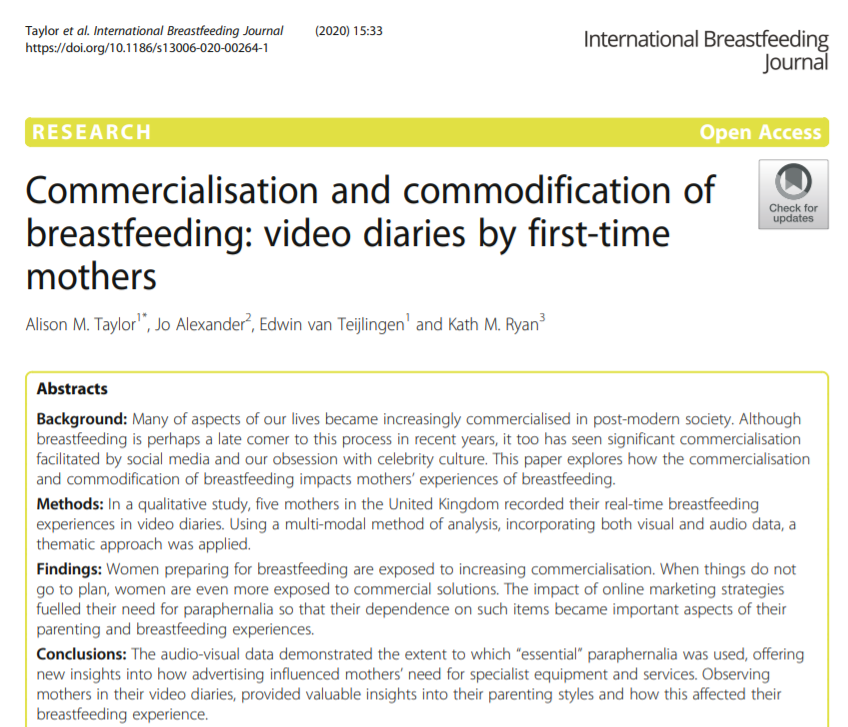
Congratulations to Dr. Alison Taylor  in the Centre for Midwifery, Maternal & Perinatal Health (CMMPH) the publication two days ago of her paper ‘Commercialisation and commodification of breastfeeding: video diaries by first-time mothers’ in the International Breastfeeding Journal [1].   Alison is Deputy Head of Department Midwifery and Health Sciences as well as Infant Feeding Lead.   This paper is the third paper from her excellent PhD study It’s a relief to talk…”: Mothers’ experiences of breastfeeding recorded in video diaries.  The first and second paper we published in 2019 also with Alison supervisors Professors Jo Alexander, Kath Ryan and Edwin van Teijlingen [2-3].  This third paper focuses on how many of aspects of our lives became increasingly commercialised. Although breastfeeding is perhaps a late comer to this process in recent years, it too has seen significant commercialisation facilitated by social media and our obsession with celebrity culture. This paper explores how the commercialisation and commodification of breastfeeding impacts mothers’ experiences of breastfeeding.

This qualitative research is based on five new mothers in the United Kingdom recorded their real-time breastfeeding experiences in video diaries. The purposive sample of five participants recorded 294 video entries lasting 43 h and 51 min, thus providing abundance of rich data. using a multi-modal method of analysis, incorporating both visual and audio data, a thematic approach was applied.  The study found that women preparing for breastfeeding are exposed to increasing commercialisation. When things do not go to plan, women are even more exposed to commercial solutions. Under the influence of online marketing strategies the need for paraphernalia grew.  Women’s dependence on such items became important aspects of their parenting and breastfeeding experiences.  Alison and her co-authors conclude that the audio-visual data demonstrated the extent to which “essential” paraphernalia was used.  The paper offers new insights into how advertising influenced mothers’ need for specialist equipment and services. Observing mothers in their video diaries, provided valuable insights into their parenting styles and how this affected their breastfeeding experience.

References:

  1. Taylor, A.M., van Teijlingen, E., Alexander, J., Ryan, K. (2020) Commercialisation and commodification of breastfeeding: video diaries by first-time mothers, International Breastfeeding Journal 15:33   https://doi.org/10.1186/s13006-020-00264-1
  2. Taylor A, van Teijlingen, E.,Ryan K, Alexander J (2019) ‘Scrutinised, judged & sabotaged’: A qualitative video diary study of first-time breastfeeding mothers, Midwifery 75: 16-23.
  3. Taylor, A.M., van Teijlingen, E., Alexander, J., Ryan, K. (2019) The therapeutic role of video diaries: A qualitative study involving breastfeeding mothers, Women & Birth 32(3):276-83. https://www.sciencedirect.com/science/article/pii/S1871519218300064

BU academics at Virtual International Day of the Midwife

Five FHSS academics have presentations and/or posters at this year’s Virtual International Day of the Midwife (IVDM) conference.  Dr. Luisa Cescutti-Butler  (Senior Midwifery Lecturer in  the Centre for Midwifery, Maternal & Perinatal Health (CMMPH) and Dr. Humaira  Hussain have an online presentation ‘on the topic of Making discoveries through research: midwifery student’s perceptions of their role when caring for pregnant women who misuse substances: neonatal simulators as creative pedagogy’.

BU Midwifery Lecturer Denyse King also in CMMPH has been interviewed by the VIDM her poster on her PhD research around Virtual Reality Learning Environments (VRLE), which can be offered as a computer-generated virtual simulation of a clinical workspace.

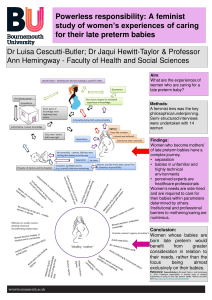
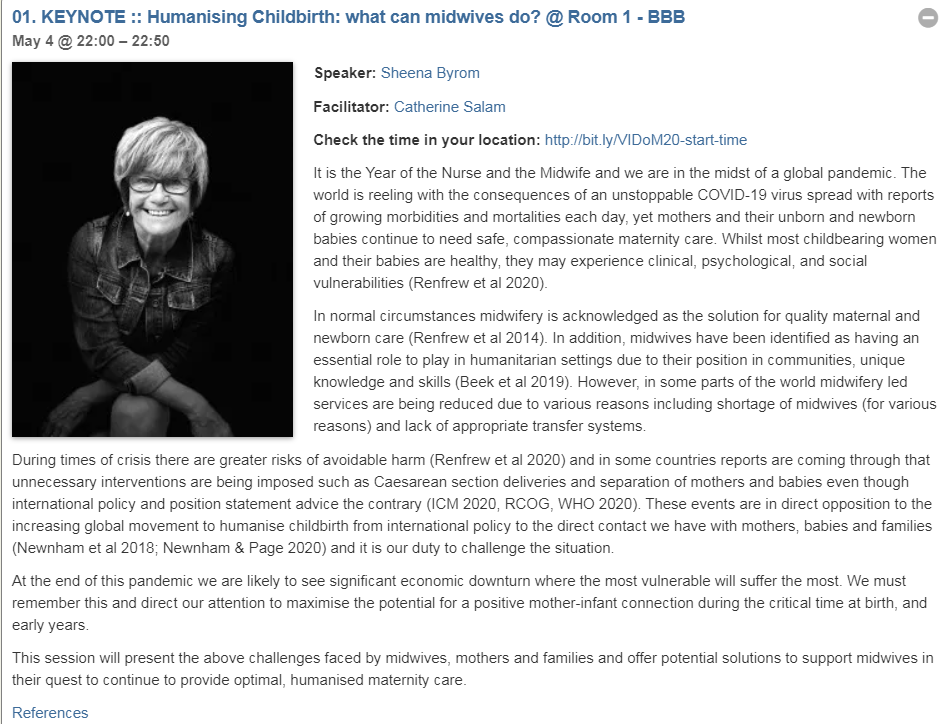
Whilst Dr. Luisa Cescutti-Butler,  Dr. Jacqui Hewitt-Taylor and Prof. Ann Hemingway have a poster  ‘Powerless responsibility: A feminist study of women’s experiences of caring for their late preterm babies’ based on Luisa’s PhD research.  Last, but not least, FHSS Visiting Faculty and holder of a BU Honorary  Doctorate Sheena Byrom is key note speaker at the week’s IVDM conference!

Congratulations!

Prof. Edwin van Teijlingen

CMMPH

HE Policy Update for the w/e 1st May 2020

Hi all – we are bit late against our Wednesday deadline this week, we’re sure you’ll understand.  Still lots going on and some of it doesn’t even relate to the crisis – KEF concordat high on your priority list, anyone?

Students in the lockdown

Minister under the spotlight: Universities Minister Michelle Donelan has responded to several parliamentary questions this week, and come under fire for some, perhaps unintentionally misleading, answers during interviews. Most widely reported in the media was her statement responding to a question on supporting student rent costs that students had not been told to return to the family home (as a C-19 distancing safety measure) – “I can assure you that we never instructed students to return to their permanent addresses.” Also causing raised eyebrows were the implications within some of the Minister’s responses putting the onus on universities for certain decisions and support measures – such as blanket hardship support and IT funding (see the parliamentary questions below).

Q – Richard Holden: To ask the Secretary of State for Education, what steps he is taking to ensure that university students in their final year receive the support they need during the covid-19 outbreak.

A – Michelle Donelan:

  • The government is doing all it can to keep staff and students at our universities safe in this unprecedented situation, while mitigating the impact on education. I have written to students to outline the support available and we continue to work closely with the sector, putting student wellbeing at the heart of these discussions…
  • My clear expectation is that universities should make all reasonable efforts to enable students to continue and complete their studies; for their achievements to be reliably assessed; and for qualifications to be awarded securely…The Office for Students has also recently confirmed that providers are able to use the student premium to support students to access IT equipment and internet connectivity where needed. Students will continue to receive scheduled payments of loans towards their living costs for 2019/20. Both tuition and living costs payments will continue irrespective of closures or whether learning has moved online. Many students will be feeling uncertain and anxious and it is vital that students can still access the mental health support that they need. Many providers are bolstering their existing mental health services and adapting the delivery of these services to means other than face-to-face. These services are likely to be an important source of support to students during this period of isolation.

And:

Q – Peter Kyle: To ask the Secretary of State for Education, what steps he is taking to support online learning for disadvantaged university students.

A – Michelle Donelan:

  • As my right hon. Friends the Prime Minister and Chancellor of the Exchequer have both made clear, the government will do whatever it takes to support people affected by COVID-19. Despite the significant disruption being felt across the higher education (HE) sector, students rightly deserve the appropriate support and recognition for their hard work and dedication. HE providers take their responsibilities seriously and are best placed to identify the needs of their student body as well as how to develop the services needed to support it. Many HE providers have moved rapidly to develop new ways of delivering courses through online teaching and alternatives to traditional end-of-course exams. When making changes to the delivery of their courses, HE providers need to consider how they support all students, particularly the most vulnerable. This includes students suffering from COVID-19, students who need to self-isolate, international students and students who are either unable or less able to access remote learning for whatever reason, as well as care leavers, students who are estranged from their families and students with disabilities. The Office for Students (OfS) has recently published guidance setting out the actions that it will take to support providers to maintain standards and teaching quality. It highlights flexible models for teaching, learning and assessment that will most likely satisfy OfS quality and standard conditions. On 23 March, the Quality Assurance Agency for Higher Education published the first in a series of good practice guidance notes that are available to all UK HE providers.
  • HE providers should make all reasonable efforts to enable students to complete their studies, for achievement to be reliably assessed and for qualifications to be awarded securely. Many HE providers will have hardship funds to support students in times of need, including emergencies. The expectation is that where any student requires additional support, such as access to the Internet, providers will support them through their own hardship funds. The OfS have stated that providers are permitted to divert more of their student premium funding to their hardship funds to support students, including through the purchase of IT equipment. Providers should particularly ensure that students in the most vulnerable groups are able to access this support where needed.

On Friday Wonkhe reported that Paul Blomfield, Chair of the All Party Parliamentary Group for Students, blasted Universities Minister Michelle Donelan for “failing to acknowledge” concerns raised by 110 MPs from across Parliament – arguing in a fresh letter that the issues “have only become more pressing” over the last three weeks. Reflecting concerns about some institutions’ refusal to adopt “no detriment” policies, Blomfield argues that plans on exams “vary widely” and, for that reason, “create a sense of unfairness” among students.

Student connectivity : HE organisations have called on the Government to provide parity of online access for HE learners during the current crisis. Chief Executives from JISC, the Association of Colleges, Universities UK and UCISA ask the Minister to work with telecoms providers and Ofcom to make all relevant online education sites free for access for UK further education and higher education students and that they be considered a priority group of vulnerable consumers in discussions with telecoms providers. The letter states:

  •  ‘With campuses closed, thousands of students are now learning online at home, where both broadband and access to mobile devices is prohibited by availability, connectivity and cost. The further education (FE) and higher education (HE) sectors have worked very hard to successfully ensure the continual provision of teaching and learning online but, put simply, this is unaffordable and inaccessible for many learners. Not only does this prohibit their education, but it is damaging for their overall wellbeing.’

MPs calling for support for students who usually work throughout their degree and are ineligible for universal credit continues – see this Guardian article. There is another Guardian feature giving the student perspective on hardship (including university hardship funding).

Accommodation: Last Wednesday the Office for Students published a briefing note for universities on how to help students with accommodation problems during the coronavirus pandemic, including worries over rent, access to kitchens and bathrooms shared with self-isolators, and signposting to sources of information. Research Professional cover the guidance here.

Student Loans: The Student Loan Company updated their FAQs with COVID19 content.

More parliamentary questions:

Q – Barry Sheerman: To ask the Secretary of State for Education, what representations he has received from disabled students on access to assistive technology via the disabled students’ allowance due to the economic effect of the covid-19 outbreak; and if will make a statement. [37453]

A – Michelle Donelan:

  • Disabled Students’ Allowances (DSAs) provide for the additional costs that disabled students may face in higher education because of their disability. A basic computer is a mainstream cost of study and students are therefore expected to make a £200 contribution towards the cost of any computer recommended as part of their needs assessment. The contribution is for computer hardware only; students are not expected to fund recommended specialist software or training in how to use it.
  • There are currently no plans to suspend the requirement for disabled students to contribute £200 towards the purchase of a computer. The department has not received any representations from disabled students on access to assistive technology through DSA support in relation to the economic effect of the Covid-19 outbreak. It is too early to assess the effect of the Covid-19 outbreak on the employment opportunities for disabled students. These are rapidly developing circumstances; we continue to keep the situation under review and will keep Parliament updated accordingly.

Q – Tommy Sheppard: To ask the Secretary of State for Work and Pensions, when she plans to respond to Question 30815 of 17 March 2020 from the hon. Member for Edinburgh East. [38568]

A – Will Quince:

  • Students who do not ordinarily have entitlement to Universal Credit (UC) and who receive a maintenance loan or grant through the student finance system, will continue to be able to draw upon this financial support until the end of this academic year.
  • Those who do not receive student finance and who would ordinarily not have entitlement to UC, such as those undertaking a part-time course which would otherwise not be considered as compatible with the requirements for them to look for and be available for work, will have entitlement to UC. We have disapplied UC and both legacy and new style JSA work preparation, work search and availability requirements and related sanctions. This will initially be for a three-month period. After three months, consideration will be given as to whether a further extension is required.

Q – Emma Hardy: To ask the Secretary of State for Education, what recent discussions he has had with the Secretary of State for Work and Pensions on enabling students that are unable to (a) work and (b) be furloughed to claim universal credit during the covid-19 pandemic. (37820)

A – Michelle Donelan:

  • Students with a part time employment contract should speak to their employer about the Coronavirus Job Retention Scheme which has been set up to help pay staff wages and keep people in employment. HMRC are working urgently to get the scheme up and running and we expect the first grants to be paid within weeks.
  • Students suffering hardship should in the first instance contact their provider. Many universities have hardship funds to support students most in need and contact details are available on university websites. Undergraduate students studying on full-time courses will continue to receive their maintenance loan payments as planned for the remainder of this academic year, 2019/20. Eligible students who need to undertake additional weeks of study on their course in the current academic year may qualify for additional long courses loan to help with their living costs.
  • Certain groups of students eligible for benefits such as lone parents will continue to qualify for Universal Credit in addition to their maintenance loans.

Universities and the crisis

Student number controls: you will recall that this is part of the UUK package of measures – a cap on forecast numbers plus 5% (which doesn’t sound like much of a cap anyway given that the OfS keep saying that the forecasts are unreasonably high and suggest a problem with financial sustainability because they won’t be achieved…) –Wonkhe have a blog by Mark Corver suggesting they would cause more problems than they would solve.  Some extracts below:

  • The case for quotas is that by restricting student choice they can divvy up fee income across universities in a way that can offer financial stability. But quotas make a fundamental mistake in placing little value on what students want, assuming that their personal aspirations can be redirected around the system as required. This could well lead to many students opting not to go to university, making quotas of very limited use in helping stability this cycle.
  • The best response to uncertainty is flexibility. Imposing quotas strips both students and universities of the ability to respond to events.
  • A more reliable approach to securing stability is the same as what government is considering across the economy. If a large, but likely temporary, change risks destroying productive capacity then the government considers support until the temporary conditions abate.
  • For some transport operating companies they have done this through partially compensating for the loss of passengers their finances reasonably assumed. They have not proposed offering potential passengers a take-it-or-leave-it offer to buy tickets for journeys they don’t want make to places they do not want to go. Because it would not work.

Remember that UUK bailout package? UUK and Millionplus came out with an additional specific one for the key worker sectors this week.  Working with universities, the government could take a major stride towards mitigating against future capacity shortfalls with a simple three-pronged approach:

  • Supporting students and graduates to become key workers in public services, by offering a maintenance grant of up to £10,000 for all students in training, removing any recruitment caps, and providing fee-loan forgiveness for those remaining in the relevant professions for at least five years.
  • Strengthening and enhancing key public service HE capacity in universities by increasing the funding to the Office for Students to reflect the added costs while creating a new Public Services in Higher Education Capital Fund to enable universities to invest in simulation equipment, additional staff costs and other infrastructure.
  • Retaining and developing key workers in public services, by increasing general staffing budgets and creating a new professional development programme focused on enhancing skills of current key workers in public services and the new NHS volunteer reserve.

Flexible Learning: Advance HE published guidance on flexible learning accompanied by a blog stressing the importance of flexibility: Flexible learning comes of age.

Ex-Ministers speak: Research Professional cover an excellent session in which three past university ministers (Willets, Johnson, Skidmore) discuss the dangers of allowing a Government imposed temporary student numbers cap and instead urge the sector to agree its own self restraint version. International students are also mentioned. The Express also cover Willetts’ comments.

Discussion and speculation over Government’s thinking on university bail out/support measures continued this week.

HEPI have published the blog: Don’t panic…yet? Explaining their perspective as to why Ministers wouldn’t immediately jump to support the HE sector. It contains a couple of fresh perspectives alongside reiterating reasons already stated. In essence the statement:  “Frustrating though it is, it is not unreasonable for officials to want to see this play out a little before making firm decisions that could cost billions of pounds” sums the blog up.

The Guardian ran Ministers split over bailout package for universities.

The Times have a piece explaining that Universities that would benefit well from a rescue package based on research funding are also some of the richest universities. The article reiterates familiar messages including Ministers wanting to wait to find out what the real situation is in September rather than jumping the gun unnecessarily. Excerpt:

  • Smaller, newer institutions are getting the scraps from the table. Yet they can reasonably argue that they will be the ones to spearhead an economic recovery, being in many cases the biggest employers in their areas. They are now doing their own lobbying.
  • “Frustrating though it is, it is not unreasonable for Whitehall officials to want to see this play out a little before making firm decisions that could cost billions of pounds,” Nick Hillman, director of the Higher Education Policy Institute and a former government adviser, said.
  • The danger is the Treasury, where officials are not short of self-belief, think they know more about the sector than everyone else and can direct any bailouts to, for example, universities already in financial trouble to make sure they do not go under, rather than seeing the bigger picture of protecting Britain’s research prowess and global reputation.

New Normal

Wonkhe have a lot to say on the ‘new normal’:

  • We’re being asked to consider what living with Covid-19 in the medium to long term might mean.
  • Most universities now think they have this term under control, but it’s September that poses the biggest headache. Universities have done their best to shift the rest of this year’s teaching and assessment online – but it’s starting to become clear that this hasn’t worked for some students and some courses. A big debate about adequacy is coming, as is one about which emergency adaptations, both to teaching and to assessment, will be scrapped or retained (and when). Some of the compromises made mid-crisis may be harder to justify – and charge full fees for – in the autumn.
  • Learning and teaching teams are working around the clock to plan for a full or mostly online student experience from September. This will require much more careful thinking about remote student engagement, and in many cases a full redesign of existing courses…But delivering change on this scale at pace is bound to tax universities to the very limits.
  • If the institutional approach to dealing with this tension is truly in the student interest, then students will at the very least need to be involved in the debate. At the moment, they, like the rest of us, would love to return to a normal that isn’t on offer.

And Wonkhe offer a plethora of new blogs on the topic of what change is to come:

Parliamentary Business/Updates

Select Committee Chair elections – 6 May: The process for election to the coveted BEIS chair has been confirmed. Nominations will open (by email) on 17 April and close on May 4 and must be accompanied by 15 letters of support. Select committee membership is representative of the proportion of MPs elected at the beginning of the Parliament and a balance of Conservative, Labour and members of other parties are agreed in advance of the Committees reforming. This includes which party will chair which select committee. BEIS is chaired by Labour so only Labour MPs will be nominated to stand. The (outsourced) online ballot will elect the chair on 6 May. Chair of the Standards Committee (to replace Kate Green who was appointed Shadow Minister for Child Poverty Strategy) will also take place on 6 May 2020 again only members of the Labour Party may be candidates.

Employability after the crisis

HEPI continue to talk about new graduate career anxiety although the latest offering suggests students feel confident they will find work in Open for business? Students’ views on entering the labour market. This publication was based on a survey of 1,000 full time undergraduate students. HEPI highlight:

  • 79% of graduates feel confident of getting a graduate level job once they graduate
  • However, when asked about their feelings towards entering the labour market:
    • 28% cite anxiety, ahead of confidence (23%), uncertainty (16%) and feeling overwhelmed (16%)
    • 14% selected excitement as their primary emotion, 3% felt relaxed
  • 29% say the Coronavirus pandemic has altered their feelings (71% no feeling change)
  • Almost two-thirds (64%) have a specific career in mind for when they graduate, compared to 18% who do not and 17% who are unsure.
    • 72% intend to go into a career directly related to their degree subject
    • Work experience is seen as important (61%)
  • Students think there are four main factors that make for a successful career: doing something they are interested in (49%), being happy and fulfilled (48%), having stability (47%) and having a high salary (41%).
  • 35% of graduates to be intend to spend up to 2 years in their first role; 24% plan on staying for over three years (19% pumped for 2-3 years; 18% intend to stay less than a year and 3% intend to spend less than six months!

Rachel Hewitt, HEPI’s Director of Policy and Advocacy, said:

  • ‘These results show students feel confident about finding work, but anxious about starting their career. This anxiety has been there since before the current pandemic for many students, but for almost a third the current circumstances have exacerbated these feelings. Universities need to provide as much support as they can for students who are entering the labour market in such uncertain times and employers need to be mindful of these results in their hiring processes.
  • The polling also shows a number of misconceptions that students have about the labour market. Most expect to go into a career directly related to their degree subject, while employers tend to see subject of study as less important than the skills they have gained. Students expect to only spend a short time in their first graduate job, when research shows that many stay in their first role for longer than expected. University careers guidance should seek to tackle these misconceptions, so students are better informed about their future careers.’

In the Foreword to the report, Jonathan Black, Director of Oxford University Careers Service, writes:

  • Students graduating this year could, perhaps, be forgiven for thinking they have lived against a backdrop of uncertain and threatening events: the 9/11 terrorist attacks and subsequent wars, the 2008 financial crisis, the turmoil and division of Brexit, and throughout the period, an increasingly obvious climate crisis. Now, along comes a global pandemic that is beginning to make the previous environment look almost benign and limited.
  • This HEPI report confirms that students’ familiarity with uncertainty is measurable by the fact that the majority of respondents say their perceptions haven’t changed solely because of the Covid-19 pandemic. They remain generally positive about their future – perhaps the optimism of youth who either don’t know or don’t believe the predictions or maybe they see opportunities in the changes to come.
  • ‘This report forms a useful benchmark of how much the pandemic is changing students’ views of their career. The extent, scale, and life of this pandemic and its accompanying economic shock are only just emerging, and there could be a very long way to go before we return to a “new normal”’

Nicola Dandridge, Chief Executive, Office for Students responded to the HEPI paper:

  • Coronavirus will clearly have a profound impact on the economy, so it is unsurprising that students are anxious as they enter the next stage of their lives after graduation. However, the skills and experiences of graduates will be crucial to the economy as we rebuild, and there will be many opportunities for well qualified graduates to embark on rewarding careers.
  • The careers services that universities and colleges provide have a crucial role to play in helping to equip students with the confidence and skills they need to find professional employment. Their expertise will be particularly important during these difficult and uncertain times.’

Research

REF: The REF team have published a set of FAQs covering adjustments to the REF (timetable still under discussion) following last week’s webinar discussing the changes needed to adapt for C-19.

Academic Travel: HEPI have a blog considering how conducting PhD vivas online would be a forward step in reducing emissions and make a positive impact on carbon reduction supporting both universities environmental policies and national goals – Conducting PhD vivas online is working fine: there will be no need to return to excessive flying habits. It was inspired by the change in practices forced by lockdown.

Similarly HEPI have another blog on universities achieving carbon neutral status and what this means for academic travel.

Research Professional published Alarm as Covid-19 recovery plan neglects to mention R&D discussing how research and education has been left out of EU roadmap just two days before discussions were due.

Knowledge Exchange Concordat

The Knowledge Exchange Concordat was published on Friday. Research Professional covered the publication announcement here. It was a slight surprise to the sector as originally it was anticipated to be delayed and launched alongside a process allowing providers to explicitly sign up to the Concordat high level implementation plan (which won’t happen until later in 2020). And as Ivory Tower (tongue-in-cheek Friday comedy HE column) so eloquently imagine, lockdown seems a strange time to be launching an outward focussed process – excerpt from Ivory Tower imagined diary of Trevor McMillan, vice-chancellor Keele University:

  • This is definitely the right moment to release the knowledge exchange concordat. I’ve been working on this for a decade.
  • Now is the time to find out how staff in universities are getting out into their communities and interacting with people. Oh, hold on… can I start this again?

(Trevor McMillan is the Chair of the Concordat Committee on real life.)

Wonkhe have a short blog from Trevor McMillian himself  The Knowledge Exchange Concordat: published but not yet activated explaining a little on the concordat and timing:

  • Universities all have different strengths and we are committed to applying them to maximise their impact. When we are through the acute stages of the Covid-19 pandemic there will be the need for an enormous recovery programme to turn around the social and economic deficits that will be left by the current crisis. Universities will have a critical role in this, by engaging staff from right across our disciplinary base.
  • Hopefully, the Knowledge Exchange Concordat will provide a framework in which we can, as universities, ensure that we have the approaches in place to facilitate our staff and students to continue to have a major impact.

Dods explain the basics on knowledge exchange for those less familiar with the purpose of the concordat:

  • Knowledge exchange includes a set of activities, processes and skills that enable close collaboration between universities and partner organisations to deliver commercial, environmental, cultural and place-based benefits, opportunities for students and increased prosperity. This KE concordat therefore seeks to provide a mechanism by which universities can consider their performance in KE and make a commitment to improvement in those areas that are consistent with their priorities and expertise.
  • UK universities received £4.9 billion from knowledge exchange activities in 2018-19, helping fund activities to boost scientific, technological, medical and cultural breakthroughs. More effective knowledge sharing between universities and businesses will be essential in underpinning the Government’s target spend of 2.4% of GDP on research and development by 2027.

David Sweeney, Executive Chair of Research England, said: I am pleased to see the publication of the KE concordat and very much welcome that its development has been sector-led. The concordat provides the means to continuously improve institutional KE performance and I see it as critical in assurance of our funding, especially driving efficiency and effectiveness.”

Joe Marshall, CEO of the National Centre for Universities and Business, said: “Universities’ knowledge exchange activities play an incredibly important role in attracting, supporting and enhancing businesses and other organisations. The Concordat is an important vehicle for universities to proactively show their commitment to collaboration with others and demonstrate to external partners that through self-improvement they want to build better and deeper partnerships.”

And our view: it doesn’t look to have changed much from the version that was consulted on. It still includes aim 3 “to provide clear indicators of their approaches to performance improvement”. They have added more language to the guiding principles. “Working effectively” has become “working transparently and ethically” but the language underneath it is the same. It still includes “continuous improvement” and “evaluating success” as principles. The list of examples is hedged about with more “could” language but we still under the final commitment have to commit to producing an action plan for improvement and consider and respond to feedback from their panel. It still feels more like a regulatory framework than anything else.

Social Mobility and Widening Participation

Care Leavers and Estranged Students: The Care Leavers Progression Project shared several links aiming to support the vulnerable community of care leavers who are disproportionately affected by the crisis:

Disadvantaged school pupils: Education Select Committee Chair, Robert Halfon, is reported in iNews as suggesting retired teachers, graduates and underemployed Ofsted inspectors could support the reduction of the gap in the attainment of disadvantaged children by volunteering to tutor them post-lockdown. Halfon suggests they could be assigned to their local school. TES also covers Halfon’s volunteer army plan, excerpt:

  • “I’m really worried that the left behind pupils get left further behind because they aren’t able to learn during lockdown. So I’ve been proposing a catch-up premium and also a nationwide army of volunteers – including graduates and retired teachers – going in and helping the schools…The research shows if you have half an hour of mentoring three times a week you can advance by about five months.”

The Nuffield Foundation and Bristol University have also published a report highlighting how children in England who have been supported by a social worker at any point during their schooling fall behind educationally by at least 30% by the age of 16. Other findings include:

  • Young children, who needed a social worker before the age of seven, achieved better GCSEs if they had experienced a long-term stay in care than those who had not.
  • Children in need and children in care were more affected by other forms of disadvantage, such as poverty, socio-economic status, special educational needs, and disabilities, which led to lower educational attainment
  • Absence, temporary or permanent exclusions, and changing schools at the age of 15 or 16 were other factors shown to worsen academic performance.
  • A quarter of all children who had ever needed a social worker were still receiving a social work service in the final year of their GCSE exams.

Many parents of children in need interviewed as part of the study said they were living in poverty and struggled to pay for their child’s school needs, such as uniform, computers and internet access. Older children interviewed indicated they liked primary school but regarded secondary schools less favourably, due to their size, complexity and difficulties with teachers.

Recommendations:

  • Make support available for children in care applicable to children in need, such as Pupil Premium Plus payments provided to schools and Virtual Schools which oversee their education.
  • Teacher training for pupils’ well-being.
  • Measures to address the affordability of schooling are cited as other necessary changes.

The report has led to a national call to action, appealing for more comprehensive and coordinated support.

Anne Longfield, Children’s Commissioner for England, said: “Too many children in this country are growing up in disadvantage, struggling at home and at school. The educational prospects for many thousands of children in need are, frankly, terrible. Many leave the education system without even the basic qualifications. The government has promised to ‘level up’ across the country, and this must include properly-resourced, cross-departmental strategies for tackling the issues that blight the life chances of the most vulnerable children. The response to the coronavirus shows that coordinated action and political will on funding can have a transformative impact. The ‘new normal’, post-coronavirus, is an opportunity for similar brave action which gives help and support to vulnerable children from their early years and throughout their childhood and tackles the generational problems that have held back so many.”

Brexit

Dods report that the EU’s Chief Brexit Negotiator, Michel Barnier has stated that there has been a “disappointing” amount of progress made between the UK and EU in post Brexit talks. Speaking after talks with his UK counterpart David Frost, Bernier said that the “clock was ticking” and warned that “genuine progress” was needed by June if there was to be an agreement reached on the UK/EU future relationship by the end of the year. Despite talks stalling, and having to be reduced due to Coronavirus, the UK Government is still insisting that it will not request or accept an extension to the transition period beyond 31st December 2020. Under the Withdrawal Agreement, the transition period can be extended by up to two years if both sides agree by 1 July 2020. Barmier told the press conference a joint decision would be taken on 30 June about whether to extend the transition period. “The UK cannot refuse to extend transition and at the same time slow down discussions on important areas,” he said. The UK and EU are failing to make progress primarily on the areas of level playing field arrangements, fisheries and justice. The next round of talks are due to be held the w/c 11 May and 1 June.

Inquiries and Consultations

Click here to view the updated inquiries and consultation tracker. Email us on policy@bournemouth.ac.uk if you’d like to contribute to any of the current consultations.

Other news

People News: Stian Westlake has been appointed as Chief Executive of the Royal Statistical Society (RSS). Stian was previously policy advisor to Universities Ministers – David Willetts, Jo Johnson and Sam Gyimah. RSS describe Stian’s previous roles:

  • As an executive director at Nesta from 2009 to 2017, Stian ran the organisation’s think tank. Under his leadership, the team launched a range of initiatives on data and evidence, including the Alliance for Useful Evidence, the Innovation Growth Lab and the Innovation Index (in partnership with ONS), as well as significantly increasing its external income. After this, Stian served as policy advisor to three successive ministers for universities and science. He is co-author of Capitalism Without Capital, a book about intangible investment and the economy. He is also a governor of the National Institute for Economic and Social Research and advisory board member of the Institute for Community Studies.
  • At the RSS, Stian will lead on a programme of activities that take forward its strategic goals, including the Society’s Covid-19 Task Force, Data Manifesto and National Lottery-funded initiative, Statisticians for Society.

Skills Toolkit: The DfE have launched a Skills Toolkit for the public. SoS for Education Gavin Williamson describes it in his written ministerial statement: a new online platform giving people access to free, top-quality digital and numeracy courses to help build up their skills, progress in work and boost their job prospects.

NHS Visas: The Home Affairs Committee has written to Home Secretary Priti Patel seeking further clarification on issues relating to NHS visa extensions.

Subscribe!

To subscribe to the weekly policy update BU staff can simply email policy@bournemouth.ac.uk.

JANE FORSTER                                         |                       SARAH CARTER

Policy Advisor                                                                   Policy & Public Affairs Officer

Follow: @PolicyBU on Twitter                |                       policy@bournemouth.ac.uk
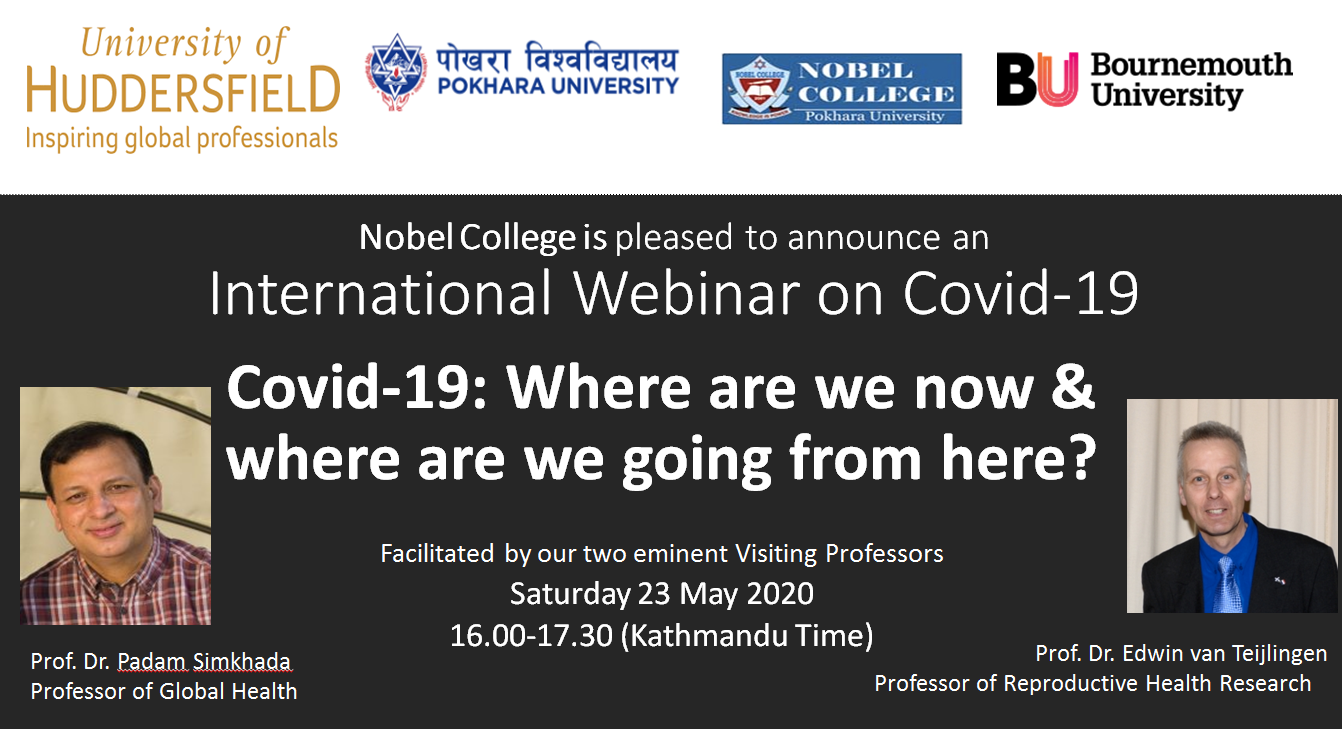
Congratulation to BU nutritionists

This week Elsevier  Publishers sent the proofs for a book chapter written by two Bournemouth University nutrition researchers: Fotini Tsofliou and Iro Arvanitidou in collaboration with an academic colleague from Greece: Xenophon Theodoridis.  The chapter ‘Toward a Mediterranean-style diet outside the Mediterranean countries: Evidence of implementation and adherence’​ will appear in 2021 in the second edition of the book  The Mediterranean diet edited by Victor R. Preedy and Ronald R. Watson

Congratulations!

Prof. Edwin van Teijlingen

Centre for Midwifery, Maternal & Perinatal Health (CMMPH)

BU midwifery paper cited in WHO report

Last week the Regional Office for South East Asia of the WHO (World Health Organization) published its strategy for strengthening midwifery [1].  The report highlights how Bangladesh, India and Nepal have recently introduced midwifery education. They joined DPR Korea, Myanmar, Sri Lanka and TimorLeste in establishing midwives as an independent cadre of the health workforce.

This report cited our 2015 paper on midwifery developments in Nepal which appeared in the Journal of Asian Midwives [2].  The lead author Jillian Ireland is a Visiting Faculty in the Centre for Midwifery, Maternal & Perinatal Health (CMMPH) and Professional Midwifery Advocate at Poole Hospital NHS Foundation Trust, my other co-author, Joy Kemp, is Global Professional Adviser at the Royal College of Midwives (RCM).  The paper reflects on the RCM Global Midwifery Twinning Project in Nepal.  The paper argues that the presence of a strong professional association of midwives in a country yields double benefits. On one side, the association provides inputs into framing policies and developing standards of care, and on the other, it ensures quality services by continuously updating its members with information and evidence for practice.

Bournemouth University’s work in Nepal is ongoing with a project run by CMMPH helping to develop midwifery education and training the trainers funded by the German aid organisation GIZ (Deutsche Gesellschaft für Internationale Zusammenarbeit).


References:

  1. World Health Organization. Regional Office for South-East Asia (2020) Regional Strategic Directions for strengthening Midwifery in the South-East Asia Region 2020–2024, Delhi: World Health Organization. Regional Office for South-East Asia.
  2. Ireland, J., van Teijlingen, E, Kemp J. (2015) Twinning in Nepal: the Royal College of Midwives UK and the Midwifery Society of Nepal working in partnership, Journal of Asian Midwives 2 (1): 26-33. http://ecommons.aku.edu/jam/vol2/iss1/5/


COVID-19 and the rise of Virtual Conferences

Yesterday we had a conference paper accepted by the EUPHA (European Public Health Association) International Conference.  When the paper was originally submitted to the EUPHA Health Workforce Research Section Mid-term Conference we had opted for an oral presentation in person at the conference in Romania this summer.  However, with the COVID-19 pandemic travelling to Romania to attend this conference is not an option for many (if not most) academics.  Therefore the organising committee took the initiative to re-arrange it as a virtual meeting.   Further good news for us is that participation will be free.

Of course, I am aware that some of the strengths of attending conferences include having unexpected discussions (often in the bar) with fellow academics and being away from the day job.  At the moment being forced to choose between postponing or cancelling a conference or changing to a virtual meeting conference organisers may want to reflect on  “… ask how conferences make a difference.”  This question was  originally raised in the book Academic Conferences as Neoliberal Commodities by Donald Nicholson [1].

We should have moved to more virtual meetings and  online conferences much sooner, but it is easy to say with hindsight!  The COVID-19 crisis has thought us that virtual classrooms, internet-based tutorials, Zoom meetings and online conferences can work, albeit with their limitations.  It is worth considering the return of investment of a conference [2] not just for the conference organisers (and funders) but also  individual academics as less travel will be saving time  and society as reducing  travel, especially international flights, will improve our carbon foot print.


Prof. Edwin van Teijlingen

Centre for Midwifery, Maternal & Perinatal Health (CMMPH)


References

  1. Nicolson. D.J. (2017) Academic Conferences as Neoliberal CommoditiesPalgrave Macmillan.
  2. Nicolson. D.J. (2018) Guest post by Donald Nicolson: The problem of thinking about conferences and Return on Investment (ROI) 


Psychological skills for health workers in Nepal

Yesterday  Dr. Shanti Shanker (Lecturer in Psychology), BU Visiting Faculty Jillian Ireland and I produced a short three-minute video for health care workers in Nepal on the topic of living with uncertainty and the COVID-19 virus. Hopefully this will be the first in a series from our Bournemouth University team.  The video is based on work funded by GCRF in the United Kingdom and supported by two NGOs (non-Governmental Organisations): (a) Sheetal Astitva and  (b) Green Taral Nepal as well as Symbiosis International (Deemed University).

This video can be accessed here!

Prof. Edwin van Teijlingen
CMMPH

BU policy update for the w/e 1st April 2020

HE news in the media has been dominated by talk of student number controls while the sector wrestles with decisions over student exams.

Parliamentary Business

Appointments

Alex Chisholm has been announced as the new Permanent Secretary at the Cabinet Office and Chief Operating Officer for the Civil Service. Alex is currently serving as Permanent Secretary at the Department of Business, Energy & Industrial Strategy, and was previously Chief Executive of the Competition & Markets Authority. He has also held senior executive positions in the media, technology and e-commerce industries, with Pearson plc, Financial Times Group, eCountries Inc and Ecceleration Ltd.

Minister for the Cabinet Office, Michael Gove, said:

  • In the medium term, much of Alex’s work will necessarily be coronavirus response related. But Alex will be responsible for supporting ministers to develop and then drive forward a reform programme for the Civil Service, building on the Government’s existing efficiency programme. He will also supervise all the Cabinet Office’s various work programmes including on preparing for the end of the transition period, strengthening the union, and defending our democracy.

Jeremy Pocklington has been appointed as the new Permanent Secretary at the Ministry of Housing, Communities and Local Government.

Health Education England has announced that current interim Chief Nurse Mark Radford has been permanently appointed.

Student Number Controls

The major news since the last policy update is speculation over the potential return of student number controls to limit recruitment. It is suggested that capping numbers (limiting the number of students a university can take for a particular programme) would help stabilise the sector by preventing some universities from taking a higher number of UK students to fill places that would have been filled by international students, who may not come because of the virus.

Alongside the domestic young population dip hitting the lowest point this year (increasing competition between providers) Coronavirus also threatens the international student recruitment. With Government intimating that lockdown or lighter restrictions last between 3 and 6 months the concern is that the much-needed funds from international students won’t be forthcoming if the students cannot enter the country or undertake face to face tuition. EU student numbers would fall too if lockdown continues to prohibit travelling.

Since the removal of student number controls in 2015 there have been regular stories about financial stability as the higher tariff or ‘prestigious’ universities recruited increased numbers of students – leaving the mid or lower tariff providers with less demand for their places, especially as the UK approached the bottom of its demographic dip in the number of 18 year olds.

The flip side is that capping student numbers means some students are unable to get a place on a programme or at their preferred provider. The government wants all students to aspire to the “higher tariff” institutions and to have a choice of providers. Of most concern in this scenario is the risk that disadvantaged students are the least likely to achieve the place at the provider they wished for due to a combination of lack of careers support, guidance, lower predicted grades, parental support and intervention and access to relevant (unpaid) work experience or social networks. And the government has said, for some time, that it does not want to cap the number of students attending university, with the social mobility benefits that this has.  So the government doesn’t like student number controls.

The coronavirus pandemic has destabilised business, education, the whole economy, and this may be one way for Ministers to prevent some HE providers becoming big winners from the disruption whilst the losers collapse. The lower tariff providers are most at risk and these are the institutions that often sit at the heart of communities that have no one local or regional HE institutions, and that take higher numbers of disadvantaged students. If these institutions collapse it is a big fail for social mobility, affecting the lives of these students and future generations.

So far the Government has moved to prevent new unconditional offers being made or converting conditional offers already made to unconditional while they are finalising the exam grade awarding strategy. The Government has not spoken out on the return of student number control (yet). Although the media and HE blogging organisations seem to be doing the job for them! Here are some of the sources:

The Guardian has been at the centre of the debate from the outset:

  • Strict limits on the number of students that each university in England can recruit are set to be imposed by the government in an effort to avoid a free-for-all on admissions, with institutions plunged into financial turmoil as a result of the coronavirus pandemic, the Guardian has learned.
  • A government source said each university would face limits on the number of UK and EU undergraduates it could admit for the academic year starting in September, in a move backed by higher education leaders.

As the Guardian article mentions UUK’s response to the proposal has also been at the forefront.  The Guardian article states the board of UUK approved the return of student number caps and an edited article quotes Alistair Jarvis (Chief Exec UUK) as saying

  • “The UUK board discussed a range of measures needed to promote financial stability of the sector in these tough times. Foremost was the need for government financial support for universities. Student number controls were discussed and it was agreed that further consideration of the pros and cons were needed, with further input from members.” (Alistair tweeted to state the Board had not approved student numbers after the original Guardian article was published, hence ‘student number controls were discussed’ and RP cover the backtrack here).

The offers for students – Research Professional (RP) analyse whether degree outcomes vary based on unconditional offers (including conditional unconditional offers).

The Mail Online is convinced that student number controls are back and write as if the Government has already announced this – Government will place strict limit on student numbers in bid to avoid admissions free-for-all at universities hit by coronavirus

RP also ask in Aftershock if number controls are reintroduced then…: The Guardian’s article is well sourced but lacks detail. Are students who have had their A levels cancelled now going to be told that they cannot go to the university of their choice? That could have a significant impact on recruitment across the board come September.

The Guardian followed up their original article with Concern for A-level students over chaos on university admissions which covers exactly what RP raise above – that students holding offers may no longer have a place to attend. It also includes comment from David Willetts:

  • David Willetts removed student number controls from 2015 when he was minister for universities and science. Writing for the Higher Education Policy Institute in a blog due to be published on Tuesday, he said: “University is a safe haven for young people in these tough times. We can expect many more 18-year-olds to try to get to university now as the alternatives are so poor at the moment. If the government does reintroduce number controls (which I would regret), it must not do so in a way that reduces opportunities for young people to go to university.”

The Guardian also publish an opinion piece – Covid-19 is our best chance to change universities for good.

HEPI have much to say on student number controls. Nick Hillman, Director of HEPI, worked for David Willets ex-Universities Minister and recalls that the abolishing of student number controls was announced on his last day in the job. Elsewhere on HEPI there is a blog Eight interventions for mitigating the impact of Covid-19 on higher education; number 1 is the re-imposition of student number controls to ensure that institutions have a viable first year student population. They suggest that – Realistically, given the damage to school students’ education and examination preparation, this will not be a one-year exercise. There are a number of ways this could happen, either by setting institution by institution limits on admissions (as was the case until 2011) or by limiting variance to +/-5 per cent for any institution against a three year average of admissions (from 2017 to 2019 inclusively). In the longer term, there should be a fundamental review of the operation of the market.  The blog is worth a full read covering other topical elements such as impact on current student retention and progression rates, rent support, contextual admissions, ditching the NSS (national student survey for 2020), increasing quality-related research funding to stabilise the research base and establishing a digital learning leadership fund.

Nick Hillman (HEPI) is also quoted in the Guardian article:

  • …there are people who have long wanted to restrict access to higher education who might see this as the chance to do it. Yet when there are fewer jobs to go around, education becomes more important, not less. And: Reintroducing number caps would protect those universities that have grown the most in recent years by locking down the number of home students that they educate and stopping others from growing at their expense. Older, more prestigious universities would be the biggest losers, as they had hoped to be able to replace lost international students with more home students.

Other HEPI blogs:

Other sources:

There may be more news on this soon.

Exams

The NUS has called for all non-essential (year 1 and 2) exams to be cancelled to reduce anxiety for these students and allow HEIs to focus on facilitating the best possible assessment experience for the final year students. Coverage in the Guardian states that NUS say: disabled, international and poorer students would be significantly disadvantaged if universities go through with plans to hold online exams and assessments next term. [Because accessibility has been lost or left behind in the swift move to online teaching and assessment.]… final-year students should be given a choice of how to complete their degrees, such as receiving an estimated grade based on prior attainment, doing an open book online exam, or taking their finals at the university at a later date.

Claire Sosienski-Smith, the NUS vice-president (Higher Education): “In the current climate, student welfare must come first…It is vital that there are no compulsory exams this year.”

NUS also call for PG students to have a 6-month extension on their submission deadlines.

Similar to student number controls there is a wealth of media attention and material on exams this week. There are nationwide reports of petitions and students campaigning on a range of factors, including ‘no detriment’ policies. No detriment means the average grade the student has already earned from previous assessments is taken as a given and any further assessments can only build to increase the overall grade awarded (not decrease). However, the devil is in the detail and the application.  For example, how can students demonstrate they have met professional registration or statutory regulatory requirements? And in some approaches students have to pass this year’s assessment – if they do better their grade goes up, if worse their grade remains at previous average, if they don’t pass the assessment then their average grade may be in question. No doubt at some point a bright spark will point out that a no detriment policy when going into a final exam is much the same motivation as entering A levels with an unconditional university offer. Brace yourself for headlines not only about grade inflation but about final exam underachievement.

BU readers should know that BU has also announced a “no detriment” policy with the details being worked out on a programme by programme basis.

The Tab summarises a range of approaches and highlights which details universities are following that approach. It covers final and earlier year exams, graded assessments versus pass and fail marking, and dissertation extensions.

Other media:

Horizon Scanning

To catch up on wider regular policy issues –  you can read our BU policy horizon scan.

Research & KEF

On Tuesday Wonkhe reported that the Knowledge Exchange Concordat has been postponed.

A research related parliamentary question:

Q – Dr Lisa Cameron: To ask the Chancellor of the Exchequer, with reference to Budget 2020, what proportion of the £22 billion investment in R&D he plans to allocate to (a) performing and (b) funding R&D. [33613]

A – Jesse Norman: The Government is committed to supporting the UK’s leadership in science and innovation, and set out an ambition to increase economy-wide investment in R&D to 2.4% of GDP by 2027. At the 2020 Budget, the Government announced that it would increase public investment in R&D to £22bn by 2024-25, the largest ever increase in support for R&D. This will support innovators and researchers across the UK to develop their brilliant ideas, cutting edge technologies and ground breaking research. The majority of this uplift will be allocated at the Spending Review, including support for various R&D programmes. The Government will set out further details in due course

Mental Health

The Department of Health and Social Care released new public guidance regarding mental health support during the coronavirus outbreak covering areas from medication, to managing wellbeing, medication and coping mechanisms. There is easy read guidance for those that need this. The Government have also announced £5 million for leading mental health charities, administered by Mind. And NHS Mental Health Providers are establishing 24/7 helplines.

Paul Farmer, Mind Chief Executive, stated:

  • We are facing one of the toughest ever times for our mental wellbeing as a nation. It is absolutely vital that people pull together and do all they can to look after themselves and their loved ones, when we are all facing a huge amount of change and uncertainty…Charities like Mind have a role to play in helping people cope not only with the initial emergency but coming to terms with how this will affect us well into the future. Whether we have an existing mental health problem or not, we are all going to need extra help to deal with the consequences of this unprecedented set of circumstances.

Claire Murdoch, NHS mental health director, said:

  • The NHS is stepping up to offer people help when and how they need it, including by phone, facetime, skype or digitally enabled therapy packages and we also have accelerated plans for crisis response service 24/7…We are determined to respond to people’s needs during this challenging time and working with our partners across the health sector and in the community, NHS mental health services will be there through what is undoubtedly one of the greatest healthcare challenges the NHS has ever faced.

The Times has an article on student mental health focusing on anxiety caused by uncertainties such as exams: Panic and anxiety after education is plunged into limbo.

Brexit & immigration

Withdrawal Agreement

The Government has published a press release outlining that the Withdrawal Agreement Joint Committee met virtually on Monday 30 March to discuss the application and interpretation of the Withdrawal Agreement. There is a factsheet about the Withdrawal Agreement Joint Committee here.

EU Settlement Scheme

The EU settlement scheme continues. However, the Home Office has clarified that while applications continue to be processed, during this challenging time they will take longer than usual. And the resolution centre will only respond to email inquiries, not telephone; all the ID document scanner locations have been suspended as is the postal route to submit identity evidence. The Home Office reminds: there are still 15 months before the deadline of 30 June 2021 for applications to the EU Settlement Scheme, and there is plenty of support available online to support those looking to apply. This includes translated communications materials and alternative formats being made available.

Visas

The Government has announced visa extensions until 31st May for all foreign nationals in the UK. Individuals who are in the UK and whose visa expired after 24th January are being urged to contact the Home Office to be issued with the May extension. The Government have confirmed they will continue to kept the timescales under review in case further extension is needed.

A dedicated Covid-19 immigration team has been set up within the Home Office to make the process as “straightforward as possible” for visa holders. To help those who want to apply for visas to stay in the UK long-term, the Home Office is also temporarily expanding the in-country switching provisions. In light of the current advice on self-isolation and social distancing, the Home Office is also waiving a number of requirements on visa sponsors, such as allowing non-EU nationals here under work or study routes to undertake their work or study from home.

Priti Patel, Home Secretary, stated: The UK continues to put the health and wellbeing of people first and nobody will be punished for circumstances outside of their control. By extending people’s visas, we are giving people peace of mind and also ensuring that those in vital services can continue their work.

NHS Visas – 1 year extension & Student Nurses

The Home Office have announced that doctors, nurses and paramedics will automatically have their visas extended for one year, free of charge. The extension also covers family members. This measure will also help bolster the number of NHS staff able to work during the coronavirus situation.

Restrictions limiting the number of hours that student nurses and doctors can work in the NHS have also been lifted.

Priti Patel said:

  • Doctors, nurses and paramedics from all over the world are playing a leading role in the NHS’s efforts to tackle coronavirus and save lives. We owe them a great deal of gratitude for all that they do. I don’t want them distracted by the visa process. That is why I have automatically extended their visas – free of charge – for a further year.

NUS

NUS ran its hustings and voting for the election of the presidential and executive officers online for the first time ever. Hillary Gyebi-Ababio has been elected NUS UK’s Vice-President Higher Education for a two-year term receiving 85% of the vote. Hillary is currently the Undergraduate Education Officer at University of Bristol Students’ Union. She states she believes that education should be free, accessible and open to all, with students from all backgrounds and identities being able to engage with and shape the education they deserve. She wants students to be at the centre of their education, not viewed as metrics in a market. She will be fighting for an education system that puts students first. Hillary commented:

  • “It is an honour to be elected as the new Vice President Higher Education of our new and reformed NUS. The fact that students all over the country have trusted me with this role is a sign of how much there is a need for a NUS that puts students at the heart of all it does. I am committed to ensuring that every student, regardless of background, circumstance or identity is heard, seen and cared for. This is going to be an exciting time for the student movement, and the beginning of a new and revitalised NUS.”

Student Experience

Lawyer Smita Jamdar blogs on the consequences of the changes to teaching, assessment and student services as a result of Covid-19 and what universities should be considering to ensure they stay on the right side of the Consumer Rights Act.

Accessibility & Mitigation

Wonkhe write: Is online teaching accessible to all? The sector has (mostly) shifted teaching online – but this has been the very opposite of the kind of planned migration that would be considered best practice by digital delivery experts. In the rush to ensure that students could continue their studies it is very likely that the needs of some students – specific learning needs, disabilities, and external factors – have been forgotten. The next phase of the great leap online will be unpicking where mitigations and alternatives need to be put in place to ensure every student can continue their education during the Covid-19 lockdown.

Wonkhe have one blog on the ethics sitting behind it all: The sudden shift to online provision has failed to consider the needs of all students, and may have been built on tools of uncertain provenance.

And a further blog from Martin McLean from the National Deaf Children’s Society on the mitigations required for deaf students to succeed in online teaching and assessment.

Parliamentary Questions

Student Enrolment/Employment

Q – Dr Luke Evans: To ask the Secretary of State for Education, what discussions he has had with universities on ensuring that students remain enrolled at their institution in the event (a) that they lose their part-time employment and (b) of another change in their financial situation as a result of the covid-19 outbreak. [33725]

A – Michelle Donelan: The government is working closely with the sector on a wide range of issues, and student wellbeing is at the heart of those discussions. It will be for universities to deal with individual students’ situations. Universities know how best to provide support and maintain hardship funds, which can be deployed where necessary, which is especially important for students who are estranged from their families, disabled or have health vulnerabilities.

Students will continue to receive scheduled payments of loans towards their living costs for the remainder of the current, 2019/20, academic year. If they are employed or self-employed, they may also be able to benefit from the wider measures of support announced by the Chancellor of the Exchequer. If agreed with their employer, their employer might be able to keep them on the payroll if they’re unable to operate or have no work for them to do because of coronavirus (COVID-19). This is known as being ‘on furlough’. They could get paid 80% of their wages, up to a monthly cap of £2,500.

Loans

Q – Preet Kaur Gill: To ask the Secretary of State for Education, what discussions he has had with the chief executive of the student loans company on the potential merits of refunding loans for the third term of this academic year. [33730]

A – Michelle Donelan: The Student Loans Company (SLC) will continue to make scheduled tuition and maintenance payments to both students and providers. Both tuition and maintenance payments will continue irrespective of whether learning has moved online. This has been communicated via the SLC website. We are continuing to monitor the position.

Inquiries and Consultations

Click here to view the updated inquiries and consultation tracker. Email us on policy@bournemouth.ac.uk if you’d like to contribute to any of the current consultations.

New consultations and inquiries this week:

  • The Commons Education select committee is running an inquiry into the impact of COVID-19 on education and children’s services – how the outbreak of COVID-19 is affecting all aspects of the education sector and children’s social care system and will scrutinise how the Department for Education is dealing with the situation. It will examine both short term impacts, such as the effects of school closures and exam cancellations, as well as longer-term implications particularly for the most vulnerable children. Closes: 30 September 2020
  • The House of Commons Women and Equalities Committee has launched an inquiry to hear about the different and disproportionate impact that the Coronavirus – and measures to tackle it – is having on people with protected characteristics under the Equality Act. Closes: 30 April 2020

Other news

  • Data Futures: HESA have published the latest data futures guidance. Wonkhe write on the release: The release of version 1.0.0 of the HESA Data Futures manual offers a welcome indication that, Data Futures, the long-planned overhaul of student data collection will be going ahead. The new materials suggest three data collection points (one per “reference point”) each year, confirming the move away from continuous collection. Also from HESA, a detailed methodology statement (in two parts) on Graduate Outcomes.
  • Student rent: The BBC has an article on the Bristol students staging rent strikes. They are campaigning about the lack of flexibility or forgiveness from landlords. In particular students who have lost their part time jobs or are unable to work because they are self-isolating are detailed. And Wonkhe report that Shadow Secretaries of State John Healey and Angela Rayner have written to government ministers to raise concerns about student accommodation fees for the summer term – requesting action for students living in halls and for those in the private rented accommodation sector.

Subscribe!

To subscribe to the weekly policy update simply email policy@bournemouth.ac.uk.

JANE FORSTER                                            |                       SARAH CARTER

Policy Advisor                                                                     Policy & Public Affairs Officer

Follow: @PolicyBU on Twitter                   |                       policy@bournemouth.ac.uk

Nepal publication: Smoking & suicide ideation

Published earlier this week in the Nepal Journal of Epidemiology a BU co-authored paper on ‘Cigarette smoking dose-response and suicidal ideation among young people in Nepal: a cross-sectional study’ [1].   The authors conducted a cross-sectional questionnaire-based survey with 452 young people in Nepal’s second largest city Pokhara.  The study matched participants by age and smoking status. The mean age was 21.6 years and 58.8% were males. The overall rate of suicidal ideation in our cohort was 8.9%. Smokers were slightly more likely to report suicidal ideation than non-smokers (aOR 1.12). The risk of developing suicidal ideation was 3.56 (95% CI 1.26-10.09) times more in individuals who smoked greater than 3.5 cigarettes per week (p=0.01).
The paper concludes that the rate of suicidal ideation was slightly higher among smokers and a dose-response relationship  existed linked with the number of cigarettes smoked per week. Being aware of the link between smoking and
suicidal ideation may help health care professionals working with young people to address more effectively the issues of mental well-being and thoughts about suicide.  The Nepal Journal of Epidemiology is an Open Access journal hence this public health  paper is freely available to readers across the globe.

Reference:

  1. Sathian, B., Menezes, R.G., Asim, M., Mekkodathil, A., Sreedharan, J., Banerjee, I., van Teijlingen, E.R., Roy, B., Subramanya, S.H., .Kharoshah, M.A., Rajesh, E., Shetty, U., Arun, M., Ram, P., Srivastava, V.K. (2020) Cigarette smoking dose-response and suicidal ideation among young people in Nepal: a cross-sectional study, Nepal Journal of Epidemiology 10 (1): 821-829 https://www.nepjol.info/index.php/NJE/article/view/28277

New FHSS nutrition publication

Congratulations to FHSS academics Dr. Fotini Tsofliou and Prof. Carol Clark on the acceptance for publication of their latest article ‘Effects of lunch club attendance on the dietary intake of older adults in the UK: a pilot cross-sectional study’ [1].  This paper is forthcoming in the journal Nutrition & Health (published by SAGE).


Reference:

  1. Tsofliou, Fotini; Grammatikopoulou, Maria; Lumley, Rosie; Gkiouras, Konstantinos; Lara, Jose ; Clark, Carol (2020)  Effects of lunch club attendance on the dietary intake of older adults in the UK: a pilot cross-sectional study.  Nutrition & Health (accepted)

COVID-19 Pandemic: Public Health Implications in Nepal

Our editorial today in the Nepal Journal of Epidemiology highlights some of the key issues related to COVID-19 related to a low-income country such as Nepal [1].  There are various Public Health challenges to preventing the spread of COVID-19 in South Asia including Nepal. Learning from the  COVID-19 outbreak in China, there will be slowdown of economic activity with damaged supply chains which impact upon the public health systems in Nepal. Moreover, there is limited coordination among different stakeholders in healthcare management with few policies in place for infection prevention and control, shortage of testing kits and medical supplies (shortages of masks, gloves), and poor reporting are major challenges to be tackled in case of the COVID-19.

All South Asian countries are vulnerable to a mass outbreak with high population density in cities which is challenging to create social distancing, made worse by generally poor hygiene and often low (health) literacy. Additionally, some COVID-19 cases remain asymptomatic; so it is difficult to predict the epidemic outbreak that may introduces further difficulty in diagnosis of newer cases. Finally, healthcare workers across the globe were infected at high rates during the MERS and SARS outbreaks, so Nepal has to initiate health workers’ training including simulation exercises to provide health staff with a clearer picture of the complexities and challenges associated with COVID-19 and containing potential outbreaks.

This editorial has a very different time span between submission and publication than the one highlighted last week on the BU Research Blog (see details here!).  This  COVID-19 editorial took exactly one month between submission and publication, the one mentioned last week took  three-and-a-half years between submission and publication.


Prof. Edwin van Teijlingen

CMMPH

Reference:

  1. Asim, M., Sathian, B., van Teijlingen, E.R., Mekkodathil, A., Subramanya, S.H., Simkhada, P. (2020) COVID-19 Pandemic: Public Health Implications in Nepal, Nepal Journal of Epidemiology 10 (1): 817-820. https://www.nepjol.info/index.php/NJE/article/view/28269

Latest CMMPH publication by Dr. Alison Taylor

Congratulations to Dr. Alison Taylor in the Centre for Midwifery,Maternal & Perinatal Health (CMMPH) whose third PhD paper  has just been accepted by the International Breastfeeding Journal.  Alison’s paper ‘Commercialisation and commodification of breastfeeding: video diaries by first-time mothers’ reminds us that many of aspects of our lives are increasingly commercialised in post-modern society.  Although breastfeeding is perhaps a late comer to this process in recent years, it too has seen significant commercialisation facilitated by social media and our obsession with celebrity culture.

This paper explores how the commercialisation and commodification of breastfeeding impacts mothers’ experiences of breastfeeding.  The paper highlights that women preparing for breastfeeding are exposed to increasing commercialisation.  When things do not go to plan, women are even more exposed to commercial solutions. The impact of online marketing strategies fuelled their need for paraphernalia so that their dependence on such items became important aspects of their parenting and breastfeeding experiences.   Dr. Taylor and her co-authors  offer new insights into how advertising influenced mothers’ need for specialist equipment and services. Observing mothers in their video diaries, provided valuable insights into their parenting styles and how this affected their breastfeeding experience.

The International Breastfeeding Journal is an Open Access journal owned by Springer.


References:

  1. Taylor, A.M., van Teijlingen, E., Alexander, J., Ryan, K. (2020) Commercialisation and commodification of breastfeeding: video diaries by first-time mothers, International Breastfeeding Journal (accepted).
  2. Taylor A, van Teijlingen, E.,Ryan K, Alexander J (2019) ‘Scrutinised, judged & sabotaged’: A qualitative video diary study of first-time breastfeeding mothers, Midwifery 75: 16-23.
  3. Taylor, A.M., van Teijlingen, E., Alexander, J., Ryan, K. (2019) The therapeutic role of video diaries: A qualitative study involving breastfeeding mothers, Women & Birth 32(3):276-83. https://www.sciencedirect.com/science/article/pii/S1871519218300064

Donning the ‘Slow Professor’

Congratulations to the Bournemouth authors who published the paper ‘Donning the ‘Slow Professor’: A Feminist Action Research Project’ earlier this month [1].  This paper was published in the journal Radical Teacher.  The paper argues that the corporatisation of Higher Education has introduced new performance measurements as well as an acceleration of academic tasks creating working environments characterised by speed, pressure and stress. This paper discusses findings from a qualitative, feminist participatory action research (PAR) study undertaken by an interdisciplinary team of women academics at a modern, corporate university in England. The study illuminates how corporatized HE erodes faculty autonomy, degrades learning environments, damages professional satisfaction and health. Strategies for resistance and liberation developed through the PAR process are discussed.

The writing collective for this paper comprised: Sara Ashencaen Crabtree, Ann Hemingway, Sue Sudbury, Anne Quinney, Maggie Hutchings, Luciana Esteves, Shelley Thompson, Helen Jacey, Anita Diaz, Peri Bradley, Jenny Hall, Michele Board, Anna Feigenbaum, Lorraine Brown, Vanessa Heaslip,  and Liz Norton.

Reference: Ashencaen Crabtree, S., Hemingway, A., Sudbury, S., Quinney, A., Hutchings, M., Esteves, L., Thompson, S., Jacey, H., Diaz, A., Bradley, P., Hall, J., Board, M., Feigenbaum, A., Brown, L., Heaslip, V., Norton, L. (2020) Donning the ‘Slow Professor’: A Feminist Action Research Project , Radical Teacher, Vol. 116

Nepal reproductive health paper published yesterday

Congratulations on the latest paper published yesterday by Dr. Preeti Mahato in the Centre for Midwifery, Maternal & Reproductive Health (CMMPH) and colleagues.   This paper ‘Factors associated with contraceptive use in rural Nepal: Gender and decision-making’ [1], is freely available for the next 49 days through our personalized link: click here


This research paper in the journal Sexual and Reproductive Healthcare reports on a secondary analysis of pas a quantitative cross-sectional study in four villages of a hilly district in Nepal.  This authors found that gender was associated with current/ever use of contraceptives but decision-making was not found associated with current/eve use of contraceptives.  And, as perhaps was to be expected, socio-economic factors such as husband’s and wife’s education; and indicators showing sharing of childcare responsibilities were found to be associated with contraceptive use.   the paper concludes that educational, health promotional and family planning programmes involving husbands are needed to promote use of contraceptives.


Preeti’s co-authors are based at Dorset County Hospital in Dorchester, at CMMPH and at Singapore Clinical Research Institute/Duke-NUS Graduate Medical School, Singapore.


Reference:

  1. Mahato, P., van Teijlingen, E., De Souza, N., Sheppard, Z. (2020) Factors associated with contraceptive use in rural Nepal: gender and decision-making, Sexual & Reproductive Healthcare 24: 100507 https://doi.org/10.1016/j.srhc.2020.100507