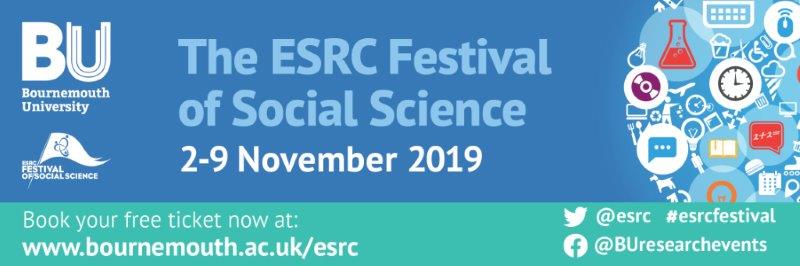
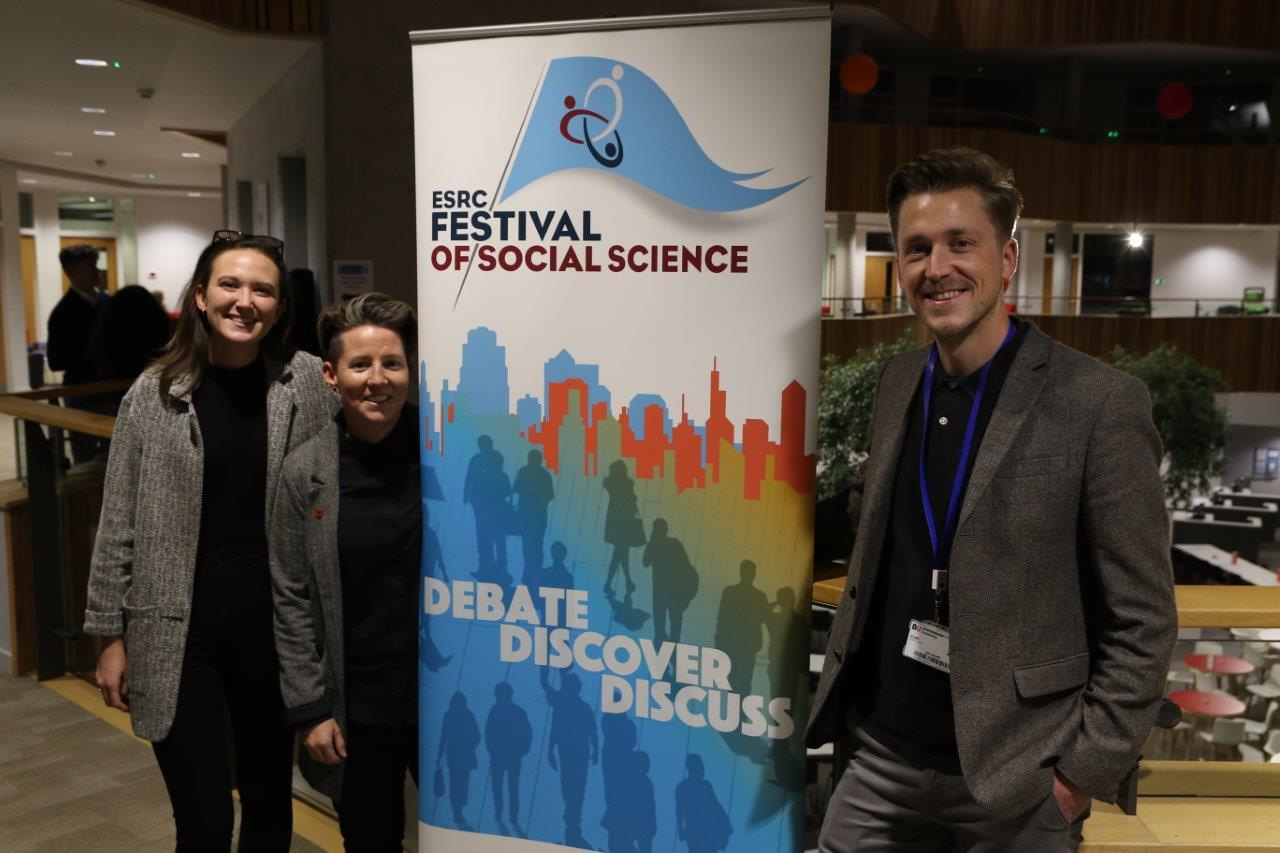
 With only a few days to go before we kick off this year’s ESRC Festival of Social Science, don’t miss out on booking your free tickets!!
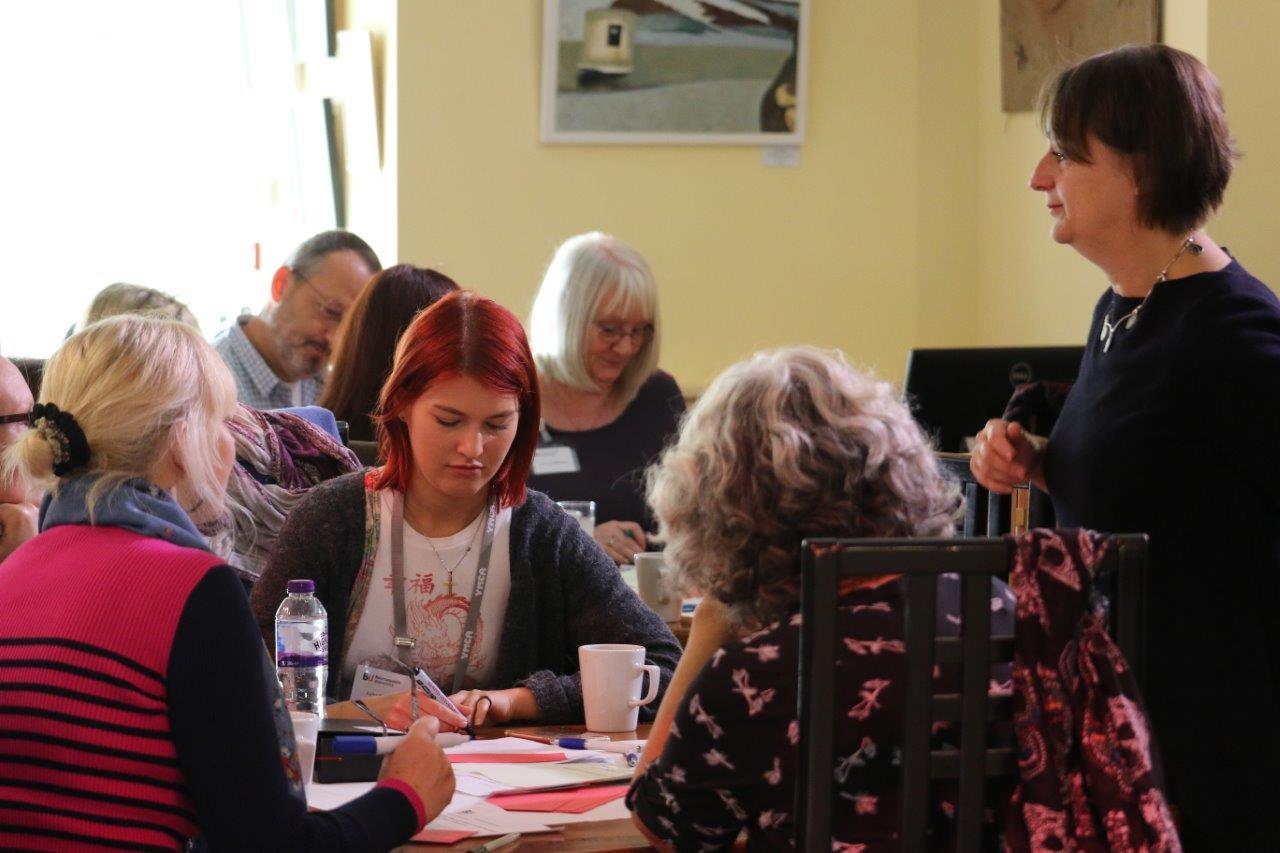
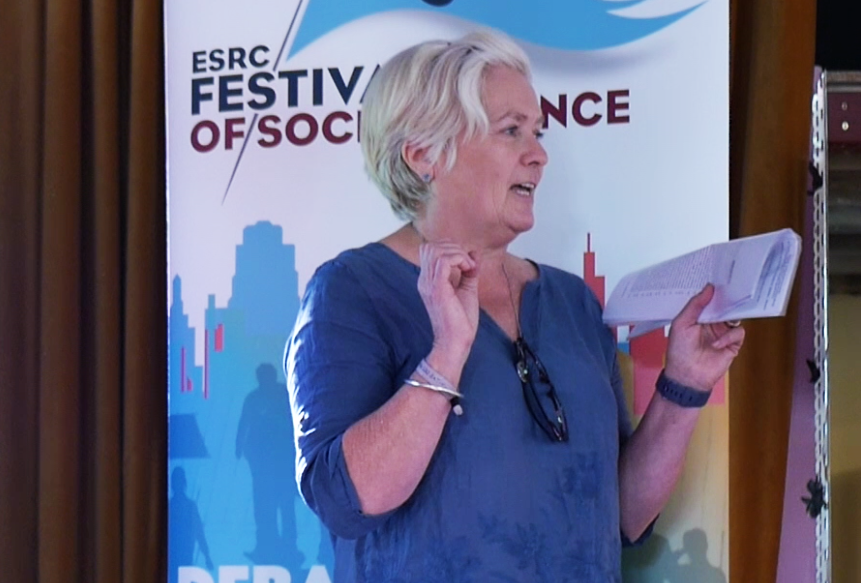
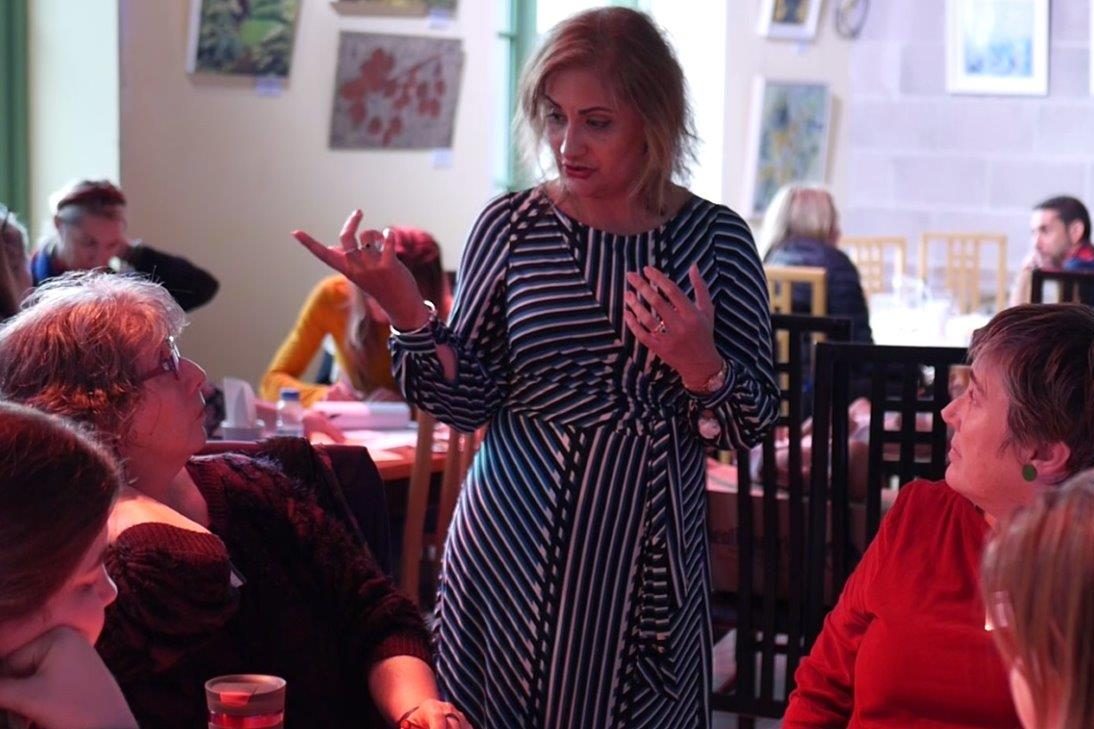
This year we’re exploring a number of different issues through a series of talks, interactive workshops, discussions and exhibitions. These events are aimed at a wide range of audiences to share understanding and spark conversations that can make a difference to society.
Come and join us to gain a fascinating insight into some of the social science research taking place at Bournemouth University and find out how we’re helping to understand and shape society.
Living your best life: positivity for wellbeing
Saturday 2 November: 9:30am -12:30pm
Lighthouse, 21 Kingland Road, Poole, BH15 1UG
With a rise in reported mental health issues amongst the general population, it is important to understand how each of us can take steps to develop our own self-awareness and socio-emotional intelligence. In this event we’ll turn the latest social science research into wellbeing tips and self-care strategies you can adopt in our own life, to develop your confidence and a better understanding of your emotional experiences.

Ways of seeing sport coaching violence
Monday 4 November: 6 – 8pm
Bournemouth University, Talbot Campus
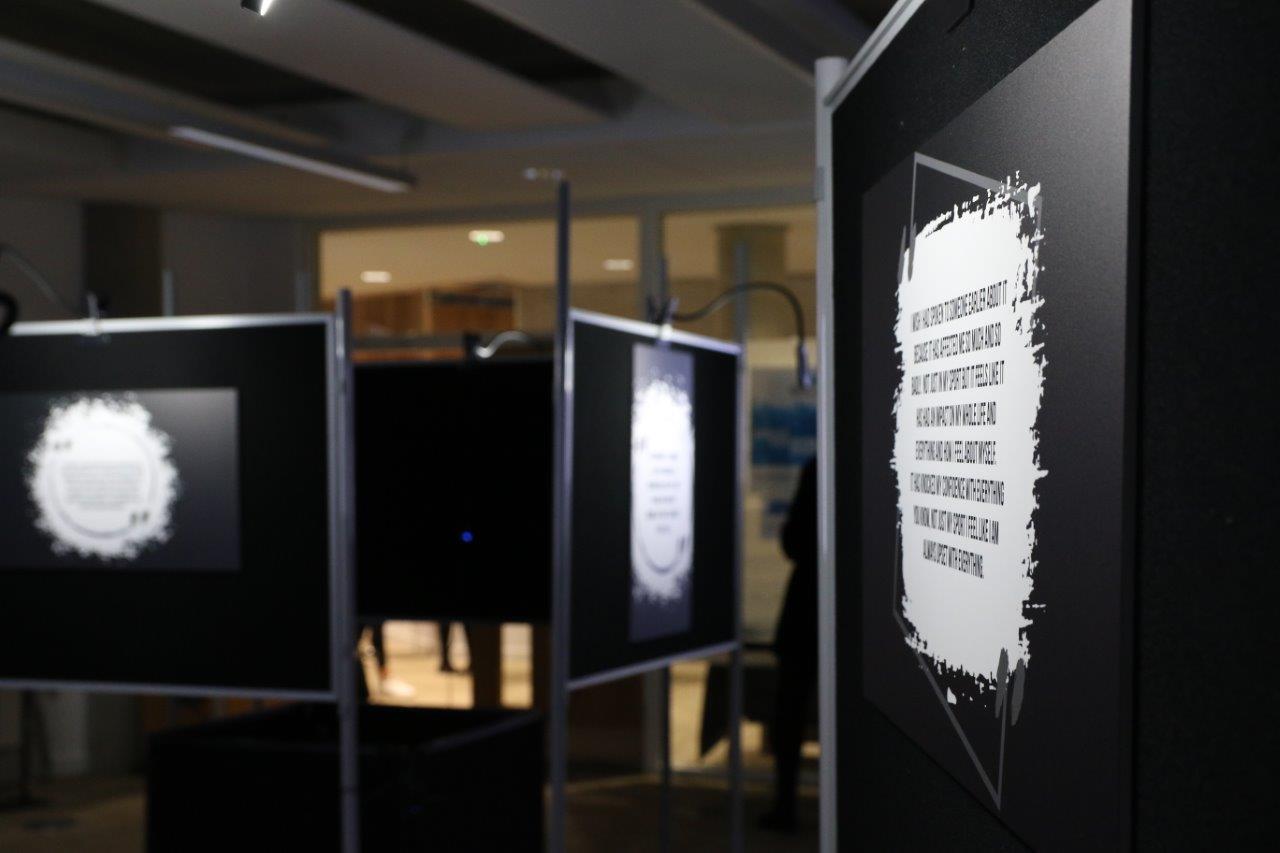
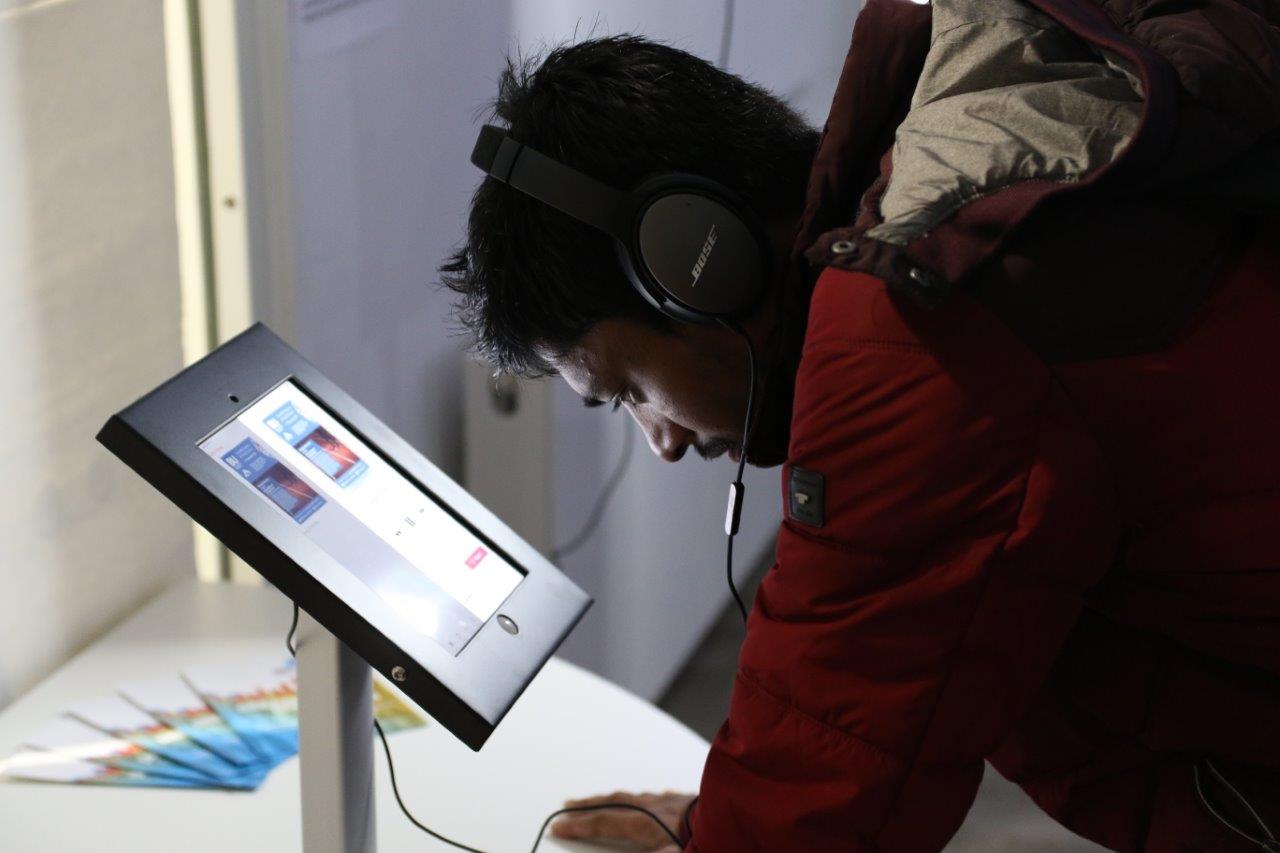
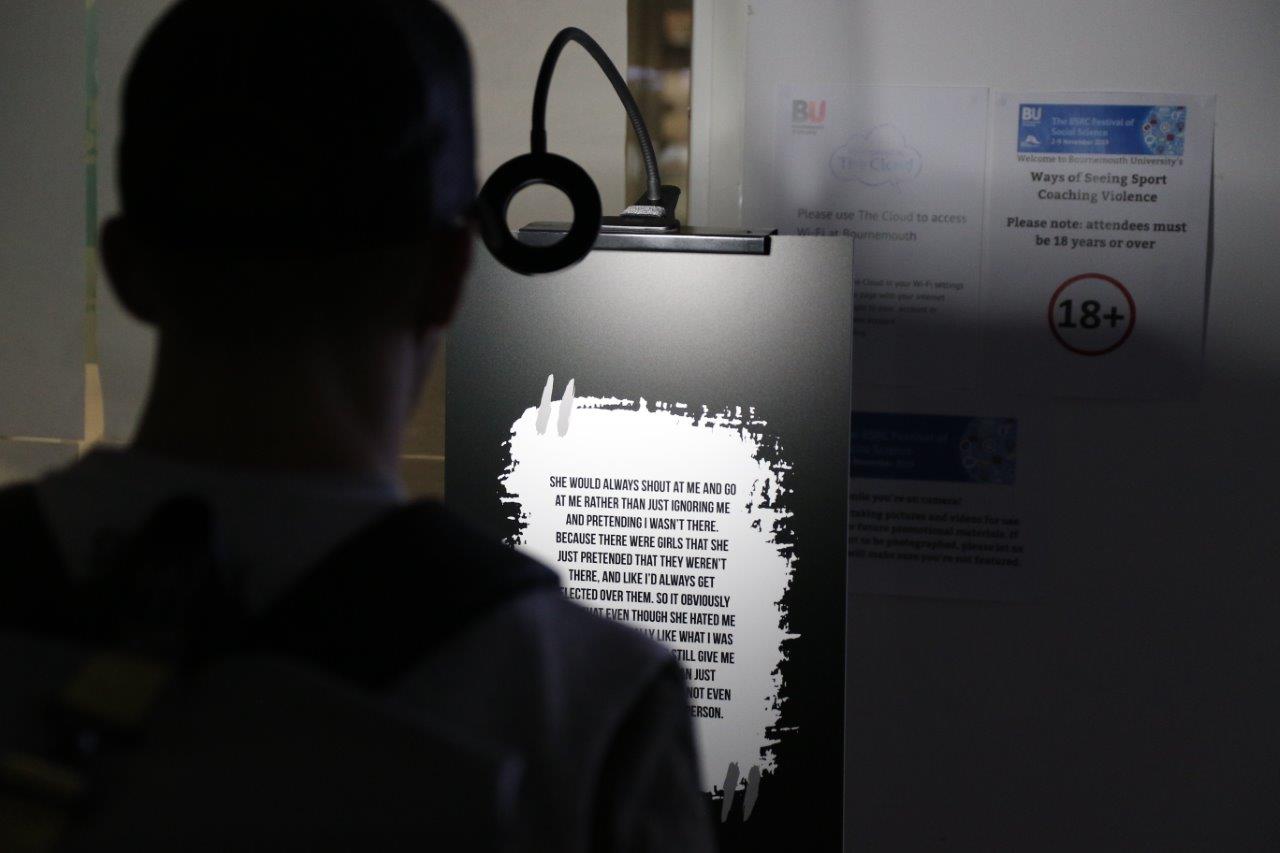
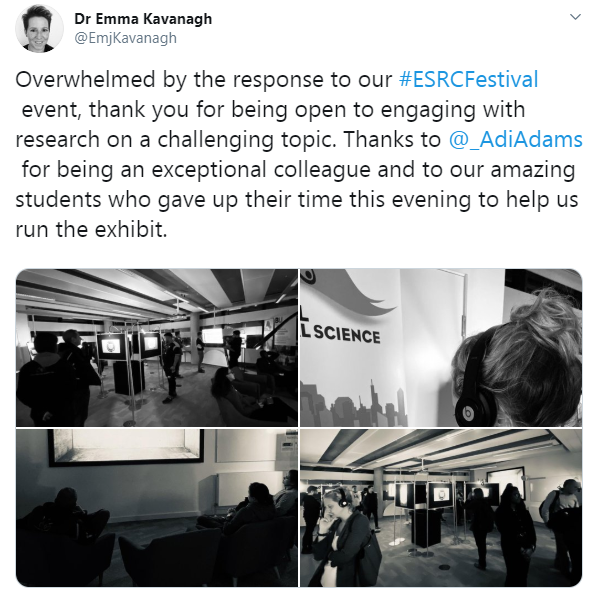
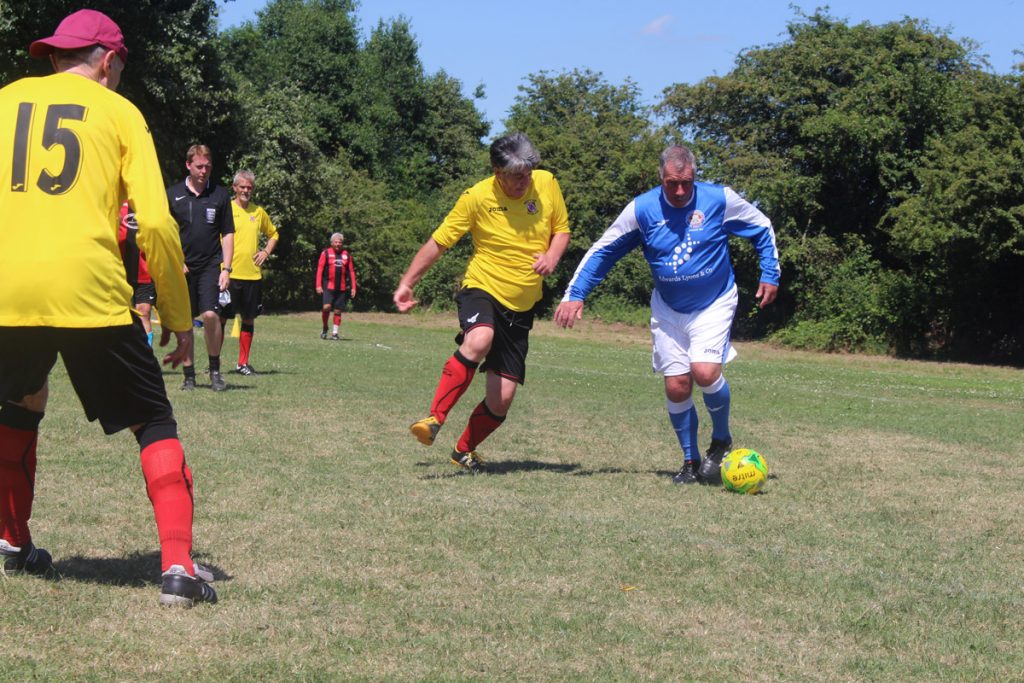
Abuse, intimidation and violence in sport and coaching remain a significant global problem. Drawing on academic research and real life accounts of coach-athlete related violence, this event offers sport coaches, practitioners and others interested in this issue a unique and innovative opportunity to engage with research through an arts-based, audio-visual installation. You’ll also be able to chat to the researchers and share your experiences and views on developing positive coaching practice.

Trauma-informed health and social care
Tuesday 5 November: 9am – 4pm
The Shelley Theatre, Beechwood Avenue, Bournemouth, BH5 1LX
Trauma informed care is a new way of supporting the wellbeing of individuals who are experiencing, or have experienced childhood adversity or trauma. Using the World Café format, we will bring together those who work with people in a supportive role, for example teachers, care workers and social workers, to exchange ideas, learn from each other and develop new strategies. We’ll also feature talks from service users and expert practitioners, as well as workshop activities.

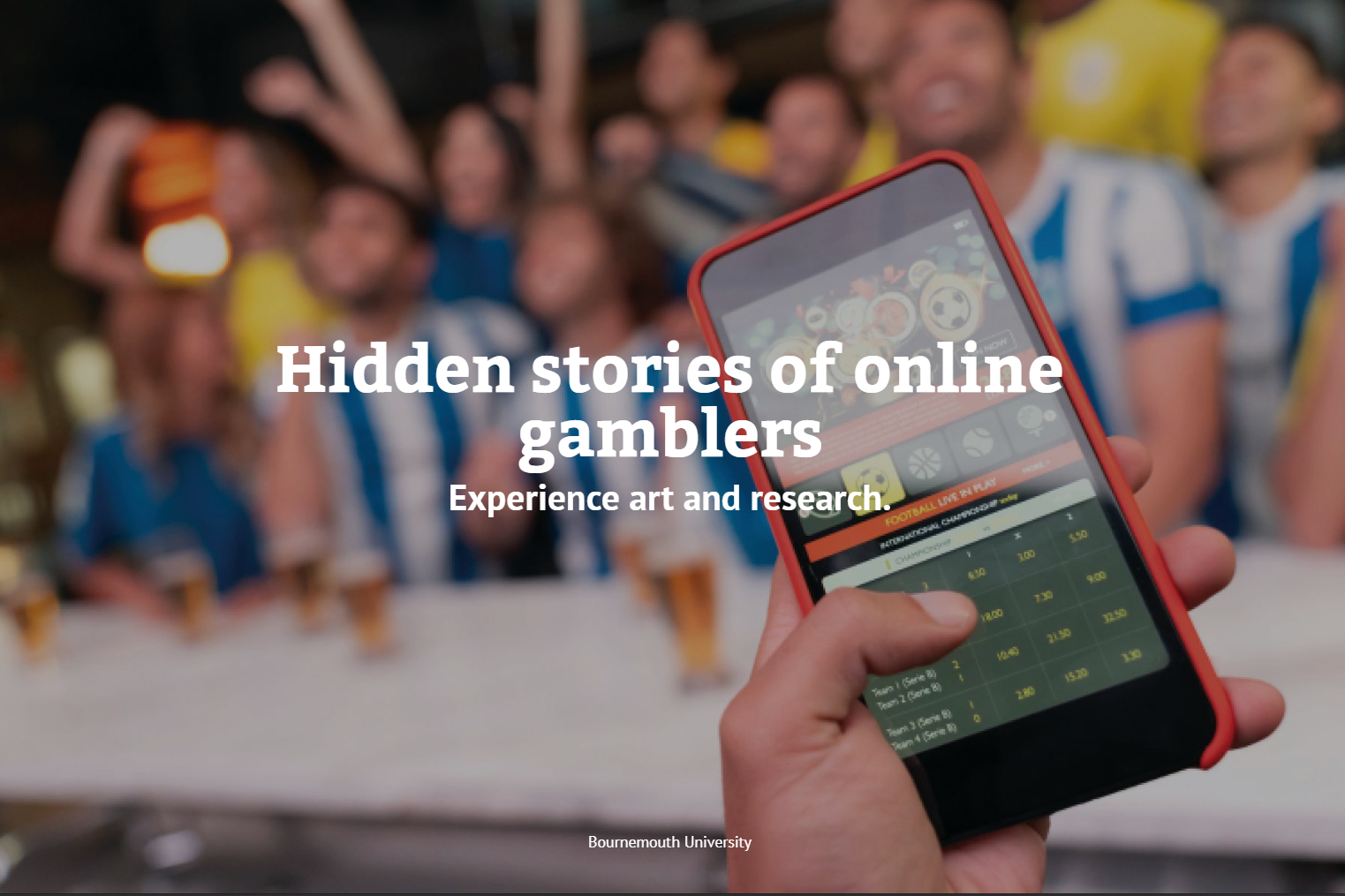
Hidden stories of online gamblers
Tuesday 5 November: 7:30 – 9pm and all week, online
Cafe Boscanova, Boscombe BH1 4BP
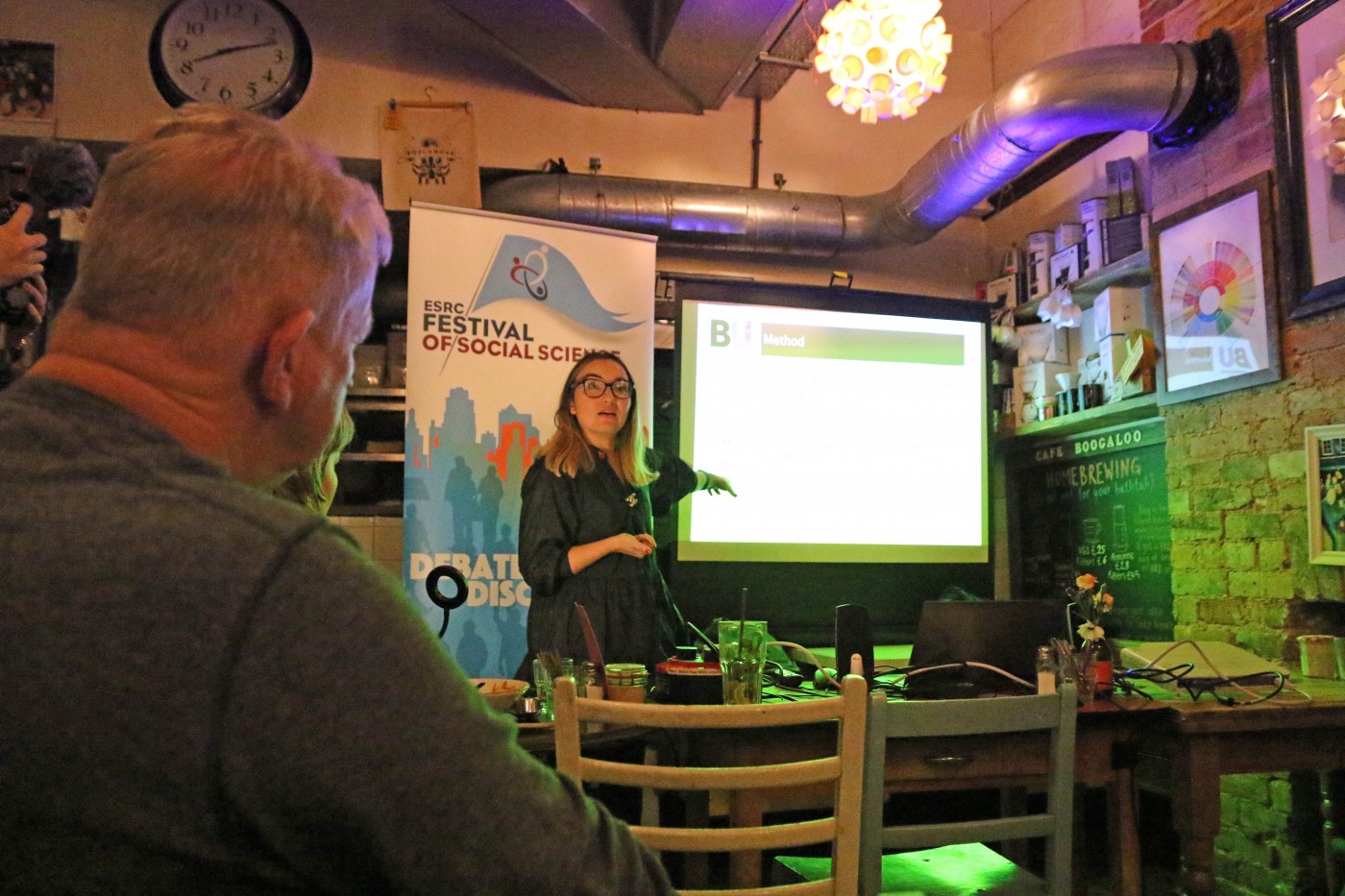
Visit our virtual exhibition, where we’ll share the diverse stories and voices of those affected by online gambling. Attend our Cafe Scientifique discussion in person or watch online to enjoy talks to discover the artificial intelligence, targeted advertising and behavioural science that keeps gamblers hooked and how you can beat them. Join the conversation by sharing your views and stories on social media.

Stress and wellbeing in the workplace
Wednesday 6 November: 10am – 4pm
Executive Business Centre, Holdenhurst Road, Bournemouth BH8 8EB
There is growing recognition that experiencing stress and trauma at work can have a hugely detrimental effect on your wellbeing. This event brings together academic researchers, staff from key agencies and the public to discuss research on stress and workplace trauma, and the best ways of tackling it. There will an opportunity to try out a range of self-care, relaxation and coping techniques as part of the event.
Preparing Gen Z for the global workplace
Wednesday 6 November: 3 – 5:30pm
Bournemouth University, Talbot Campus
It’s more important than ever that we equip our 21st century learners with the skills they need to thrive in the global workplace. This event, for further education teachers and tutors will teach you how to deliver a suite of workshops developed at Bournemouth University. We will run through the workshops in small interactive groups, and you will be provided with all the materials required to adapt these workshops for your own work with young people.

How we think about pregnancy and childbirth
Friday 8 November: 5:30 – 6:30pm
Poole Hospital, Longfleet Road, Poole BH15 2JB
This event looks at different perspectives on pregnancy – from the social model of pregnancy, which accepts childbirth as a normal event in a woman’s life to the medical model, which portrays childbirth as potentially dangerous to health. We’ll also discuss how understanding key models of pregnancy and childbirth could help politicians, journalists, healthcare professionals, pregnant women and new mothers put issues around ‘normal birth’ into perspective

Influencers for good
Friday 8 November: 6 – 8pm
South Coast Roast, Richmond Hill, Bournemouth BH2 6EJ
News stories highlight the power of influencers to drive overspending, overconsumption, fast fashion and to erode self-confidence. But is there a better way? Join local influencers and experts from Bournemouth University for a relaxed event with talks and workshops. We’ll talk about how to post responsibly, how to understand your own behaviour and identity, and the power dynamics between influencers and followers. What’s more – we’ll learn how influencers can make the world a better place.

Suicide in the media
Saturday 9 November: 10am – 3pm
Executive Business Centre, Holdenhurst Road, Bournemouth BH8 8EB
This event will discuss the role of the media in suicide prevention, and the impact it can have on those suffering from bereavement and working in the field of suicide prevention. Join Bournemouth University academic Dr Ann Luce, along with people with experience of suicide, members of the Mental Health Forum, the Wellbeing and Recovery Partnership and the NHS. The event will feature talks and a discussion, with peer counsellors on hand to support you.
For more information about any of these events please contact; publicengagement@bournemouth.ac.uk
 The latest issue of RKE News is
 If you’re an arts and humanities early career researcher who has applied to Round 4 (or thinking of applying to future rounds) of the















 Verbal autopsy paper published two days ago
 ESRC Studentships for 2027 Entry: Opportunity Now Open
 SONAMONI contributions to Safety Conference 2026 in South Africa
 Three CMWH presentations at Berlin conference
 Horizon Europe Cluster 3 (Civil Security for Society) 2026 Calls Now Open
 MSCA Doctoral Networks 2026 Call Information Webinar
 ESRC Festival of Social Science 2026: Application Deadline Extended to Thursday 25 June 2026
 Reminder: Register for the ESRC Festival of Social Science 2026 Information Session
 ECR Funding Open Call: Research Culture & Community Grant – Apply now
 ERC Advanced Grant 2025 Webinar
 Update on UKRO services
 European research project exploring use of ‘virtual twins’ to better manage metabolic associated fatty liver disease