Being asked to examine a PhD thesis is a honour for most academics. As an examiner you always learn something new. If not about the topic itself, you may learn different ways of applying a research method or new theoretical explanations or even new ideas for supervising your own PhD students. It is a joy to have an in-depth scientific discussion with a dedicated and motivated candidate. Usually the candidate is a little nervous, especially at the start of the viva, and I see it as one of my tasks as an examiner to help the candidate to relax a little.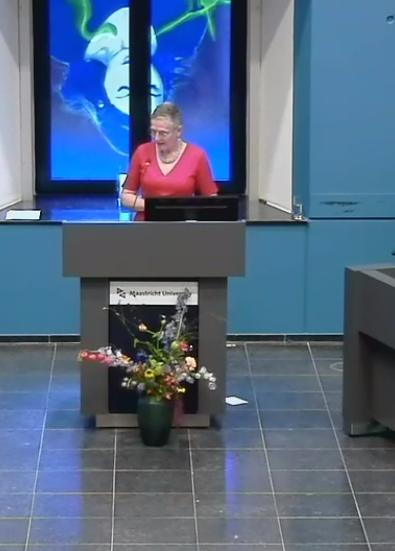
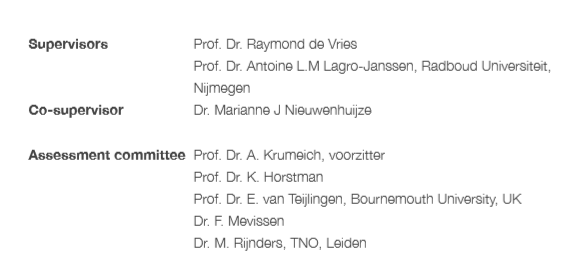 Today I had the pleasure of being one of the examiners for a PhD at the University of Maastricht (the Netherlands). The PhD candidate (now Dr.) Franka Cadée was a little nervous according to her supervisors, although it did not show during the viva.
Interestingly, enough I also felt nervous! Before today I had examined 50th PhD thesis in seven different countries. However, I probably had not felt this nervous since my own viva nearly three decades ago. Why was I nervous? First, although I am Dutch and I have studied in the Netherlands and the UK, I had never attended a PhD examination in the Netherlands. And PhD examinations really do differ between the UK and most northern European countries, especially the public defence of the thesis by the candidate in front of examiners, colleagues, friends and family. Secondly, the candidate today is the president of the ICM (the International Confederation of Midwives). Of course, this does not make any difference in the examination process, this candidate was treated the same as any other student would have been. Thirdly, and most importantly, the ICM had globally advertised the public defence of Dr. Cadée’s thesis to midwives, maternity policy-makers, member of International Non-Governmental Organisations and maternity care providers and invited ‘everybody’ to watch on ZOOM.
I really think it was the latter that made me more nervous than the much more private UK PhD viva with perhaps five or six people in a small class room, or, these days, on ZOOM.
Finally, my congratulations to Dr. Franka Cadée on the successful defence of her thesis Twinning, a promising dynamic process to strengthen the agency of midwives.
Professor Edwin van Teijlingen
Centre for Midwifery, Maternal & Perinatal Health (CMMPH)







 Our
Our  Live online event on the 8th June 2017
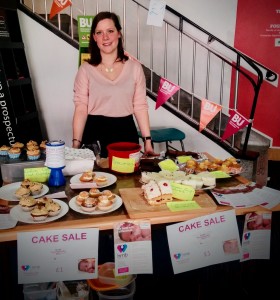 The amount raised will help to either
 If you would like to learn more about donor milk visit the website of the
  If you would like to learn more about the
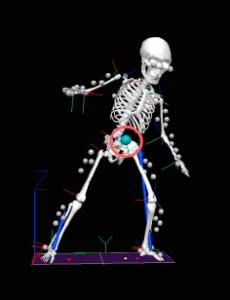
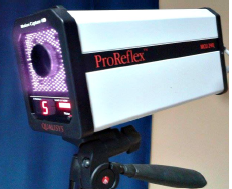 using a system of 8 QTM cameras and a force plate, I measured the effect of different tasks upon the static balance in 20 young volunteers.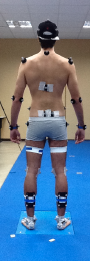
 Special thanks go to the people who helped me at the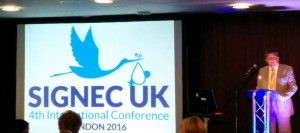
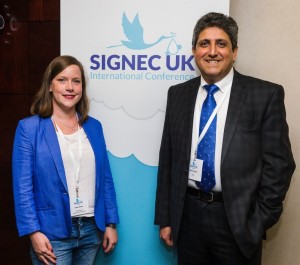 My supervisor Dr Simon Dyall and I were delighted to be invited to attend this event, since, together with Minesh, we are looking at the role of essential fatty acids in perinatal health. As stated above, NEC is a major health concern in the perinatal period, which potentially benefits from essential fatty acids. Furthermore, the event was a perfect opportunity to network with people working in the field of perinatal health and to get more ideas for future research.
 If you would like to learn more about SIGNEC UK or attend next year’s conference, please contact Prof Minesh Khashu at







 Verbal autopsy paper published two days ago
 ESRC Studentships for 2027 Entry: Opportunity Now Open
 SONAMONI contributions to Safety Conference 2026 in South Africa
 Three CMWH presentations at Berlin conference
 Horizon Europe Cluster 3 (Civil Security for Society) 2026 Calls Now Open
 MSCA Doctoral Networks 2026 Call Information Webinar
 ESRC Festival of Social Science 2026: Application Deadline Extended to Thursday 25 June 2026
 Reminder: Register for the ESRC Festival of Social Science 2026 Information Session
 ECR Funding Open Call: Research Culture & Community Grant – Apply now
 ERC Advanced Grant 2025 Webinar
 Update on UKRO services
 European research project exploring use of ‘virtual twins’ to better manage metabolic associated fatty liver disease