Category / REF Subjects
New ways of publishing?
Last we took a new step into the academic publishing by submitting a paper to Qeios. This Open Access journal publishes papers for free, more or less immediately and after the paper has appeared online peer-reviewers are being invited. The paper ‘Impact of Men’s Labour Migration on Non-migrating Spouses’ Health: A Systematic Review‘ [1] is part of Shraddha Manandhar’s Ph.D. study at the University of Huddersfield. Her supervisors are Huddersfield’s Prof. Philip Brown and Prof. Padam Simkhada and Bournemouth University’ Prof. Edwin van Teijlingen. This journal uses AI to find and invite reviewers, and these reviews will the be are published alongside our article. Should we advised by reviewers to make changes, edits or improvements the next version of the paper will be published online alongside the original submission and the reviews.
We have had some previous experience with the process of post-publication review, in 2017 BU’s Dr. Sarah Collard and Prof. van Teijlingen wrote a referee report for F1000Research after it published a methods paper on online focus groups [2]. More recently we published a COVID-19 paper in a so-called pre-print journal SSRN [3], but this was later in published in a traditional peer-reviewed journal called Scientific Reports [4], part of the Nature publishing family.
References
- Manandhar, S., Simkhada, P., Brown, P., van Teijlingen, E. (2023) Impact of Men’s Labour Migration on Non-migrating Spouses’ Health: A Systematic Review, Qeios,
May 13, https://doi.org/10.32388/BX9WFC - Collard, S., van Teijlingen, E. (2017) Referee Report For: Insights for conducting real-time focus groups online using a web conferencing service [version 2; referees: 2 approved]. F1000Research 6:122 (doi: 10.5256/f1000research.11236.r21467) https://f1000research.com/articles/6-122/v1#referee-response-21467
- Parajuli, R.R., Mishra, B., Banstola, A., Ghimire, B.R., Poudel, S., Sharma, K., Dixit, S.M., Shah, S., Simkhada, P., van Teijlingen, E., (2020) Multidisciplinary Approach to COVID-19 Risk Communication: A Framework and Tool for Individual and Regional Risk Assessment. Available at SSRN: https://ssrn.com/abstract=3634190 or http://dx.doi.org/10.2139/ssrn.3634190
- Parajuli, R.R., Mishra, B., Banstola, A. et al. Multidisciplinary approach to COVID-19 risk communication: a framework and tool for individual and regional risk assessment. Sci Rep 10, 21650 (2020). https://doi.org/10.1038/s41598-020-78779-0
Whatever It Takes: Community Led Research on Disability & Cancer CELEBRATION EVENT
We would like to invite you ALL to our very exciting CELEBRATION EVENT on 17th May 2023 in BG-302.
We have been exploring disabled, chronically ill, visually impaired and neurodivergent people’s experiences of cancer services. We also explored how using the community research model can provide a level of shared understanding between researchers and community members to enable the capture of the perspectives of individuals currently underserved by health and social care research.
This project was commissioned by Macmillan Cancer Support and Wessex Cancer Alliance, and overseen by Involving People – Help & Care, Bournemouth University’s Public Involvement in Education and Research (PIER) partnership and the Research Centre for Seldom Heard Voices.
At this event, we will be sharing the outcomes of our research project, with opportunities to take a look at the report, a film which has been developed using the attendee’s artistic creations for the visuals, with the experiences they shared in a voiceover, and to engage in a creative arts workshop. A variation of healthcare professionals, academics and those with lived experience have been invited to this event, so we can all discuss the success of the project, as well as what more needs to be done.
Everyone is welcome and there will be refreshments!
Please get in touch with Stevie Corbin-Clarke (scorbinclarke@bournemouth.ac.uk) with any queries.
BU PhD student receives OpenBright grant


The Journal of Asian Midwives accepted for inclusion by Scopus
Today one of my co-editors of the Journal of Asian Midwives emailed me to announce that our journal has been accepted for inclusion by Scopus.
Scopus, which is owned by the publishing house Elsevier, is the world’s largest electronic database of peer-reviewed literature. The Scopus assessors of our application made some very nice comments about the Journal of Asian Midwives, for example that it:
“consistently includes articles that are academically sound and relevant to an international academic or professional audience in the field. The journal has scholarly relevance as evidenced by citations in other journals currently covered by Scopus… The journal has clear aims and scope/journal policies that are consistent with the journal’s content. Although the scope of this journal is narrow, it addresses the need of an important niche audience.”
We are very proud of this achievement and we, as editors (Prof. Rafat Jan, Ms. Kiran Mubeen, Prof. Edwin van Teijlingen, with editorial assistant Ms. Abeer Musaddique), thank all our supporters, especially the library staff at The Aga Khan University in Pakistan, our reviewers, our authors and of course, you, our readers! I personally like to thank our former CMMPH (Centre for Midwifery, Maternal & Perinatal Health) PhD student Dr. Sheetal Sharma for suggesting many years ago that I might like to help this, at the time, new journal. It is a proper well-run peer-reviewed journal, and I know that from personal experience, as a few years ago one of the papers on which I am a co-author was rejected after peer review by ‘my’ journal!
Prof. Edwin van Teijlingen
CMMPH (Centre for Midwifery, Maternal & Perinatal Health)
Co-editor Journal of Asian Midwives
BU hosting British Society of Criminology’s Hate Crime Network’s annual conference in June

New COVID-19 paper on Nepal
Yesterday Plos ONE published our latest study on the health system in Nepal under the title ‘Barriers in accessing family planning services in Nepal during the COVID-19 pandemic: A qualitative study‘ [1]. This qualitative study, in an Open Access journal, explores what sorts of barriers are faced by women needing family planning services in Nepal during the pandemic. It was conducted in five districts of Nepal. Telephonic in-depth interviews were conducted with 18 women of reproductive age (18–49 years) who were the regular clients of family planning services. Data were coded deductively using the preexisting themes based on a socio-ecological model (e.g., individual, family, community, and health-facility levels).
The paper reports that individual level barriers included low self-confidence, inadequate knowledge on COVID-19, myths and misconception related to COVID-19, limited access to family planning services, low priority to sexual and reproductive health services, low autonomy in family and limited financial ability. Family level barriers comprised partner’s support, social stigma, increased time at home with husbands or parents, not accepting family planning services as essential health services, financial hardship due to loss of jobs, and communication with in-laws. Movement restrictions and transportation hindering access, unsecured feeling, violation of privacy, and obstacles from security personnel were the community level barriers and unavailability of preferred choice of contraception, increased waiting time, limited outreach services by community health workers, limited physical infrastructures, the behavior of health workers, stock out of commodities, and absence of health workers were health facility level barriers.
The authors conclude that policymakers and programme managers should consider strategies to ensure continued availability of the full method mix during emergency, particularly since disruptions may go unnoticed and strengthen the provision of services through alternative service delivery channels to ensure sustained uptake of such services in this sort of pandemic.
This is the latest addition to the pool of academic papers published by Bournemouth University academics on the effects of COVID-19 on health care in Nepal or issues related to Nepal [2-11].
Prof. Edwin van Teijlingen
CMMPH (Centre for Midwifery, Maternal & Perinatal Health)
References:
- Sigdel A, Bista A, Sapkota H, van Teijlingen E (2023) Barriers in accessing family planning services in Nepal during the COVID-19 pandemic: A qualitative study. PLoS ONE 18(5): e0285248. https://doi.org/10.1371/journal.pone.0285248
- Mahato P., Adhikari B., Marahatta S.B., Bhusal S., Kunwar K., Yadav R.K., Baral, S., Adhikari, A., van Teijlingen, E. (2023) Perceptions around COVID-19 and vaccine hesitancy: A qualitative study in Kaski district, Western Nepal. PLOS Global Public Health 3(2): e0000564.
- Regmi, P., Dhakal Adhikari, S., Aryal, N., Wasti, S.P., van Teijlingen, E. (2022) Fear, Stigma and Othering: The Impact of COVID-19 Rumours on Returnee Migrants and Muslim Populations of Nepal, International Journal of Environmental Research & Public Health 19(15), 8986.
- Simkhada, P., Tamang, P., Timilsina, L., Simkhada, B., Bissell, P., van Teijlingen, E., Sah, S.K., Wasti, S.P. (2022) Factors Influencing COVID-19 Vaccine Uptake among Nepali in the UK: A Qualitative Study, Vaccine 10(5): 780. https://doi.org/10.3390/vaccines10050780
- Khanal, S.P., van Teijlingen, E., Sharma, M.K., Acharya, J., Sharma, C. (2021) Perceived threats towards COVID-19 pandemic among Nepali migrant workers returned from India, Journal of Health Promotion 9(1):87-99.
- Wasti, SP., Simkhada, P., Magar, S.A., van Teijlingen, E. (2021) Nepalese Health System Response to Fight Against COVID-19 Pandemic, Europasian Journal of Medical Sciences 3(1): 98-104.
- Simkhada, P., Mahato, P., Tamang, P., van Teijlingen, E., Shahi, P. (2020) The Role of Health Promotion during the COVID-19 Pandemic. Journal of Health Promotion, 8:1-4. https://doi.org/10.3126/jhp.v8i0.32964
- Parajuli, R.R., Mishra, B., Banstola, A., Ghimire, B.R., Poudel, S., Sharma, K., Dixit, S.M., Shah, S., Simkhada, P., van Teijlingen, E. (2020) Multidisciplinary Approach to COVID-19 Risk Communication: A Framework and Tool for Individual and Regional Risk Assessment. Scientific Reports 10: 21650
- Adhikary, P., Balen, J., Gautam, S., Ghimire, S., Karki, J., Lee, A.C.K., Marahatta, S.B., Panday, S., Pohl, G., Rushton, S., Sapkota, S., Simkhada, P.P., Subedi, M., van Teijlingen, E. for the Nepal Federal Health System team (2020) The COVID-19 pandemic in Nepal: Emerging evidence on the effectiveness of action by, and cooperation between, different levels of government in a federal system, Journal of Karnali Academy of Health Sciences 3 (3): 1-11.
- Mahato, P., Tamang, P., Shahi, P., Aryal, N., Regmi, P., van Teijlingen, E., Simkhada, P. (2020) Effects of COVID-19 during lockdown in Nepal, Europasian Journal of Medical Sciences 2(2):1-5.
- Tamang, P., Mahato, P., Shahi, P., Simkhada, P., van Teijlingen, E., Amgain, K. (2020) COVID-19 Quarantine: A Key Part of Prevention in Nepal. Journal of Karnali Academy of Health Sciences 3(1):1-14.
Measuring Health Literacy & Health Promotion in Adolescents
The paper reports that of these 23 papers, 21 focused on assessing AHL measures, and 15 addressed the association between AHL and HP. Seven studies used the HL School-Aged Children instrument. The findings suggested that the methodological and conceptual underpinnings of HL measures are insufficient. Furthermore, HL acts as an independent and positive mediator for many facets of HP. Overall, this review offers a warning to practitioners and educationists interested in measuring HL as the number of measurement tools is substantial with different tools applying different scales.
- Khanal SP, Budhathoki CB, Okan O, van Teijlingen E, Sharma MK, Acharya J, Wood C. Systematic review of health literacy and health promotion in school-aged adolescents. Journal of Education & Community Health. 2023; 10(1):49-57. doi:10.34172/jech.2023.1982
Dissemination is an import step toward impact
Disseminating your research findings to a range of stakeholders is an important part of the research impact process. The key is to think about ‘who’ might possibly benefit from knowing more about your research, and importantly, ‘how’ could they use your findings to support, inform and develop their practice.
A good example of this process is the recent keynote address delivered by Prof. John Oliver (FMC) to more than 60 delegates at a one-day event that launched the new Centre of Excellence, Enterprise Portfolio Management Office (UK Parliament). Prof. Oliver’s talk entitled ‘Harnessing the Power of Scenario Planning’ presented the findings of his scenario-planning project that ultimately developed a mission, vision and strategy for the House of Commons Library Service in UK Parliament. Additional keynotes were given by the Chief Operating Officer (House of Lords) and a range of internal and external experts on project delivery and digital transformation.
Prof. Oliver’s work is published in Oliver, J.J., Reid, M., and Gray, K. (2023). The Library of the Future: a scenario-based approach. Journal of Library Administration, Volume 63, Issue 1, Pages
27-41
Erasmus exchange visit to Nepal by Dr. Jon Williams
Dr Jonathan Williams, Principal Academic and Deputy Head of the Department of Rehabilitation & Sports Science is the latest BU academic to visit Manmohan Memorial Institute of Health Sciences (MMIHS) in Nepal as part of the Erasmus+ exchange funding. Yesterday he run a workshop in Kathmandu on how to conduct a Literature Review for Health Professionals. This session was well attended by medical doctors at Manmohan Memorial Teaching Hospital.
The workshop was organised buy Prof. Sujan Marahatta at MMIHS, who is also Visiting Faculty member in FHSS. BU is currently in the process of renewing its MoA with MMIHS, to continue working together after this successful Erasmus+ programme.
Prof. Edwin van Teijlingen
Centre for Midwifery, Maternal & Perinatal Health (CMMPH)
PhD paper on health management in pre-Taliban Afghanistan
Yesterday FHSS graduate Dr. Shaqaieq Ashrafi Dost heard from Razi International Medical Journal the the paper from her Ph.D. study had been accepted for publication. Her paper ‘Management capacity in the Ministry of Public Health (MoPH) Afghanistan: Political and socio-cultural issues’ is based on a mixed-methods case-study was conducted with staff at the Afghan Ministry of Public Health. The Ph.D. study explores MoPH’s management capacity. Interviews were conducted with 12 senior staff and qualitative data were analysed thematically. A quantitative survey, covering directors of 30 departments, was analysed using descriptive statistics.
The paper reports that management capacity was generally weak. Key appointments including directors were subject to political interference and many directors appointed by politicians lacked the skills to manage well. Consequently, those directors were not able to support employees appropriately or to create a healthy work environment. The respondents reported that there were strong socio-cultural influences such as nepotism and favouritism. Often employees believed they were not treated consistently or fairly. This was compounded by overly complex administrative systems. The authors concluded that the Afghan government needs to appoint competent and committed staff who can recognize/address the gaps in the functioning of the Ministry, especially the negative political and socio-cultural practices that undermine effectiveness.The reader needs to bear in mind that this Ph.D. study was conducted prior to the 2021 takeover by the Taliban. Putting the paper’s conclusion in perspective.
Razi International Medical Journal founded in 2021 is a peer-reviewed scholarly journal from Afghanistan that aims to impact public health and global health and distributed internationally. The journal is Open Access and published in electronic and paper-based format twice a year, and there is no article publishing charge (APCs).
Congratulations to BU social work academics!
Congratulations to Dr Sally Lee and Dr Lou Oliver on the publication of their important edited collection Social Work Practice with Adults published by SAGE. This excellent book brings together practitioners, academics and, innovatively and most importantly, people who use social work services. The book includes chapters by several BU social work authors in addition to the editors, notably, Jenny Bigmore, Ros Dray, Orlanda Harvey, Stefan Kleipoedszus, Mike Lyne, and Jonathan Parker, and congratulations go to all involved.
The book places people who avail themselves of social work at the centre, demonstrating the commitment of the editors and authors to changing lives for the better. It also represents a phenomenal teaching text for students learning to practise.
Well done everyone!
CSHV – International guest lecture on ‘Pacing Adult Womanhood: Young Women, Aspirations, and Expectations in Newly Independent Kosovo’
The Centre for Seldom Heard Voices is delighted to invite you to a special international guest lecture featuring social anthropological research on ‘pacing adult womanhood’ in precarious situations, here through the case study of young women’s situation in Kosovo. Dr Rozafa Berisha (Manchester/ Prishtina), currently visiting the social anthropology sister programme in the Social Science and Social Work department through our Erasmus+ K107 programme in partnership with University of Prishtina, Kosovo, will present her research on Thursday, 27th April, 15:00 to 17:00 in EB-206. All interested staff and students welcome! More details are available in this poster: Rozafa Berisha poster
BU PhD student publishes in The Conversation
Congratulations the Abier Hamidi, PhD student in the Faculty of Health & Social Sciences (FHSS) whose PhD work was published in The Conversation this week (24 April) under the title Social media now trumps traditional family networks in Libya – my Facebook survey reached 446,000 women. Her piece in The Conversation on the recruitment of female participants for a PhD study in a rather patriarchal society brings together issues of anonymity, gender, and wider social culture.
This is Abier’s PhD research is supervised by Dr. Pramod Regmi, Senior Lecturer in International Health and the Global Engagement Lead in the Department of Nursing Sciences, and Prof. Edwin van Teijlingen in the Centre for Midwifery, Maternal & Perinatal Health (CMMPH).
Congratulations!
Prof. Edwin van Teijlingen
Several BU papers at this week’s BNAC Nepal Study Days
The BNAC (Britain-Nepal Academic Council) twentieth Nepal Study Days (24-25 April) start today in Huddersfield. BU is directly represented through Dr. Pramod Regmi who will be presenting ‘Health Research Priorities and Needs in Migrant Health: A Review of Reviews’ today.
Dr. Regmi based in the Department of Nursing Sciences and Prof. Edwin van Teijlingen in the Department of Midwifery & Health Sciences are also part of the paper ‘Nepal Family Cohort Study: Starting a Longitudinal Population Health Study’ which will be presented by our colleague Dr. Om P. Kurmi from Coventry University.
There will also be a BU paper on ‘Perceptions Around Covid-19 and Vaccine Hesitancy: A Qualitative Study Among People Living in Kaski, Western Nepal’ , presented by Dr. Preeti Mahato. Preeti is based at Royal Holloway (University of London) and she is also a Visiting Faculty member of FHSS. She’ll presenting a study recently published in PLOS Global Public Health.
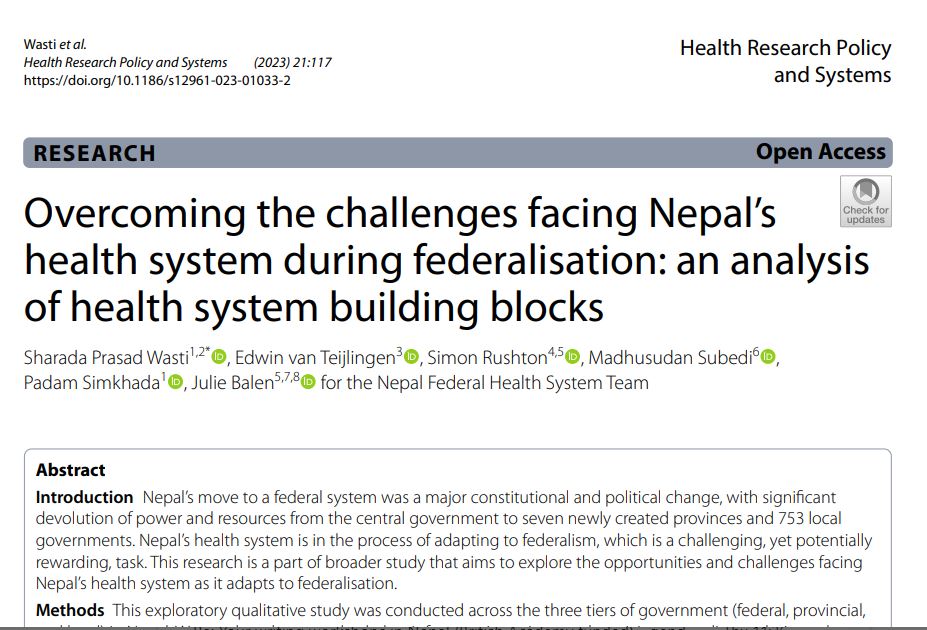
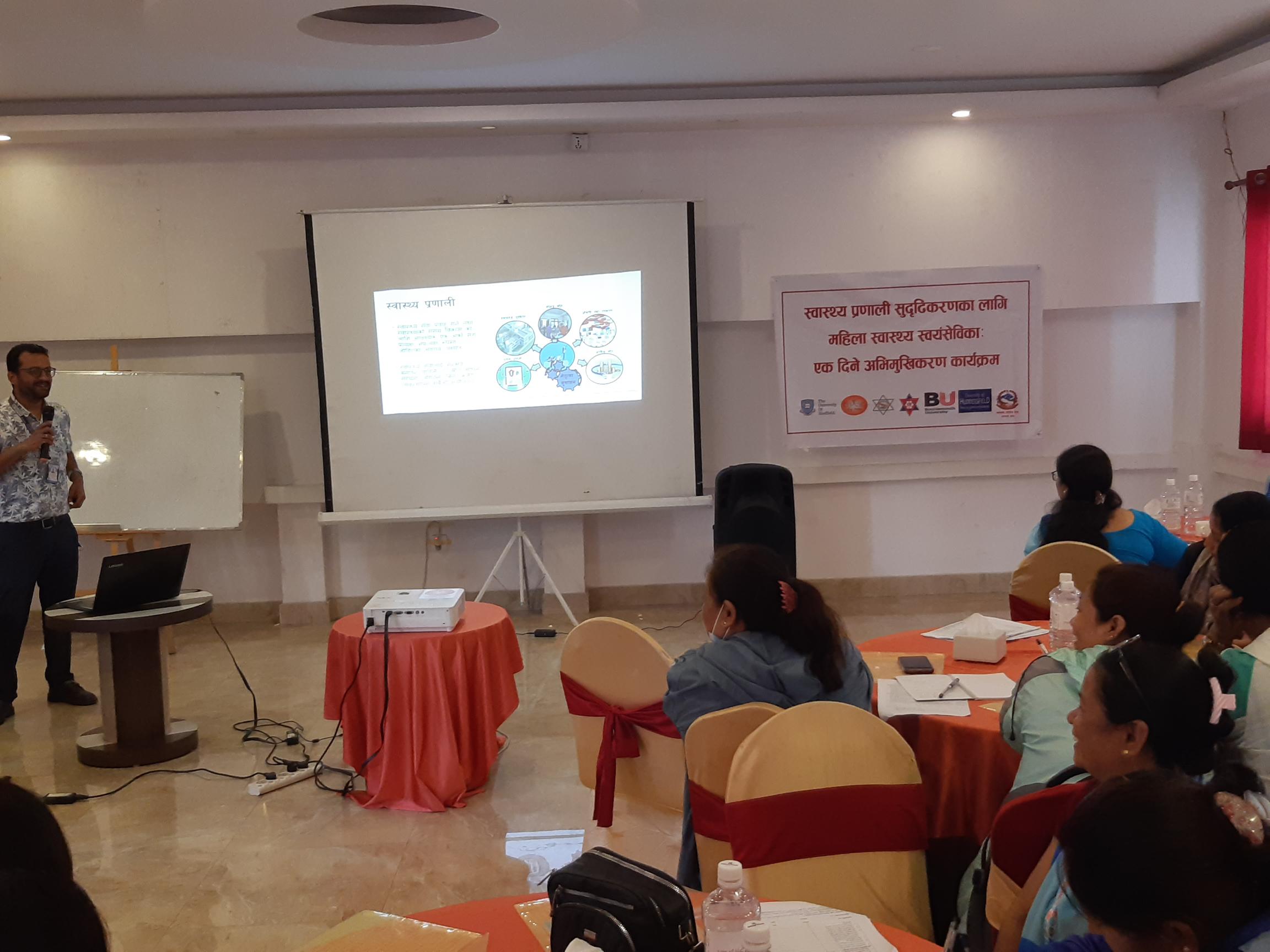
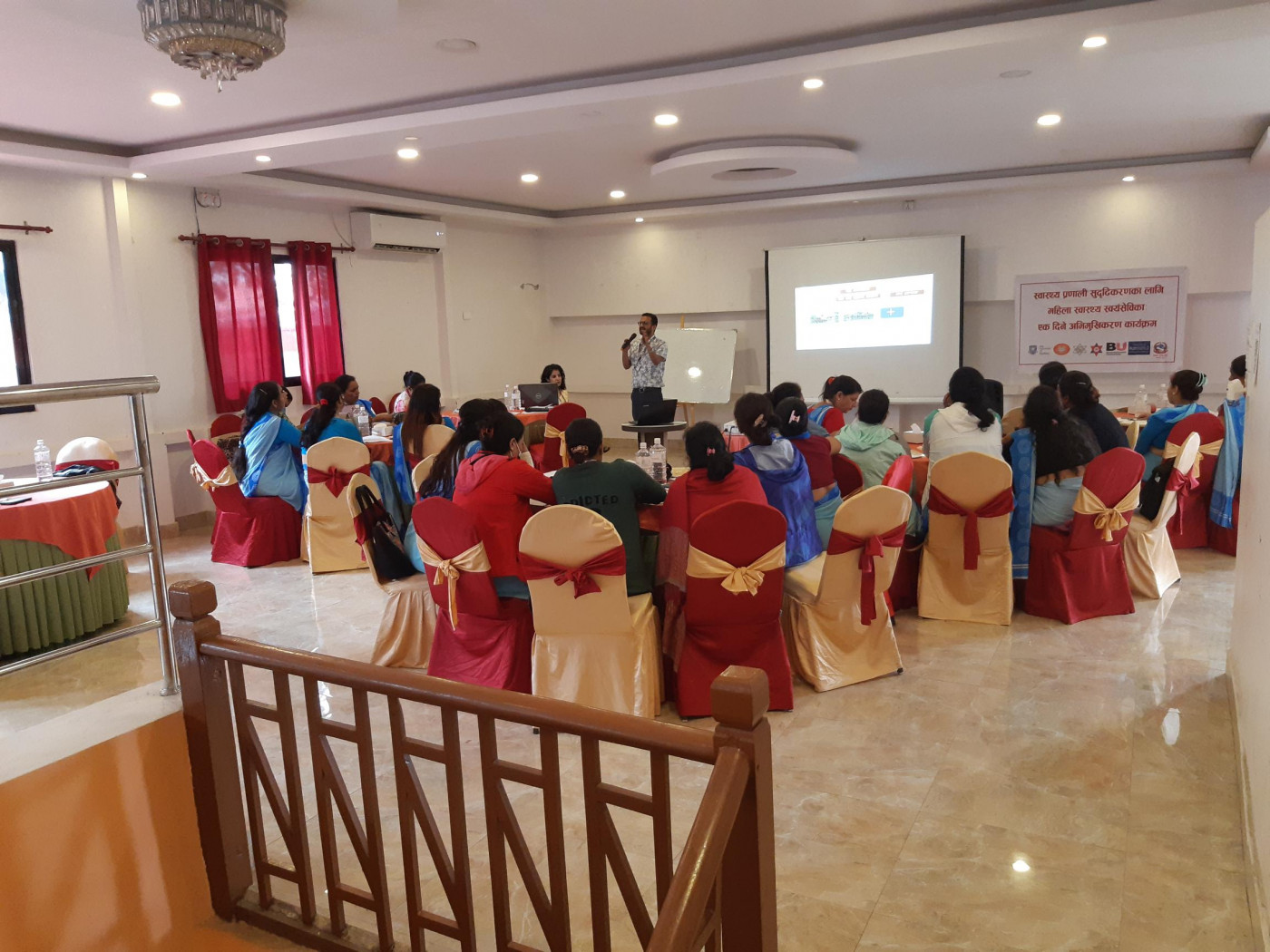
These Nepal Studies Days pay serious attention to our ongoing interdisciplinary study ‘The impact of federalisation on Nepal’s health system: a longitudinal analysis’ which was reported in several national newspapers in Nepal last week. Tomorrow there will be a plenary session by Prof. Simon Rushton, the PI on this project in which BU collaborates. He will be talking about ‘Nepal’s Health System During Federalisation: Emerging Issues and the Co-production of Policy and Practice Recommendations’. Later that day there will be two further presentations based on this large-scale study, the first one by Dr. Sharada P. Wasti followed by one delivered by Dr. Sujata Sapkota.
Extensive media coverage in Nepal last week
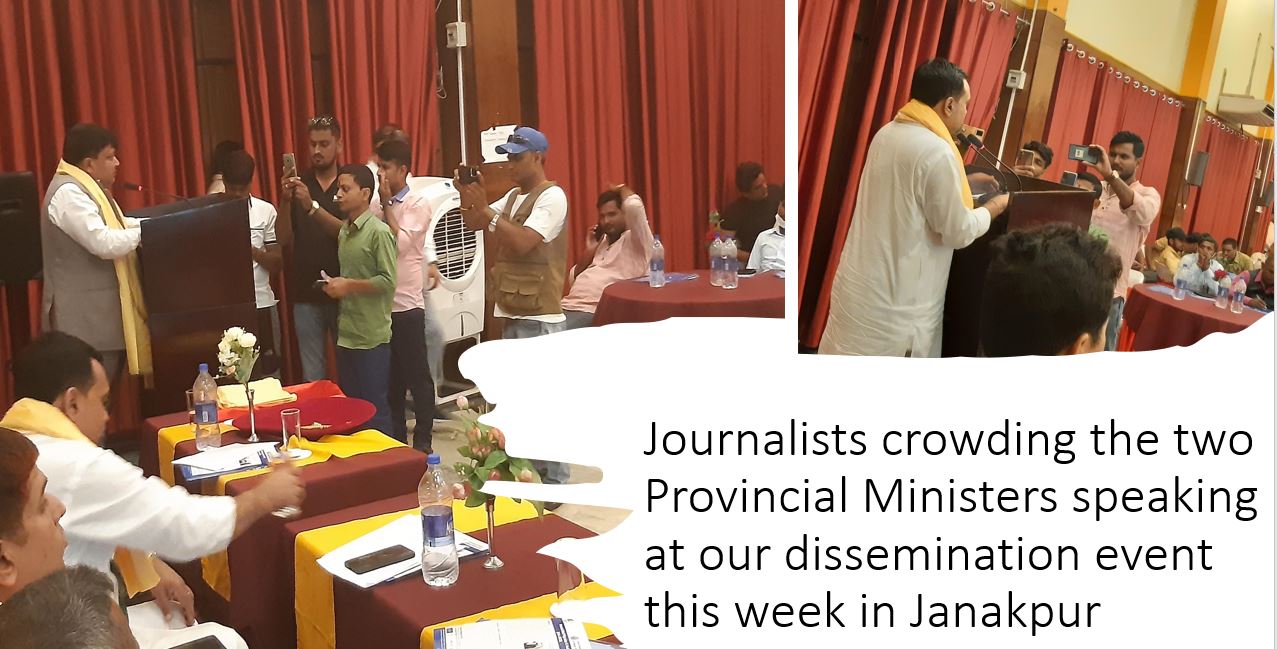
The interdisciplinary research project ‘The impact of federalisation on Nepal’s health system: a longitudinal analysis’ was reported in several national media in Nepal last week. This project running from 2020 to 2024 is, funded by the Health System Research Initiative, a UK collaboration between three funders: the MRC (Medical research Council), the Foreign, Commonwealth & Development Office, and the Welcome Trust.
The 2015 Constitution brought federalisation and with it, significant changes to the health system.
To understand these changes researchers worked in three provinces where they interviewed 243 stakeholders, at all three levels of government. They also conducted 31 Participatory Policy Analysis workshops at local and province levels. The team includes researchers from Manmohan Memorial Institute of Health Sciences (Kathmandu), and PHASE Nepal (Bhaktapur), and three UK institutions (the Universities of Sheffield, Bournemouth, and Huddersfield). It researchers from the UK and Nepal meet with Provincial and Federal MPs to discuss the interim findings of a federalisation and health study.
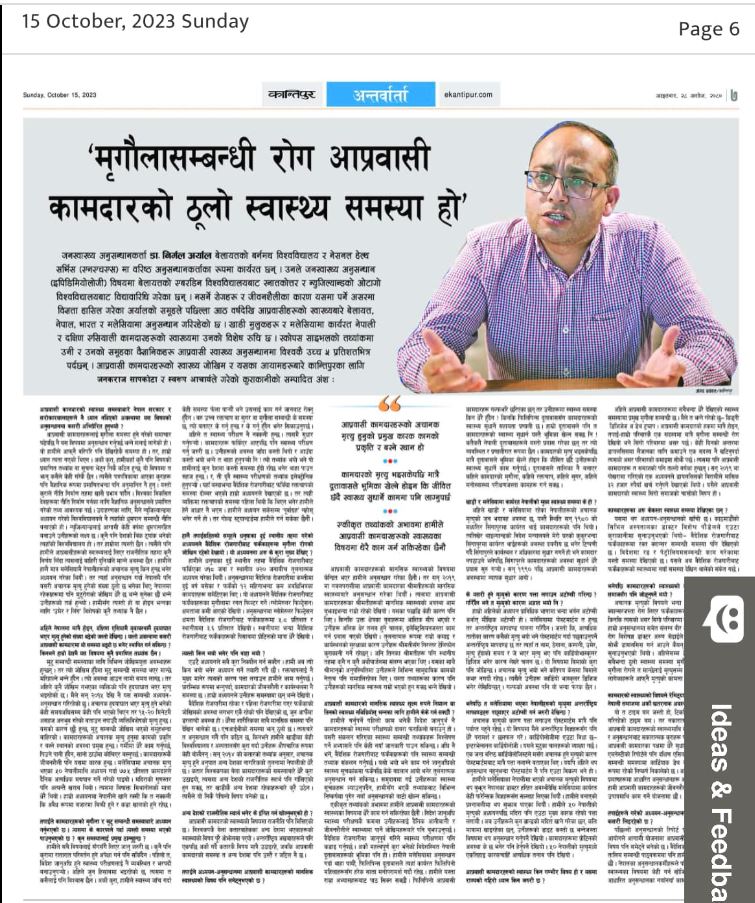
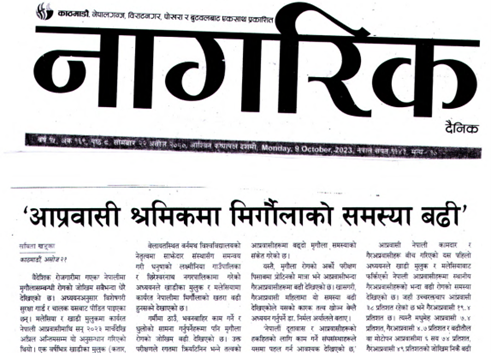
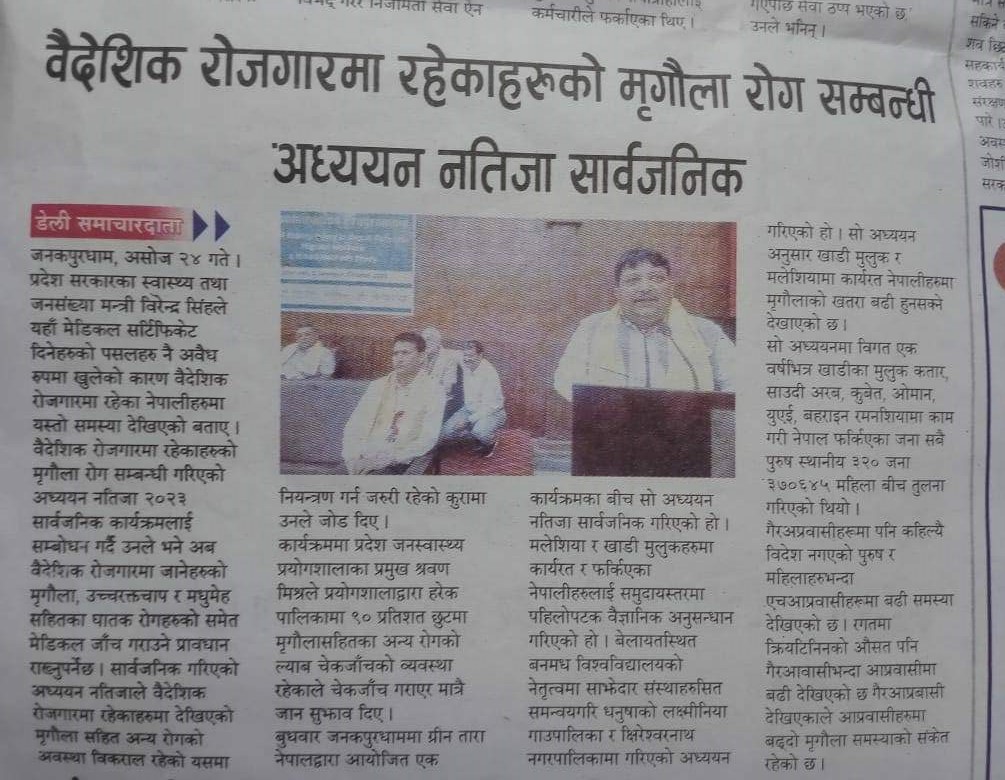
News articles appeared in national newspapers in Nepal, both in English and Nepali. The Nepali article appeared in the country’s oldest newspaper Gorkhapali, see copy here! Bournemouth University [Thank you Nathaniel Hobby and Stephen Bates] also publicized our press release on this project online. The journalist Nam Raj Bhatta published an item in the online Nepali-language newspaper NepalHealthOnline on April 13. The main meeting to discuss the interim findings of our project took place on Thursday 13 April an hotel close Nepal’s parliament. The interim results highlight how federalisation of the political system has affected Nepal’s health care organisation. The research team summarized the findings for the invited MPs and local and provincial political leaders, and invited their reflections on the political possibilities and obstacles to moving forward with the development of the country’s health system. The Himalayan Times published the article on top of this BU Research Blog as well as the special interview with the University of Sheffield based PI Prof. Simon Rushton.
Prof. Edwin van Teijlingen
Centre for Midwifery, Maternal & Perinatal Health
Double congratulations to Prof. Jonathan Parker
Congratulations to Prof. Jonathan Parker, Professor of Society & Social Welfare in the Department of Social Sciences and Social Work, who just published his historical-sociological analysis of British Welfare under the title Analysing the History of British Social Welfare – Compassion, Coercion and Beyond. The book it is published by Policy Press and will be available next week. This book offers insights into the development of social welfare policies in Britain. By identifying continuities in welfare policy, practice and thought throughout history, it offers the potential for the development of new thinking, policy making and practice.In addition Jonathan also published a new edition of his popular textbook Introducing Social Work SECOND EDITION. This edited volume included chapters by BU academics Dr. Orlanda Harvey (Chapter 26) and Dr. Sally Lee (Chapter 22) as well as an array of internationally renowned social work academics.
New publication Abier Hamadi, PhD student in FHSS
Congratulations to Abier Hamidi on the acceptance of her Ph.D. paper ‘Facilitators and barriers to condom use in Middle East and North Africa: a systematic review’. [1] This review has been registered on PROSPERO. [2] The Journal of Public Health is part of BU’s publishing deal with Springer, hence it will free open access when published.
Abier is supervised by Dr. Pramod Regmi, Senior Lecturer in International Health and the Global Engagement Lead in the Department of Nursing Sciences, and Prof. Edwin van Teijlingen in the Centre for Midwifery, Maternal & Perinatal Health (CMMPH). Earlier Abier published ‘HIV epidemic in Libya: Identifying gaps’ in 2021. [3]
References:
- Hamidi, A., Regmi, P., van Teijlingen, E. (2023) Facilitators and barriers to condom use in Middle East and North Africa: a systematic review, Journal of Public Health, (accepted)
- Hamidi, A., van Teijlingen, E., Regmi, P. (2021) Facilitators and barriers to condom use in Middle East and North Africa: a systematic review. PROSPERO CRD42021297160
- Hamidi, A., Regmi, P., van Teijlingen, E. (2021) HIV epidemic in Libya: Identifying gaps, Journal of the International Association of Providers of AIDS Care, 20 :1-5 https://doi.org/10.1177/23259582211053964 .


Fourth INRC Symposium: From Clinical Applications to Neuro-Inspired Computation
Writing policy briefs
Upholding Excellence: The Concordat to Support Research Integrity
Today’s Documentation Will Serve Tomorrow’s Justice
ECR Funding Open Call: Research Culture & Community Grant – Application Deadline Friday 12 December
MSCA Postdoctoral Fellowships 2025 Call
ERC Advanced Grant 2025 Webinar
Horizon Europe Work Programme 2025 Published
Horizon Europe 2025 Work Programme pre-Published
Update on UKRO services
European research project exploring use of ‘virtual twins’ to better manage metabolic associated fatty liver disease