Over the past four weeks during our research project at Bournemouth University, we have carried out and participated in numerous tests and activities in the Orthopaedic Research Institute under the supervision of PGR Francesco Ferraro; some of which being more exciting, and others being more interesting.
One the simplest tests that we have carried out for the purpose of the research is the Mini-BESTest, this is a Balance Evaluation Systems Test and requires numerous subsidi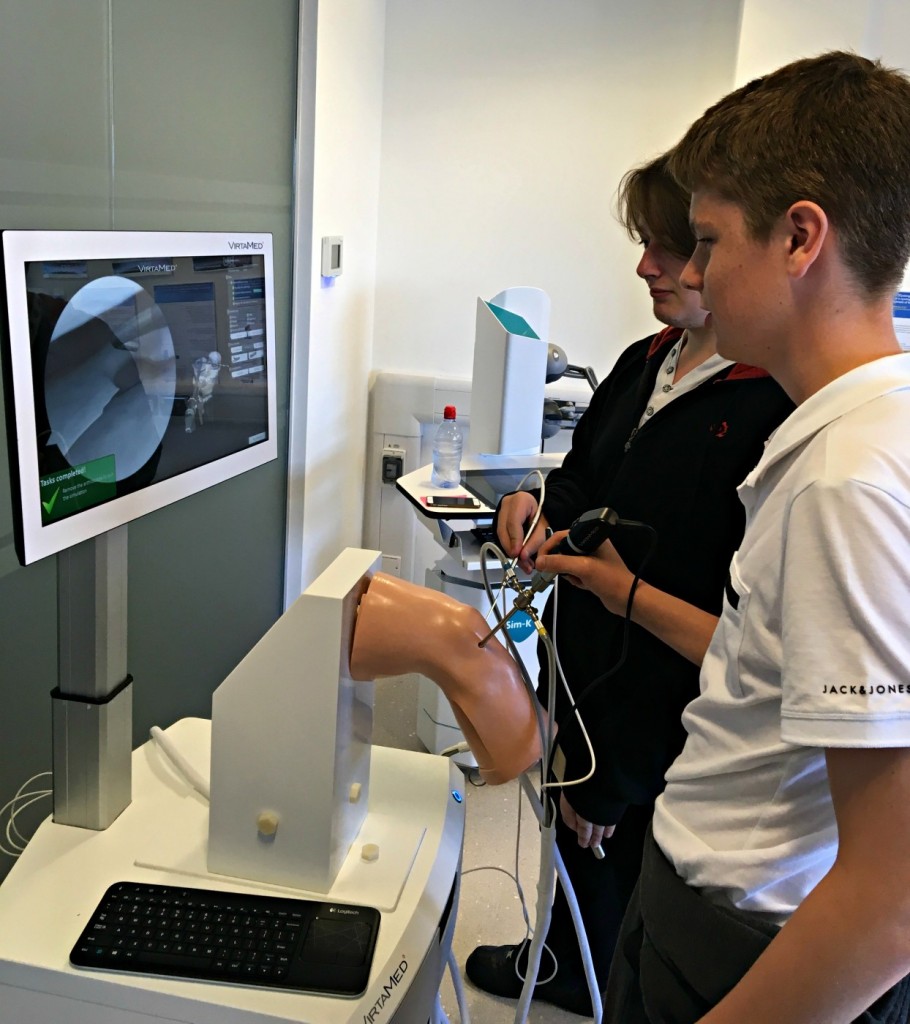 ary tests to be carried out for different aspects associated with balance, these include: anticipatory tests (when preparing for something to happen), reactive postural control (how you react to a change in motion), sensory orientation, and dynamic gait speeds (walking speeds and how they change in different circumstances). This was necessary in order to see how the effects of inspiratory muscle training effects balance over the course of 8 weeks.
In terms of analysis and methods, one of the most interesting tests for us involved the breathing system and using a spirometer. This device was used to measure the Forced Vital Capacity (total air volume of the lungs), Forced Expiratory Volume (how much air a person can exhale in a forced breath), MIP (maximum pressure generated by inhalation against occluded airway), and the MEP (this is the same but is the pressure generated by exhaling). For us, this was particularly interesting because it allowed us to see how a spirometer works in a hands on experience and how the data is presented and analysed.
Another series of tests involved the PrimusRS, a very impressive machine. It served to be a challenge and required lots of problem solving to carry out the tests successfully. During our use of the PrimusRS we experienced the different processes that were needed to be carried out involving; calibration, setting up, creating templates, correcting motion to improve the results, and the analysis of the final results. This was an extraordinary piece of equipment as it allowed us to carry out endurance and isometric tests (strength tests) for both flexion, extension and rotation regarding the trunk muscles, and gave us different data including power of the muscles/ movement.
Finally, the most exciting and enjoyable session to carry out involved using Virtual Reality Simulators for knee arthroscopy (operations) that surgeons all over the world travel to see. The reason for this being the most enjoyable test/session was due to complexity behind machines that looked so simple, and it allowed us to carry out practise operations teaching you the motions and procedures that would be used in real life. Other fascinating features of the virtual simulator was the way in which it introduced us to the different textures of the bone structures and tissues by giving feedback involving vibrations and stiffness of the simulator drill/ saw as well as the screen display.
As well as all of these above tests, we also are aware of the protocols and ethics of the tests that we have carried out in the duration of the project, this allowed us to experience and build up our own picture of the research that needs to be carried out before conducting the actual investigation.
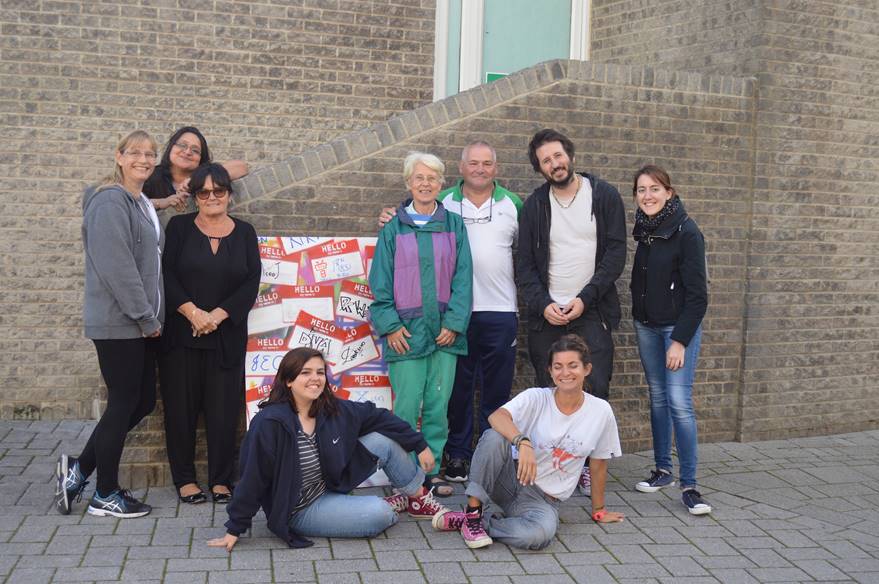
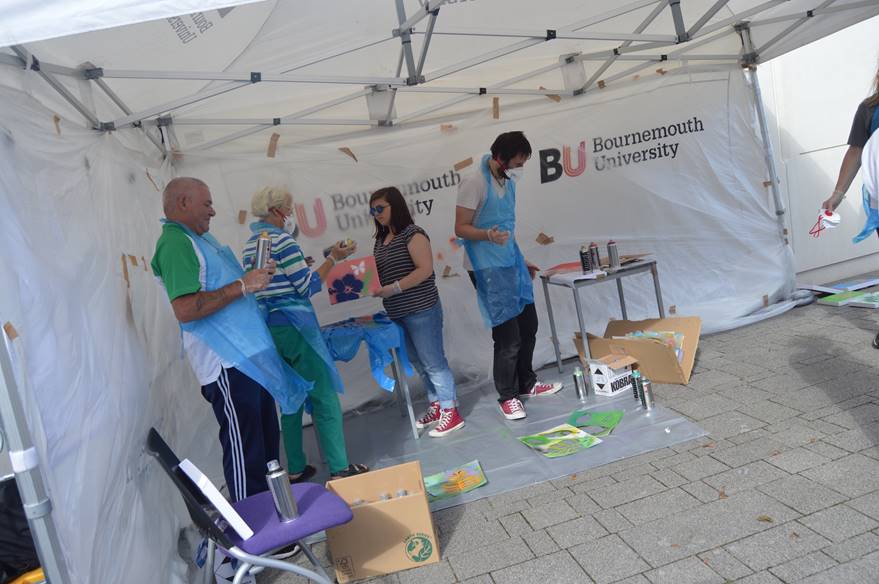


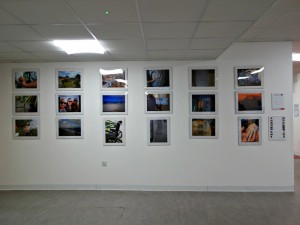 From 12 September, the Centre for Excellence in Learning (CEL) is holding a photo exhibition in Poole House, next to the Cash Office. This exhibition is part of the ‘Students who bounce back’ project, a study funded by Bournemouth University’s Fair Access Agreement Management Group. The study is being conducted by researchers at CEL, in co-production with student carers*.
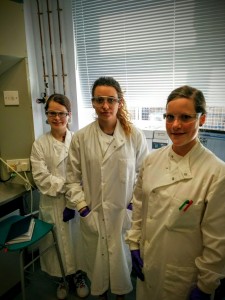 During the last 4 weeks, Sophie and Rose (left and middle in the picture), two AS level students, have spent their summer holidays gaining hands-on laboratory research experience at BU during their Nuffield Research Placement. Together with Dr Simon Dyall and PGR Isabell Nessel (right in the picture), they have worked on a research project which is investigating ways to increase the intake of omega-3 and omega-6 polyunsaturated fatty acids in preterm infants. Rose and Sophie have been helping to develop and validate a method to measure the fatty acid content of preterm formula milks by using gas chromatography (see picture).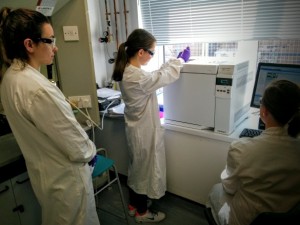







 3C Event: Research Culture, Community & Cherry Blossom
 Boost Your Research Profile: Training Sessions with The Conversation
 ESRC Festival of Social Science 2026: An Opportunity to Engage New Audiences
 New HIV paper by BU PhD student
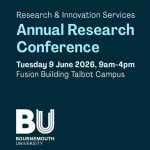 BU Annual Research Conference: Poster Exhibition Call for Applications
 Vitae Three Minute Thesis (3MT®) Competition: Applications Now Open
 ECR Funding Open Call: Research Culture & Community Grant – Apply now
 ECR Funding Open Call: Research Culture & Community Grant – Application Deadline Friday 12 December
 MSCA Postdoctoral Fellowships 2025 Call
 ERC Advanced Grant 2025 Webinar
 Update on UKRO services
 European research project exploring use of ‘virtual twins’ to better manage metabolic associated fatty liver disease