What is MS?
Multiple Sclerosis (MS) is a chronic debilitating and progressive condition that affects the fatty tissue sheath surrounding nerves. Loss of the myelin sheath is largely responsible for uncoordinated movements because the nerves cannot transmit signals smoothly across the complex neural circuitry. A common symptom of MS is excessive yawning together with fatigue.
Research study
Following recent completion of a study at the Osborne Centre, West Parley, we found that people with MS had higher cortisol levels when yawning compared with healthy participants.
Previous research at Bournemouth University
This research follows several years of research by the author at Bournemouth University with the first report on the “yawning envelope”, identifying the electrical trace during yawning (Refs. 1-2), and the first report on the association between yawning and cortisol levels following provoked yawning (Refs. 3-6).

Yawning “envelope”
“Contagious” yawning is seen in animals as well humans; it may involve empathy to perceived social cues in humans.

Yawning: (clockwise) Fox, Pig, Human, Hippopotamus


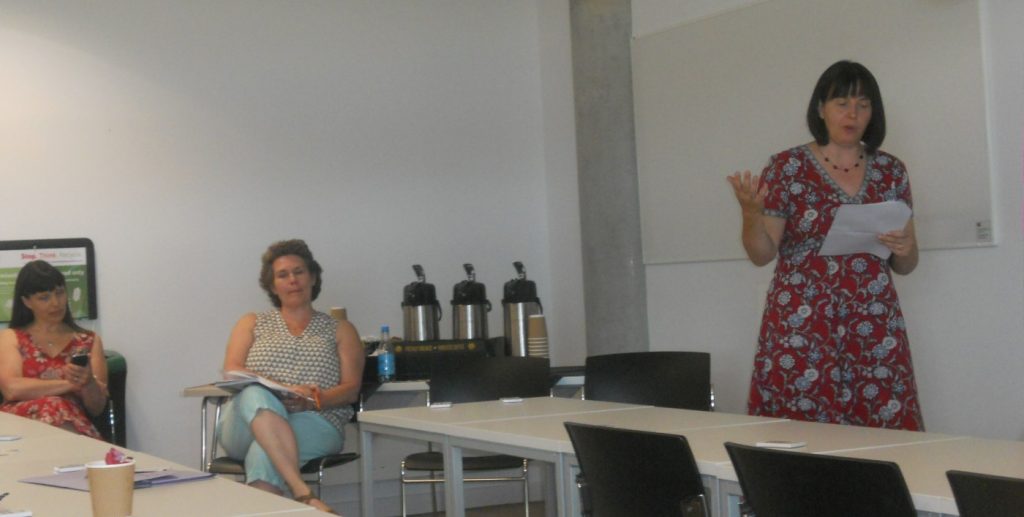
A series of 3 Q and A events with talks about findings was held at the MS Society local branch which facilitated an interesting and lively debate among participants, researchers and staff at the Centre.
Further research planned
We believe that threshold levels of cortisol trigger the yawn response which lowers brain temperature, particularly important in MS where brain temperatures can be elevated considerably following fatigue. A funding bid is in preparation to examine early detection of MS using these findings.
About the author
Simon B N Thompson is Associate Professor, Bournemouth University; and Visiting Professor, Université Paris Ouest Nanterre La Défense, France. He has presented to His Excellency Bernard Emié, the French Ambassador at the French Embassy, signalling formation of the Anglo-French International Scientific Council for Research into Multiple Sclerosis.
Acknowledgements
Thanks to all volunteers; Alister Coleman and Nicola Williams for assisting in data collection and analysis; Rod Slip, Group Co-ordinator and Kay Bundy, Fundraising Co-ordinator of the MS Society Osborne Centre for providing free facilities.
References
1. Thompson, S.B.N., 2013. How to catch a yawn: initial observations of a randomised controlled trial. WMC Neurology, 4(8), doi: 10.9754/journal.wmc.2013.004371.
2. Thompson, S.B.N., Frankham, C., & Bishop, P., 2014. The art of capturing a yawn using the science of nerve impulses and cortisol levels in a randomized controlled trial. Thompson Cortisol Hypothesis as a potential predictor of neurological impairment. International Journal of Arts & Sciences, 7(3), 529-543.
3. Thompson, S.B.N., 2011. Born to yawn? Cortisol linked to yawning: a new hypothesis. Medical Hypotheses, 77, 861-862.
4. Thompson, S.B.N., & Bishop, P., 2012. Born to yawn? Understanding yawning as a warning of the rise in cortisol levels: randomized trial. Interactive Journal of Medical Research, 1(2), e4, 1-9, doi: 10.2196/ijmr.2241.
5. Thompson, S. B. N., Daly, S., Le Blanche, A., Adibi, M., Belkhiria, C., Driss, T., de Marco, G., 2016. fMRI randomized study of mental and motor task performance and cortisol levels to potentiate cortisol as a new diagnostic biomarker. Journal of Neurology & Neuroscience, 7(2); 92: 1-8.
6. Thompson, S.B.N., 2017. Hypothesis to explain yawning, cortisol rise, brain cooling and motor cortex involvement of involuntary arm movement in neurologically impaired patients. Journal of Neurology & Neuroscience, 8(1); 167: 1-5.









 On Tuesday morning Professor Sir Mark Walport, Chief Designate of UK Research and Innovation, gave a speech outlining the vision, objectives and next steps in development for the organisation. The aim is for UKRI to be the best research and innovation agency in the world; a model which can be emulated by other countries.





 Universities and Science Minister Jo Johnson today (4 July 2017) confirmed the government is investing £100 million to attract highly skilled researchers to the UK through its new Ernest Rutherford Fund.
 NERC, the Department for International Development, and the Economic & Social Research Council







 SONAMONI contributions to Safety Conference 2026 in South Africa
 Three CMWH presentations at Berlin conference
 New interdisciplinary paper on Nepal
 Horizon Europe Cluster 3 (Civil Security for Society) 2026 Calls Now Open
 MSCA Doctoral Networks 2026 Call Information Webinar
 ESRC Festival of Social Science 2026: Application Deadline Extended to Thursday 25 June 2026
 Reminder: Register for the ESRC Festival of Social Science 2026 Information Session
 ECR Funding Open Call: Research Culture & Community Grant – Apply now
 ERC Advanced Grant 2025 Webinar
 Update on UKRO services
 European research project exploring use of ‘virtual twins’ to better manage metabolic associated fatty liver disease