Category / Social Work and Social Policy

New BU paper: Health of Nepali migrants in India

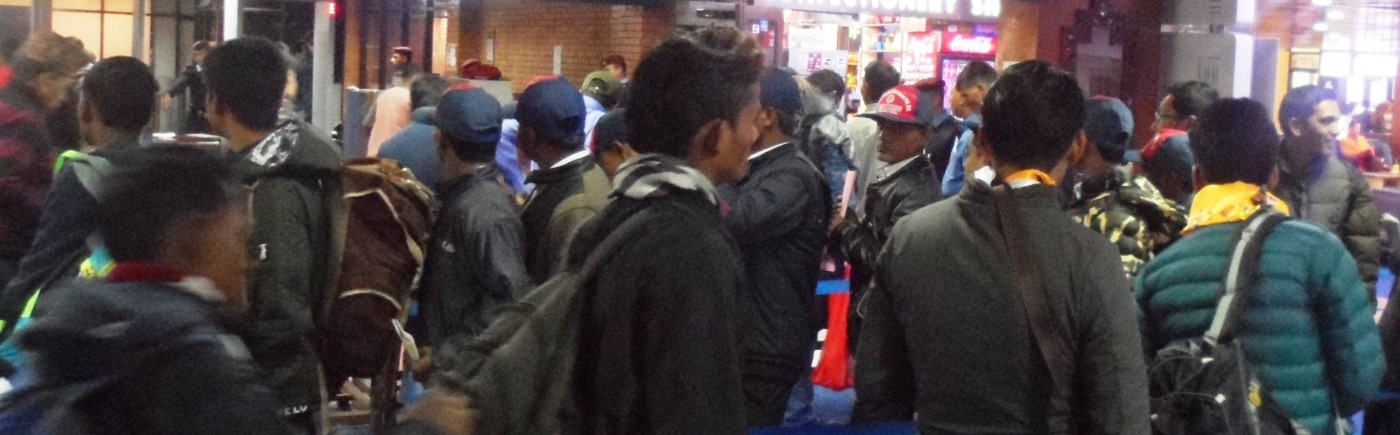
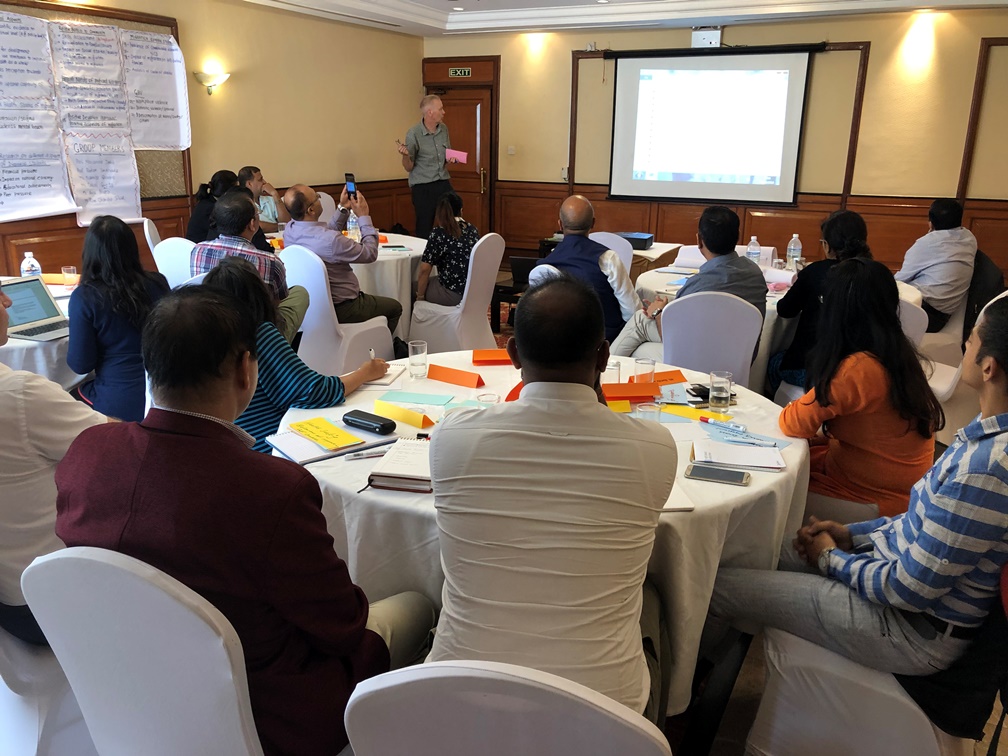
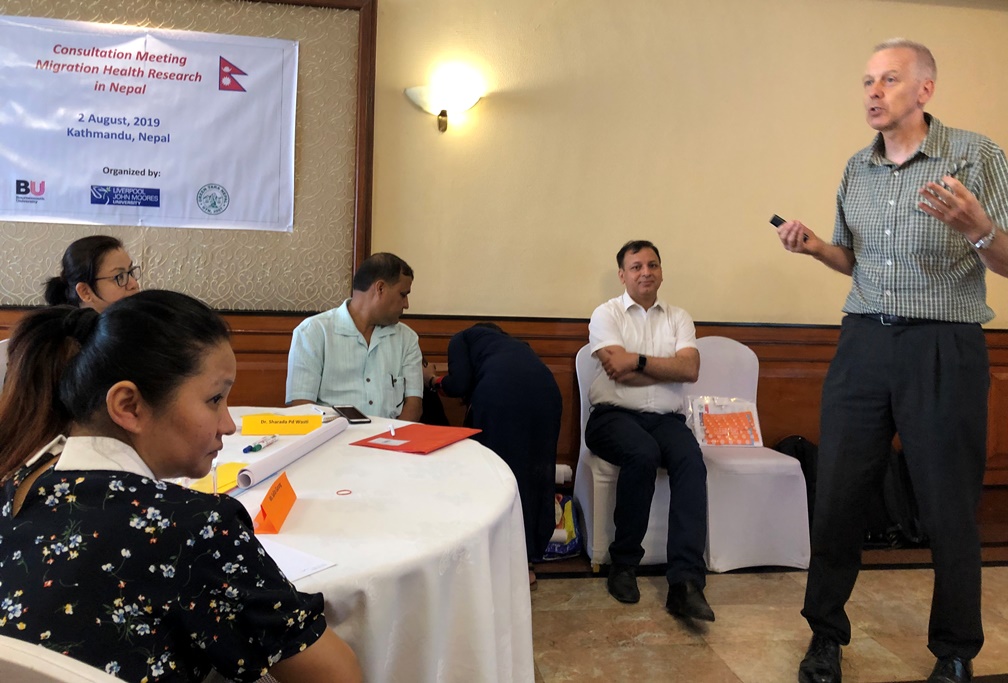
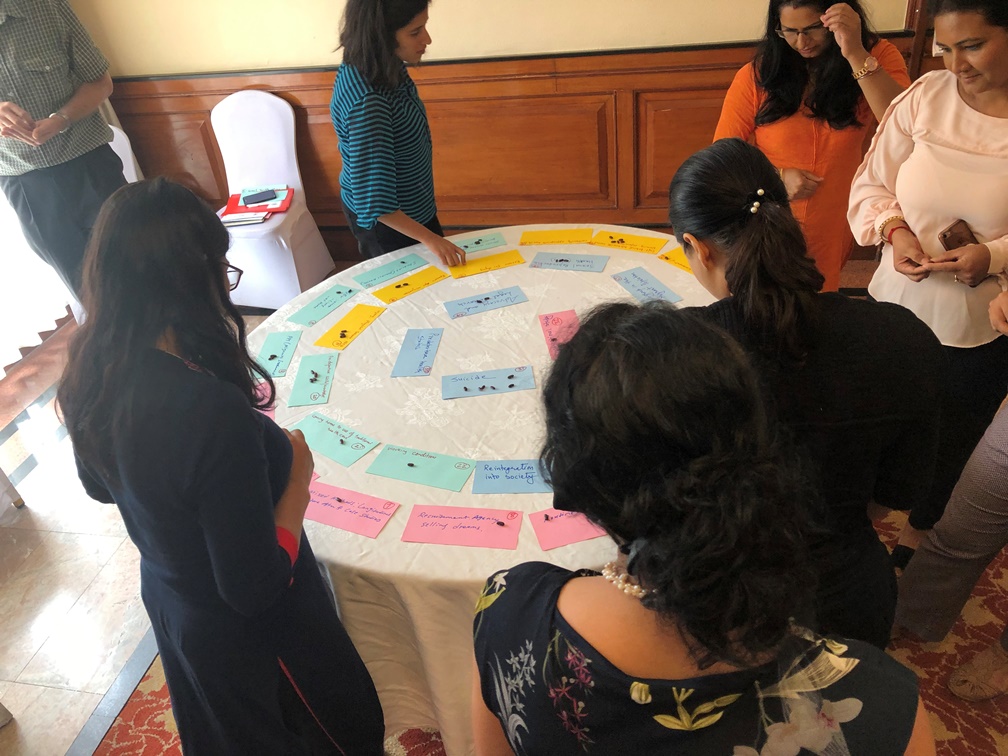
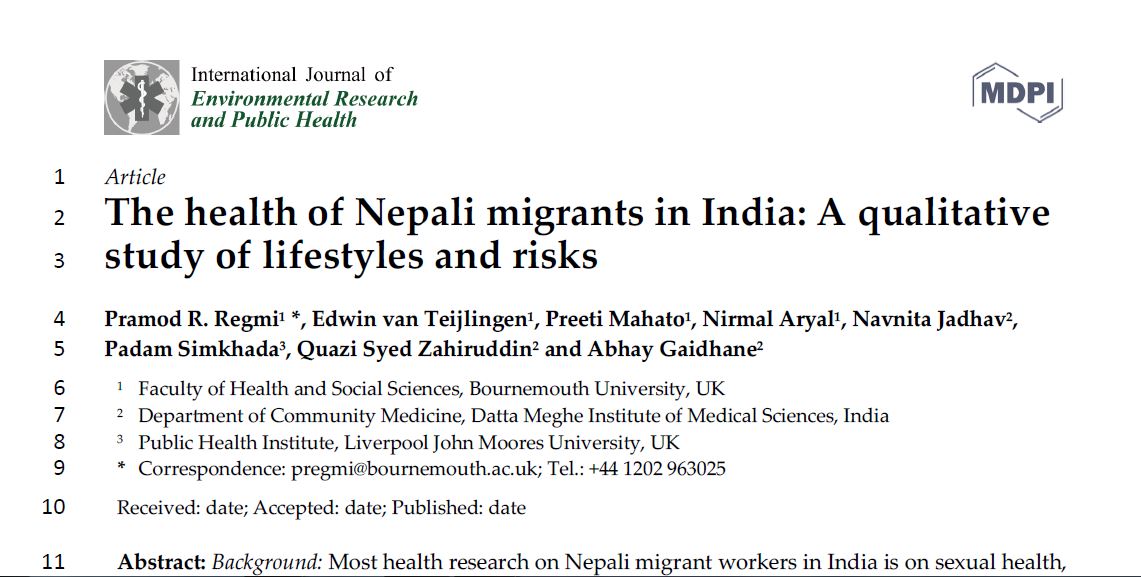
Today the International Journal of Environmental Research and Public Health accepted our paper ‘The health of Nepali migrants in India: A qualitative study of lifestyles and risks’ [1].  The research in this paper was funded through Connect India is Bournemouth University’s Hub of Practice for the Indian subcontinent.  It brought together a community of researchers, educators, practitioners and students, both at Bournemouth University and across the Indian subcontinent.

The lead author, Dr. Pramod Regmi, is lecturer in International Health in the Department of Nursing & Clinical Science.  His co-authors are based in the UK, Nepal and India.  BU authors are: Pramod Regmi, Edwin van Teijlingen, Preeti Mahato and Nirmal Aryal as well as BU Visiting Faculty Prof. Padam Simkhada.  The  International Journal of Environmental Research and Public Health is an interdisciplinary Open Access journal, hence when published this paper will be freely available to readers across the globe, including India and Nepal.

Reference:

  1. Regmi, P., van Teijlingen, E., Mahato, P., Aryal, N., Jadhav, N., Simkhada, P., Syed Zahiruddin, Q., Gaidhane, A., (2019) The health of Nepali migrants in India: A qualitative study of lifestyles and risks Journal of Environmental Research & Public Health (forthcoming)


New paper by Dr. Caroline Ellis-Hill

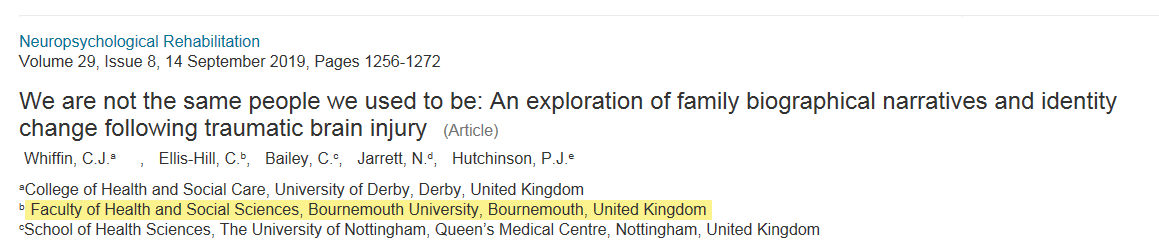
Congratulations to Dr. Caroline Ellis-Hill on the publication of her article ‘We are not the same people we used to be: An exploration of family biographical narratives and identity change following traumatic brain injury’.  This paper was accepted for publication in 2017 and will now be finally published in its final format in the September issue of Neuropsychological Rehabilitation.

This scientific paper focuses recovery and rehabilitation following traumatic brain injury. Accumulation of subjective changes over time has led many to examine the question of “continuity of self” post-injury. Vacillation between feeling the same and different is common and often at odds with the medical narrative preparing families for permanent change. This position of ambiguity was examined in a qualitative narrative study. The aim of this paper is to describe the narrative structures used by uninjured members of a family to understand change. These changes relate primarily, to their perspective of whether and how the injured person had changed, but also secondarily to whether and why they themselves felt they had changed in the first year post-injury. Nine uninjured family members from three families took part in three unstructured interviews during the first twelve months post-injury.

In-depth narrative analysis showed family members used biographical attendance; biographical disruption; biographical continuity; and biographical reconstruction to understand change. Dr. Ellis-Hill and her co-authors argue that concentrating on a narrative of change is too limiting and that engaging in biographical narratives may help humanise care provided to injured individuals and their families. Implications for research and practice are discussed

Prof. Edwin van Teijlingen

CMMPH

Migration & health research in Middle East & Malaysia

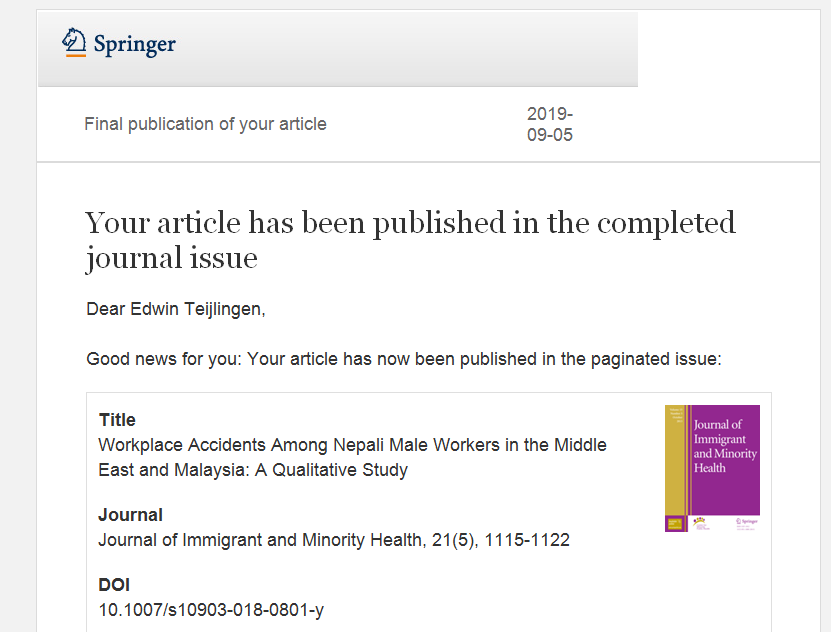
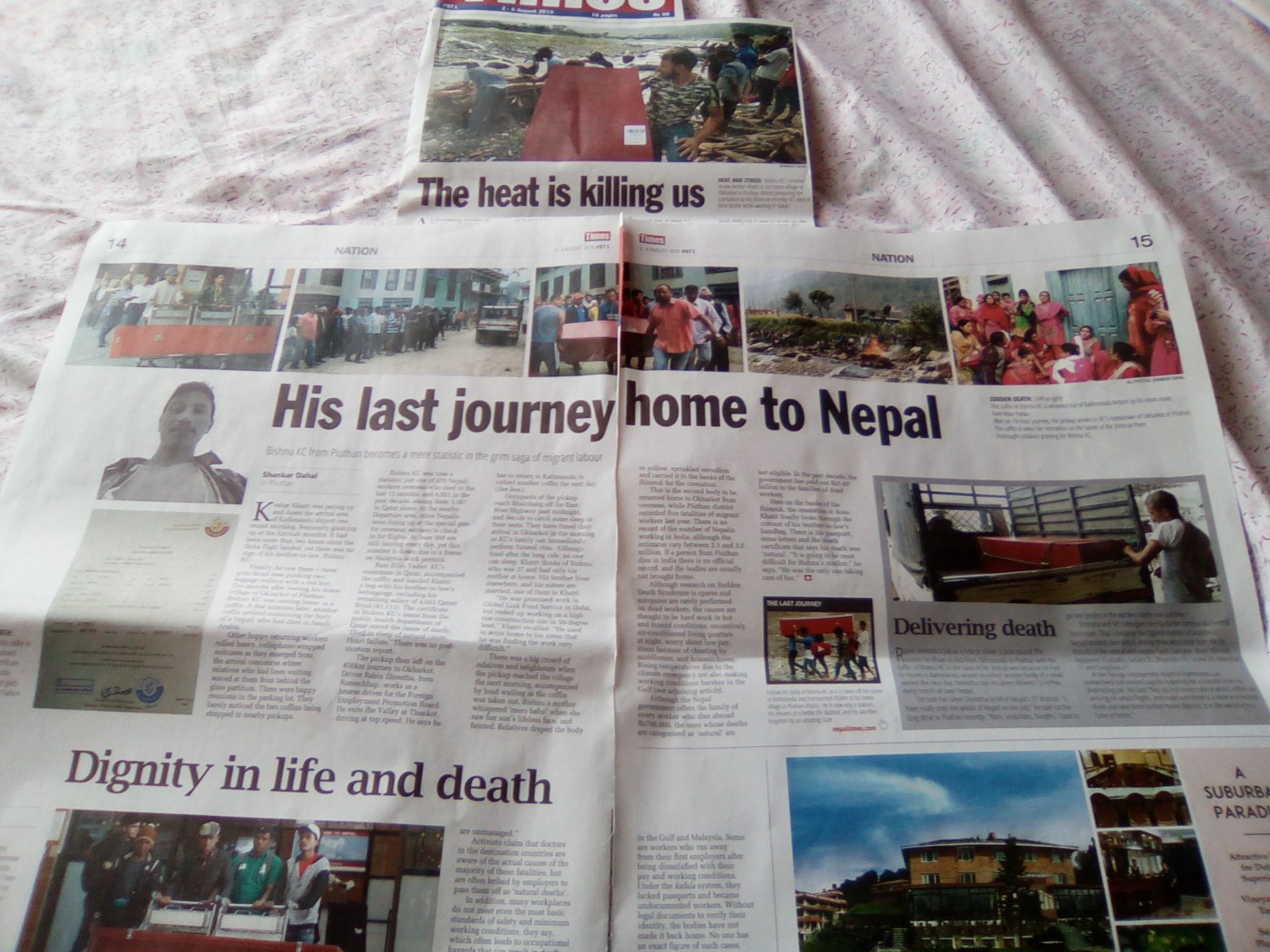
Yesterday the Journal of Immigrant and Minority Health published the final version of Dr. Pratik Adhikary’s paper ‘Workplace Accidents Among Nepali Male Workers in the Middle East and Malaysia: A Qualitative Study’ [1].  This is the fourth paper originating from Pratik’s Ph.D. research conducted in the Faculty of Health & Social Sciences, the first three papers appeared in the period 2011-2018 [2-4].

The paper highlights that many Nepali men work in the Middle East and Malaysia and media reports and anecdotal evidence suggests they are at a high risk of workplace-related accidents and injuries for male Nepali workers.   Pratik’s Ph.D. study used face-to-face interviews to explore the personal experiences of twenty male Nepali migrants of unintentional injuries at their place of work.  His study found that almost half of study participants experienced work-related accident abroad. The Participants suggested that the reasons behind this are not only health and safety at work but also poor communication, taking risks by workers themselves, and perceived work pressure. Some participants experienced serious incidents causing life-long disability, extreme and harrowing accounts of injury but received no support from their employer or host countries.

The paper concludes that Nepali migrant workers are at a high risk of occupational injuries owing to a number of interrelated factors poor health and safety at work, pressure of work, risk taking practices, language barriers, and their general work environment. Both the Government of Nepal and host countries need to be better policing   existing policies; introduce better legislation where necessary; ensure universal health (insurance) coverage for labour migrants; and improve preventive measures to minimize the number and severity of accidents and injuries among migrant workers.


References:

  1. Adhikary P, van Teijlingen E., Keen S. (2019) Workplace accidents among Nepali male workers in the Middle East and Malaysia: A qualitative study, Journal of Immigrant & Minority Health 21(5): 1115–1122. https://link.springer.com/article/10.1007/s10903-018-0801-y
  2. Adhikary P., Keen S., van Teijlingen E (2011) Health Issues among Nepalese migrant workers in Middle East. Health Science Journal 5: 169-75. www.hsj.gr/volume5/issue3/532.pdf
  3. Adhikary, P, Sheppard, Z., Keen, S., van Teijlingen, E. (2017) Risky work: accidents among Nepalese migrant workers in Malaysia, Qatar & Saudi Arabia, Health Prospect 16(2): 3-10.
  4. Adhikary P, Sheppard, Z., Keen S., van Teijlingen E. (2018) Health and well-being of Nepalese migrant workers abroad, International Journal of Migration, Health & Social Care 14(1): 96-105.  https://doi.org/10.1108/IJMHSC-12-2015-0052


BMC blog on latest HSS paper

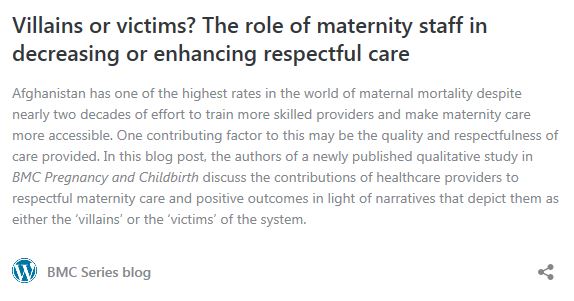
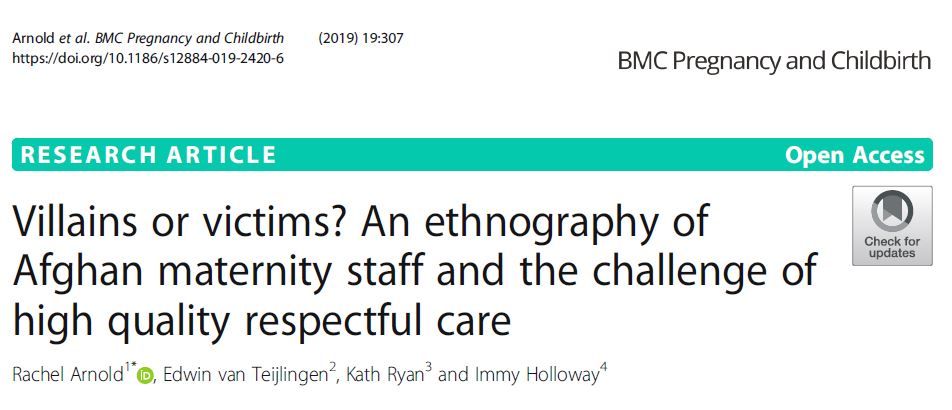
Dr. Rachel Arnold’s recent paper in BMC Pregnancy & Childbirth was highlighted in a blog promoted by the publisher.  The paper ‘Villains or victims? An ethnography of Afghan maternity staff and the challenge of high quality respectful care‘ reports on the everyday lives of maternal healthcare providers working in a tertiary maternity hospital in Kabul, Afghanistan (1). BMC Pregnancy & Childbirth is an Open Access journal so the paper is available free of charge to anybody in Afghanistan (and elsewhere) with an internet connection.  The aim was to understand the staff’s notions of care, their varying levels of commitment to providing care for women in childbirth, and the obstacles and dilemmas that affected standards, and thereby gain insight into their contributions to respectful maternity care, whether as ‘villains’ or as ‘victims.’

Dr. Arnold is Postdoctoral Midwifery Researcher in the Centre for Midwifery, Maternal & Perinatal Health (CMMPH).  This is the third paper from Rachel’s excellent PhD project, the previous two papers appeared in BJOG and Social Science & Medicine (2-3).

Click here for BMC Blog post:

Villains or victims? The role of maternity staff in decreasing or enhancing respectful care

Reference:

  1. Arnold, R., van Teijlingen, E., Ryan, K., Holloway, I. (2019) Villains or victims? An ethnography of Afghan maternity staff and the challenge of high quality respectful care, BMC Pregnancy & Childbirth 19 :307 https://rdcu.be/bPqlj
  2. Arnold R., van Teijlingen E, Ryan K., Holloway I. (2015) Understanding Afghan health care providers: Qualitative study of culture of care in Kabul maternity hospital, BJOG 122: 260-267.
  3. Arnold, R., van Teijlingen, E., Ryan, K., Holloway, I. (2018) Parallel worlds: an ethnography of care in an Afghan maternity hospital, Social Science & Medicine 126:33-40.


NIHR RDS Grant Applications – seminar & support event, Truro, Cornwall – 8th October 2019

Are you planning to submit a grant application to NIHR?

We are holding a one-day event at the Knowledge Spa, Truro, Cornwall on Tuesday 8 October that is aimed at helping you to improve your chances of success..

The morning seminar session is open to anyone to come and hear RDS advisers give presentations on what makes a good grant proposal. Topics covered will include:

  • what does the NIHR look for?
  • the application as a marketing document: selling the topic, selling the method, and selling the team
  • the team
  • clarity of description and explanation
  • feasibility issues
  • identifying and avoiding potential pitfalls.

The afternoon support session of one-to-one appointments is for those who would like to discuss their own proposal with an RDS adviser.

This event is FREE and refreshments and lunch will be provided. Places are limited and will be allocated on a ‘first come, first served’ basis. In order to secure your place please register using our online form by 1pm, 25 September 2019Find out more.

And don’t forget, your local branch of the NIHR RDS (Research Design Service) is based within the BU Clinical Research Unit (BUCRU) on the 5th floor of Royal London House. Feel free to pop in and see us, call us on 61939 or send us an email.

RDS Research for Social Care Roadshow

The NIHR will be investing in future social care research with annual funding calls via the Research for Patient Benefit (RfPB) programme.  The next call is planned to launch in September and will follow a similar format to the first call, however to give it a clearer social care identity it will be launched as Research for Social Care (RfSC). The RfSC call will have a budget of £3m and further information will be released shortly.

The Research Design Service (RDS) is running an event in Bristol on 30th September which offers an opportunity to gain a greater understanding of RfSC funding. Attendance at these events is FREE and refreshments will be provided.

More details can be found on the NIHR website or on our RDS South West website.

And don’t forget, your local branch of the NIHR RDS (Research Design Service) is based within the BU Clinical Research Unit (BUCRU) on the 5th floor of Royal London House. Feel free to pop in and see us, call us on 61939 or send us an email.

Emerald Literati Highly Commended award for BU paper

Former PhD student, Dr Andy Harding, now at Lancaster University, and BU Professors Jonathan Parker, Sarah Head and Ann Hemingway have been highly commended for their paper Supply-side review of the UK specialist housing market and why it is failing older people published in Housing, Care and Support.

As a result, this paper has been made available on OpenAccess on the Emerald website for the next six months.

Congratulations on academic paper by BU PhD student Orlanda Harvey

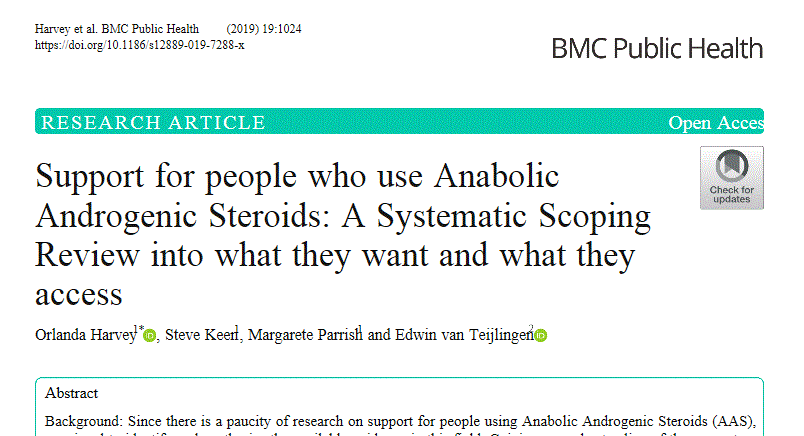
Congratulations to Orlanda Harvey, PhD student in the Faculty of Health & Social Sciences on her PhD publication “Support for people who use Anabolic Androgenic Steroids: A Systematic Scoping Review into what they want and what they access” in the Open Access journal BMC Public Health [1].  Since there is a paucity of research on support for people using Anabolic Androgenic Steroids (AAS), this article searched and synthesised the available evidence in this field. Gaining an understanding of the support both accessed and wanted by recreational AAS users will be of use to professionals who provide services to intravenous substance users and also to those working in the fields of public health and social care, with the aim to increase engagement of those using AAS.

This systematic scoping review identified 23 papers and one report for review, which indicated that AAS users access a range of sources of information on: how to inject, substance effectiveness, dosages and side effects, suggesting this is the type of information users want. AAS users sought support from a range of sources including medical professionals, needle and syringe programmes, friends, dealers, and via the internet, suggesting that, different sources were used dependent on the information or support sought.

The authors argue that AAS users tended to prefer peer advice and support over that of professionals , and access information online/specialist fora, reflecting the stigma that is experienced by AAS  users. These tendencies can act as barriers to accessing services provided by professionals.  The paper concludes that support needs to be specific and targeted towards AAS users. Sensitivity to their perceptions of their drug-use and the associated stigma of being classified in the same sub-set as other illicit drug users is relevant to facilitating successful engagement.


Reference: 

  1. Harvey, O., Keen, S., Parrish, M., van Teijlingen, E. (2019) Support for people who use Anabolic Androgenic Steroids: A Systematic Literature Review into what they want and what they access. BMS Public Health 19: 1024      https://rdcu.be/bMFon


New CMMPH publication on health promotion in post-earthquake Nepal

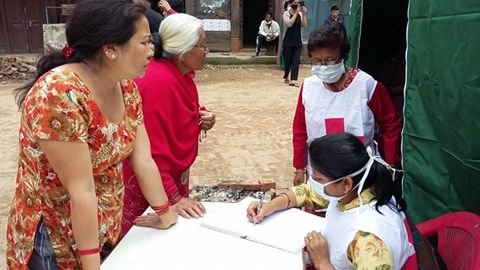
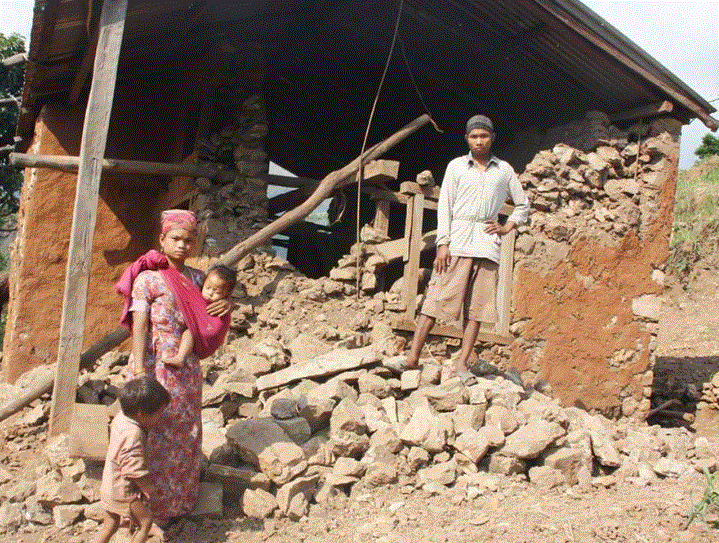
Today saw the publication of a new paper from an international research team from the UK, Japan and Nepal.  Our research article ‘Assessing knowledge and behavioural changes on maternal and newborn health among mothers following post-earthquake health promotion in Nepal’ has been published in the Open Access journal PLoS ONE [1]. 

The paper reminds us that natural disasters often disrupt health systems affecting the whole population, but especially vulnerable people such as pregnant women, new mothers and their babies. Despite the global progress in maternal, newborn and child health (MNCH) programmes over the years, emergency responses after a disaster are often poor. Post-disaster health promotion could play an important role in improving MNCH outcomes. However, evidence remains limited on the effect of post disaster health promotion activities in low-income countries such as Nepal.

The paper reports on an post-disaster intervention study aimed at women in Nepal following the 2015 earthquake. In total, 364 mothers were recruited in the pre-intervention group and 377 in the post-intervention group. The post-intervention group was more likely to have knowledge of at least three danger signs in pregnancy (AOR [Adjusted Odds Ratio] = 2.96, P<0.001), at least three danger signs in childbirth (AOR = 3.8, P<0.001), and at least five danger signs in newborns (AOR = 1.56, P<0.001) compared to the pre-intervention group. The mothers in the post-intervention group were also more likely to ever attend ANC (AOR = 7.18, P<0.001), attend a minimum of four ANC sessions (AOR = 5.09, P<0.001), and have institutional deliveries (AOR = 2.56, P<0.001).

Religious minority groups were less likely to have knowledge of all danger signs compared to the majority Hindu group. Mothers from poorer households were also less likely to attend four ANC sessions. Mothers with higher education were more likely to have knowledge of all the danger signs. Mothers whose husbands had achieved higher education were also more likely to have knowledge of danger signs and have institutional deliveries.  The paper concludes that the health promotion intervention helped the disaster-affected mothers in improving the knowledge and behaviours related to MNCH. However, the authors also comment that vulnerable populations need more support to benefit from such intervention.


Reference:

Dhital R, Silwal RC, Simkhada P, van Teijlingen E, Jimba M (2019) Assessing knowledge and behavioural changes on maternal and newborn health among mothers following post-earthquake health promotion in Nepal. PLoS ONE 14(7): e0220191. https://doi.org/10.1371/journal.pone.0220191

Dr. Rachel Arnold’s first paper as BU staff

Congratulations to Dr. Rachel Arnold in the Centre for Midwifery, Maternal & Perinatal Health who had her first paper accepted since she started working at BU two months ago. Her paper ‘Villains or victims? An ethnography of Afghan maternity staff and the challenge of high quality respectful care’ is co-authored with her former PhD supervisors Professor Kath Ryan (BU Visiting Faculy), Professor Emerita Immy Holloway and CMMPH’s Professor Edwin van Teijlingen [1].  The paper is Open Access funded by Bournemouth University’s Open Access Fund which will help promote the visibility of the paper before REF 2021.

I was tempted to head this blog ‘Dr. Arnold only two months at BU and first paper published’, but I decide this would perhaps send the wrong message to other new BU staff.  Rachel completed her PhD in CMMPH and this is paper is the third publication from her thesis.  The other academic publications by Dr. Arnold on Afghanistan have been in BJOG and Social Science & Medicine [2-3].


References:

  1. Arnold, R., van Teijlingen, E., Ryan, K., Holloway, I. (2019) Villains or victims? An ethnography of Afghan maternity staff and the challenge of high quality respectful care ,     BMC Pregnancy and Childbirth (accepted).
  2. Arnold R., van Teijlingen E, Ryan K., Holloway I. (2015) Understanding Afghan health care providers: Qualitative study of culture of care in Kabul maternity hospital, BJOG 122: 260-267.
  3. Arnold, R., van Teijlingen, E., Ryan, K., Holloway, I. (2018) Parallel worlds: an ethnography of care in an Afghan maternity hospital, Social Science & Medicine 126:33-40.

New BU cross-faculty publication

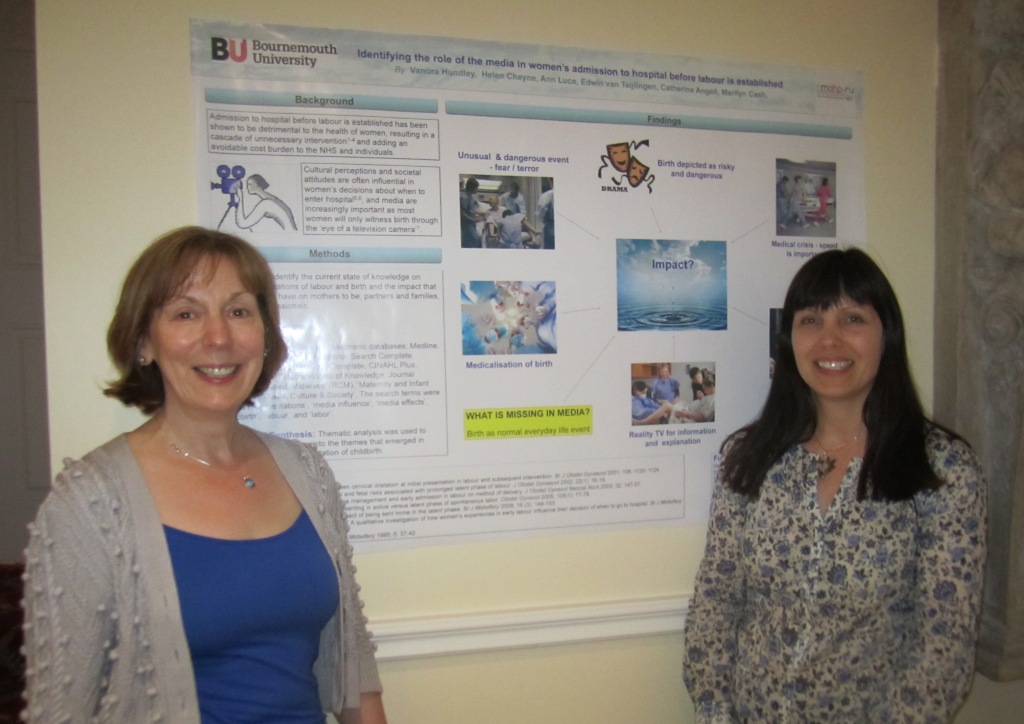
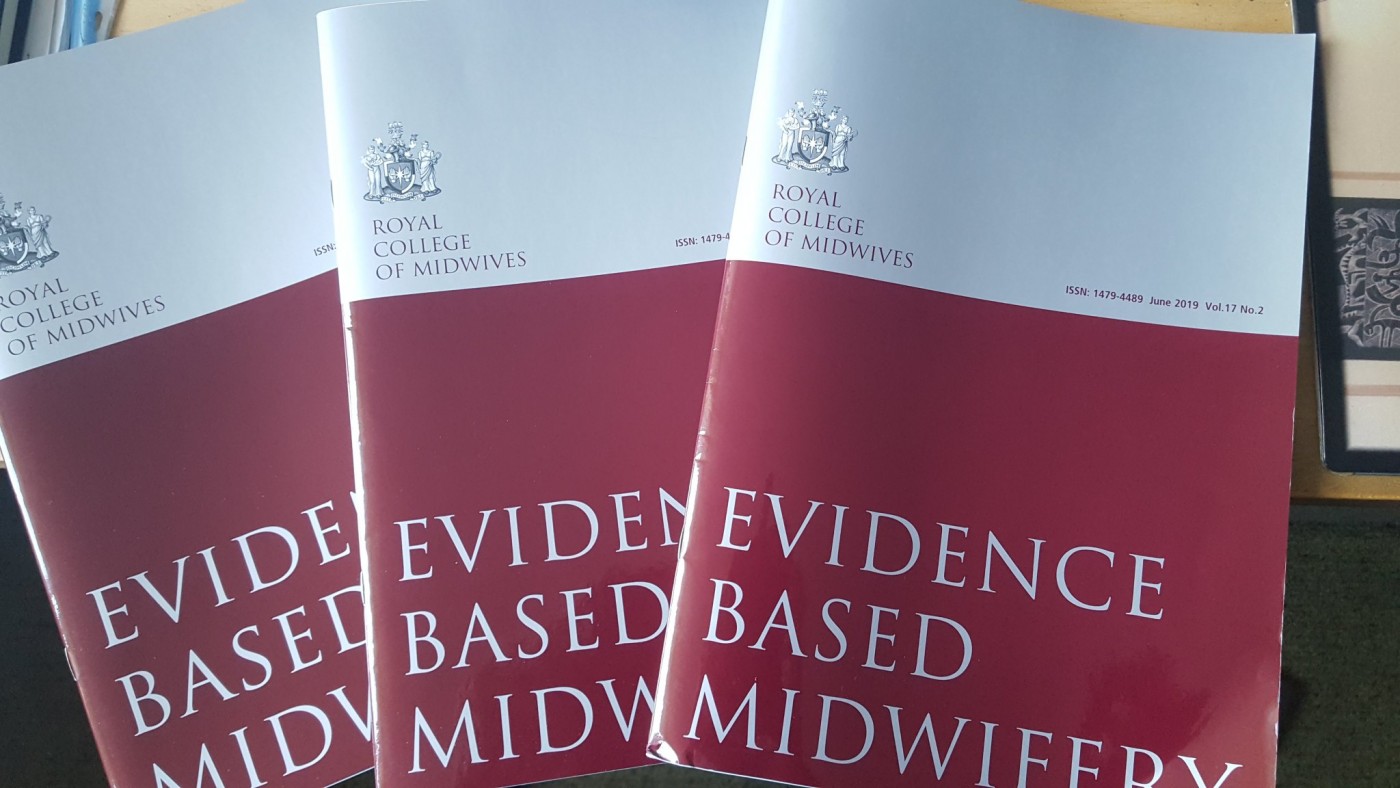
This week Evidence-Based Midwifery published the latest article from the BU team working on the portrayal of midwifery and maternity in the media.  This qualitative paper ‘Changing the narrative around childbirth: whose responsibility is it?’ is co-authored by a multidisciplinary team including the disciplines of Midwifery, Sociology and Media.[1]  The lead author is Prof. Vanora Hundley in the Centre for Midwifery, Maternal & Perinatal Health (CMMPH), one of longest established centres at BU, her co-authors are Dr. Ann Luce in the Faculty of Media & Communication, Prof. Edwin van Teijlingen director of CMMPH and Sophie Edlund, who was based at BU at the time of the research but who is now at Malmö University in Sweden.

The paper addresses societal’s interest in all aspects of childbirth, which is reflected in both social and traditional media. Stories often focus on dramatic, risky and mostly unrealistic events; misrepresenting childbirth and maternity care professionals. The authors raised the question: “Whose responsibility is it to ensure accurate representations of childbirth?”   Using semi-structured in-depth interviews with ten midwives working in the UK some working in the NHS, some in Higher Education or independent practice, the authors distilled four separate but inter-related themes:

(1) not my responsibility;

(2) fear of retribution;

(3) power balance; and

(4) social media.

The themes sat within two wider societal issues that reflect the current challenges for midwifery, these were (a) the ongoing battle between the social and the medical models of childbirth and (b) the impact of gender.  Finding that midwives fear the media resonates with experiences from a number of countries and professional groups. There is a need to change media discourse in both fictional and factual representations of childbirth and midwives have a critical role to play in this, but to do this they need to equip themselves with the skills necessary to engage with the media. Guidelines on responsible media reporting could ensure that media producers portray pregnancy, midwifery and maternity care as naturally as possible.

This paper is paper of a growing body of interdisciplinary research at BU across faculties, which had already resulted in six earlier publications. [2-7]  In addition last month Dr Chapleo from the Faculty of Management submitted a grant application to the ESRC under the title ‘Rebranding childbirth: understanding the role of marketing in influencing uptake of health services’, a joint application with CMMPH staff (Profs. Hundley & van Teijlingen) and the Media School (Dr. Luce).


References:

  1. Hundley, V., Luce, A., van Teijlingen, E., Edlund, S. (2019) Changing the narrative around childbirth: whose responsibility is it? Evidence-based Midwifery 17(2): 47-52.
  2. Luce, A., Cash, M., Hundley, V., Cheyne, H., van Teijlingen, E., Angell, C. (2016) “Is it realistic?” the portrayal of pregnancy and childbirth in the media BMC Pregnancy & Childbirth 16: 40 http://bmcpregnancychildbirth.biomedcentral.com/articles/10.1186/s12884-016-0827-x
  3. van Teijlingen, E., Simkhada, P., Luce, A., Hundley, V. (2016) Media, Health & Health Promotion in Nepal, Journal of Manmohan Memorial Institute of Health Sciences 2(1): 70-75. http://www.nepjol.info/index.php/JMMIHS/article/view/15799/12744
  4. Luce, A., Hundley, V., van Teijlingen, E. (Eds.) (2017) Midwifery, Childbirth and the Media, London: Palgrave Macmillan.
  5. Hundley, V., Duff, E., Dewberry, J., Luce, A., van Teijlingen, E. (2014) Fear in childbirth: are the media responsible? MIDIRS Midwifery Digest 24(4): 444-447.
  6. Hundley, V., Luce, A., van Teijlingen, E. (2015) Do midwives need to be more media savvy? MIDIRS Midwifery Digest 25(1):5-10.
  7. van Teijlingen, E., De Vries, R., Luce, A., Hundley, V. (2017) Meer bemoeien met media (In Dutch: more engagement with media). Tijdschrift voor Verloskundigen (in Dutch: Journal for Midwives), 41 (6):28-29.